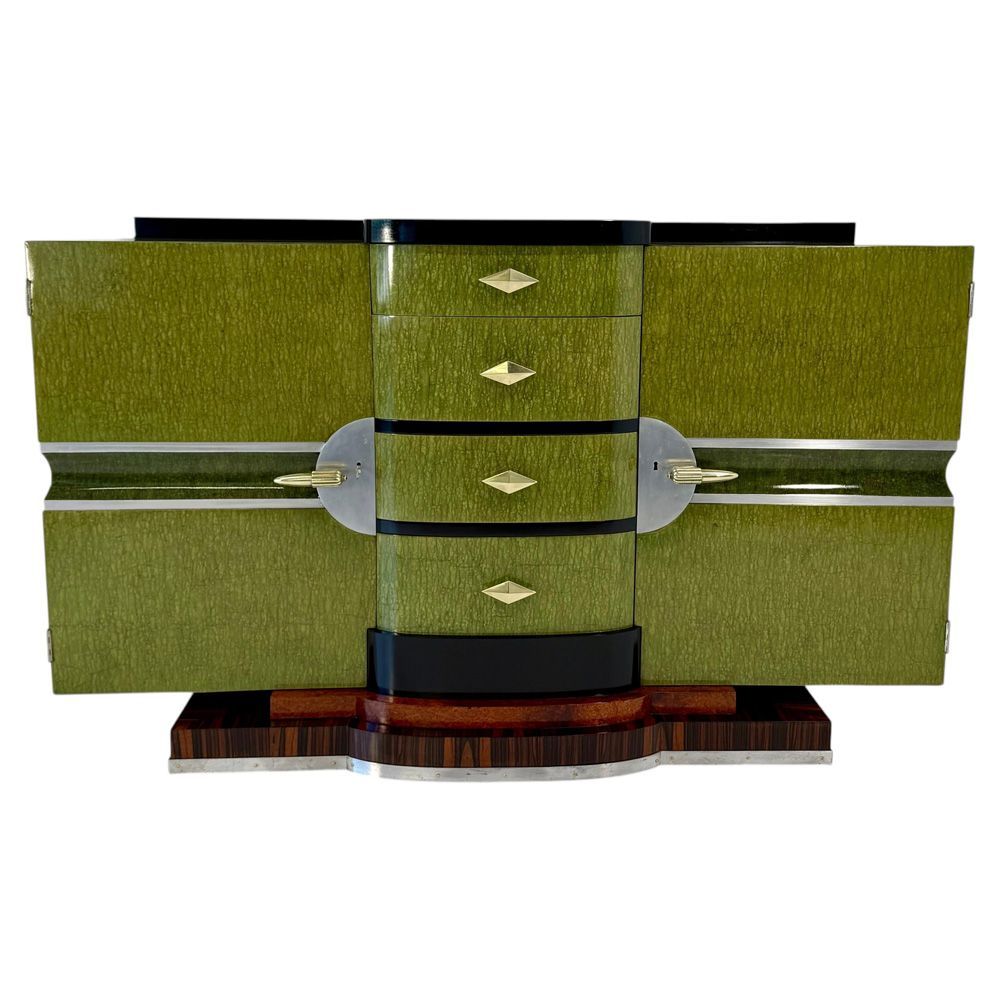
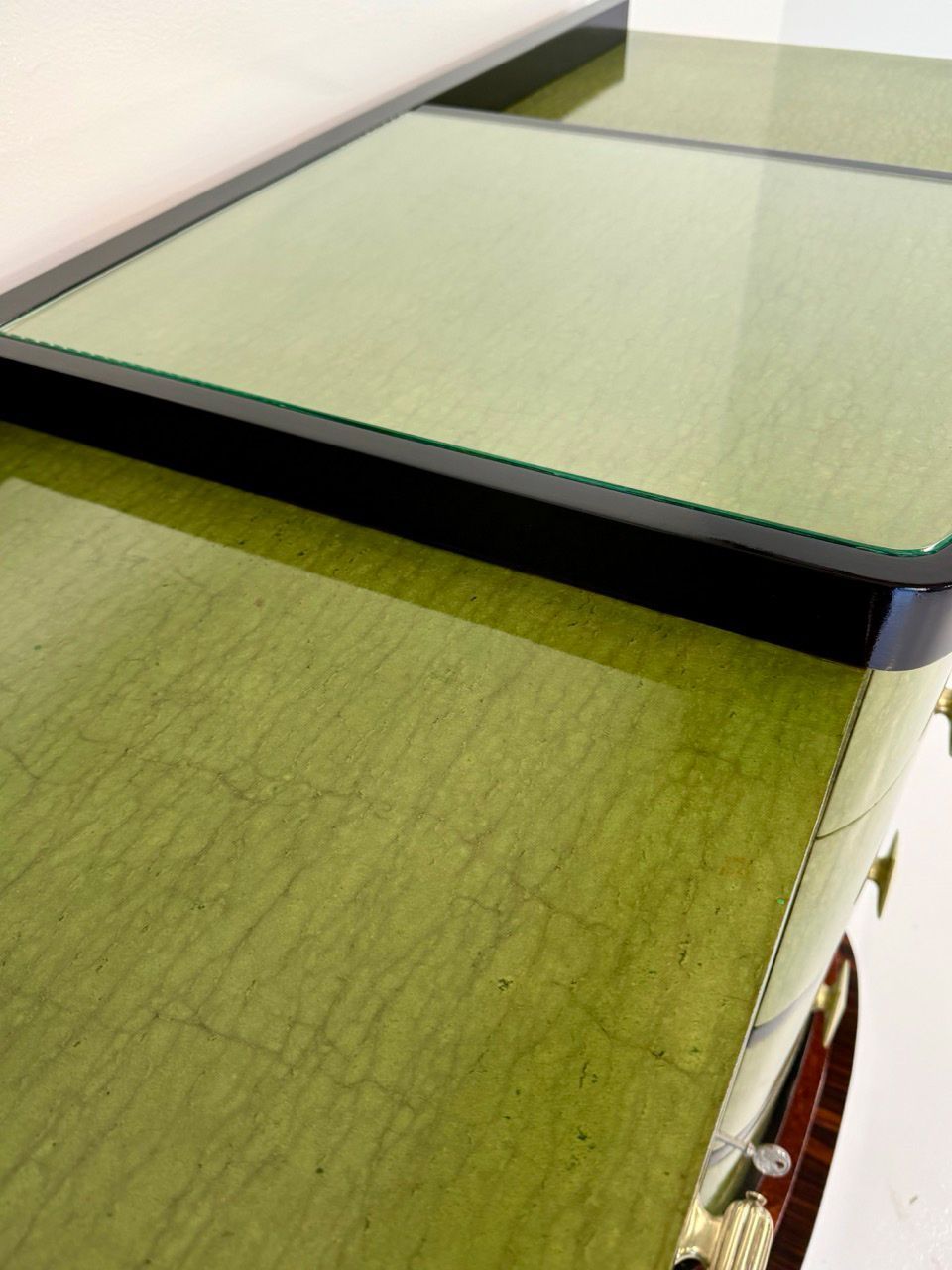
Important Italian cabinet from the 1930s, attributable to Gino Levi Montalcini and Giuseppe Pagano Pogatschnig, covered in rare green Buxus, a material developed in Italy between the 1920s and 1930s by S.A. Cartiere Giacomo Bosso within the context of Italian autarkic material and decorative research.
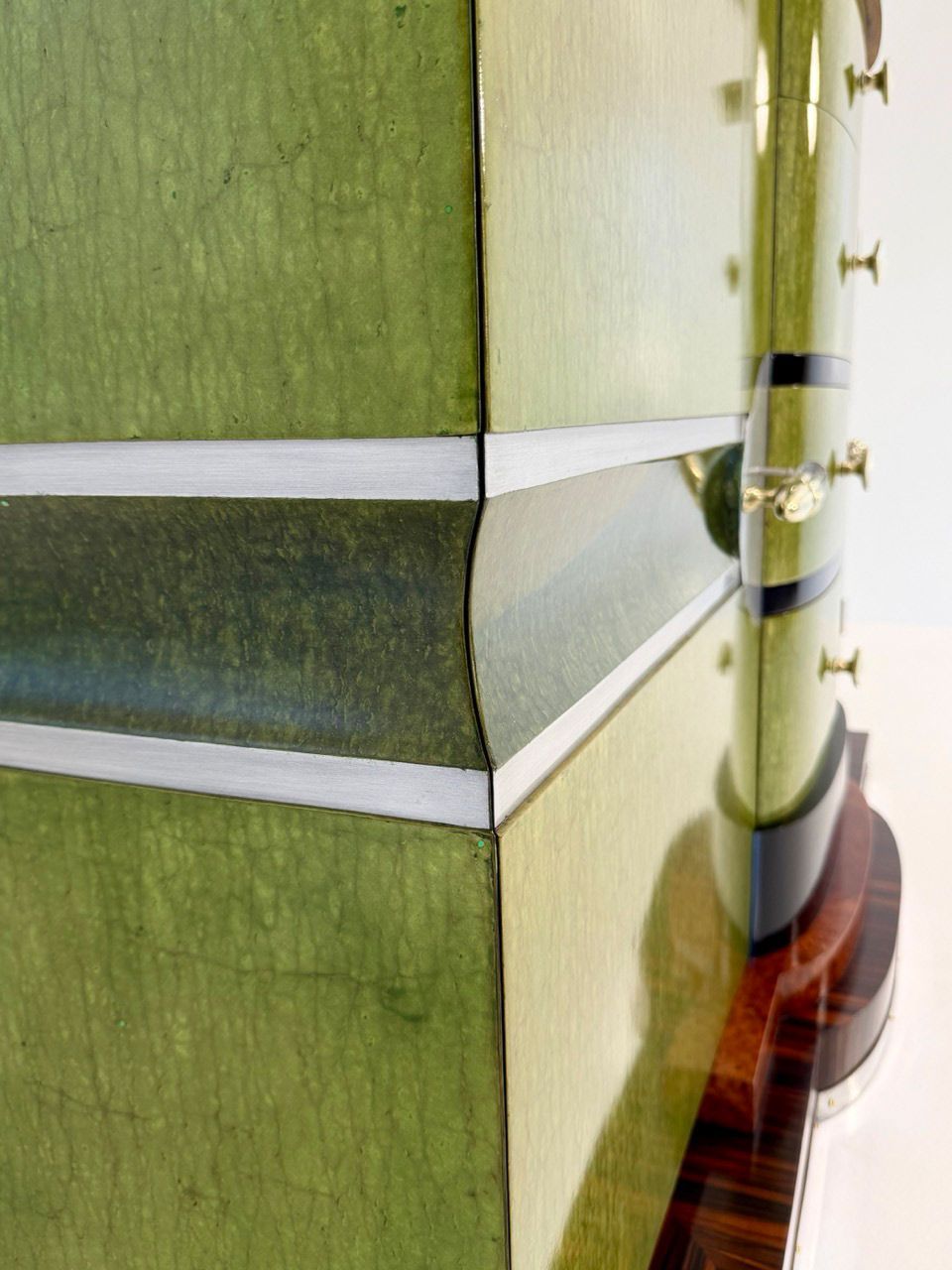
Produced through special paper-making processes and resins, Buxus was used as a finishing surface for high-quality furniture due to its extraordinary ability to imitate the depth, veining, and chromatic movements of the rarest natural burls. Today, it is considered an extremely rare and sought-after material, an authentic testament to early 20th-century Italian material experimentation.
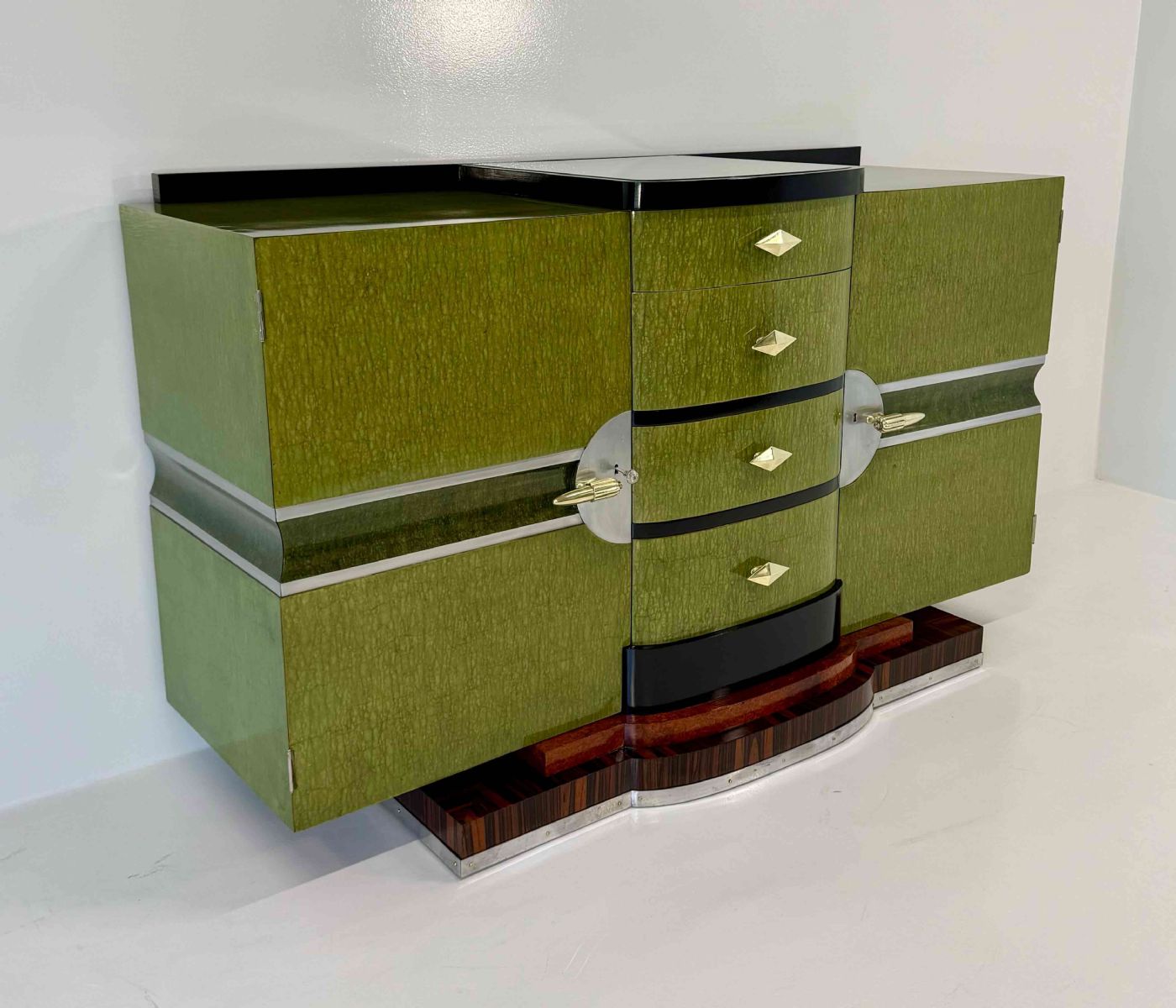
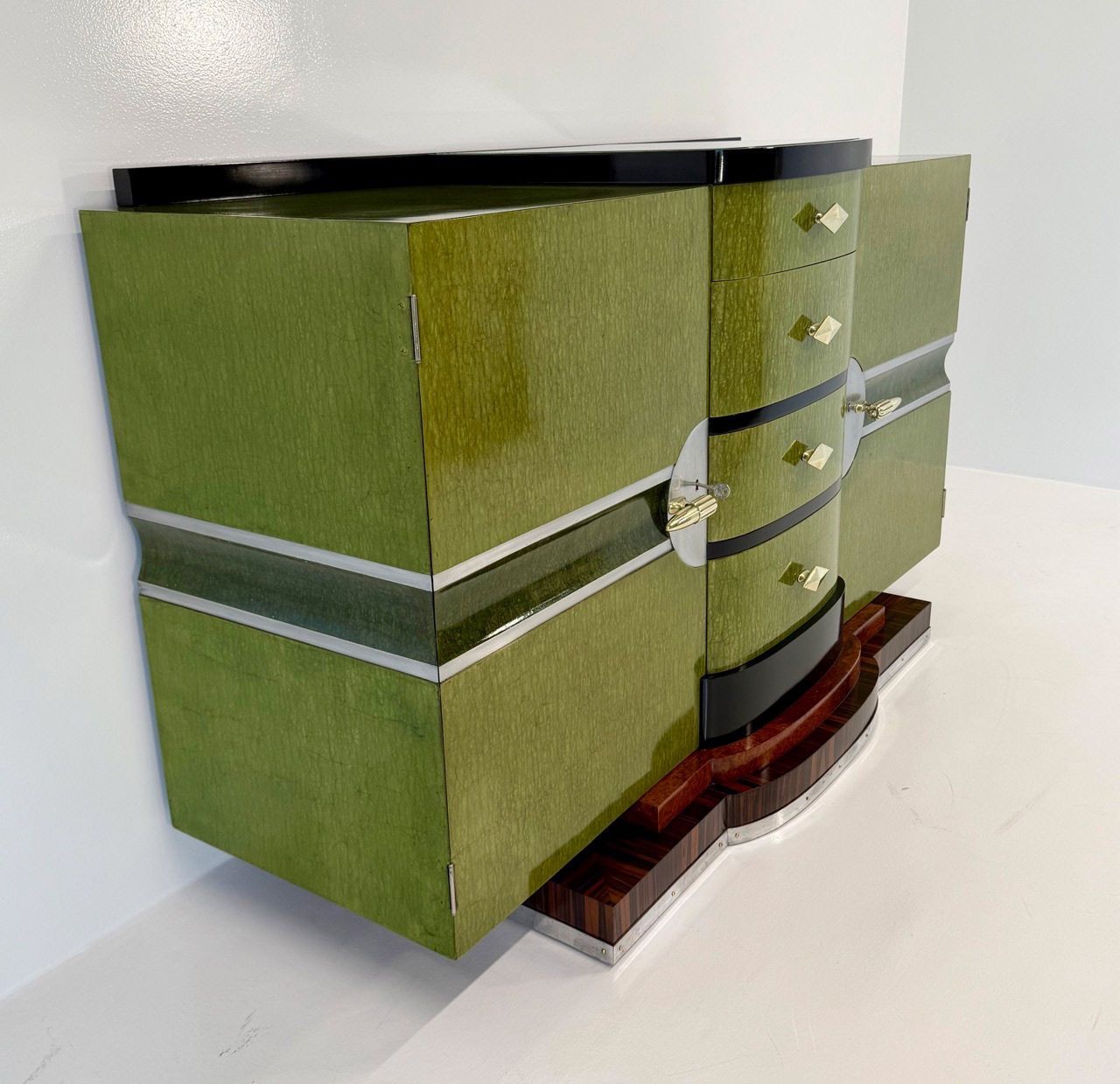
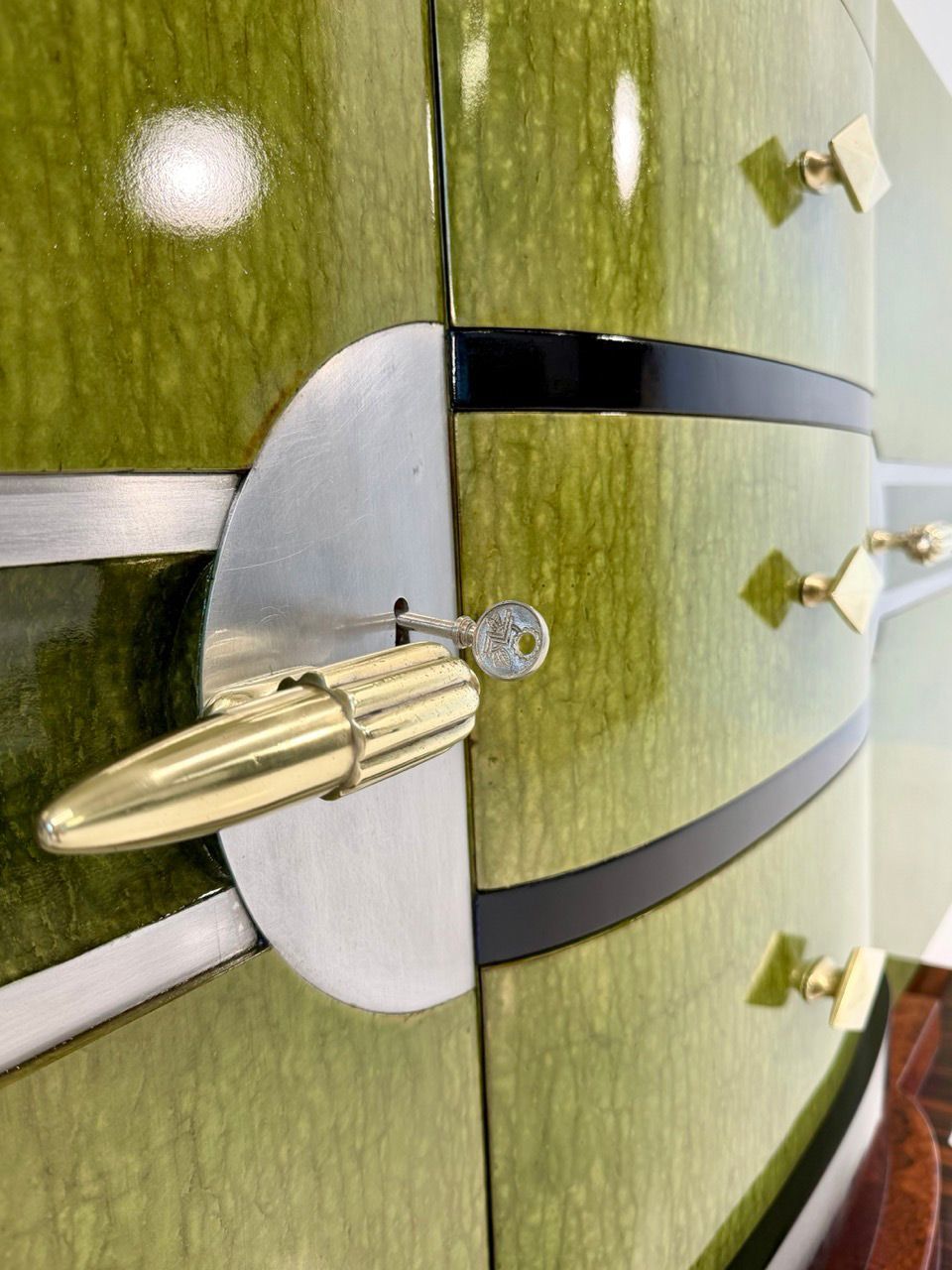
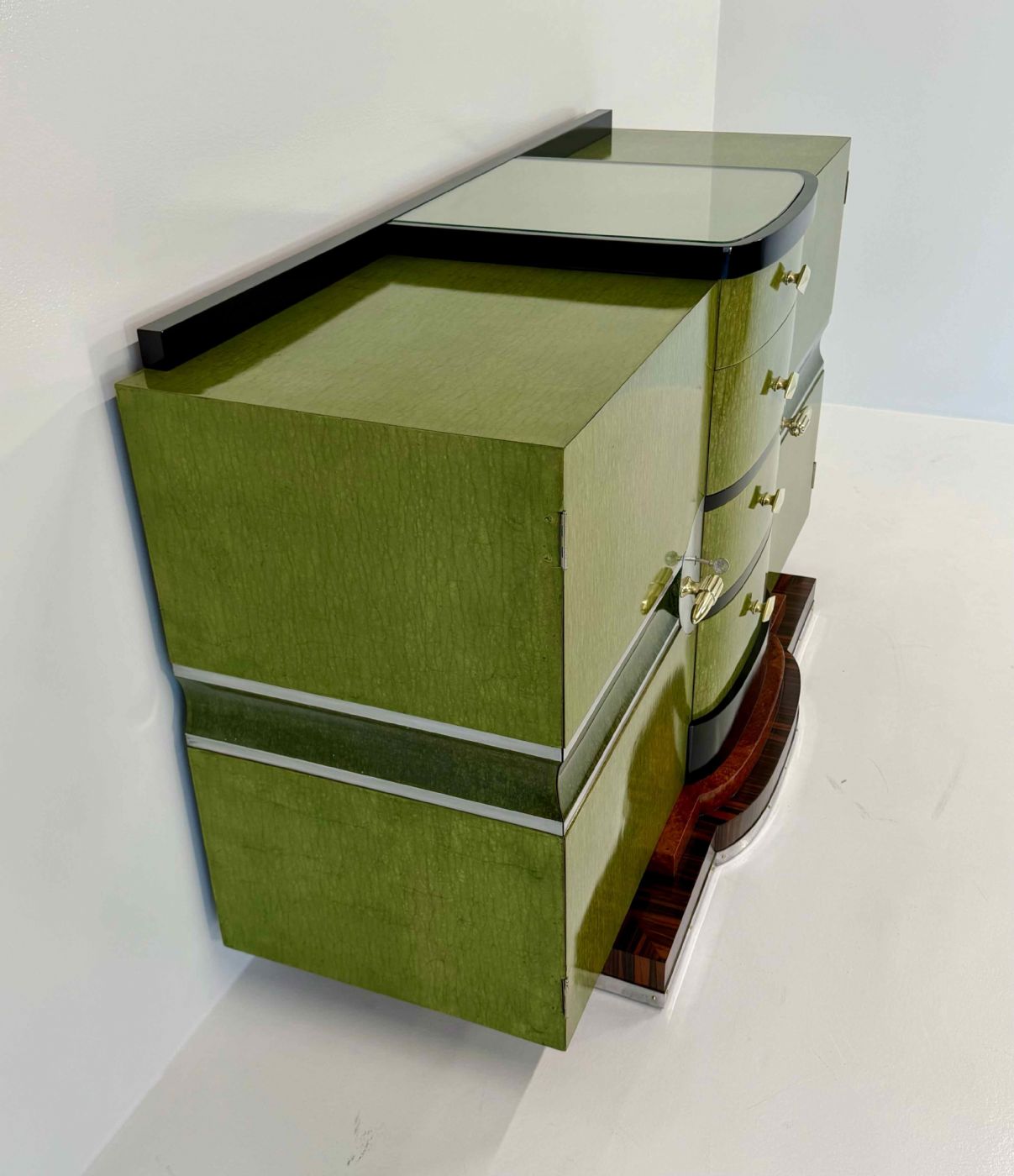
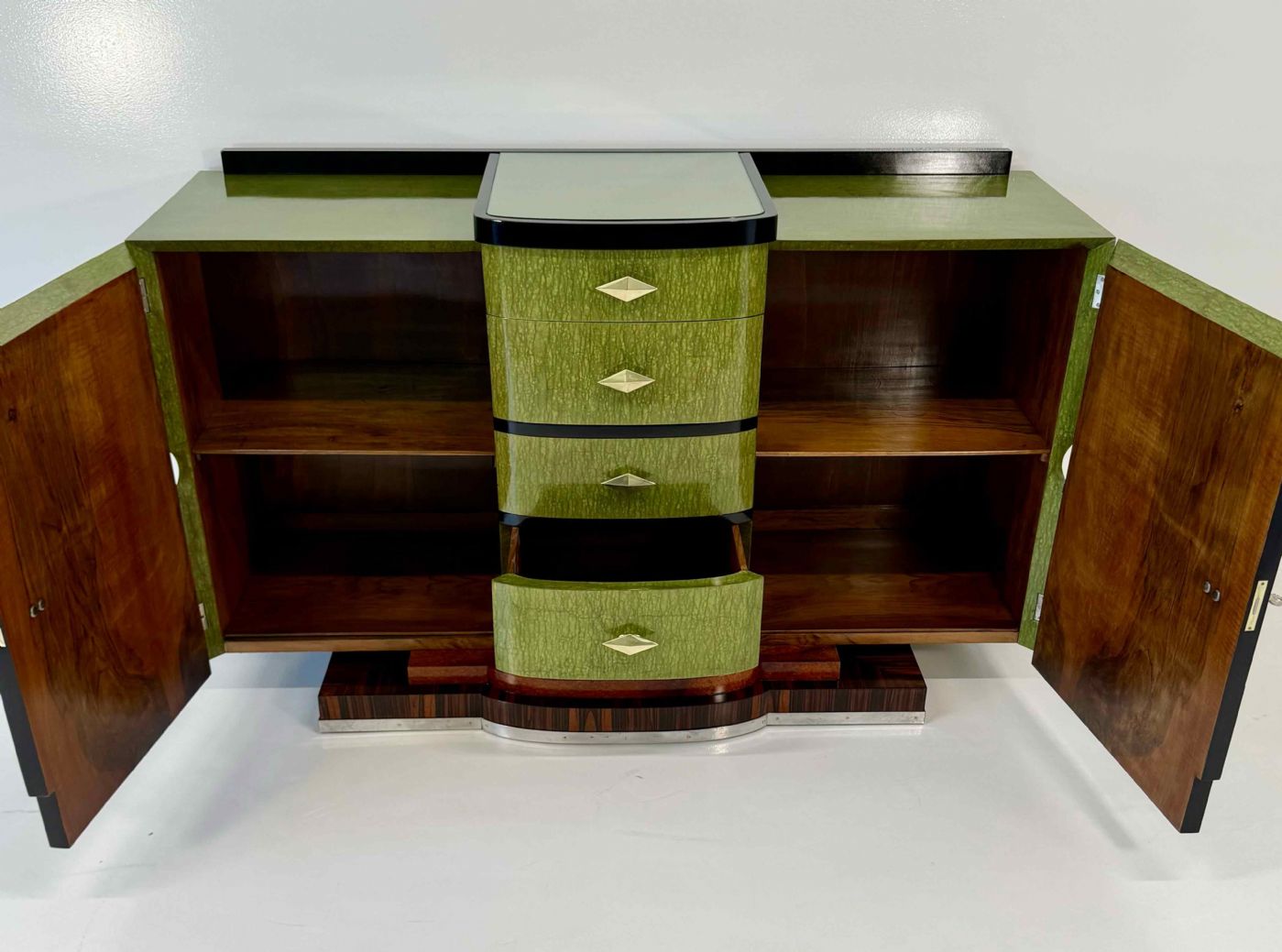
The cabinet's composition is built on a rigorous architectural balance typical of the best Italian rationalist design. At the center, a slightly curved column composed of four drawers develops, punctuated by black lacquer profiles that emphasize its vertical rhythm and volumetric depth. On the sides, two large doors conceal spacious interior compartments with shelves, entirely made of solid walnut.
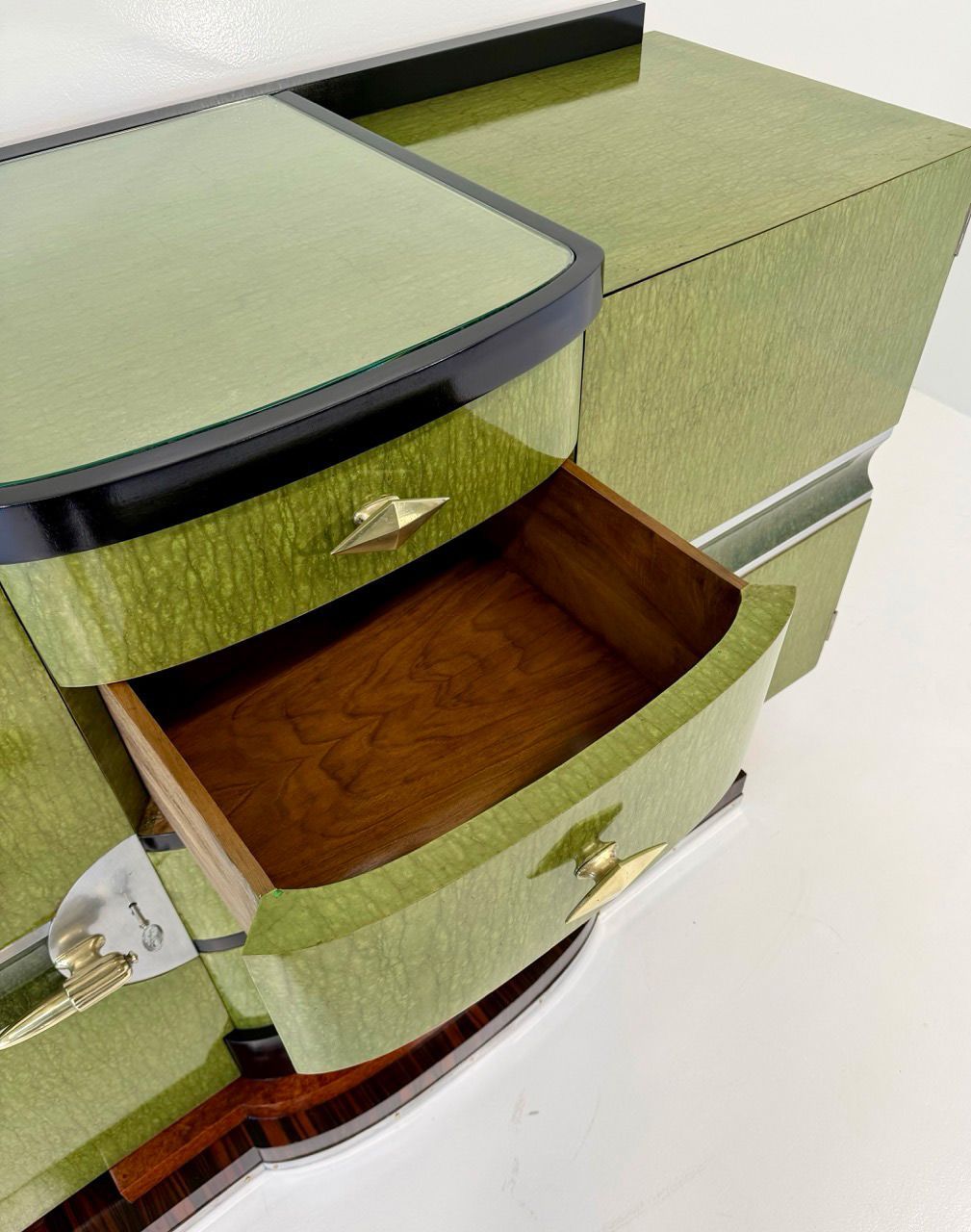
The front is crossed by elegant horizontal bands of satin metal that dialogue with the important side handles made of cast brass. These have a strongly sculptural and aerodynamic shape, with fluted terminals that recall the profile of a bullet or a stylized wing element, an emblematic expression of the Italian Art Deco aesthetic of the 1930s.
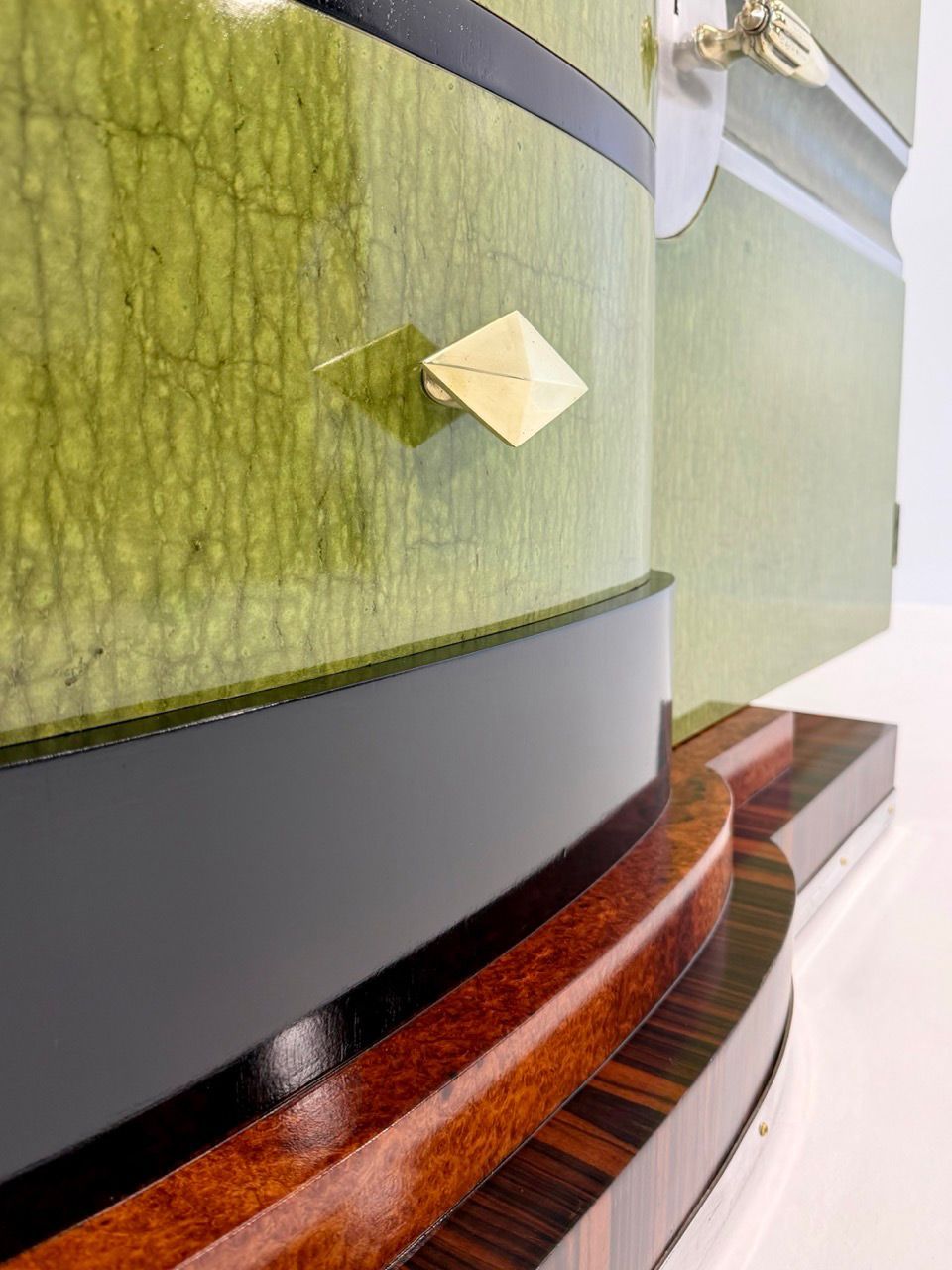
The central drawers are adorned with small, polished brass rhomboid handles, perfectly geometric and symmetrical.
The top section, only in the central part above the drawers, is completed by a transparent glass top that provides further depth and creates refined plays of reflection with the lacquer and metal surfaces.
The base, shaped and slightly recessed, combines thuya burl, Macassar ebony, and metal profiles, contributing to the cabinet's strong scenic presence and its sophisticated material contrast.
In terms of execution quality, formal language, and material refinement, this cabinet represents an important testimony to Italian rationalist design of the 1930s.
A rare and highly collectible piece, capable of uniting architectural monumentality, material research, and extraordinary decorative strength.
Measurements: 173 cm x 65 cm, H 103 cm
Art.1103