
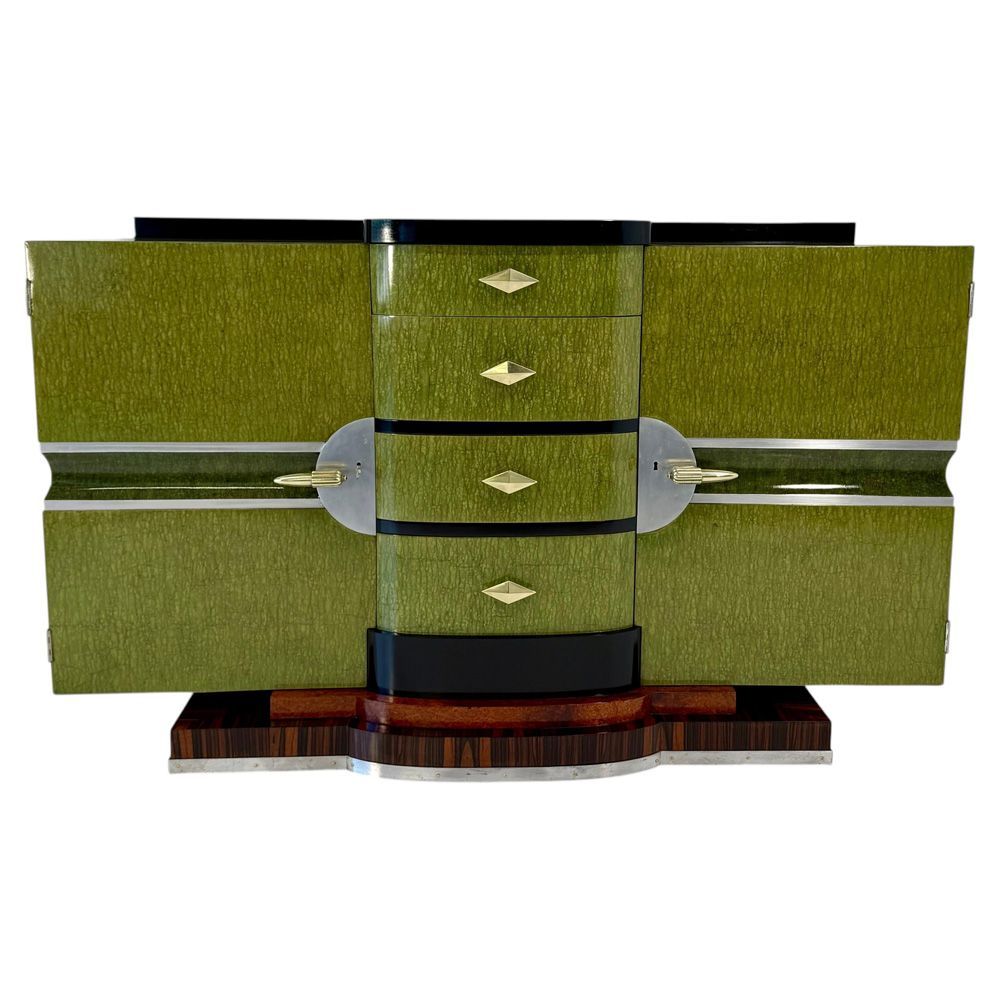
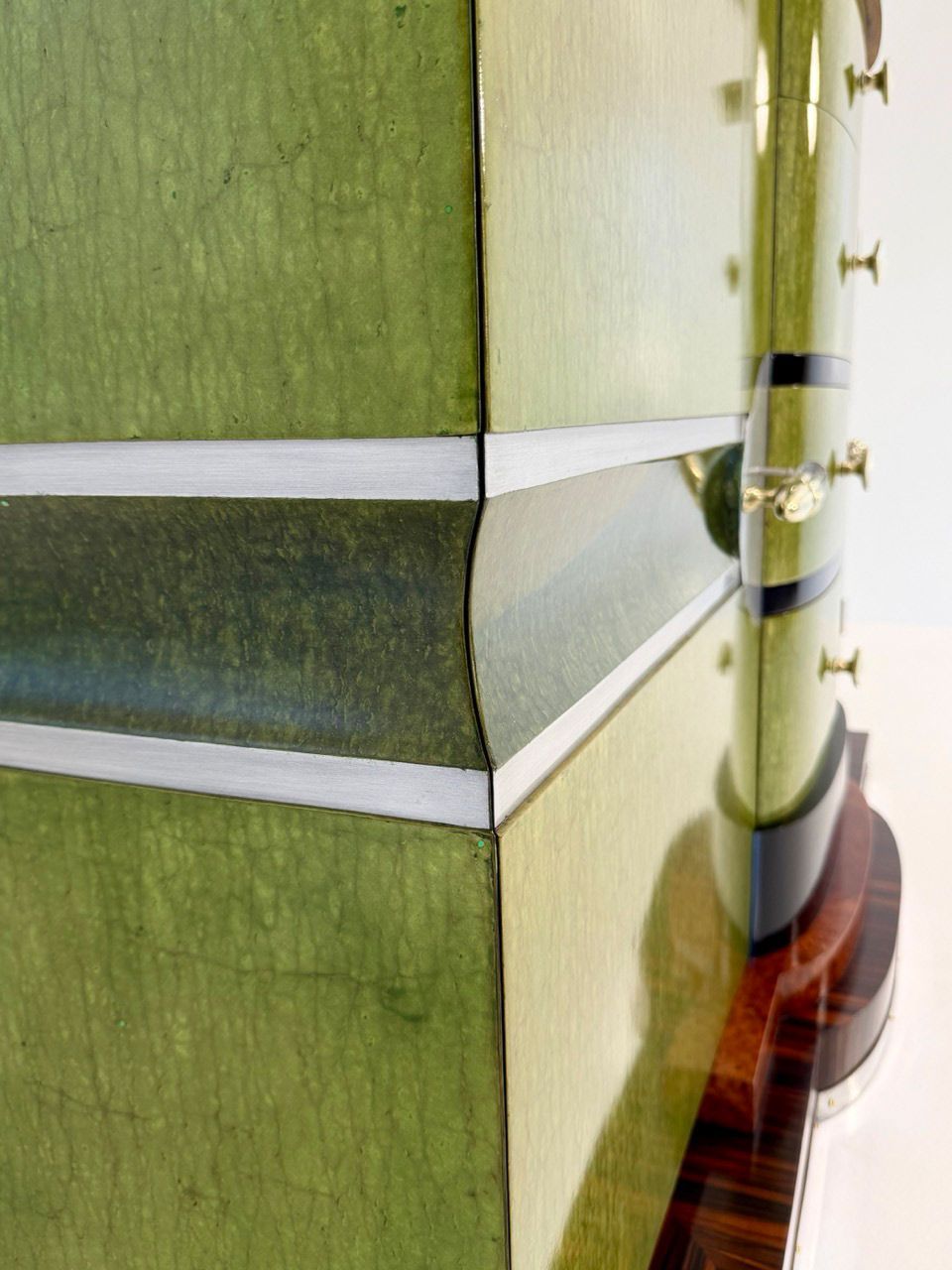
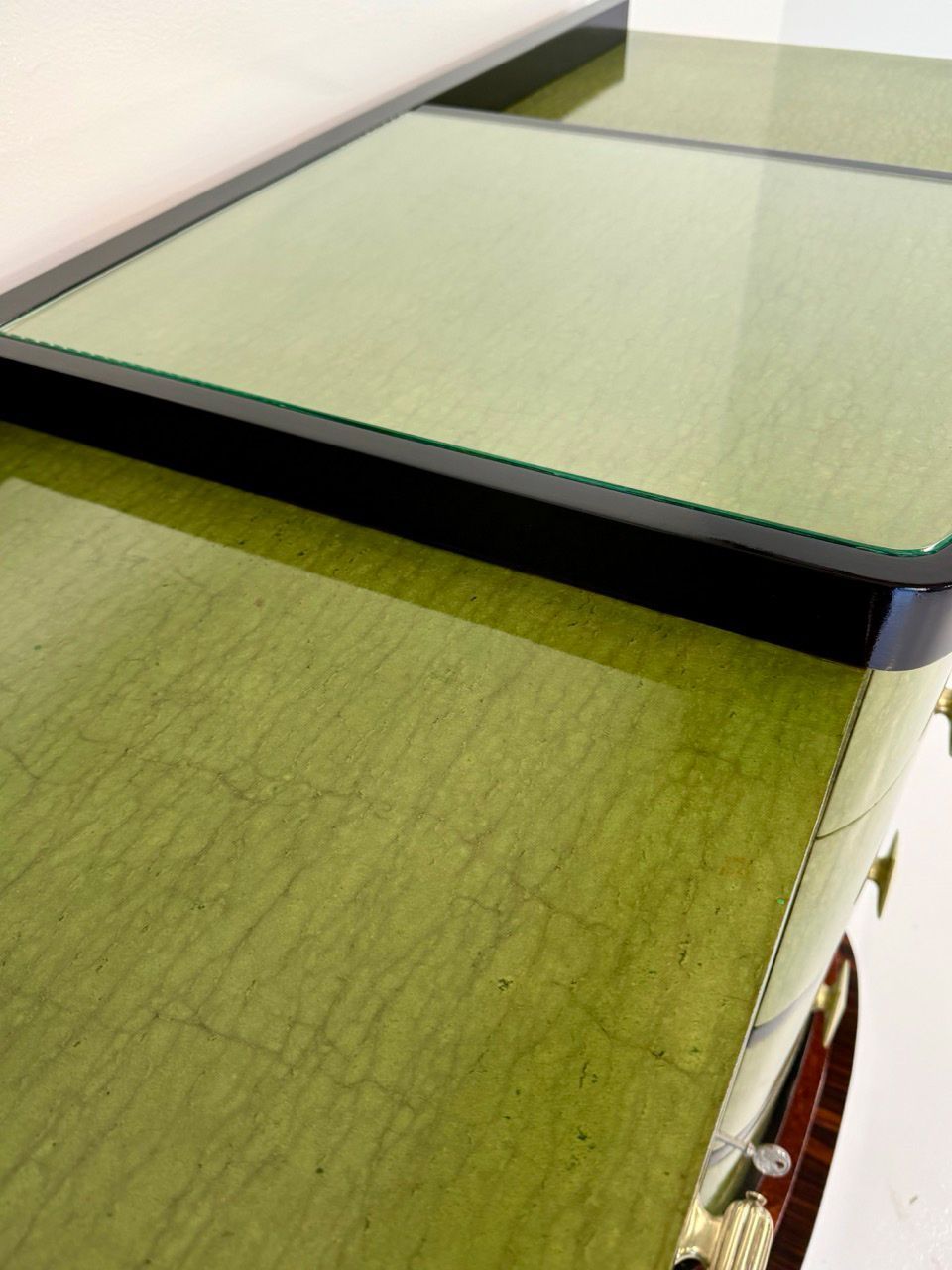
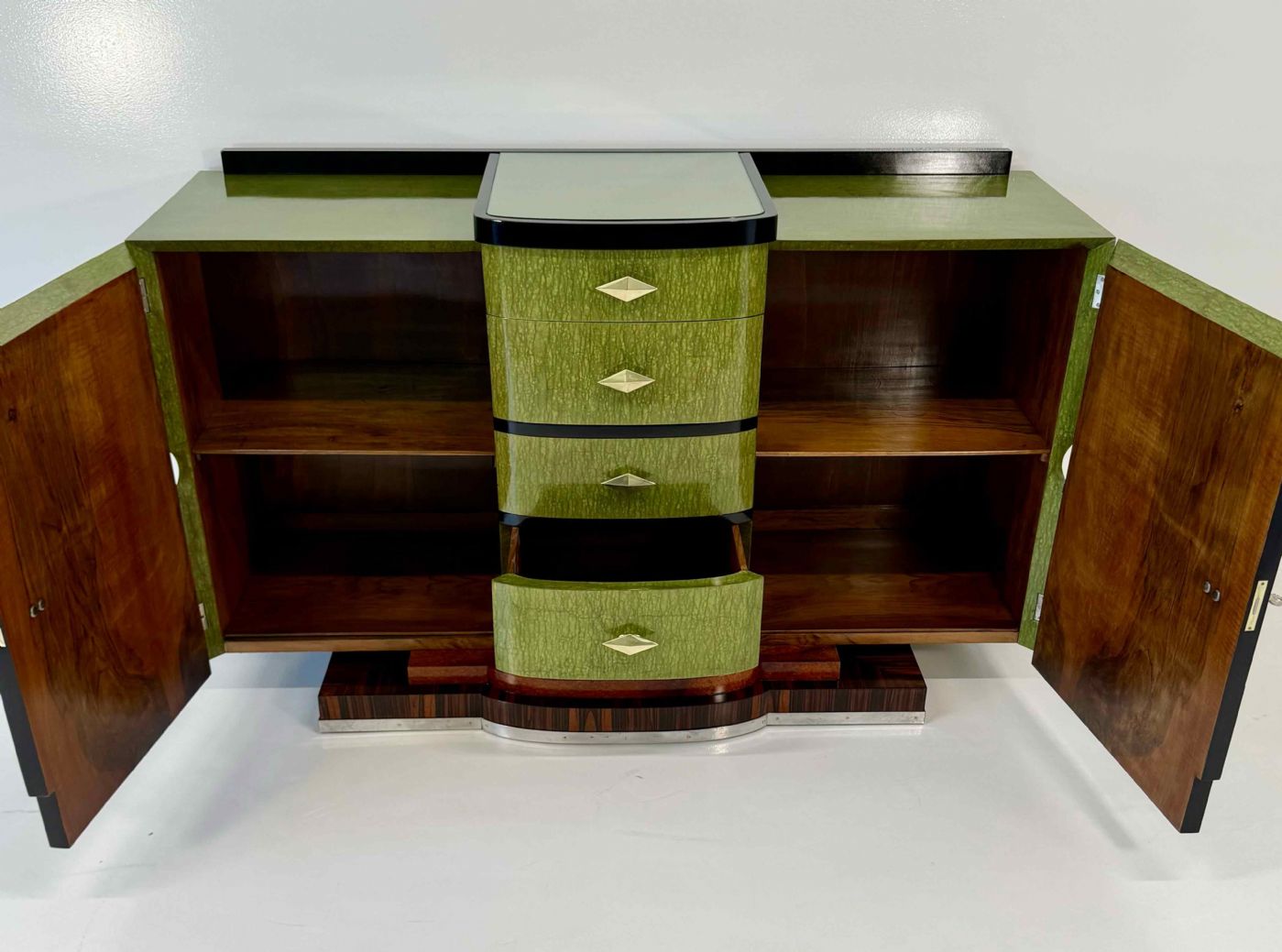
Important Italian cabinet from the 1930s, attributable to Gino Levi Montalcini and Giuseppe Pagano Pogatschnig, veneered in rare green Buxus, a material developed in Italy during the 1920s and 1930s by S.A. Cartiere Giacomo Bosso within the context of the country’s experimental decorative research during the autarkic period.
Produced through special paper-processing and resin techniques, Buxus was used as a finishing surface for fine furniture thanks to its remarkable ability to recreate the depth, veining and chromatic movement of rare natural burl woods. Today, it is considered an extremely rare and collectible material, representing an authentic testimony to the innovative material research of early twentieth-century Italian design.
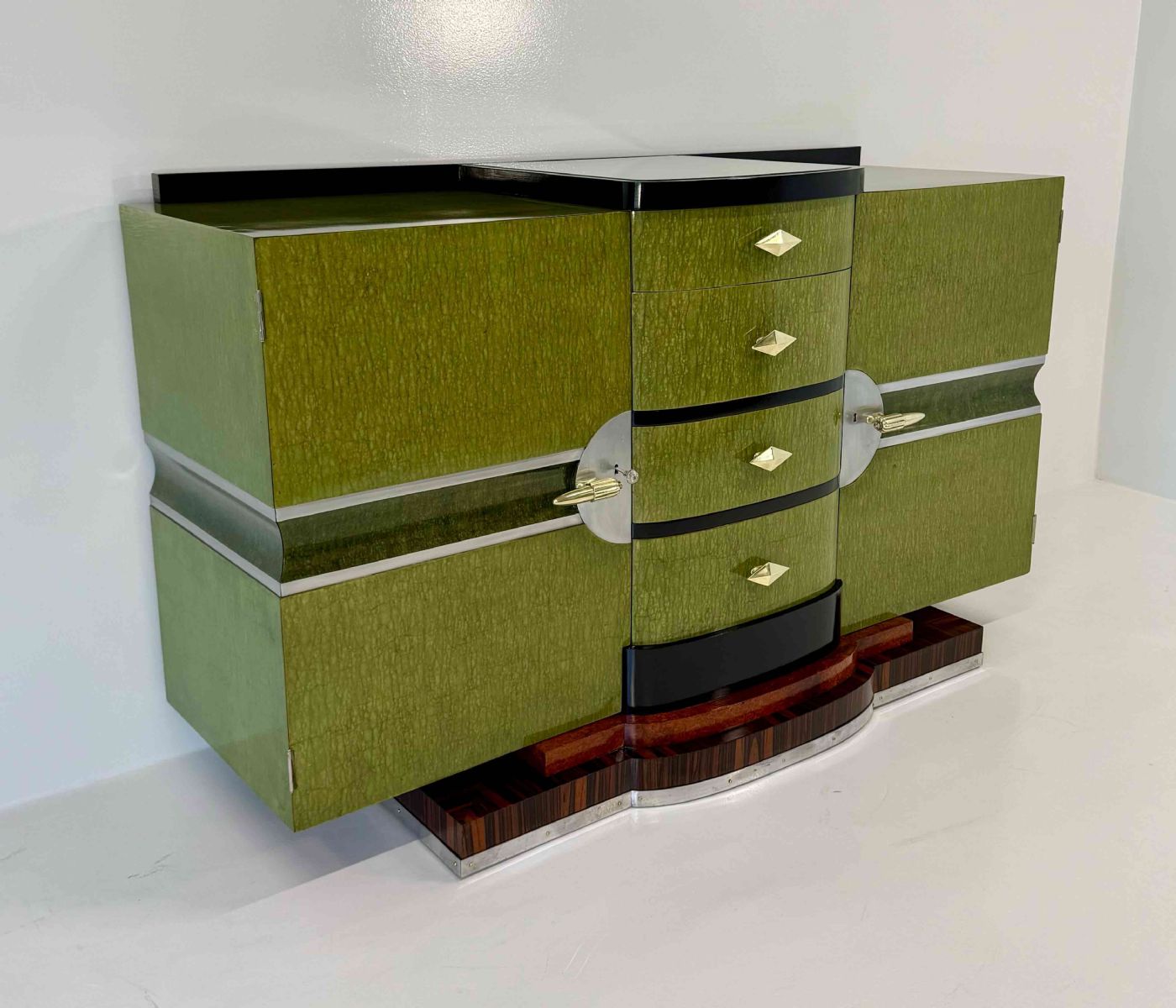
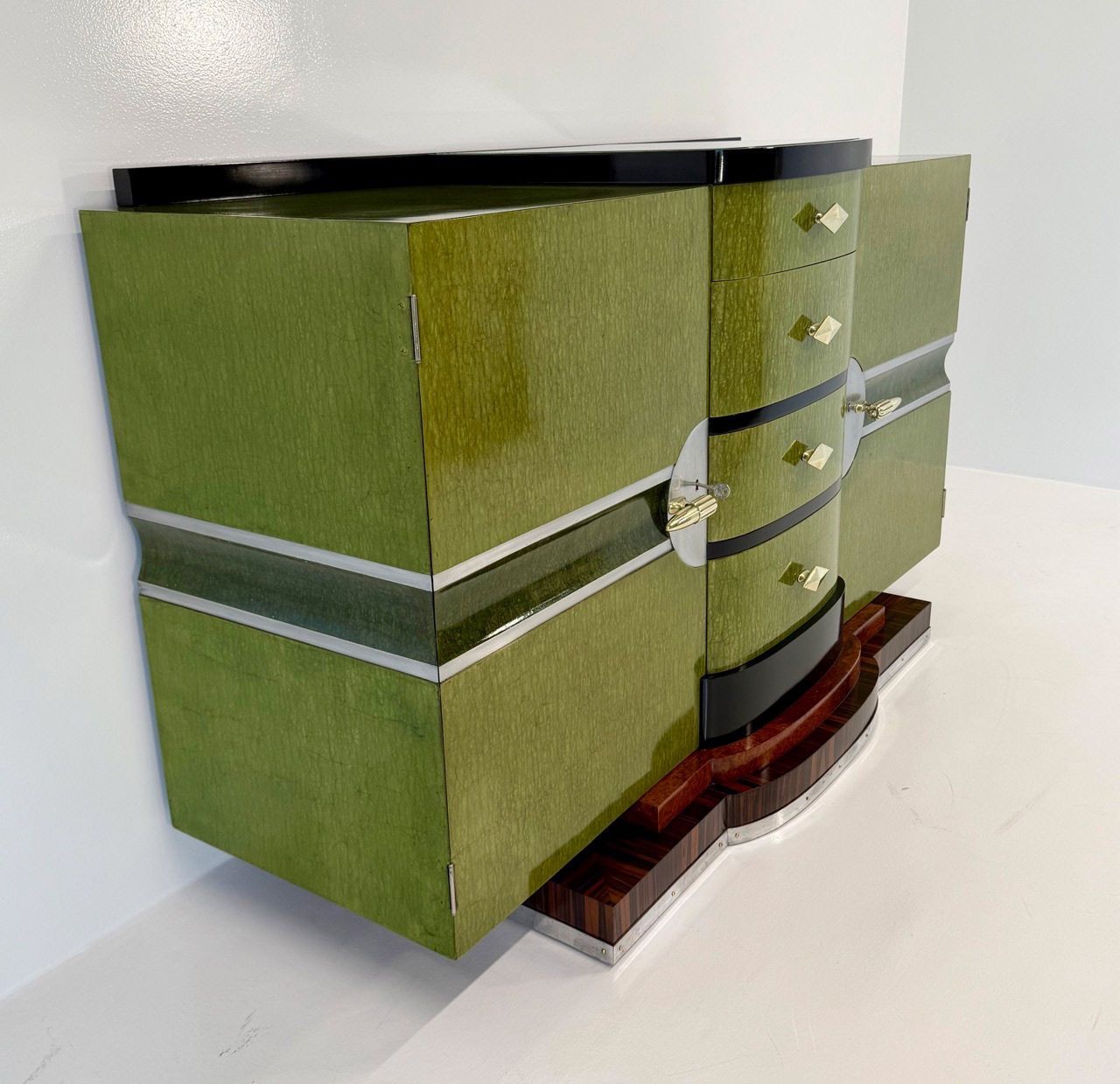
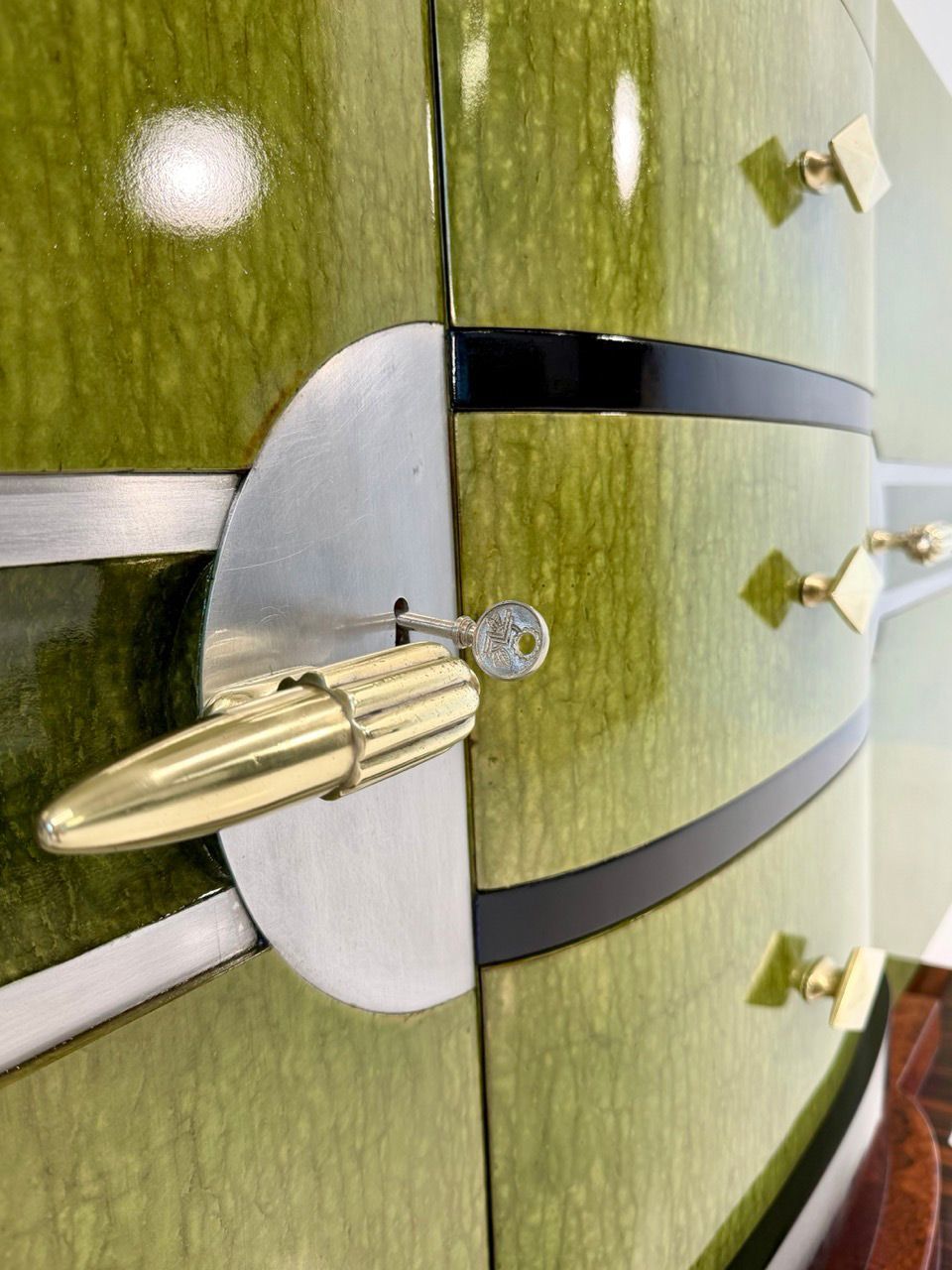
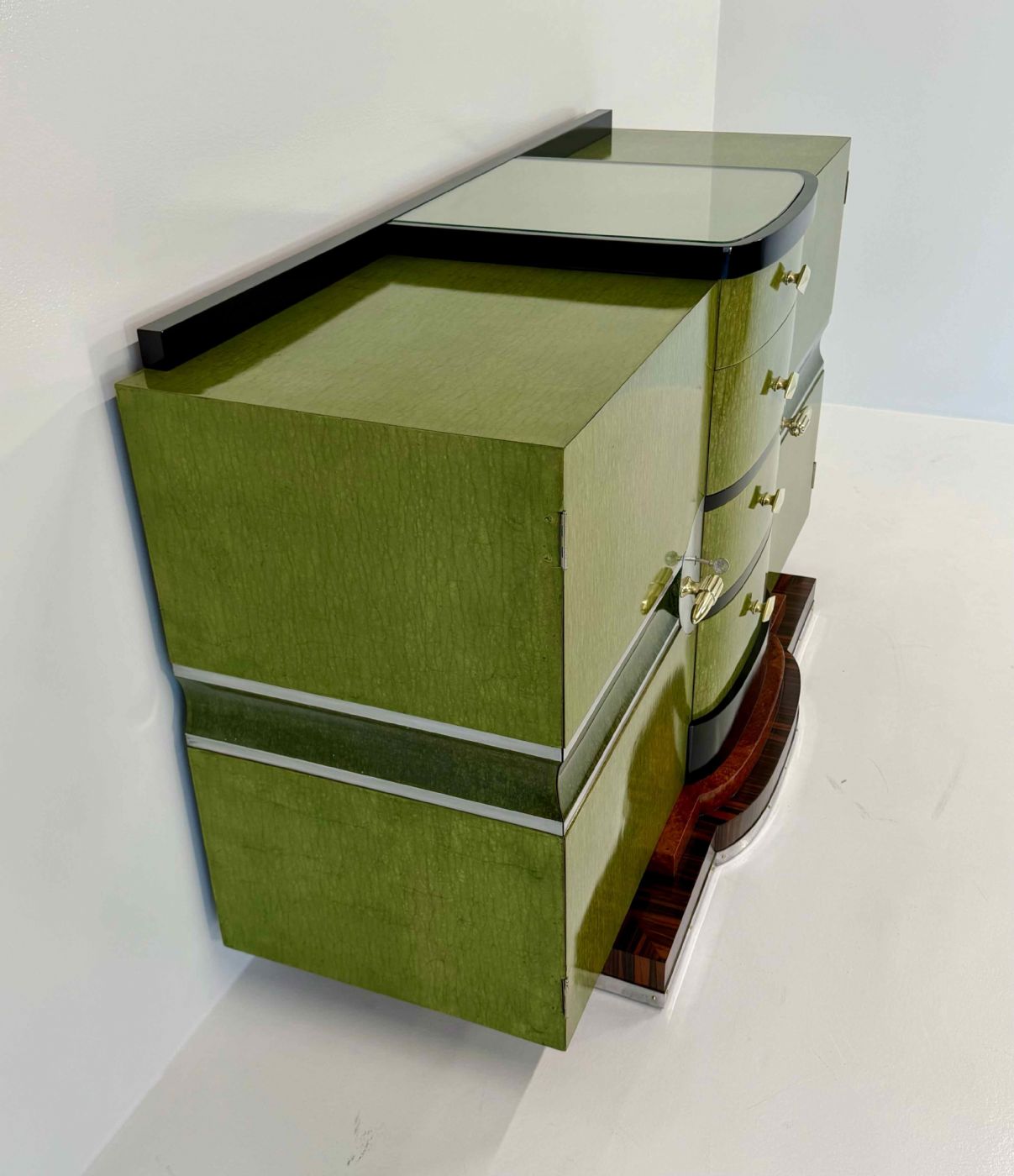
The cabinet is conceived around a rigorous architectural balance characteristic of the finest Italian Rationalist design. At the center, a slightly curved vertical section features four drawers framed by black lacquered bands that emphasize rhythm and sculptural depth. On each side, two large doors open to reveal spacious interior compartments with shelves entirely crafted in solid walnut.
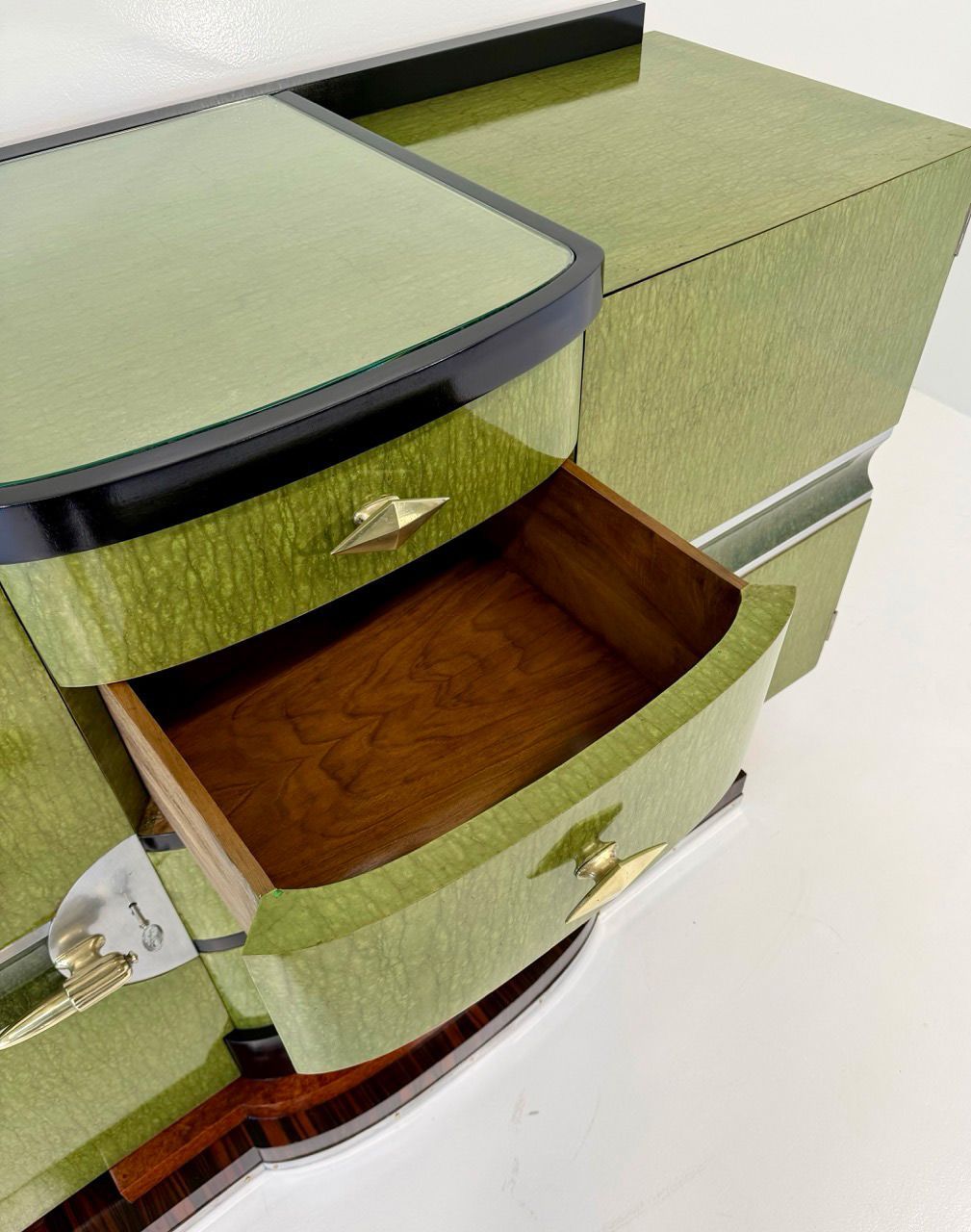
The front is articulated by elegant horizontal satin metal bands harmonizing with the remarkable cast brass side handles. These handles display a distinctly sculptural and aerodynamic form, with fluted terminals reminiscent of a stylized bullet or wing profile, perfectly embodying the refined Italian Art Deco aesthetic of the 1930s.
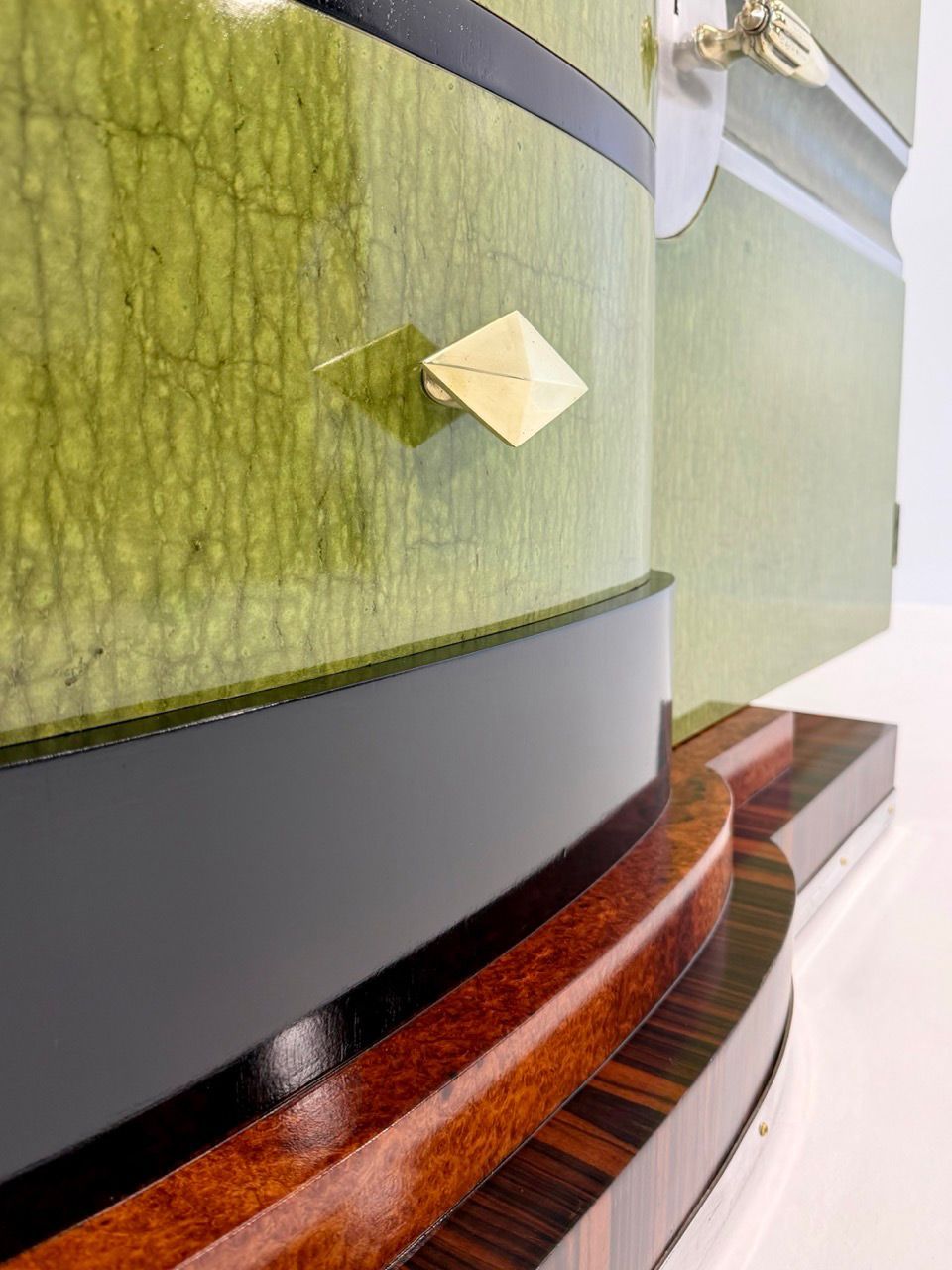
The central drawers are adorned with polished brass rhomboid pulls arranged with striking geometric symmetry.
Only the upper central section above the drawers is completed with a transparent glass top, adding depth and refined reflections that interact beautifully with the lacquered and metallic surfaces.
The shaped recessed base combines thuya burr veneer, exotic wood veneers and metal profiles, reinforcing the cabinet’s strong architectural presence and sophisticated material contrast.
For the quality of craftsmanship, formal language and refined material research, this piece represents an important example of Italian Rationalist design from the 1930s.
An exceptionally rare and highly collectible piece, combining architectural monumentality, material experimentation and remarkable decorative presence.
Measurements: 173 cm x 65 cm, H 103 cm
Art.1103