Francesco Capella
(Venice 1711 - Bergamo 1774)
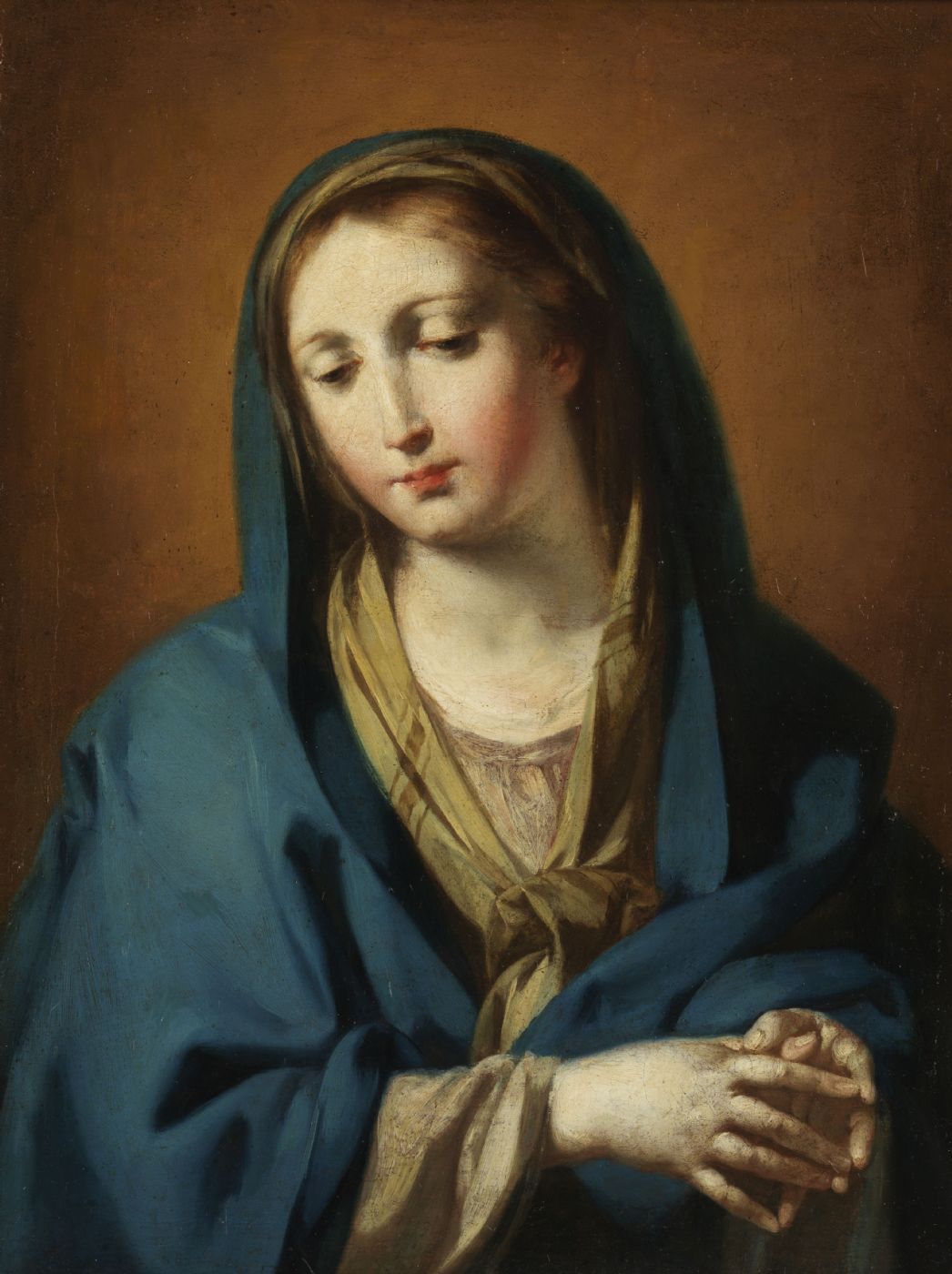
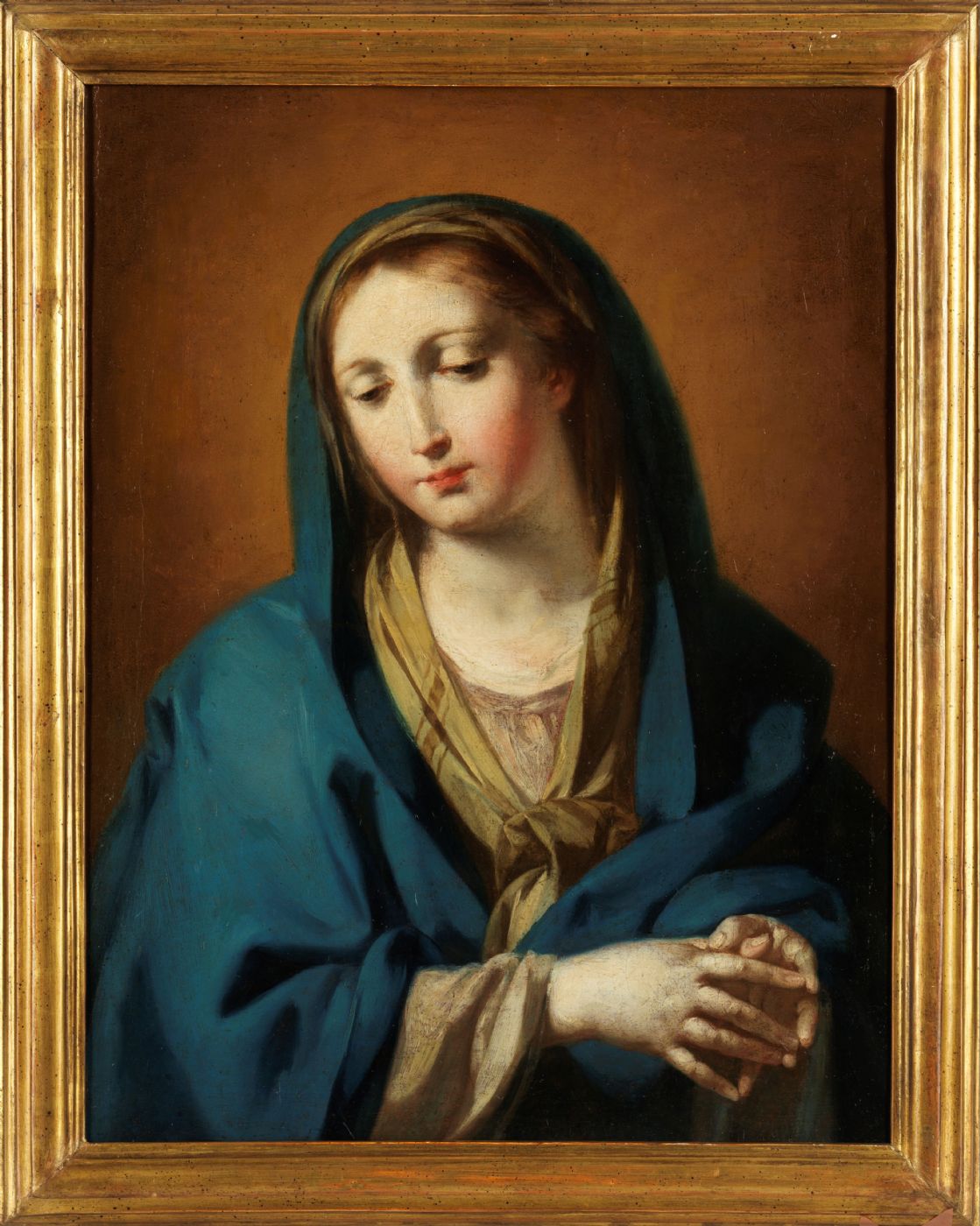
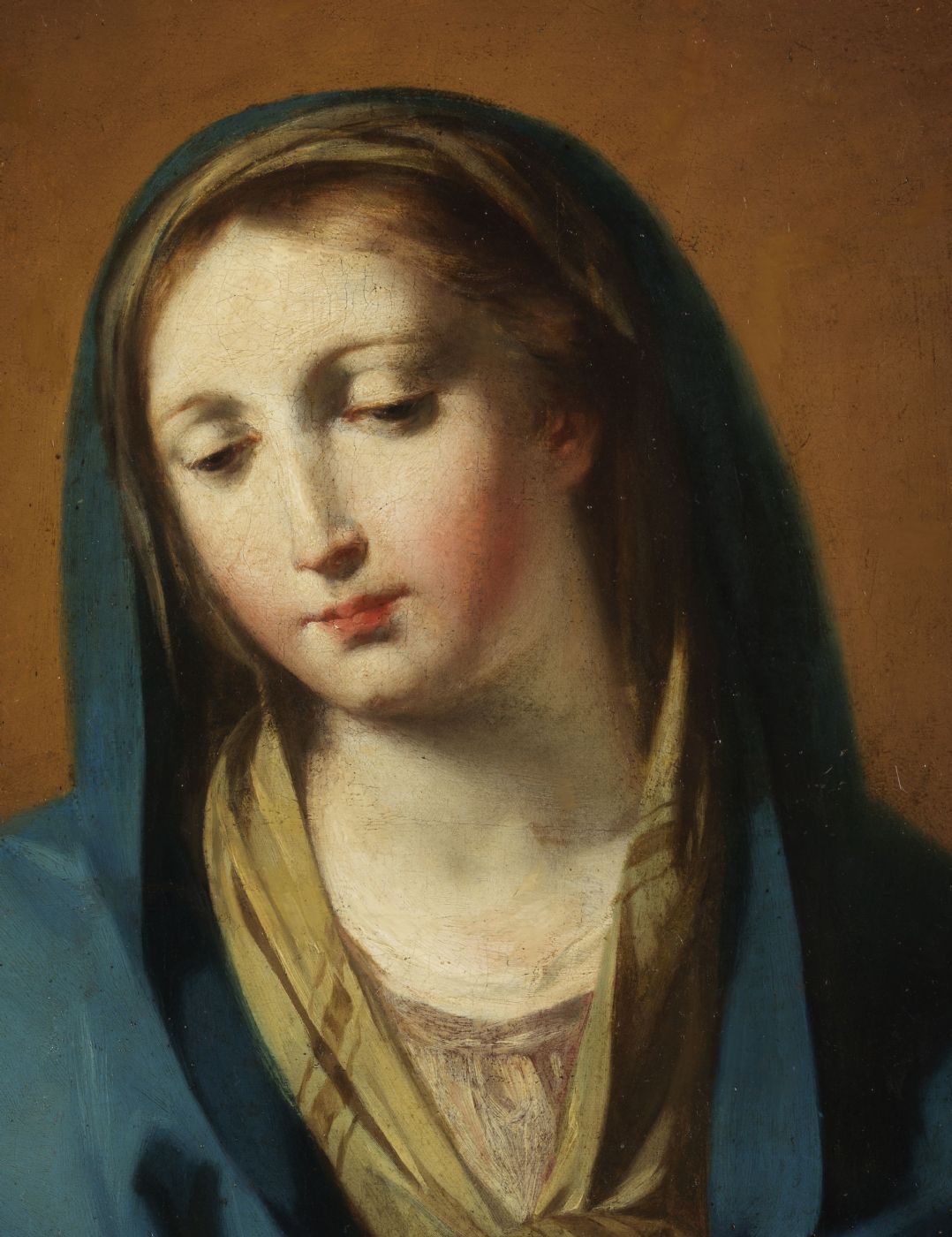
Madonna
1700
Oil on canvas, 58 x 44 cm
CAPELLA (Cappella), Francesco, known as il Daggiù or Dagiù. – He was born in Venice in 1711 (Vaccher). The surname, which appears in official documents, has often been confused with the nickname. According to Tassi, he entered Piazzetta's workshop at a very young age and remained there perhaps until the master's death in 1754, although he took on independent assignments (Pinetti). In 1744 and 1747 he is listed as a member of the Venetian painters' guild and in 1756 he was added to the Venetian Academy of Painting as a figure painter. He certainly began working with the master: there are works in fact that reveal at least in large part the hand of C., but also for the general idea go back to Piazzetta (for example, the Decollation of Saint Eurosia executed for the Friulian church of Polcenigo, now in the Museum of Udine: see Rizzi). His first documented work is The Immaculate Conception with saints and souls of purgatory, placed in the church of S. Andrea in Cortona on April 6, 1747, now in the oratory of the Villa Tommasi a Metelliano (L. Bellosi, in Arte in Valdichiana [catal.], Cortona 1970, pp. 72 s.). For Cortona three years later he painted a Miracle of St. Francis of Paola for the church of S. Filippo (now at the Diocesan Museum). In the year 1749, through Count Giacomo Carrara of Bergamo, he was commissioned the altarpiece depicting Four Saints Adoring the Cross, and the two lateral ones, St. Lucy and St. Apollonia, for the parish church of S. Martino in Alzano Lombardo. These paintings were very successful in Bergamo and earned C. the protection of both Carrara and the counts Albani, who commissioned him in 1757 a Magdalene (now in the Pipia collection in Bergamo). In the same year the same Albani commissioned him to decorate some ceilings of their palace (now Bonomi) in via Pignolo, and a year later they procured him the contract for the altarpiece with the Assumption in the parish church of Tagliuno. So many orders induced C. to leave Venice and settle permanently in Bergamo in 1757 where he opened a flourishing school and where he remained until his death in 1774. While in Venice there remains only one certain work of his (the Madonna and saints in the church of the Pietà, dated 1761), there are numerous frescoes and paintings in the churches and palaces of Bergamo and the surrounding area. Among other works worth mentioning are: the Self-Portrait of the Carrara Academy signed and dated 1756; the frescoes of the dome of the parish church of Urgnano, from 1758, and, in the same church, figures of Doctors of the Church and stations of the Via Crucis, later; the altarpiece depicting the Martyrdom of St. Stephen for the parish church of Carrobio degli Angeli of 1761; the Fall of Jesus on Calvary in the parish church of Chiuduno, of the same year; nine paintings, including a Last Supper signed and dated 1762, in the parish church of Bottanuco, the Disputation among the doctors in the parish church of Cologno al Serio and the B. Gregorio Barbarigo in the cathedral of Bergamo, of the same date; St. Stephen in prayer in S. Bernardino, of 1765; St. Monica appearing to St. Augustine in S. Spirito, of 1766, and the Ascent of Jesus to Calvary in S. Alessandro della Croce, of 1774, all in Bergamo. Not dated are, among other works, a Holy Family placed on the altar of the church of S. Giuseppe in Lugano on January 28, 1762 (Brentani), two altarpieces in the church of the Beata Vergine dello Spasimo in Bergamo, a Madonna and Child in the Gallerie dell'Accademia in Venice, the overdoors of the Mazzocchi house in Bergamo. Various of his drawings are found in the collections of the Carrara Academy and in the major collections. The canvases of Alzano have a character of languid abandonment and are distinguished especially by the refined chromatic intonation based on light brown, violet and blue tones; the frescoes of the Bonomi house are brilliant and very lively. Later, around 1760, C. seems to move away a little from the Piazzettesque models also due to the influence of the Lombard environment in which he finds himself acting; but this does not always turn to his advantage because in general he inevitably assumes a more provincial character. The contrasts of light and shadow are attenuated, the backgrounds are widened where the architectures are introduced. In the last period he returns to use lighting effects, but the drawing has lost vigor and energy. Among his pupils are mentioned Francesco Cucchi, Giovanni Belloli, Gioacchino Manzone and Tommaso Frisone (Tassi).