Angelo Maria Rossi, known as The Painter of Carlo Torre or Pseudo-Fardella (documented between 1665 and 1701), attr.
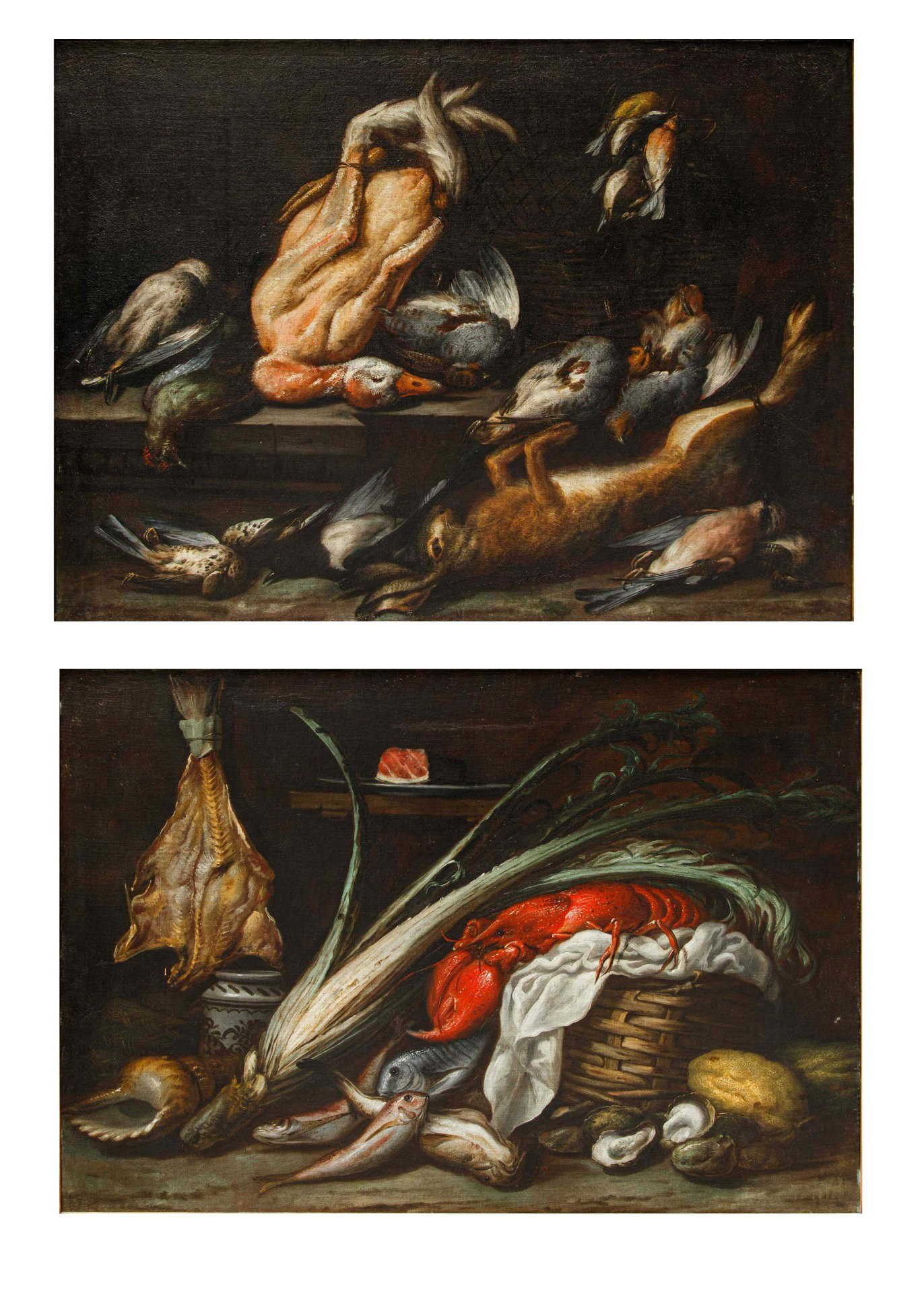
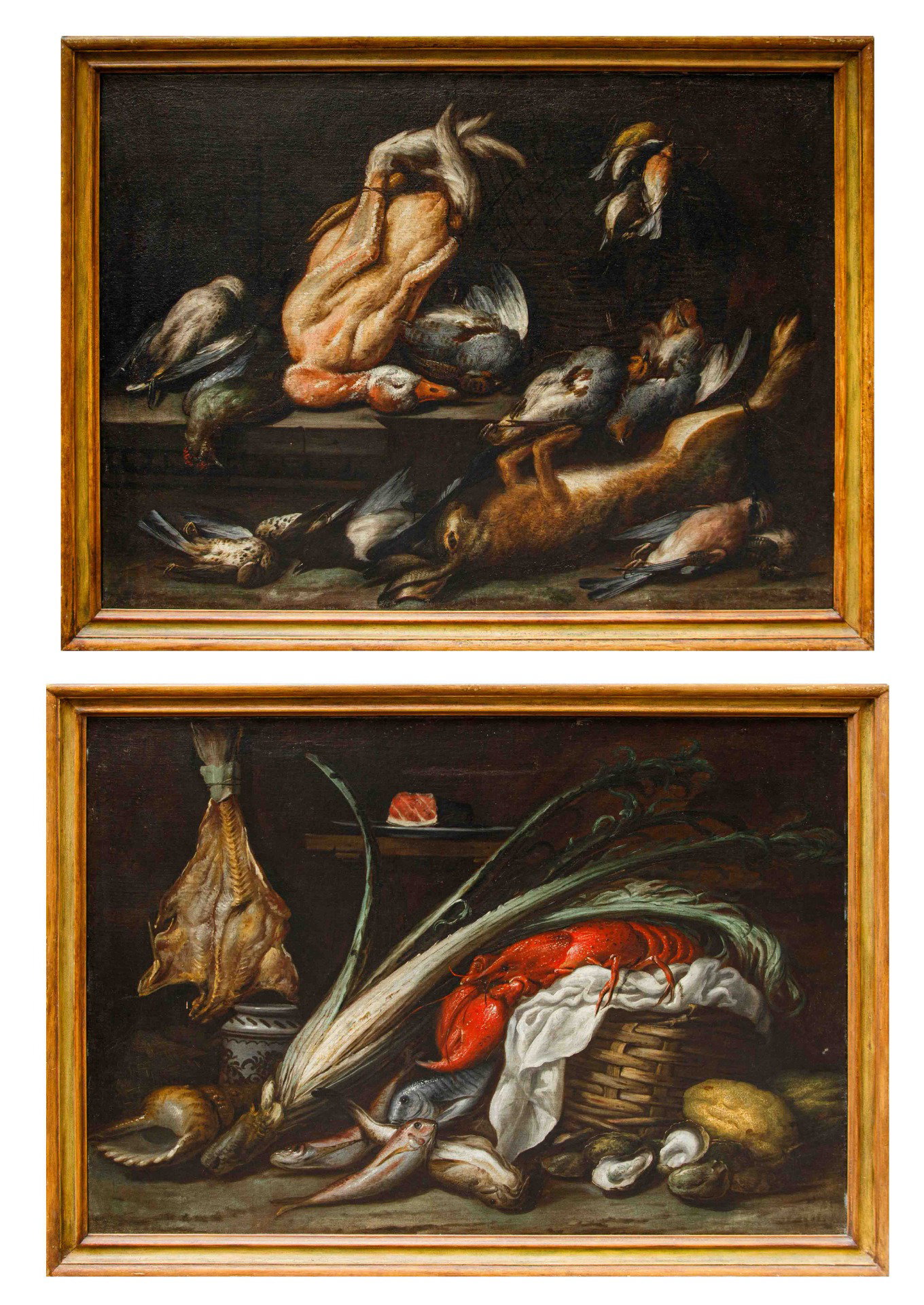
Still Life with Game - Still Life with Fish, Thistle and Lobster
Oil on canvas, 91 x 121 cm – with frame, 104 x 133 cm
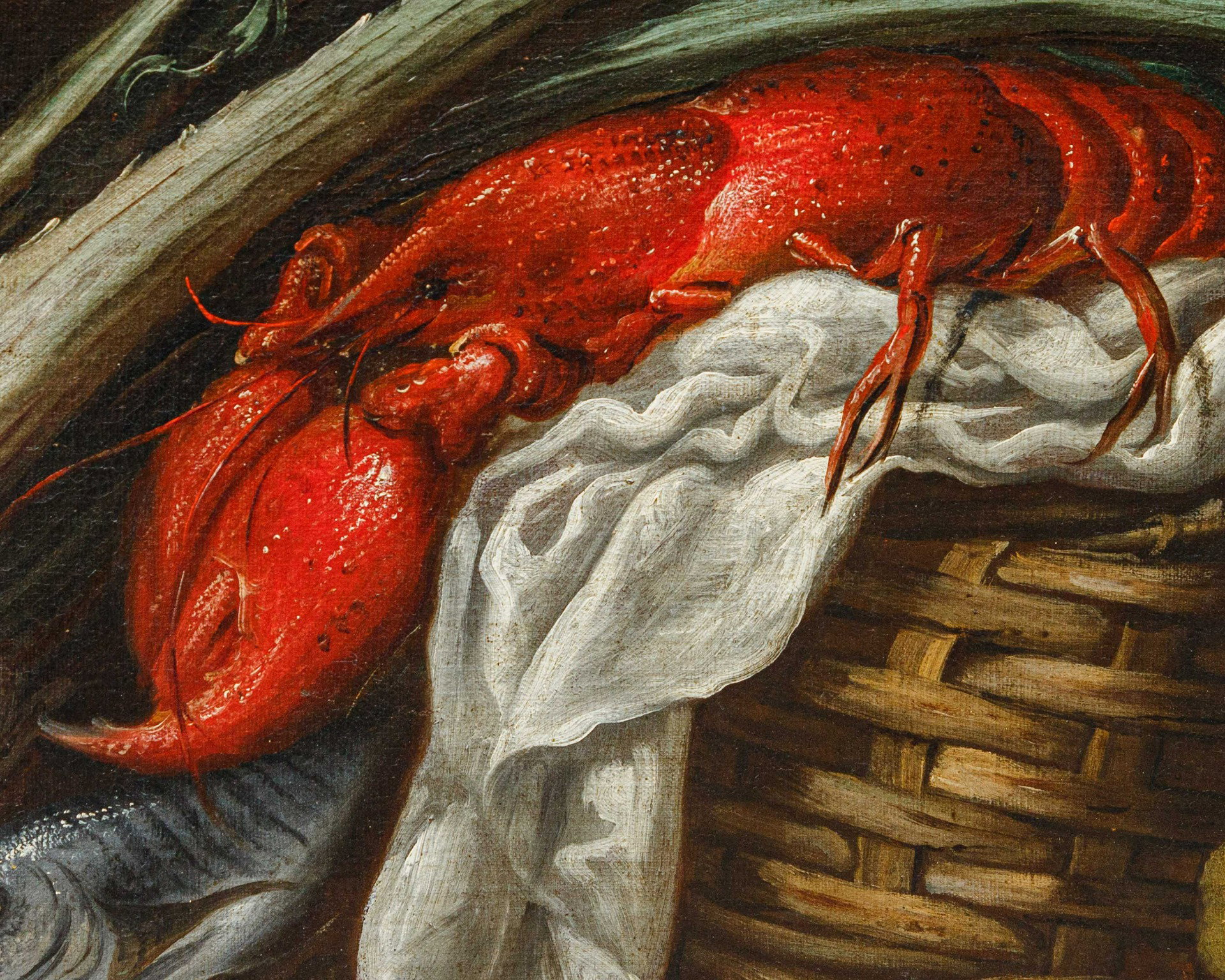
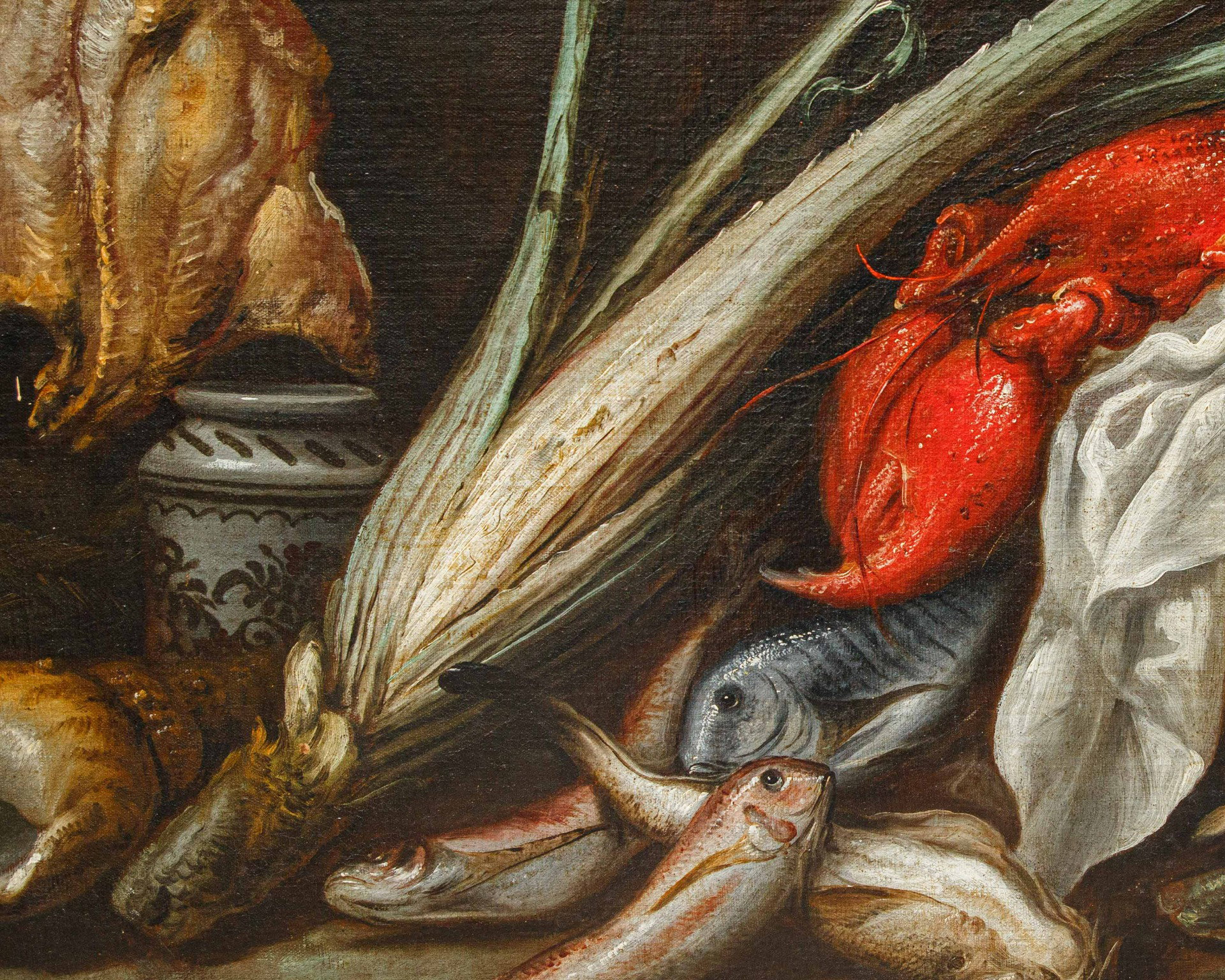
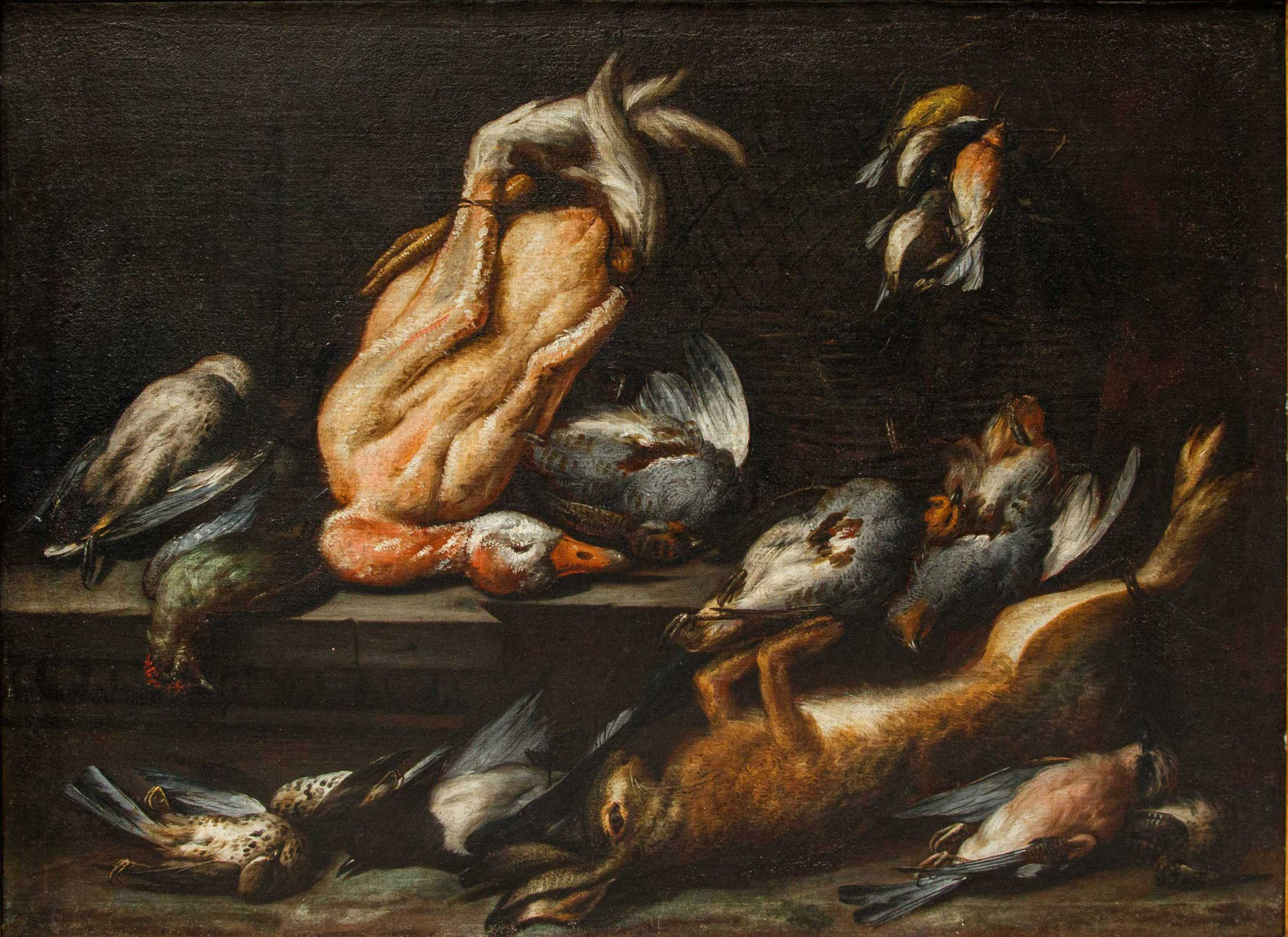
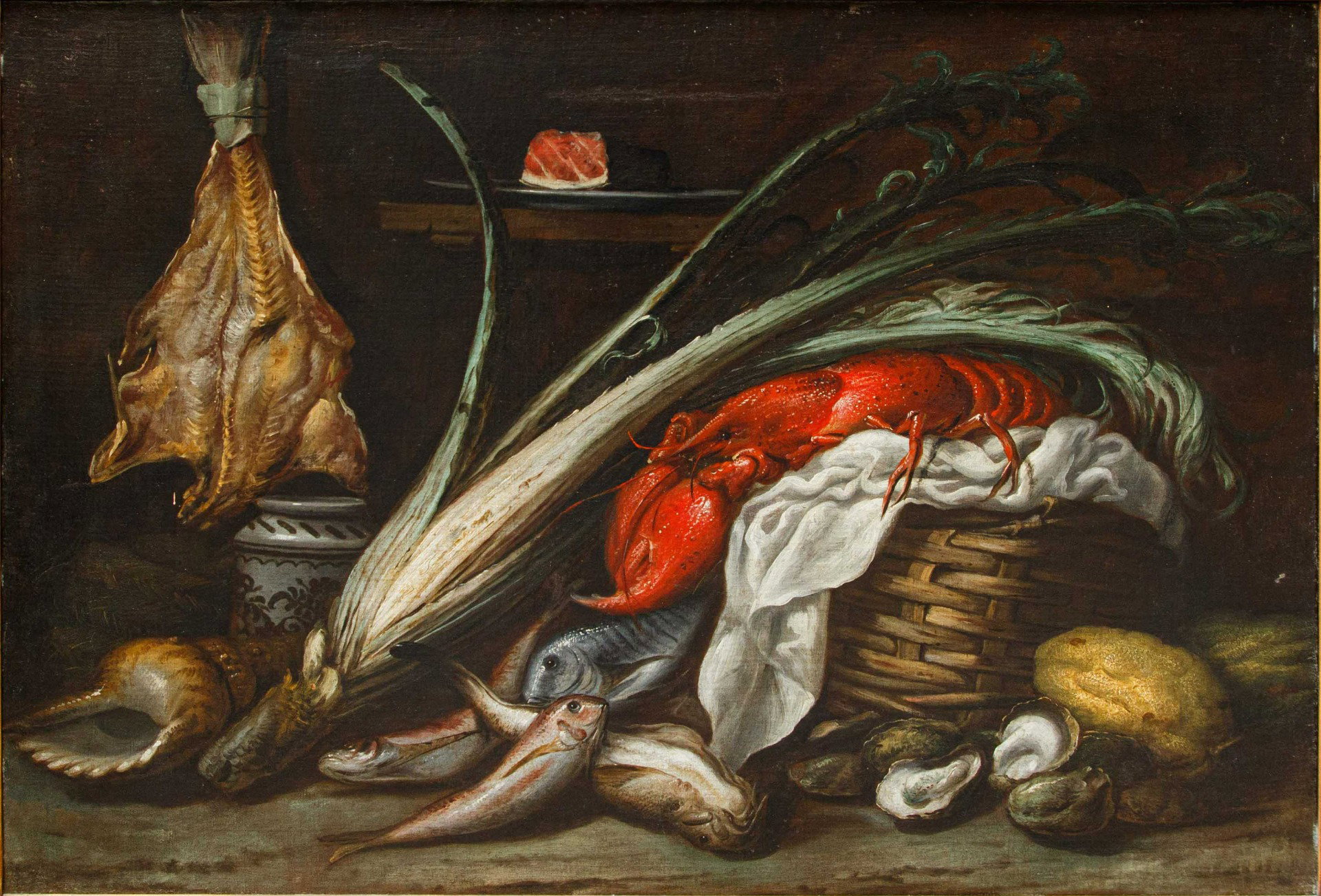
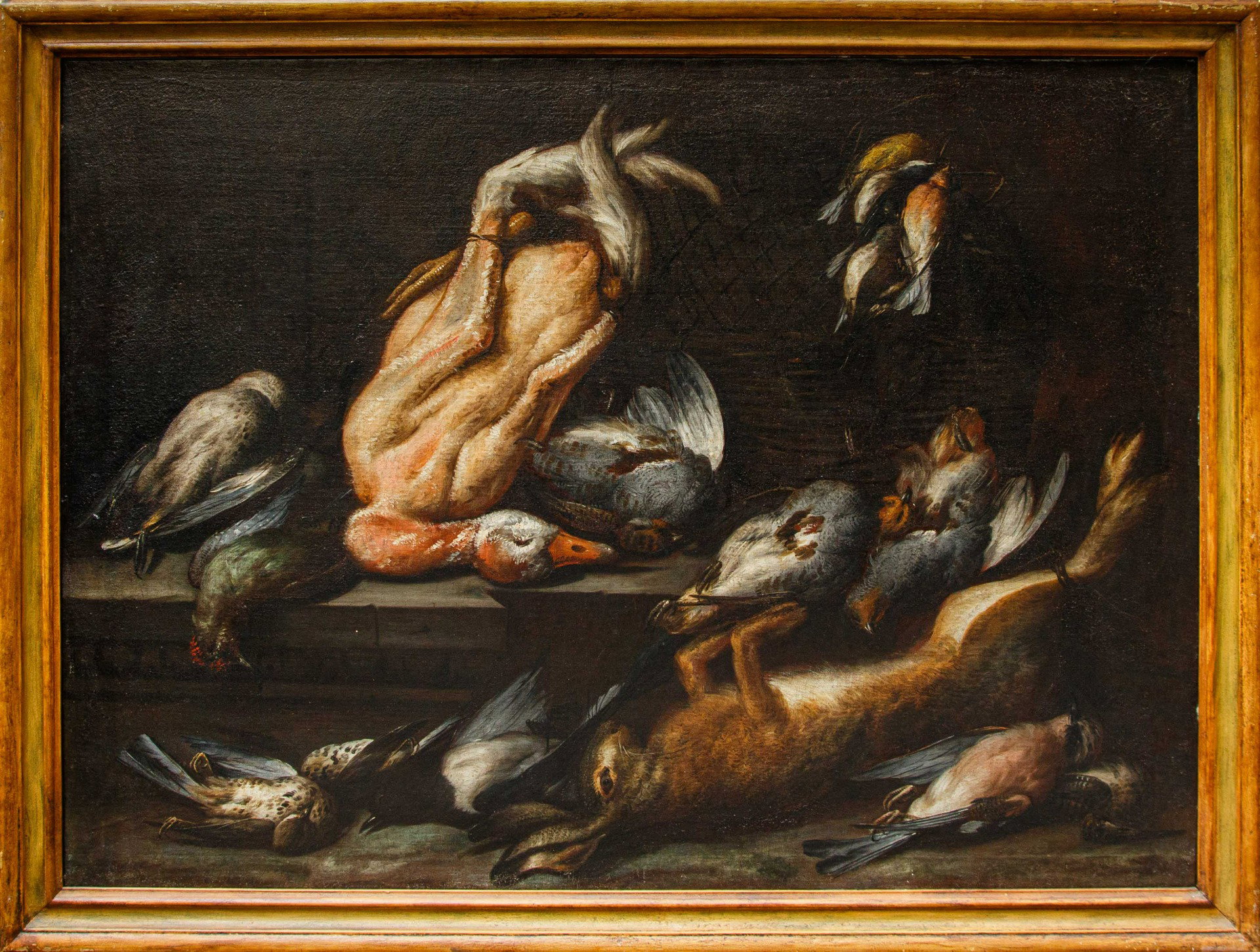
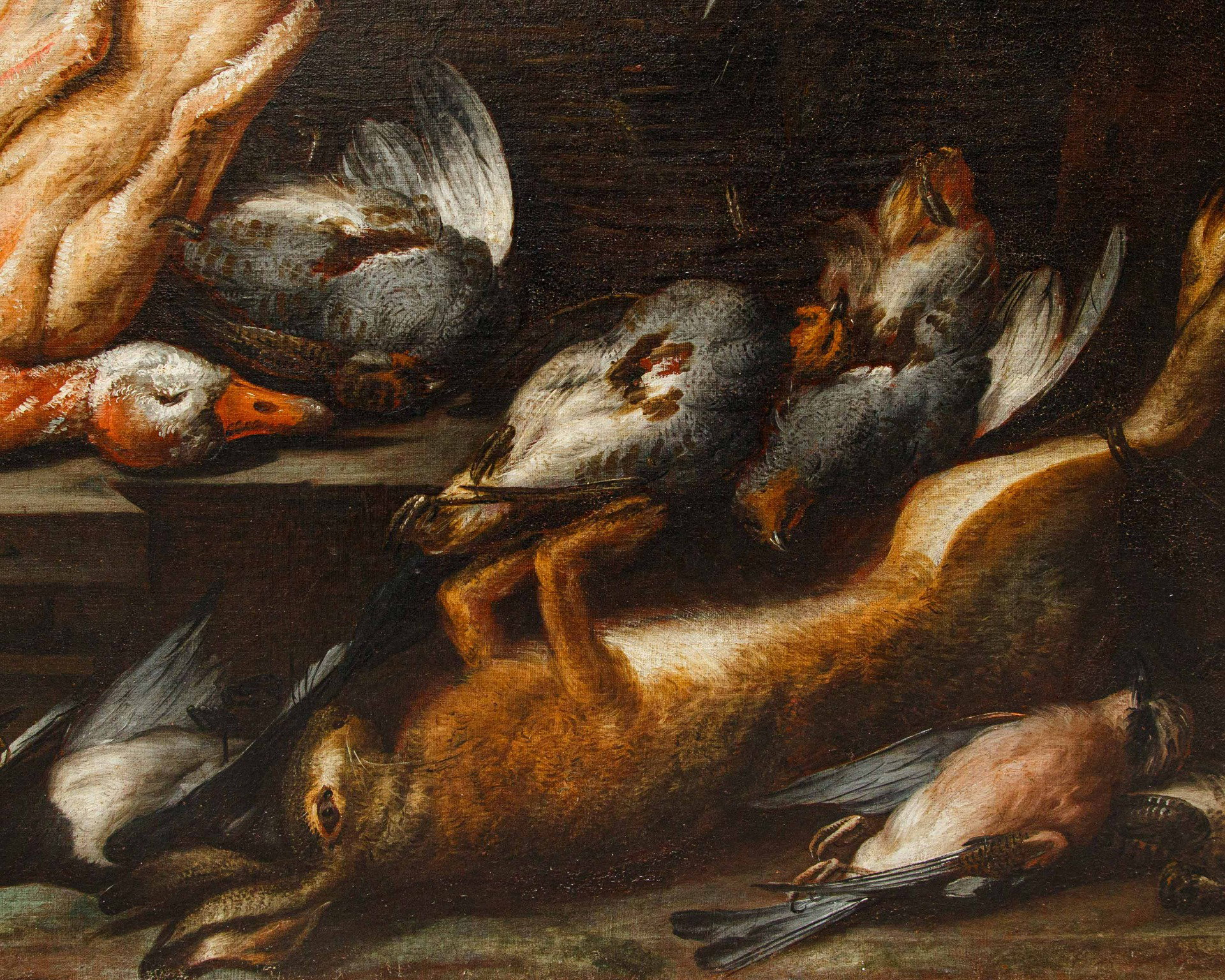
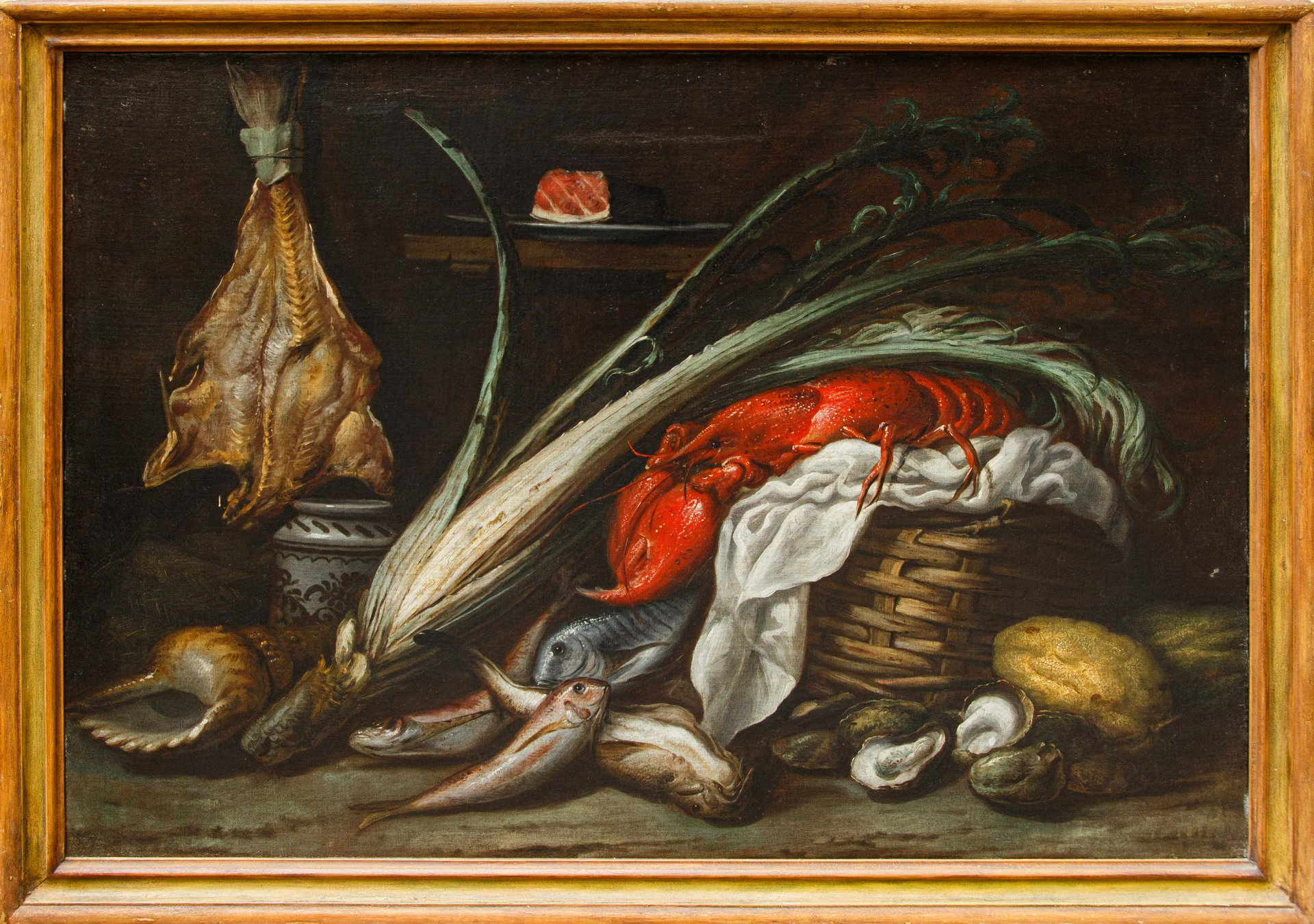
This pair of still lifes are two works by the recently rediscovered painter, Angelo Maria Rossi, a prominent artistic personality in the Padan Baroque landscape. The canvases, depicting a Still Life with Game and a Still Life with Fish, Thistle and Lobster respectively, exhibit a sensitivity to light and materiality that elevates everyday objects to the protagonists of a silent and solemn narrative. In the first work, the painter skilfully arranges the spoils of the hunt: a hare in the foreground, with its legs bound, dialogues with a plucked bird and a wide variety of fowl, all set against a dark background that enhances the tactility of the feathers and the softness of the fur. In the second composition, attention shifts to the products of the sea and land, where the bright red of a lobster placed on a basket and the sculptural verticality of a large thistle create a dynamic counterpoint to the stillness of the fish and oysters arranged on the plane.
The author of these works, Angelo Maria Rossi, was for a long time an enigma to art historical scholarship. Active in Lombardy in the second half of the 17th century, he was initially known by the pseudonym Pseudo-Fardella due to stylistic affinities with the Sicilian master. Later, in 1996, critics identified him as the Painter of Carlo Torre, an appellation derived from the discovery of a dedication addressed to the erudite author of the "Ritratto di Milano" on one of his canvases. Only more recently, thanks to the studies of Giuseppe Cirillo and the discovery of the monogram A.M.R., has it been possible to restore a certain biographical identity to the artist. Rossi now emerges as a central figure, documented between 1665 and 1701 through numerous inventories of prestigious Milanese and Turin collections, attesting to considerable collecting success even in the Baroque era.
Rossi's poetics are distinguished by a calm composition and delicate elegance that seem to distill the Caravaggesque lesson into a more intimate and twilight atmosphere. The light, which strikes the objects diagonally, not only has a descriptive function but defines the space, igniting deep and vibrant colours. In the two canvases under examination, it is clearly perceived how his art influenced contemporary still life: the ability to render the sheen of scales or the whiteness of surfaces is the result of rigorous technique that does not forgo the pursuit of beauty. These paintings fit perfectly into the master's oeuvre, where the truth of natural details merges with a theatrical luminous direction, typical of the 17th-century Lombard taste, capable of transforming a pantry into a stage of reflections and shadows full of charm.