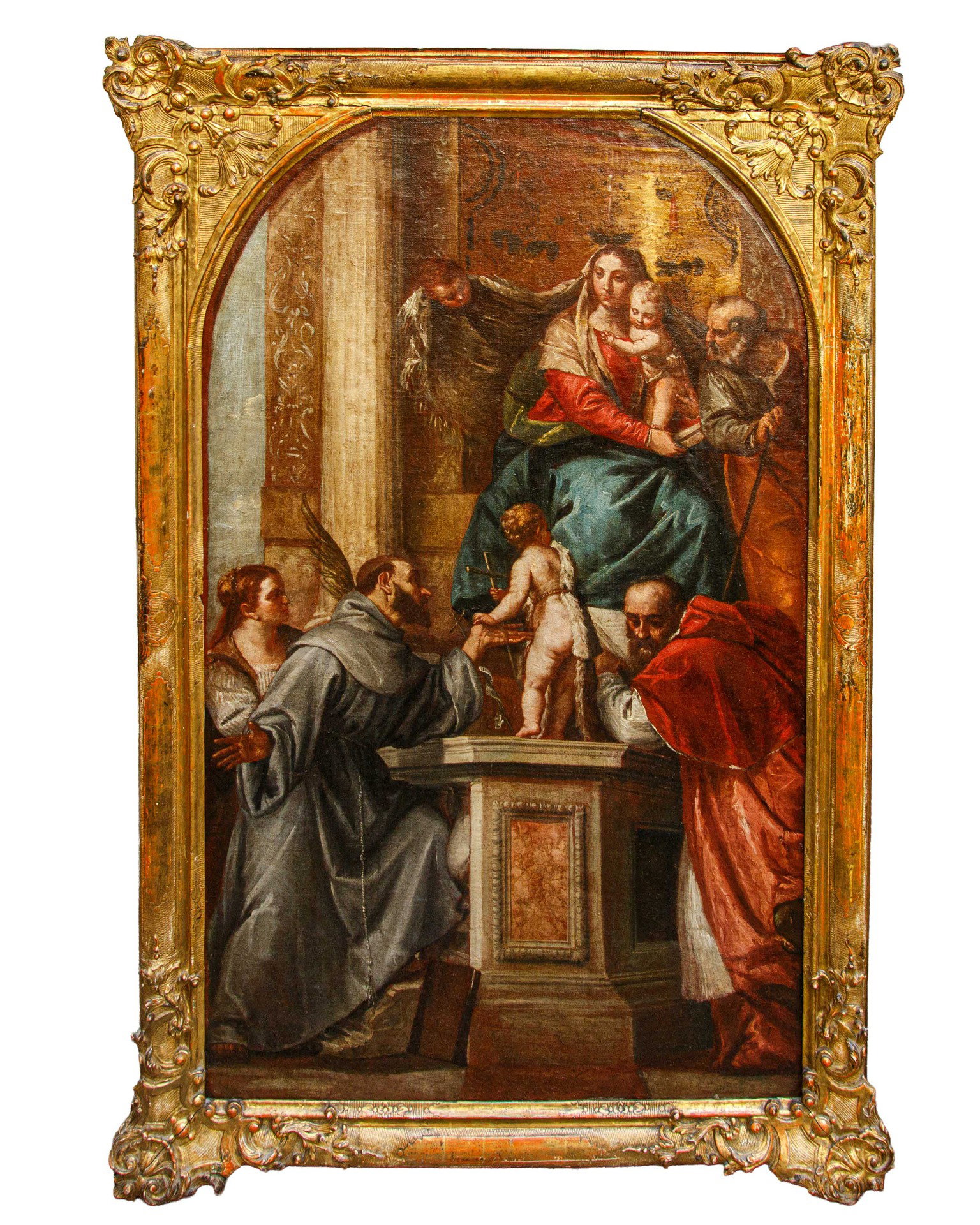
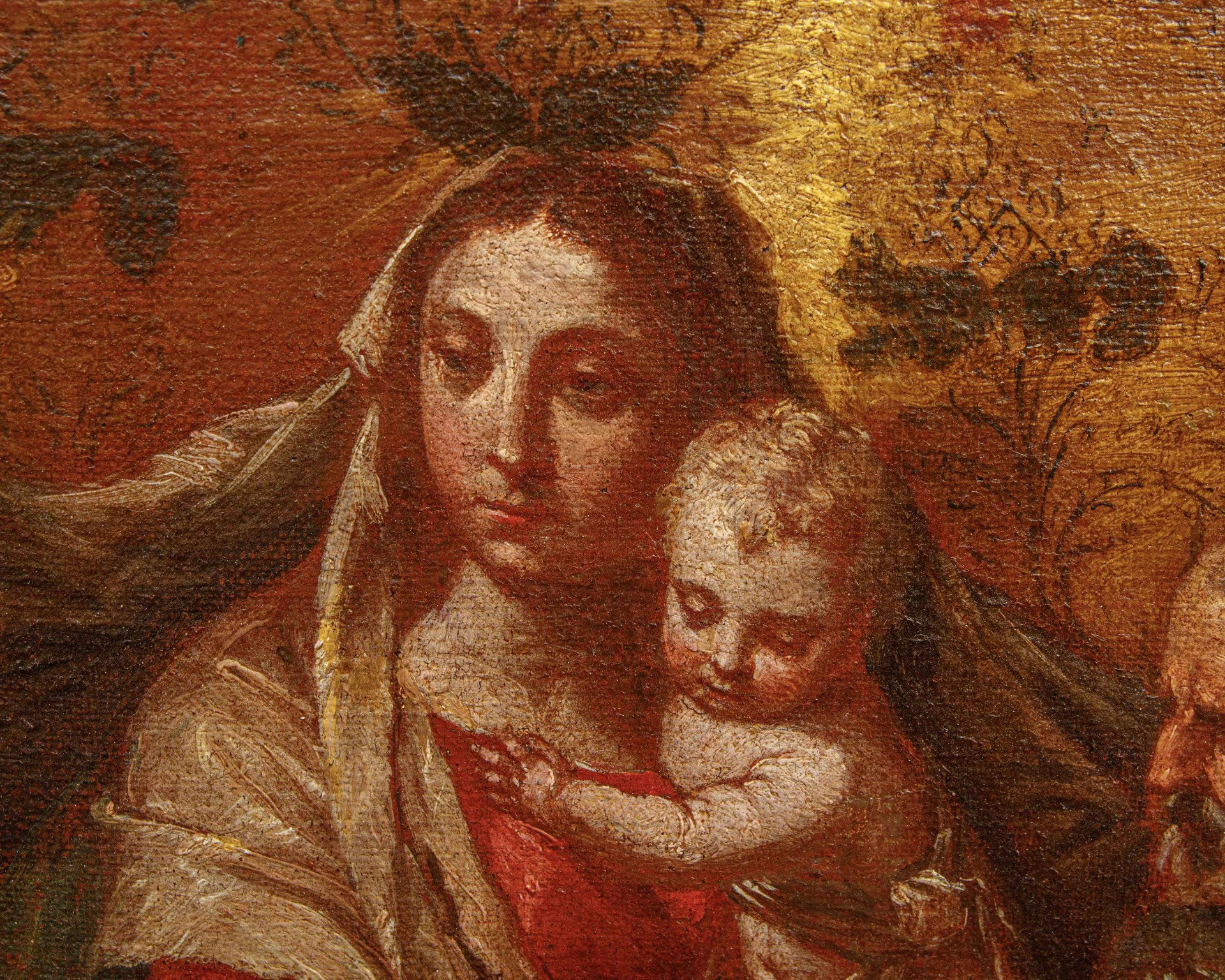
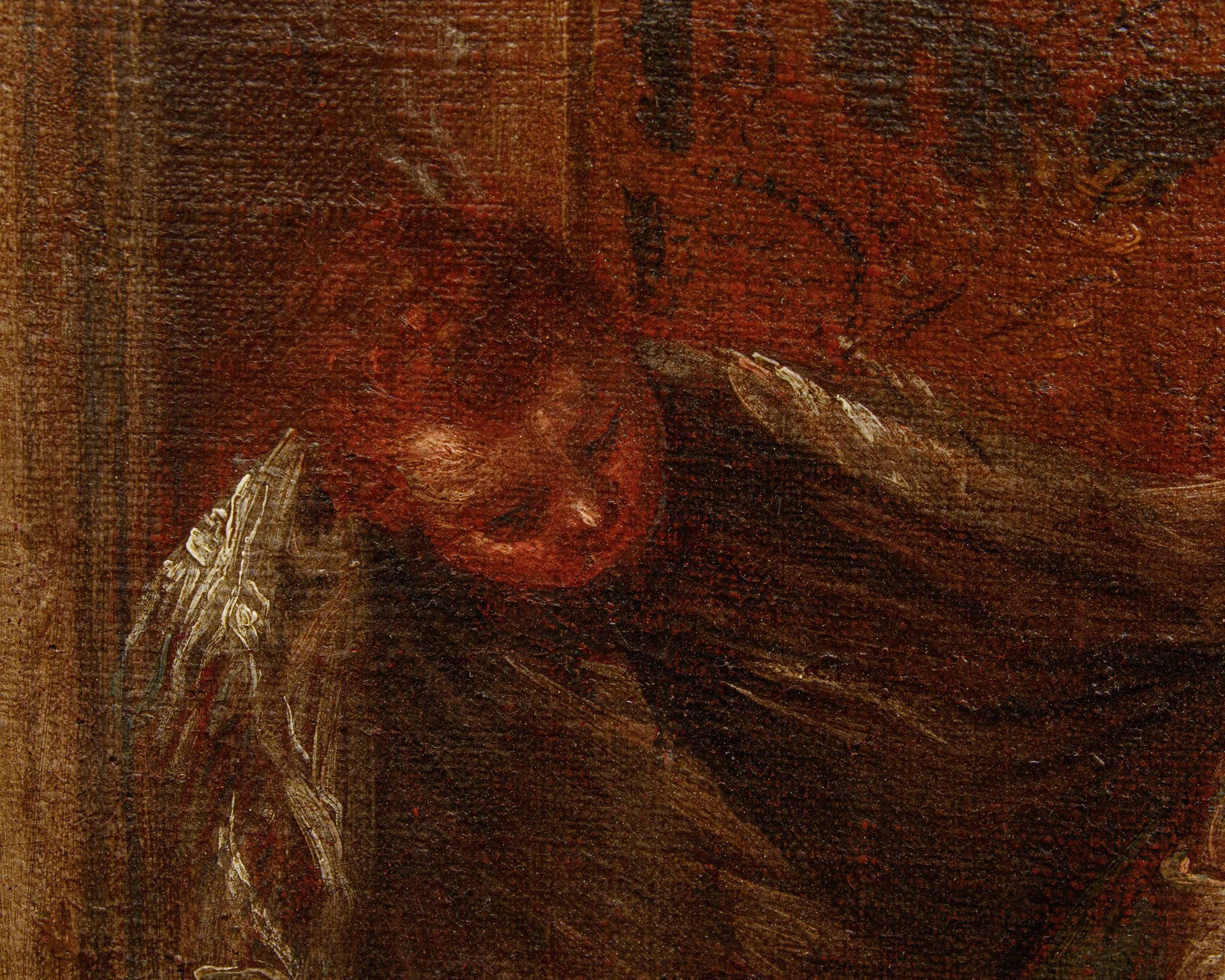
18th – 19th century, after Paolo Veronese
Altarpiece of San Zaccaria
oil on canvas, 127 x 74 cm
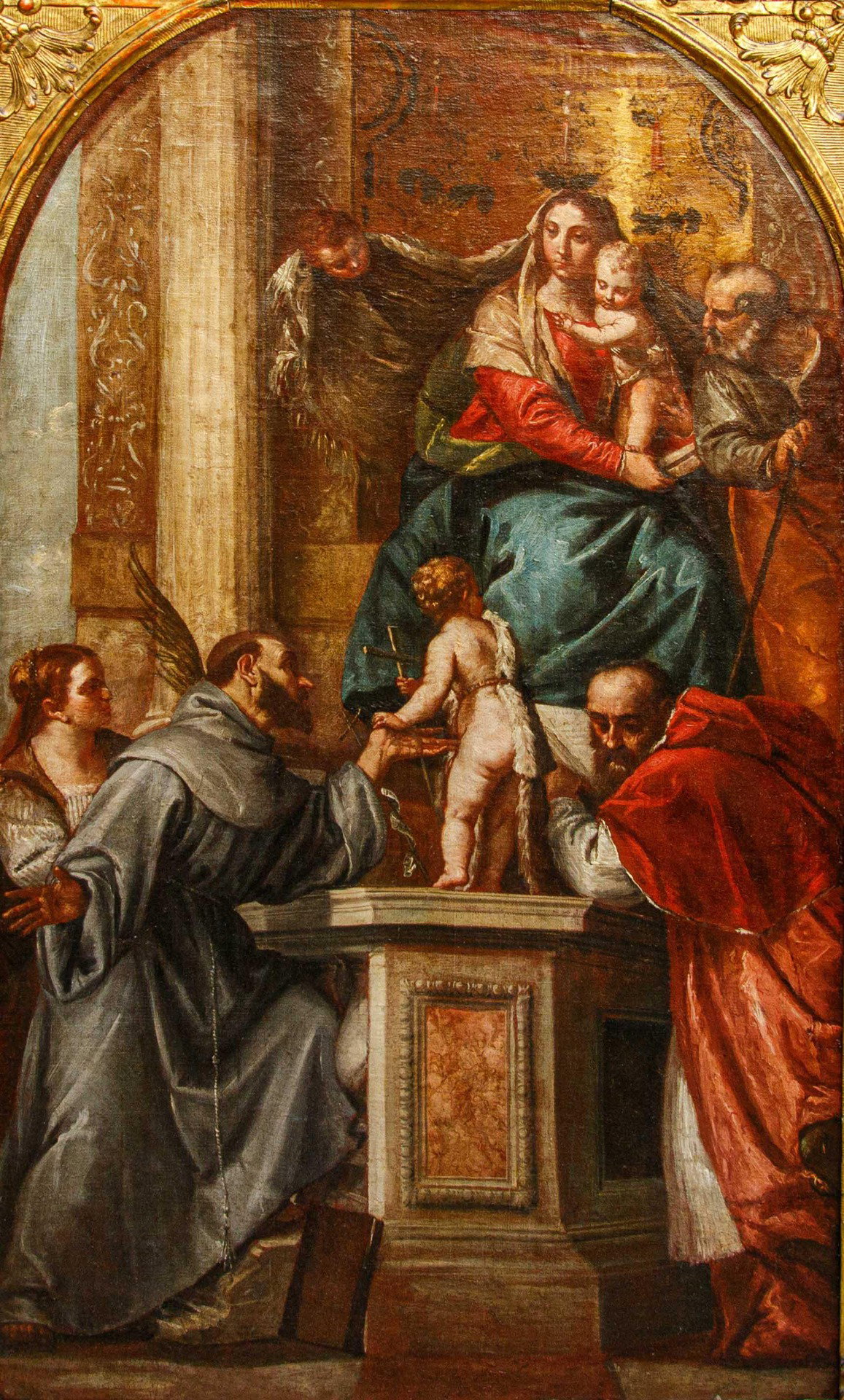
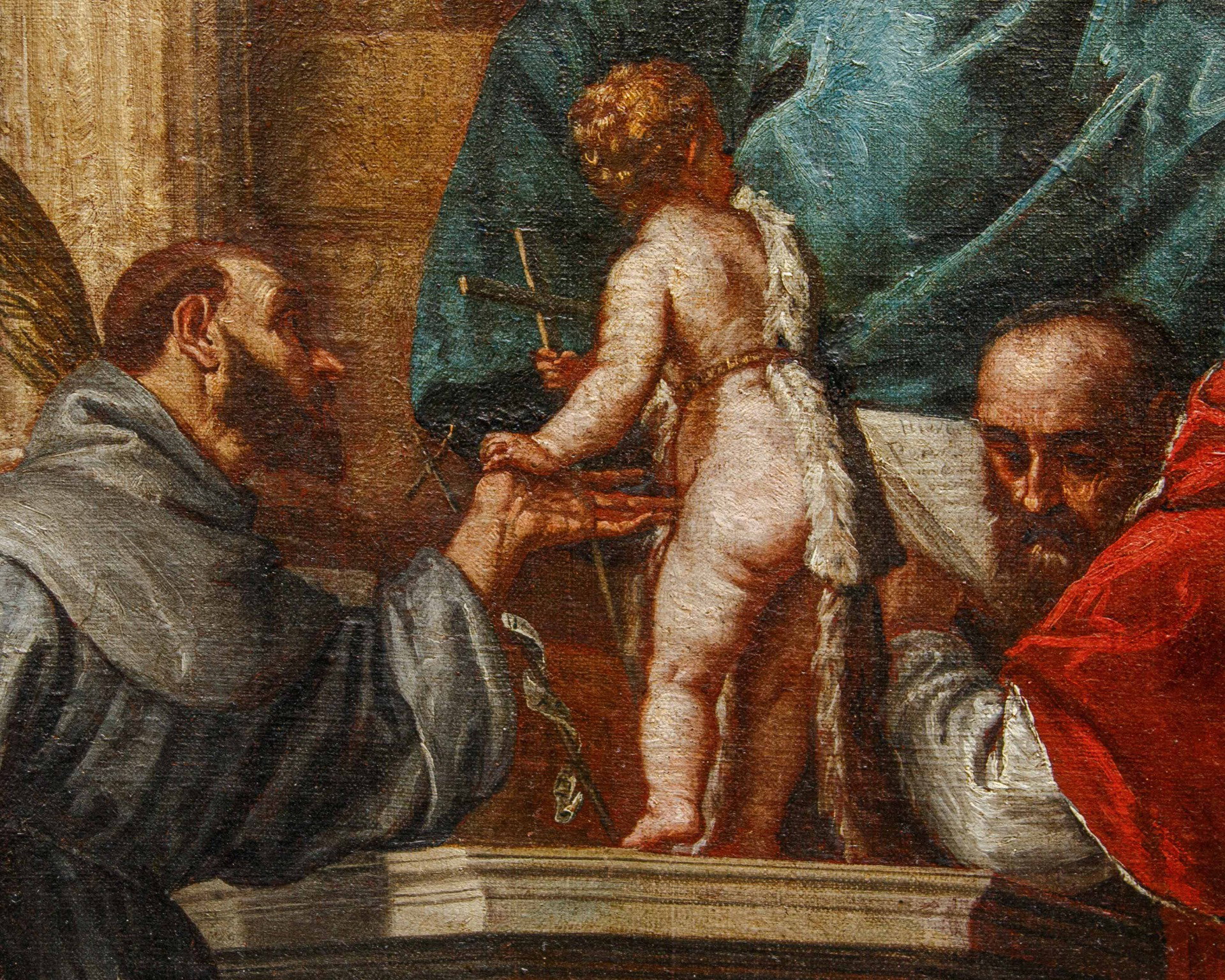
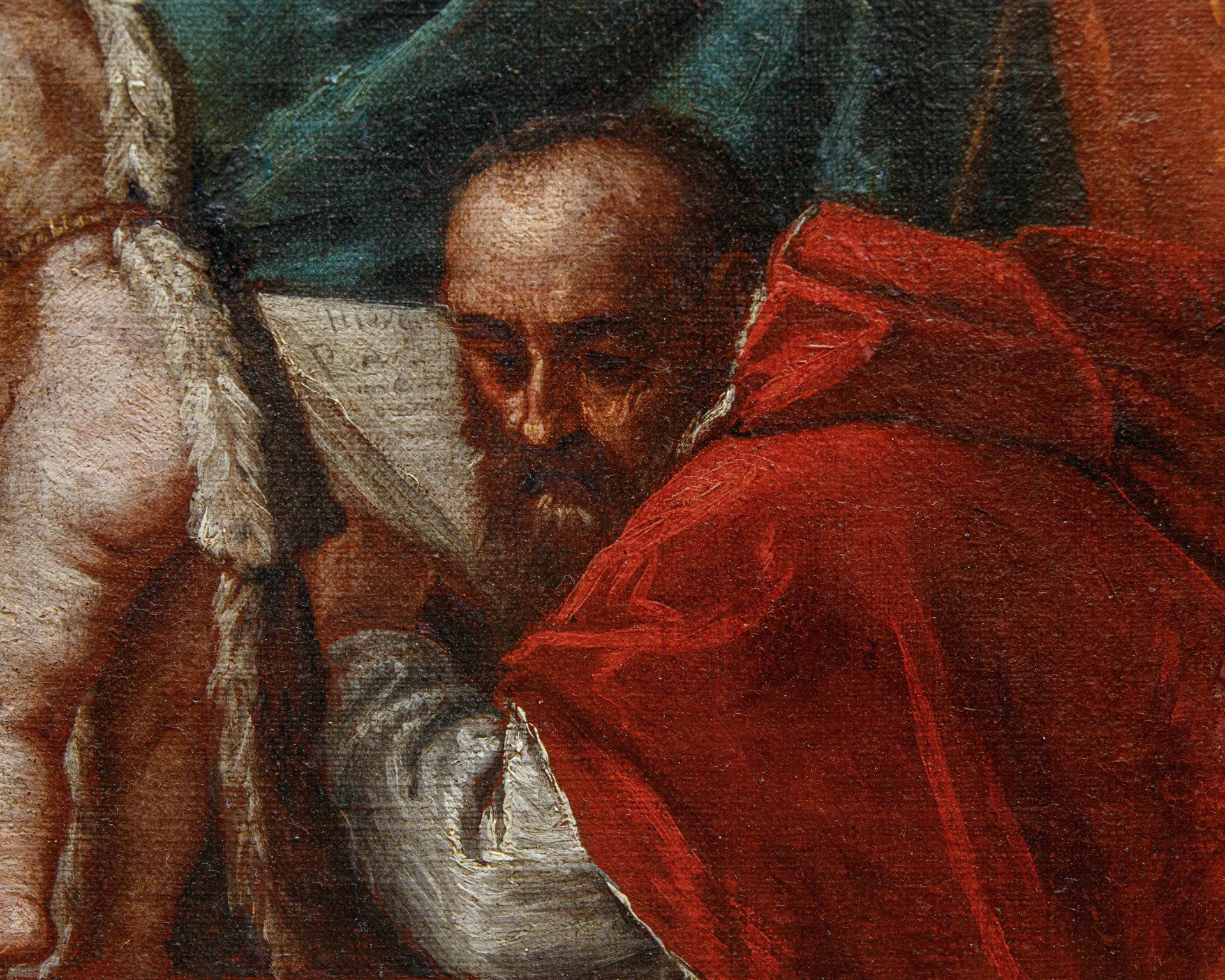
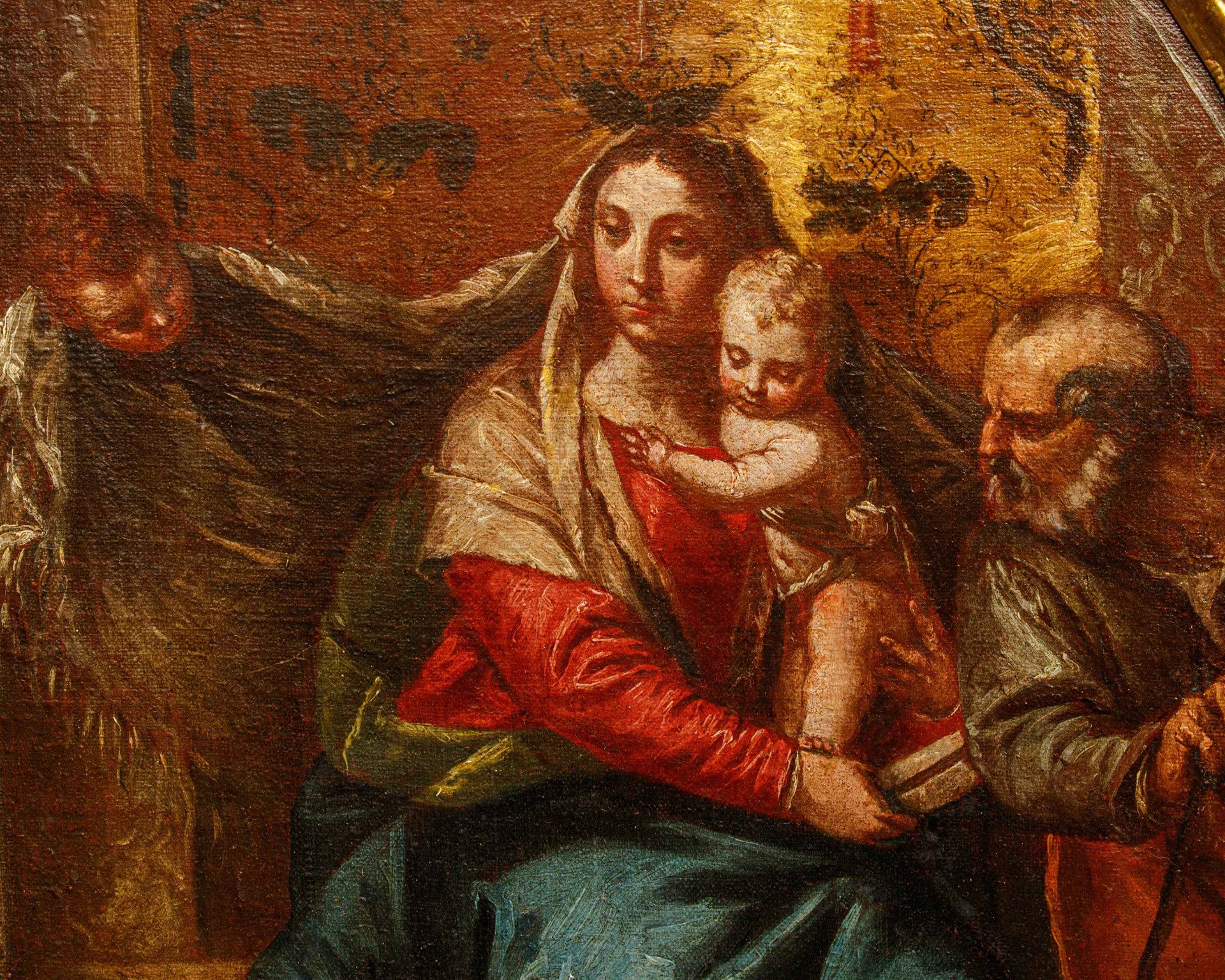
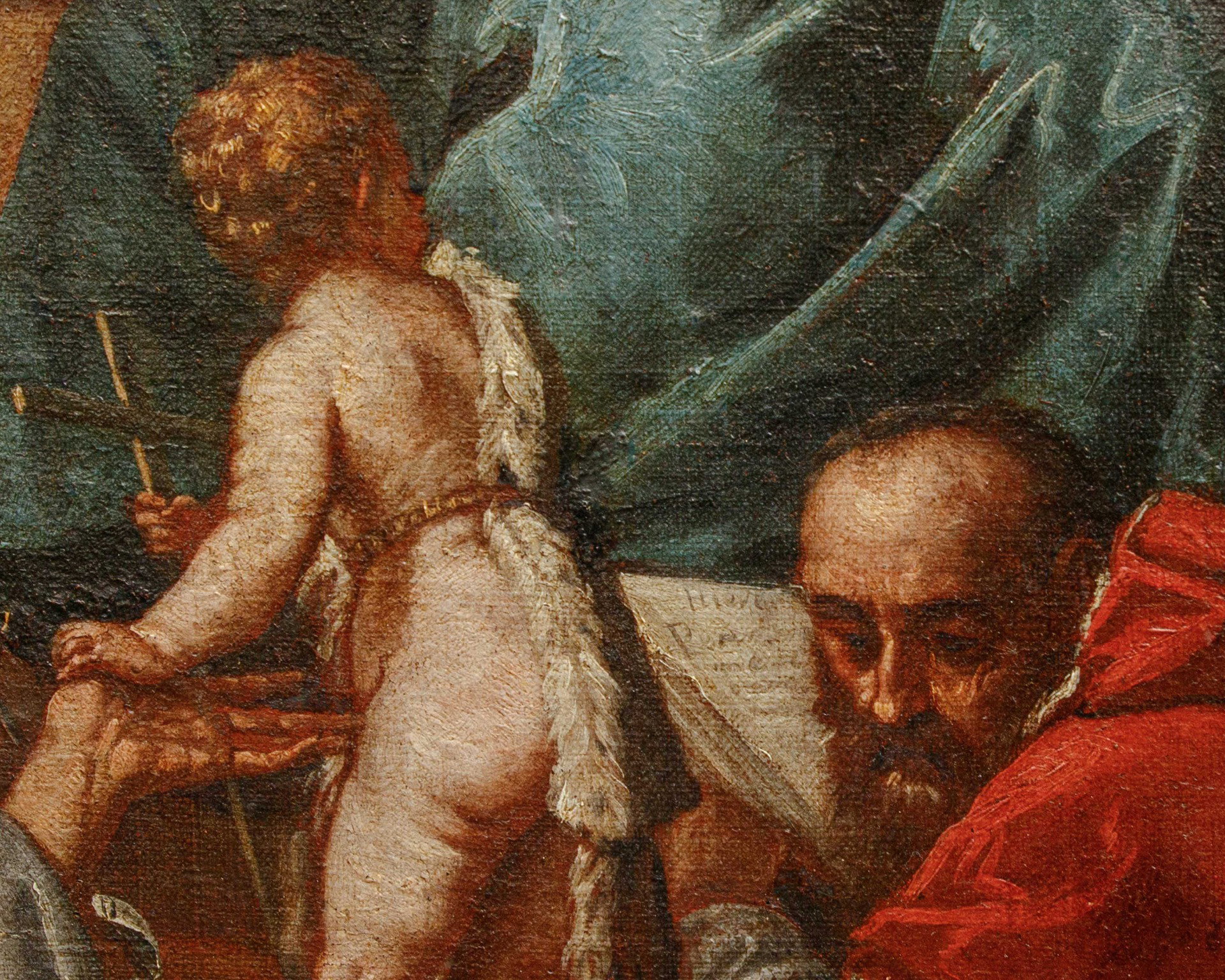
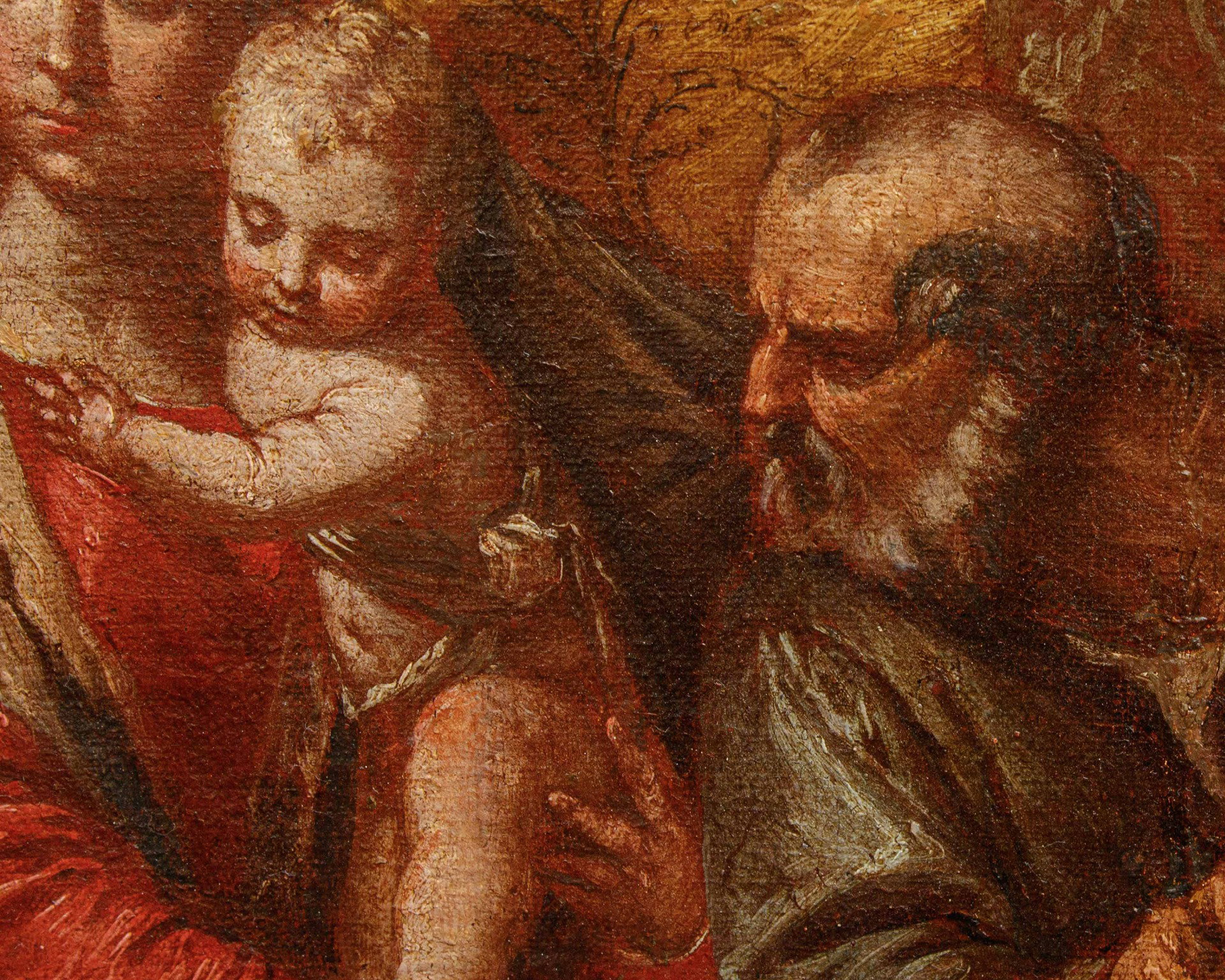
The majority of Caliari's enormous output consists of religious subject matter commissioned for churches in Venice and other Italian locations. This work replicates the forms of the altarpiece depicting the Madonna with Child and the young St. John among Saints Justina, Francis, Jerome, and Joseph, created for the Bonaldo family chapel in the sacristy of the church of San Zaccaria (but today housed at the Gallerie dell'Accademia). The patron is Francesco Bonaldo, a wealthy silk merchant, who in 1562 decided to donate 200 scudi for the redecoration of his family chapel in San Zaccaria. Veronese created the altarpiece around 1562-1564, the chronological limits ranging from the date of the donation to an autograph sketch dated 1564. The composition reprises the successful theme of the Sacred Conversation from Mannerist tradition, in which the Madonna with Child, always placed in evident superiority, converse with the adoring saints; here depicted are Saint Justina holding the palm of martyrdom, Saint Joseph as a gray-haired old man, Saint Jerome with the classic attributes of a cardinal's habit, the young Saint John with typical clothing foreshadowing his future as an exegete, and Saint Francis in a Franciscan habit. The addition of these two saints is linked to the patron's desire to celebrate his two brothers, Francesco and Giovanni, buried in the new chapel. For the spatial construction, Veronese, like Titian in the Pesaro Altarpiece and Giovanni Bellini in the San Zaccaria Altarpiece before him, sets the scene in a calculated asymmetry where the figures are framed by Renaissance architecture bounded by a fluted column. The oblique angle of the base and columns, and the semicircular mosaic apse contribute to expanding the space, which is no longer rationally defined. The lighting effects are closely related to the original location; natural light originally came from above the chapel and from two small oval side openings: the portion of sky (now partially lost due to a cropping of the canvas) was enhanced by light descending from above, immersing the group in a golden atmosphere; while the side light accentuated the crispness of the column and the iridescent sheen of the saints' precious garments. The luminous, diffused, and sunny coloring, reinforced by the monumental structure, are typical characteristics of Caliari's work between 1560 and 1570. The composition was immediately successful, and various reproductions are known: one, commissioned "by the English resident in Venice"; another from the 16th century by an anonymous painter; a third 17th-century version housed in the Capitoline Museums, made by Giuseppe Bonati; yet another is the 18th-century reinterpretation by Giovanni Antonio Guardi; finally, there is a version that passed through a Christie's sale in London. Paolo Caliari, il Veronese (1528-1588), trained in Verona, soon departed from local masters to embrace a Mannerist style close to Parmigianino. Moving to Venice in 1551, he maintained a style "foreign" to Titian's tradition: while his contemporaries focused on tonal fusion, Veronese chose the centrality of drawing and a clear chromatic rendering, with distinct color areas and precise contours. Favoring precious, cool palettes arranged for contrast, he signed monumental cycles in the Doge's Palace, the Marciana Library, and the famous frescoes at Villa Maser for the Barbaro brothers. His art, which profoundly influenced the Lagoon Baroque, was carried on after his death by his workshop managed by his sons Carlo and Gabriele, along with his brother Benedetto.