Ludovico Giminiani, (Rome, 1643-Zagarolo, 1697)
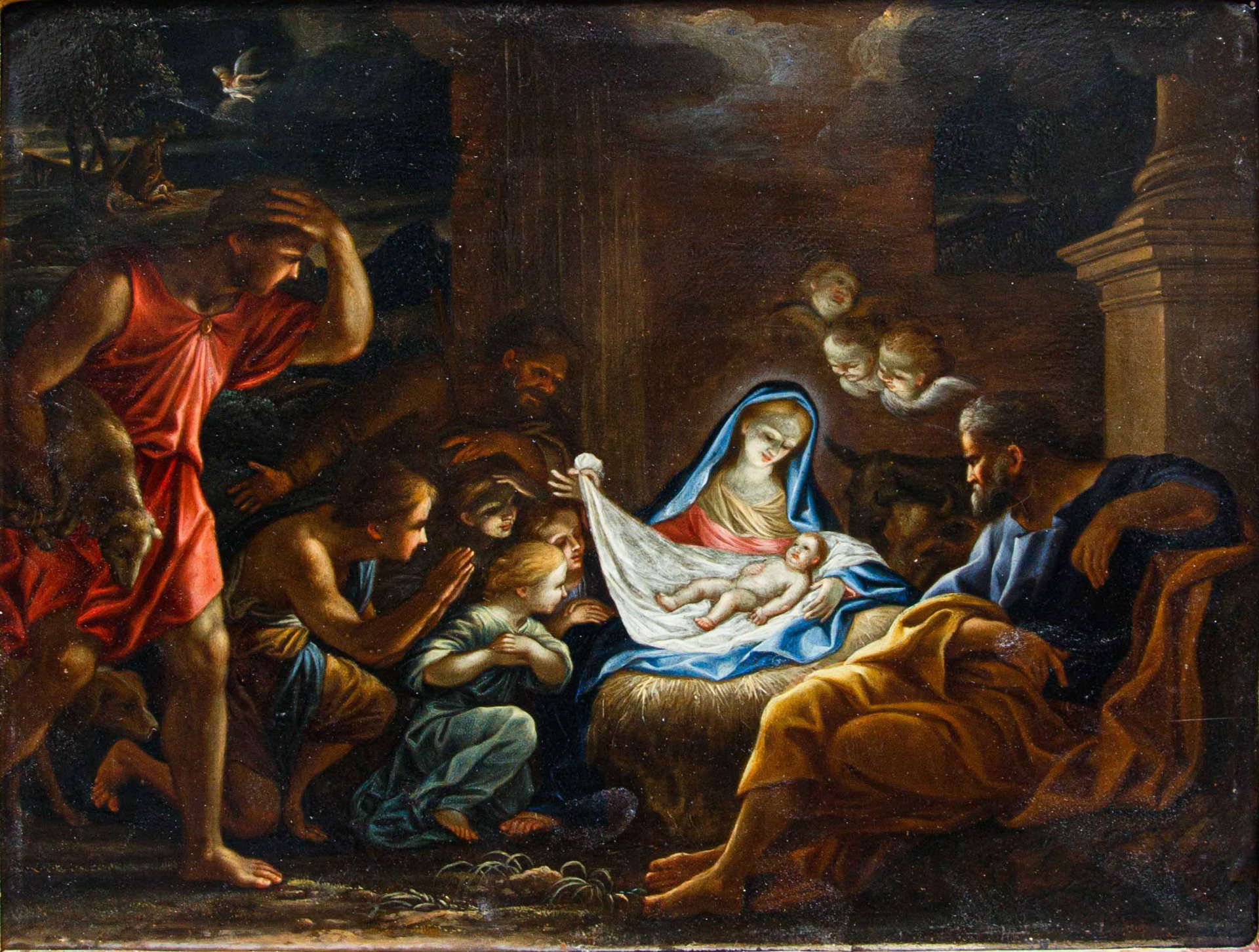
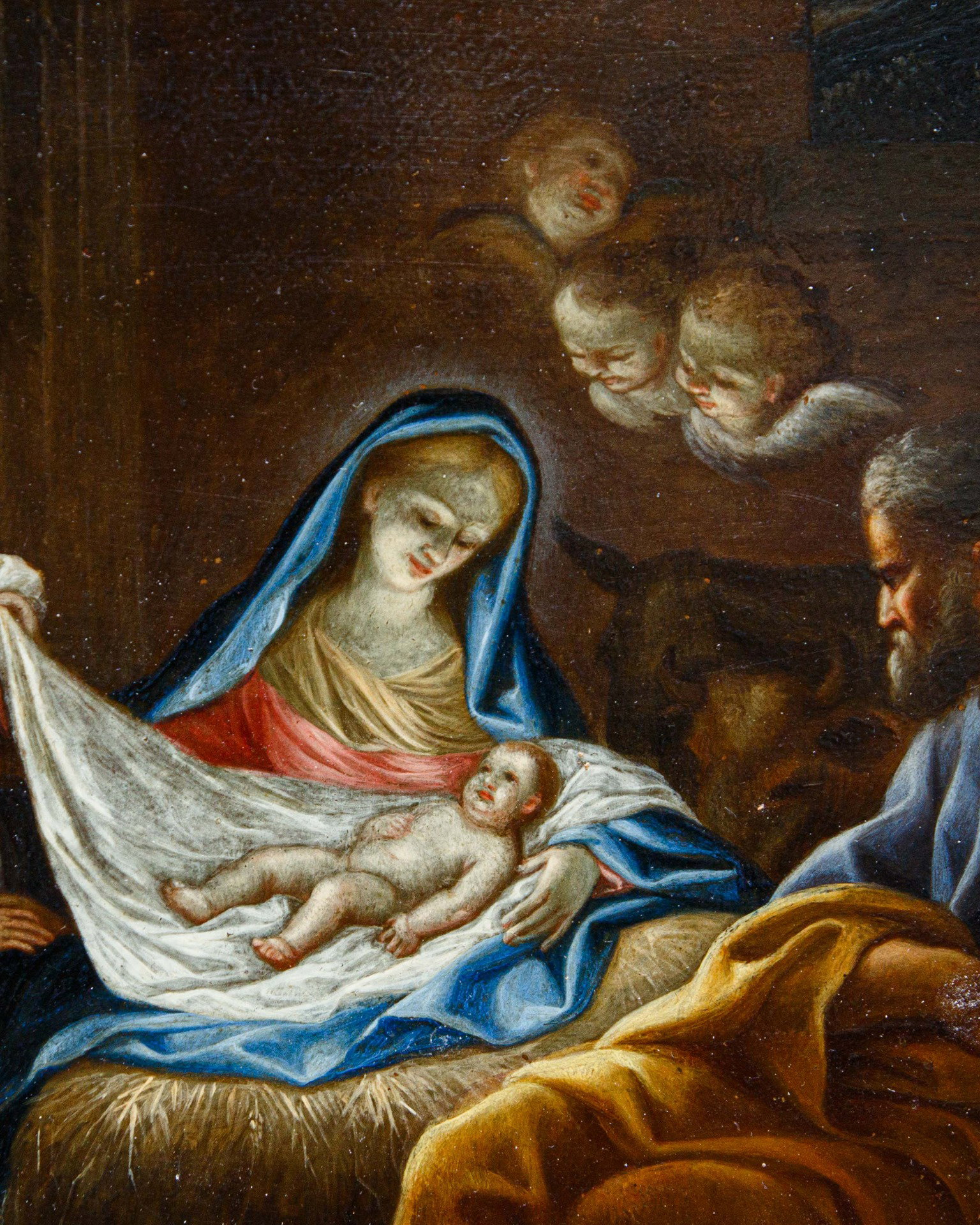
Adoration of the Shepherds
Oil on copper, 26.7 x 35.3 cm
Critical assessment by Prof. Mari Pietrogiovanna
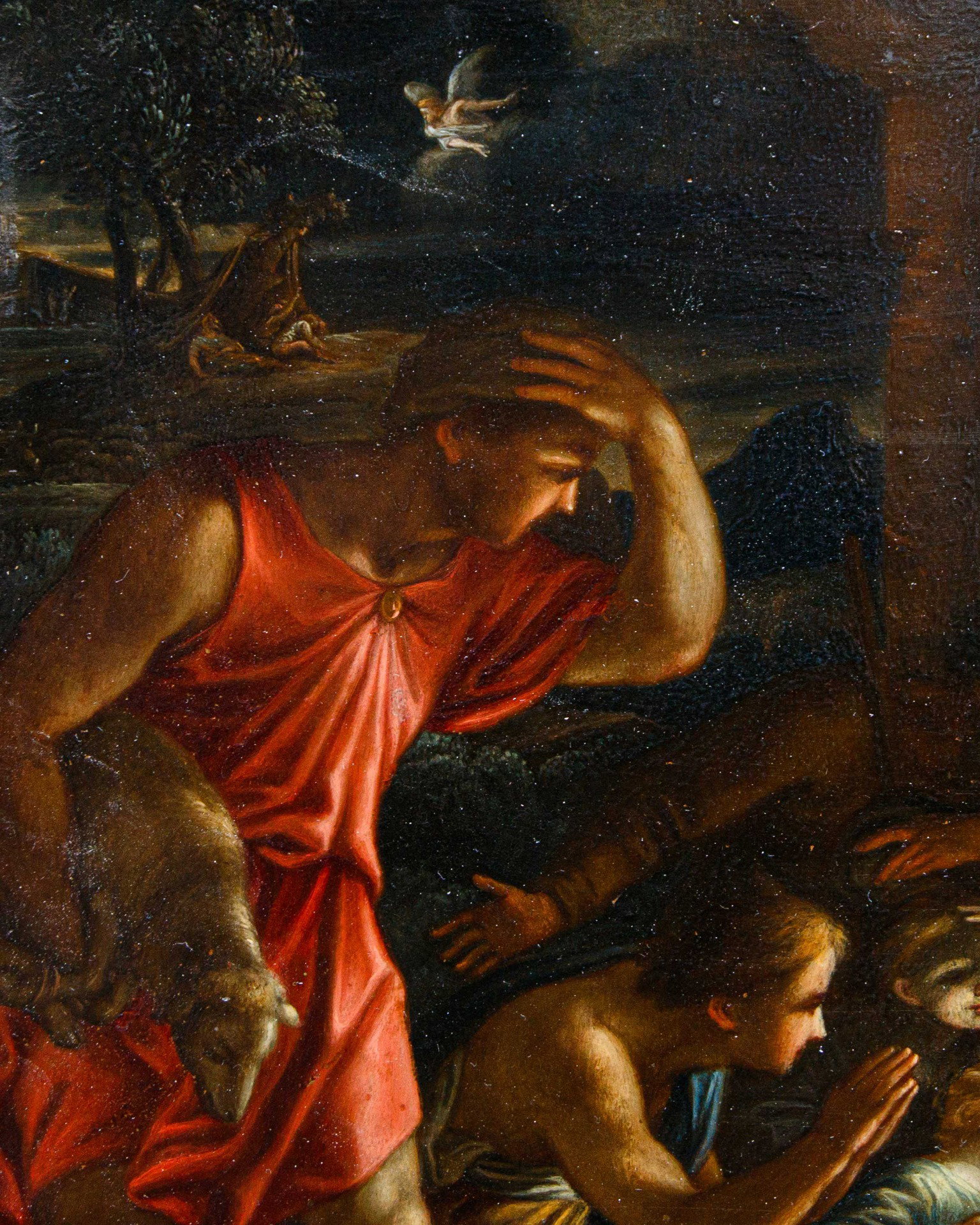
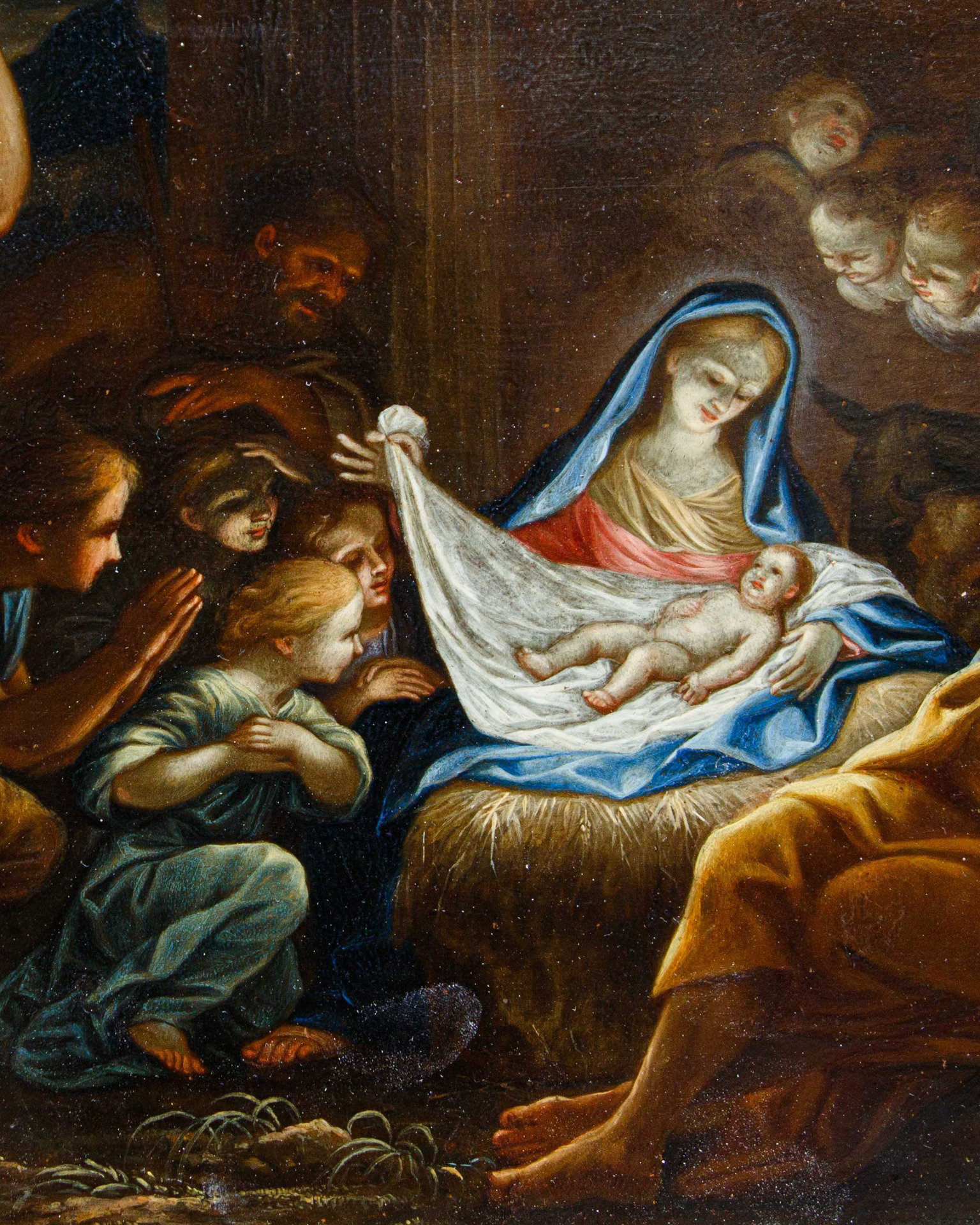
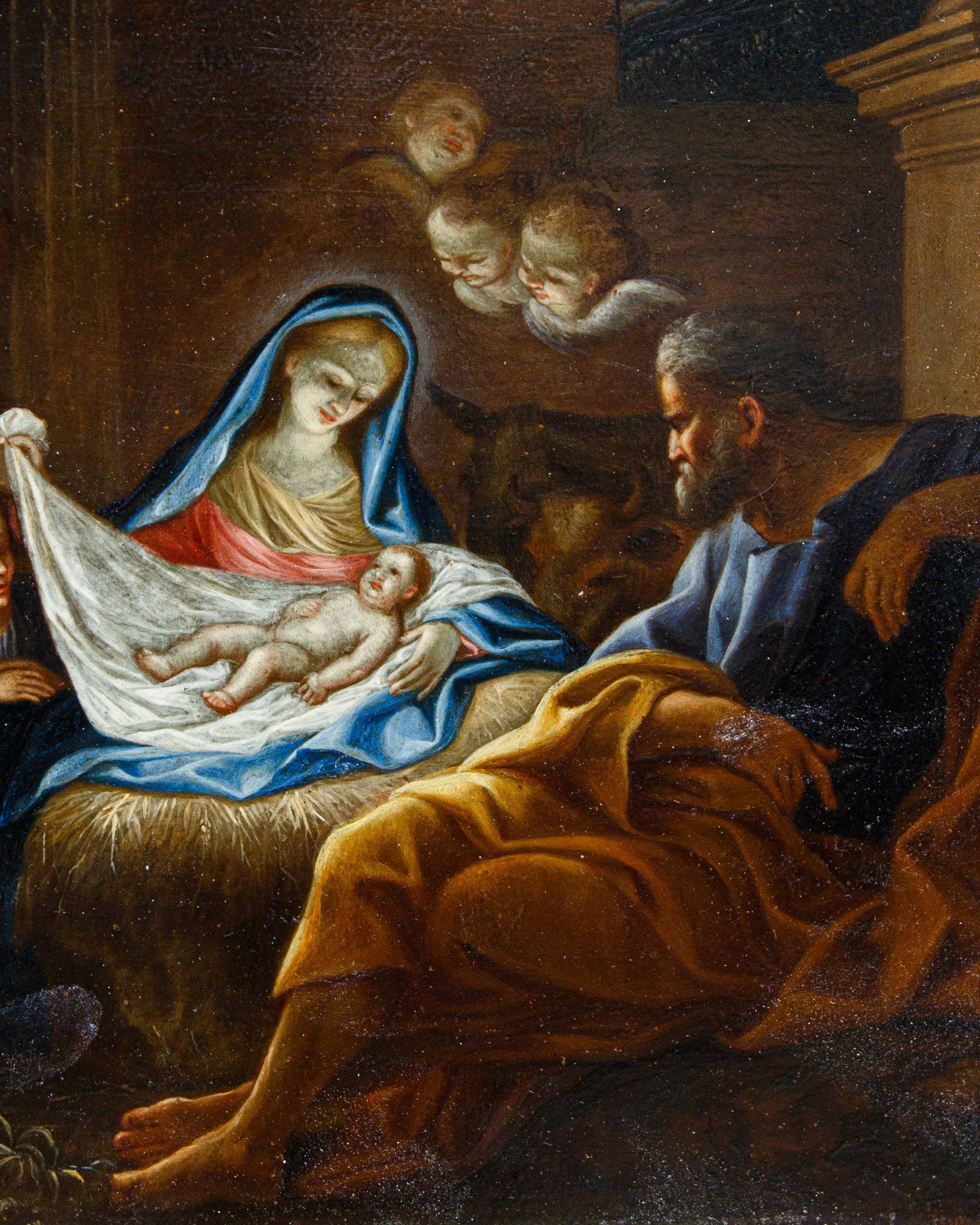
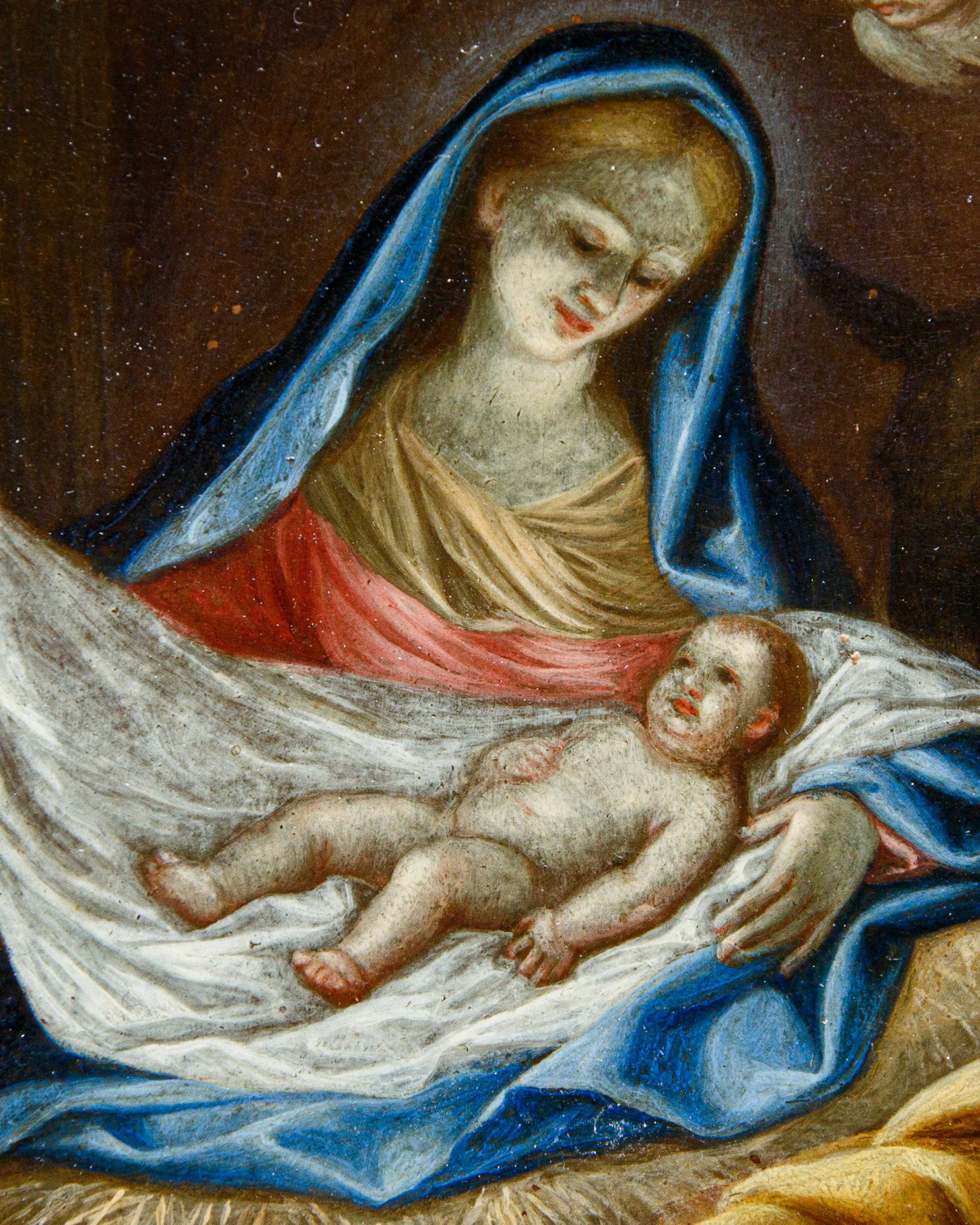
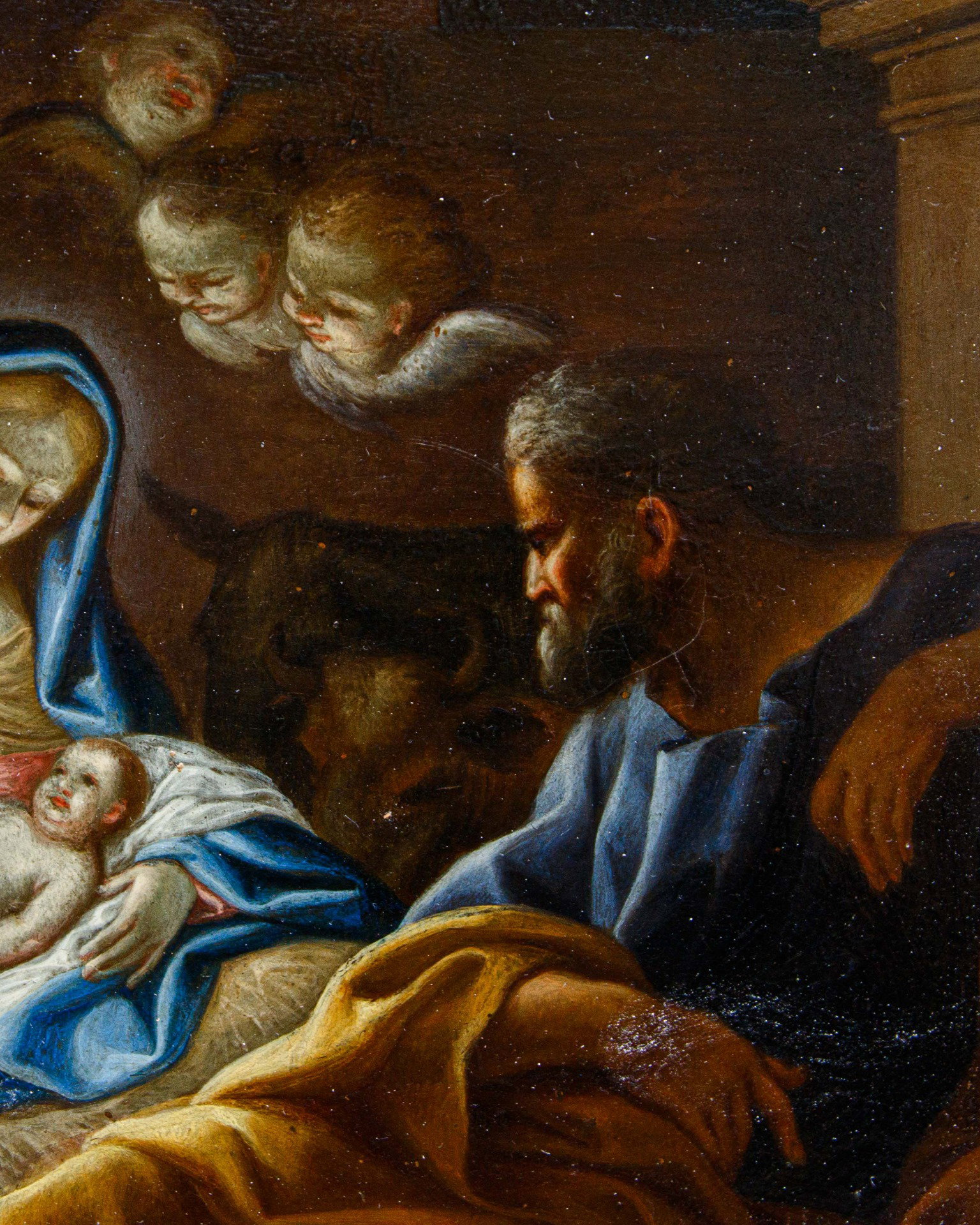
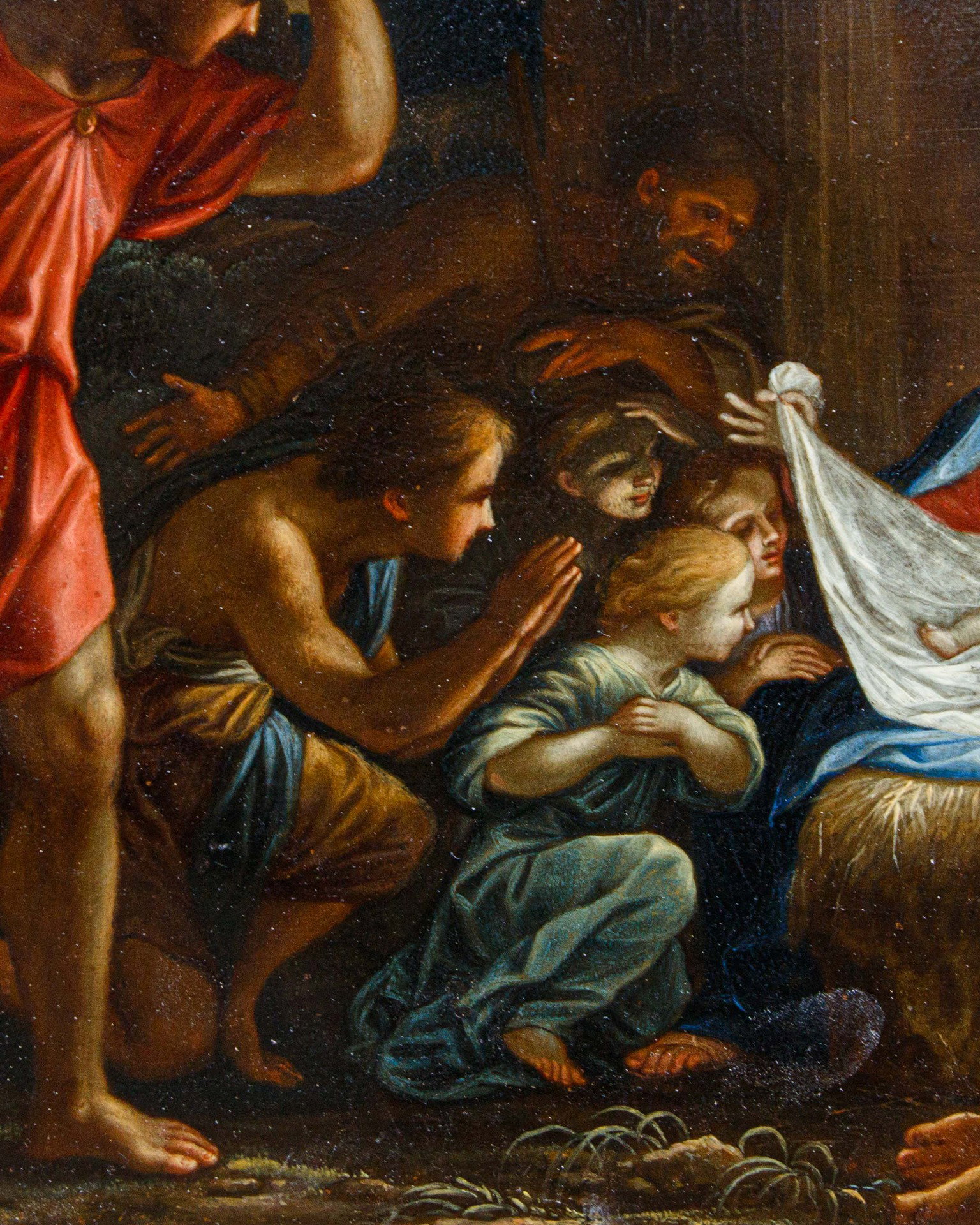
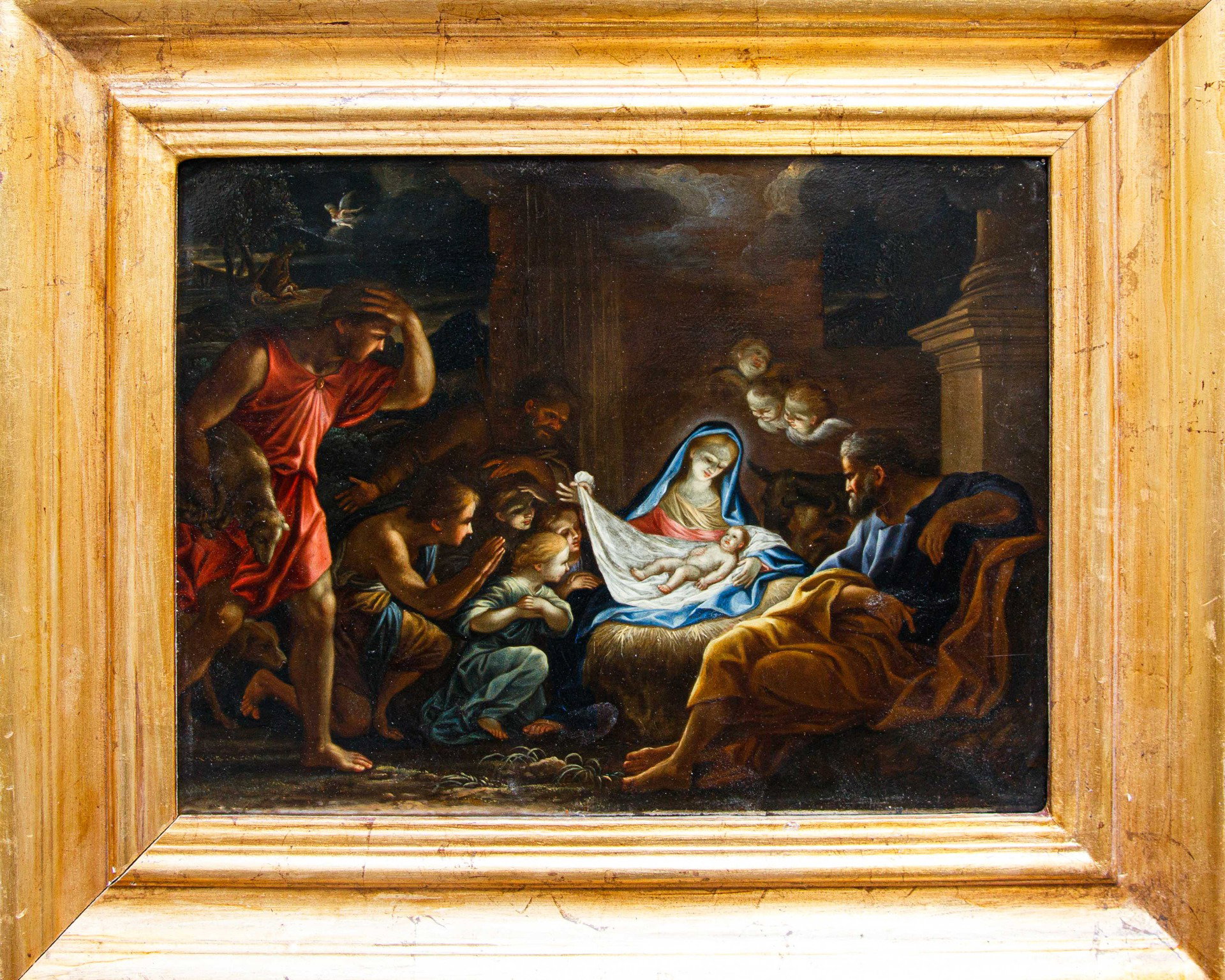
The oil on copper under examination shows a dense group of shepherds and children gathered around the Virgin, who reveals the baby Jesus so that everyone can admire him. The atmosphere is rendered magical and suspended thanks to the luminous plays of light emanating from the glow of the child, emphasizing his divine nature. The same glow comes from the background, where the preceding episode of the Annunciation to the Shepherds is also depicted in reduced dimensions.
The strong contrasts of light suggest that the work was executed during the Baroque period. Similarly, these contrasts might initially lead one to attribute the painting to an Emilian artist, perhaps due to references to the same subject treated by Correggio in the 16th century.
In reality, the author is to be found among the Roman Baroque artists. The compositional elements, the inclusion of the scene within architectural settings, the predilection for a horizontal arrangement, the use of a palette of bright colors, along with the use of copper as a support, all point to Ludovico Gimignani (1643-1697). He trained under his father Giacinto, with whom he worked at the beginning of his career. His collaborations include one with Bernini; the latter, in fact, supervised the execution of works in the Collegiata di Ariccia in 1665, where Gimignani executed an altarpiece. Ludovico also enjoyed the patronage of Clement IX, who allowed him to undertake a study trip to Venice, Lombardy, and Emilia with Giovan Battista Gaulli, known as il Baciccia. Upon returning to Rome, Gimignani was engaged in the decoration of several Roman churches, where he combined Roman stylistic elements and approaches with Venetian colorism and Veronese influences.
Observing "Saint Mary Magdalene of Pazzi Heals a Demoniac" and "The Miracle of Saint Mary Magdalene of Pazzi" from the Lemme collection, one sees the same horizontal composition and architectural framing with fluted pilasters as in the copper in question. The drapery and the rendering of faces in profile are also similar. The brushwork, which appears elongated, is also analogous. The painting under examination must therefore be part of a small-format production to which Gimignani dedicated himself for private commissions.