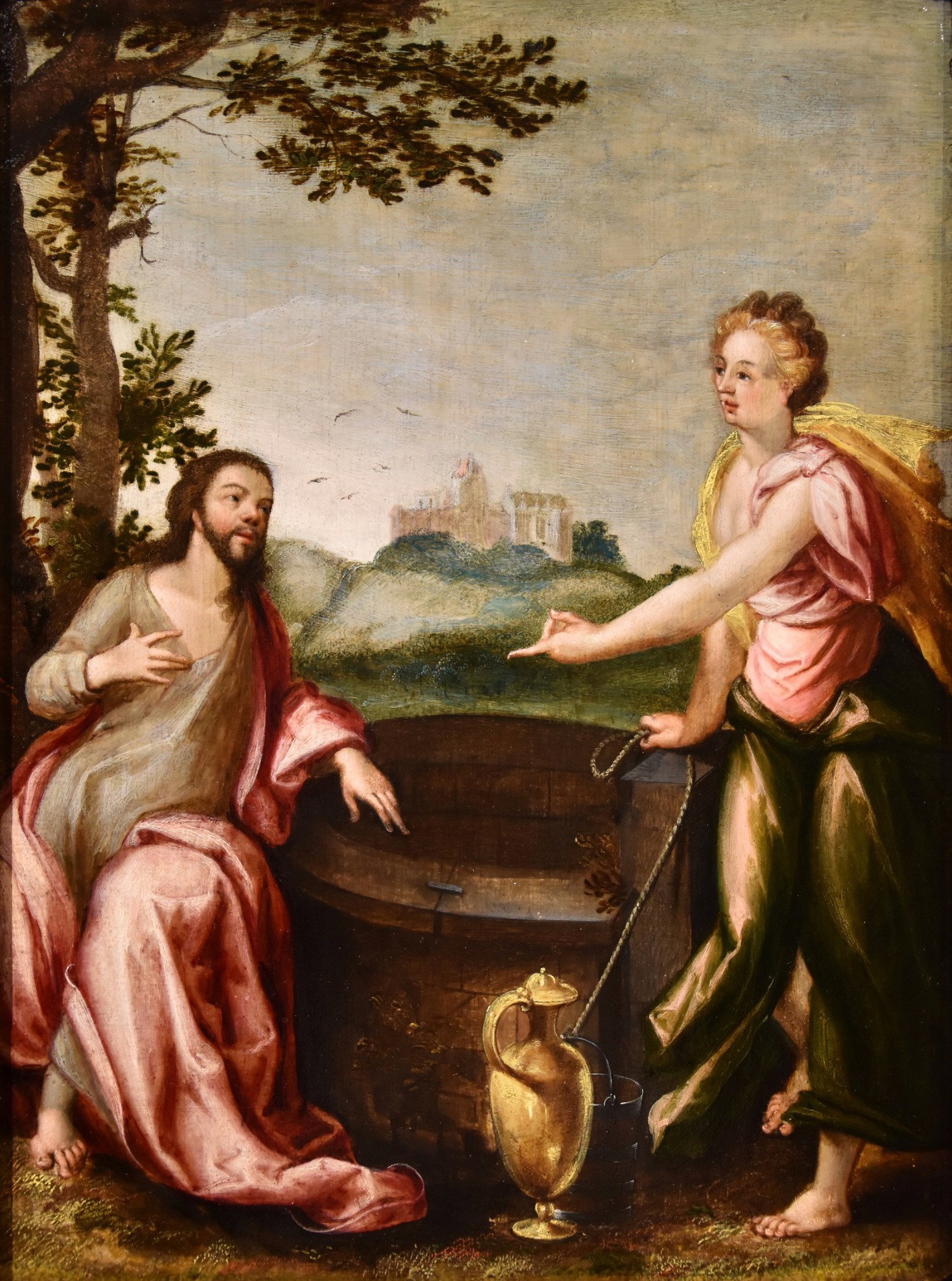
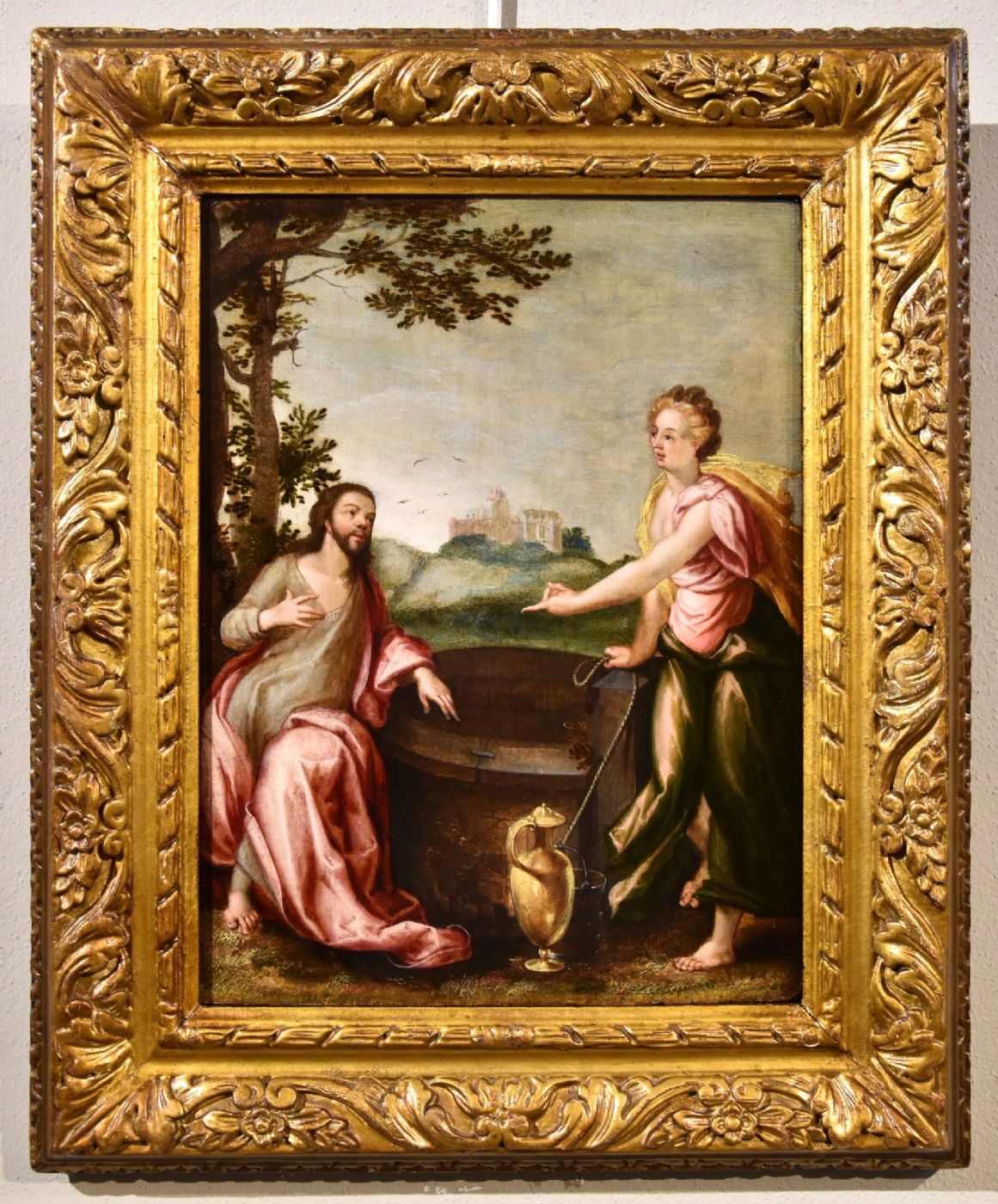
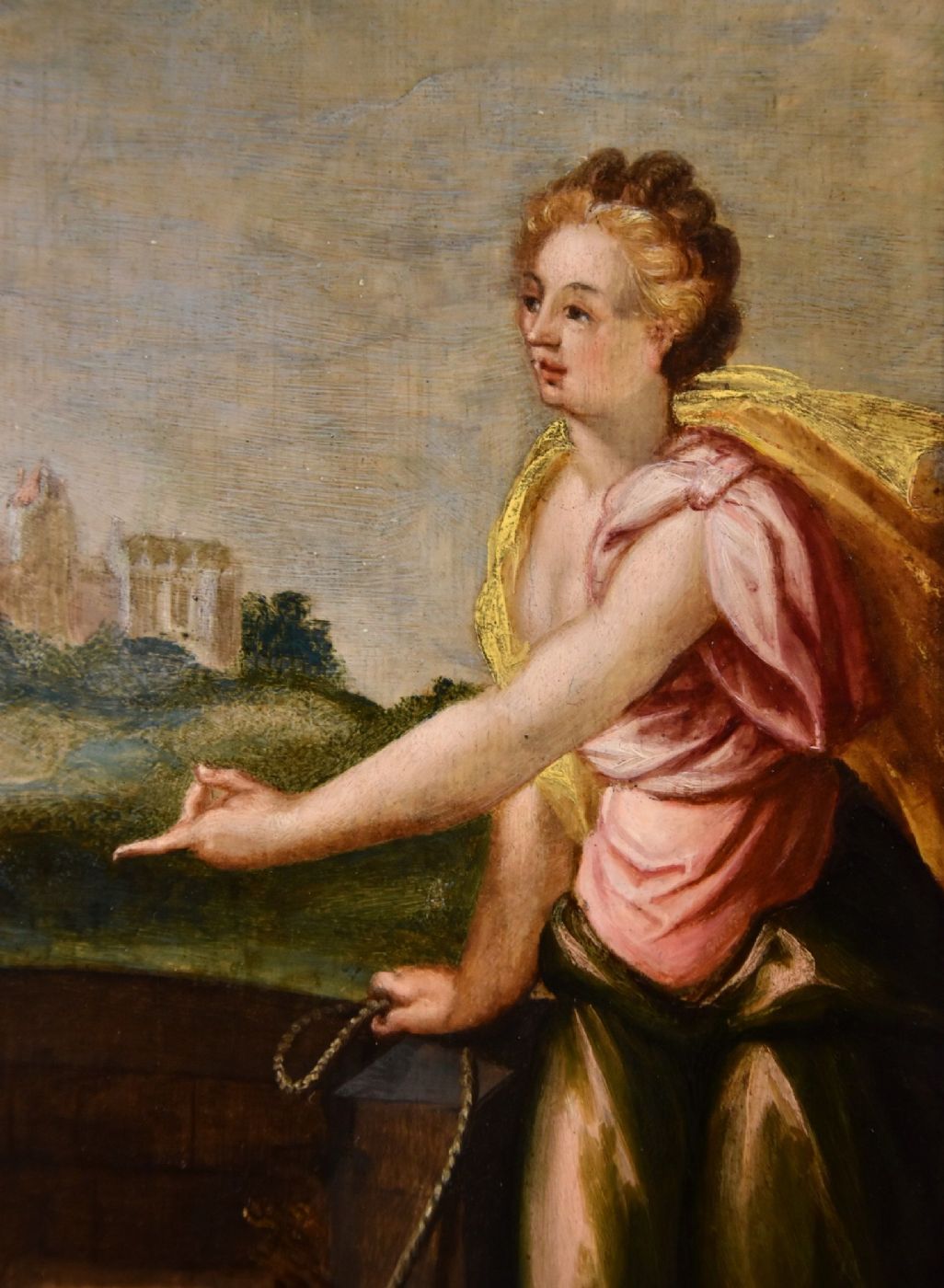
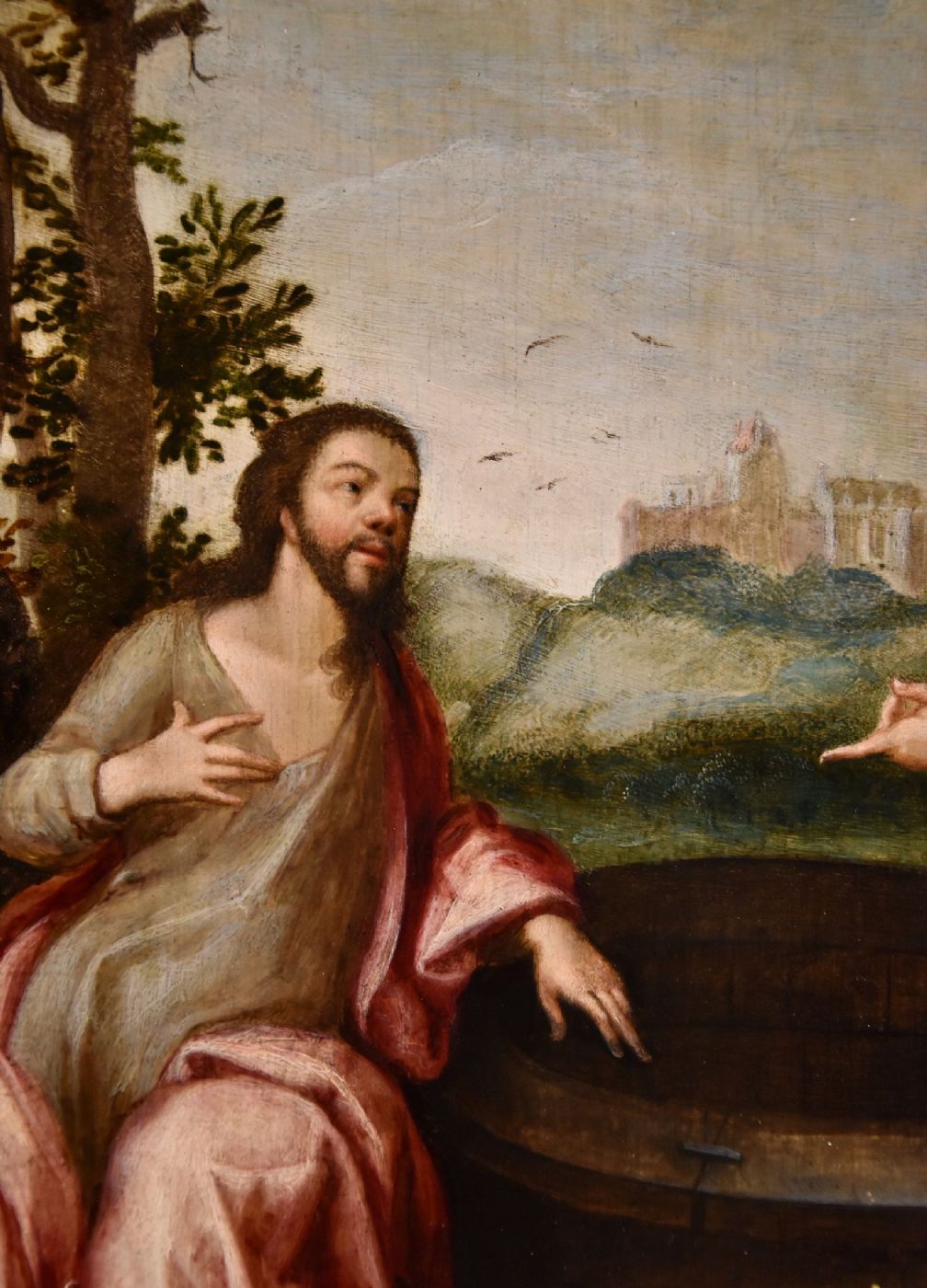
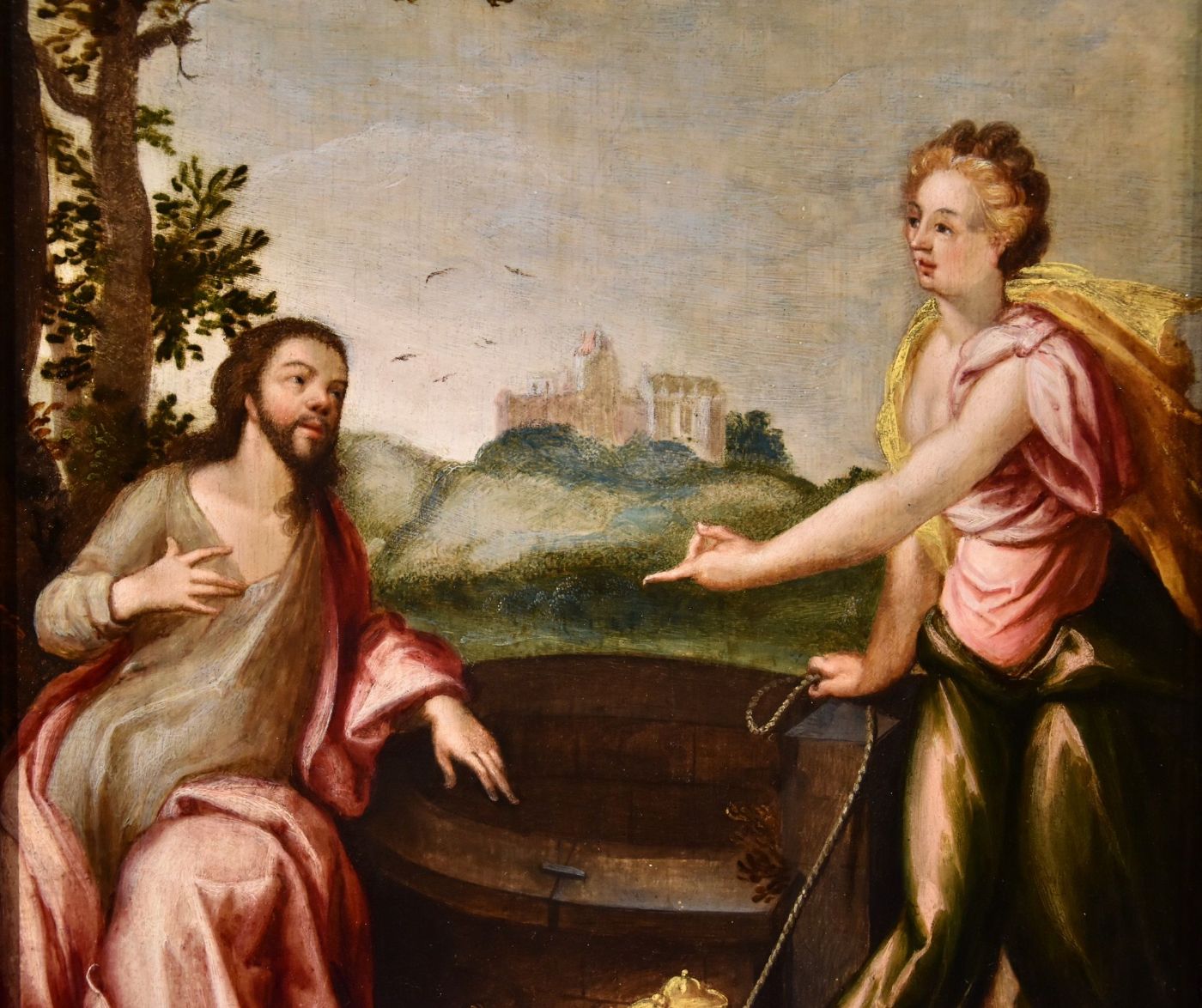
Christ and the Samaritan Woman at the Well
Attributable to Ludovico Pozzoserrato (Antwerp circa 1550 – Treviso 1605)
Oil on panel
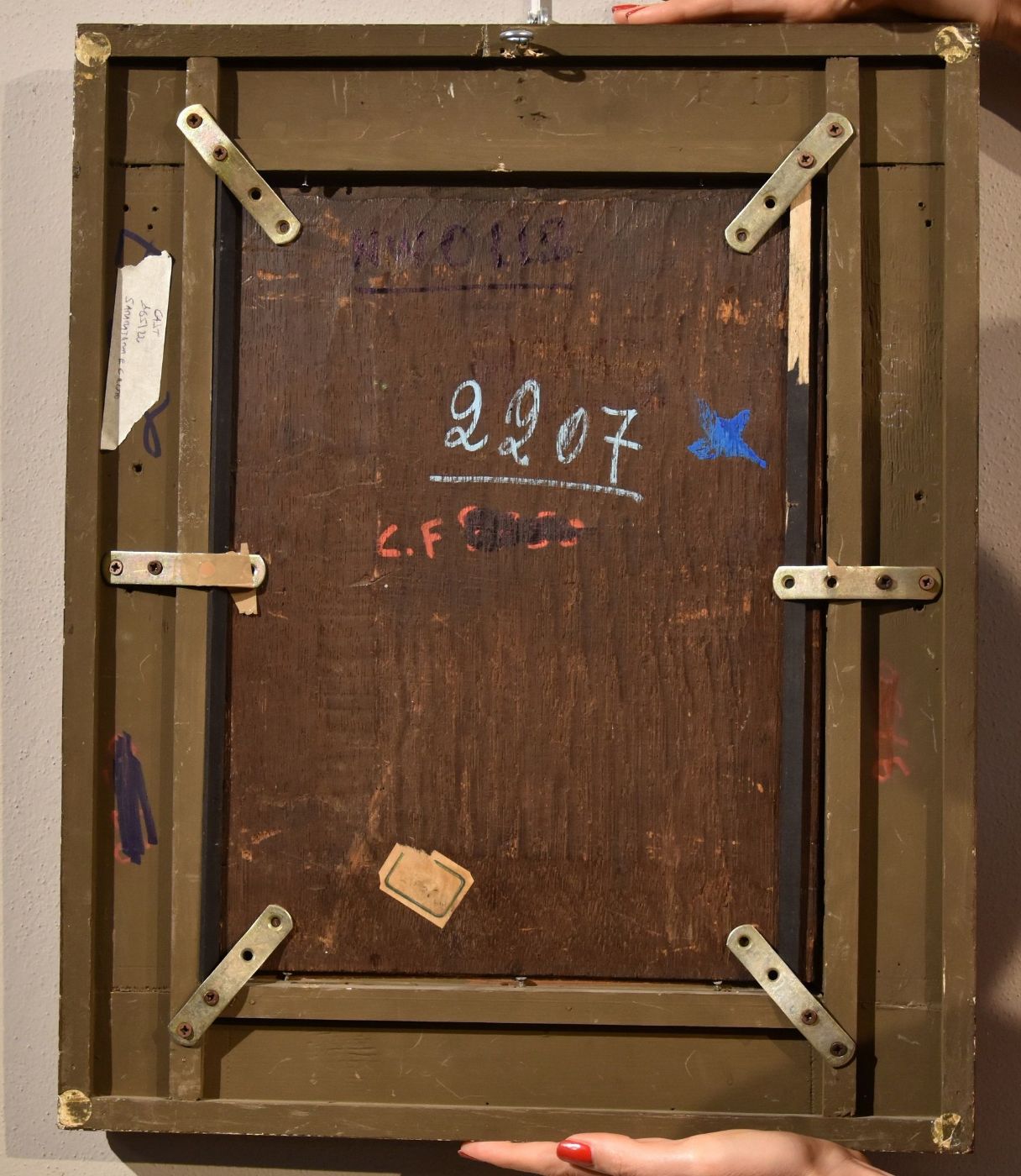
37 x 27 cm., in a frame 52 x 42 cm.
All details relating to this painting can be viewed at the following - link -
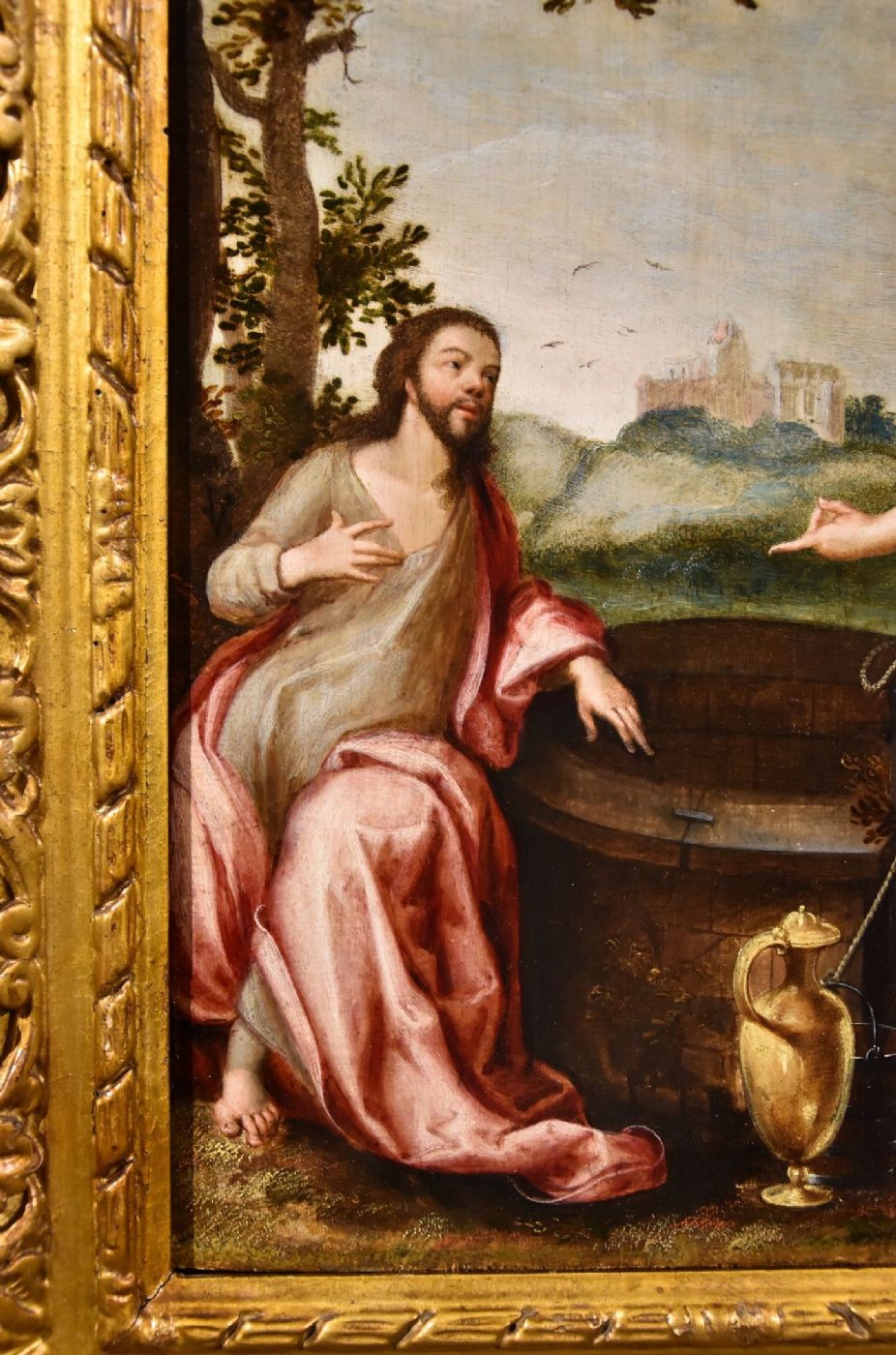
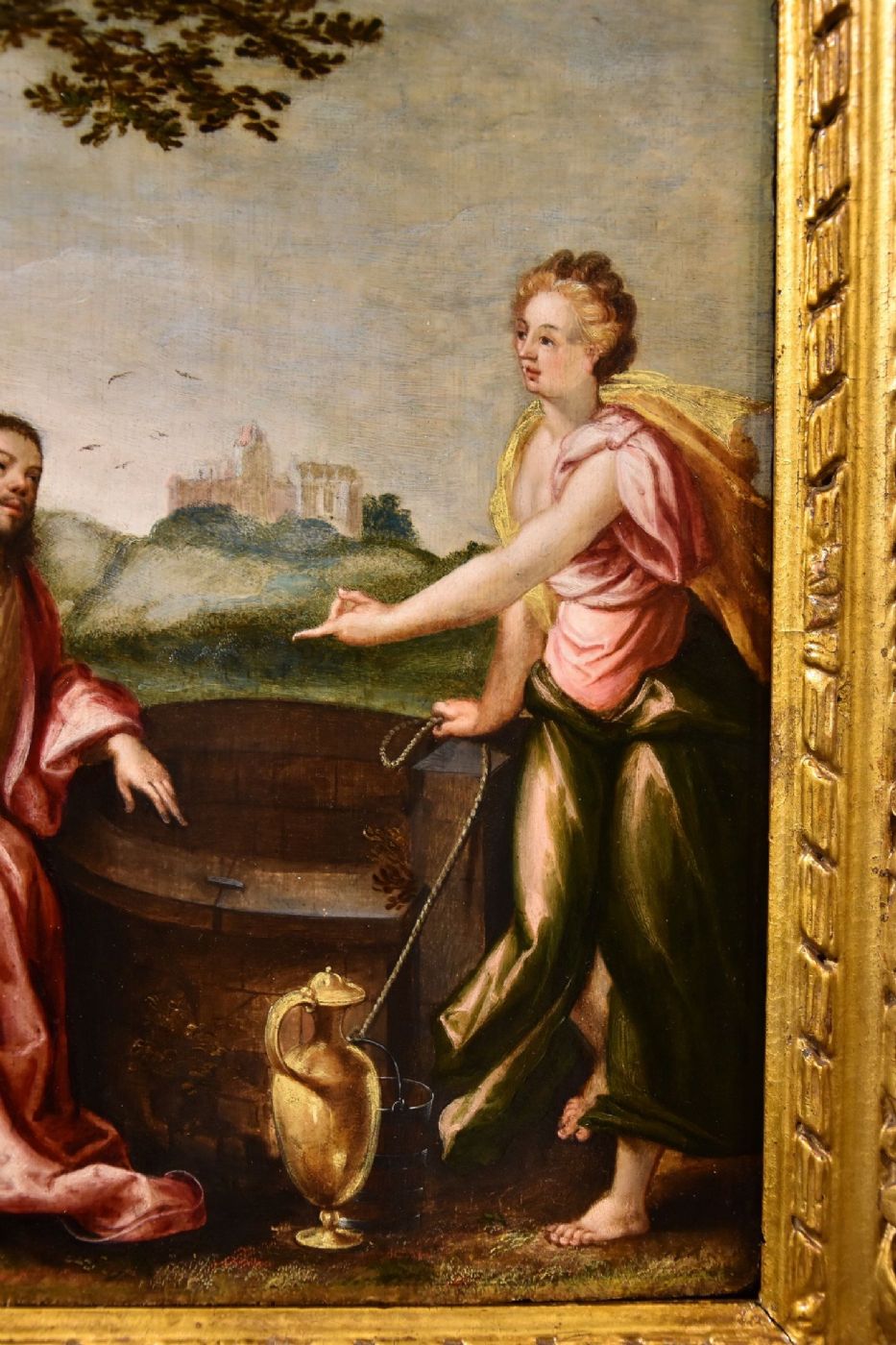
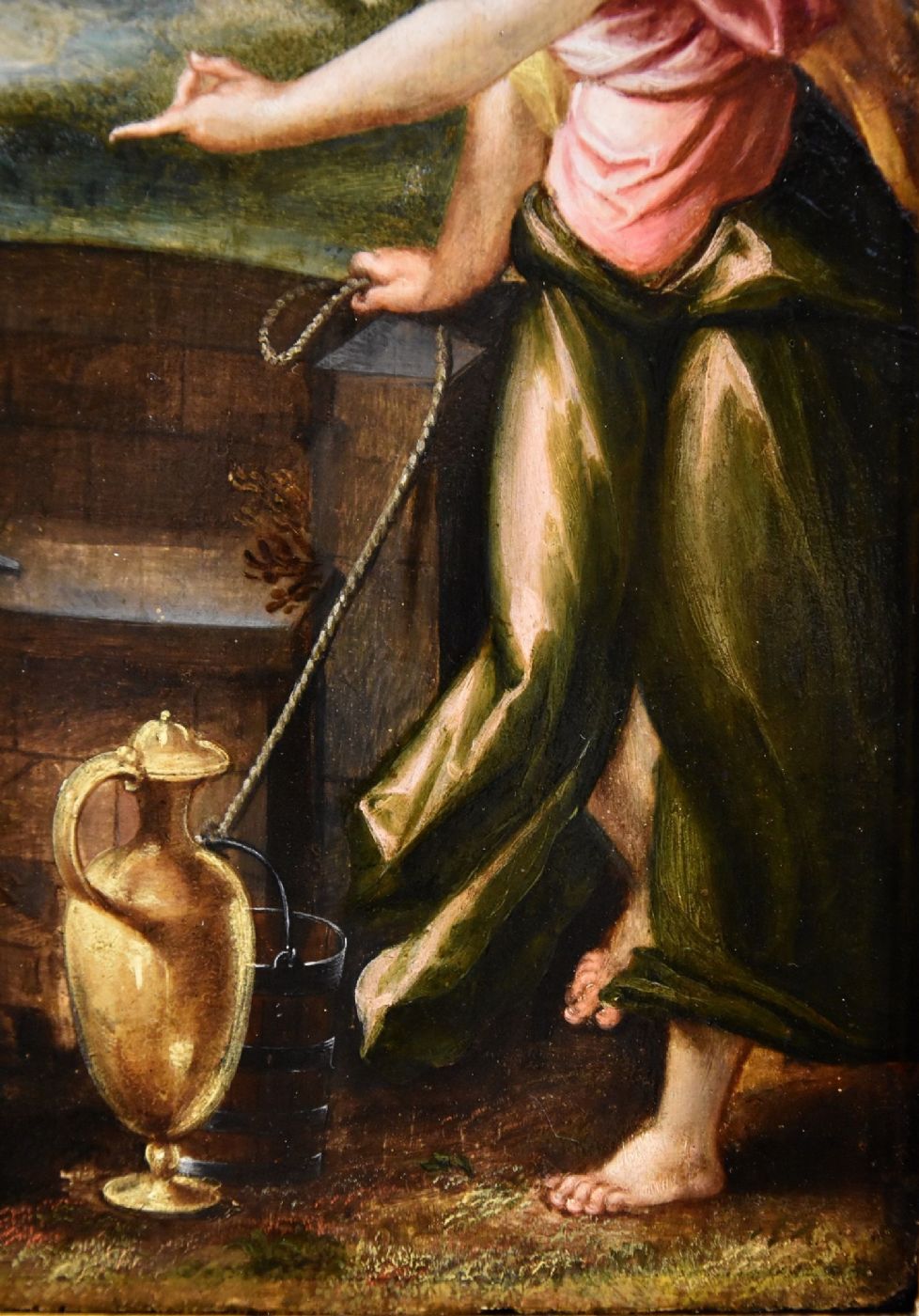
The subject illustrated in this refined painting is taken from the Gospel of John (4, 6-10), which tells how Jesus, tired from his journey to Galilee, asked a Samaritan woman, notoriously adverse to a Jew, to offer him water from Jacob's well, promising her in return 'water that will quench her thirst for eternity'.
The theme (one of the most anciently frequented in Counter-Reformation Christian art) celebrated the core concepts of the Council of Trent: the encounter with the Samaritan woman has the symbolic meaning of the innovation brought by Christ who offers the good news also to those who are not considered pure Jews. Even the place of the event, rather unusual and certainly not religious, according to biblical tradition, was rich in salvific historical meanings and evocations.
The scene takes place within a landscape depicting, according to the New Testament account, the city of Sychar, the place where the Samaritan woman will arrive to announce the coming of the new Messiah.
A strong Flemish influence can be seen in these compositions, very probable for Venetian artists given the massive presence in the lagoon city during the 16th century of artists from Flanders and the Netherlands, whose art, characterized by a strong culture of minute details, is here combined with Venetian colorism and the plastic turn of figures typical of Central Northern Italian art of those years.
In particular, we are inclined to attribute the work to Ludovico Pozzoserrato, the Italianization of Lodewyk Toeput (Antwerp, circa 1550 – Treviso, 1605).
Originally from Antwerp, he arrived in Venice around 1582, with brief stays also in Florence and Rome. His pictorial value is well demonstrated by the critical and commercial success he achieved early in the lagoon city, facilitated by a talent capable of adapting his northern training to the Venetian landscape, reaching a synthesis of rare mastery and sensitivity. We can also say that Ludovico was able to grasp the 'international' character of the elegant and cultured Mannerism of Jacopo Tintoretto and Paolo Veronese, who would find in him a highly talented interlocutor.
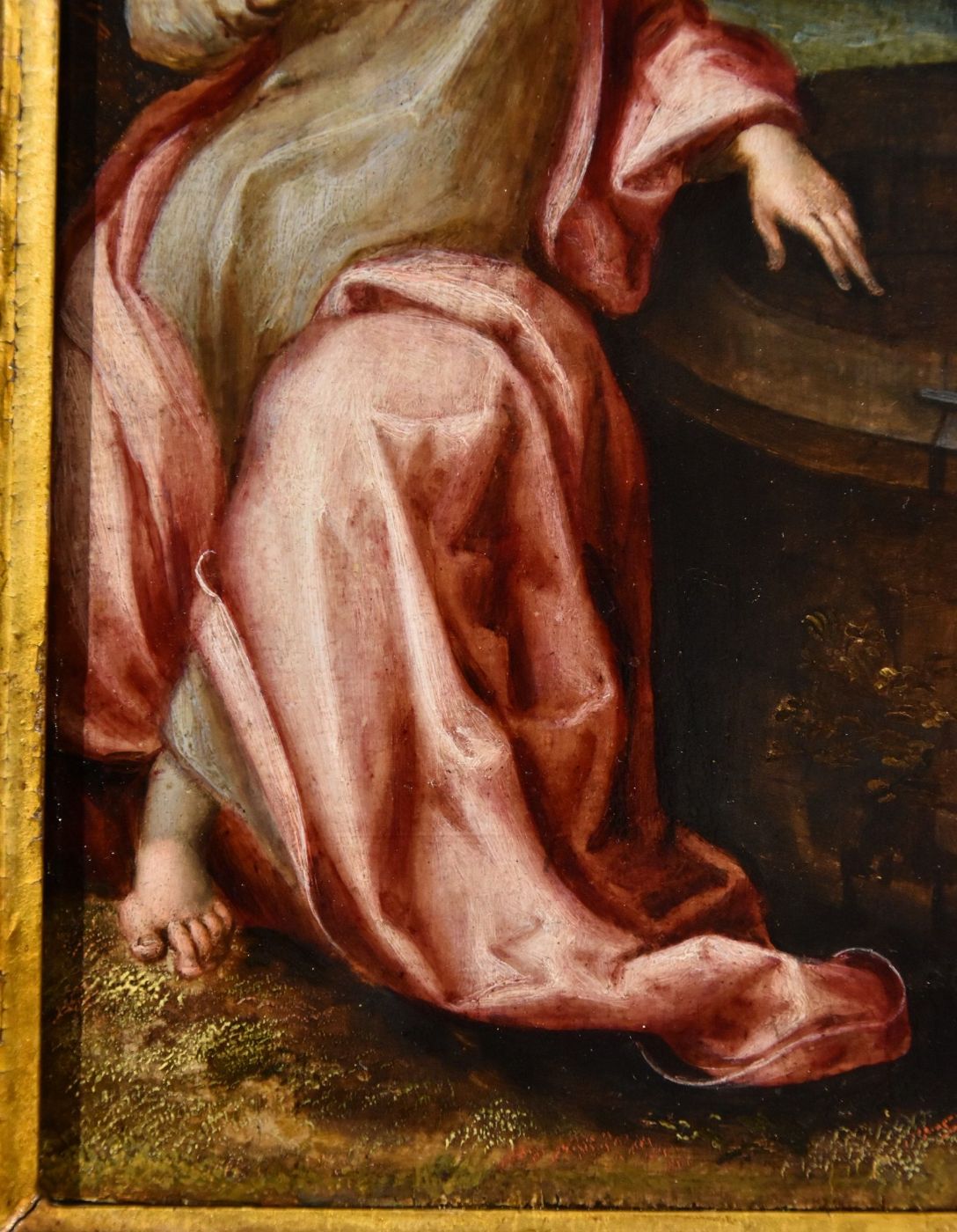
The state of conservation of the work appears to be very good. The painting is sold with a pleasant gilded frame.
FURTHER INFORMATION:
The work is sold with a certificate of authenticity and a descriptive iconographic sheet.
We handle and organize the transport of purchased works, both for Italy and abroad, through professional and insured carriers.
It is also possible to view the painting at our gallery in Riva del Garda; we will be happy to welcome you to show you our collection of works.
Contact us, without obligation, for any additional information.
Follow us also on:
https://www.instagram.com/galleriacastelbarco/?hl=it
https://www.facebook.com/galleriacastelbarco/