Michele Desubleo (Maubeuge, 1602 - Parma, 1676) - Attributable
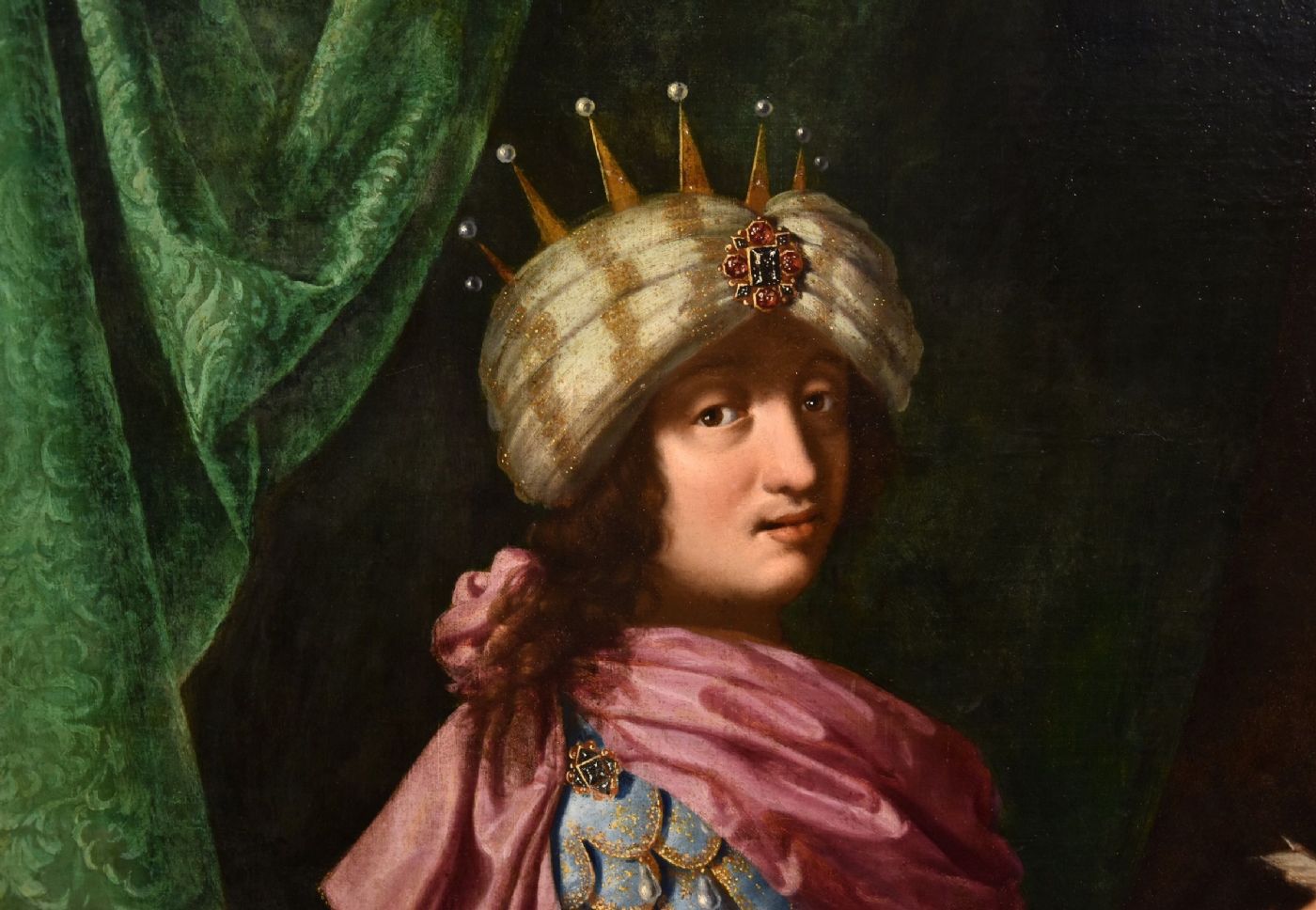
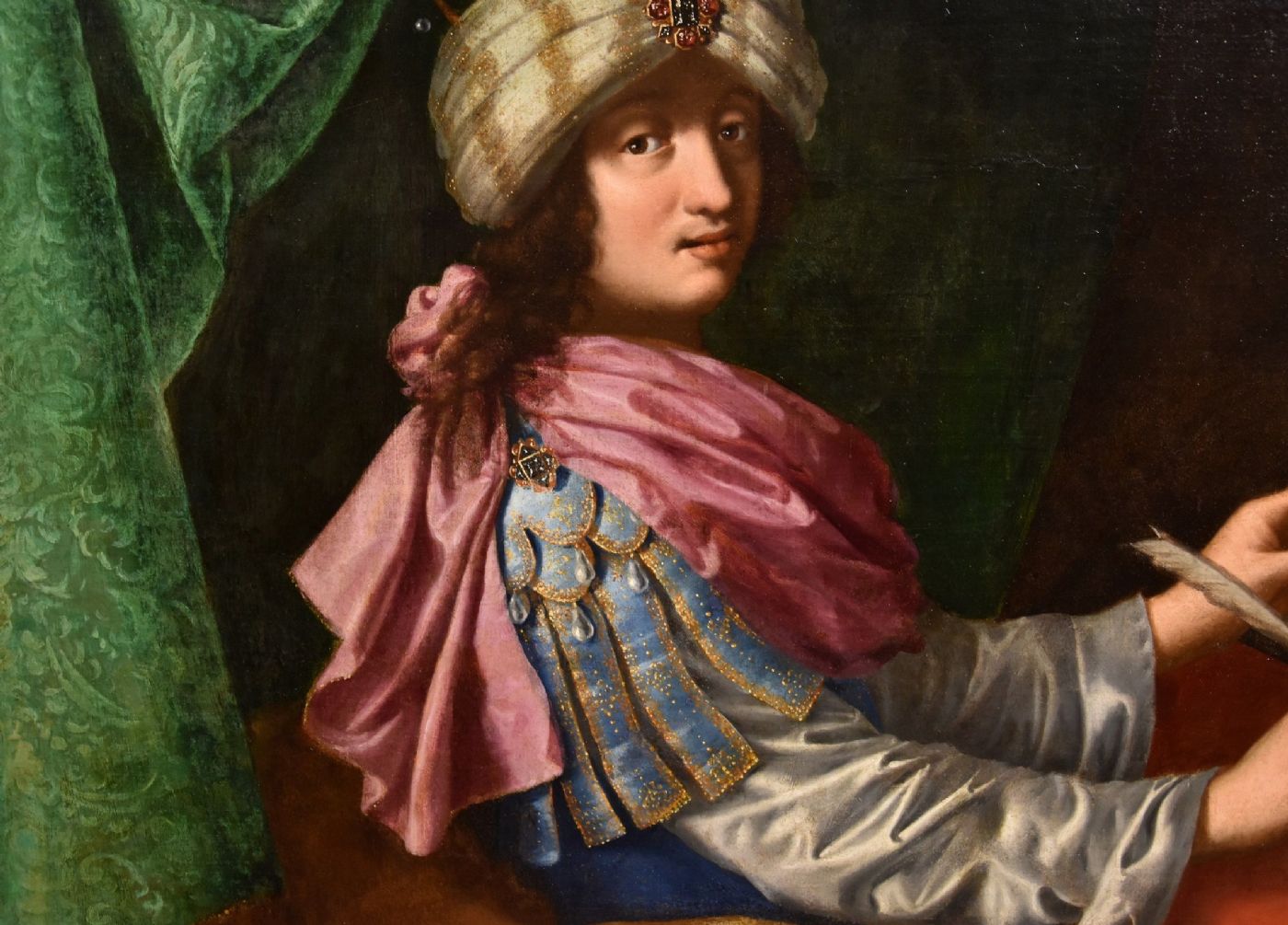
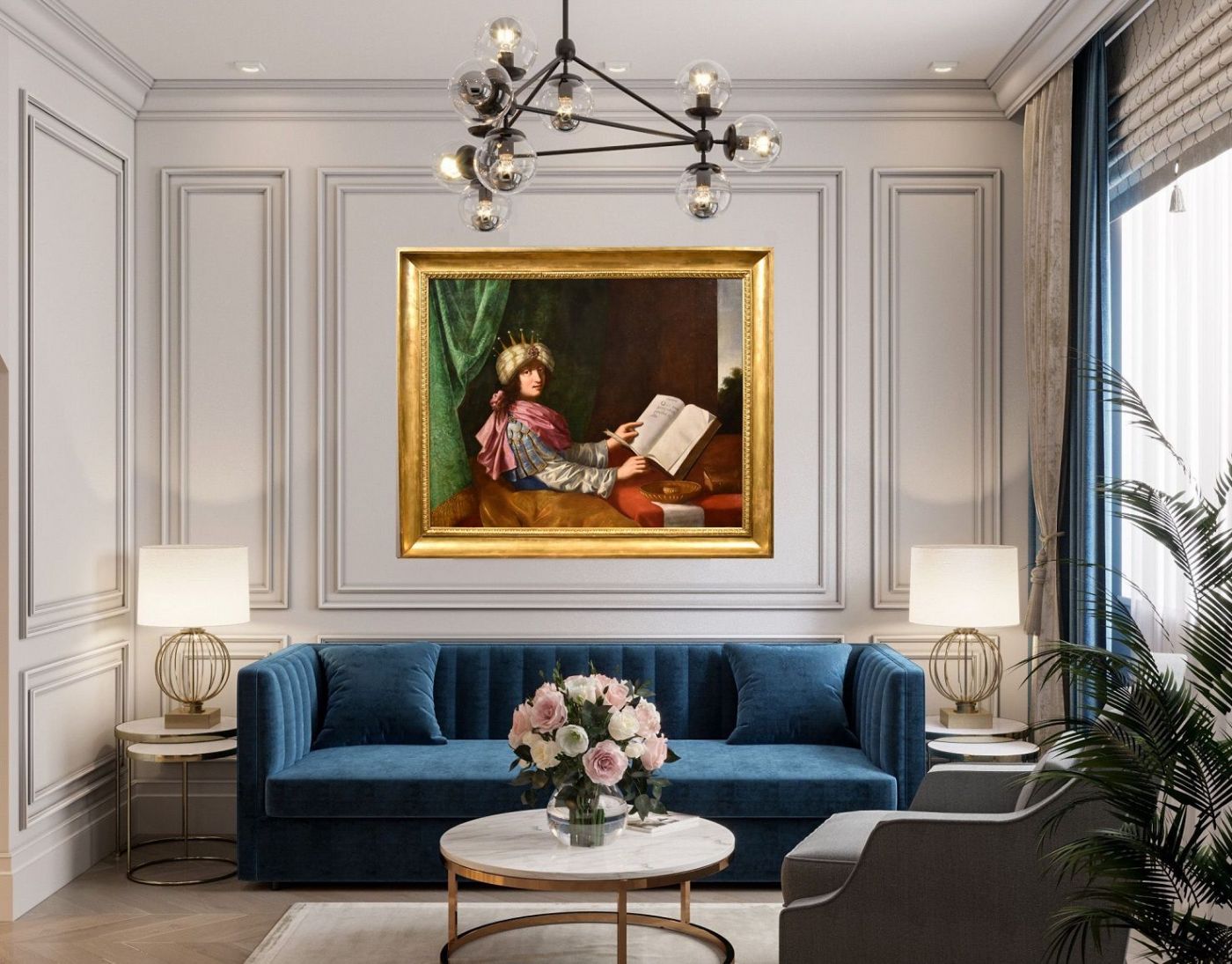
Portrait of a Gentleman as Solomon, the Wise King
Oil on canvas
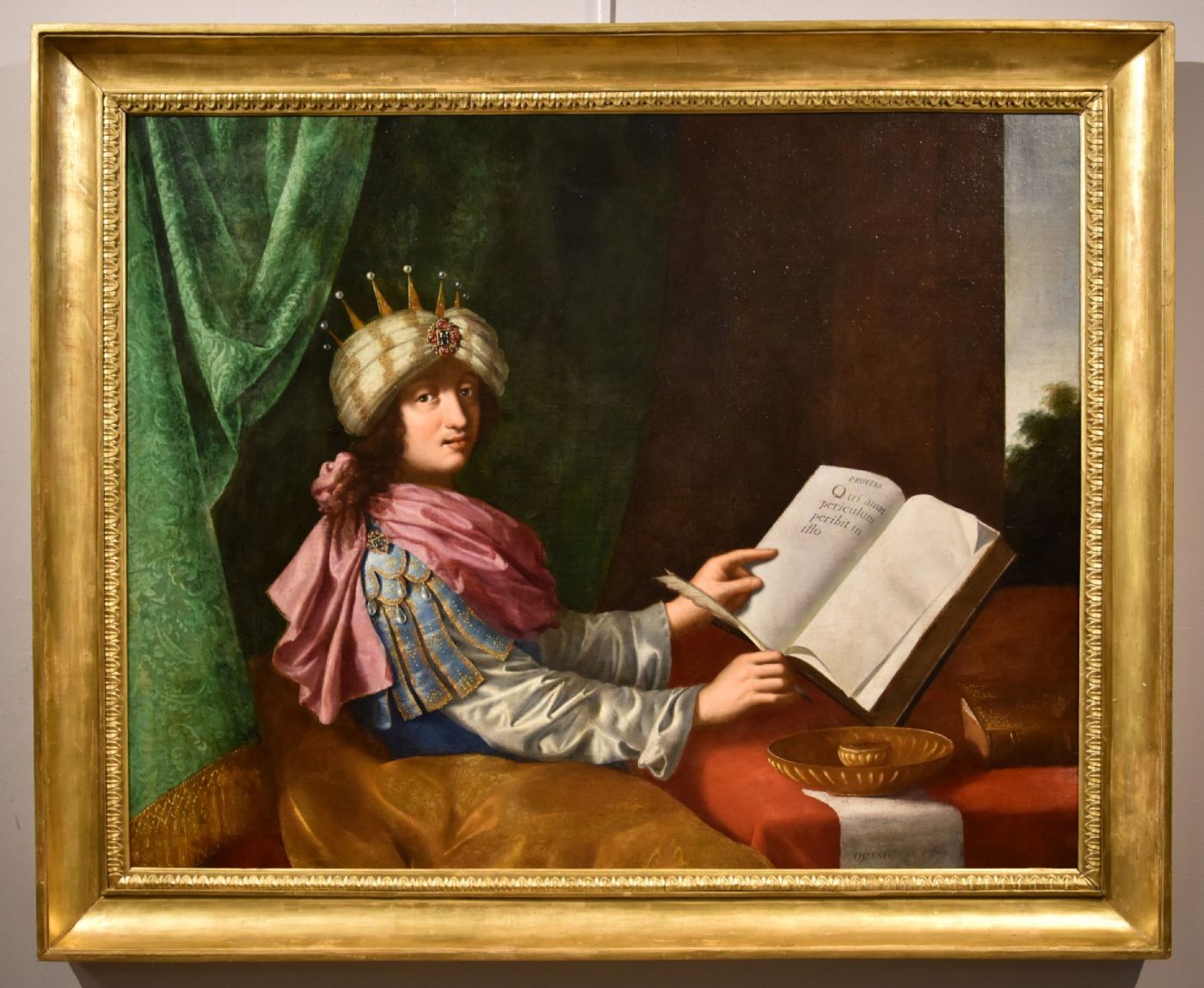
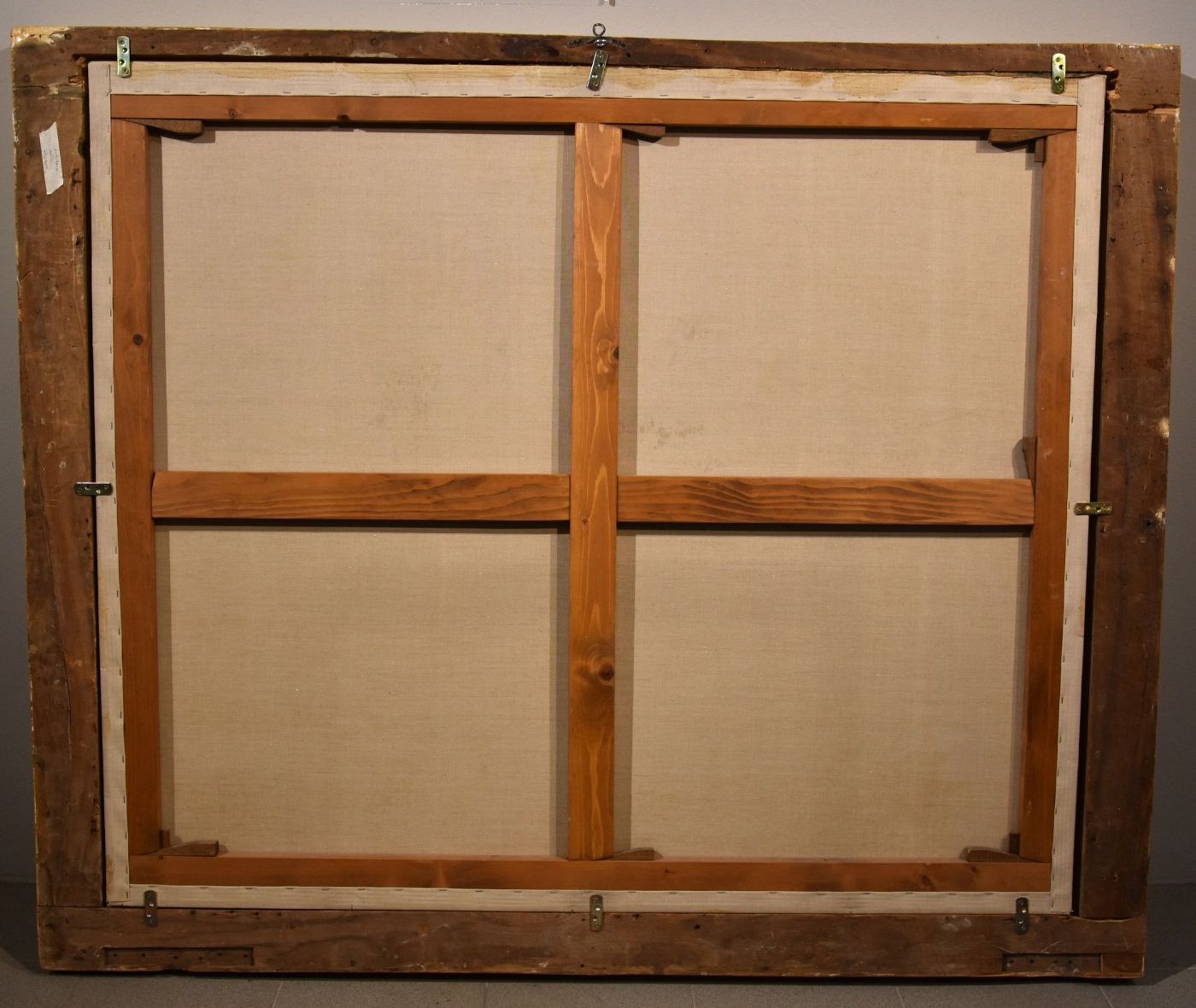
120 x 141 cm, within a gilded wooden frame cm 134 x 162 cm.
All details regarding this painting can be viewed at the following - < -
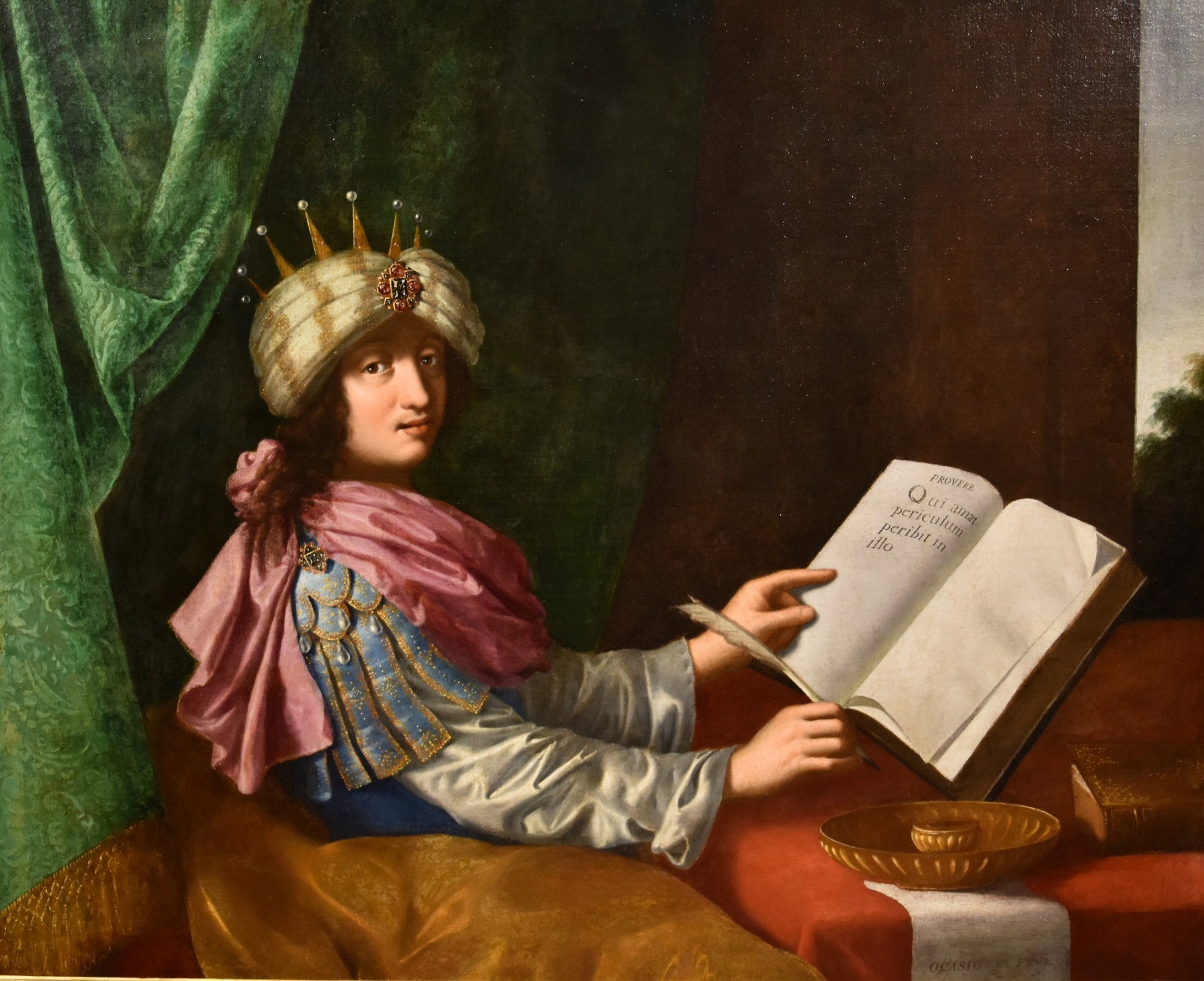
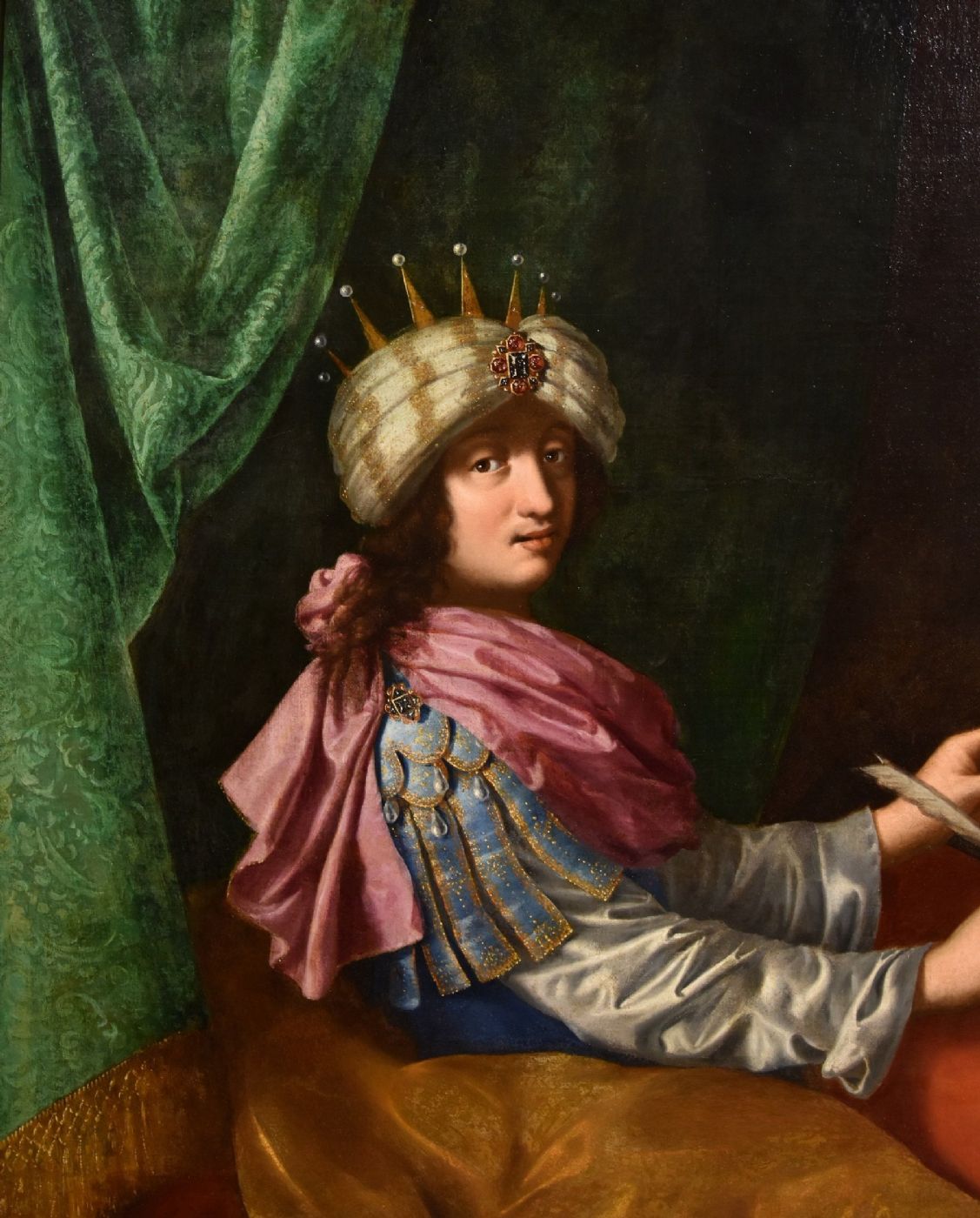
The beautiful painting shows us an image of the famous King Solomon, a legendary biblical figure who, over the centuries, has become the personification of the good ruler, and proverbially recognized as one of the wisest politicians in history. The features of the effigy are presumably those of the client of the work, who wanted to highlight his image by impersonating a character with a legendary reputation.
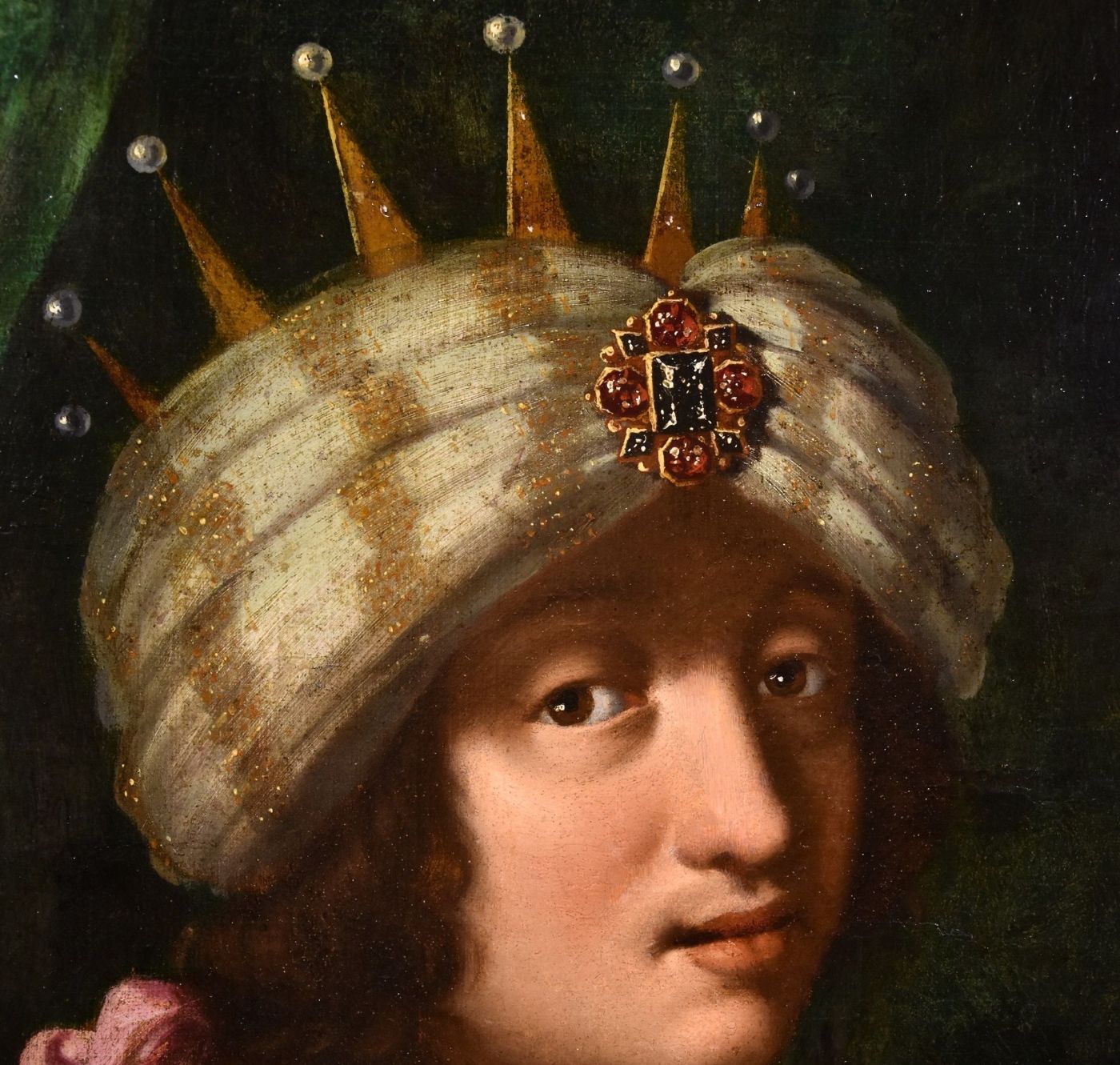
The ruler, with an elegant oriental-style crown headdress, is dressed in lavish silk robes, precious brocade and pearls that surround his shoulders, wears royal jewels, and is portrayed in the act of writing with a quill.
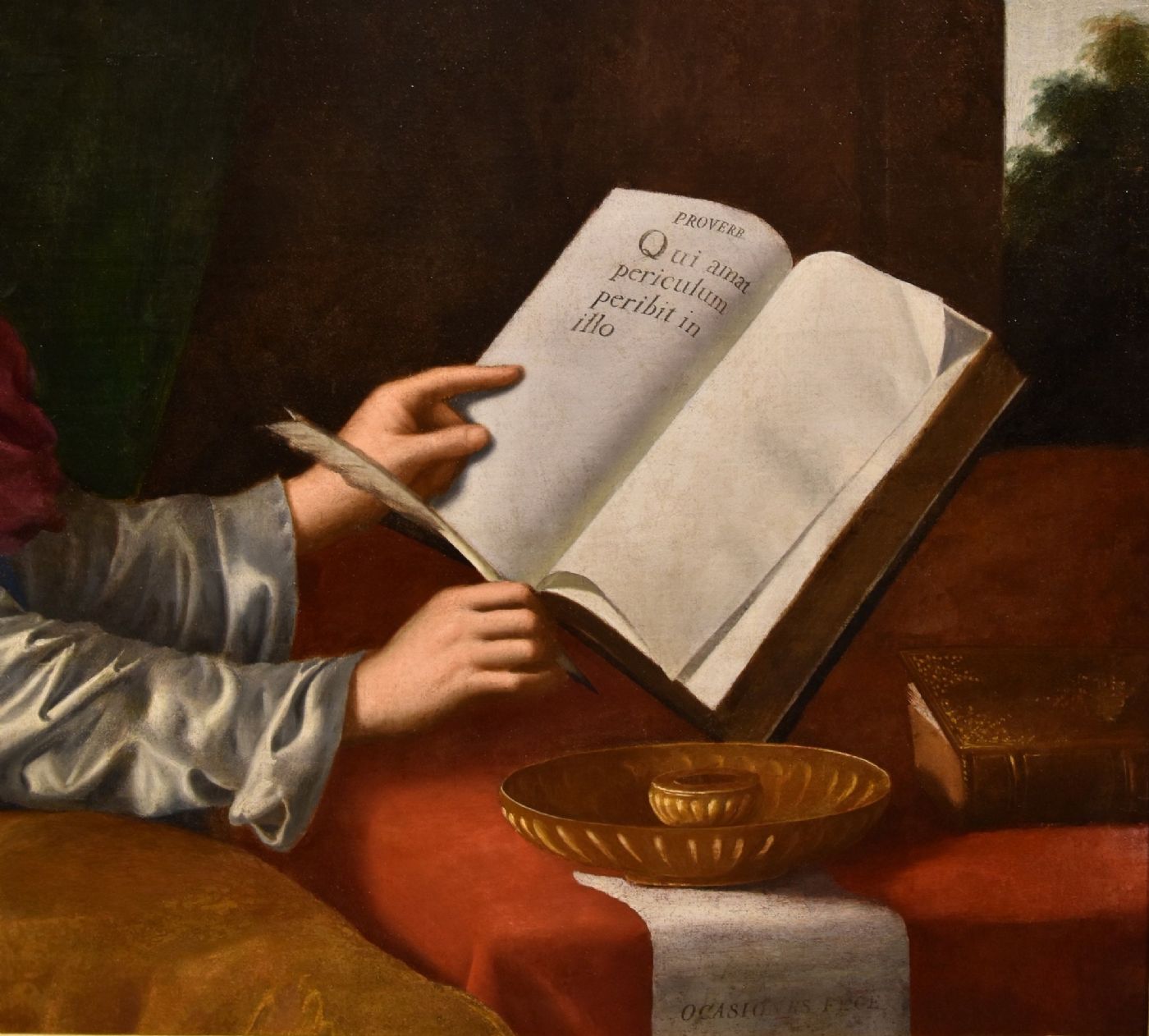
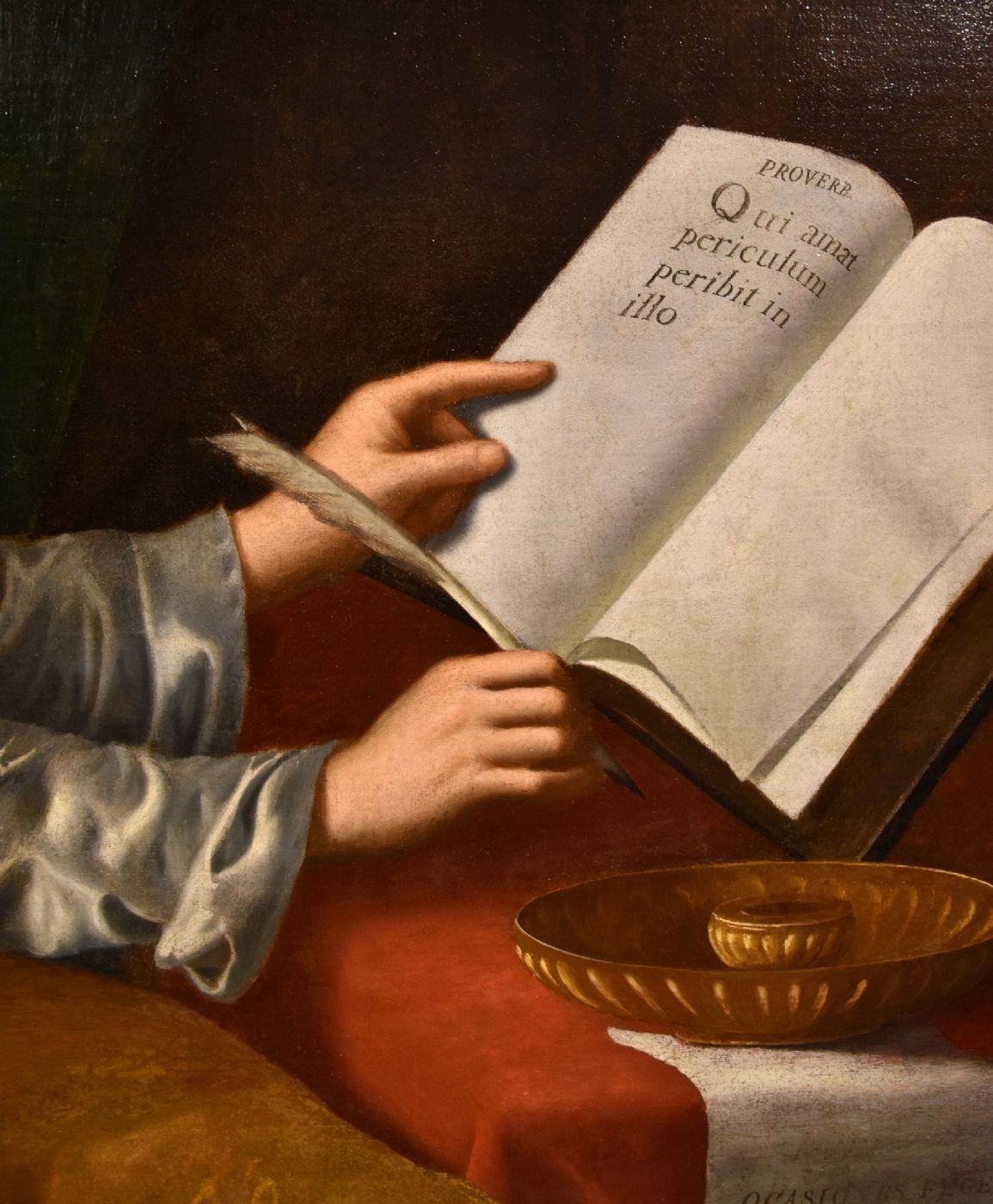
To reinforce his image of wisdom, he holds in his hands an open book on which a Latin locution taken from Ecclesiastes is legible, one of the short books of the Old Testament, dedicated to moral ethics and written by King Solomon himself. Detail of great semantic refinement, indicating that the client was not only an art collector but a man of culture.
The phrase 'Qui amat periculum, peribit in illo' (Ecclesiastes, III-27) - 'He who loves danger will perish in it' - alludes to anyone who voluntarily puts himself in danger by giving in to temptations and sin, will be destined to remain lost.
In the lower part of the composition there is a sheet that reports a second inscription, related to the first, namely 'Ocasiones fugit', a sort of exhortation that the wise ruler feels he must give to the observer of the work. Anyone who desires a virtuous life, directed to good, must not only abandon sin, but also the opportunity to sin, thus drawing on his moral virtue.
Now entering into the merits of the stylistic characteristics of our precious canvas, their analysis leads us to place its origin in that magnificent classicist expression of 17th-century Bolognese culture, with evident references to the master Guido Reni.
The compositional details, first of all the glazing of the complexion of the face, rendered with incredible shine, as well as the precious details of the clothes or the damask emerald green cloth, induce us to circumscribe its work to the great Franco-Flemish painter Michele Desubleo (Maubeuge, 1602 - Parma, 1676). Counted among the best students of Reni, he owes his great collection success to his extraordinary ability to amalgamate the best Bolognese tradition with his Nordic origins and still with Roman influences, elements that translate into a lexicon of balanced and rare elegance.
In detail, if the masterful use of colors, bright and glazed, attests to the Nordic origin of his manner, and the shadows of the large draperies betray the contact especially with the works of Simon Vouet in Rome, where he is attested in 1624 alongside his half-brother Nicolas Regnier, the contour sign of his figures, safe but always imprinted to the search for the rounded form, brings him closer to the style of the masterpieces of his master Guido Reni.
Accompanied by a photographic certificate of authenticity in accordance with the law.
It is our duty to advise that, given the delicacy of some particular antique frames, there is the possibility that small lesions of the gilding may occur during transport, despite the packaging being carried out with the utmost care.
We take care of and organize the transport of purchased works, both for Italy and abroad, through professional and insured carriers.
For any information, do not hesitate to contact us.
Follow us also on :
https://www.instagram.com/galleriacastelbarco/?hl=it
https://www.facebook.com/galleriacastelbarco/