Bolognese school of the 17th century
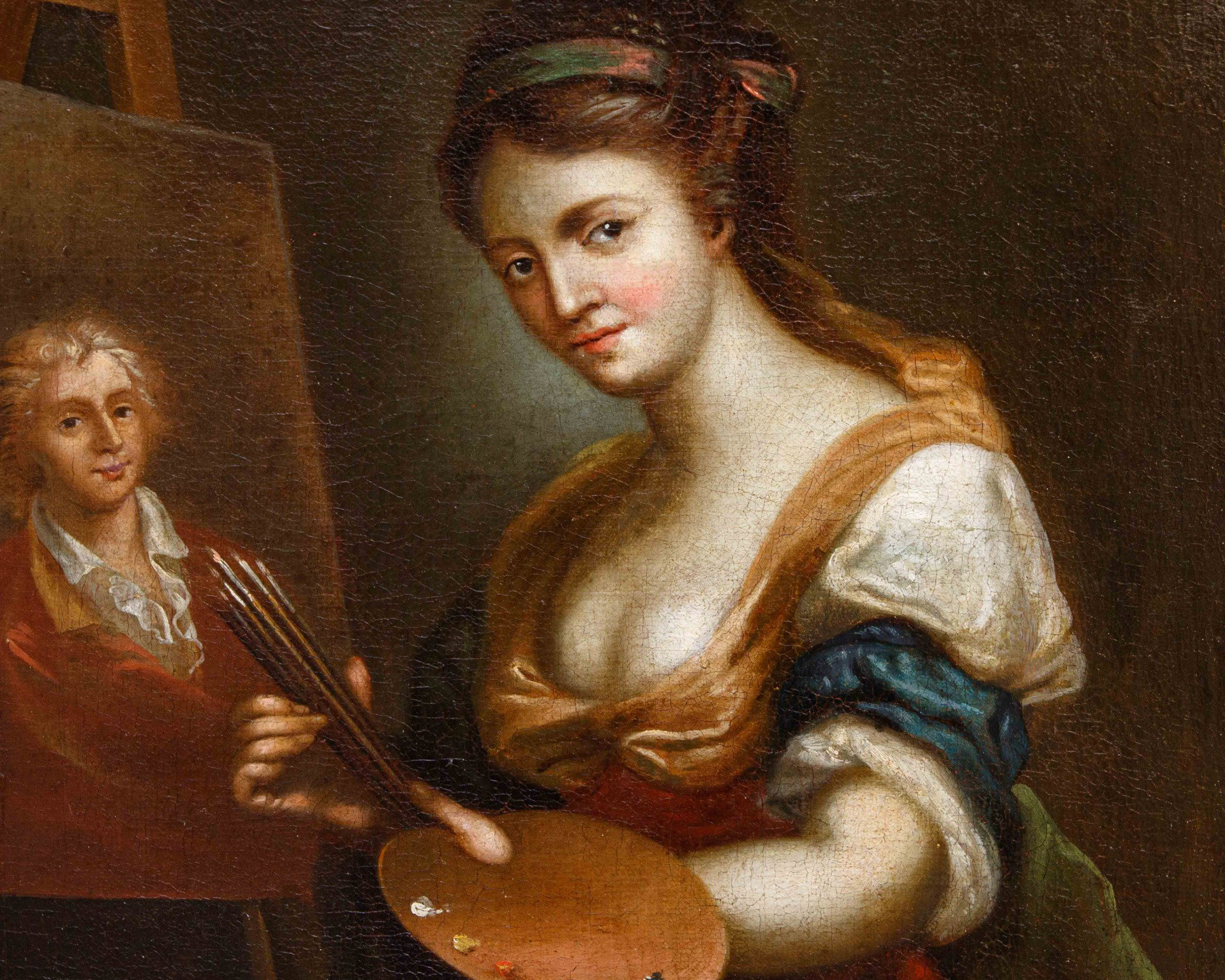
Portrait of Ginevra Cantofoli
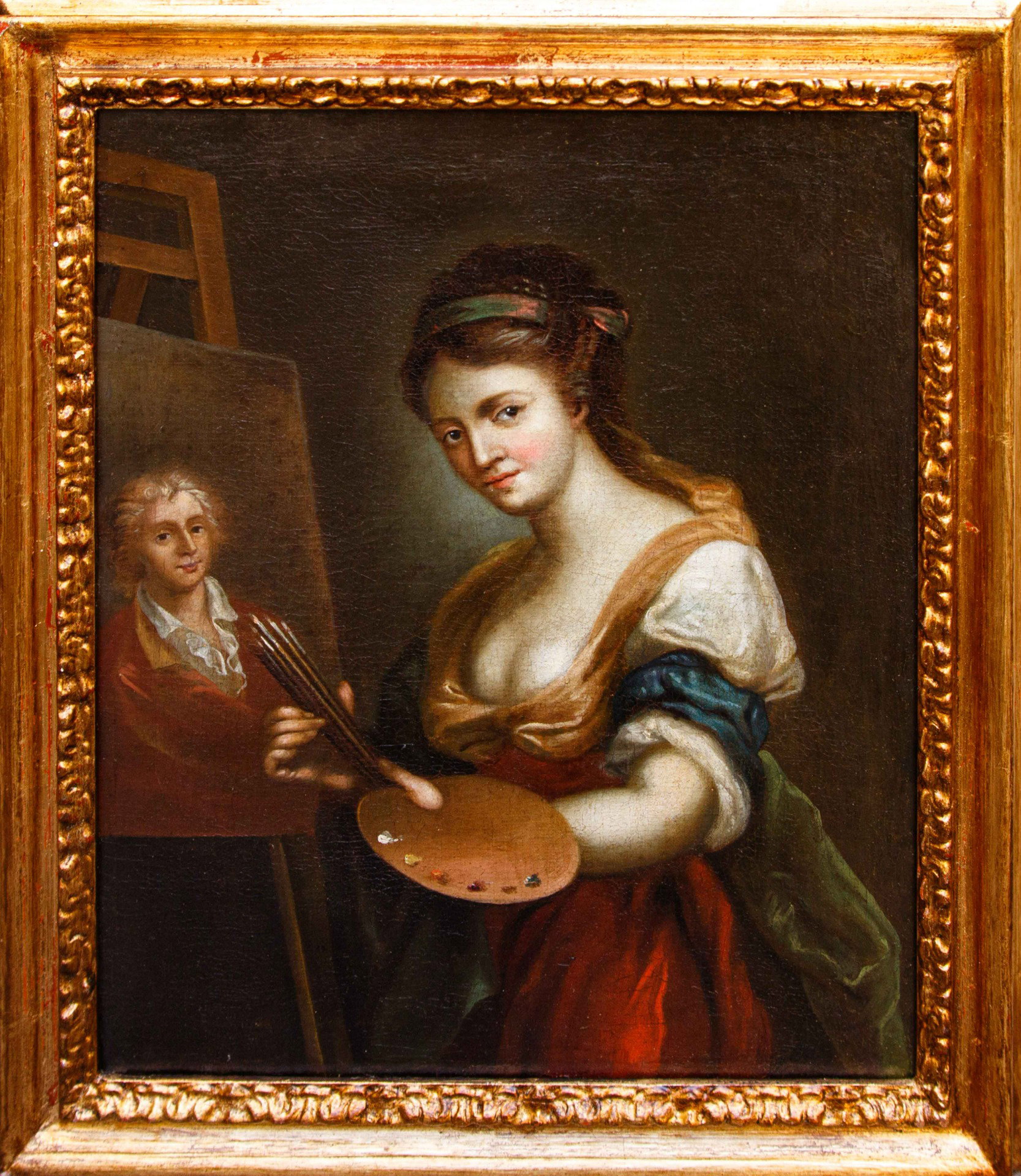
Oil on canvas, 48 x 39.5 cm
With frame, 57 x 50 cm
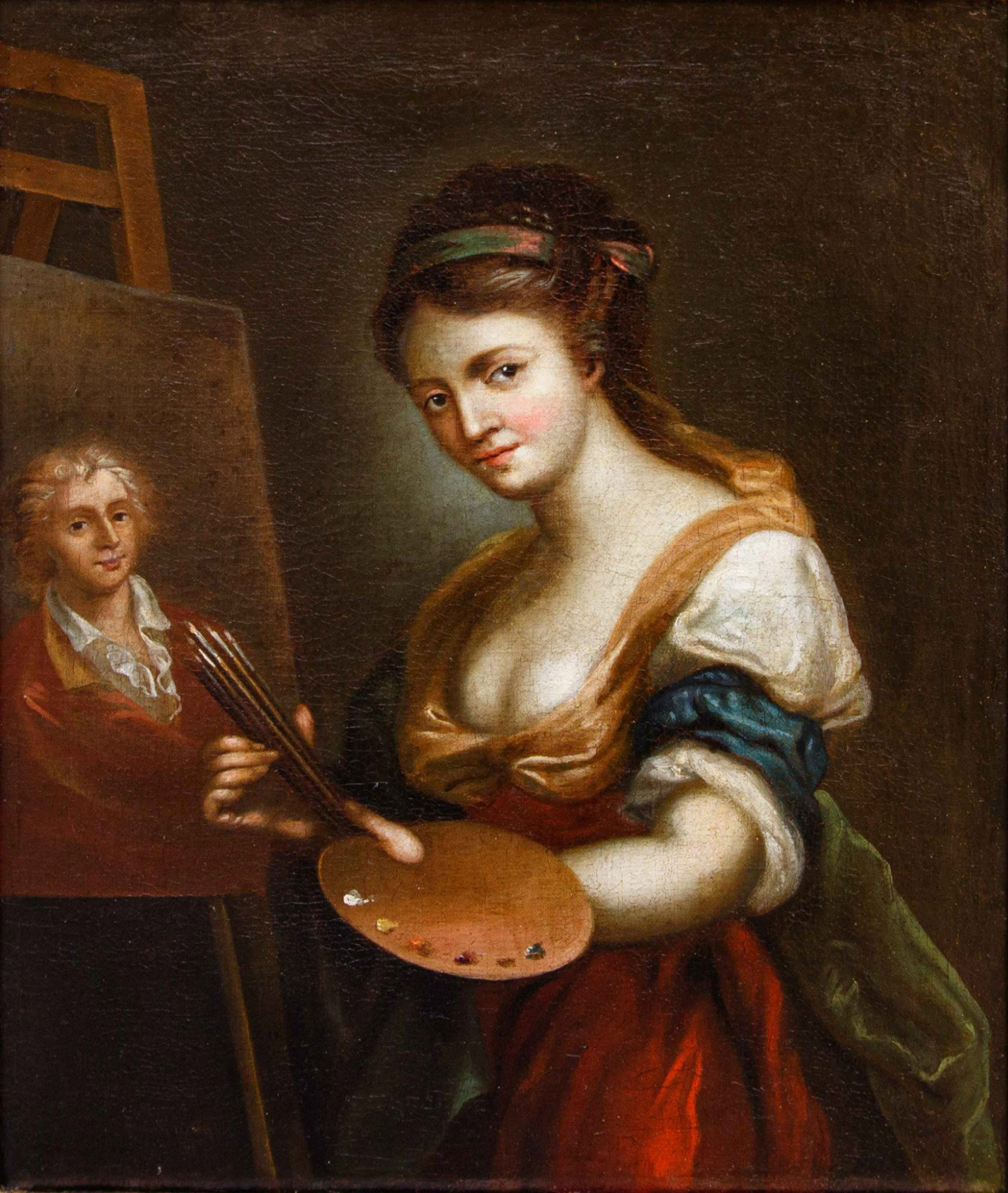
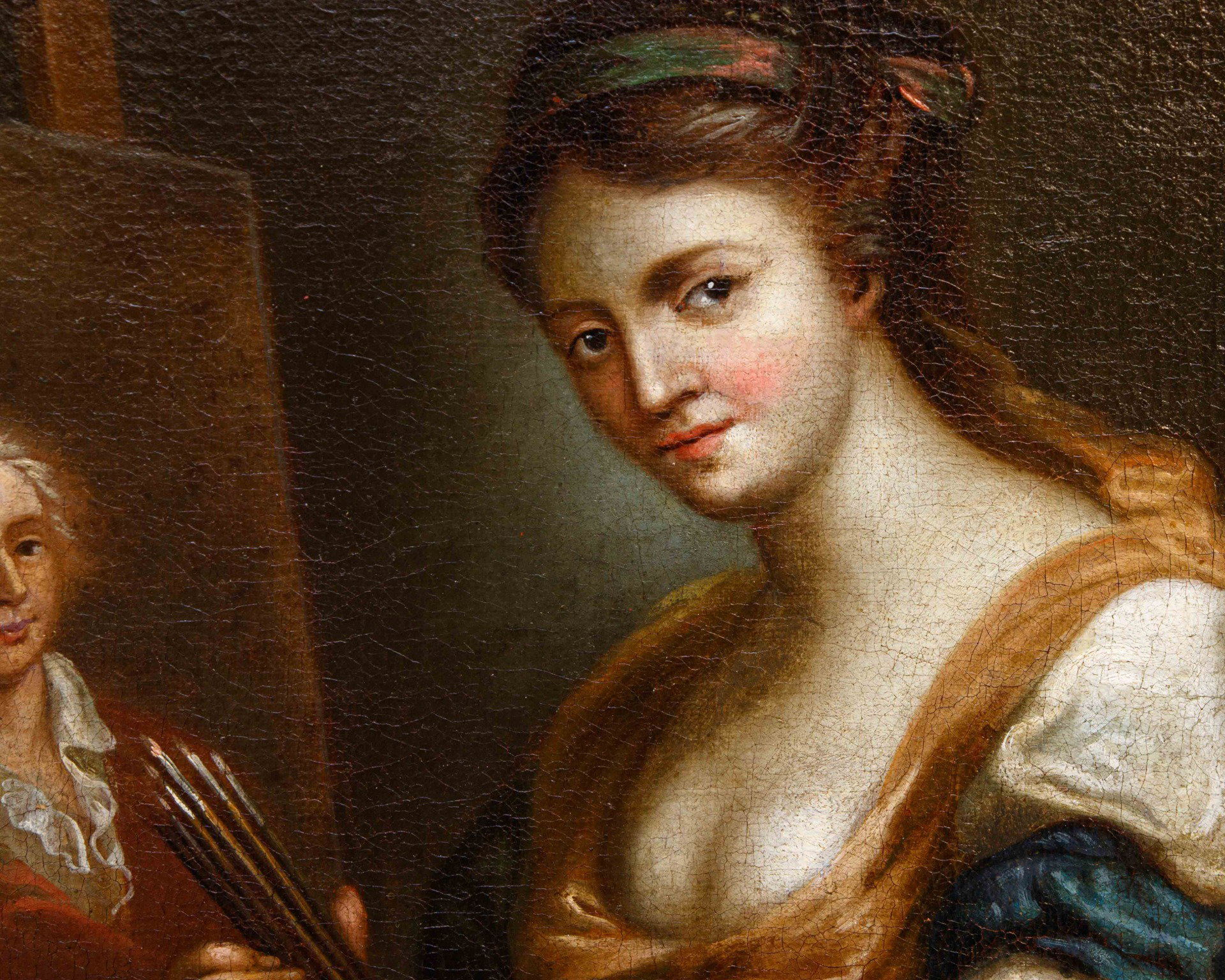
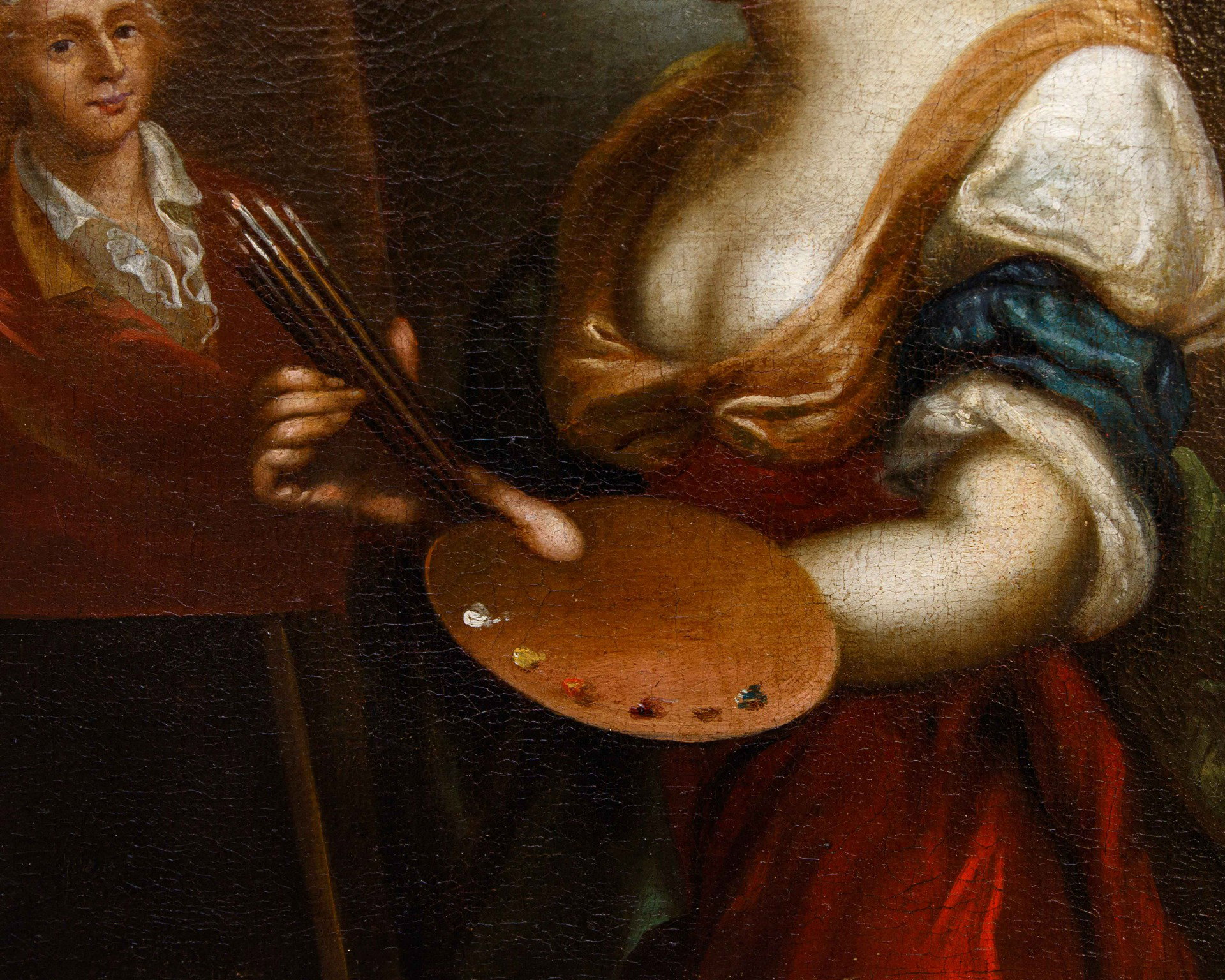
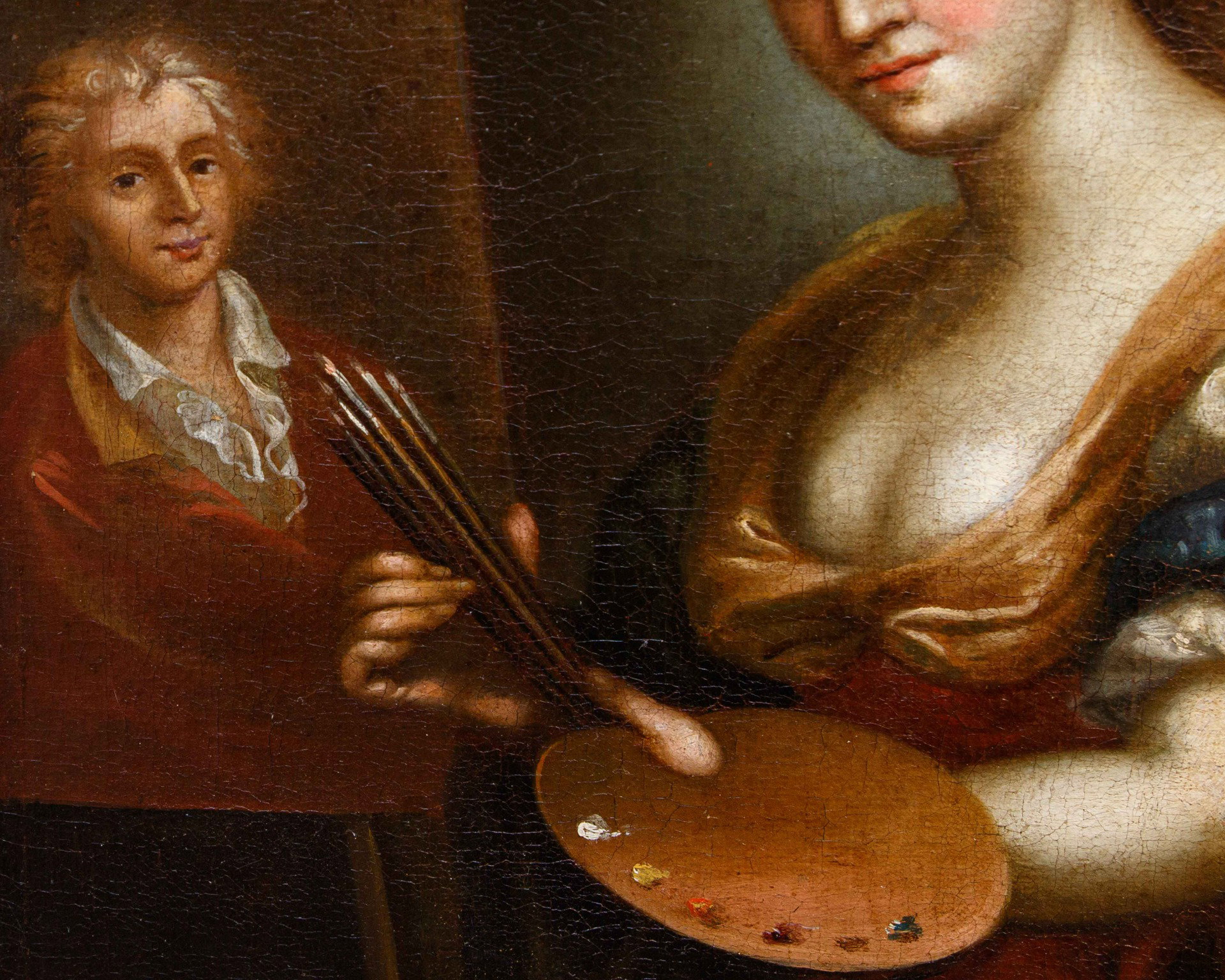
This painting depicts a female painter caught in the midst of her creative activity. In fact, she turns her gaze towards the viewer, as if she had been interrupted suddenly, while holding the palette and brushes, the tools of the trade, in her hands, and with an easel behind her on which rests her latest work: a half-length portrait of a young man who plays with the concept of a picture within a picture, creating a double illusion for the eyes of the observer. Both this solution and the idea of representing oneself holding objects and tools related to one's artistic work were often used by female painters, who wanted in this way to demonstrate their cultural, professional, and cultural independence from a male world, in which it was difficult to establish oneself due to centuries-old habits and stereotypes that also reverberated in the artistic universe. The fame that some women achieved in the field of painting was recognized both by their contemporaries and in the centuries that followed, reaching to the present day; many of these decided to represent themselves or had themselves portrayed while carrying out their art, as did great artists such as Lavinia Fontana, Sofonisba Anguissola, Elisabetta Sirani, Artemisia Gentileschi, Rosalba Carriera, and Violante Series Cerotti. Often the portrait also took on a metaphorical meaning through some symbolic references that allowed the painter to be interpreted also as a possible allegory of painting, although in this work there are no objects or references of an allegorical nature. Focusing on the identity of the subject, the features, clothing, and hairstyle, held back by cloths tied tightly around the head, are reminiscent of those of a very important Bolognese painter of the seventeenth century and her female subjects: Ginevra Cantofoli (1608-1672), a student of Elisabetta Sirani and active in her native city throughout her life. Stylistically, the work is placed in the same century of activity as Cantofoli, from which it also takes up the tones, the soft chiaroscuro, the clothing, the dark background, and the diaphanous light that illuminates the woman's face. The author, therefore, follows in the stylistic footsteps of the effigy, perhaps for coherence with the subject represented or perhaps for proximity in artistic training, perhaps a colleague, a student, or an admirer of Cantofoli. This result recalls the work in which Bernardino Campi portrays Sofonisba Anguissola, made by the Cremonese painter herself, a student of the same Bernardino, in a game of reciprocal representations that could make us suspect that the man depicted on the canvas placed on the easel may be the same author of the canvas, who mirrors the portrait of the artist.