Mid-17th century, Rubensian School
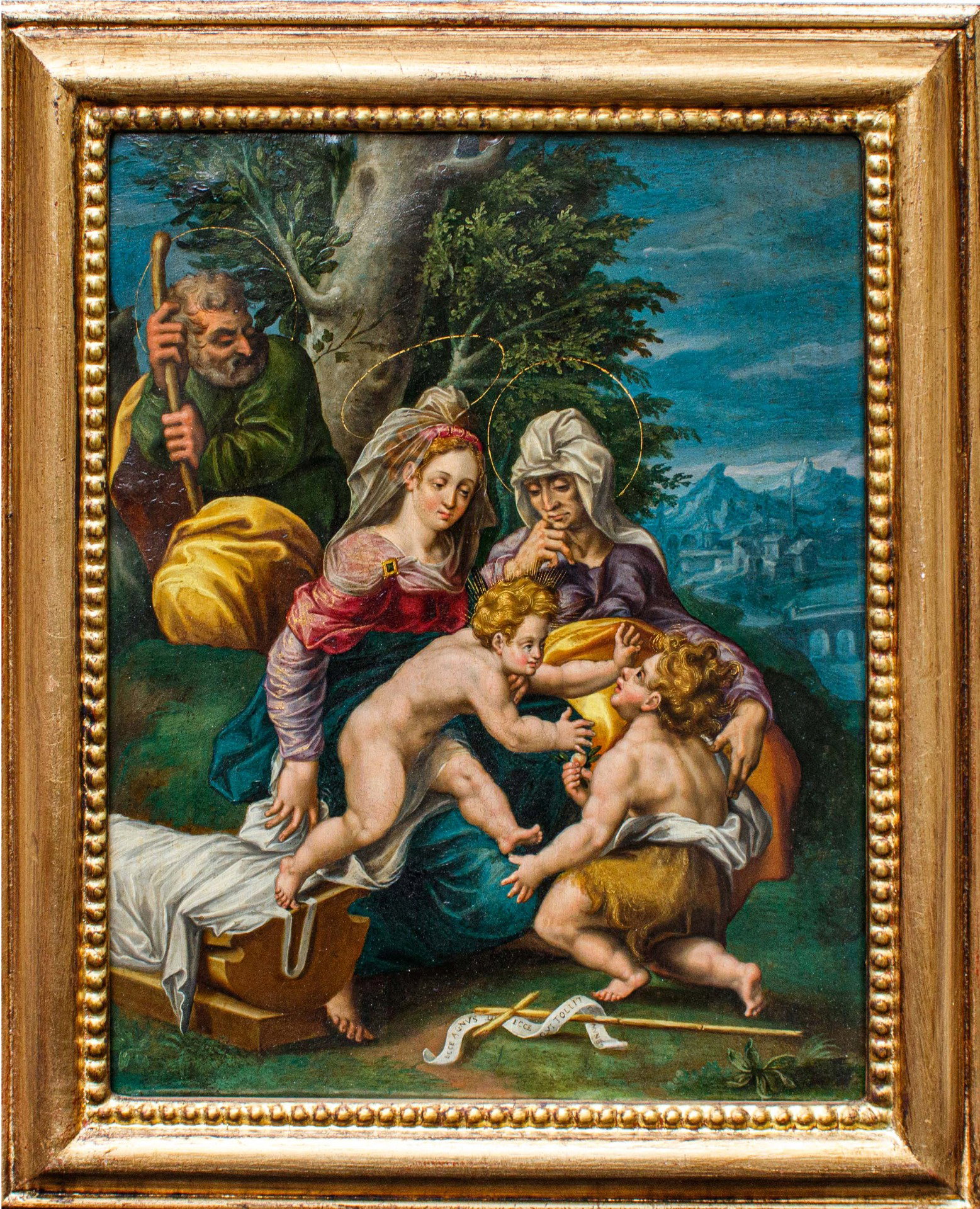
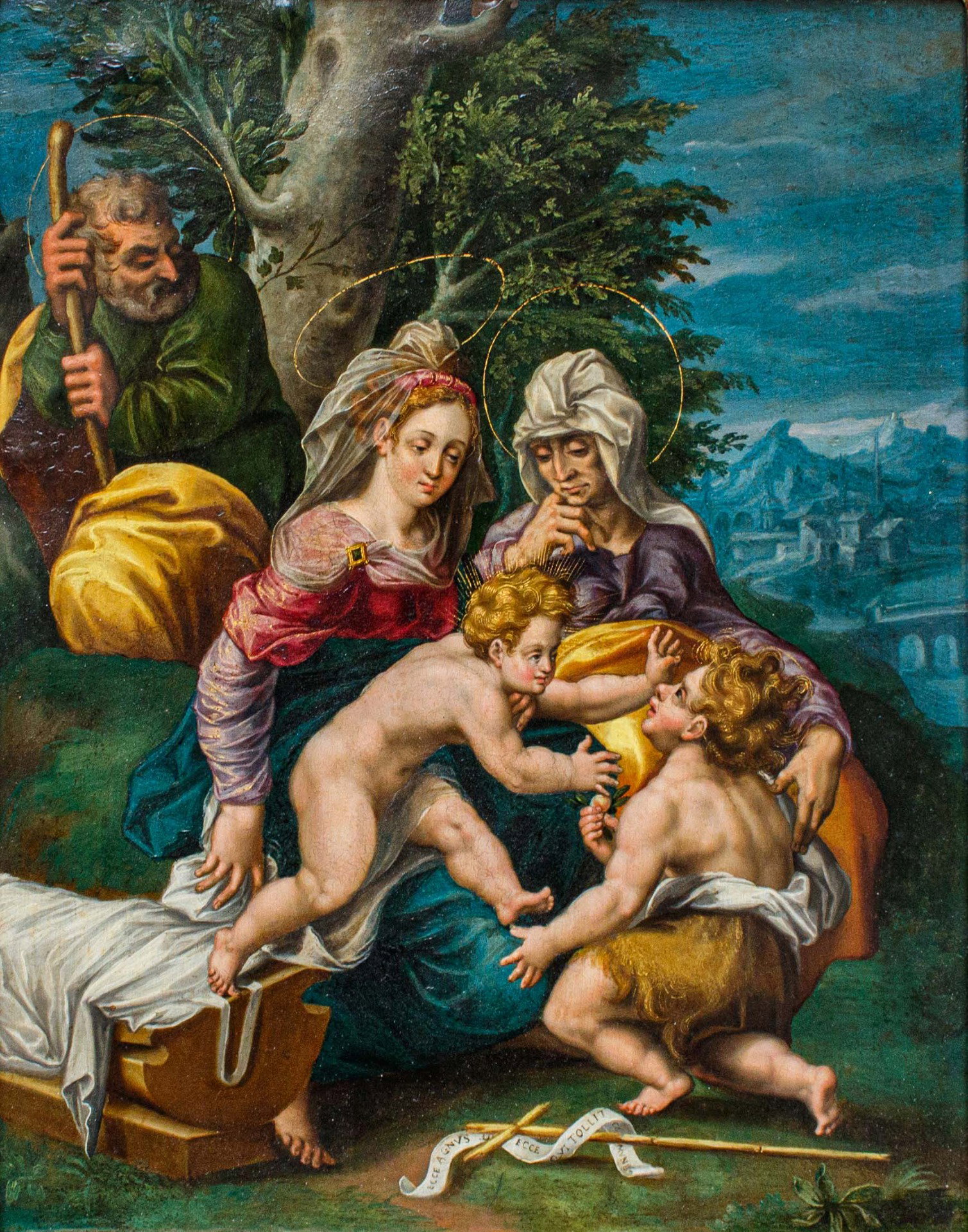
Holy Family with Saint John the Baptist and Elizabeth
Oil on copper, 36.3 x 29.5 cm
With frame, 47 x 38 cm
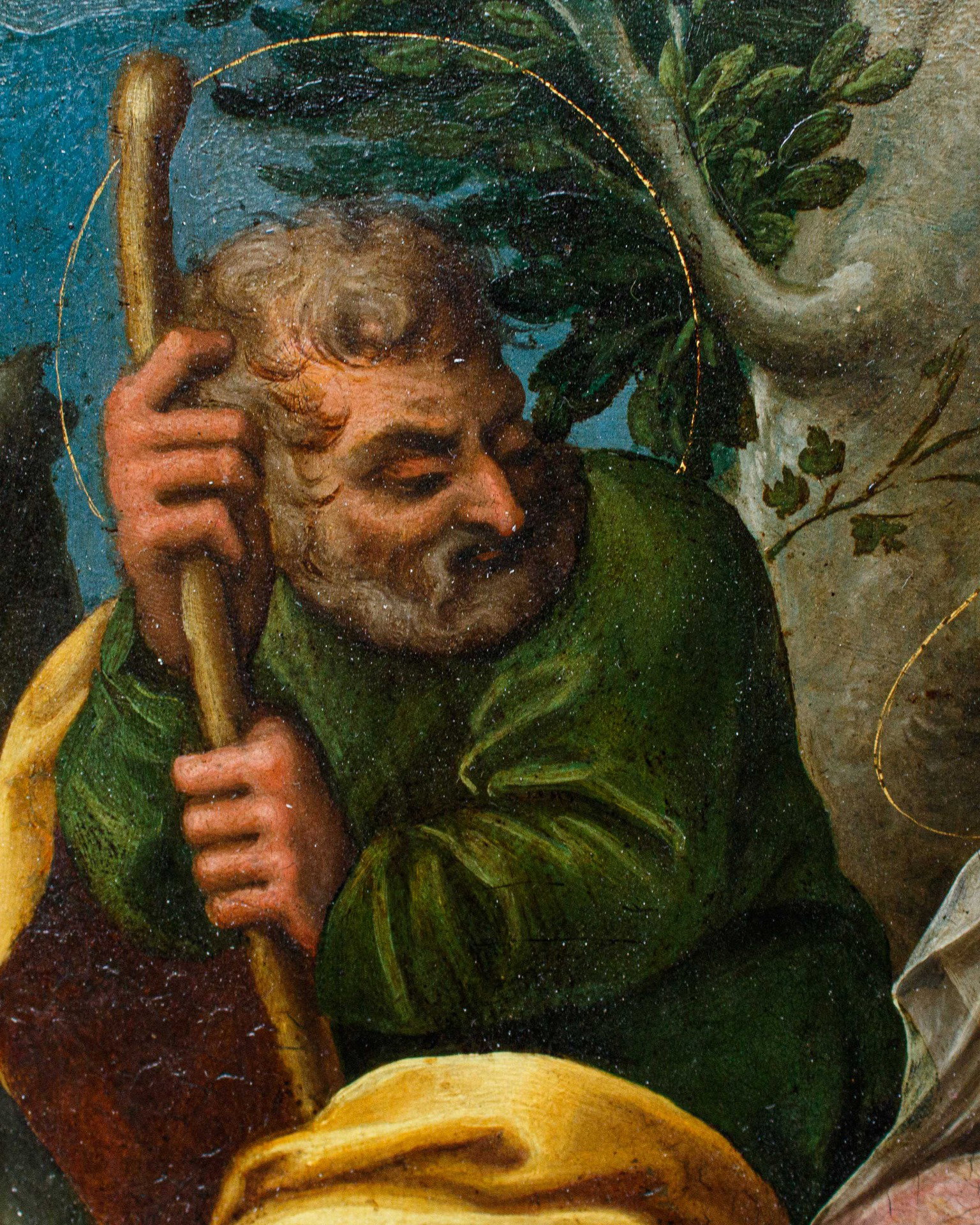
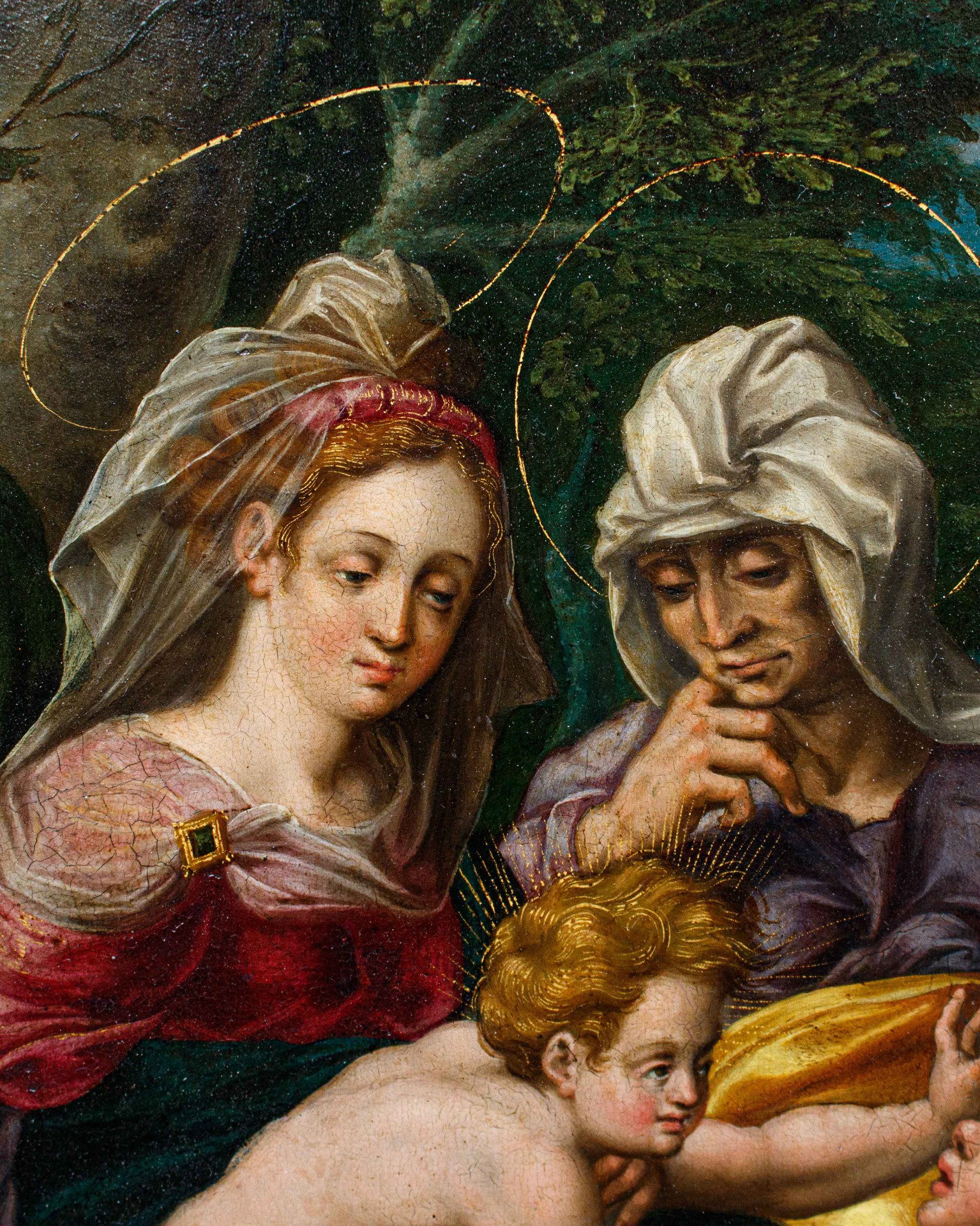
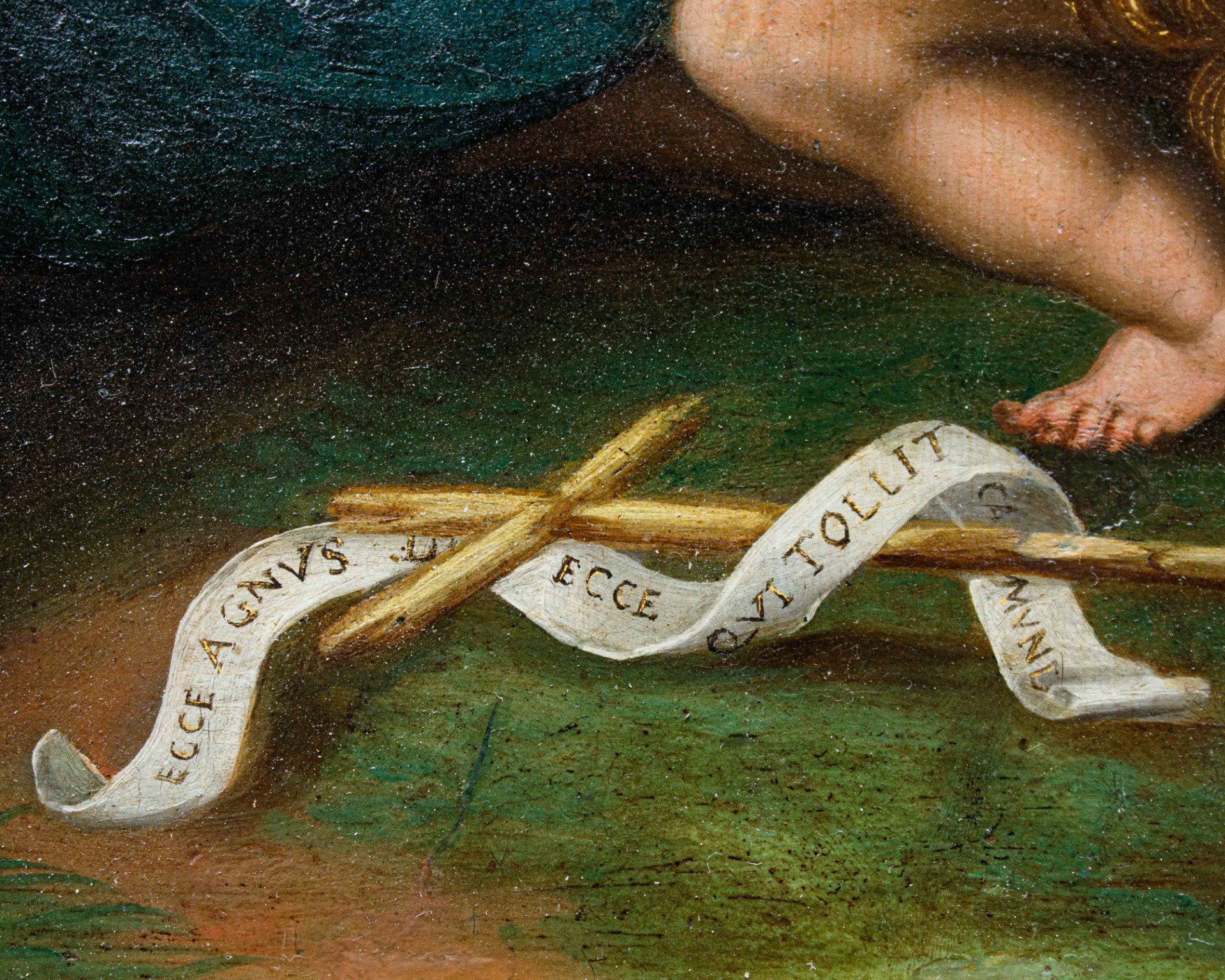
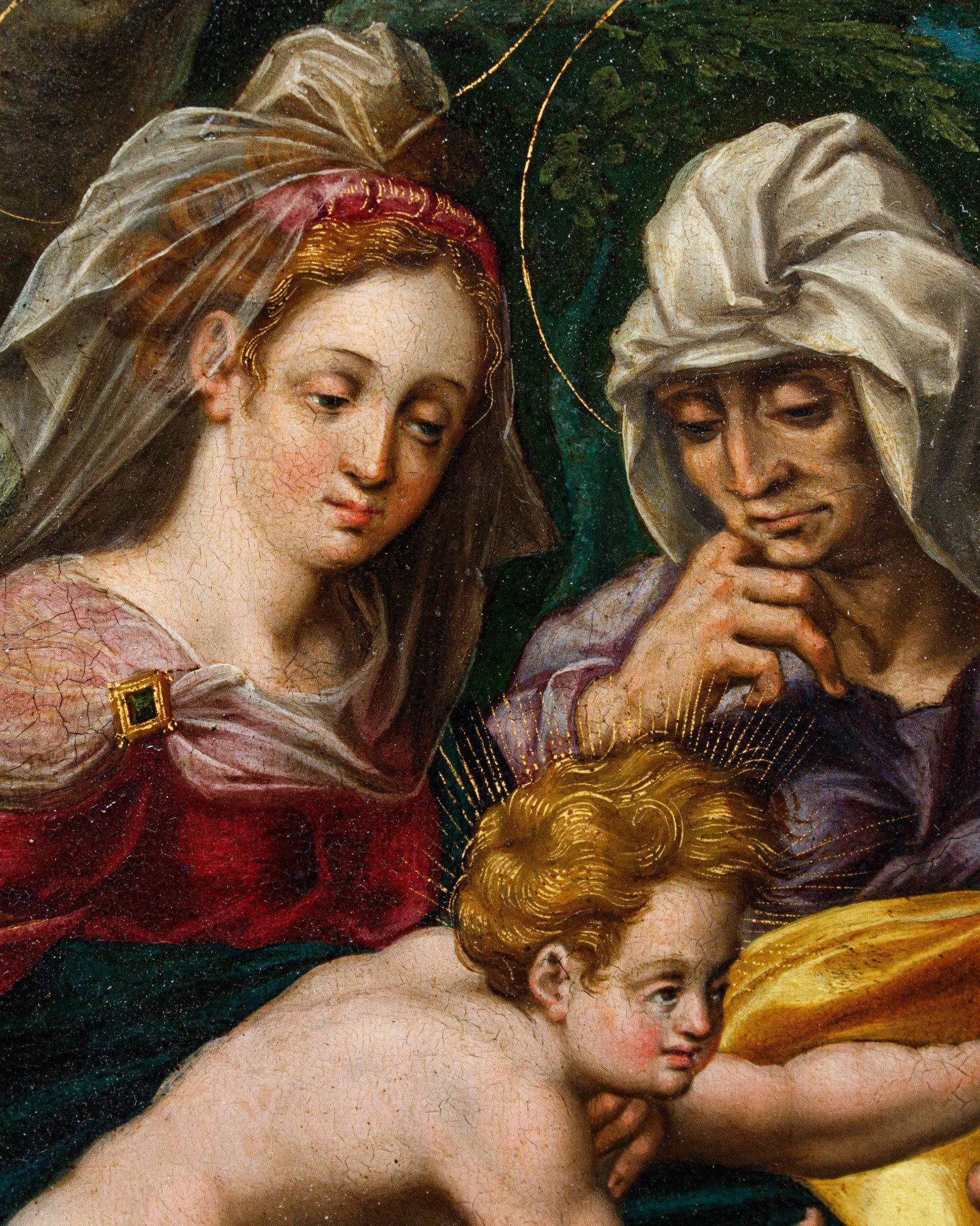
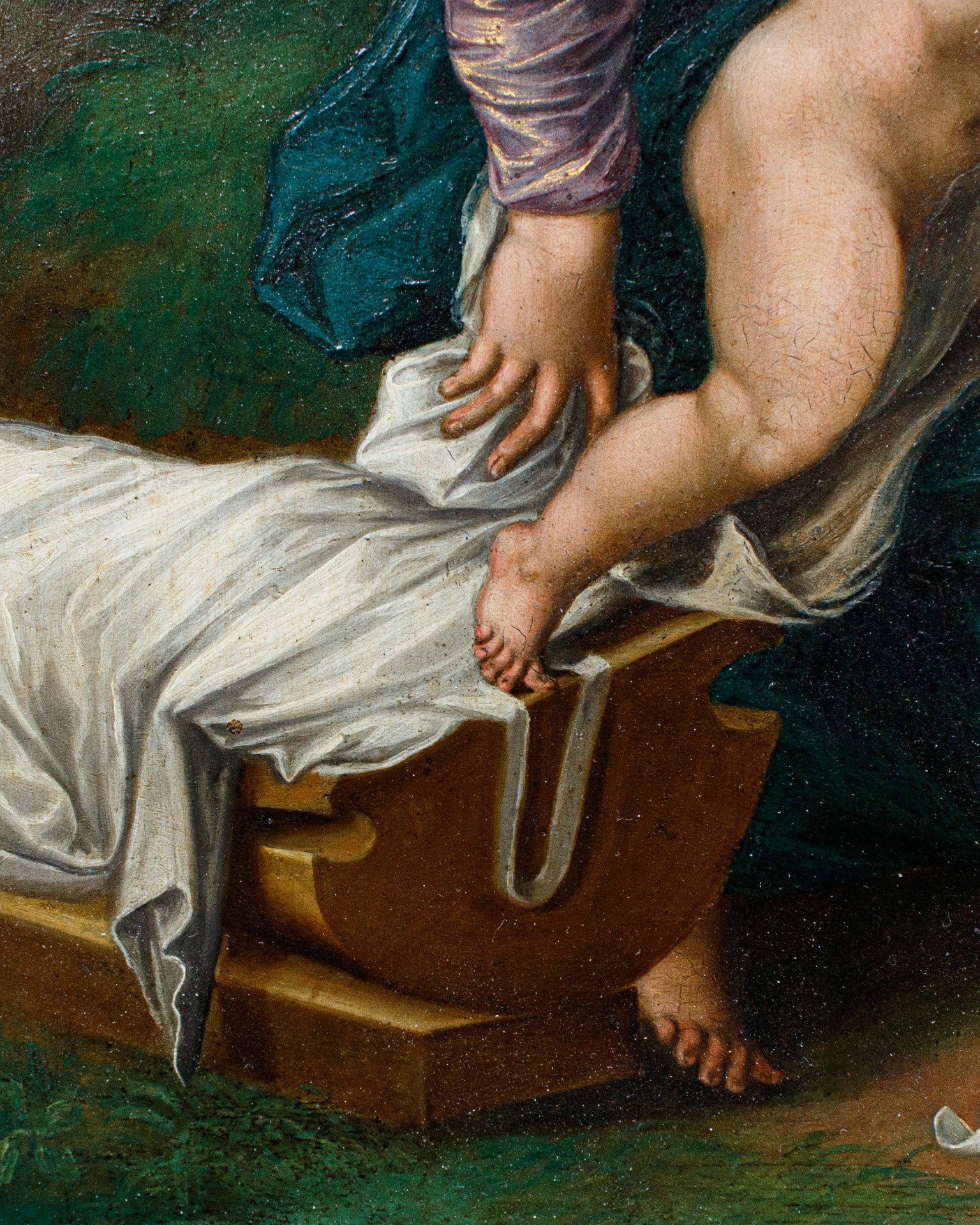
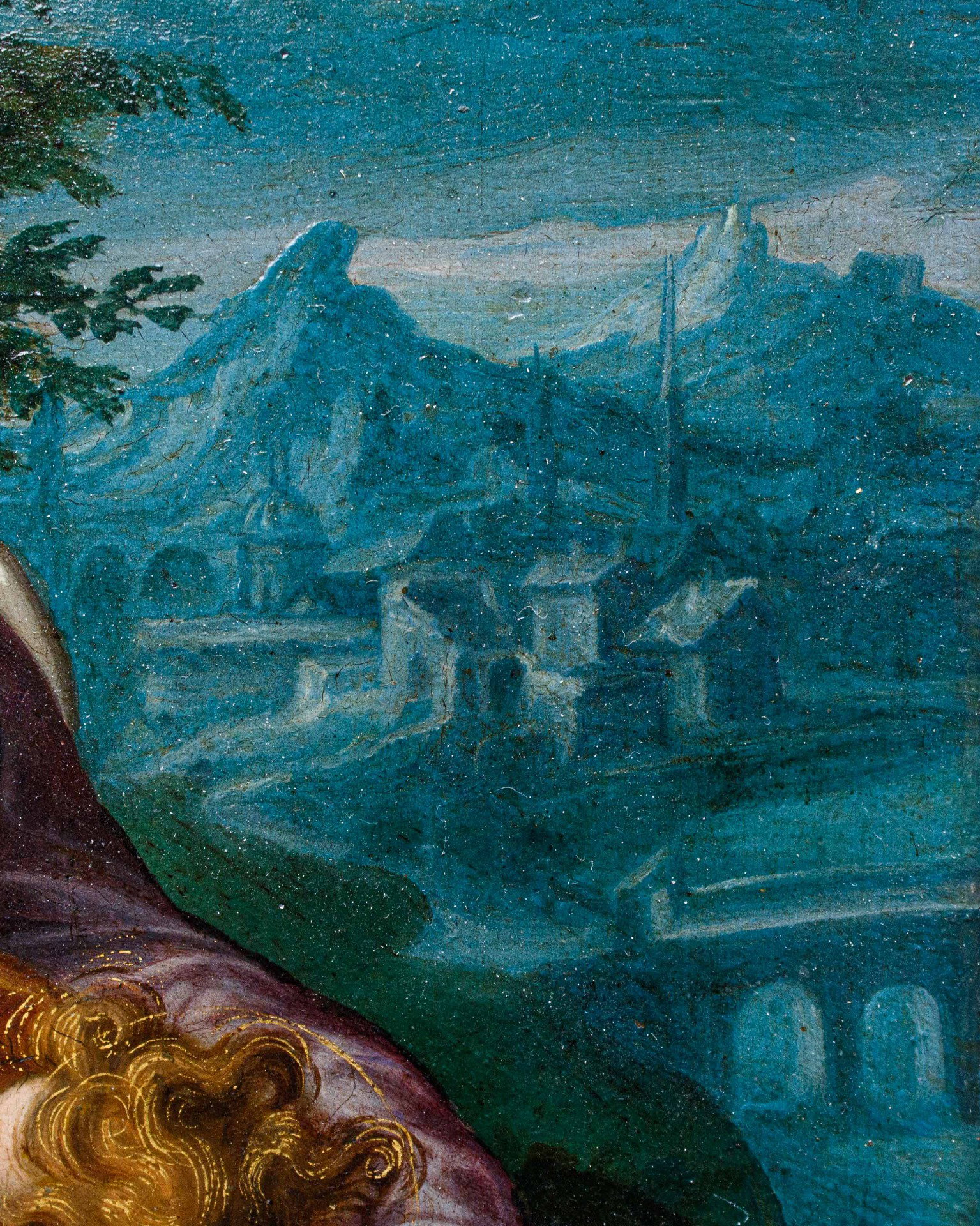
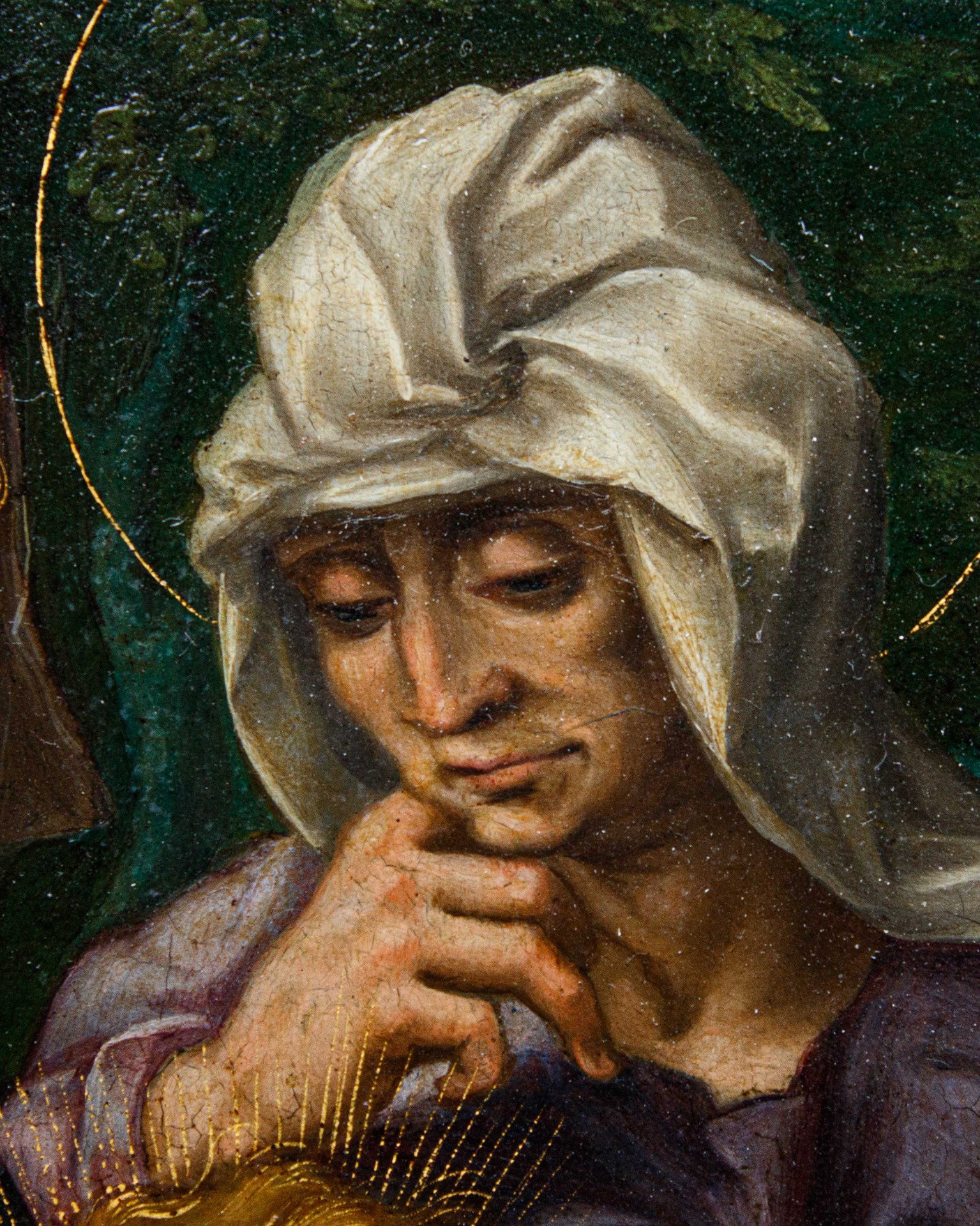
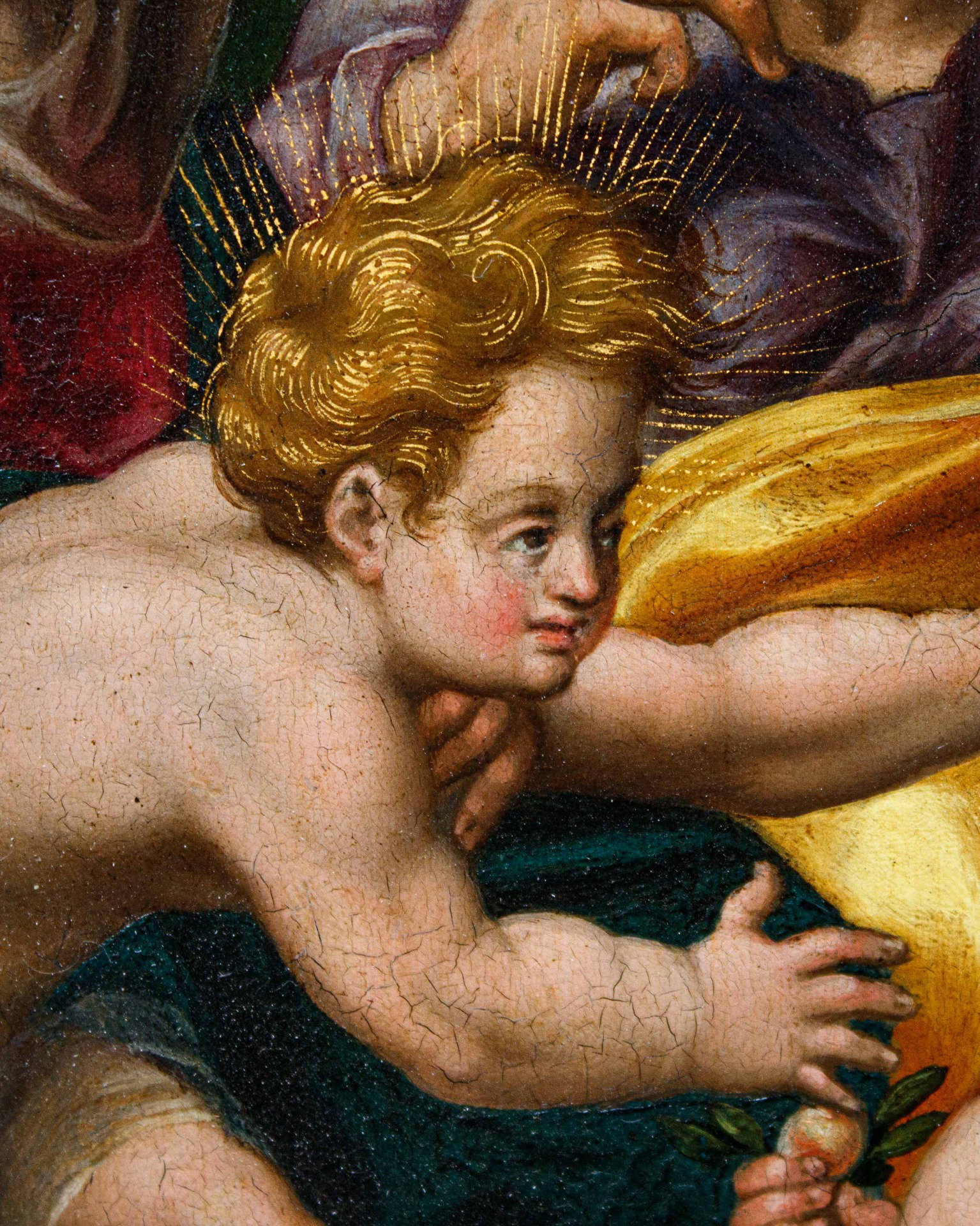
The glassy consistency, icy in the hardness of the surfaces, identifies the Flemish charm to which the conception and elaboration of this painting are owed. The artist incessantly repeats the modular exercise of structuring the surfaces, dwelling now on sculpting the muscles of the Child Jesus and John the Baptist, pure children, now on folding the smooth garments of Mary, Saint Elizabeth, and Joseph into sharp edges. The landscape in the distance, with oceanic colors, is cut off with luminescence compared to the vivid green of the hill on which the figures are resting. The bright yellow of Joseph and Elizabeth's garments surrounds Mother and Child, directing the viewer's eye to the two main figures. Elizabeth, the Baptist's mother, encourages her son with a light touch on the back as he stops and admires Jesus with boundless amazement, flying on his mother's leg towards him. The candid veil that softens the Child's cradle is already an allegory of the white shroud of death and Resurrection; the wild herbs isolated by the artist in the right corner of the painting, in addition to serving as an adequate filler for the thin layer of grass that barely covers the earth, refer to the bitter herbs eaten by the Savior during the Last Supper, a traditional Jewish meal. Birth and Resurrection remain implicit narrative vehicles of the painting, exemplified by the perfect golden halos as fine as a hair of the adults and by the halo on the Child's head, material proof of the celestial kingdom.
The artist of the present work approaches the Holy Family by Jacob Jordaens, now kept at the Royal Museums of Fine Arts of Belgium, for the formalism of the two children, moving for the sincere and enveloping embrace in which the two cousins ??hug each other, similar to what the two present ones are about to do. The Rubensian Flemish lesson, declared by the master's Holy Family kept instead at the Picture Gallery Sanssouci, Prussian Palaces and Gardens Foundation Berlin-Brandenburg in Potsdam, Germany, testifies to how the present artist has fully gathered the Flemish heritage in re-proposing, even updated to personal taste, that soft embrace of which Rubens first and Jordaens later made their distinctive mark.