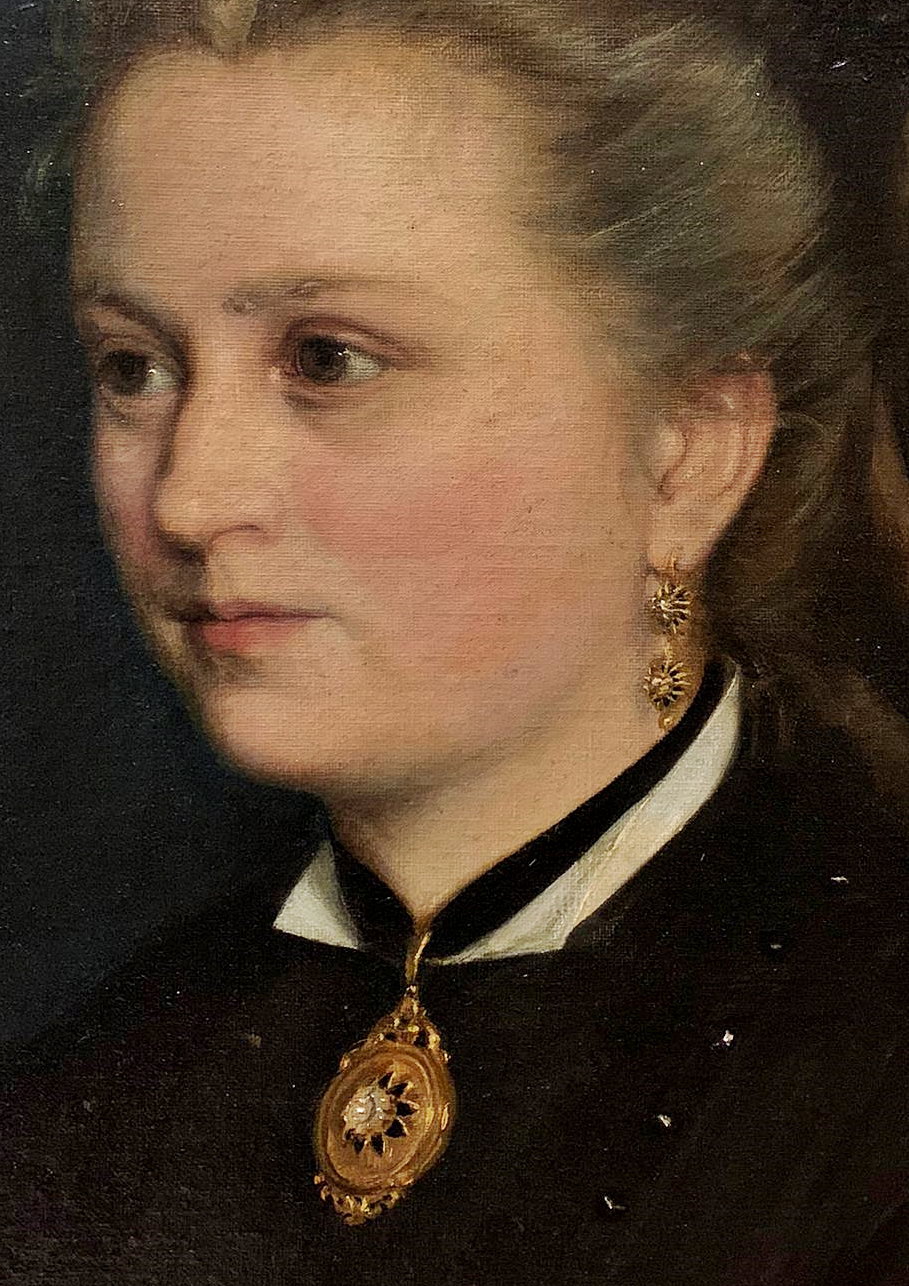
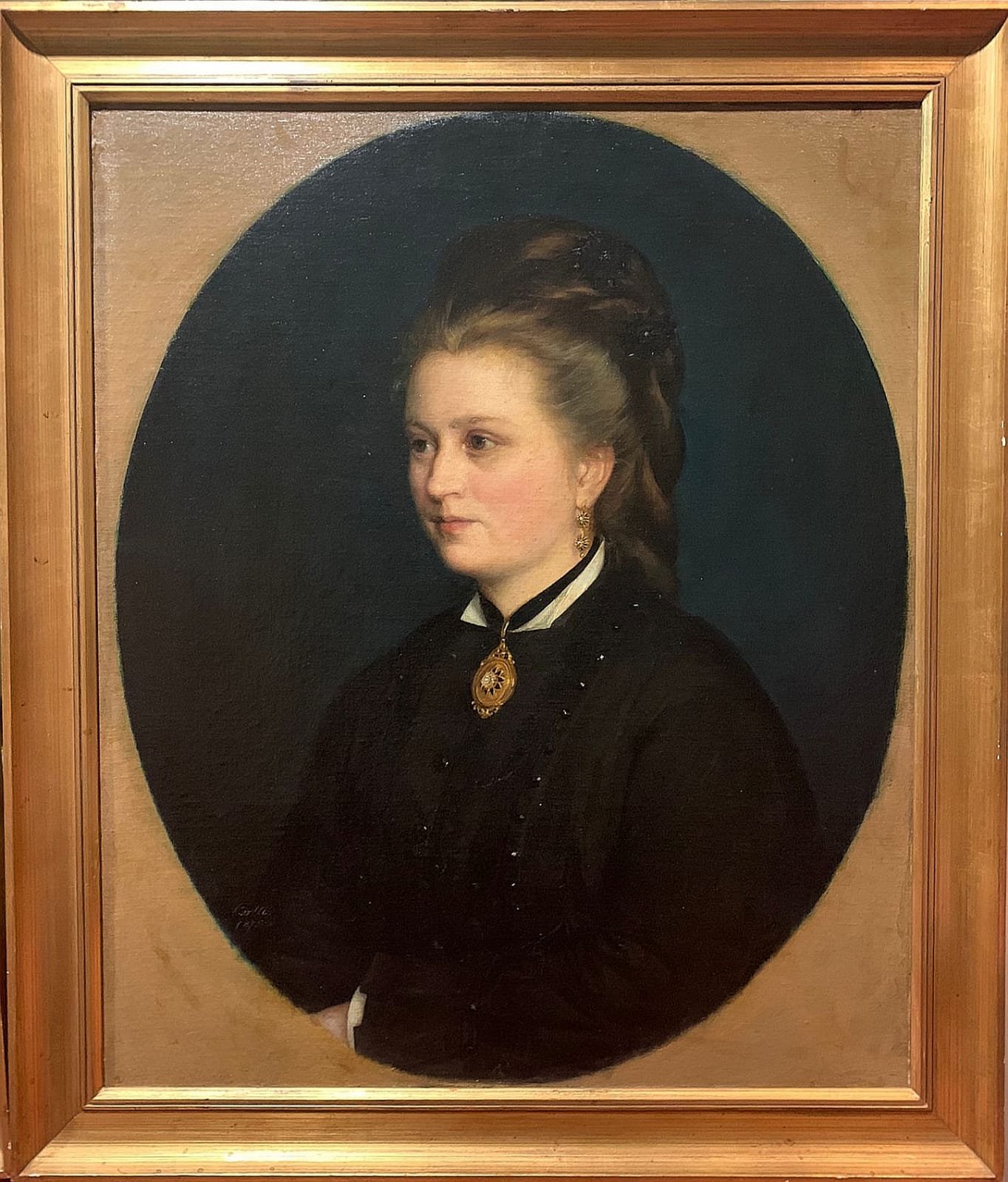
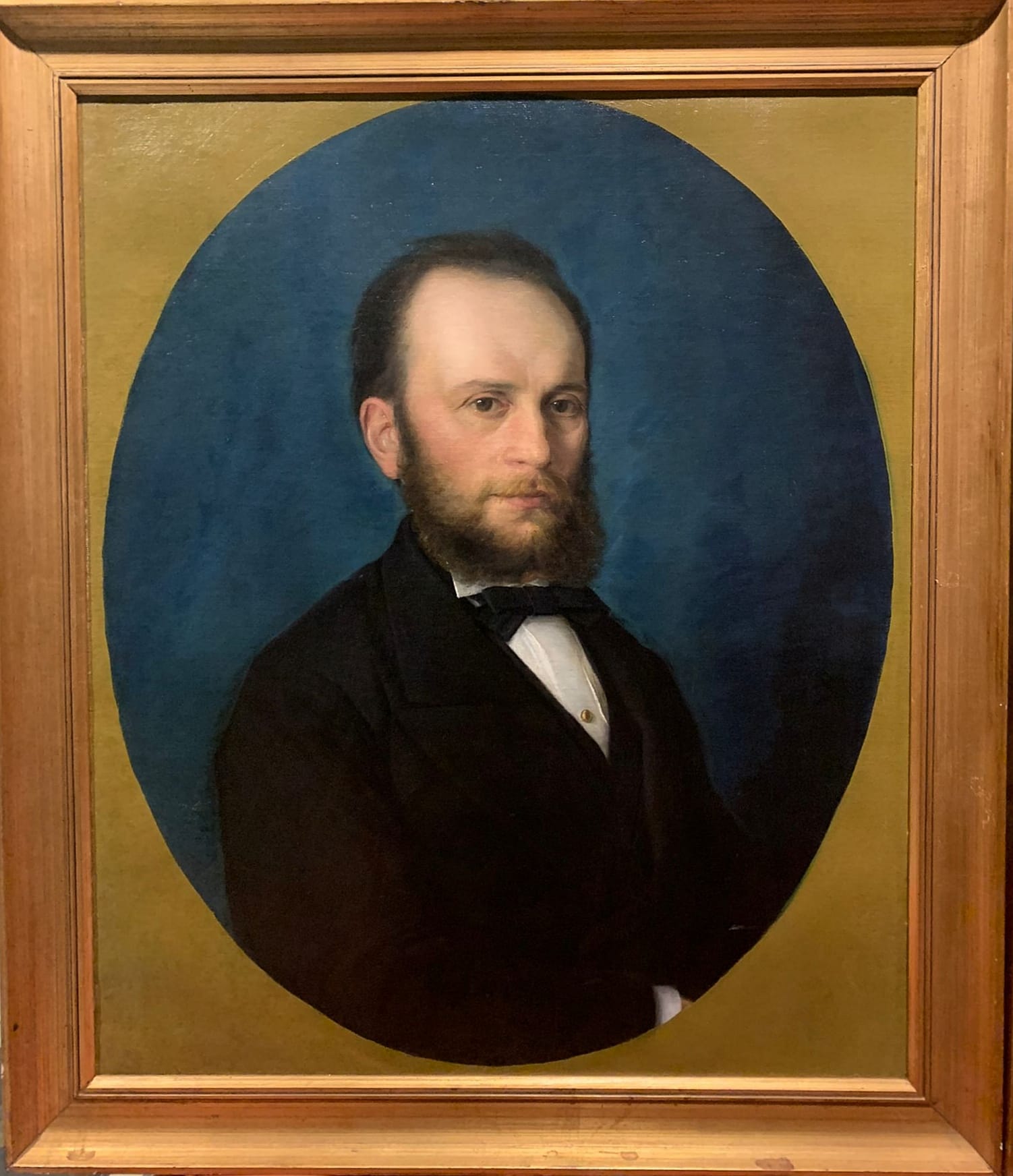
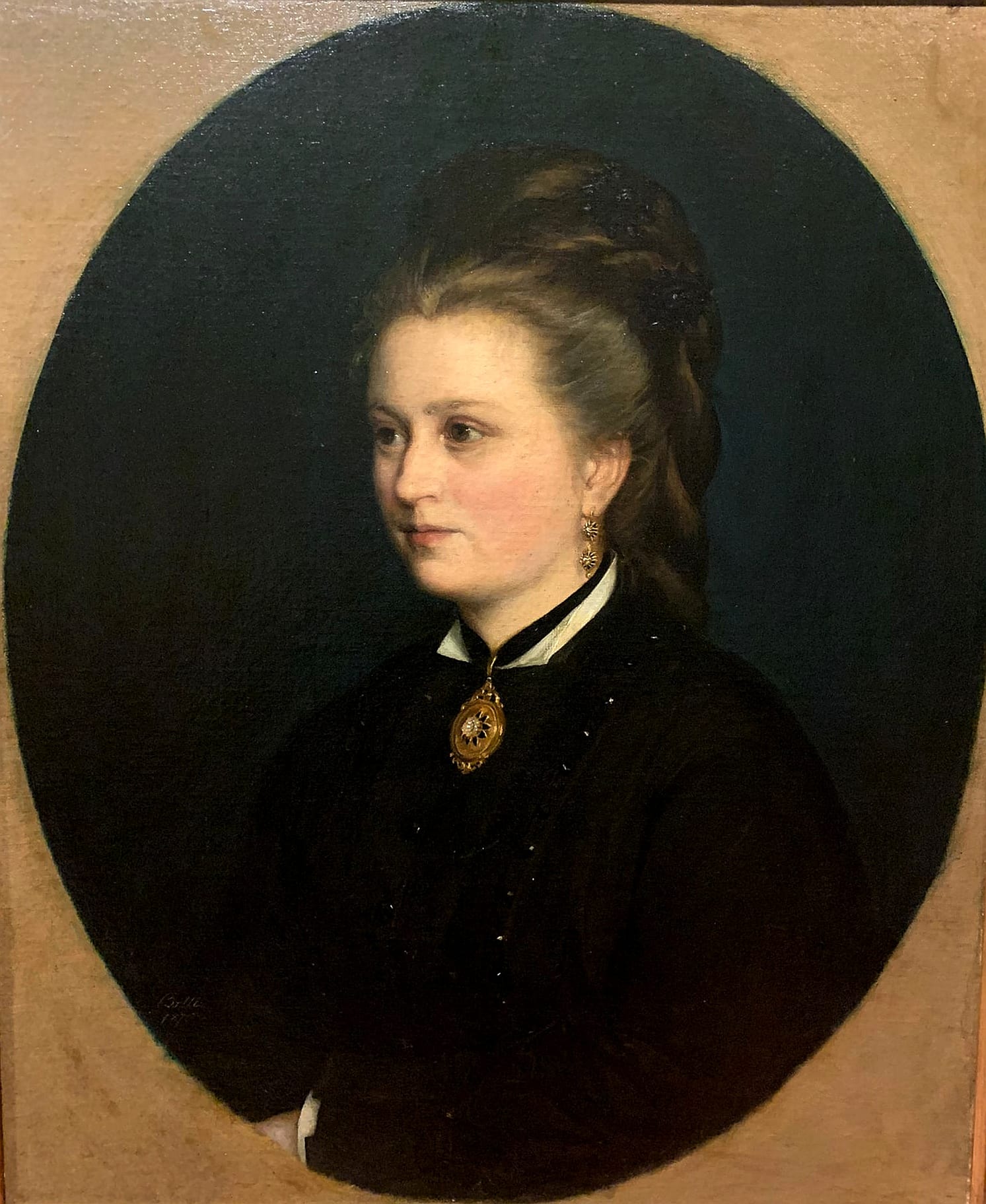
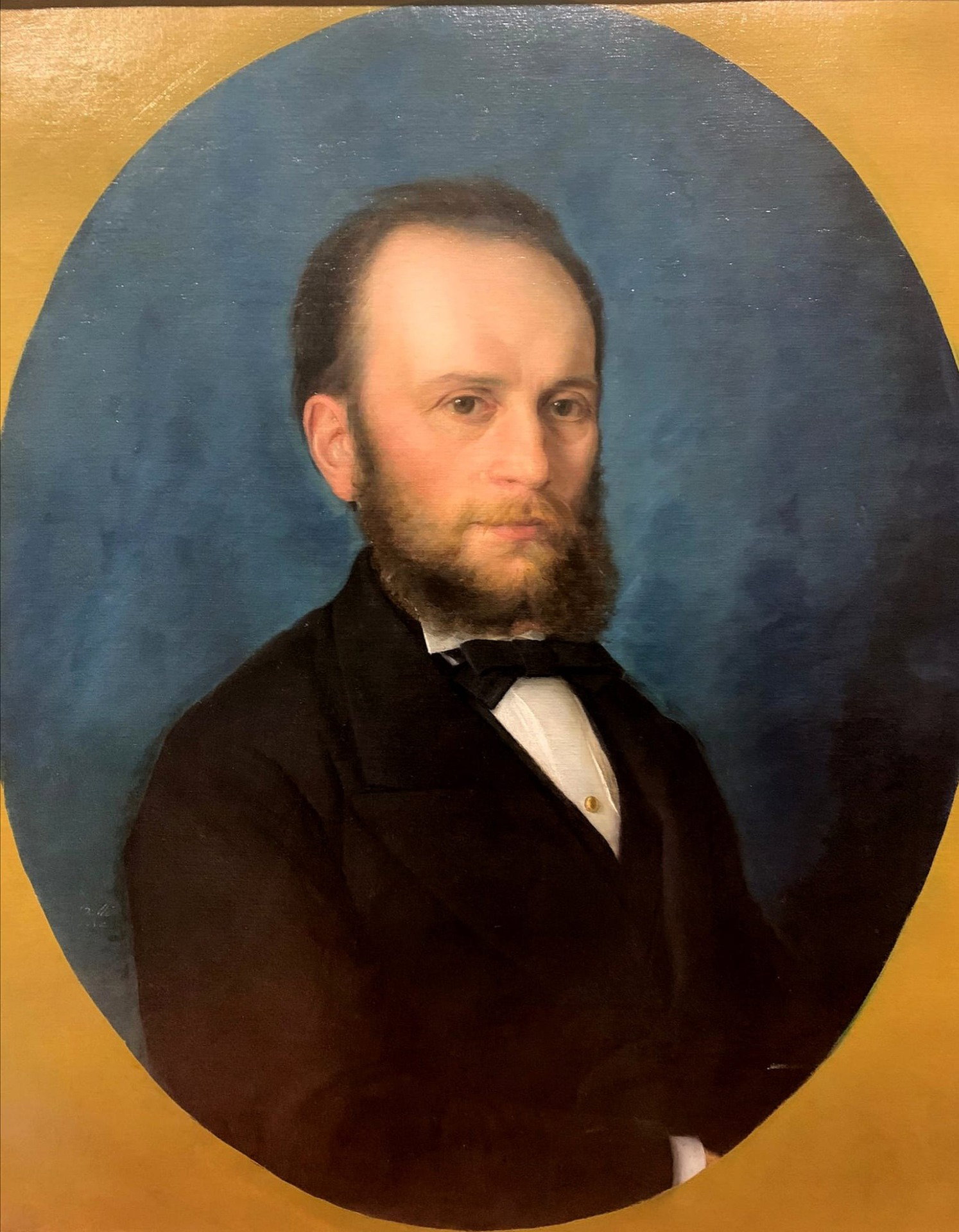
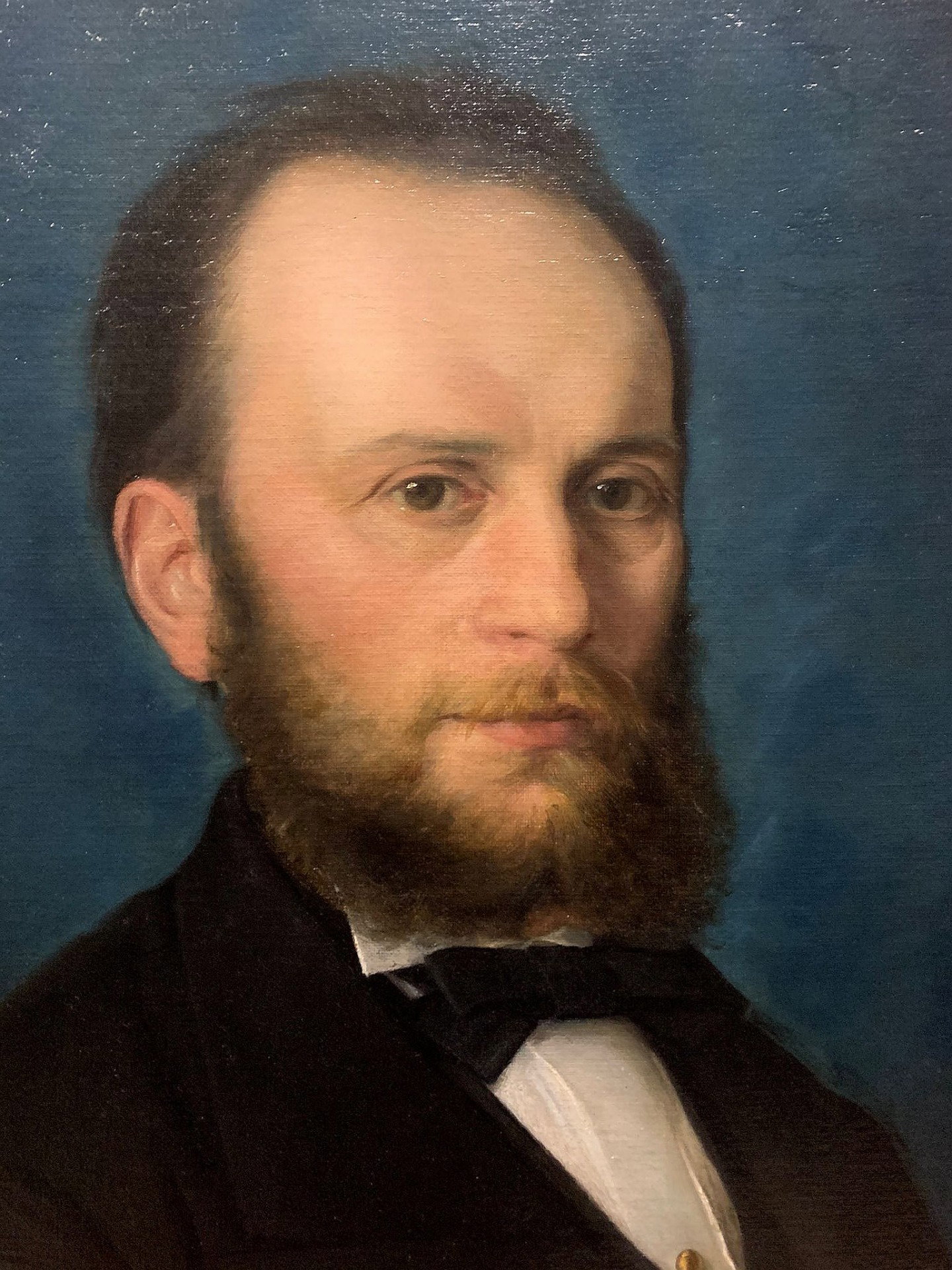
Important pair of oil on canvas paintings applied to cardboard depicting portraits of spouses belonging to the Italian aristocracy of the second half of the 19th century.
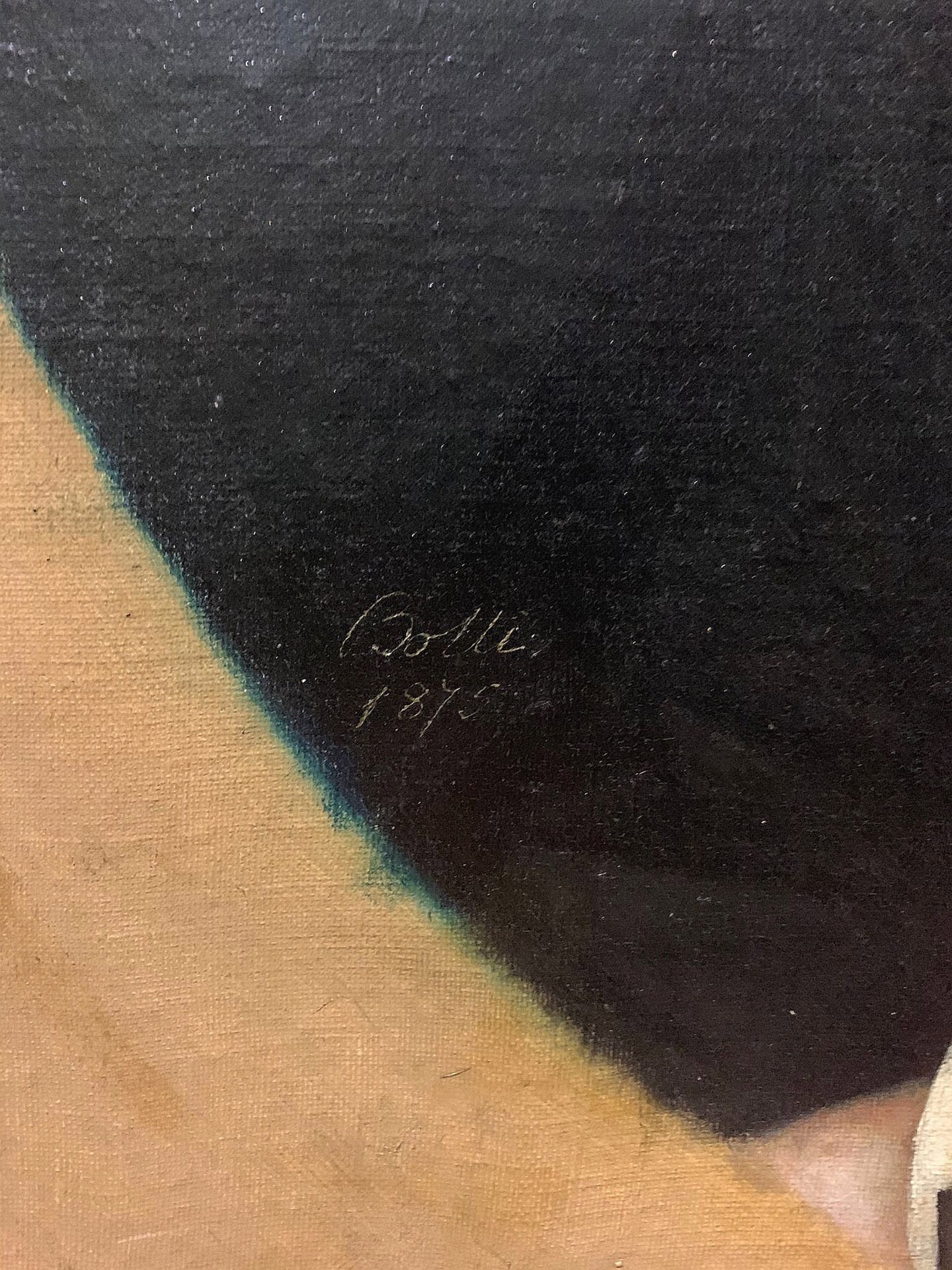
Signed and dated at the bottom left of the Lady and at the bottom left of the gentleman - Carlo Botti 1875
The pair of paintings in question certainly enter the body of works by the master Carlo Botti and add to the catalog that documents his copious activity, which according to the most authoritative source, the Critical and Documentary Dictionary by A.M. Comanducci, "The Italian Painters of the Nineteenth Century" was to be around 2000 works, including 700 portraits.
The paintings in question, due to the high quality of the naturalistic rendering of the anatomies and the light effects, appear to have been executed following the contact with the master Michele Gordigiani (Florence, May 29, 1835 – Florence, October 7, 1909), often far from academic circles, was in contact with the group of Macchiaioli artists and with whom Carlo was able to develop his great talent as a portraitist. Tendencies towards portraiture in the Florentine area can also be found in the colors of the backgrounds and the reproduced atmospheric-environmental effects.
The paintings including the coeval gilded frame measure: 74cm x 86cm; while the canvases measure 63cm x 77cm.
We attach to the sale a historical certificate of authenticity provided by our Antiques Gallery.
To shed more light on the vicissitudes of this skilled and important painter of the second half of the nineteenth century, we include an interesting article written by Francesca Felicetti to celebrate the centenary of the painter's death for "La Gazzetta di Foligno".
The famous Latin phrase nemo propheta in patria perfectly fits when talking about the Foligno artist Carlo Botti (1848-1912). Although very well known in cultural and artistic circles, he is in fact almost forgotten in his homeland, except for some news found in the writings of Michele Faloci Pulignani and Mario Sensi. For his uncommon artistic merits, in 1900 he was appointed "Academic Painter of Merit" by the Academy of Perugia, the same one that in 1912, following the painter's death, expressed its deep condolences defining him "as an artist and as a citizen, true decoration of native Foligno". The value of this artist is documented and confirmed in the Critical and Documentary Dictionary by A.M. Comanducci, "The Italian Painters of the Nineteenth Century", which states: "he participated in several exhibitions, always admired and in several awarded" and in the Dictionary and Atlas edited by F. Boco and A.C. Ponti, "Umbrian Painters of the Nineteenth Century". The approximately two thousand works (of which seven hundred portraits), which document the author's activity, represent a corpus of exceptional artistic value. After his stay in Perugia (Botti attended painting courses under Silvestro Valeri at the Academy of Fine Arts), he moved to Rome, where he studied briefly with Giuseppe Maccari. But it was in Florence with the master Michele Gordigiani that Carlo Botti discovered the love for portraiture, a favorite genre to which he dedicated himself with great success. To date, only forty of the seven hundred portraits have been found, and they depict some of the most representative figures of late nineteenth and early twentieth century society. Among the paintings you can admire the portraits of Queen Margherita of Savoy, Cardinal Domenico Svampa, Prince Rodolfo Boncompagni-Ludovisi, and Monsignor Michele Faloci Pulignani. The effigies explored the various expressions that characterize the human face and the different effects of age, and are so perfect that they seem alive. But it is the image of Christ, or rather, the reclining head of the living Christ, as it appears in the study for the painting of the Sacred Heart in the San Carlo Institute, the true cornerstone of the artist's work. Prof. Botti often treated the sacred subject, and noteworthy is also the sketch for the mosaic on the facade of the Foligno Cathedral depicting San Feliciano and Santa Messalina. But Carlo Botti was first of all a citizen, believer, liberal Catholic engaged in social work. These are the extraordinary qualities that make him a man of great moral sensitivity (before artistic) and of rare intellectual honesty in a delicate historical moment characterized by important political transformations.
www.antichitabompadre.com