Giovanni Battista Castello, known as “il Genovese” (1547 - 1637)
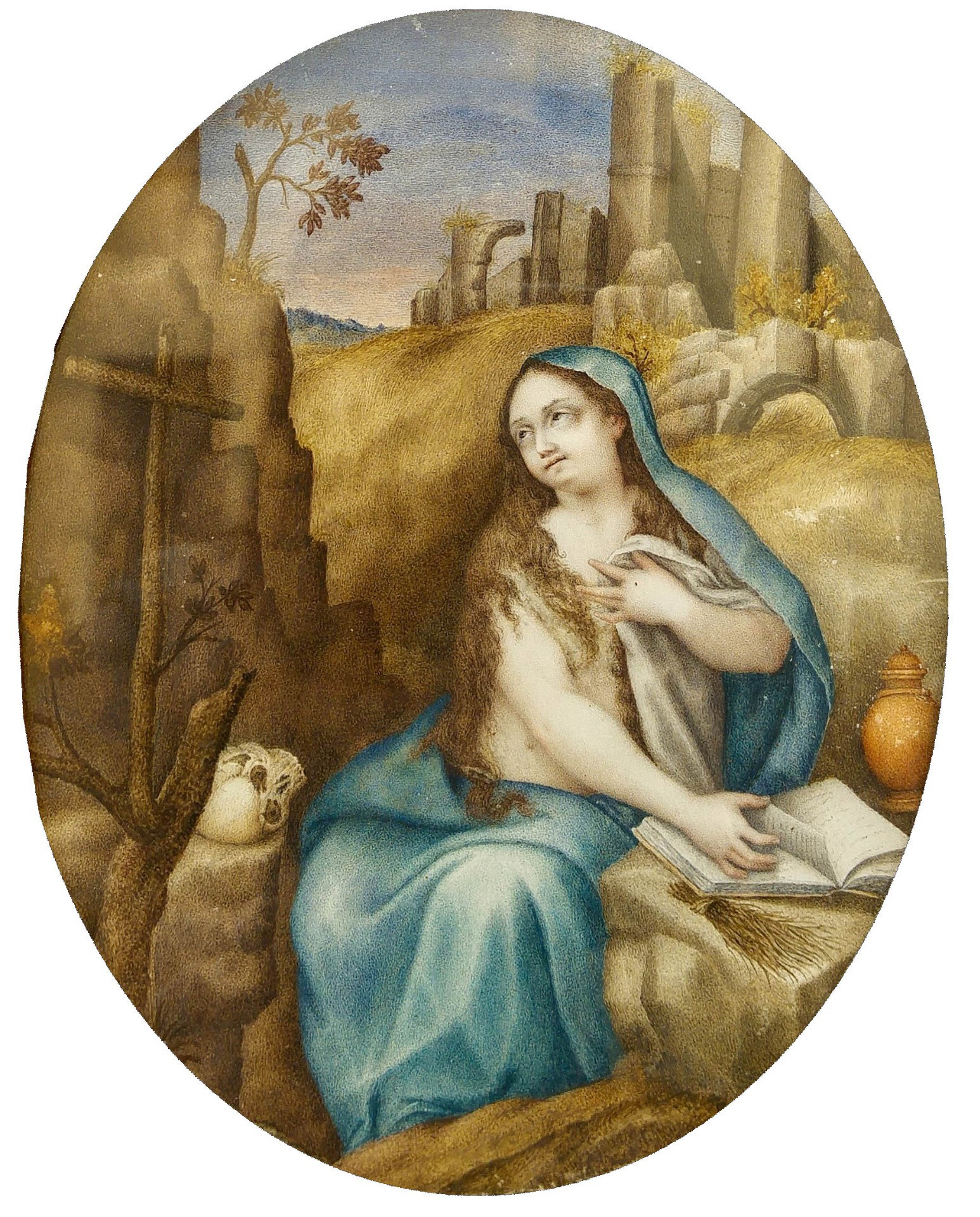
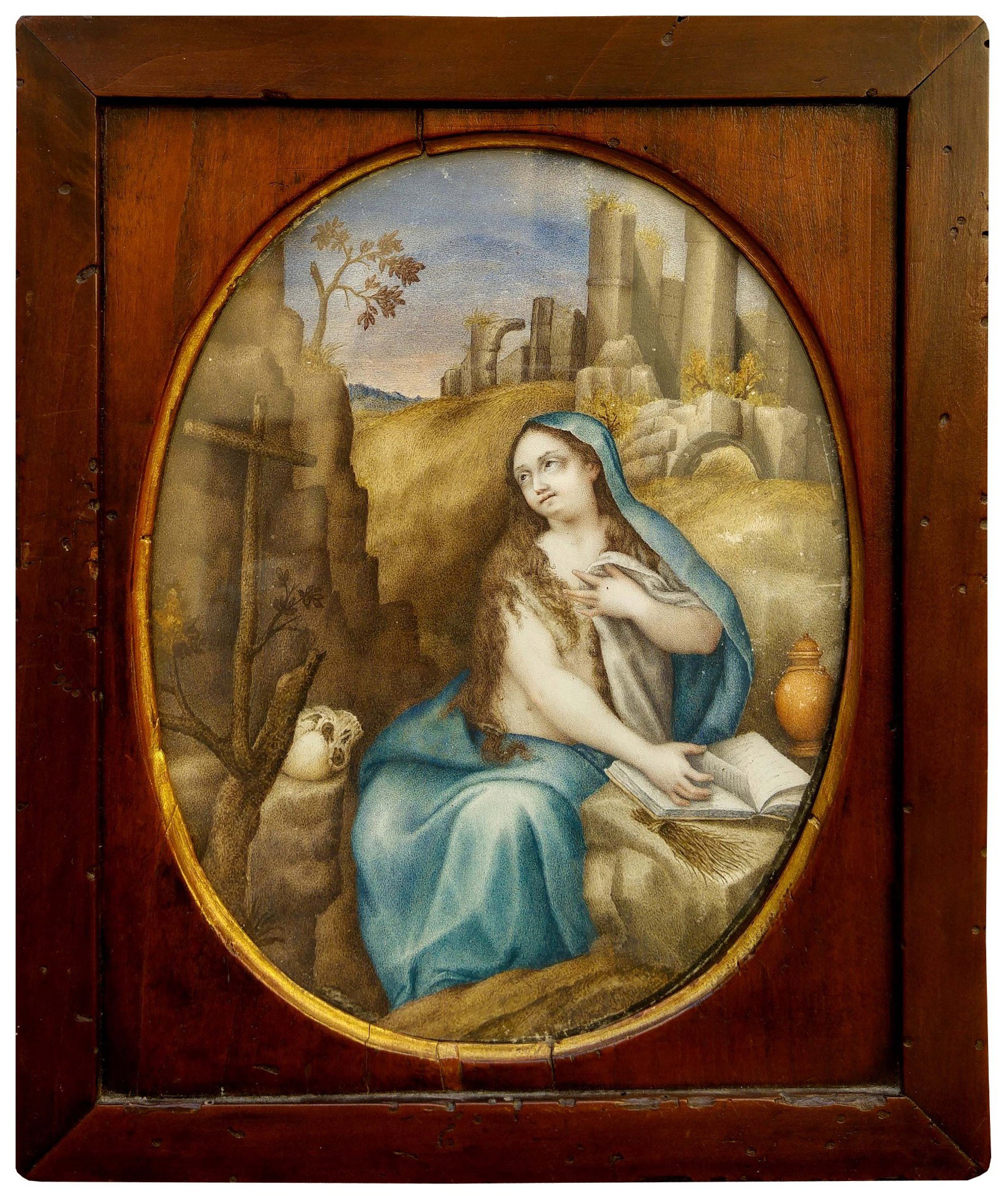
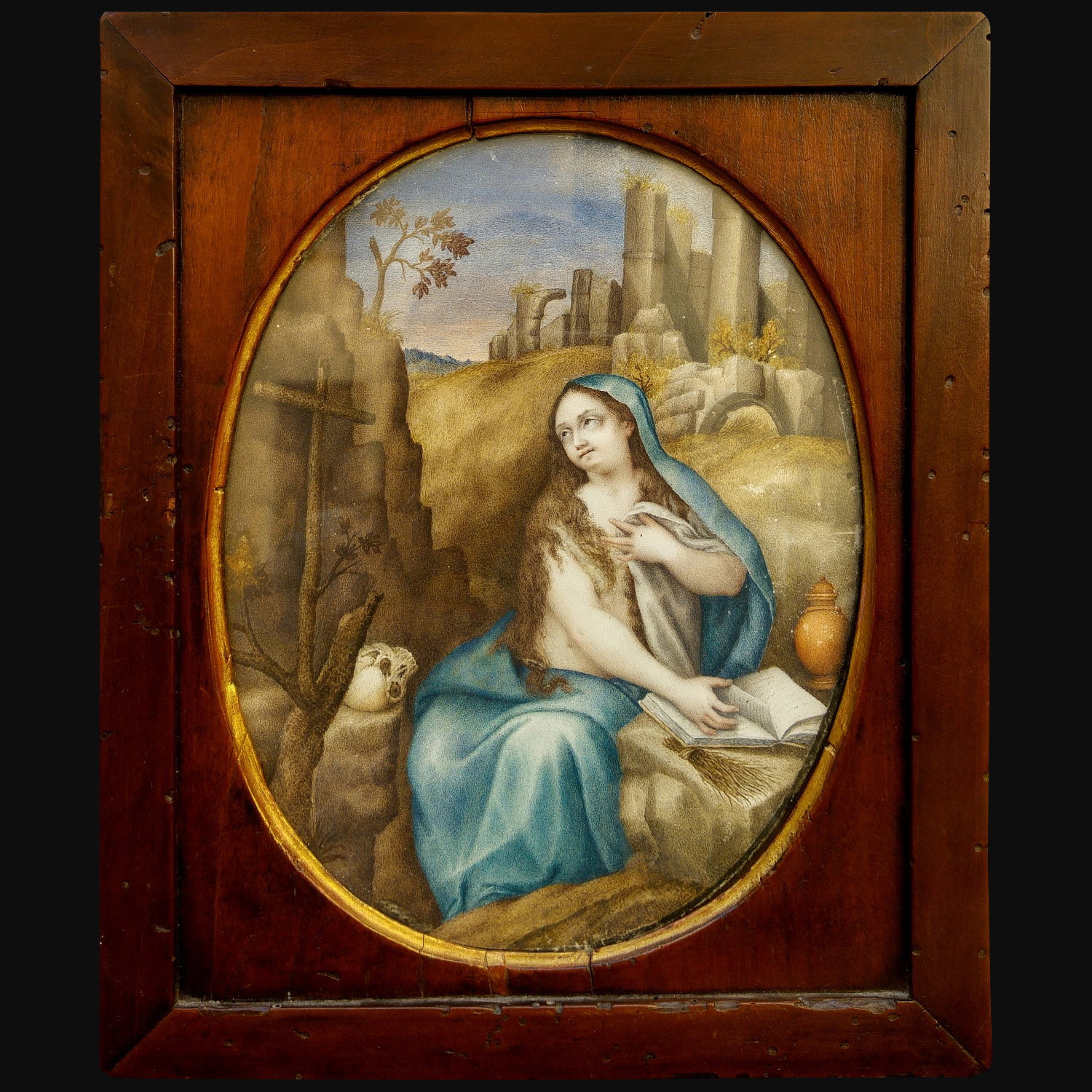
Penitent Magdalene
Tempera on parchment, 21 x 17 cm
Frame 26 x 22 cm
This precious tempera painting on parchment is attributed to the hand of the painter Giovanni Battista Castello (1547-1637), known as “il Genovese” to distinguish him from his namesake contemporary, architect and painter, known as “il Bergamasco.” The elder brother of Bernardo, a famous painter of late Ligurian Mannerism, he began his career in the field of religious goldsmithing, to which he soon added the art of miniature painting. He eventually dedicated himself completely and with greater satisfaction to this art, restoring it to a success and dissemination it had not seen since the Middle Ages, now finding incentive and justification in the spiritual and cultural climate of the Counter-Reformation.
He is cited in sources as self-taught; however, his assiduous attendance at the workshop of Luca Cambiaso is certain. Here, he acquired the entire repertoire of artistic eclecticism that this center entailed, to which he added the experience of Nordic engravers, Tuscan-Roman Mannerism, Venetian and Emilian influences, a form of refined Baroque, and, not least, the aspiration to evade artificial intellectualism, preferring an unconscious need for simplicity, purity, chastity, and that “primitiveness” that has been identified, at times, even in the period of the Counter-Reformation, with pietistic attitudes.
Following in the footsteps of Cambiaso and Tavarone, Castello was summoned to Spain by Philip II, where he illuminated, among other sacred books intended for the Escorial, an important Antiphonary for the king in 1584. This commission brought him immediate reflected glory in his homeland. His reputation was such that in 1606 the Most Serene Genoese Government declared him an “excellent” painter, “eminent above others, and exempt from the laws and chapters to which the Professors of Painting in Genoa were unworthily subjected.”
The corpus of his works is notably extensive given the exceptional duration of his intense activity, especially since, as cited by Soprani, the painter used to keep “every one of his slightest chart, even a simple sketch,” and had filled “some books with an infinity of miniatures ... taking great care that none should go to waste,” also with the intention that they “should facilitate the path of whoever wanted to undertake miniature painting” (Soprani-Ratti, Vite de’ Pittori, Scultori ed Architetti Genovesi, 1769, pp. 110). Alizeri also mentions that in Genoese patrician collections, such as the Spinola or that of Marquis Pietro Rostan, who owned eight miniatures by Castello, there were illuminated books and codices, small parchments with stories from the Old and New Testaments, and tiny landscapes with architectural ruins and animals.
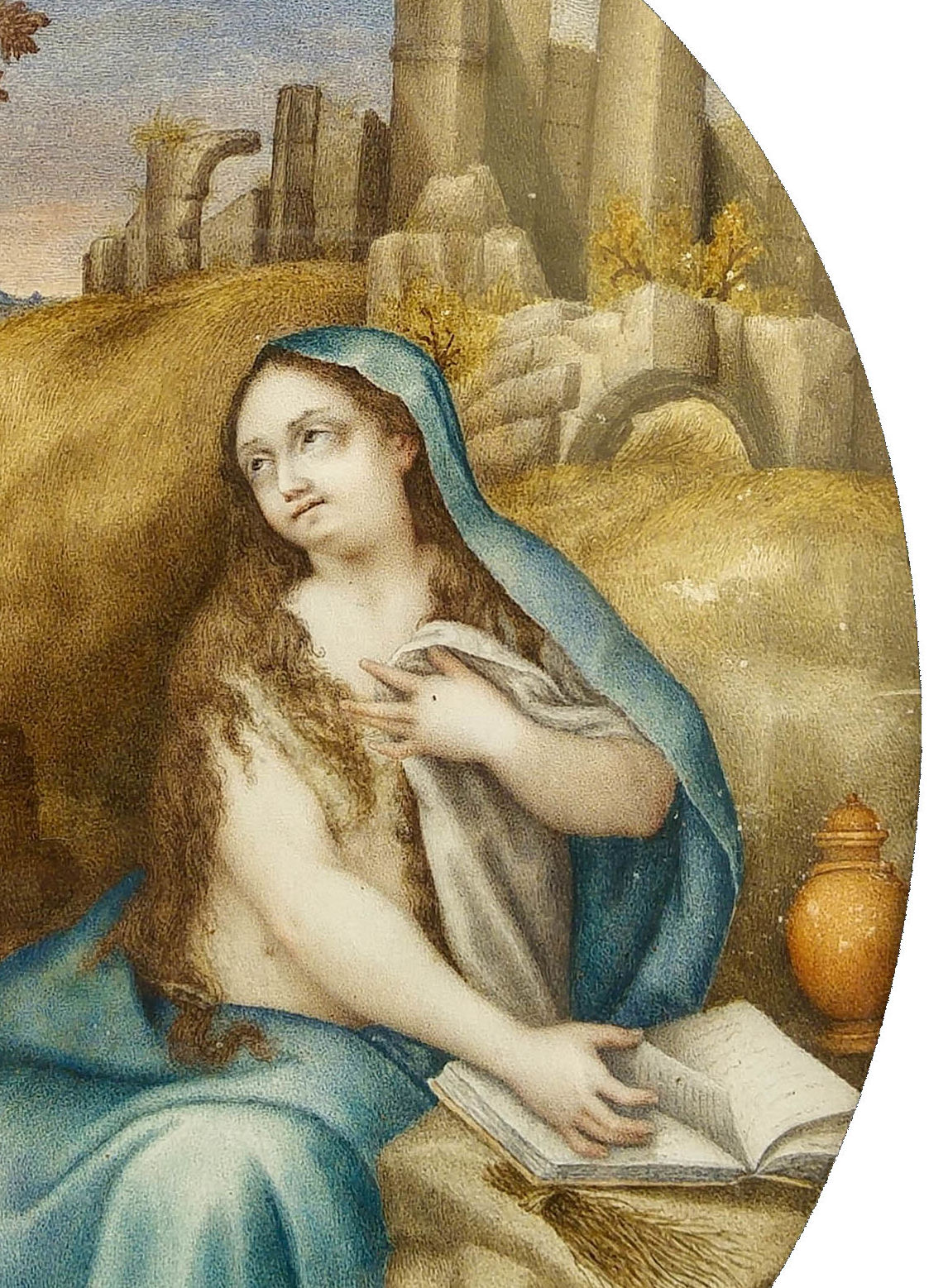
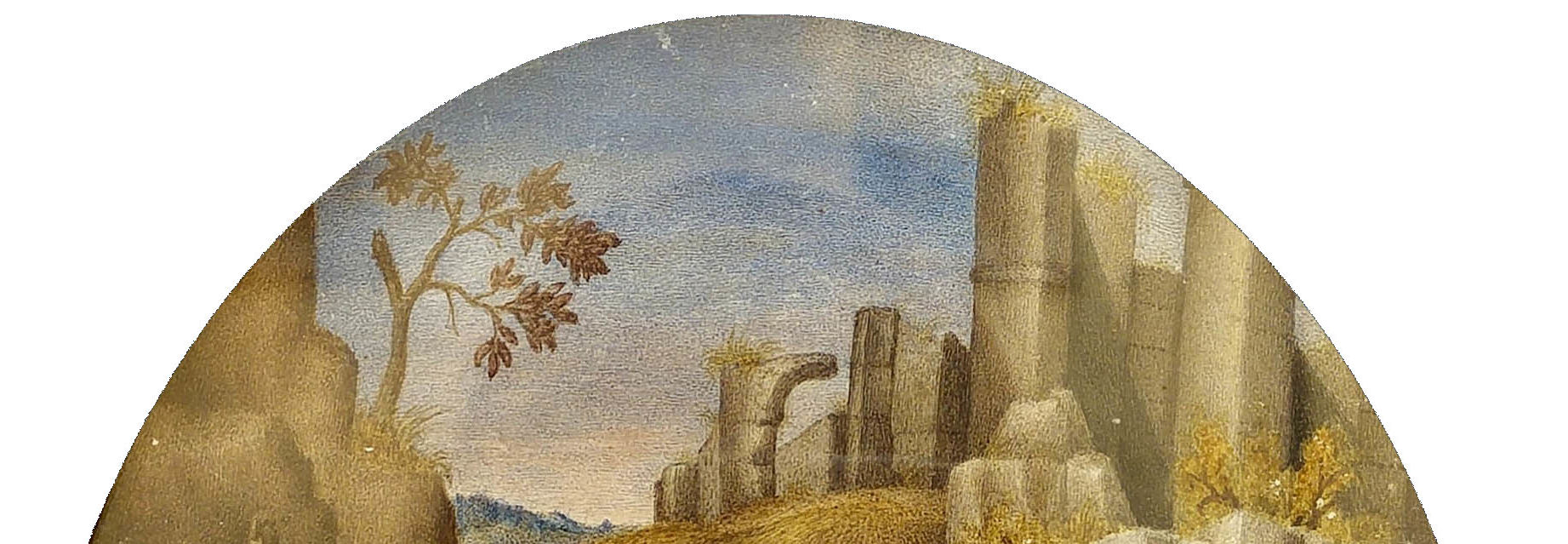
In the examined parchment, intended for the Genoese patrician patronage of images for private devotion, we find his typical harmonious and tuned palette. The execution is meticulous both in the chromatic matter and in the drawing, and the airy landscape is interpreted as a pleasant nature elaborated on multiple levels. The Penitent Magdalene is depicted in the center, in the foreground, surrounded by her typical iconographic elements, such as the skull, alluding to the transience of earthly existence, the scourge, and the vase of ointments.
Similar works are preserved both in private collections and in museums, both Italian and international. Precise comparisons can be made, for example, with the Baptism of Christ from the collection of Palazzo Mazzetti in Asti, or with the miniature depicting the Giving of the Keys to Saint Peter, now in Paris at the Louvre Museum.
With Ars Antiqua, it is possible to defer all amounts up to € 7,500 at ZERO RATE, for a total of 15 INSTALLMENTS.
Example: Total € 4,500 = Monthly installment € 300 for 15 months.
Example: Total € 3,600 = Monthly installment € 720 for 5 months.
For amounts exceeding € 7,500 or for a longer repayment period (over 15 installments), we can provide a personalized payment plan.
Contact us directly for the best quote.
LIVE TV
– SUNDAY 17.00 – 21.00 Dig.terr. 126 + 813 SKY
– Streaming on our website www.arsantiquasrl.com and on our social media Facebook and Youtube
All works offered by Ars Antiqua are sold with a certificate of authenticity in accordance with the law and a detailed in-depth sheet.
You can directly view the works at the gallery showroom in Milan, at Via Pisacane 55 and 57.
We personally organize the transport and delivery of the works, both for Italy and abroad.