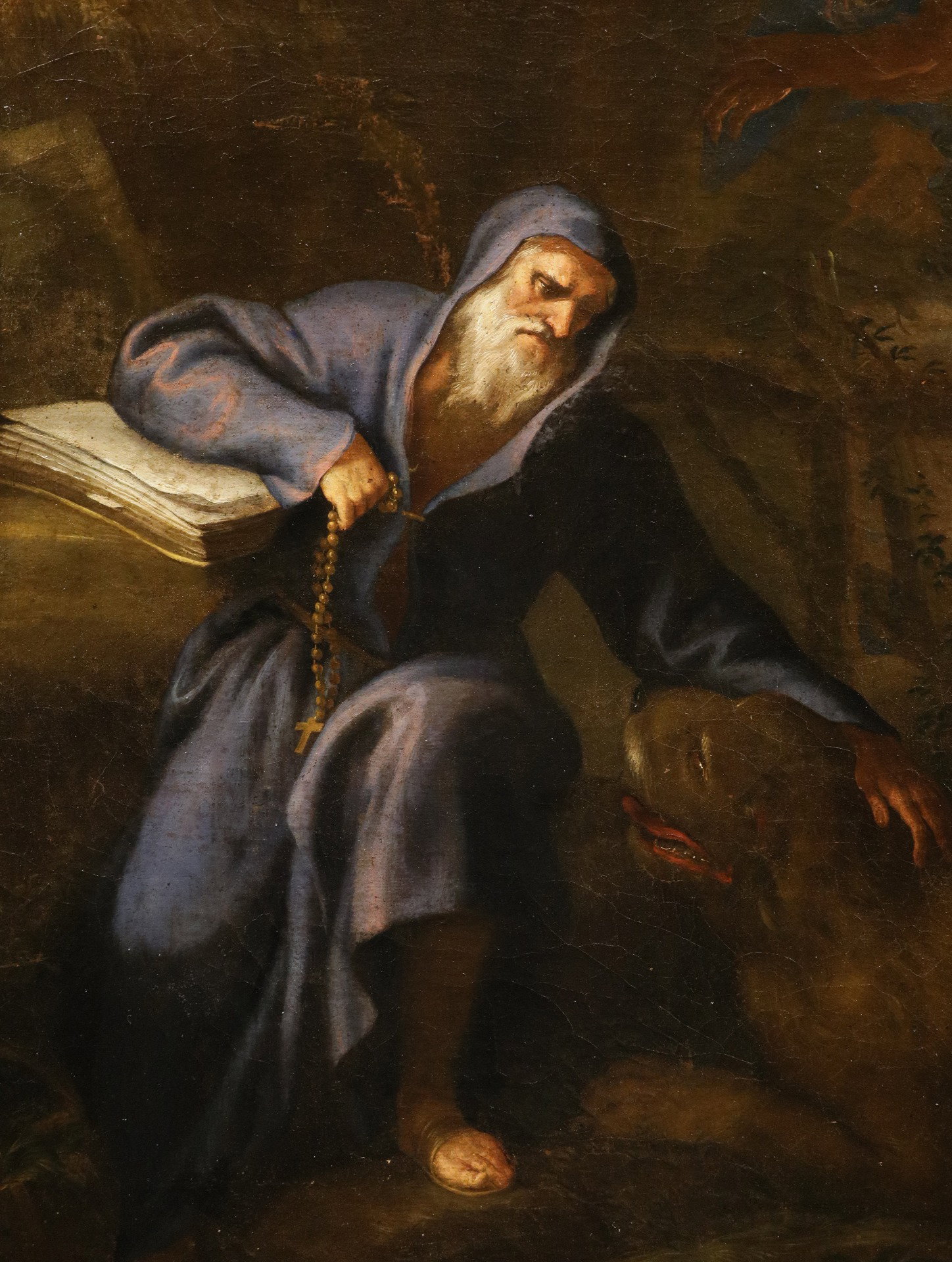
Pier Francesco Mola 'il Ticinese' (Coldrerio, 1612 – Rome, 1666) workshop
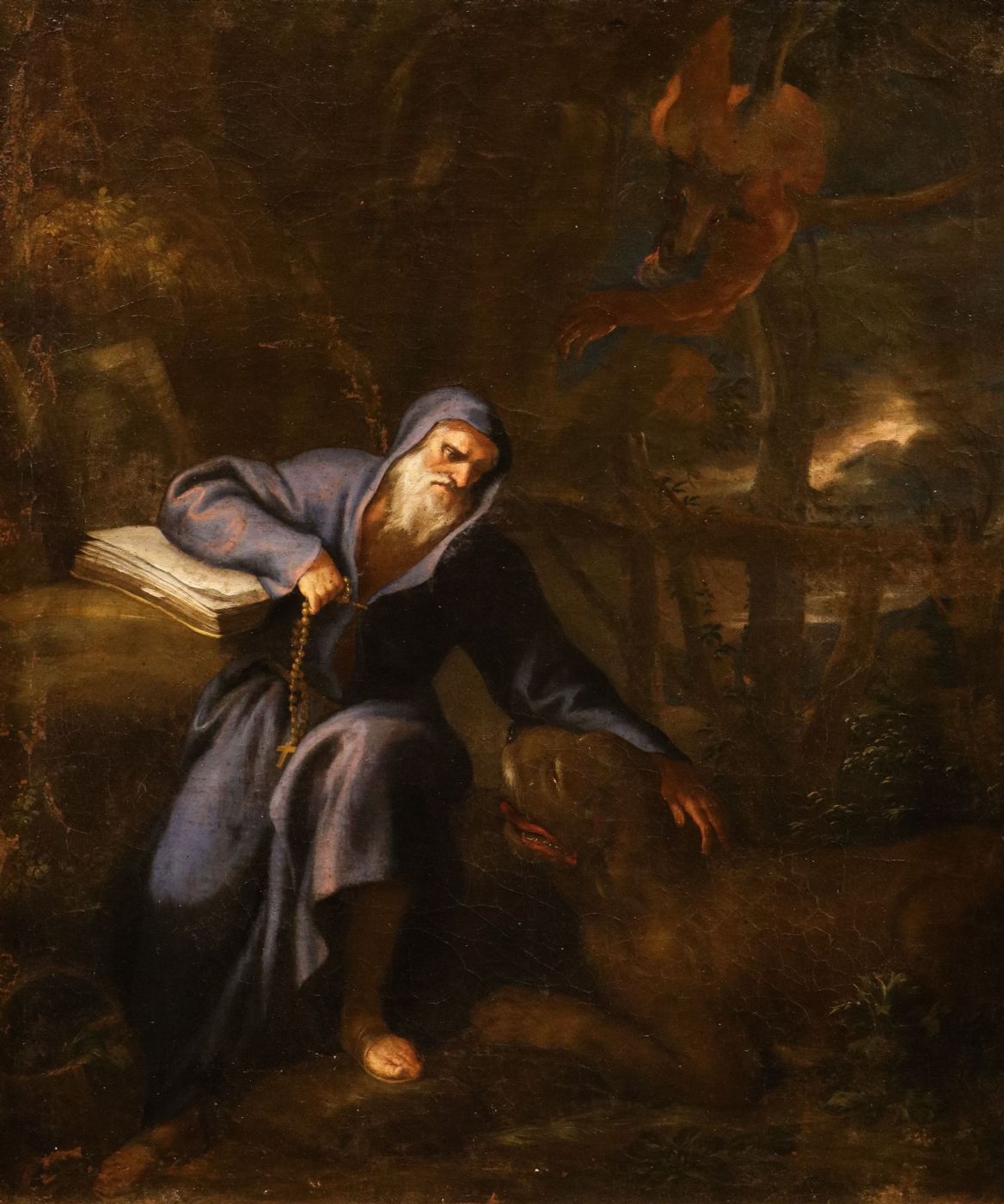
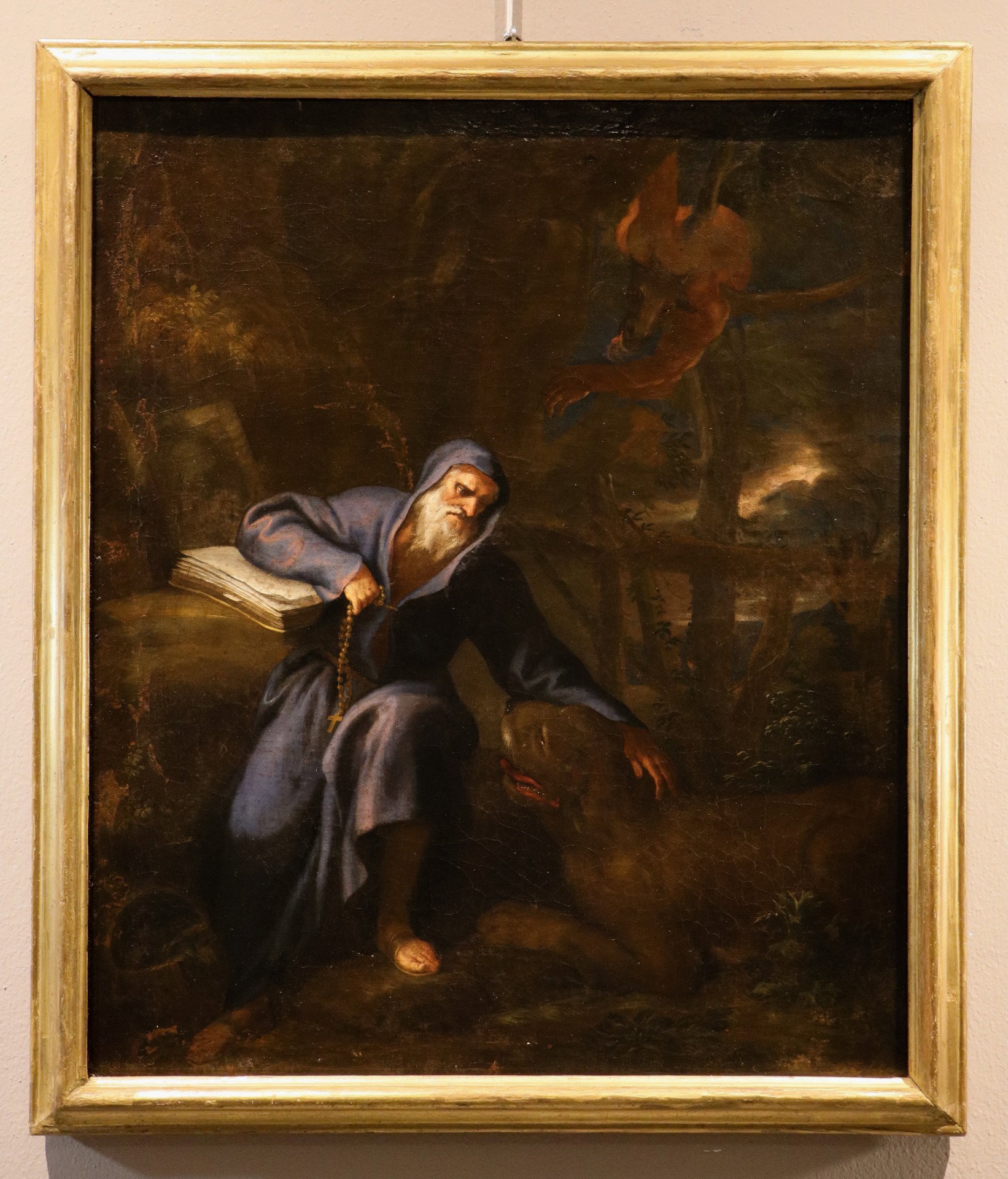
The Temptations of Saint Anthony
Oil on canvas
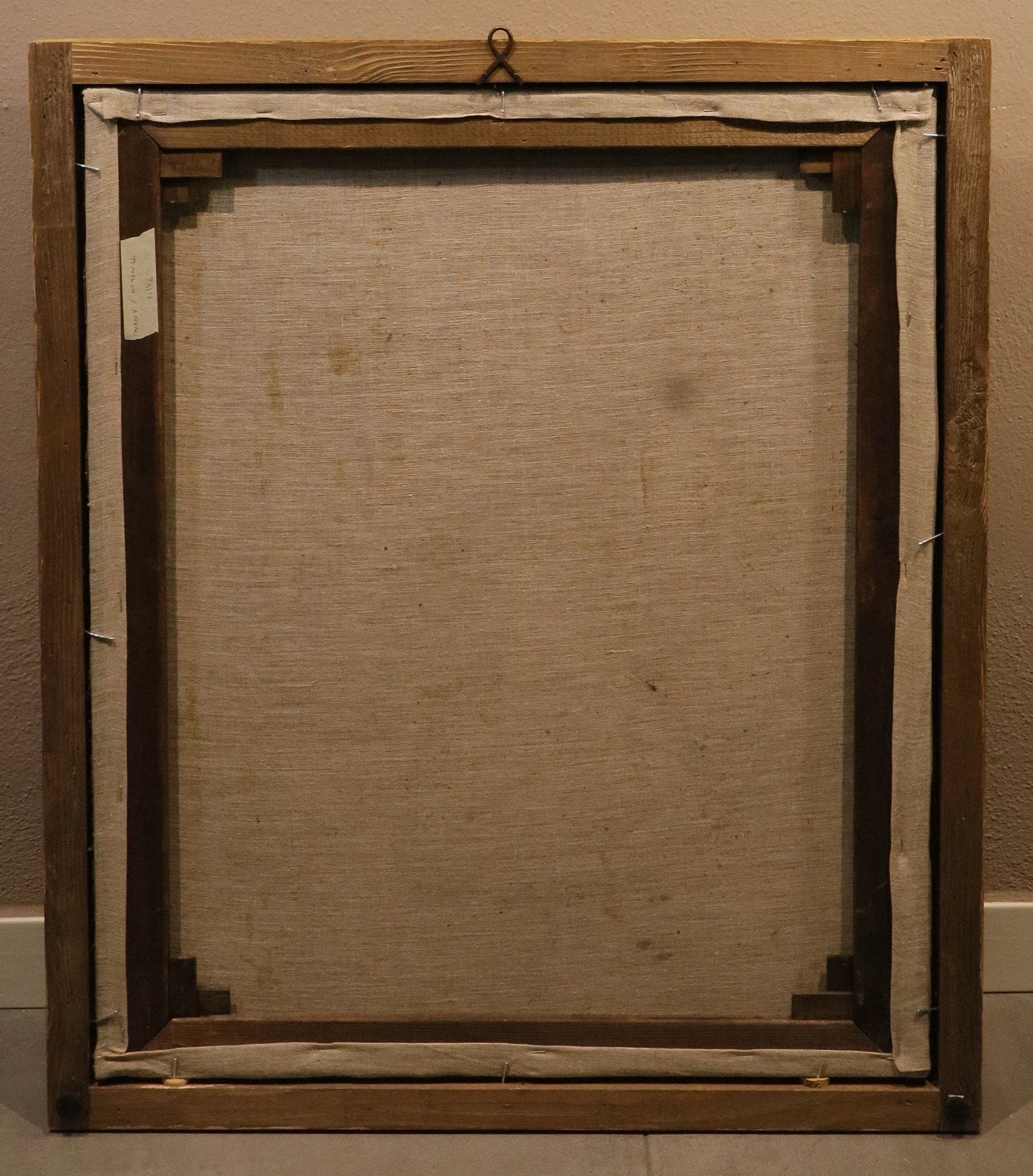
75 x 62 cm. - In a frame (defects) 82 x 71 cm.
COMPLETE DETAILS OF THE PAINTING (CLICK HERE)
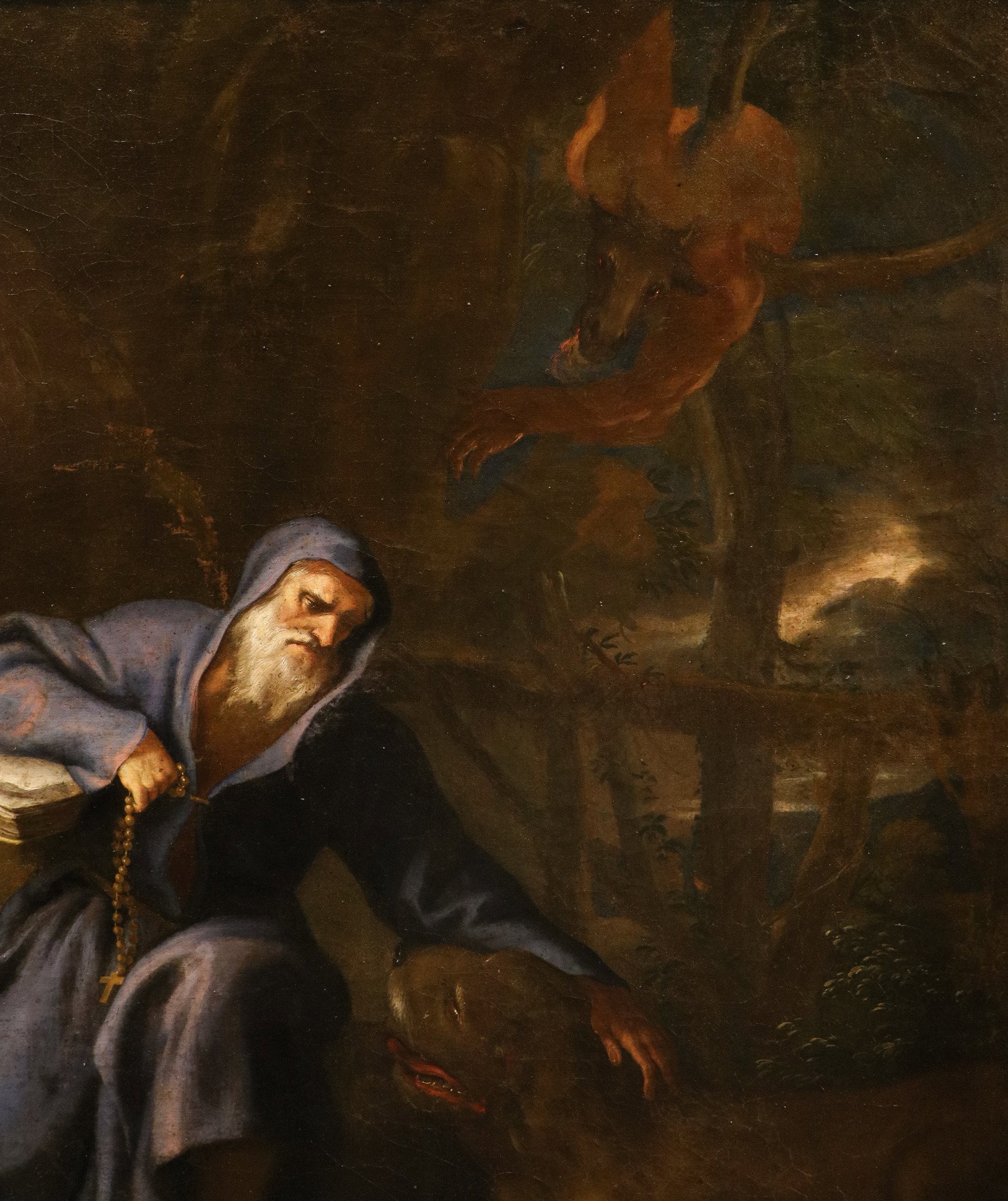
The theme of the Temptations of Saint Anthony the Abbot was a much-loved subject in Renaissance and Baroque painting, depicting the hermit tormented by demonic visions in the desert, and symbolizing the spiritual struggle between faith and the forces of evil.
According to the biographies of the saint - the most important being the Vita Antonii written by Athanasius of Alexandria - the devil sought to break Anthony's resistance by assuming various forms to torment and distract him from prayer, trying to flatter him with everything a man might desire, but without success.
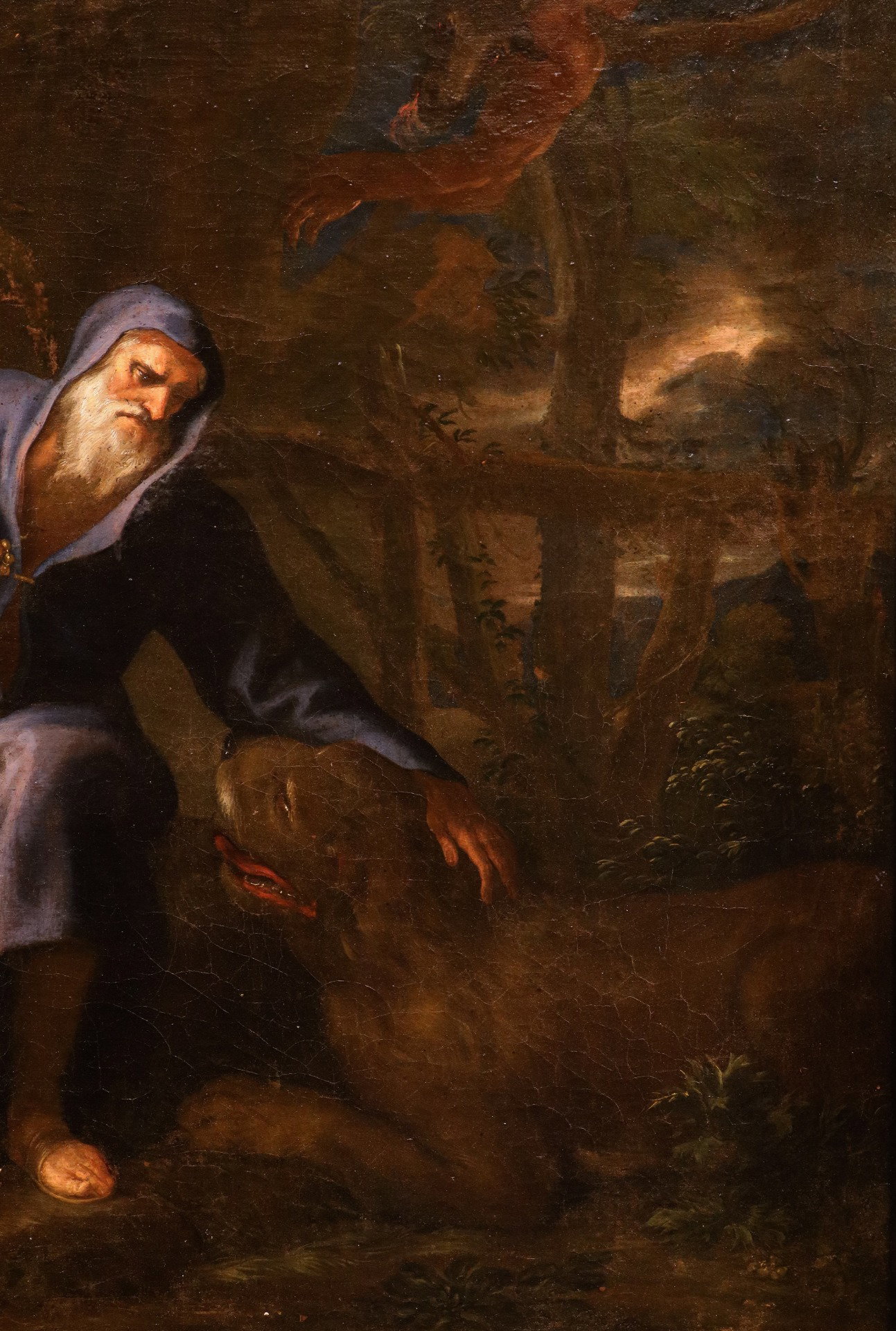
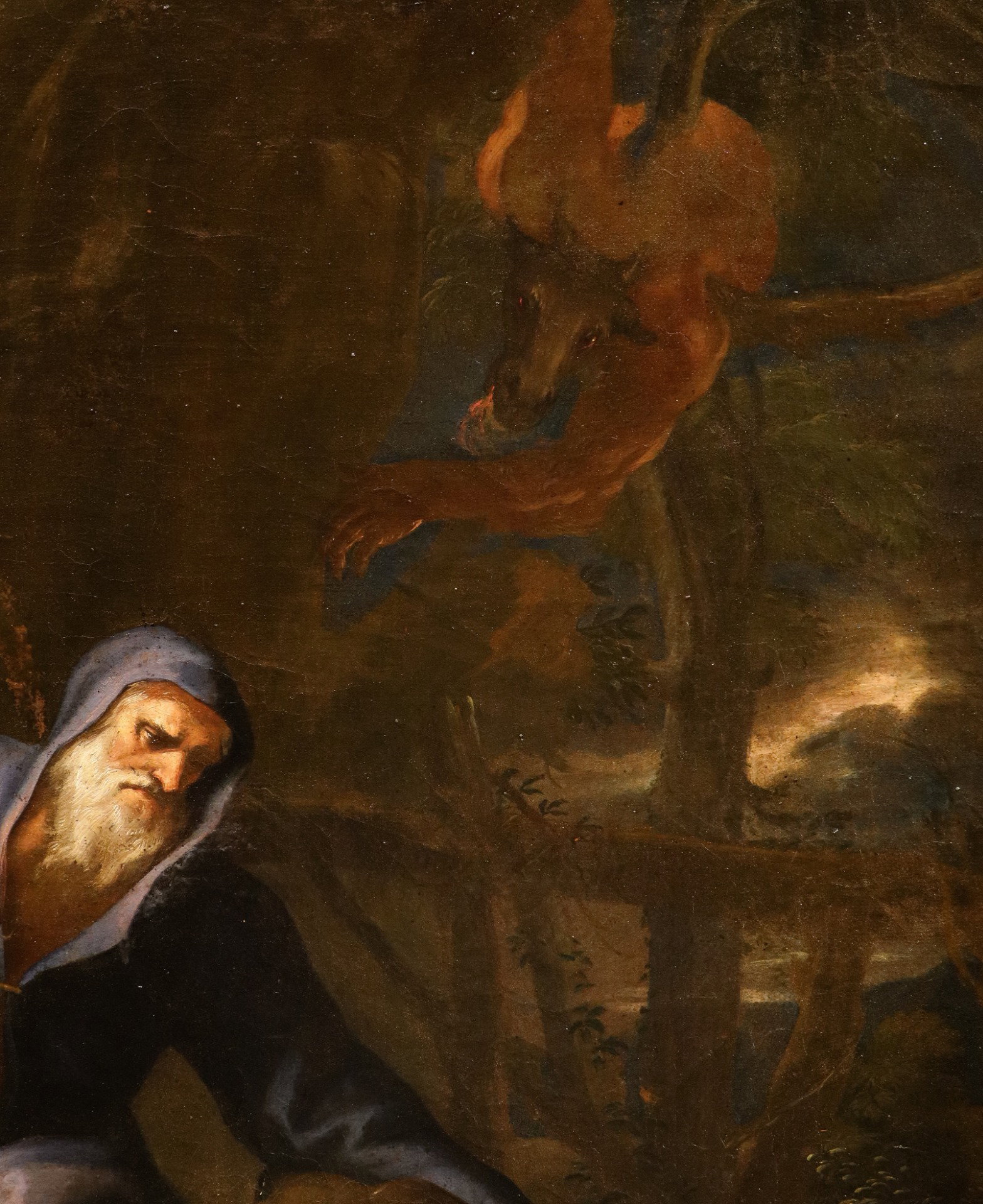
Often evil took the form of hybrid creatures, as in our case, where the devil appears as a fierce beast, a winged monster with an animalistic face.
These monstrous visions served to test the imperturbability and steadfastness of his faith, symbolizing the violence of temptations and the ferocity of the devil, who tries to frighten the saint with senses and fear, but Anthony resists through the strength of his prayer.
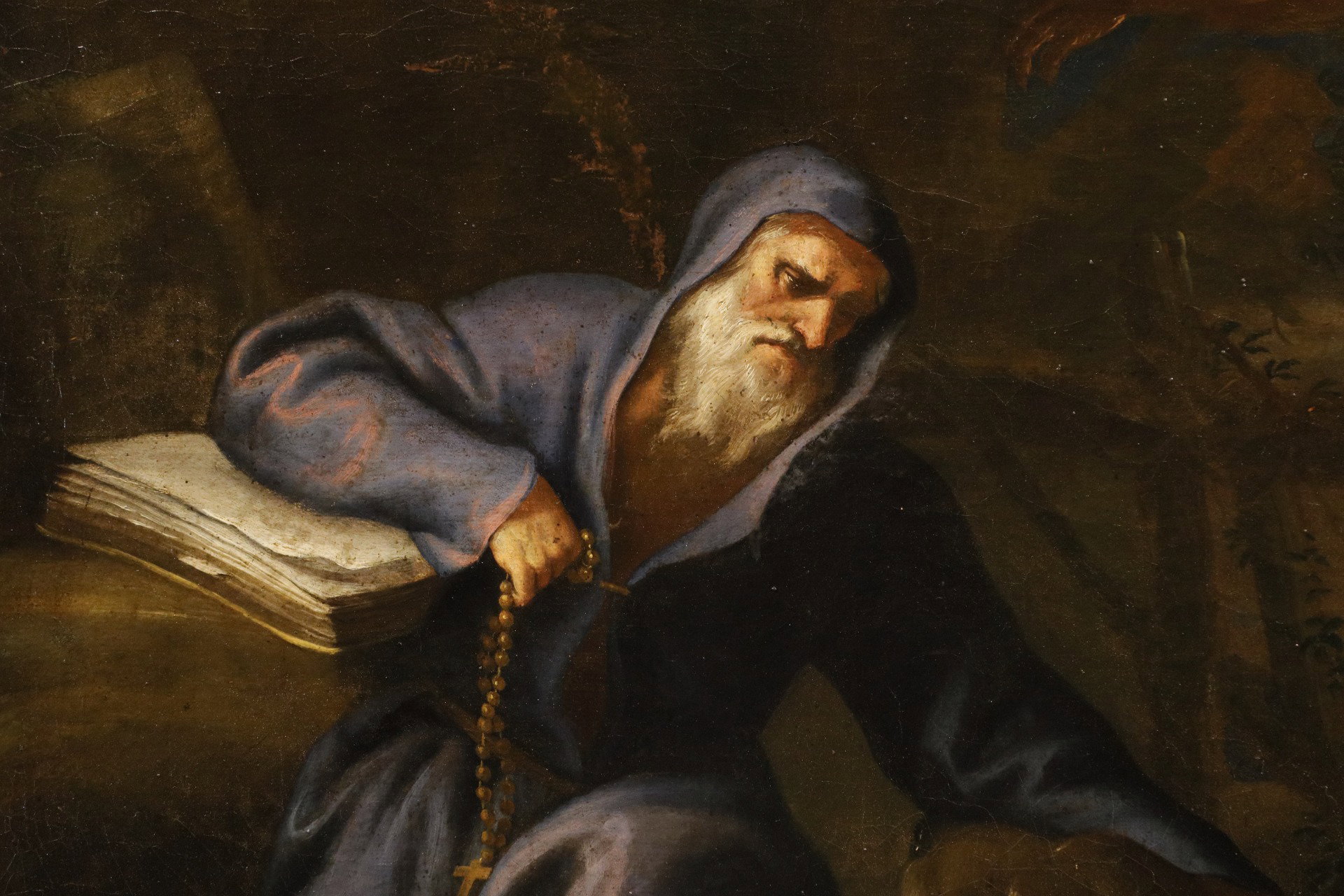
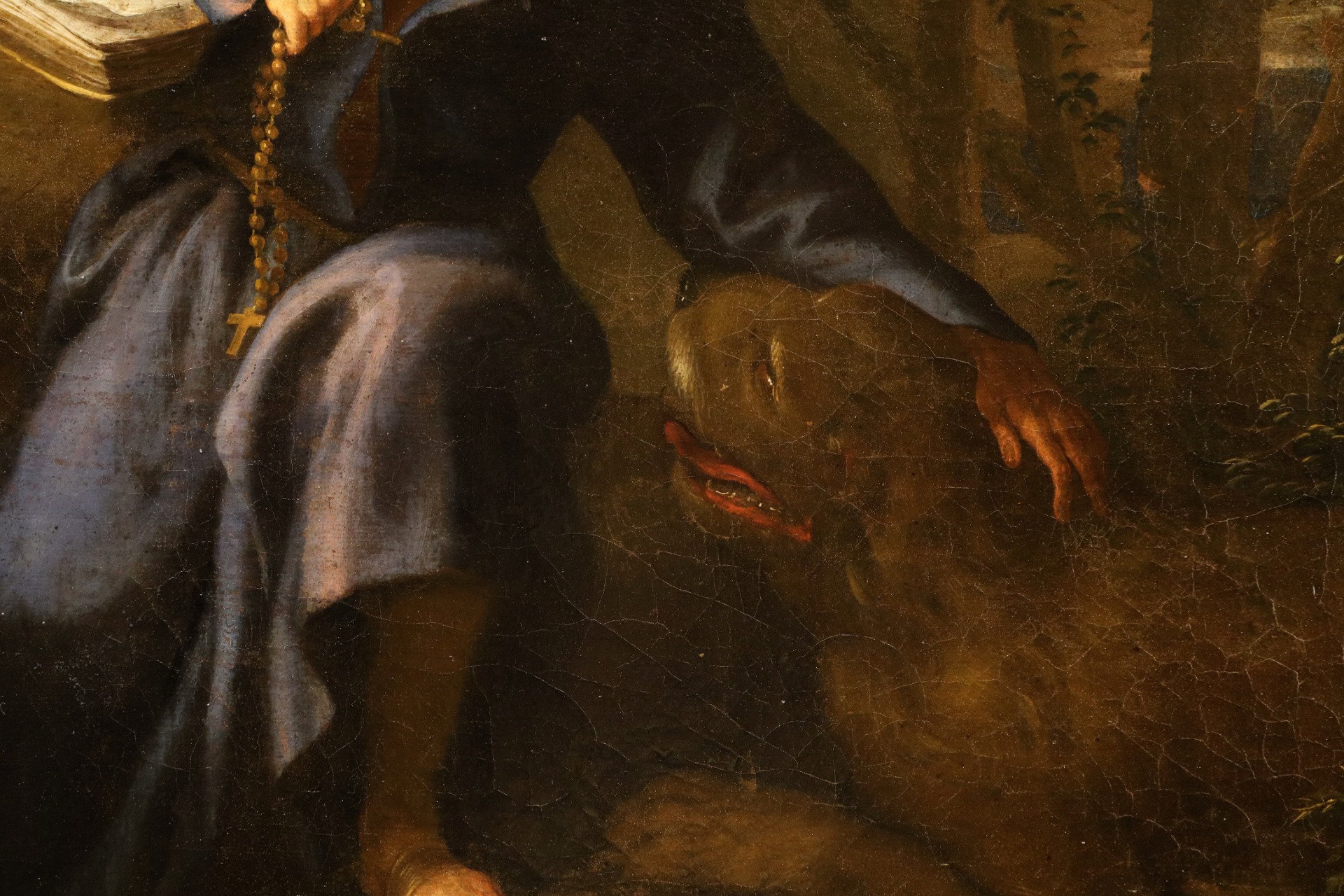
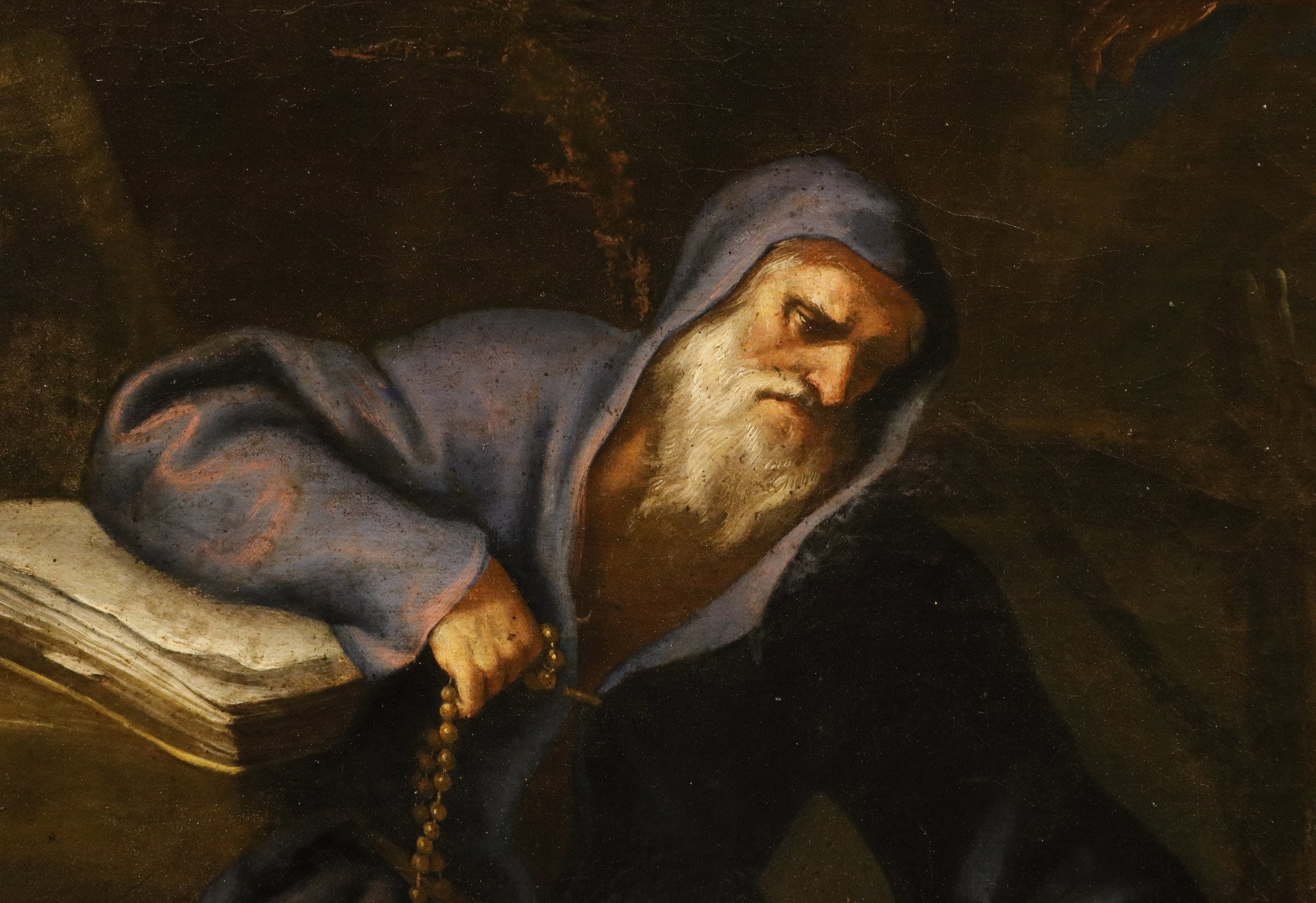
He appears imperturbable, consulting sacred texts and holding a rosary in his hand, both devotional symbols against evil. He caresses a large lion seated by his side, the Lion of Judah, which appears in one of his prayers he recites: "Fúgite, partes advérsæ. Vicit Leo de tribu Juda" (Flee, opposing powers. The Lion of the tribe of Judah has conquered), where the animal symbolizes Christ himself conquering enemy powers.
Stylistically, the painting can be attributed to the manner of Pier Francesco Mola (1612 - 1666), a Baroque painter active mainly in Rome, whose work focuses on themes of faith and devotion, and includes many scenes of saints in contemplation or in moments of spiritual ecstasy, reflecting the religious sensitivity of 17th-century Rome.
His style is intense and dramatic, often described as "pre-Romantic," capable of expressing profound interiority and passion, and he is renowned for integrating Venetian chromatic sensibility with the rigor of Roman classicism.
Regarding the attribution of our fascinating canvas, we are inclined to ascribe its creation to an artist working within Mola's workshop, presumably one of his students, among whom we can mention Francesco Giovani, Antonio Gherardi, Giovanni Battista Pace, or Girolamo Troppa, or an artist from his circle active in an immediately subsequent period.
ADDITIONAL INFORMATION:
The images were produced using a professional photographic set and lighting system.
The work is complete with a pleasant gilded wooden frame and a certificate of authenticity and descriptive iconographic sheet.
We handle and organize the transport of purchased works, both within Italy and abroad, through professional and insured carriers.
It is also possible to view the painting in our gallery in Riva del Garda; we will be pleased to welcome you to show you our collection of works.
Contact us, without obligation, for any additional information.
Follow us also on:
INSTAGRAM https://www.instagram.com/galleriacastelbarco/?hl=it
FACEBOOK https://www.facebook.com/galleriacastelbarco/