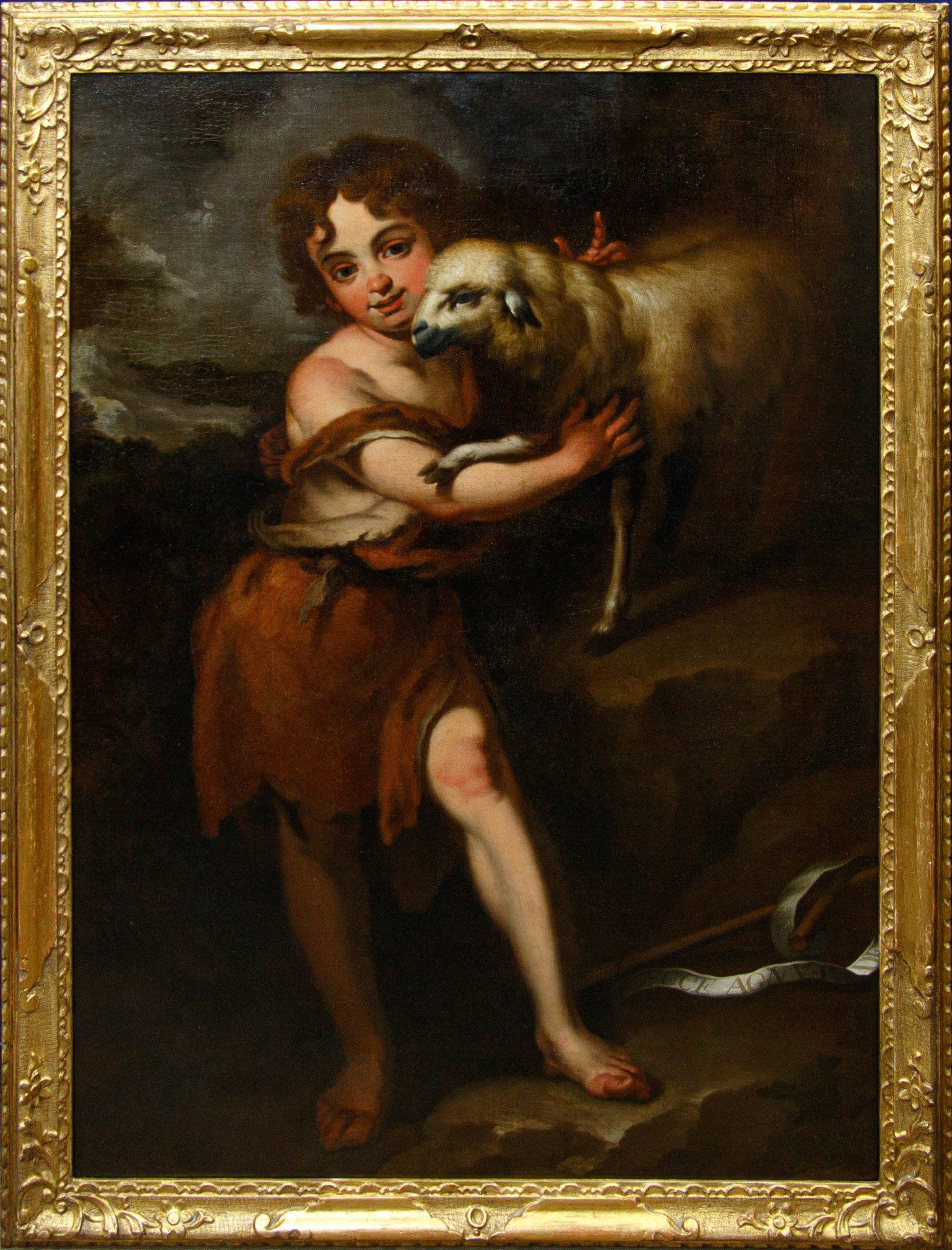
Follower of Bartolomé Esteban Murillo (Seville, 1617 - 1682)
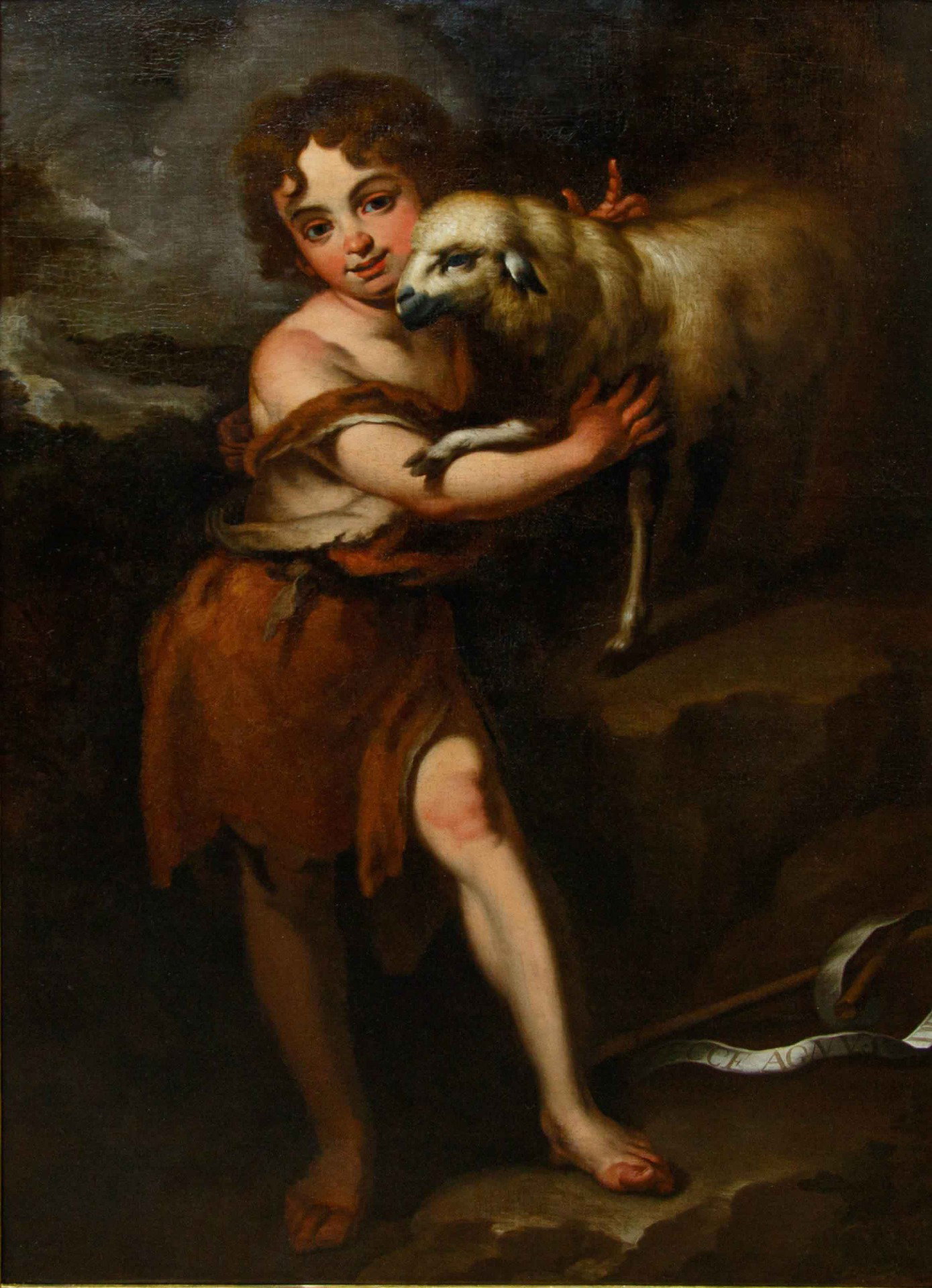
Saint John the Baptist with the Lamb
Oil on canvas, 113 x 80.5 cm
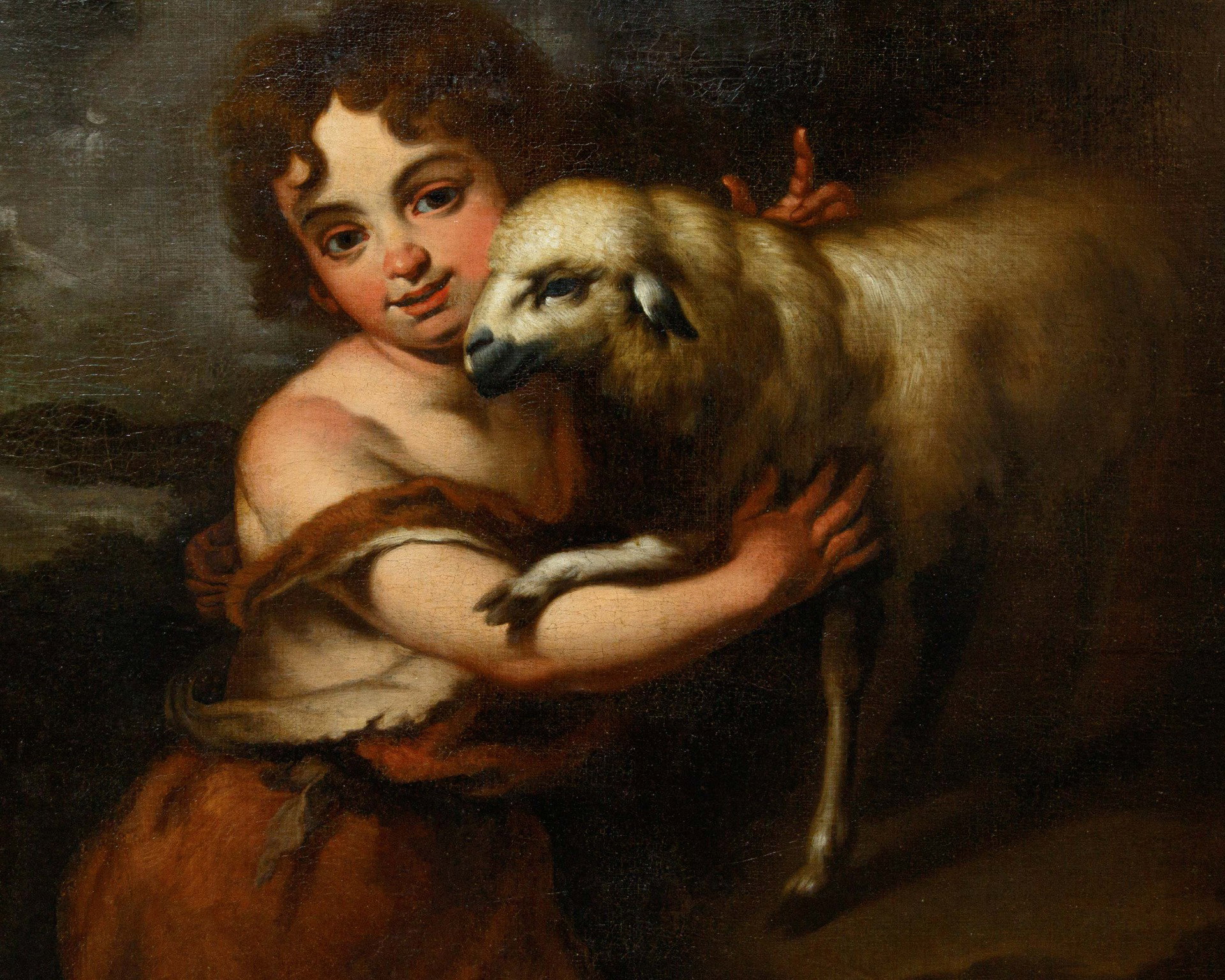
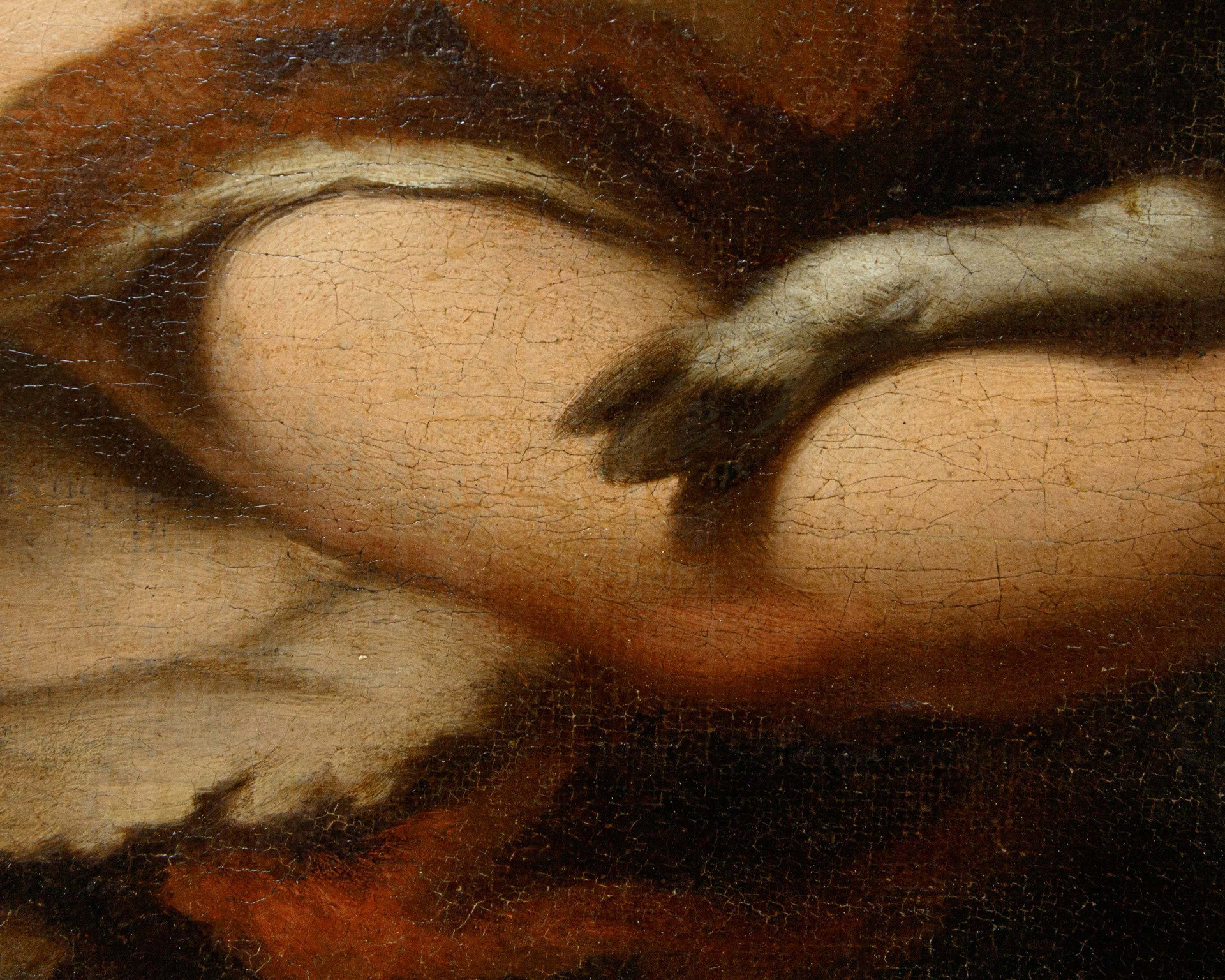
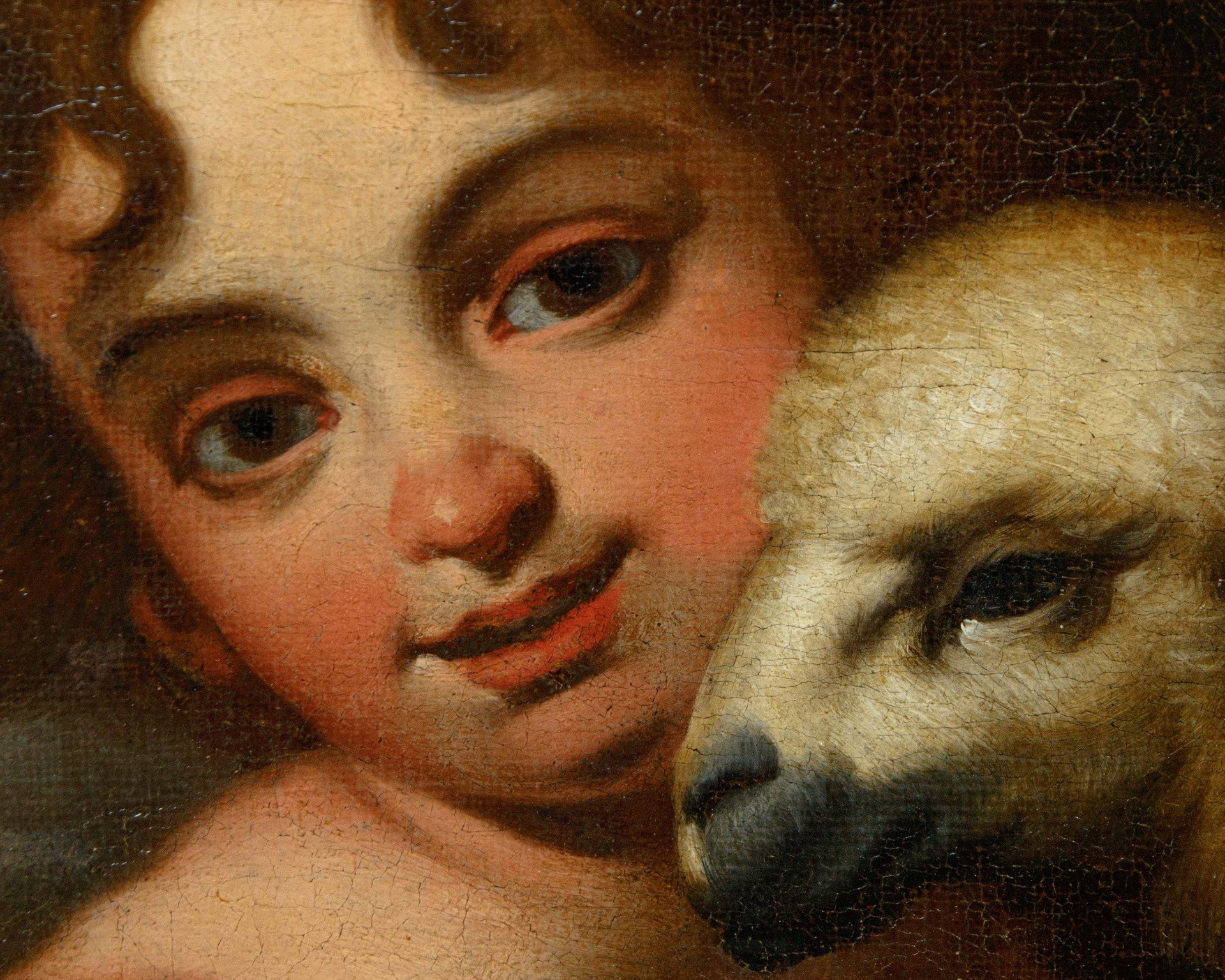
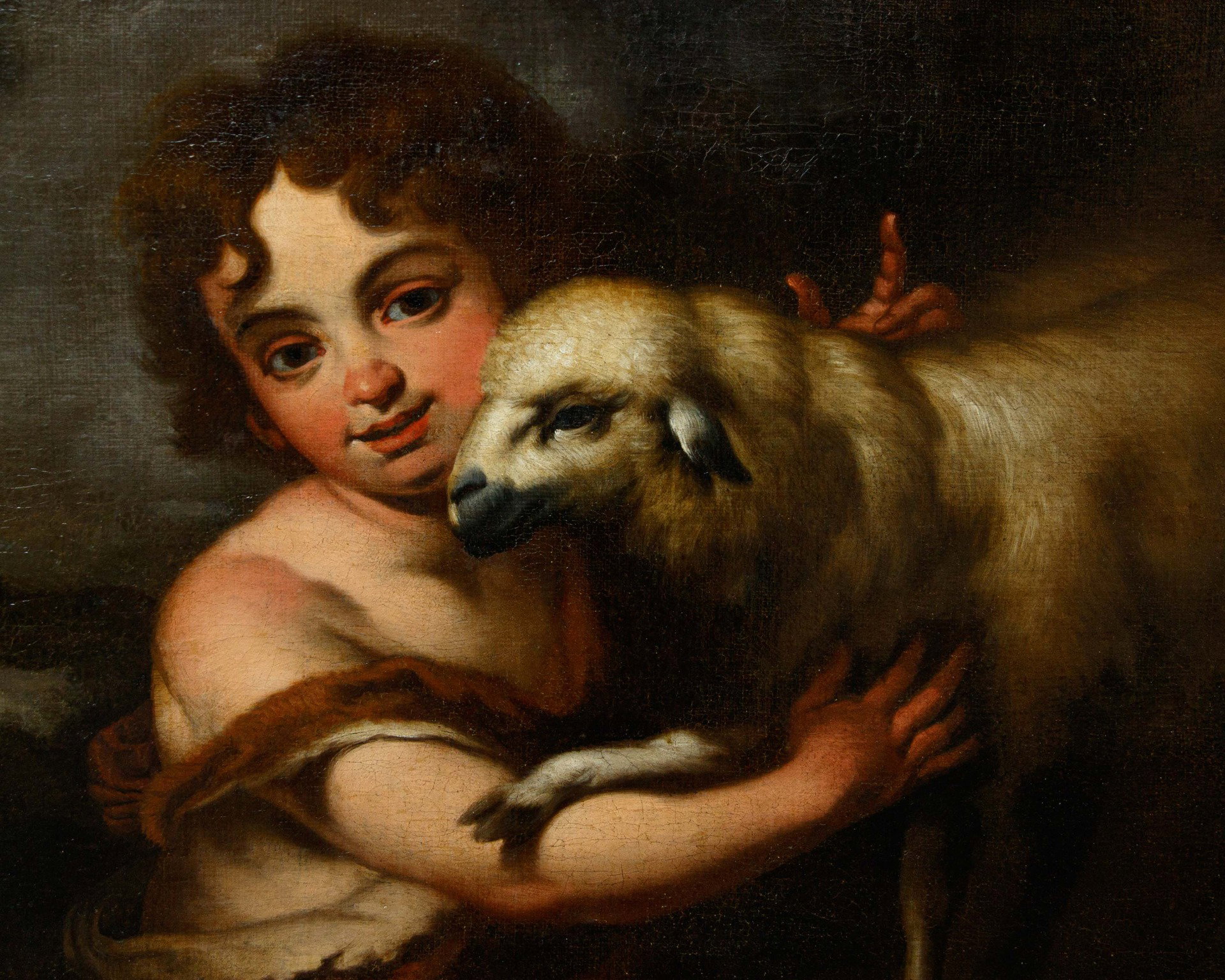
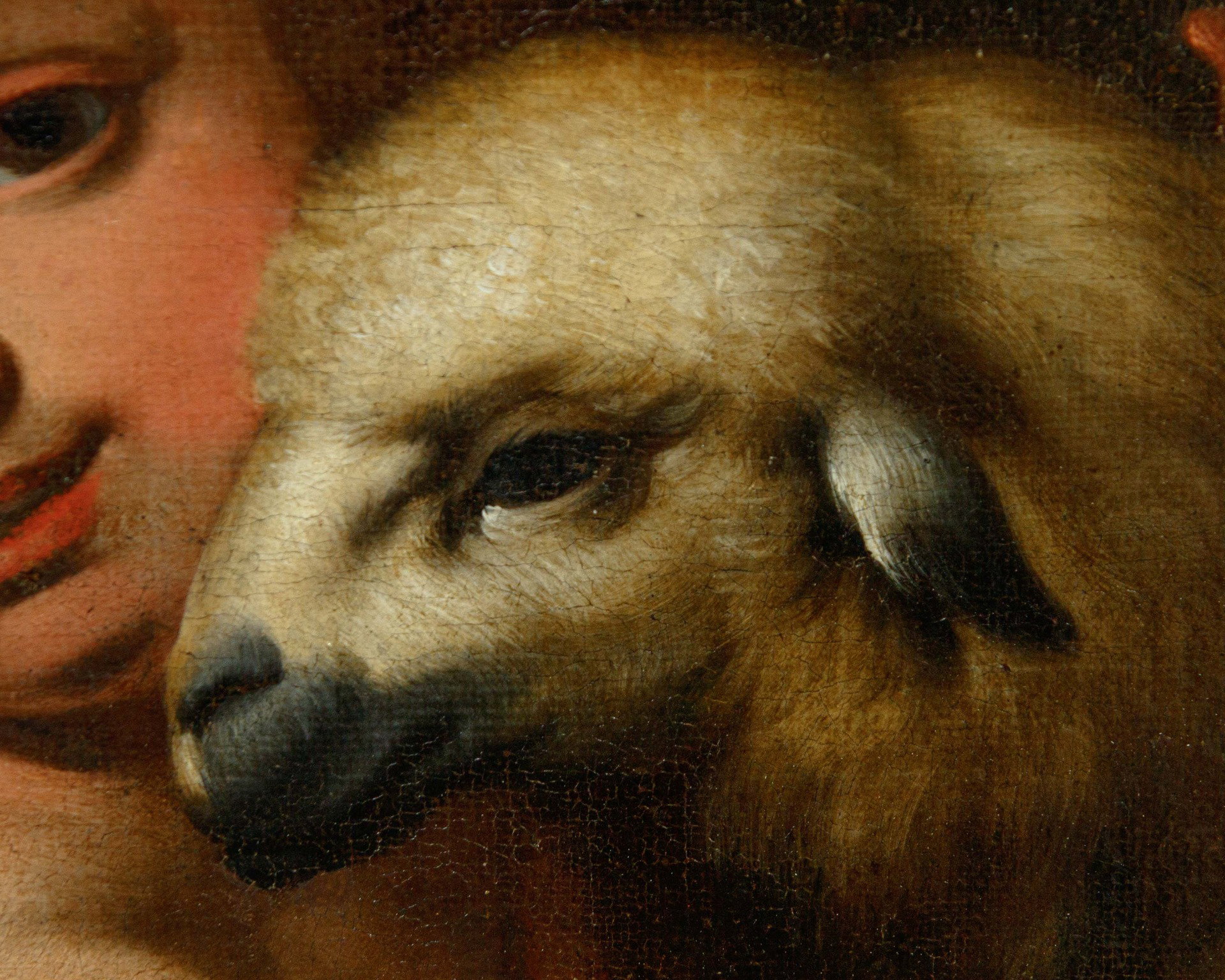
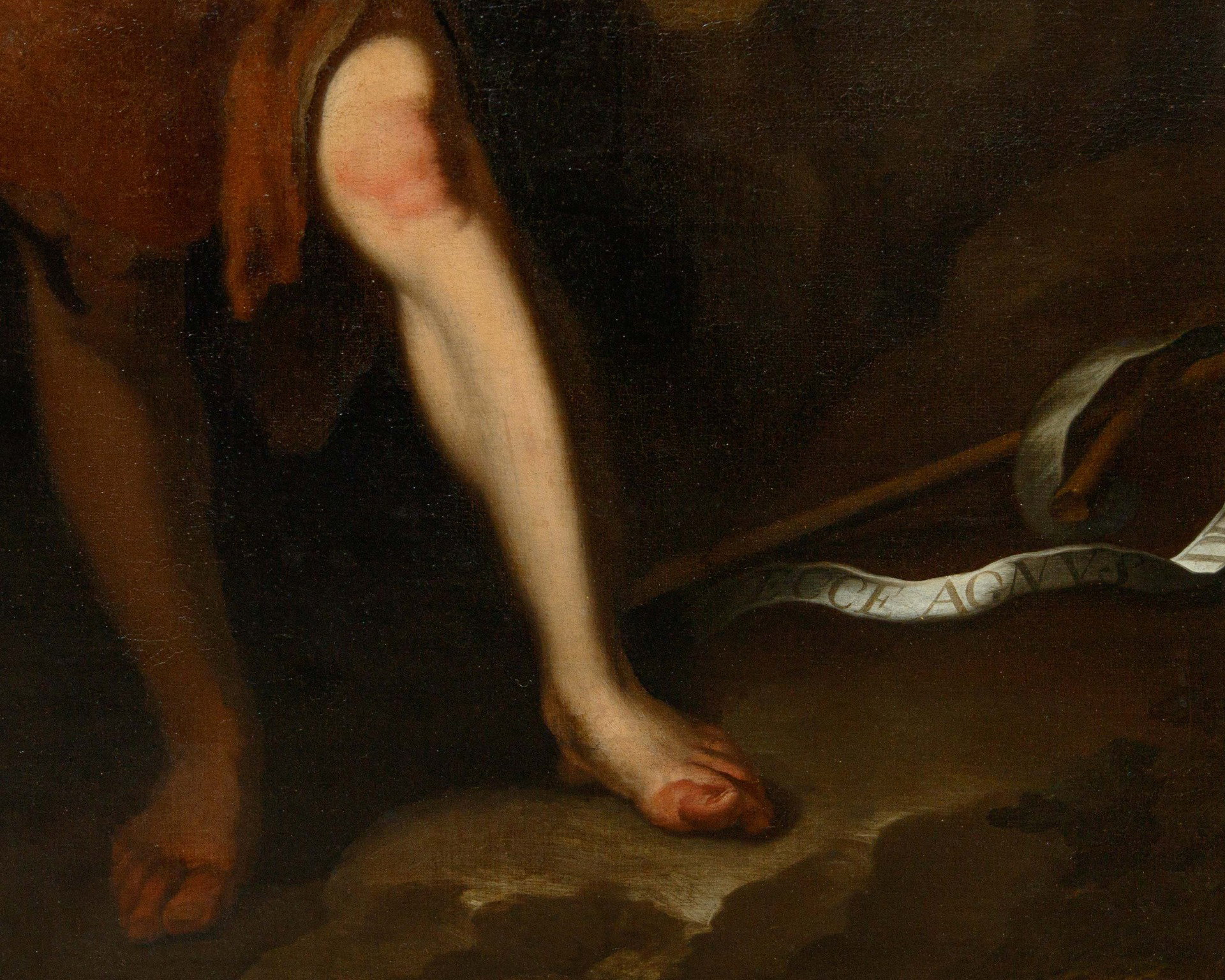
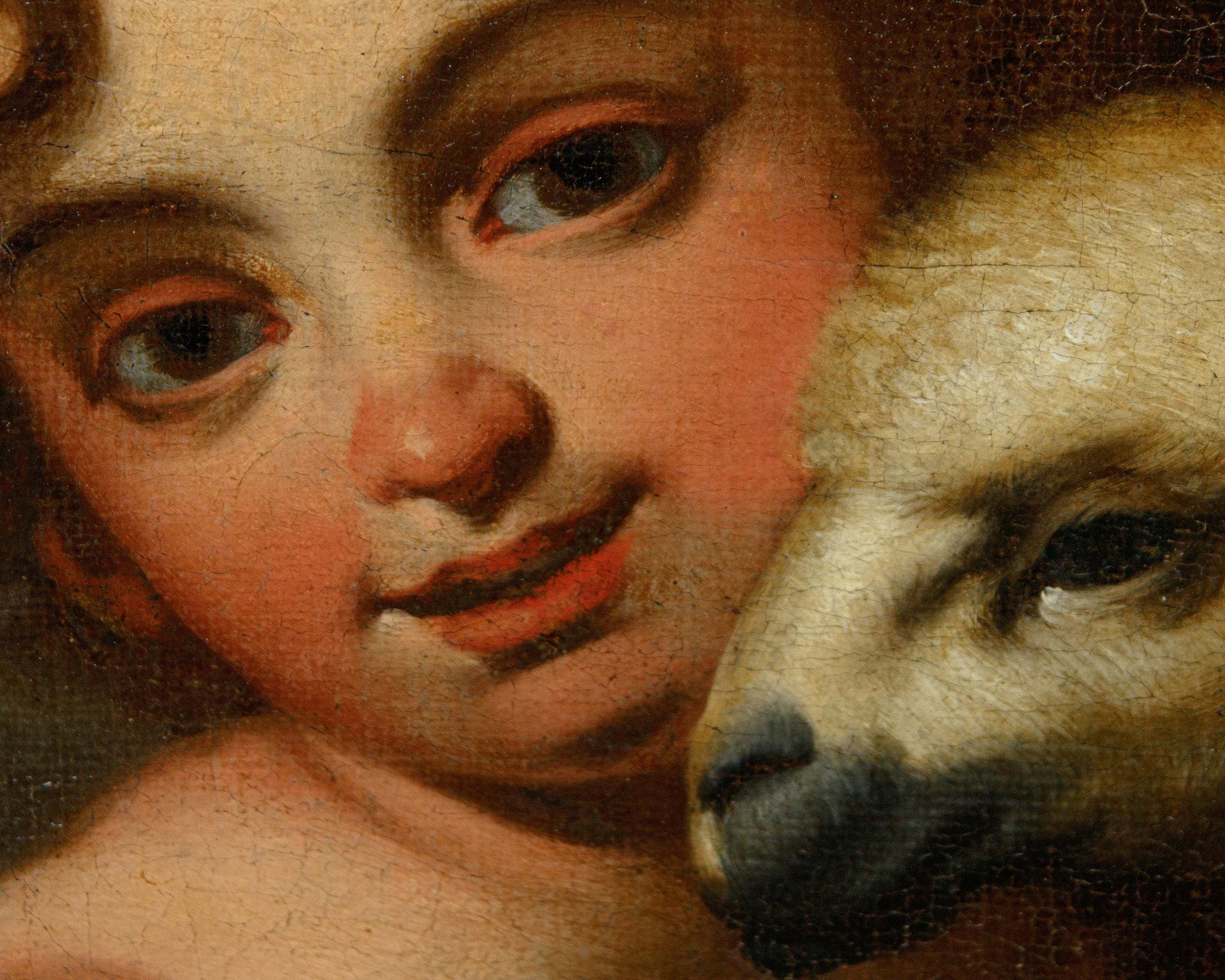
This charming canvas, the work of a talented follower of Bartolomé Esteban Murillo, depicts one of the Sevillian master's most cherished and fortunate iconographies: Saint John the Baptist with the Lamb. The scene portrays the young Baptist with an almost angelic physiognomy, far from the austere image of the preacher in the desert described by the Gospel of Matthew. The child, with soft features and a dreamy gaze, affectionately embraces a lamb, a symbol of Christ's future sacrifice, in an interaction that exudes a profound and moving humanity. The child saint's forearm intertwines with one of the animal's legs, while his hand points to the sky, recalling the evangelical encounter where John proclaims Jesus' divine nature. At his feet, a reed cross wrapped in a scroll bears the Latin inscription "Ecce Agnus Dei," an explicit reference to the words reported in the Gospel of John. This specific composition faithfully reproduces Murillo's famous autographed prototype, now housed at the National Gallery in London, a work that originally formed a diptych with the Infant Jesus as the Good Shepherd, currently in a private collection. The history of the London painting is closely linked to Don Justino de Neve, a canon of the Seville Cathedral and one of the artist's most enlightened patrons, who in 1665 exhibited the pair of canvases on the occasion of the spectacular celebrations for the inauguration of the church of Santa María la Blanca. On that occasion, Saint John the Baptist and the Good Shepherd flanked Murillo's famous Immaculate Conception of the Venerables, now in the Prado, creating a devotional apparatus of extraordinary visual power. The overwhelming success of this invention, capable of transforming complex theological dogmas into images of disarming innocence and childlike purity, prompted numerous members of the master's workshop and followers to produce replicas and variations to meet the growing demand of the art market. Murillo, moreover, returned to the theme of the child Baptist several times, exploring various compositional and psychological possibilities; the versions preserved at the Kunsthistorisches Museum in Vienna and the National Gallery in Dublin bear eloquent witness to this, where the subject is presented with subtle variations but always maintaining that stylistic signature of soft lighting and expressive tenderness that made the Sevillian painter an indispensable model even for 18th-century British masters like Gainsborough and Reynolds. In this version, the follower manages to capture the essence of Murillo's poetics, favoring an intimate and domestic atmosphere that invites the faithful to emulate the simplicity of children, paying homage to a work that, thanks also to the numerous engravings that disseminated its image over the centuries, remains today among the most iconic and recognizable of the Spanish school, capable of merging religious mysticism with a purely earthly grace.