Scipione Pulzone, called Il Gaetano (Gaeta 1544 - Rome 1598) - workshop of
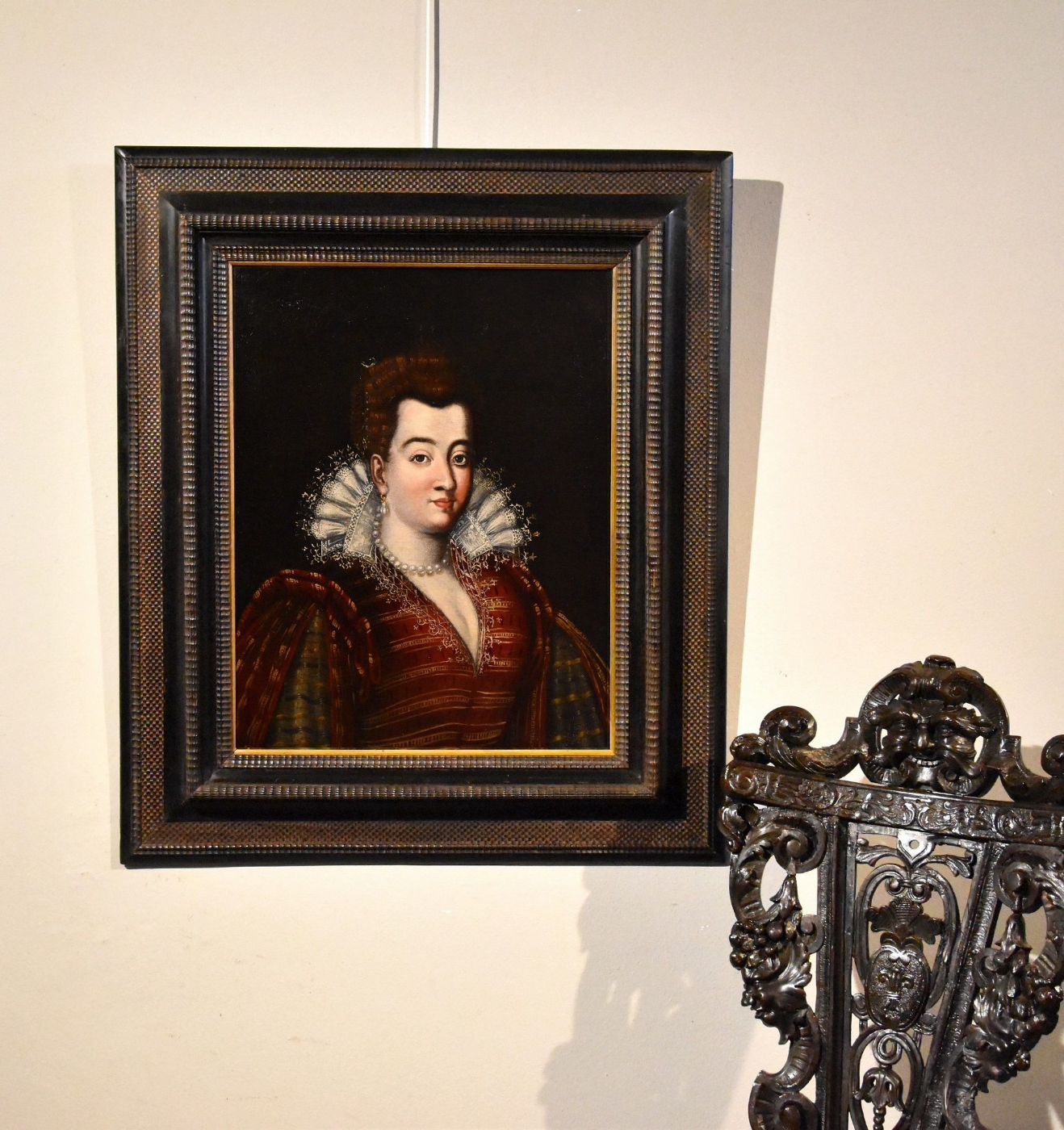
Portrait of Bianca Cappello (Venice, 1548 - 1587) Grand Duchess of Tuscany, second wife of Francesco I de' Medici
Second half of the 16th century
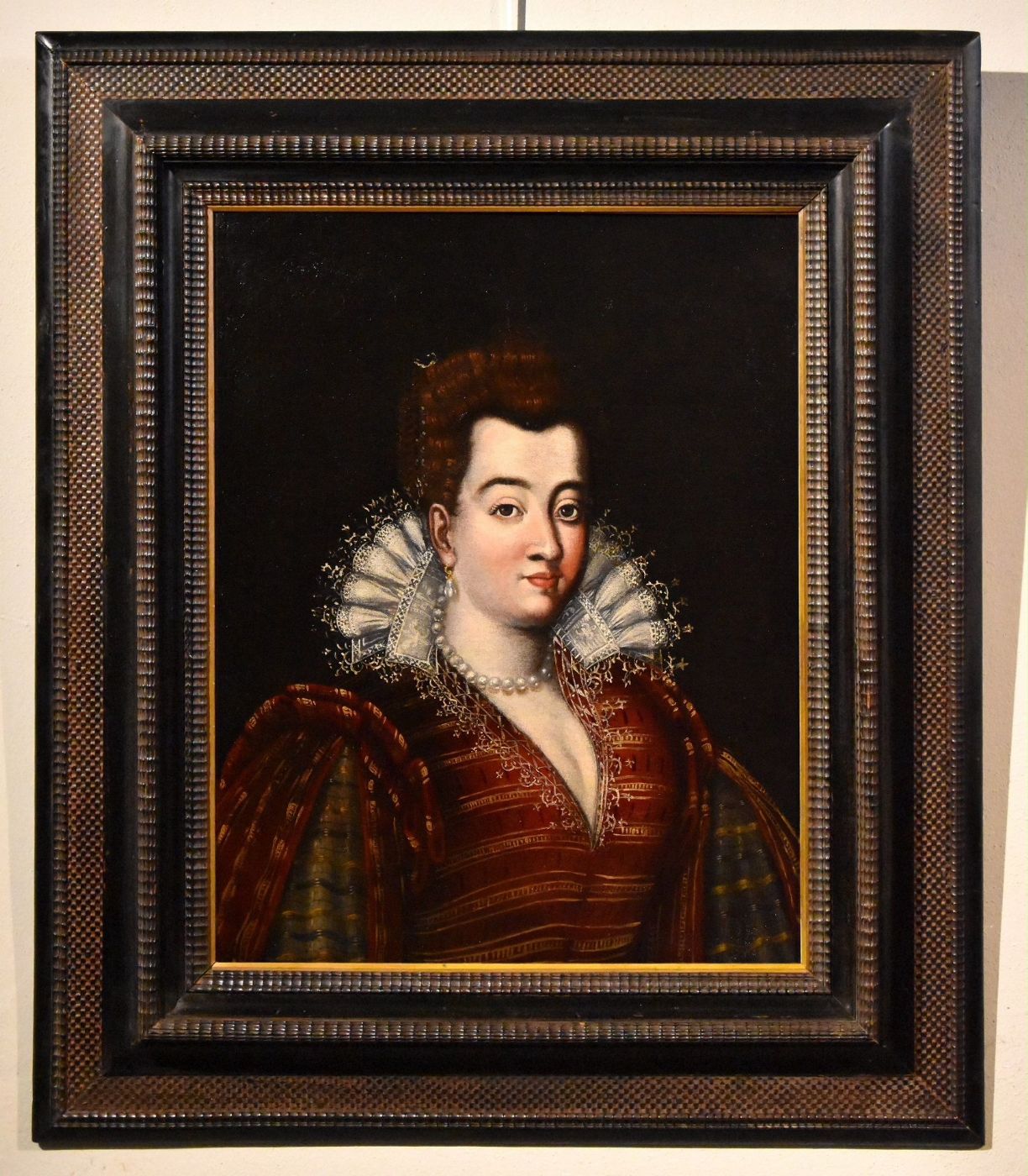
oil on canvas, cm. 70 x 56 cm., in frame 103 x 87 cm.
Complete details of the work on this link
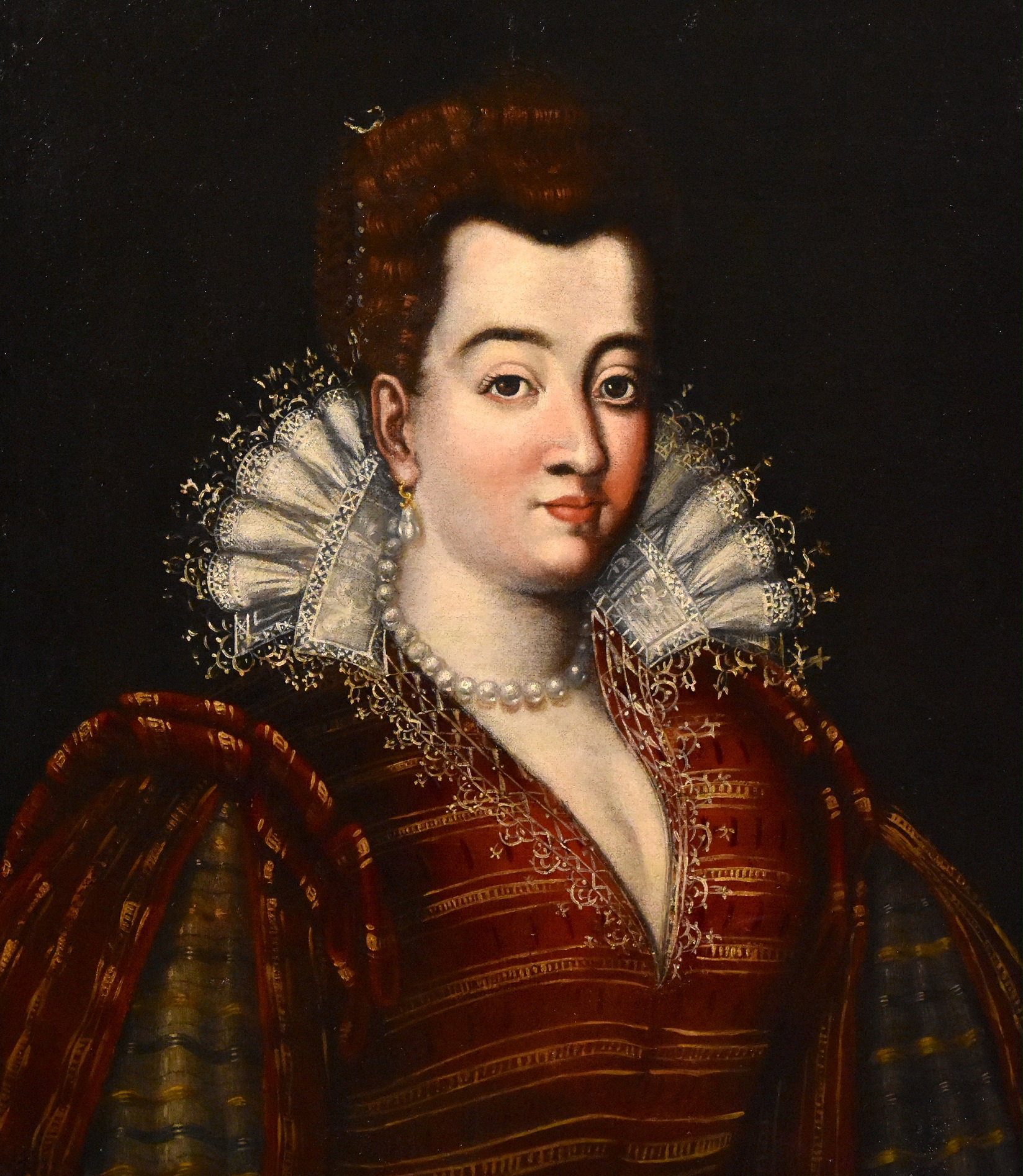
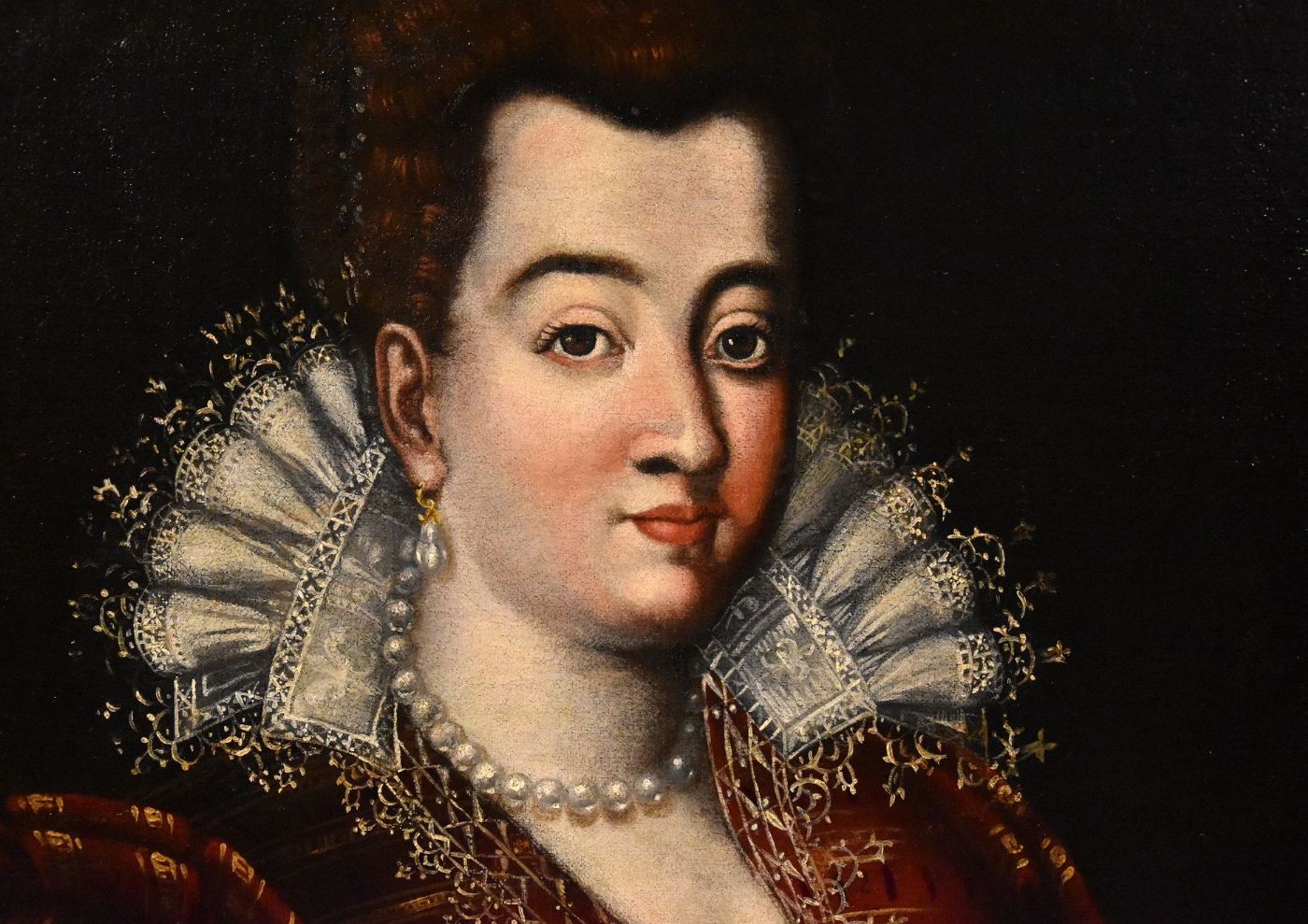
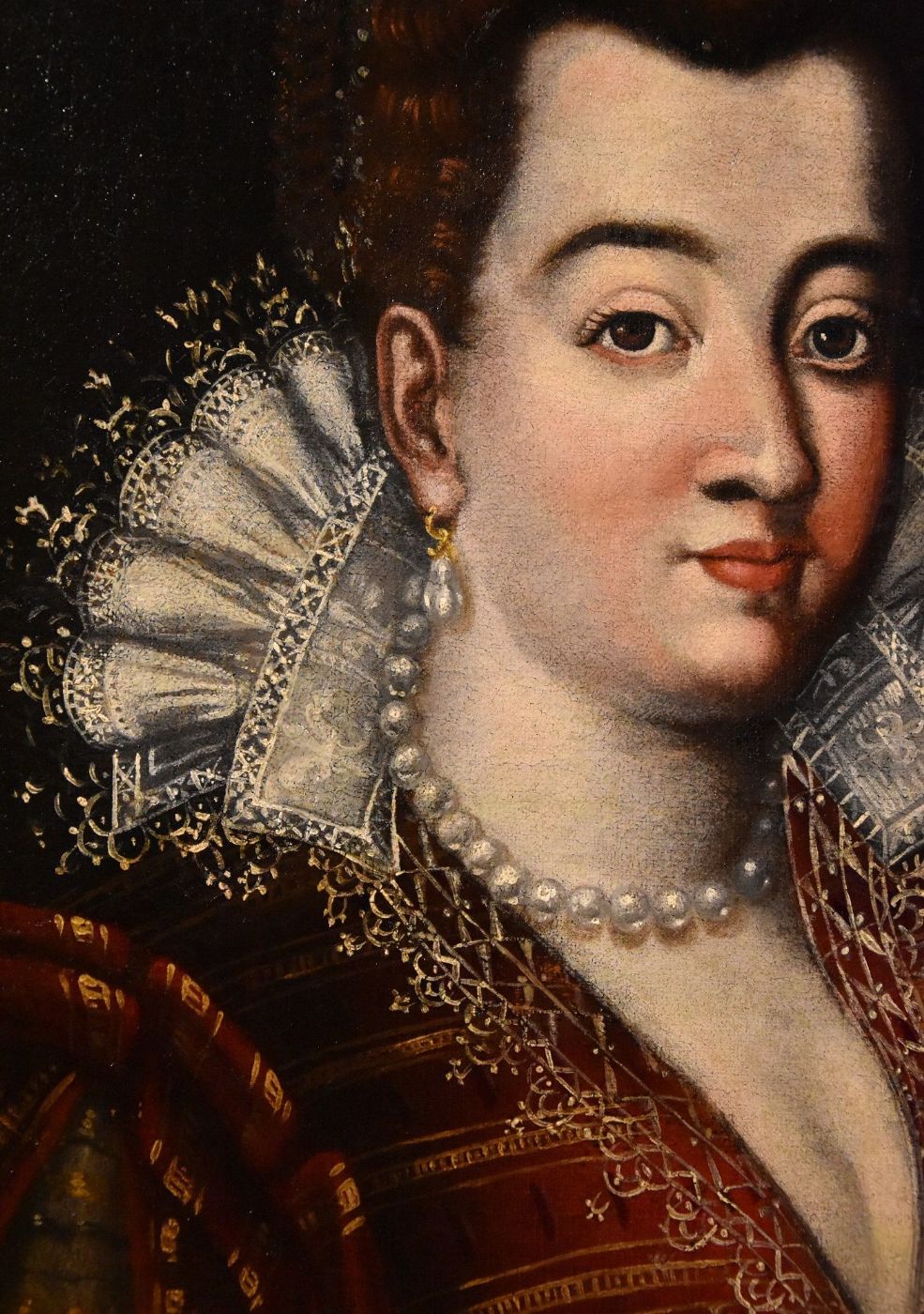
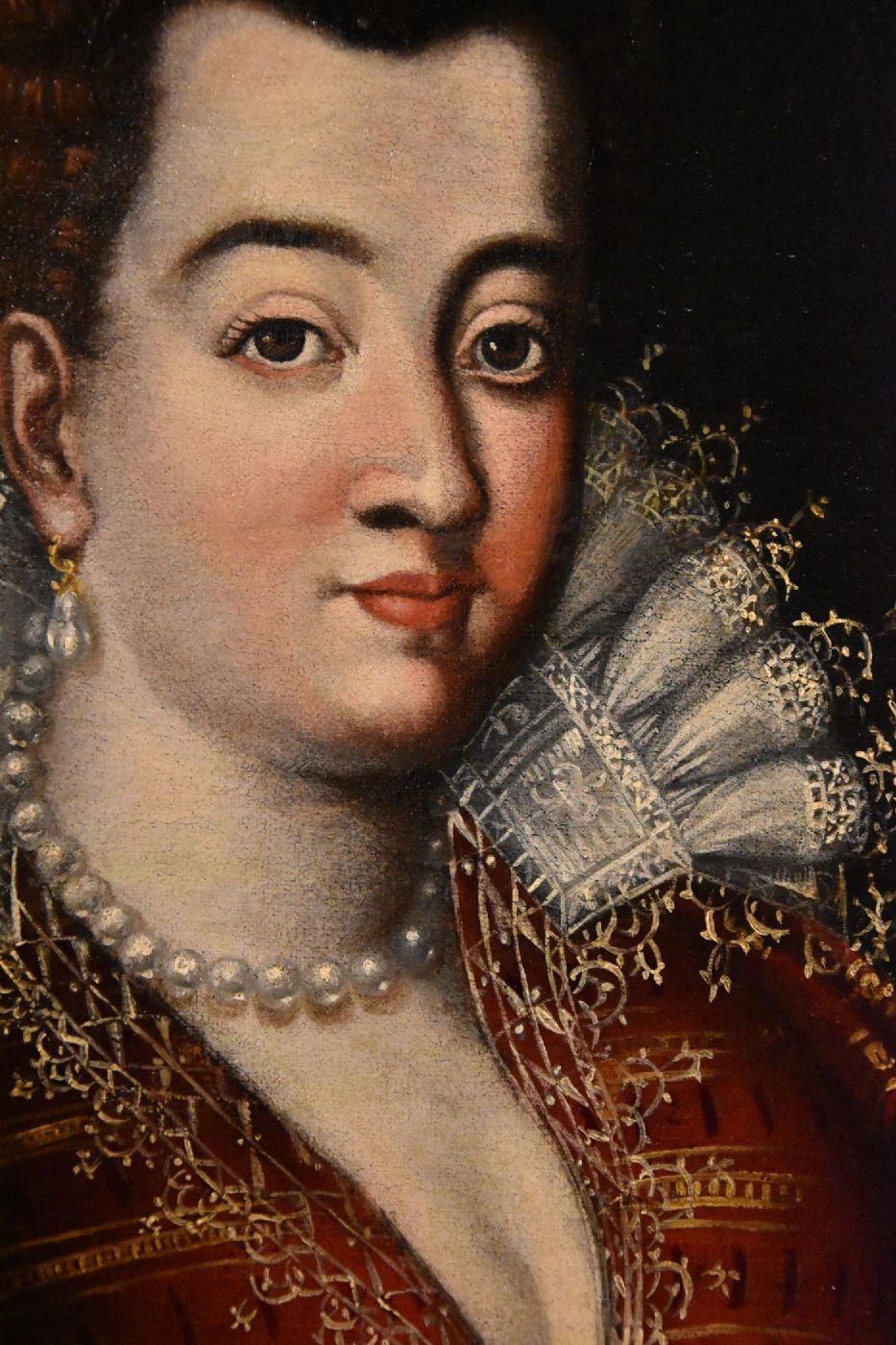
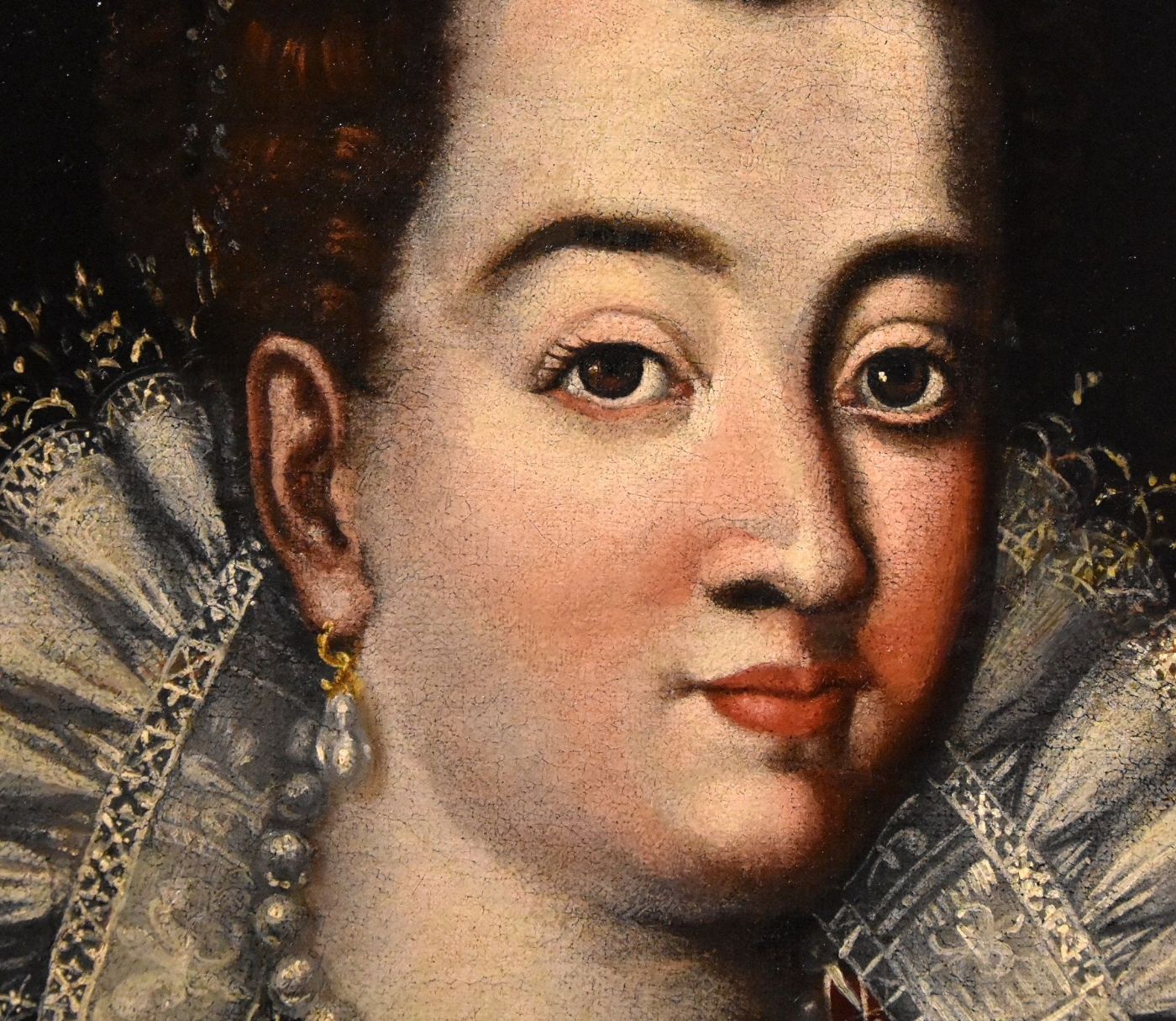
The painting presented shows us the portrait of Bianca Cappello (Venice, 1548 - 1587), a noblewoman of Venetian origin, second wife of the Grand Duke of Tuscany Francesco I de' Medici, whose expressive power is skillfully highlighted by the three-quarter composition, with her head and gaze directed at the observer. The ray of light coming from the right plastically emphasizes the volumes of the face and lingers on its features, highlighted by the large white lace ruff around her neck and the details of her precious clothing.
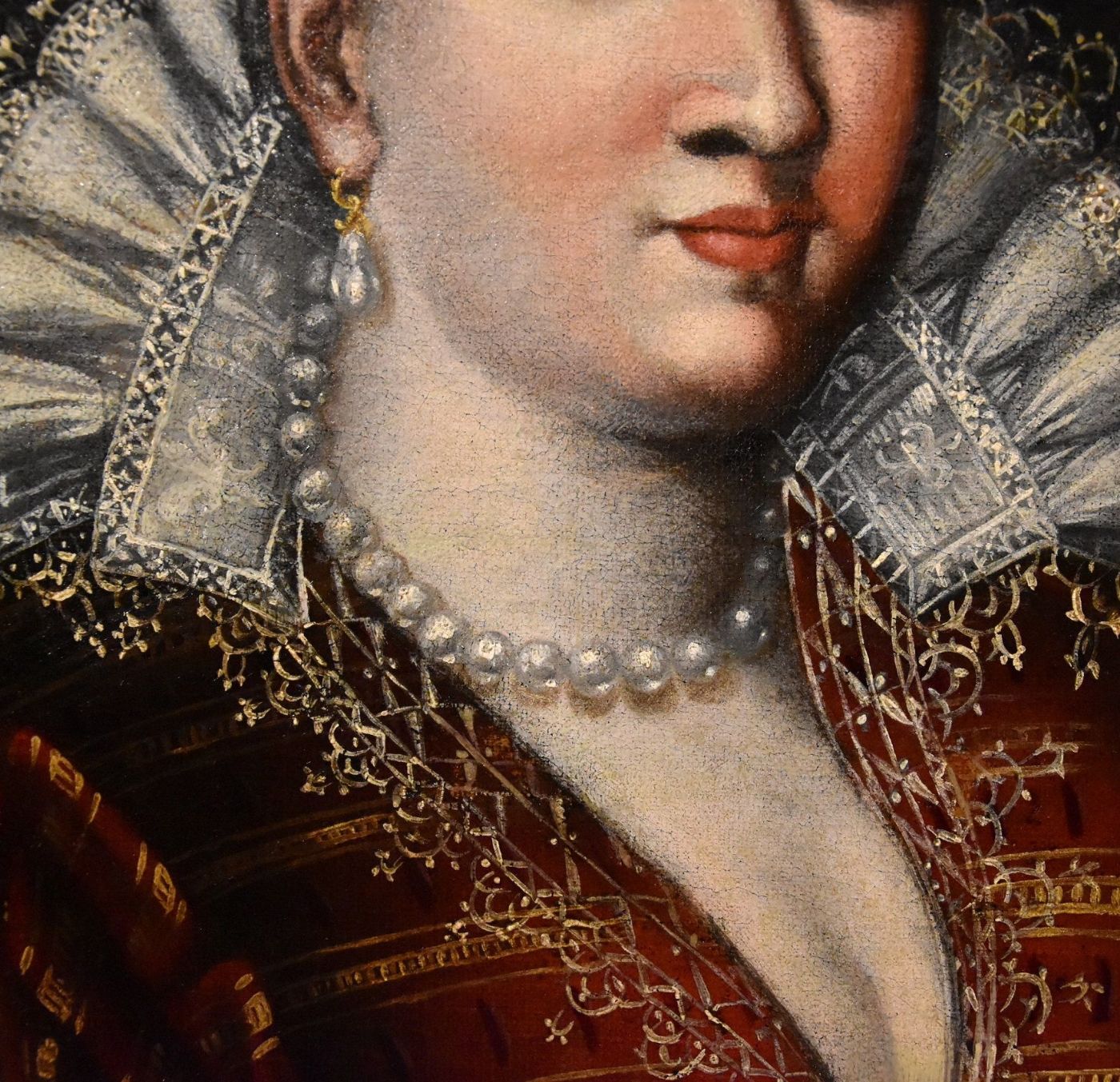
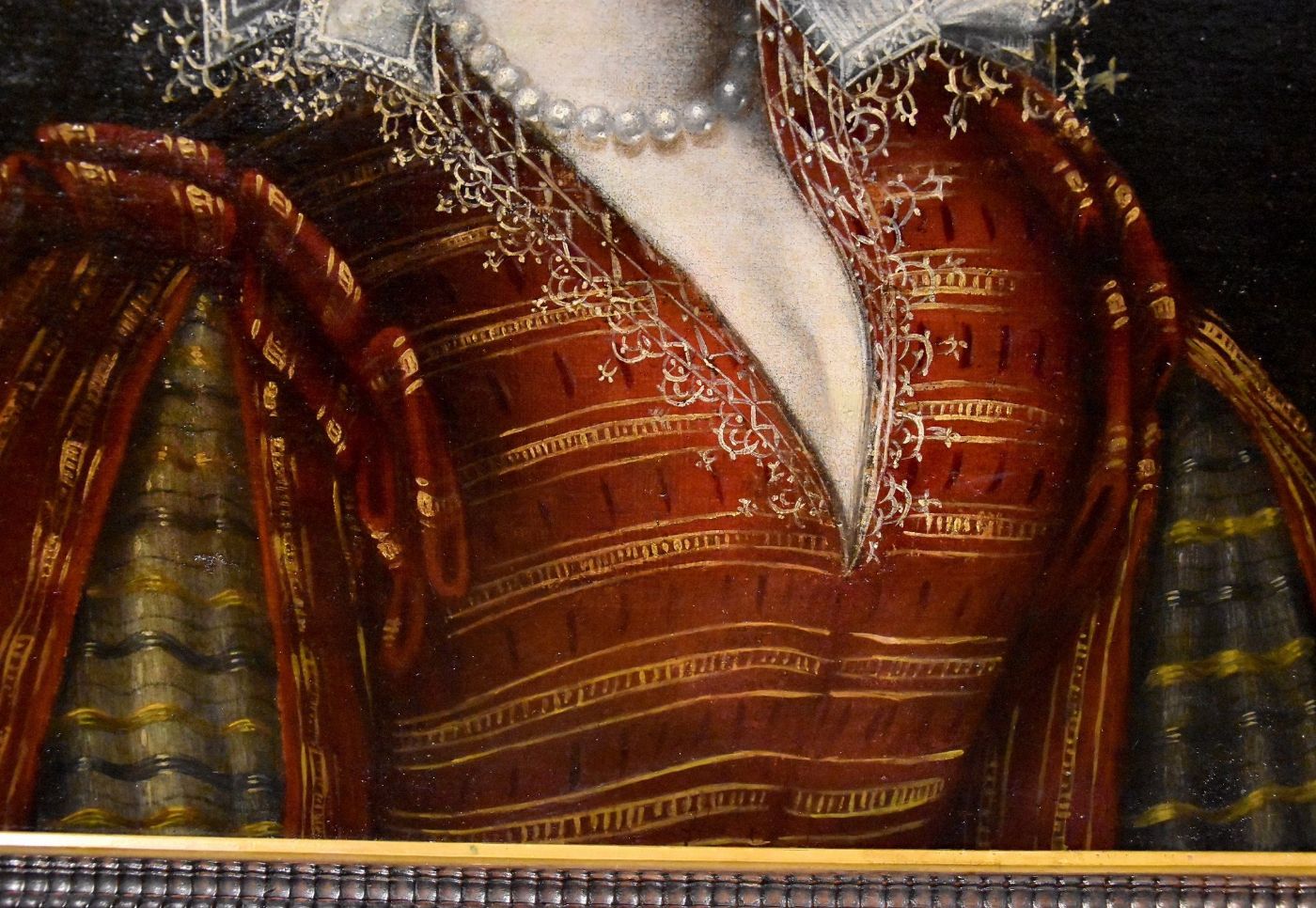
Bianca wears a dark red dress, perhaps a zimarra, embroidered in gold with a deep neckline and a high, ruffled shirt collar, also trimmed with precious lace, embroidered with the Florentine lily motif.
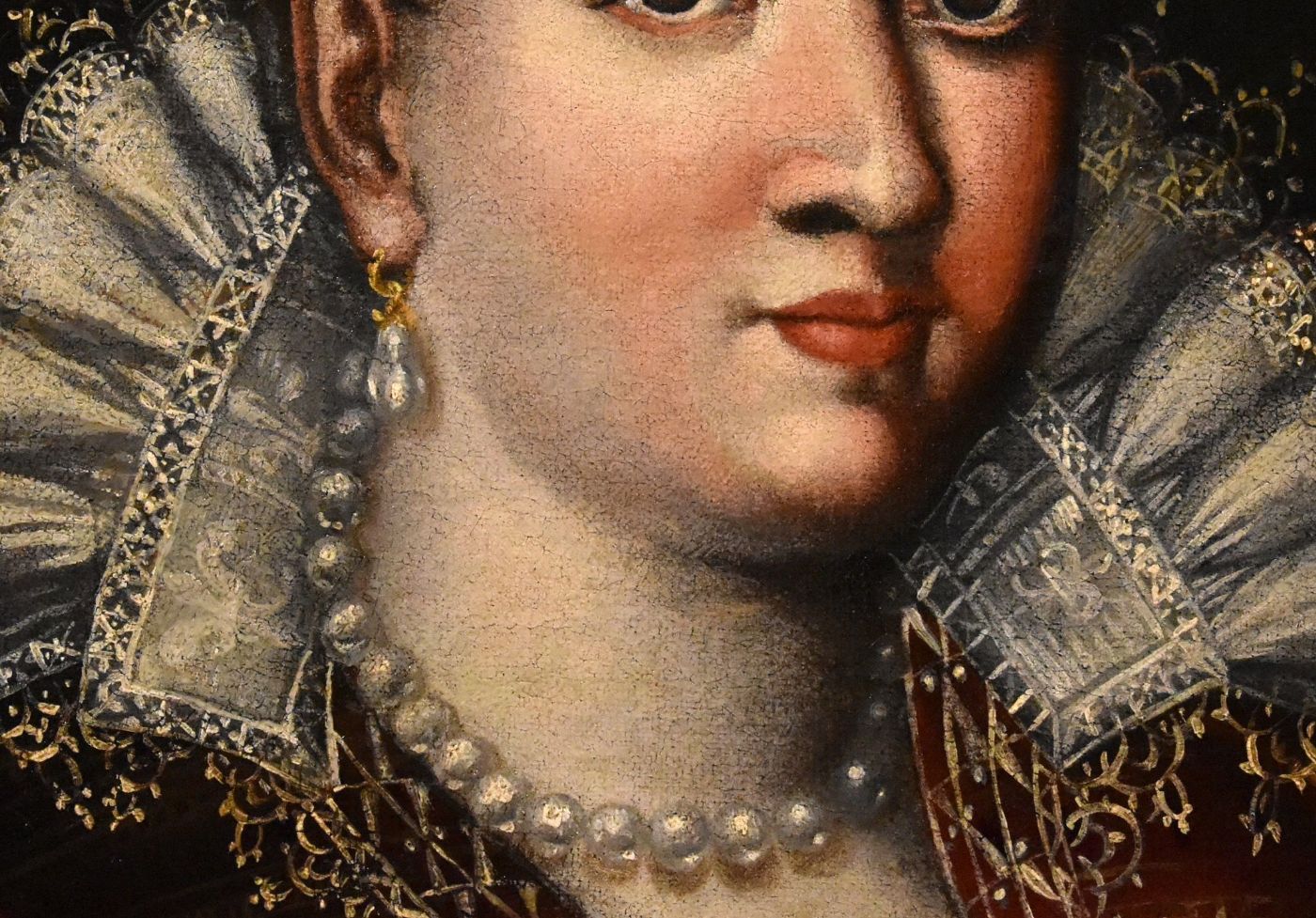
The noblewoman's favorite jewels were pearls: we see them on a choker adorning the neckline, in her earrings, and again in her hairstyle, which features her hair gathered at the nape of her neck and adorned with a strand of small black pearls and a clasp.
This is a high-quality painting that can be attributed to the workshop of the painter Scipione Pulzone, called il Gaetano, representing a genre in which the master excelled: portraiture. This attribution would be confirmed by comparisons with the numerous portraits that Pulzone dedicated to the Medici family.
Our painting, in particular, could represent one of the versions that the workshop replicated, at the request of numerous art collector patrons who wished to own a portrait of one of the most influential personalities in the Florentine scene.
The figures drawn by Pulzone were icons of incomparable elegance: noblewomen, knights, and clergymen lent their features to the artist's eye, who captured every minute detail with his superb technique. A surprising photographic richness and material attention that echo Flemish-inspired pictorial prototypes, particularly those of Antonis Mor (Utrecht 1520 – Antwerp 1578), who also worked in Rome, and who gave Pulzone the nickname "Van Dyck of the Roman school".
His portraits are capable of highlighting the characteristic signs of the exercise of power, both in the clothing and attributes, and in the facial expression and pose. The aristocrats appear to us as figures fully aware of their social status and, even if in their stillness and hieraticism, they may seem cold or impersonal at first glance, they emanate the subtle charm of "timeless" art.
First documented in Rome in 1562, Pulzone soon came into contact with the most important aristocratic families of the second half of the sixteenth century, becoming the official portraitist of the nobility and ecclesiastical leadership of the city. The first to appreciate his talent as a portraitist was Marcantonio II Colonna, victor of the Battle of Lepanto against the Turks (1571). It was he who opened the doors for him to the great Roman families, followed by commissions from the Medici in Florence.
The earliest works are characterized by an optical and lenticular investigation, by a sharp focus on details, applied to both faces and clothing through a glassy pictorial material. There is no doubt that Gaetano's technical skill, which in some cases reaches mimetic excellence, contributed to his fame. The closer we get to his final years, the more this characteristic loses consistency, and not only in his portraits does he turn towards a realism of more immediate human contact, to which our portrait seems to adhere.
In exceptionally good condition, the present painting is complete with a beautiful Flemish-style ebonized "wave" frame.
Follow us also on :
https://www.instagram.com/galleriacastelbarco/?hl=it
https://www.facebook.com/galleriacastelbarco/