Aristide Louis Fontana (1834 - 1885)
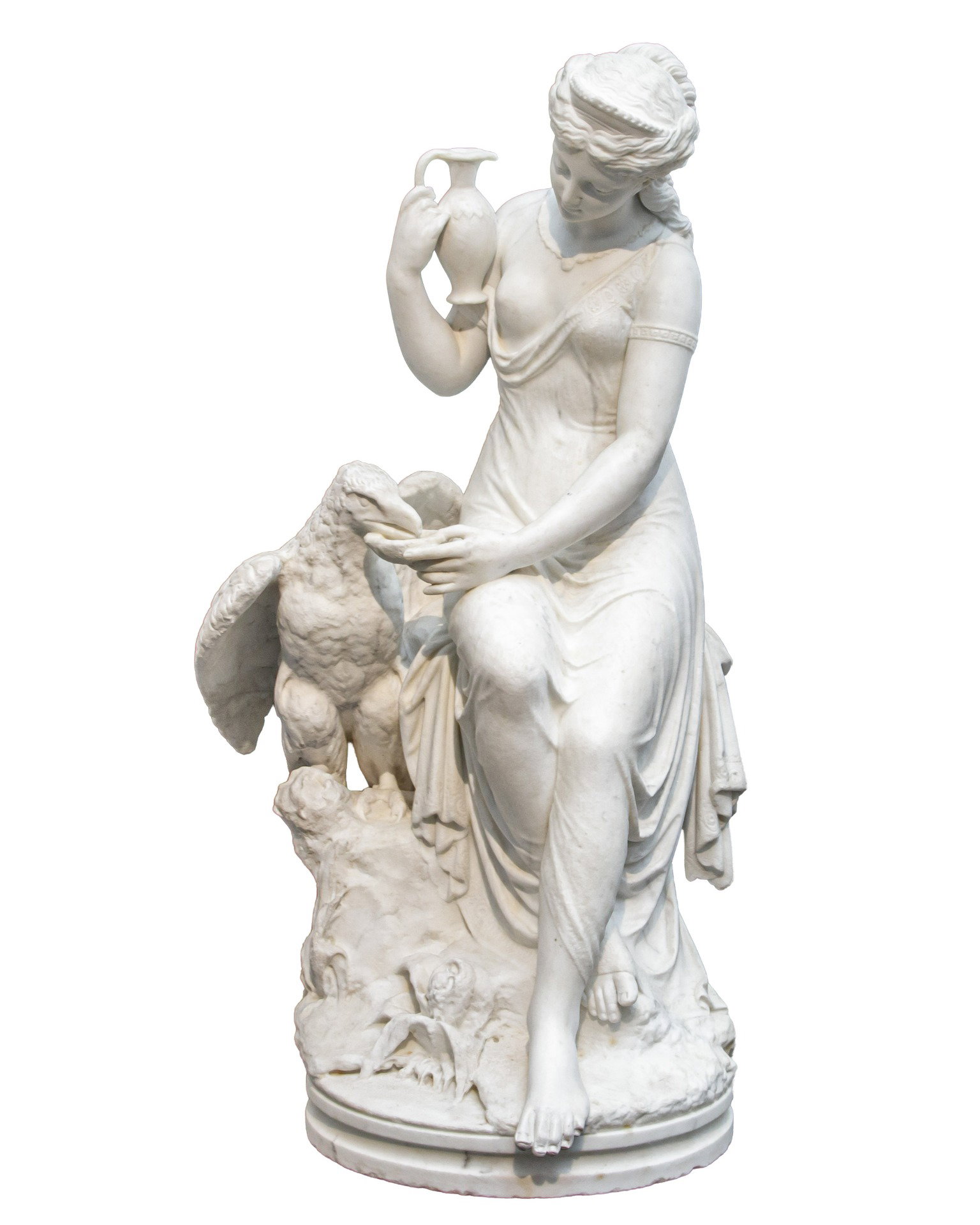
Ganymede feeding Jupiter's eagle
Marble, 102 x 52 cm
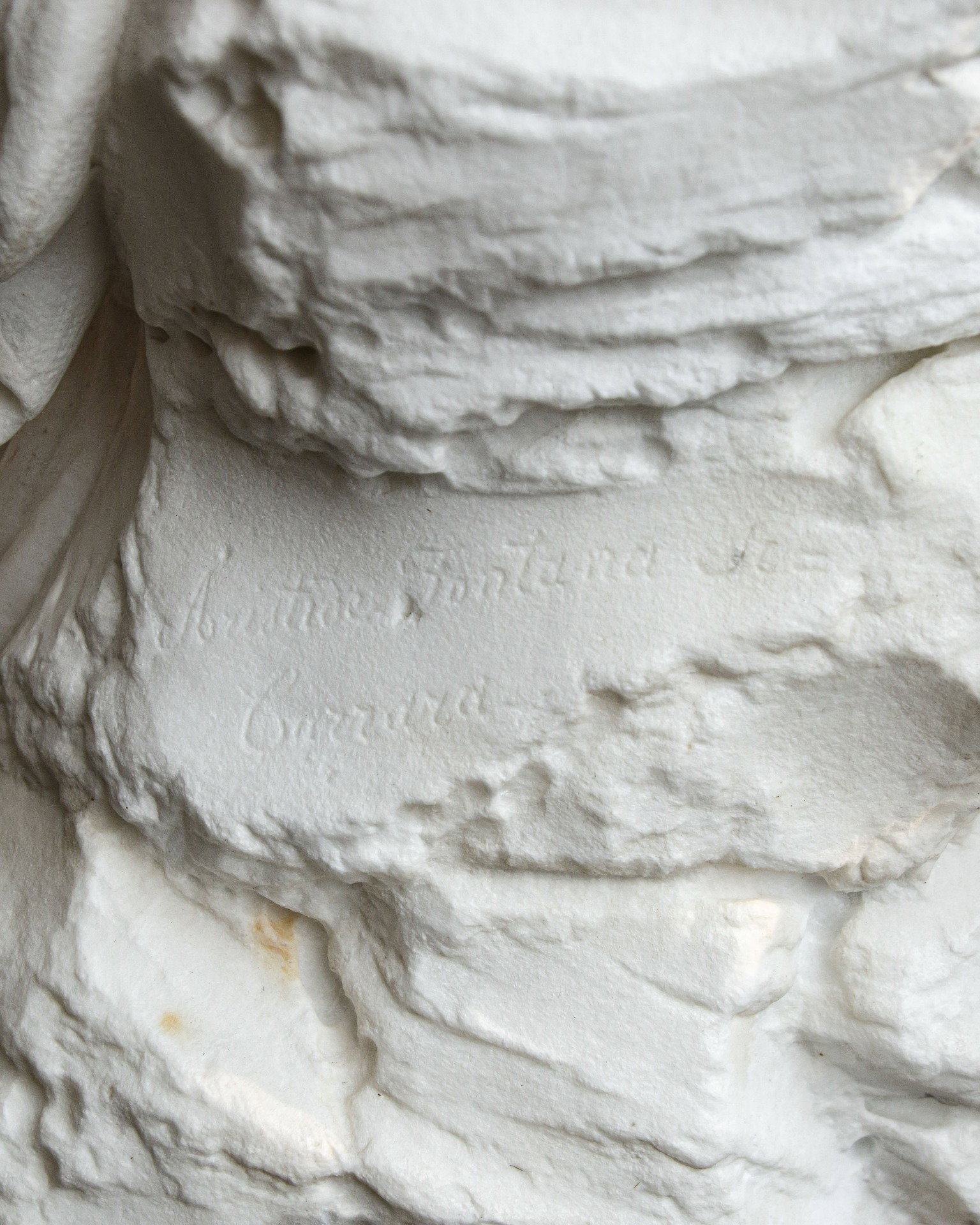
Signed on the back: Aristide Fontana Sc. Carrara
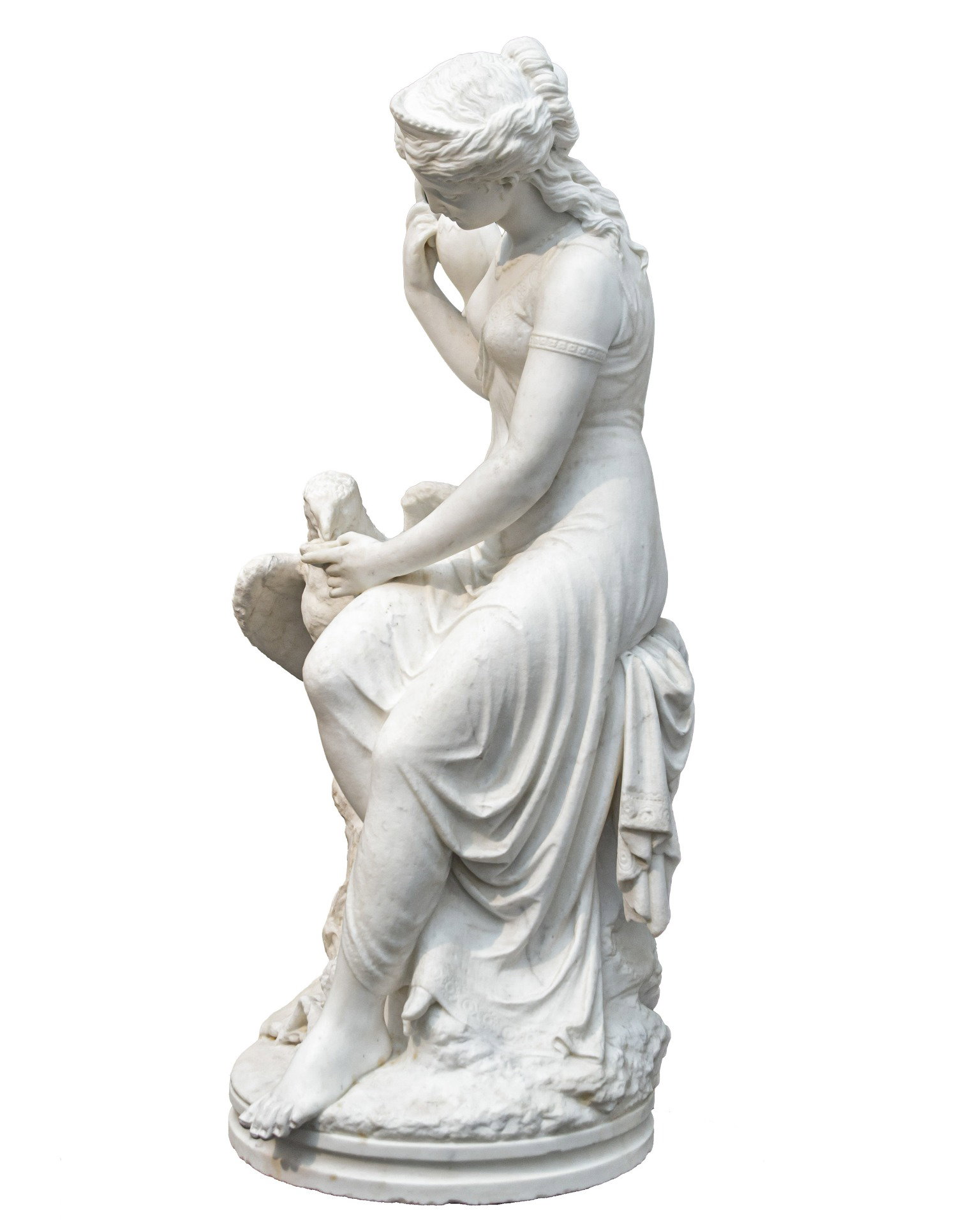
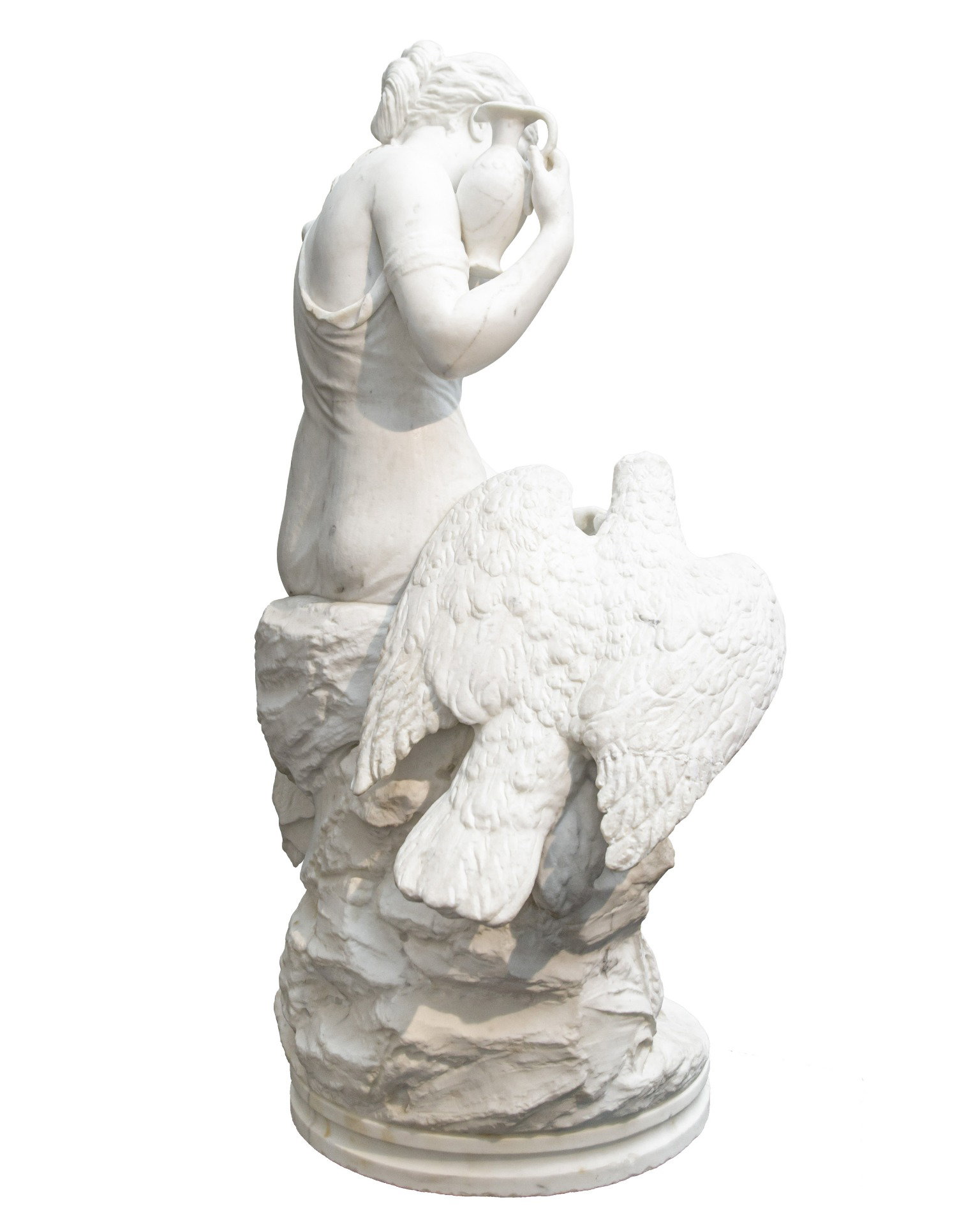
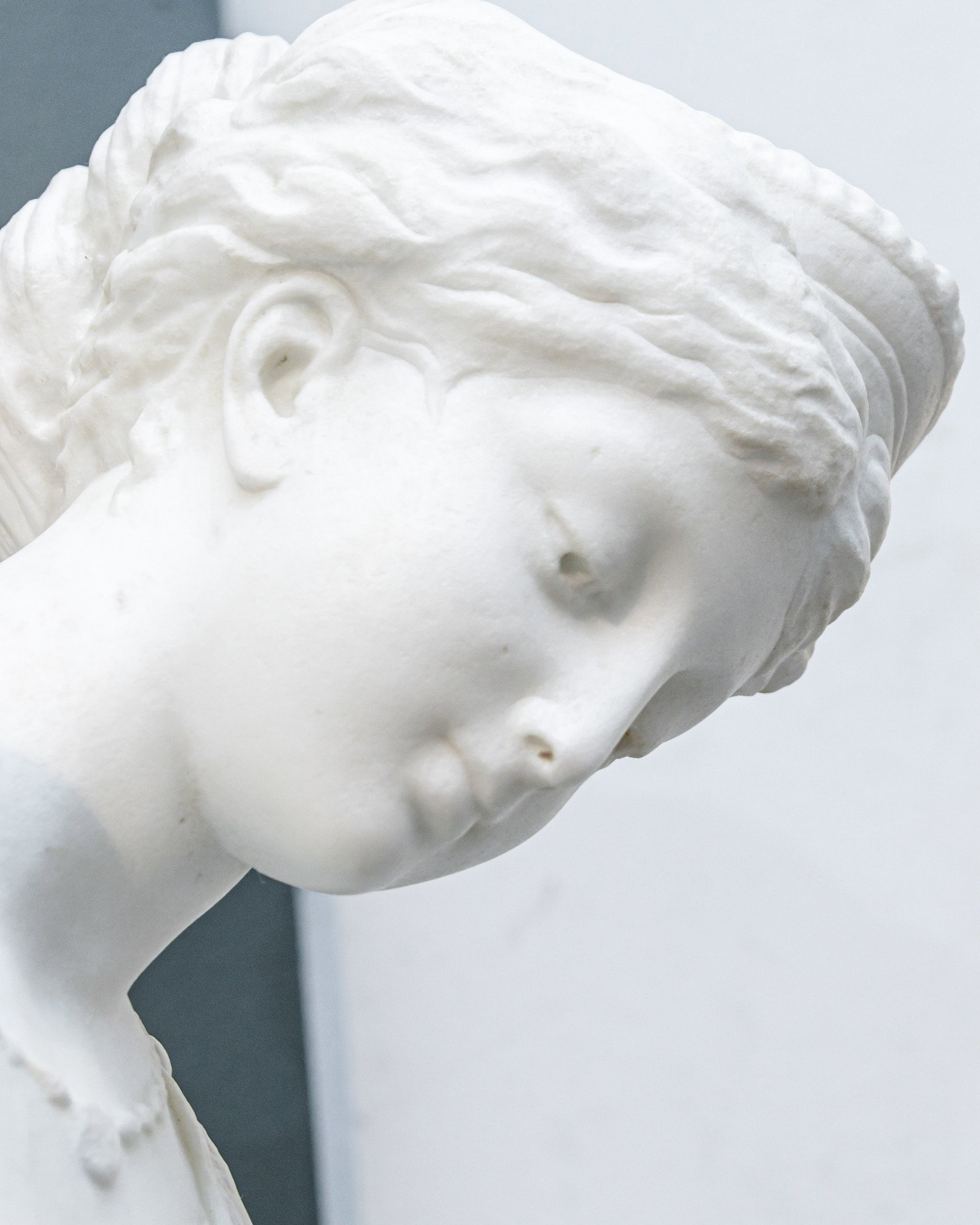
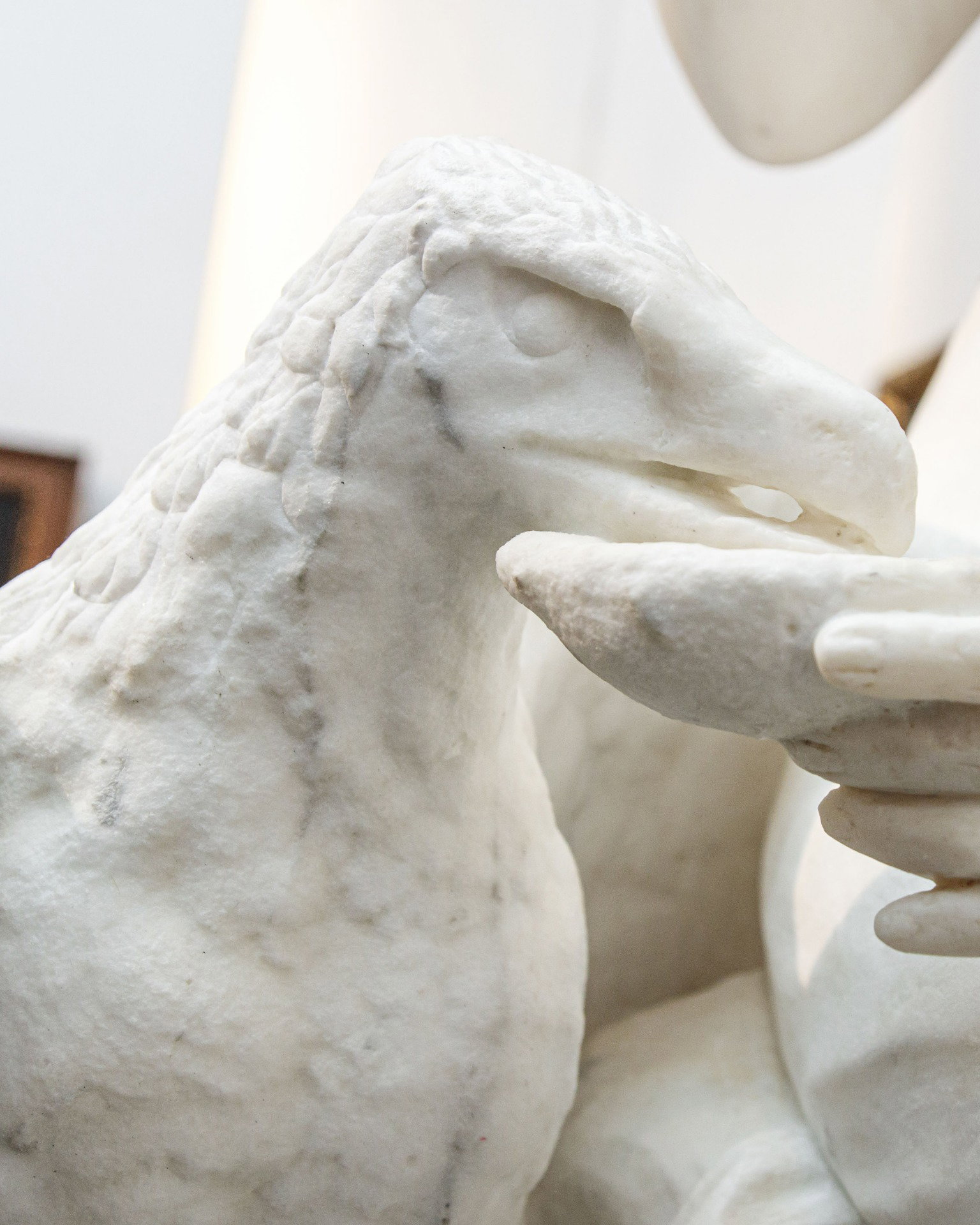
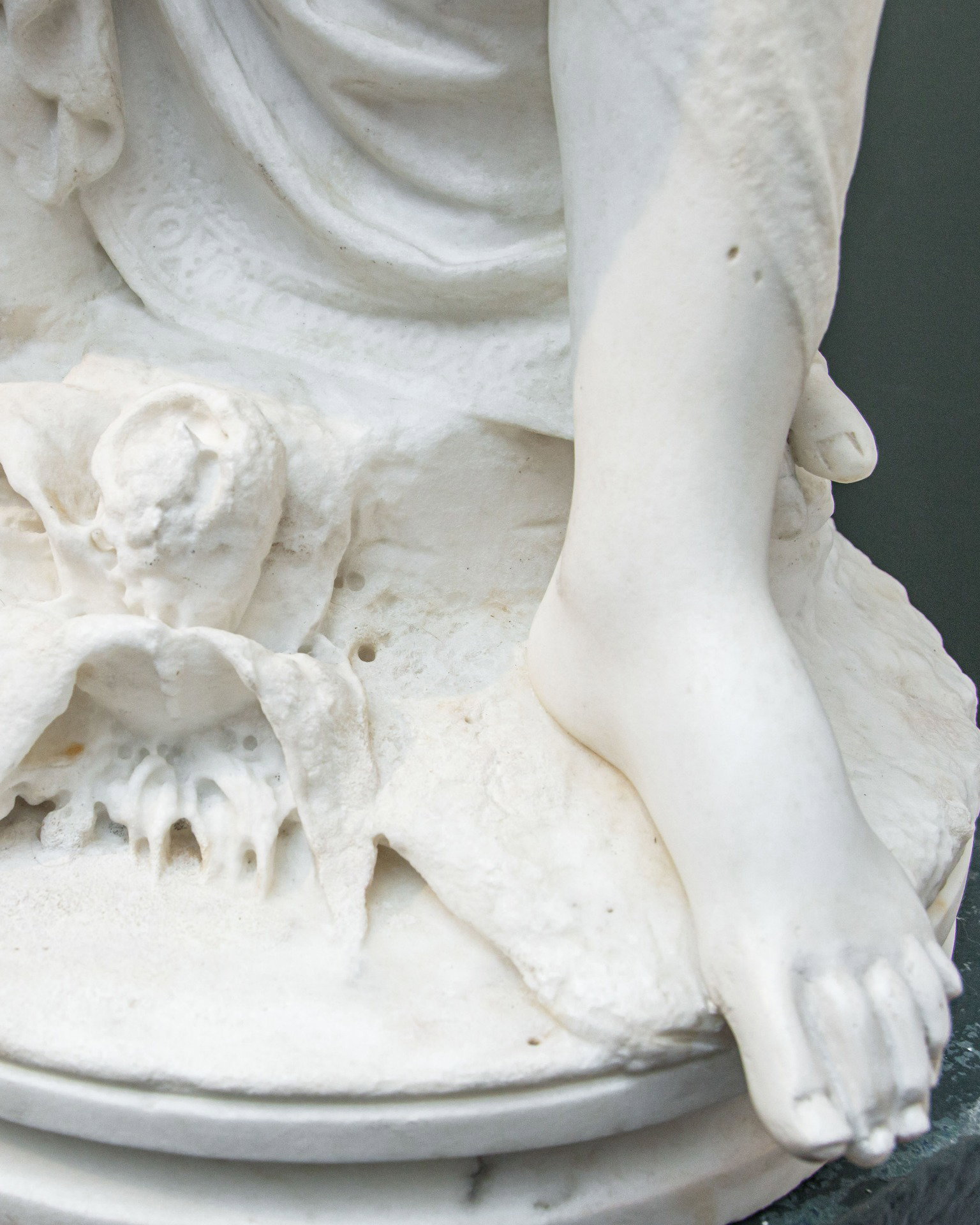
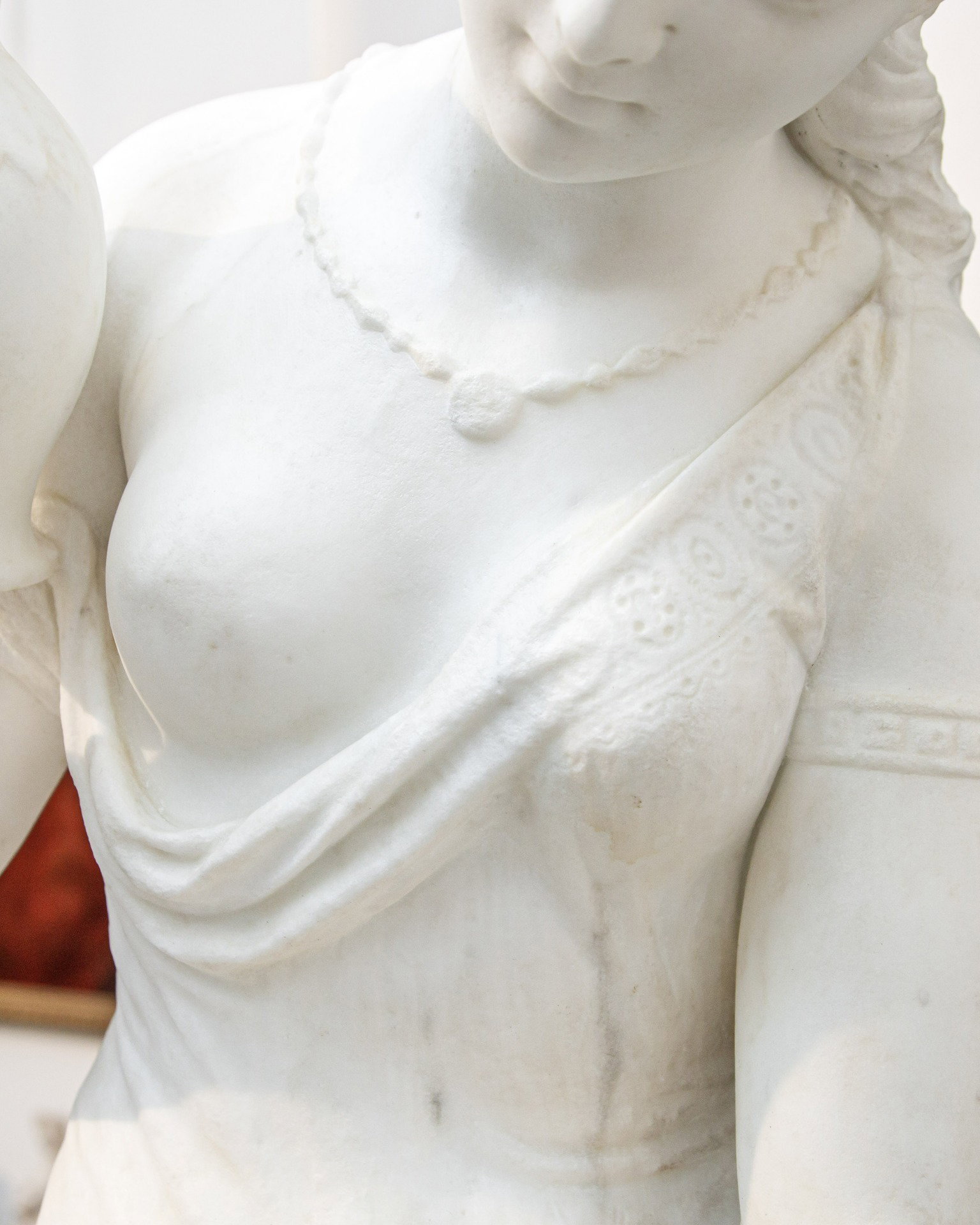
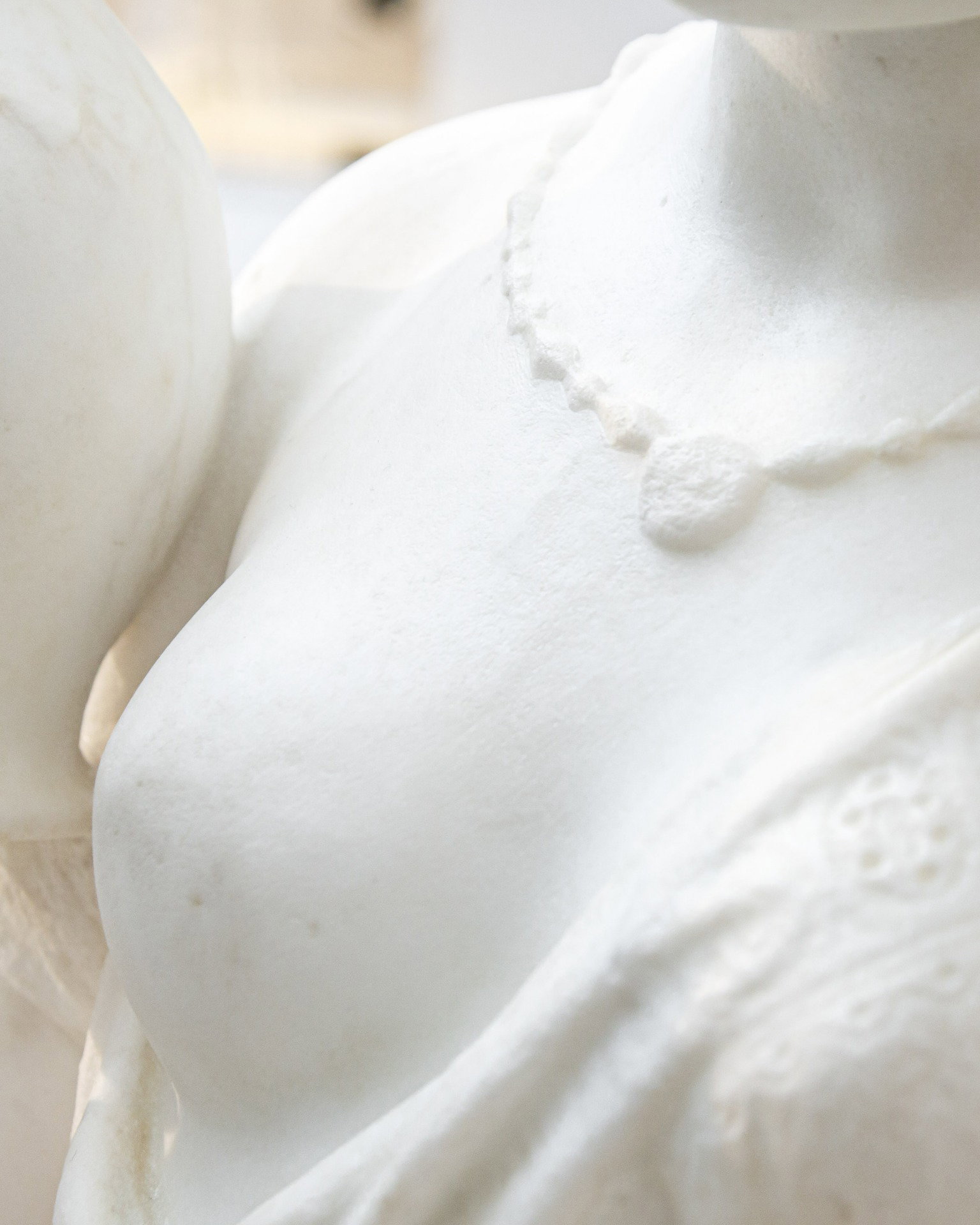
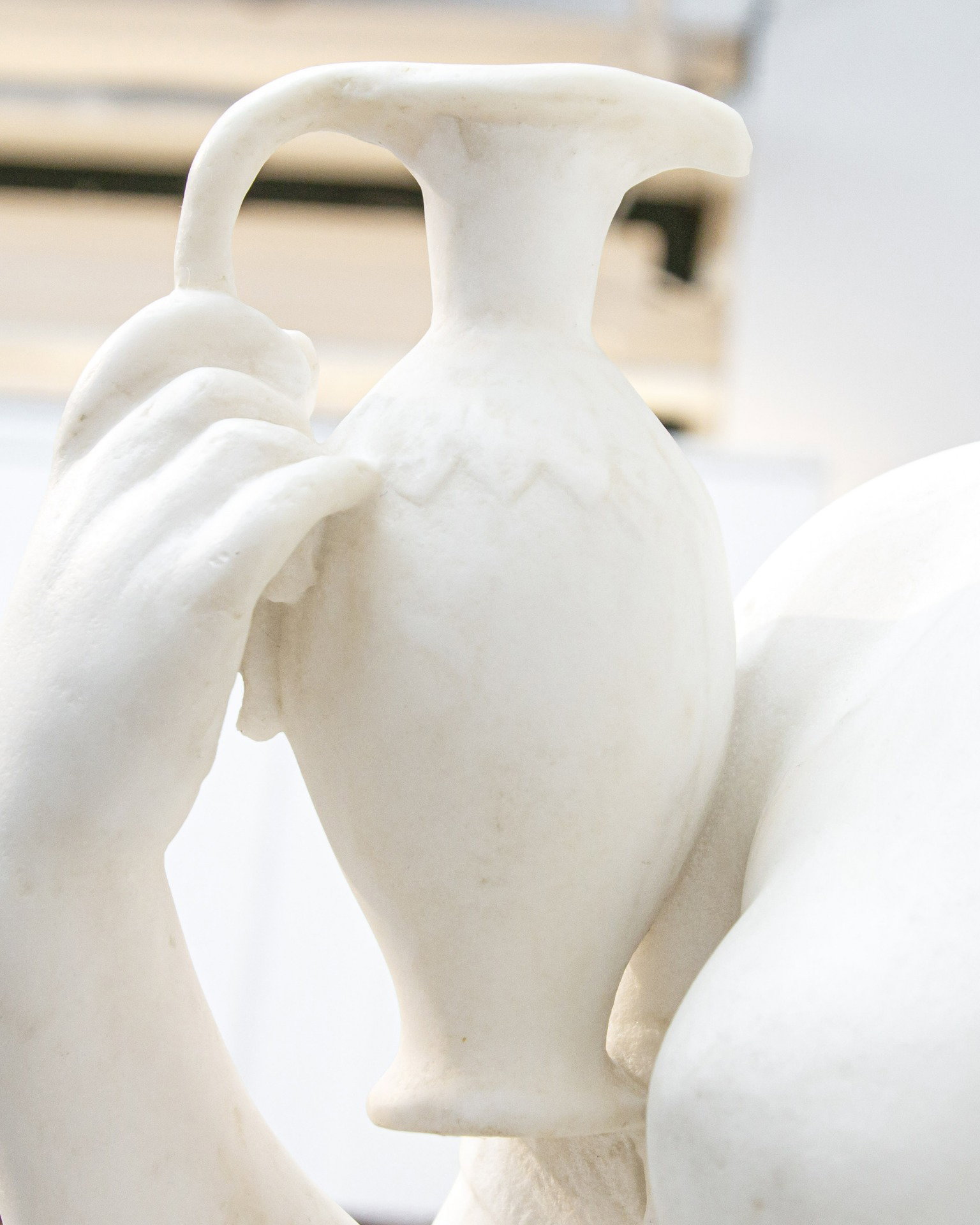
Aristide Louis Fontana (1834-1885) infused this work, titled Ganymede feeding Jupiter's eagle, with all the technical refinement of Carrara marble, signing it on the back with the inscription "Aristide Fontana Sc Carrara". The sculpture, measuring 102 x 52 cm, depicts the young cupbearer of the Gods in a moment of delicate mythological intimacy. Ganymede is portrayed sitting on a rock with extreme naturalness; her body is wrapped in soft drapery that follows her forms without constricting them, lending the figure a fluid grace. Her gesture, measured and almost affectionate, creates a silent dialogue with the raptor: while one hand reaches out to the eagle, the other holds a small vase that evokes the nectar of Olympus. In this scene, the eagle—a symbol of divine power—loses any threatening traits to become docile, contributing to a humanization of the myth typical of late 19th-century sensibility.
The work fits perfectly into that artistic vein that looked to the classical world as an ideal of harmony and beauty, reinterpreting it, however, through a sentimental and lyrical vein. Aristide Fontana was a masterful interpreter of this balance, moving between Neoclassical tradition and Romantic suggestions. Son of an artist (his father was the sculptor Fernando Fontana), Aristide grew up in the worship of pure form, deeply inspired by Canova's models.
His life and career unfolded between Italy and England: after marrying Emma Bowkett in London in 1871, he lived for a period in Carrara, the nerve center of marble processing, where his son Cesare was born. He later returned to Great Britain, where he regularly participated in prestigious international exhibitions. Among his successes were participation in the General Italian Exhibition in Turin in 1884, where he presented the sculpture Princess of Wales, and frequent exhibitions at the Royal Academy between 1881 and 1885. In these venues, Fontana distinguished himself for his female subjects and portraits, capable of fusing elegant classicism with modern sensibility. This sculpture of Ganymede represents the perfect synthesis of his journey: a work that unites formal rigor and narrative grace, returning the myth to a poetic and serene dimension.