Pseudo Giampietrino B (active in Milan between the 3rd and 5th/6th decade of the 16th century)
Penitent Magdalene
Oil on canvas, 75.5 x 65 cm
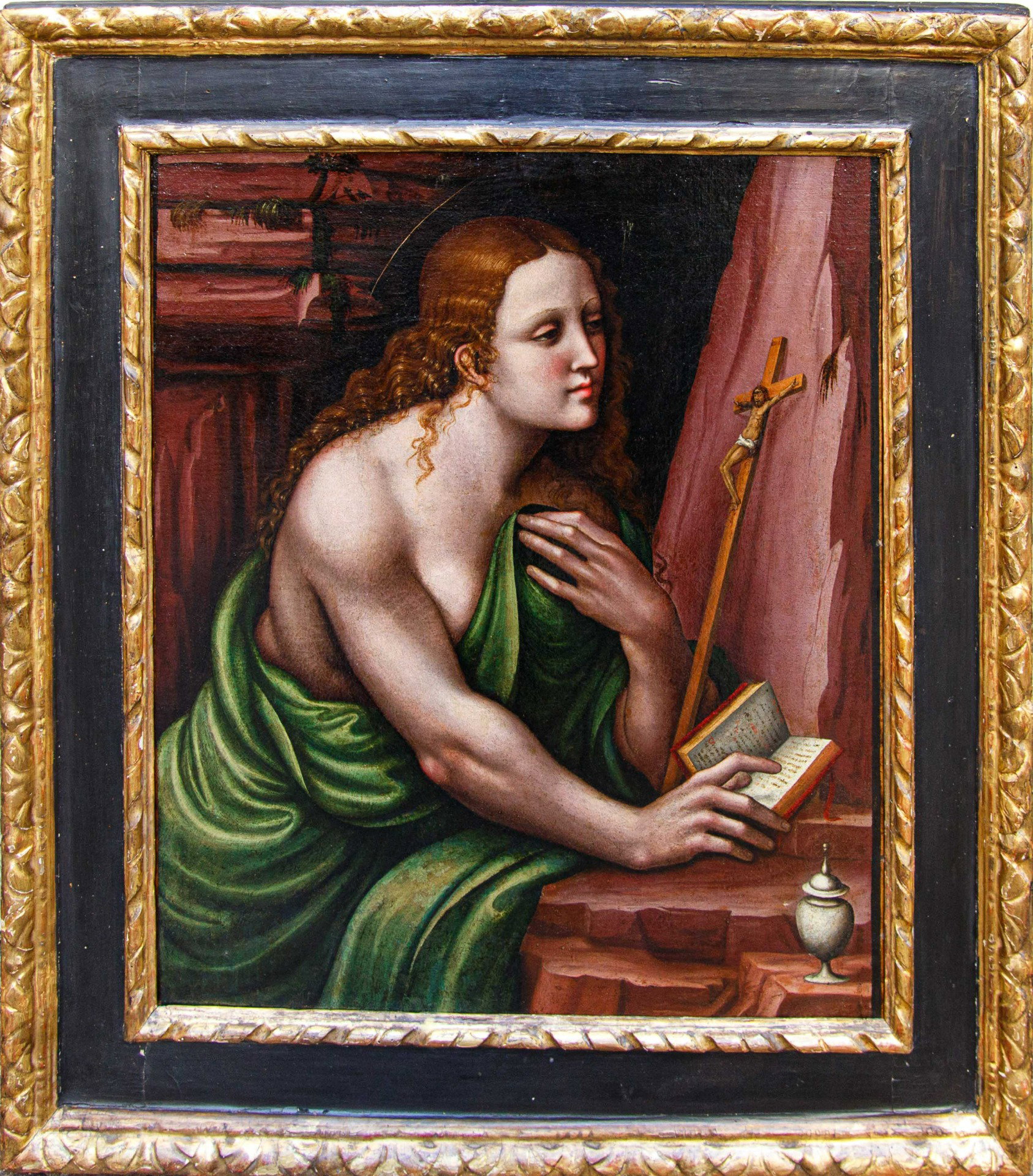
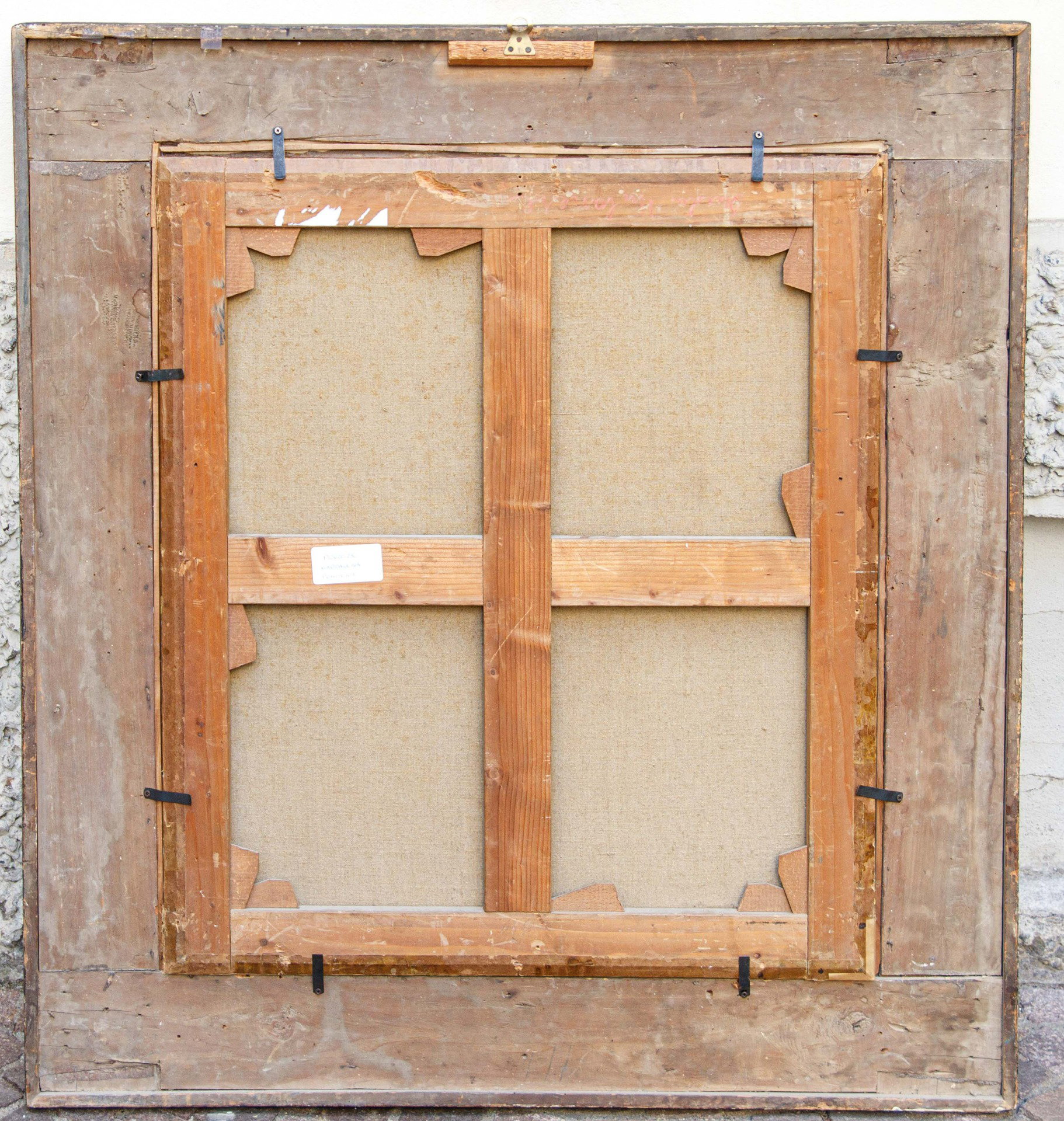
With frame, 100 x 90 cm
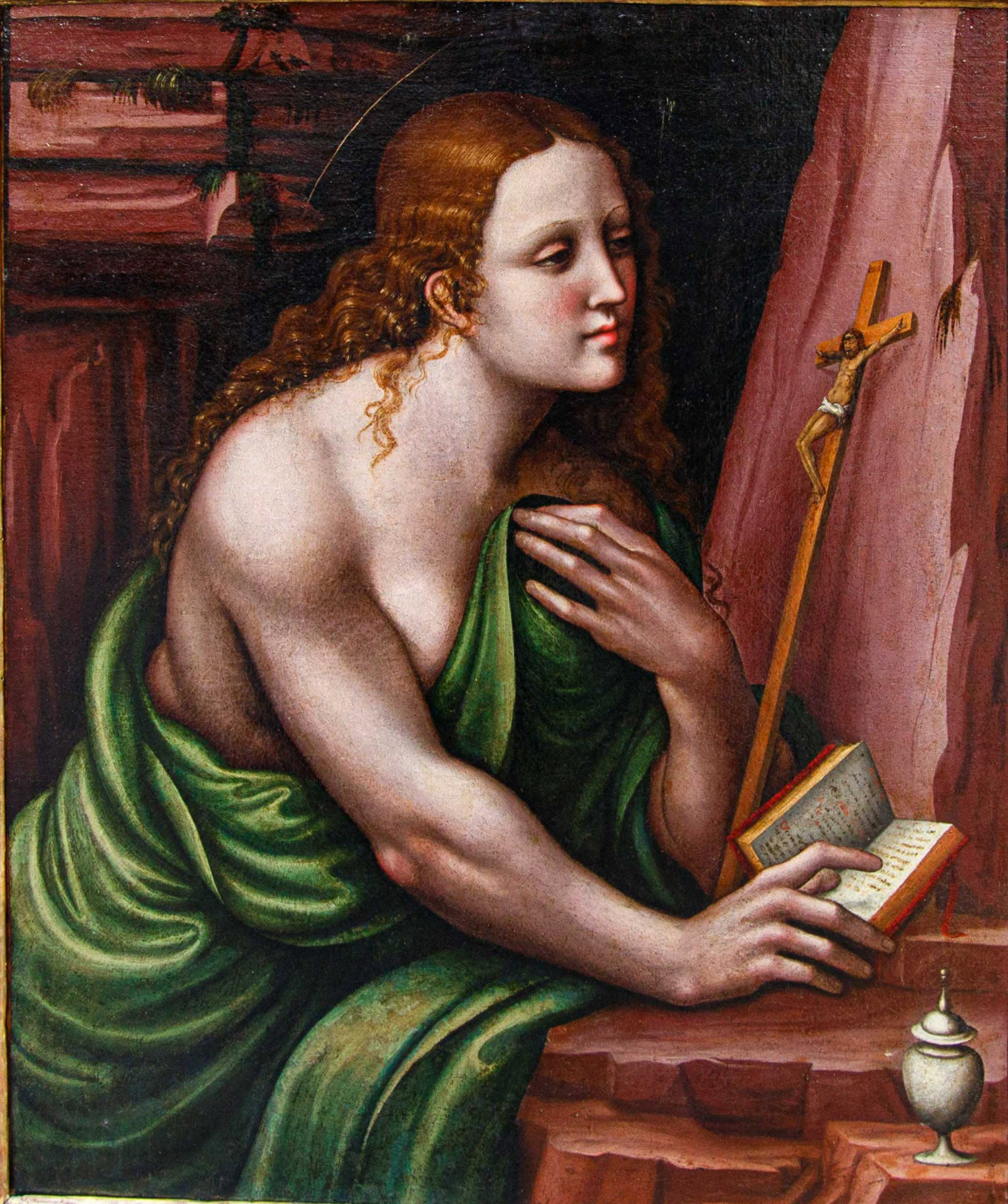
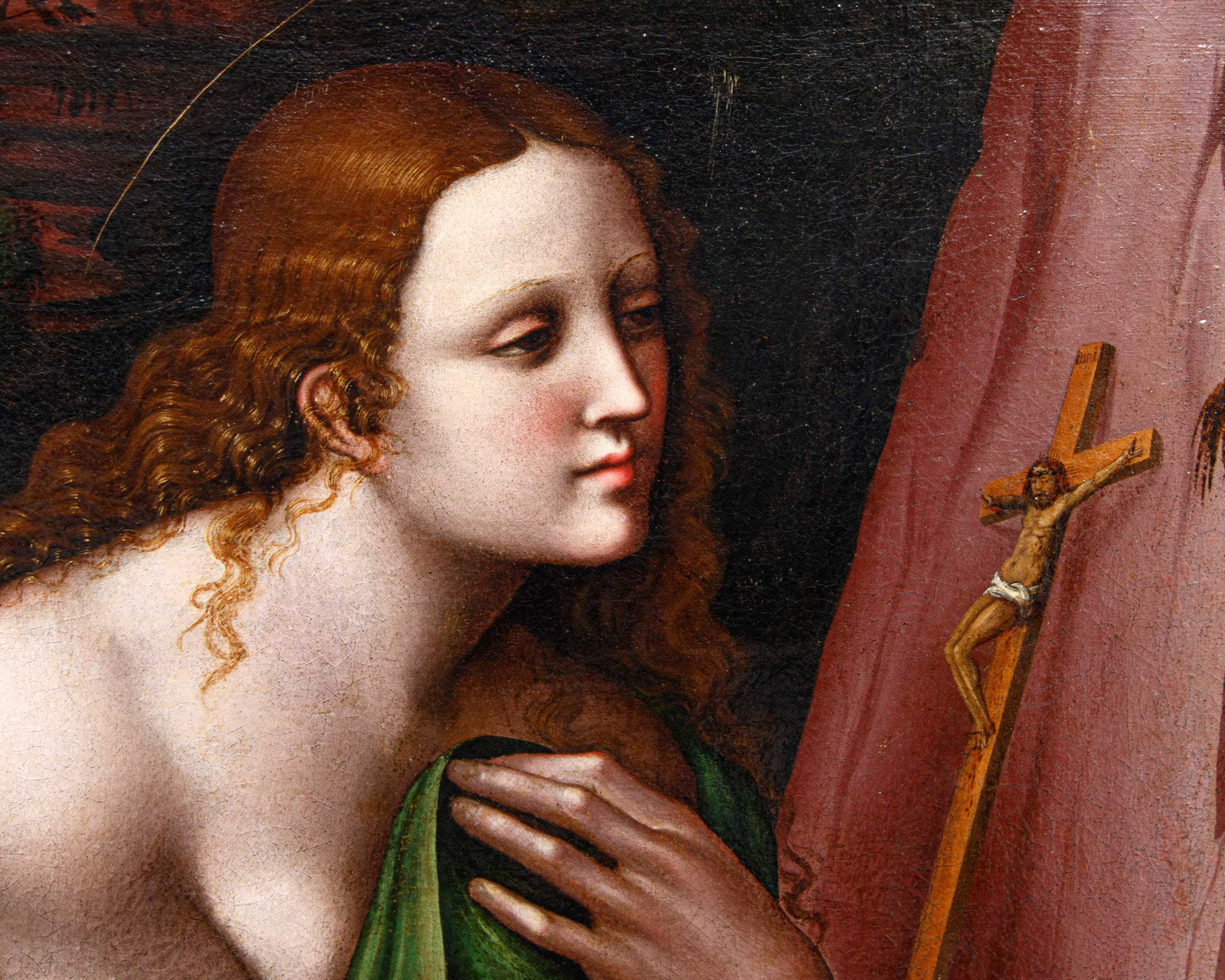
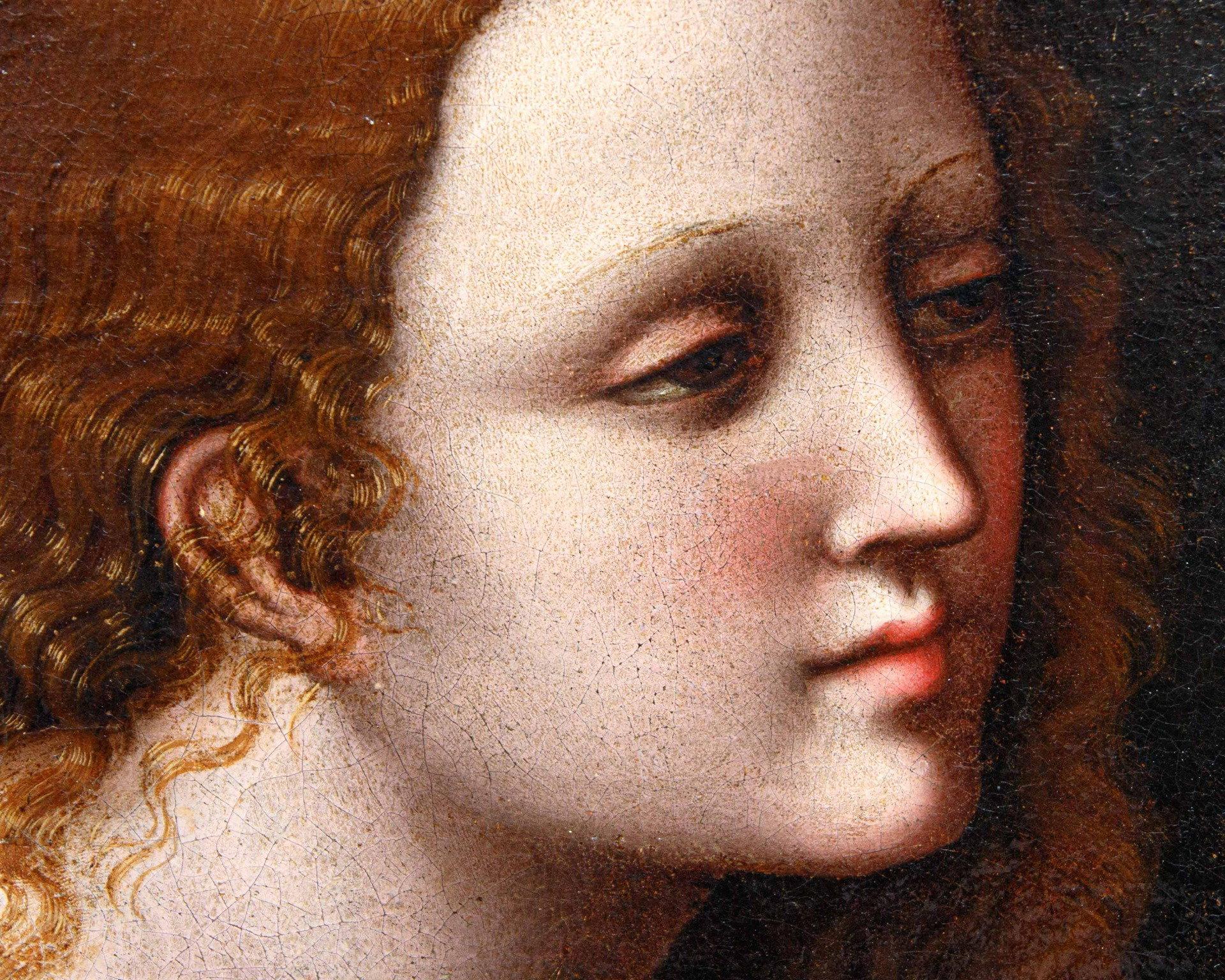
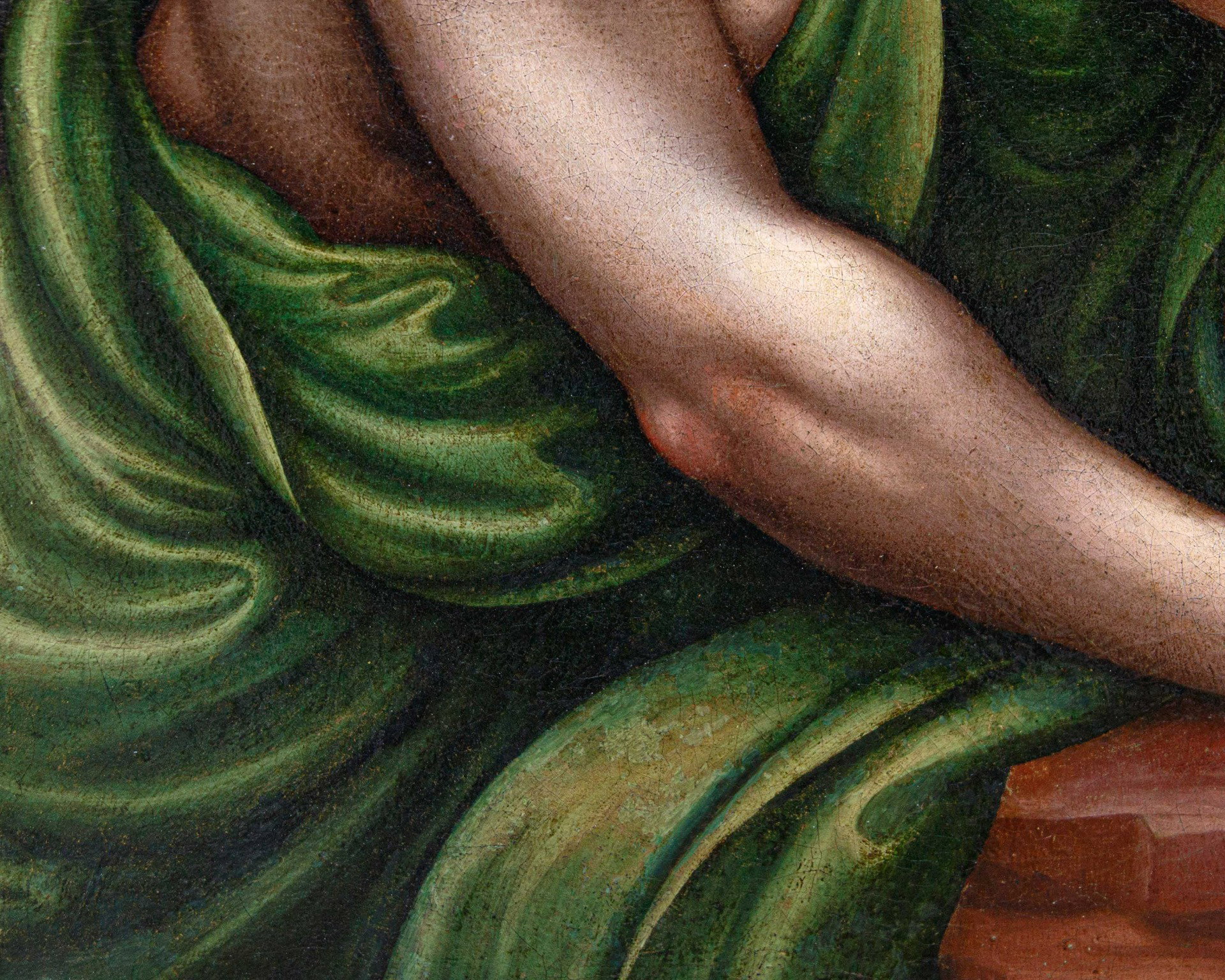
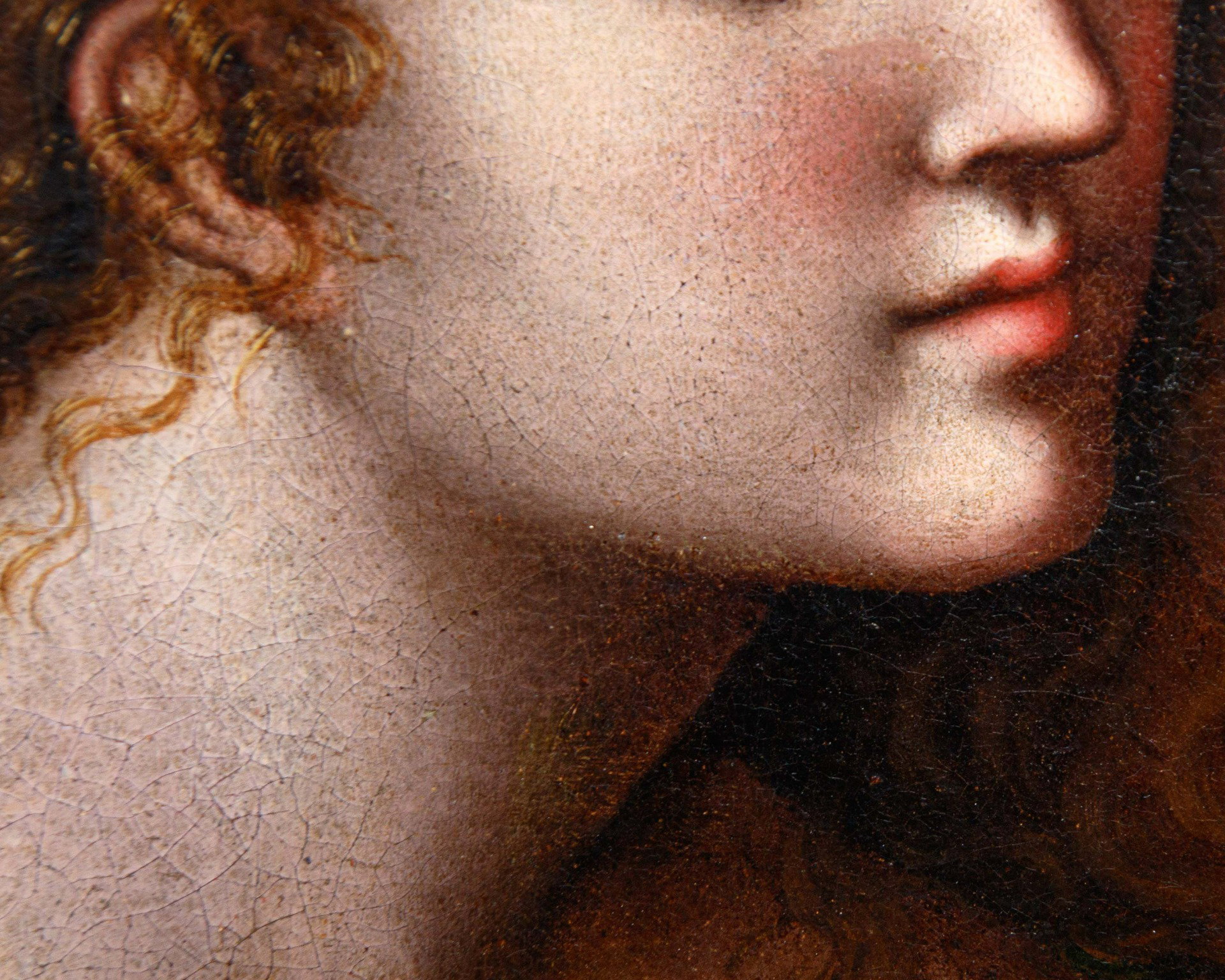
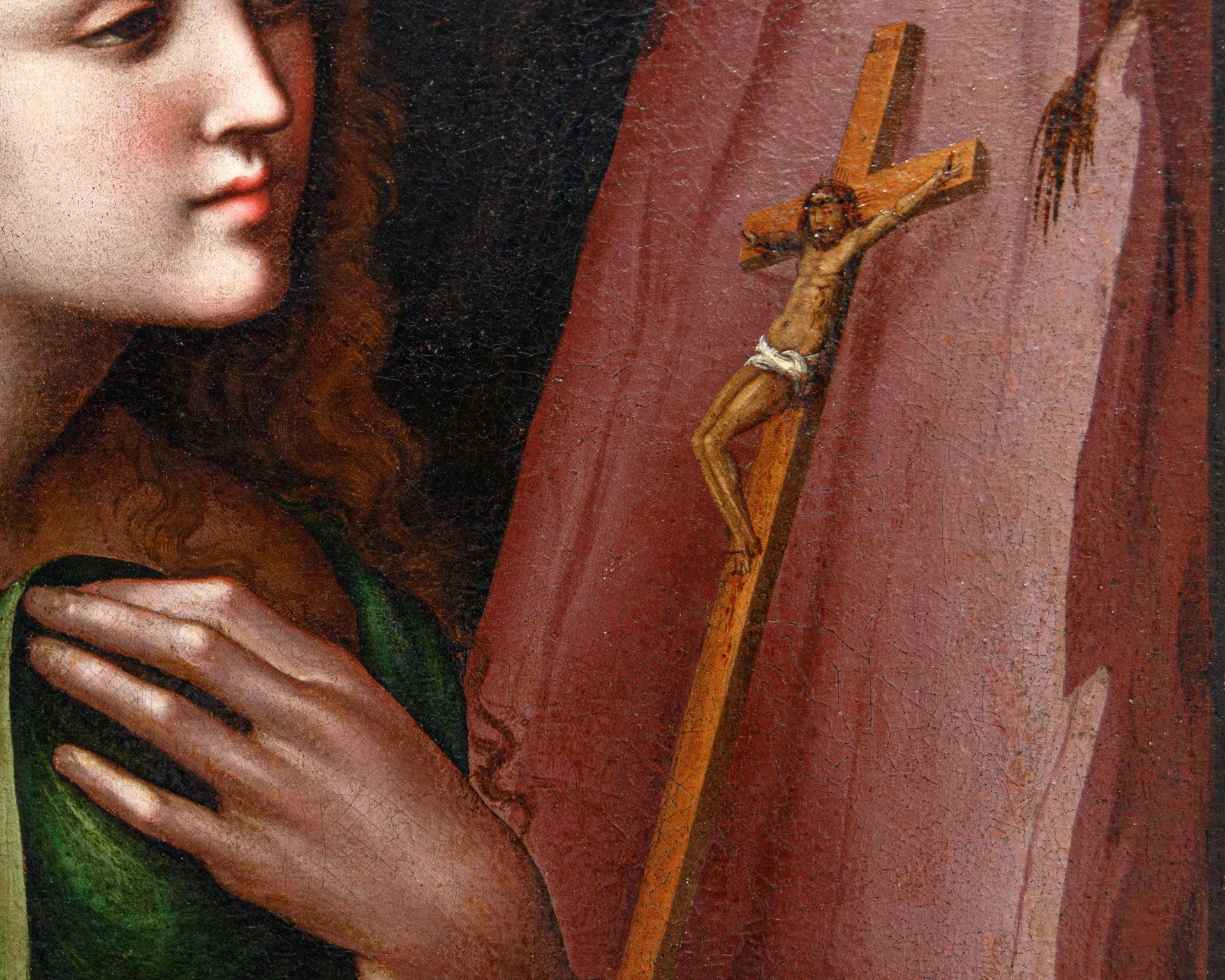
The painting under examination, depicting a Penitent Magdalene, fits into the fertile vein of Milanese Leonardesque production from the first half of the 16th century and is a work by the so-called Pseudo-Giampietrino B, an artistic personality distinct but stably operating within the workshop of Gian Pietro Rizzoli, known as Giampietrino. This collaborator, isolated by modern criticism to distinguish stylistic variations from the master, reinterprets here an iconography of extraordinary commercial and devotional success, with the prototype preserved at the Accademia Carrara in Bergamo being one of its absolute peaks. Giampietrino's work is characterized by a systematic idealization of the female figure, filtering the Leonardesque legacy through an aesthetic of polished composure that finds its greatest expression in the cycles dedicated to famous women of sacred and profane history. Through subjects such as Mary Magdalene, Saint Catherine of Alexandria, and Lucretia, the artist codifies a canon of beauty with sculptural features and vibrant emotional charge, where the skillful use of sfumato lends the flesh an almost enameled luminosity. These figures, portrayed with a grace oscillating between devotional mysticism and tragic sensuality, attest to the painter's ability to transform the Vincian model into a distinctive stylistic brand, making his heroines timeless archetypes of the Lombard Renaissance. Compared to Giampietrino's Bergamese version, where the saint's face is immersed in a soft and melancholic sfumato, Pseudo-Giampietrino B's work reveals a different plastic sensitivity that translates into an almost sculptural anatomical rendering, particularly evident in the definition of the forearm and shoulder, which appear more solid and less atmospherically blended. The organization of Giampietrino's workshop involved the systematic use of preparatory cartoons reproduced with minimal variations to satisfy aristocratic commissions desiring images of intense beauty and formal rigor; in this context, Pseudo-Giampietrino B emerges as a high-level executant, capable of maintaining the elegance of the original model while adopting a more graphic line and drapery with almost metallic folds, as seen in the emerald green cloak that envelops the figure. Characteristics of his painting include marked plasticity in the treatment of anatomy, a more pronounced use of chiaroscuro, and a subtle tendency towards caricature in the faces, balanced by the skill in rendering the golden hair with small touches of color. The painter treated the same composition of the Magdalene, derived from the aforementioned Carrara model, in two other versions: that in the Horne Museum in Florence and that in the collection of the Counts Wemyss and March in Scotland.
Bibliography: C. Geddo, La Madonna di Castel Vitoni del Giampietrino, in Academia Leonardi Vinci, Volume VII, 1994, pp. 64-65