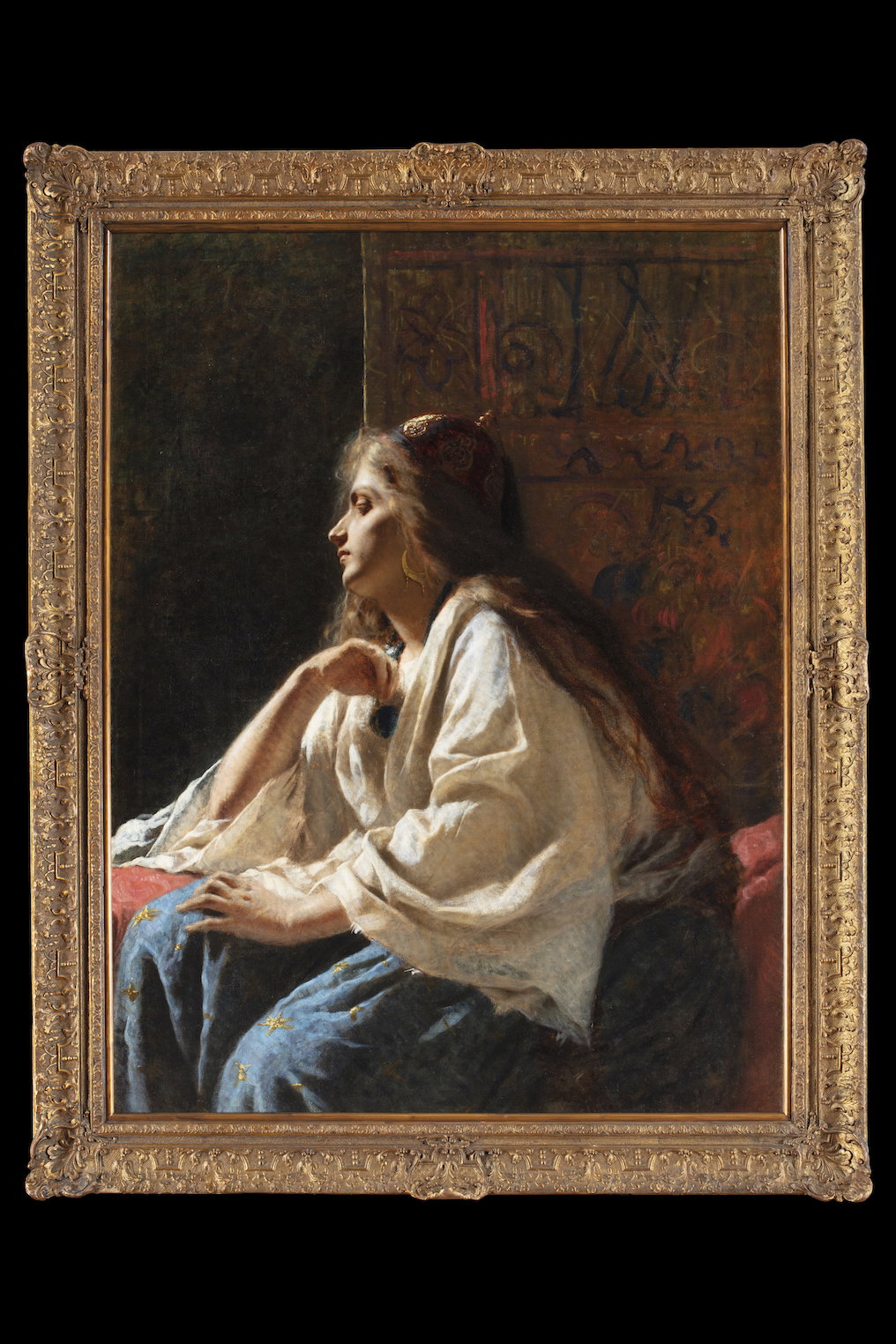
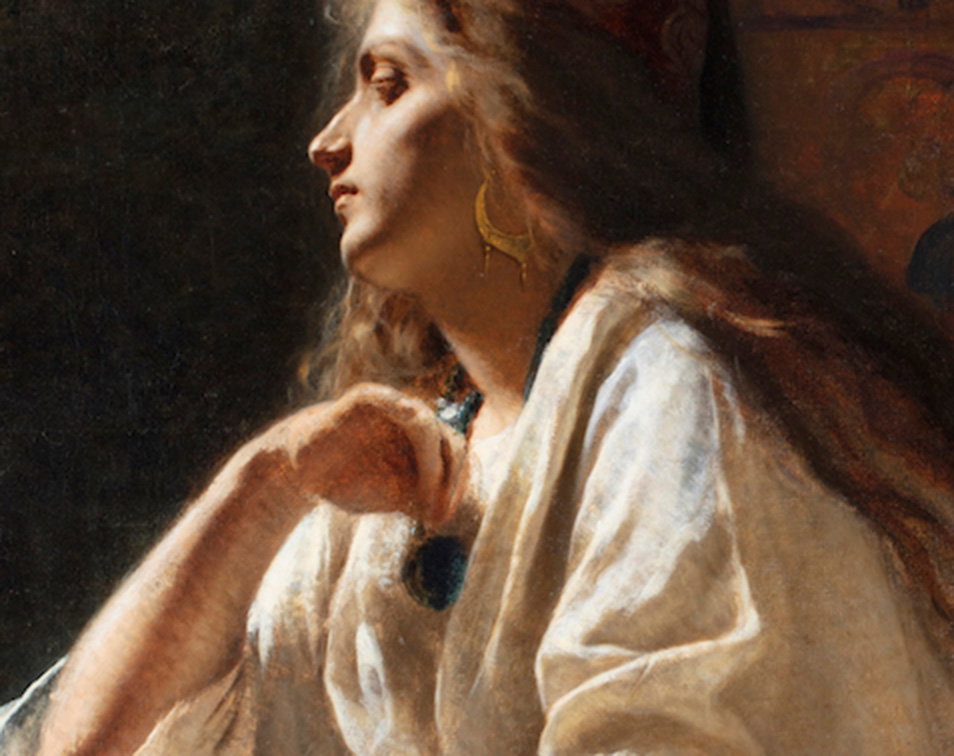
Italian School, "Circassian Woman", second half of the 19th century.
Oil on canvas, cm 131 x 97.5
Attributed to Pietro Morgari (Turin, 1852 – London, 1885) by
Dr. Arabella Cifani, Art Historian, Art Expert of the Court of Turin, Registered in the Register of Experts of the Chamber of Commerce of Turin.
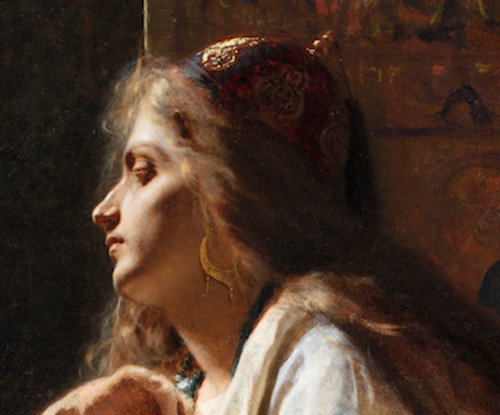
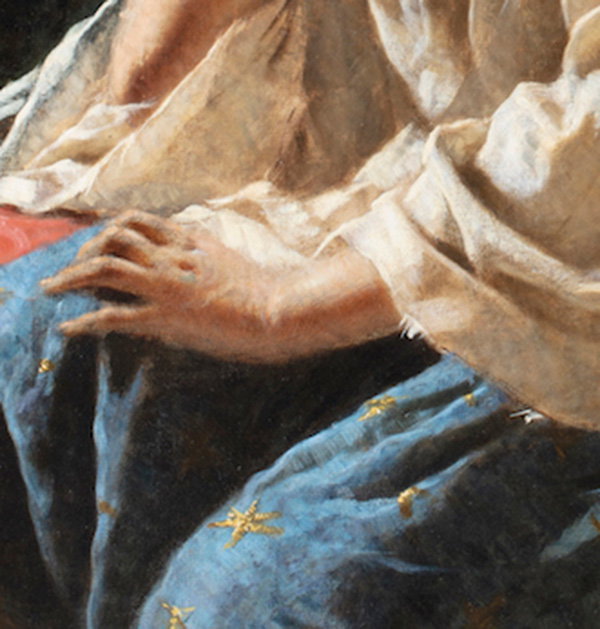
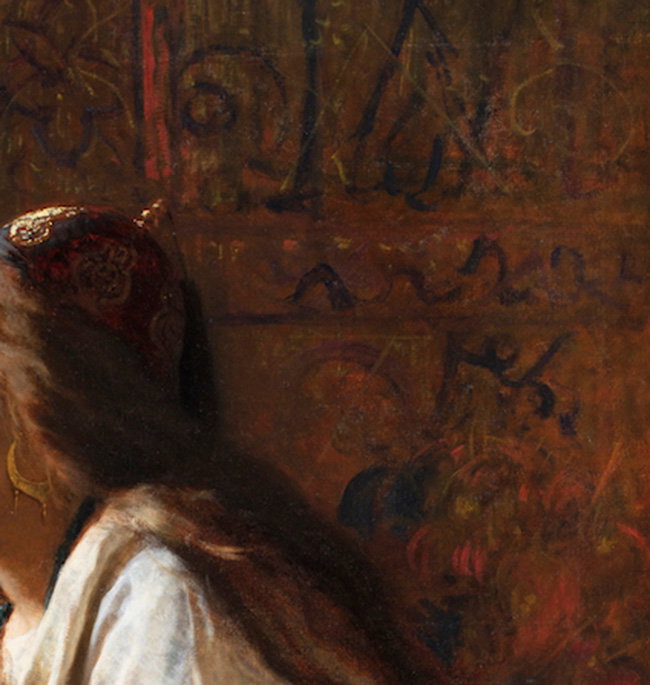
The protagonist of the painting is a young woman in oriental clothes, caught in a meditative act, while with her right hand she plays with a column of turquoise stones. A beautiful light effect sculpts her figure from the left. The woman wears a characteristic embroidered cap with a central pin, typical of Circassian women. Her clothing is completed by a wide white shirt and an azure cloak studded with golden stars. In the background, oriental-style arabesques and (non-real) inscriptions in Kufic characters. Exterminated by the Tsarist army of Alexander II, the surviving Circassians migrated to Turkey around 1864; skilled warriors were hired by the sultan, but Circassian culture and traditions also migrated to Arab and Eastern countries in the second half of the nineteenth century. Turkish sultans had always believed that Circassian women were among the most beautiful in the world, and many of them, after being kidnapped, lived as slaves in the harem; their legend became a kind of symbol in the context of Western Orientalism, especially in the pictorial field. Both in Europe and America, Circassians were thus identified as an ideal of female beauty in poetry and art. The woman's clothing, the object of study here, finds precise references in prints of the time.
The painting fits perfectly within that vein of Orientalist painting, which spread throughout Europe and the United States during the nineteenth century. It was a genre of great appreciation, the last exponents of which operated until the 1920s. Recurring themes of Orientalist painting were bazaars, alleys, deserts, mosques, landscapes with ancient ruins, the Nile, the Holy Land, the harem, the Turkish bath, slaves and odalisques. Many European ladies posed for this kind of paintings, transforming themselves, almost as a game, into oriental women.
Of great artistic interest, the work can be attributed to the rare and precious painter from Turin, Pietro Morgari.
Morgari is unfortunately still little known to critics, despite being a very modern artist, of truly European stamp and cultural openness.