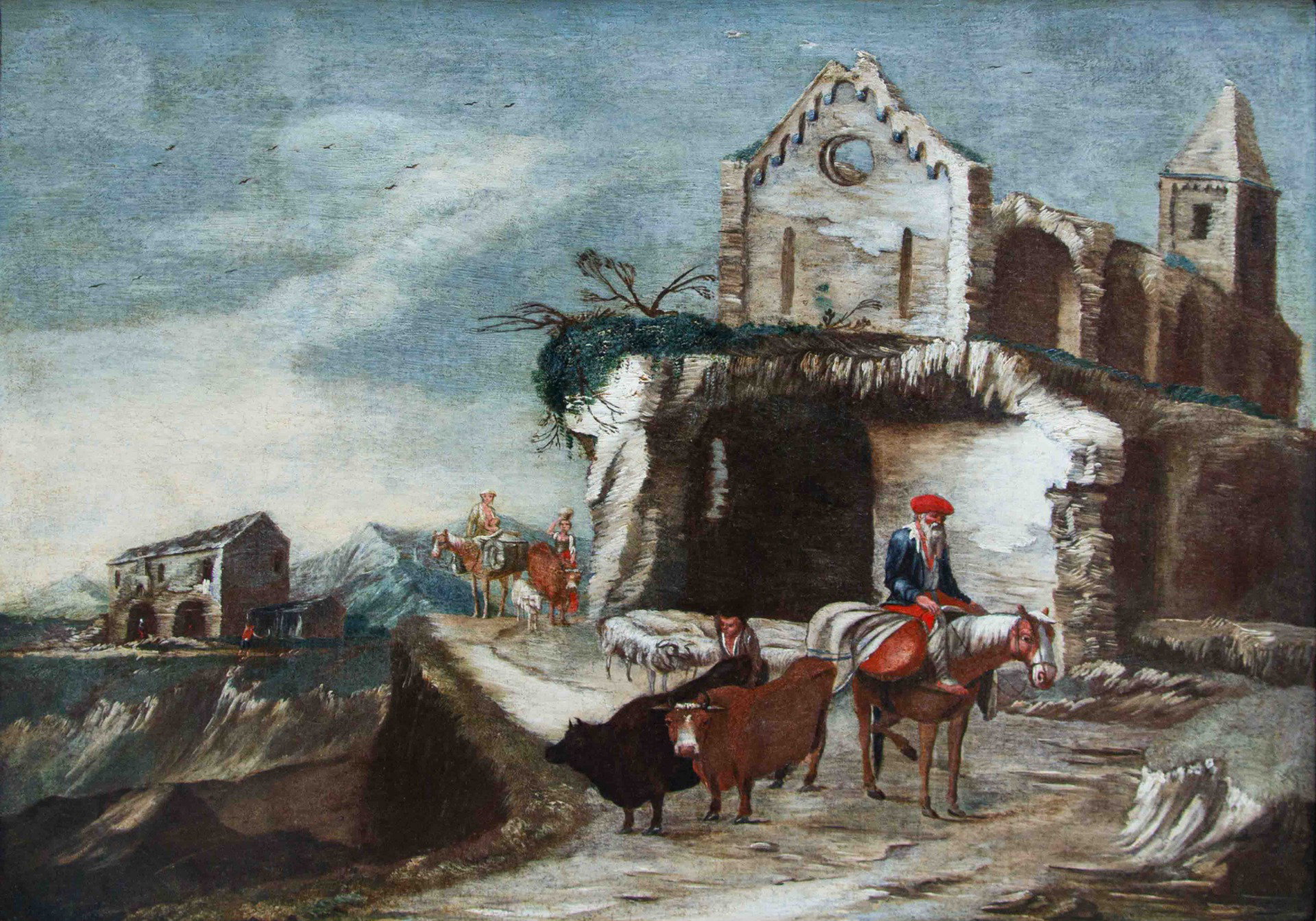
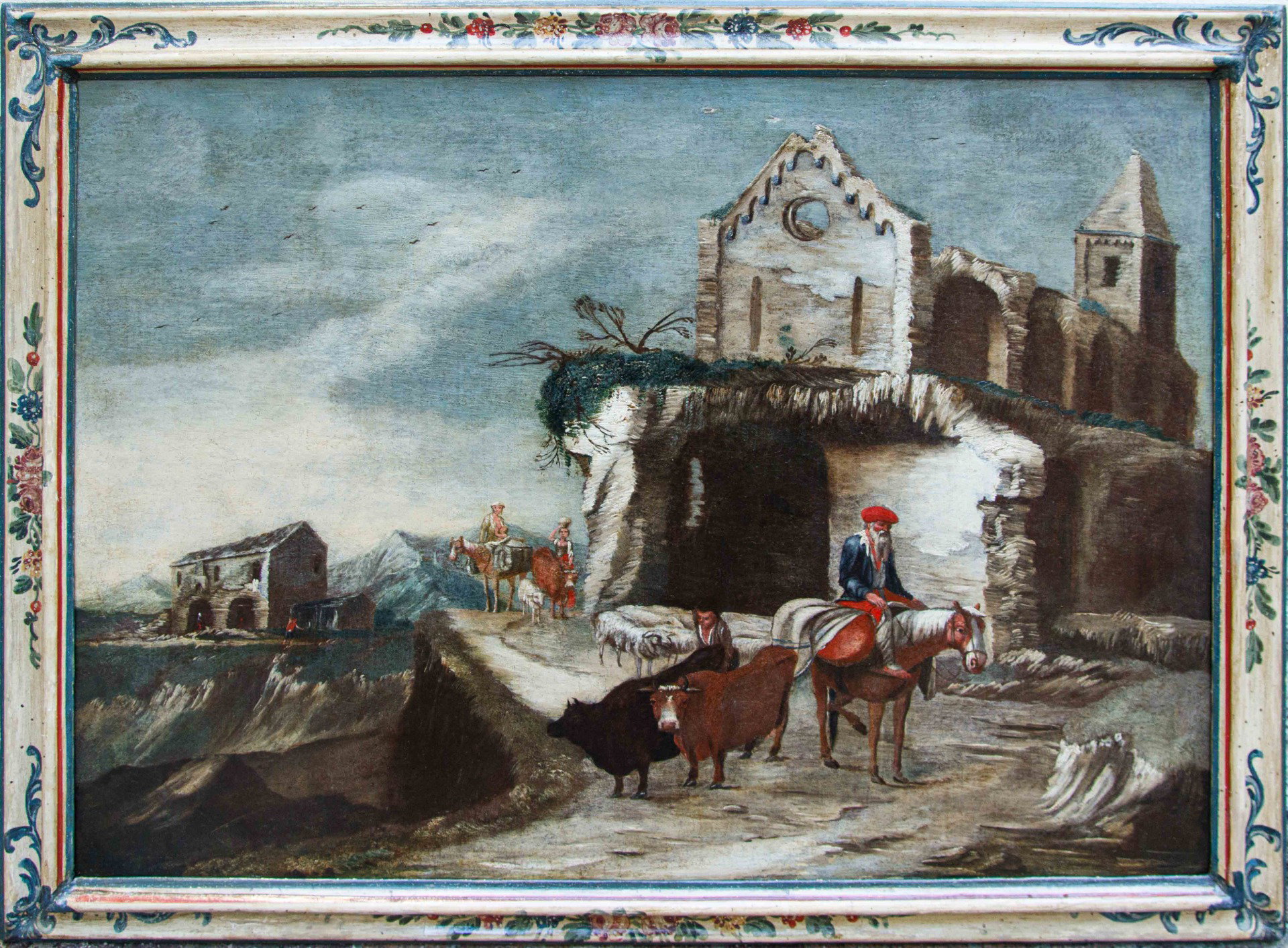
Antonio Travi called il Sestri (Sestri Ponente, 1608 - Genoa, 1665)
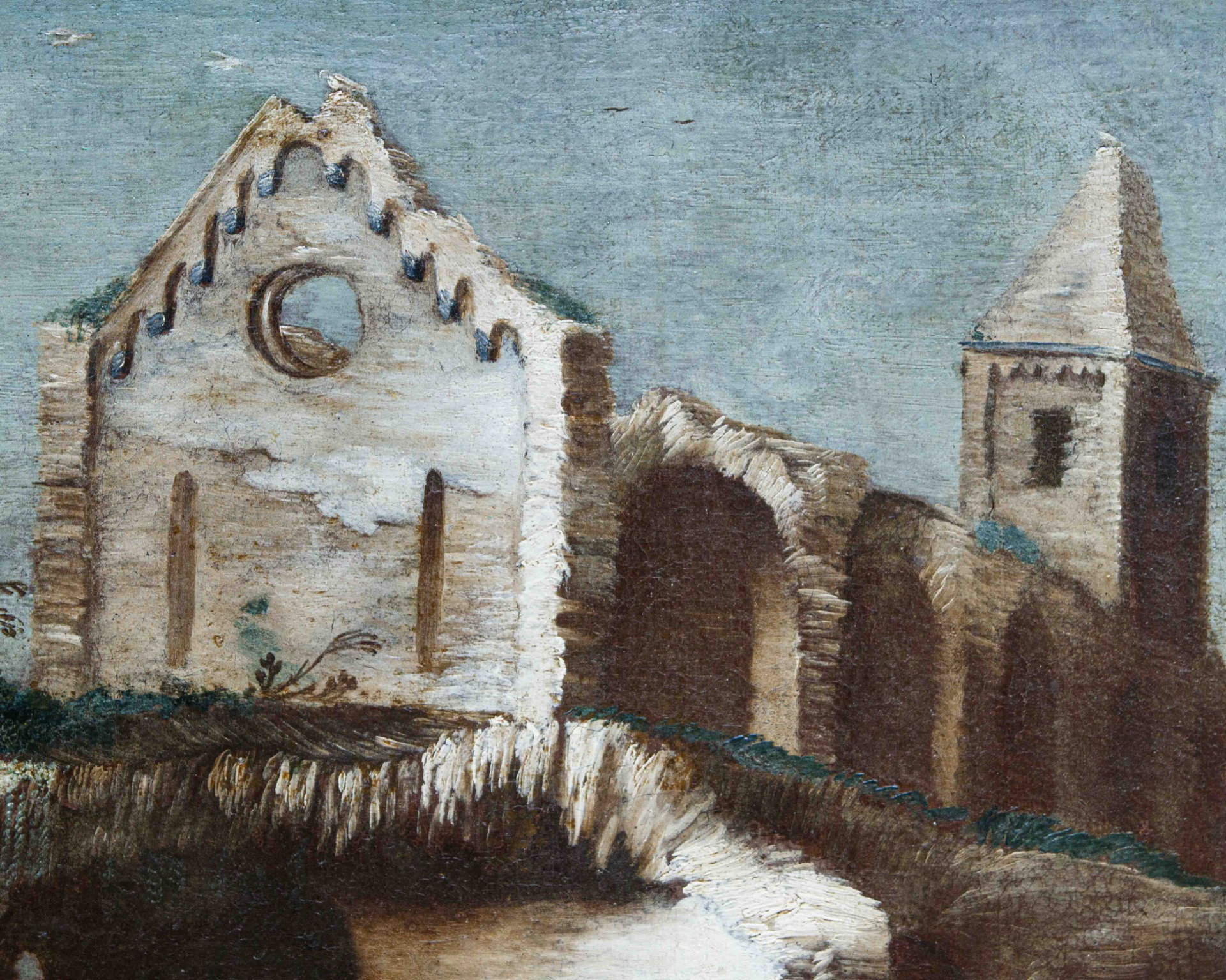
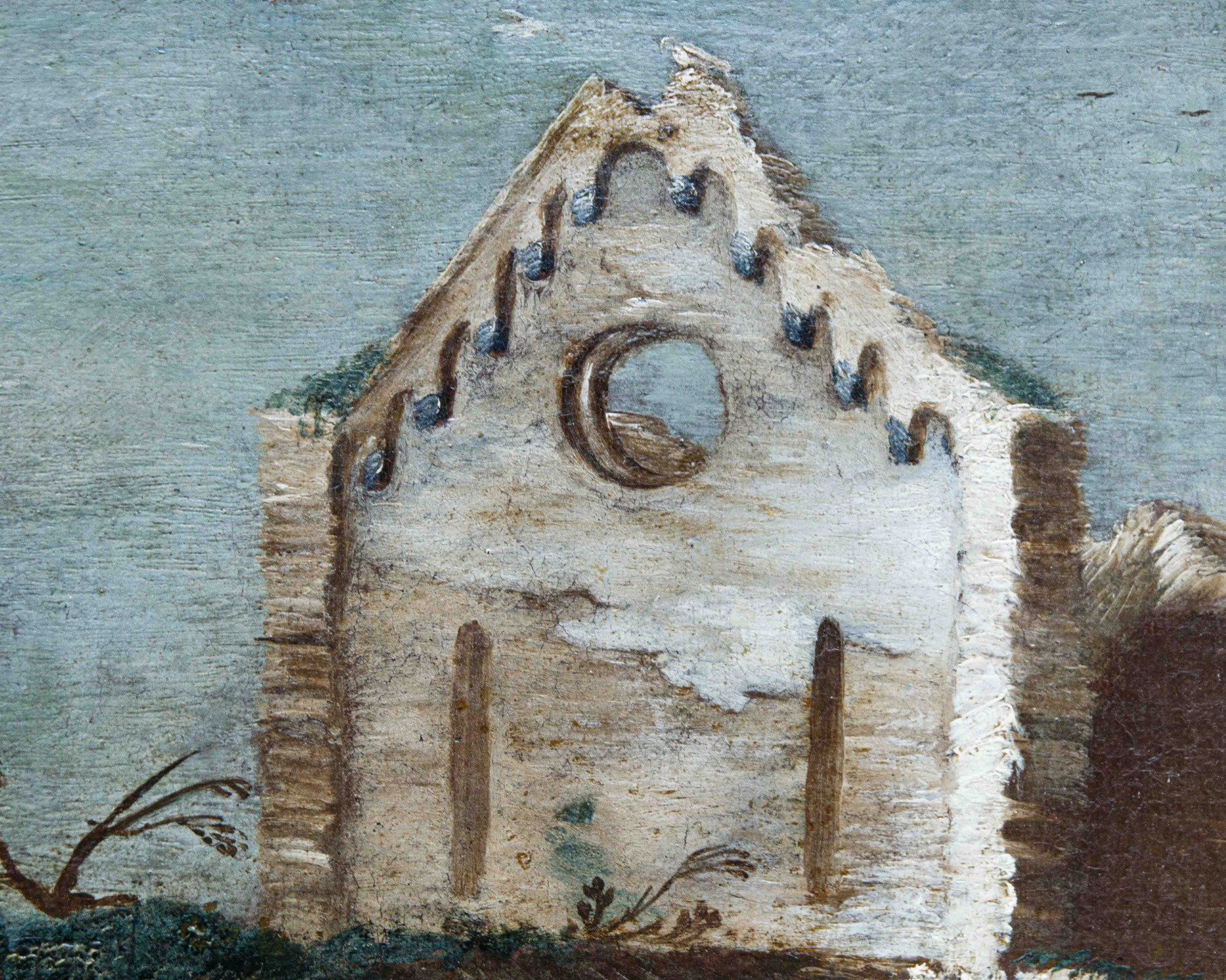
Landscape with ruins, peasants, and shepherds
Oil on canvas, 96 x 74 cm
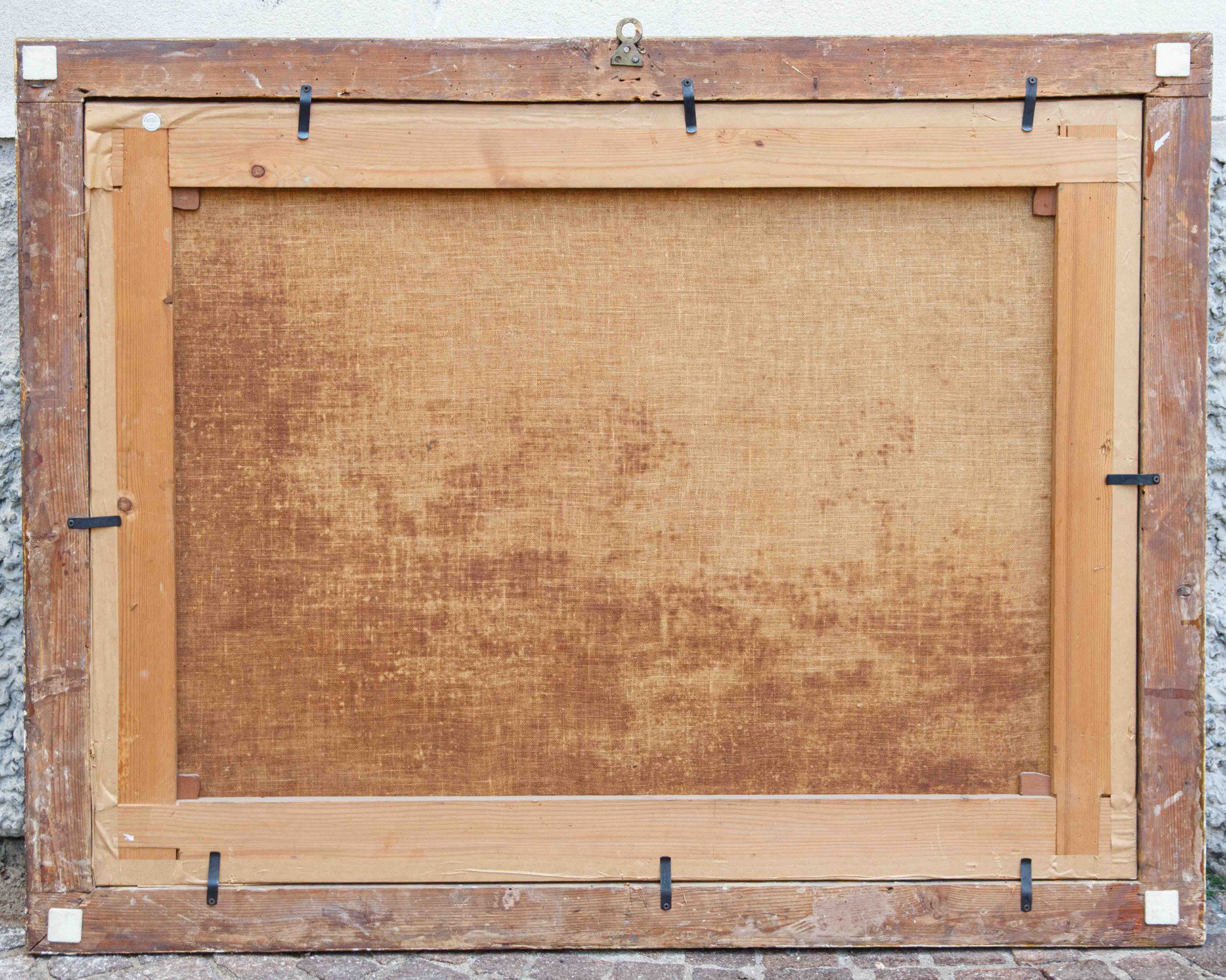
With an antique Genoese frame from the 17th century, 110 x 86 cm
Antonio Travi was born in Sestri Ponente (then an autonomous village, now a district of Genoa) in 1608, and died, according to archival documents, around 1665, at the age of about fifty-seven. Travi came from a family of modest means, soon acquiring the nickname "Il Sestri" from his birthplace, although he was sometimes called "Il Sordo di Sestri" (The Deaf Man of Sestri) due to his deafness.
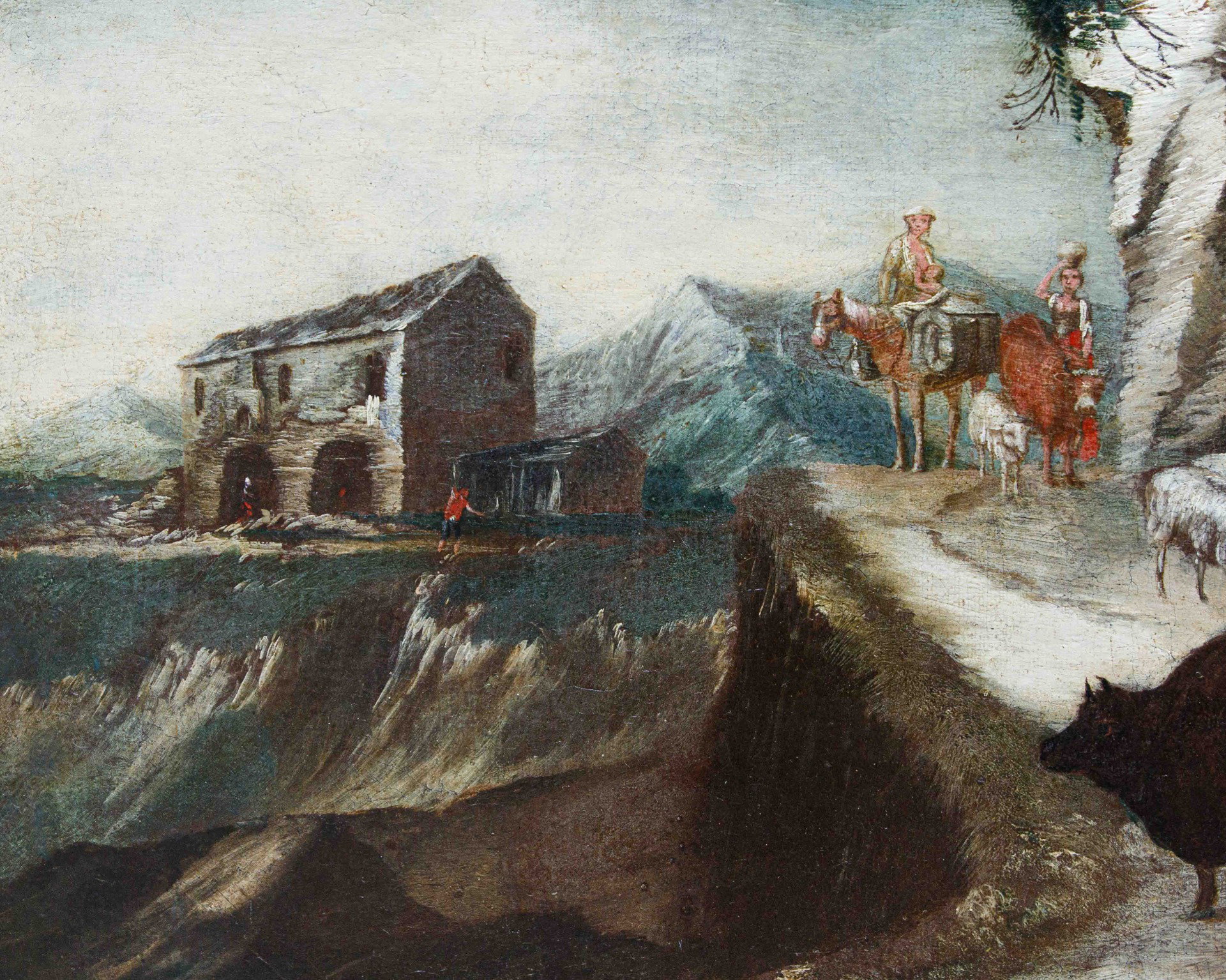
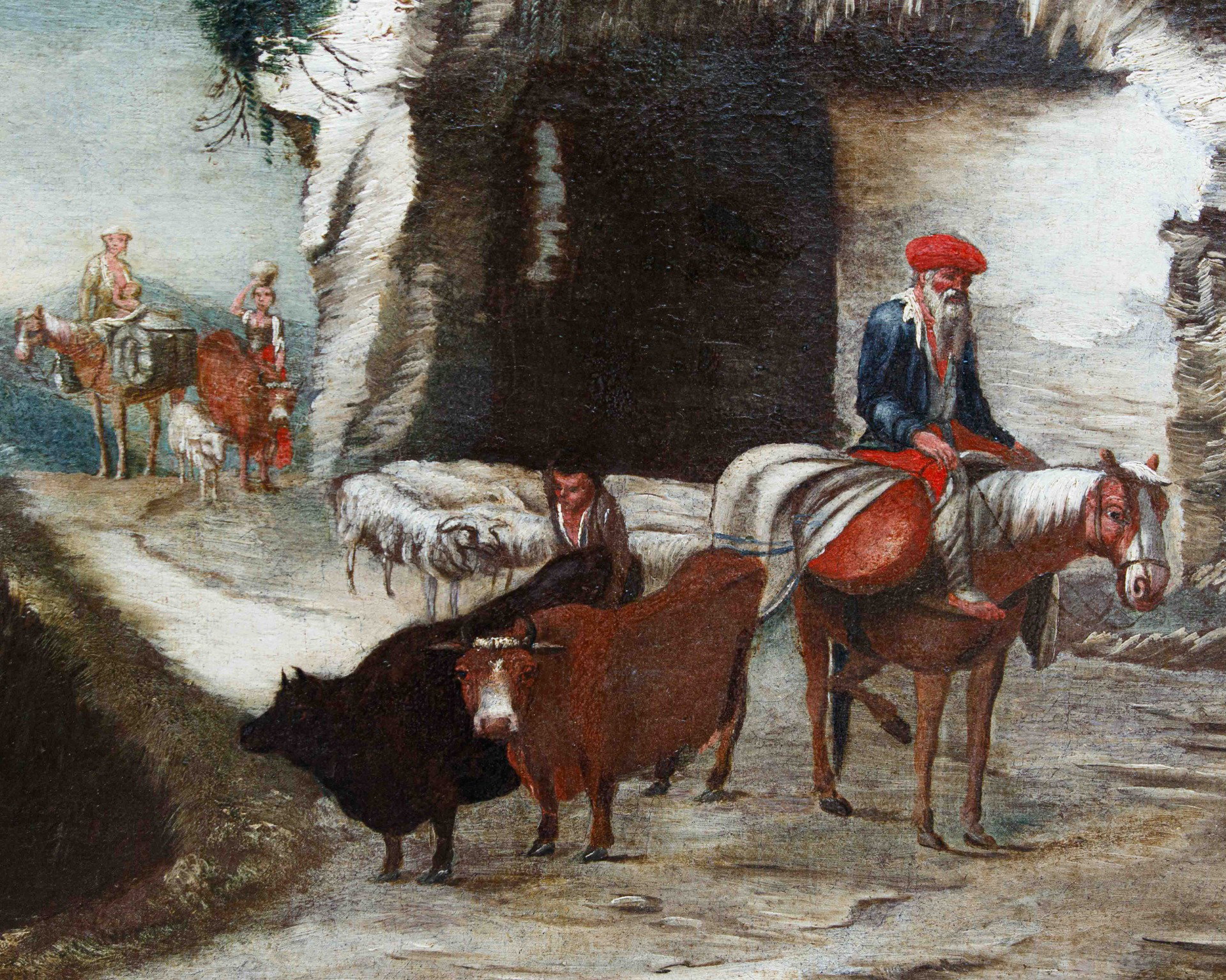
He began his artistic career in the workshop of Bernardo Strozzi (1581 – 1644), considered one of the most important and prolific exponents of Italian Baroque painting, where, according to sources, he was initially employed as a color grinder (around 1623), before the master recognized his talent and accepted him as a disciple. This association was fundamental: in 1625 Travi appeared as a witness in an archival document related to a dispute involving the master himself; furthermore, the relationship between the two remained strong over time, as evidenced by the presence of "two landscapes by Mr. Antonio da Sestri" in the inventory of Strozzi's possessions in Venice, drawn up in 1644. Although his early works show the influence of the Ligurian master's pictorial language (such as the Adoration of the Shepherds, currently preserved at Palazzo Bianco in Genoa), his crucial training in the genre that made him famous, rustic and rural landscape, took place with the Flemish painter Gottfried Wals (1595 – 1638), active in Genoa at that time. From Wals, Travi assimilated attention to aerial perspective and broad views, typical of Northern painting, although his compositions show a monumentality and material density alien to the lightness of the Flemish master. His lessons allowed him to move beyond the role of a mere reproducer of backgrounds for figures and to dedicate himself entirely to landscape as an autonomous subject. His canvases, often characterized by a deep sense of nostalgia, frequently depicted architectural ruins set in natural contexts, imparting a picturesque character that effectively anticipated the sensibility of the eighteenth century. The human element, although subordinate to the landscape, was essential: Travi populated his scenes with humble figures of shepherds, travelers, beggars, and common folk, captured in their daily activities, through a naturalism of Caravaggesque influence inherited from the Ligurian environment. From an executive point of view, he employed a full-bodied and robust pictorial technique, capable of conferring three-dimensionality and weight to the depicted elements, in stark contrast to the more airy and blended painting of the Flemish landscape artists. The use of light was aimed at highlighting strong contrasts, often with heavy skies and a milky atmosphere, which accentuated the sense of solitude and the inevitable force of nature compared to man.
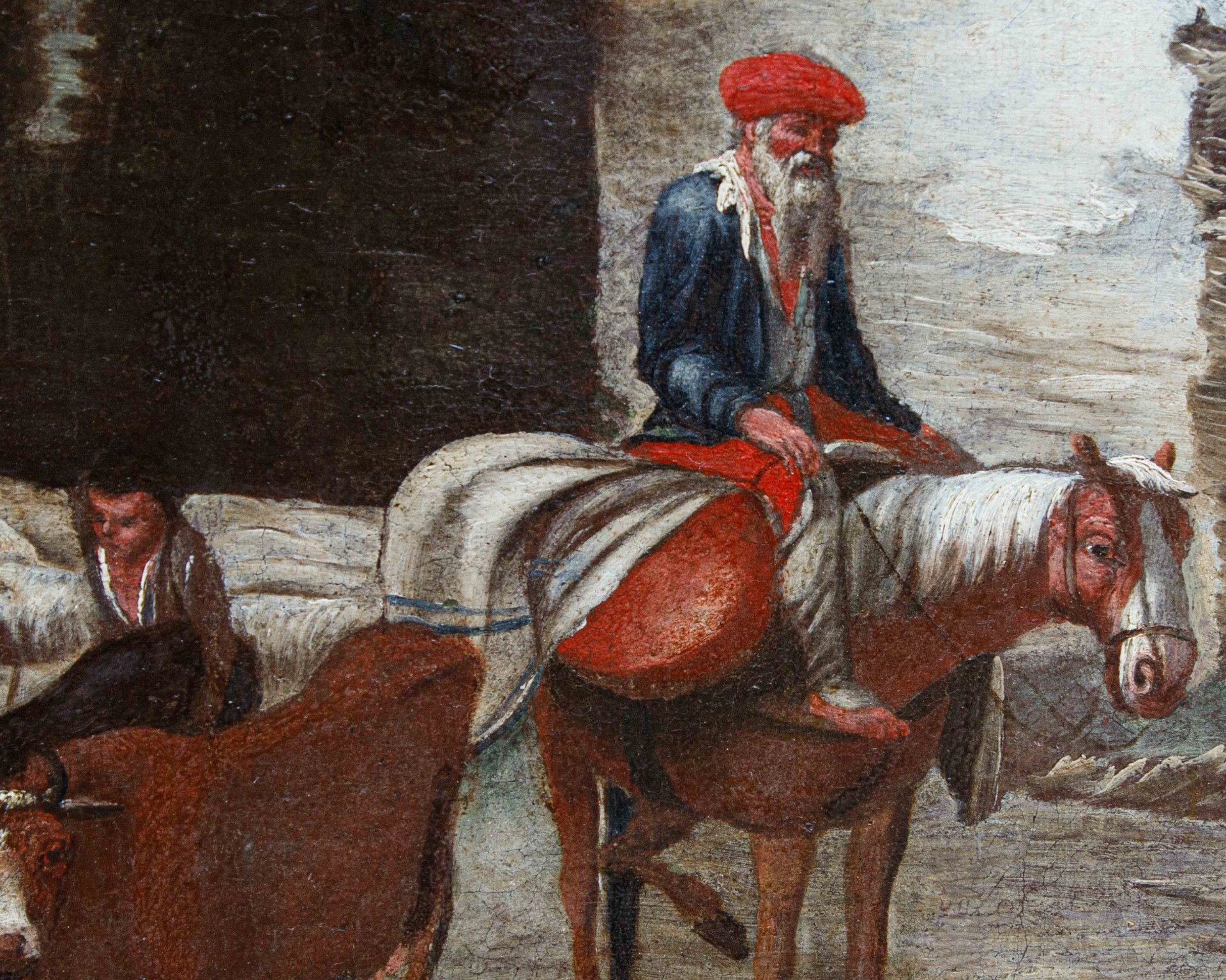
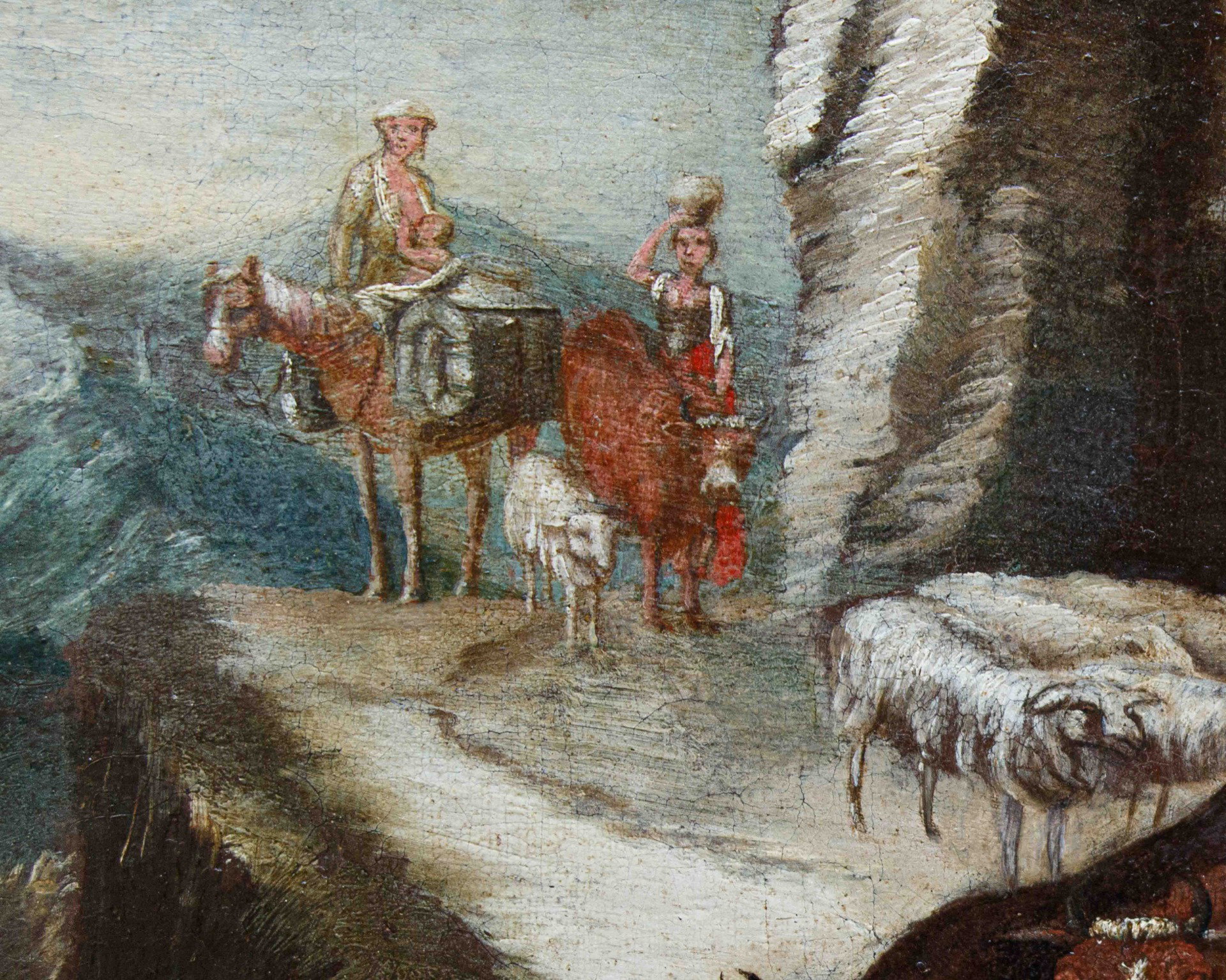
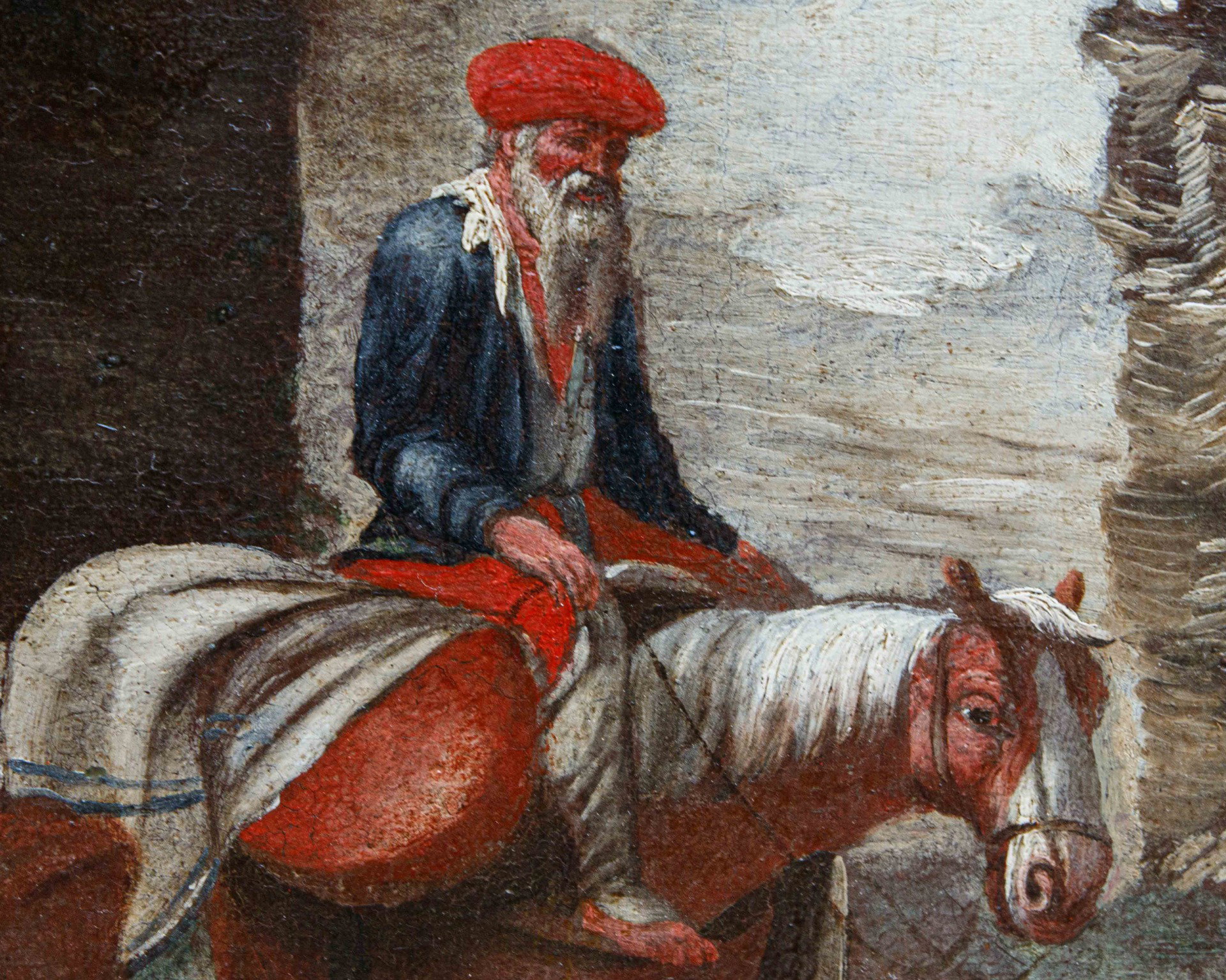
The painting in question, housed within a refined antique Genoese frame from the 17th century decorated with delicate brush-painted floral motifs, belongs to Travi's more mature landscape production, illustrating one of his favorite subjects, a rural view dominated by the ruins of a church or convent. Figures of shepherds on horseback and herds animate the scene, fitting into the rural context with a rendering that combines Genoese naturalism with the compositional structure learned from Gottfried Wals. The atmosphere is rendered intense by the dramatic cold light and the dense pictorial material, distinctive elements of his art.
With Ars Antiqua, it is possible to defer all amounts up to a maximum of € 7,500 at ZERO INTEREST, for a total of 15 INSTALLMENTS.
Ex. Total € 4,500 = Monthly installment € 300 for 15 months.
Ex. Total € 3,600 = Monthly installment € 720 for 5 months.
For amounts over € 7,500 or for longer deferrals (over 15 installments), we can provide personalized payment.
Contact us directly for the best quote.
TELEVISION BROADCAST
– SUNDAY 5.00 PM – 9.00 PM Digital terrestrial 126 – Sky 824
– Streaming on our website www.arsantiquasrl.com and on our Facebook and Youtube social media.
All works offered by Ars Antiqua are sold with a certificate of authenticity in accordanceance with the law and an accurate in-depth study sheet.
It is possible to view the works directly at the gallery showroom in Milan, at via Pisacane 55 and 57.
We personally organize transport and delivery of works, both for Italy and abroad.