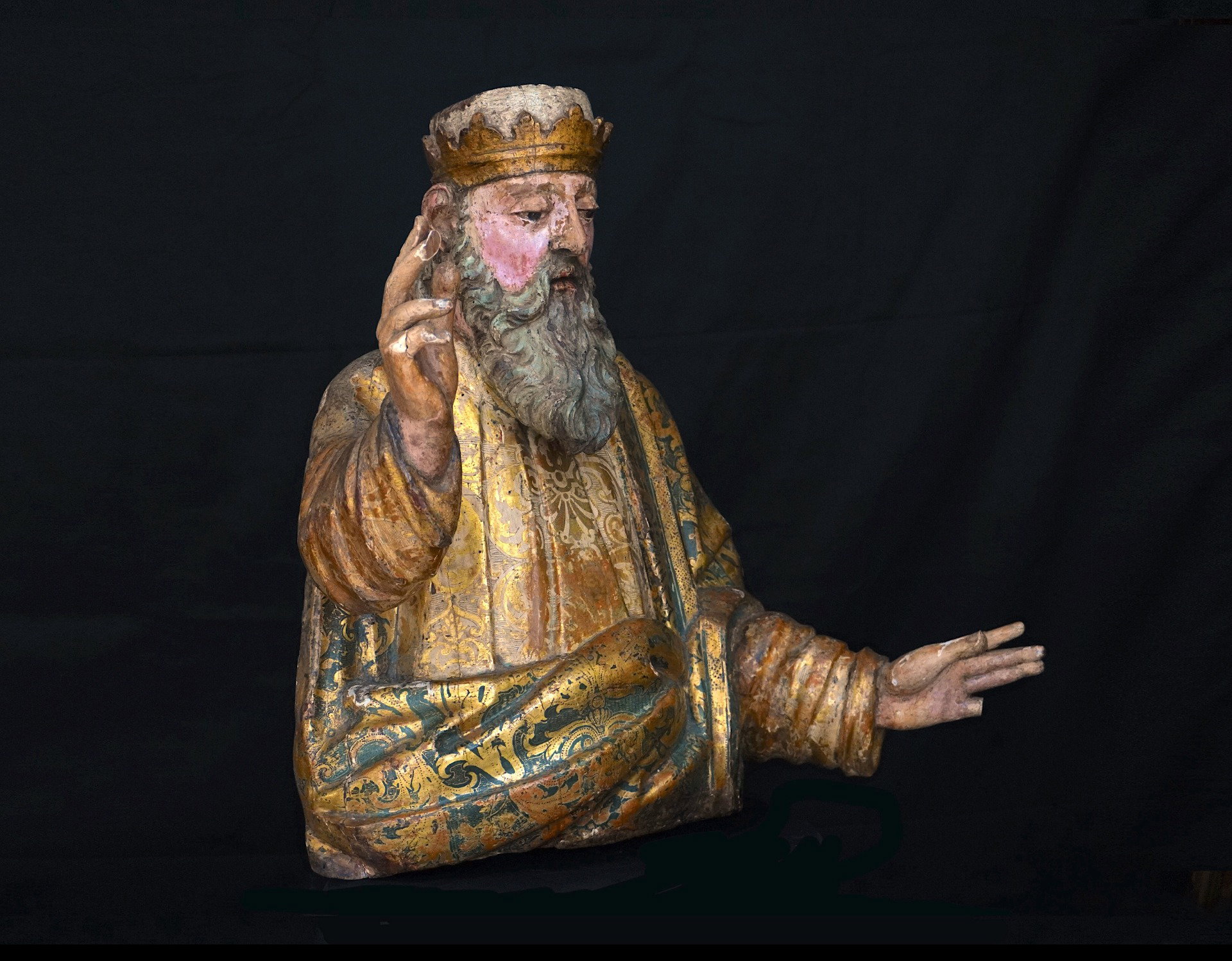
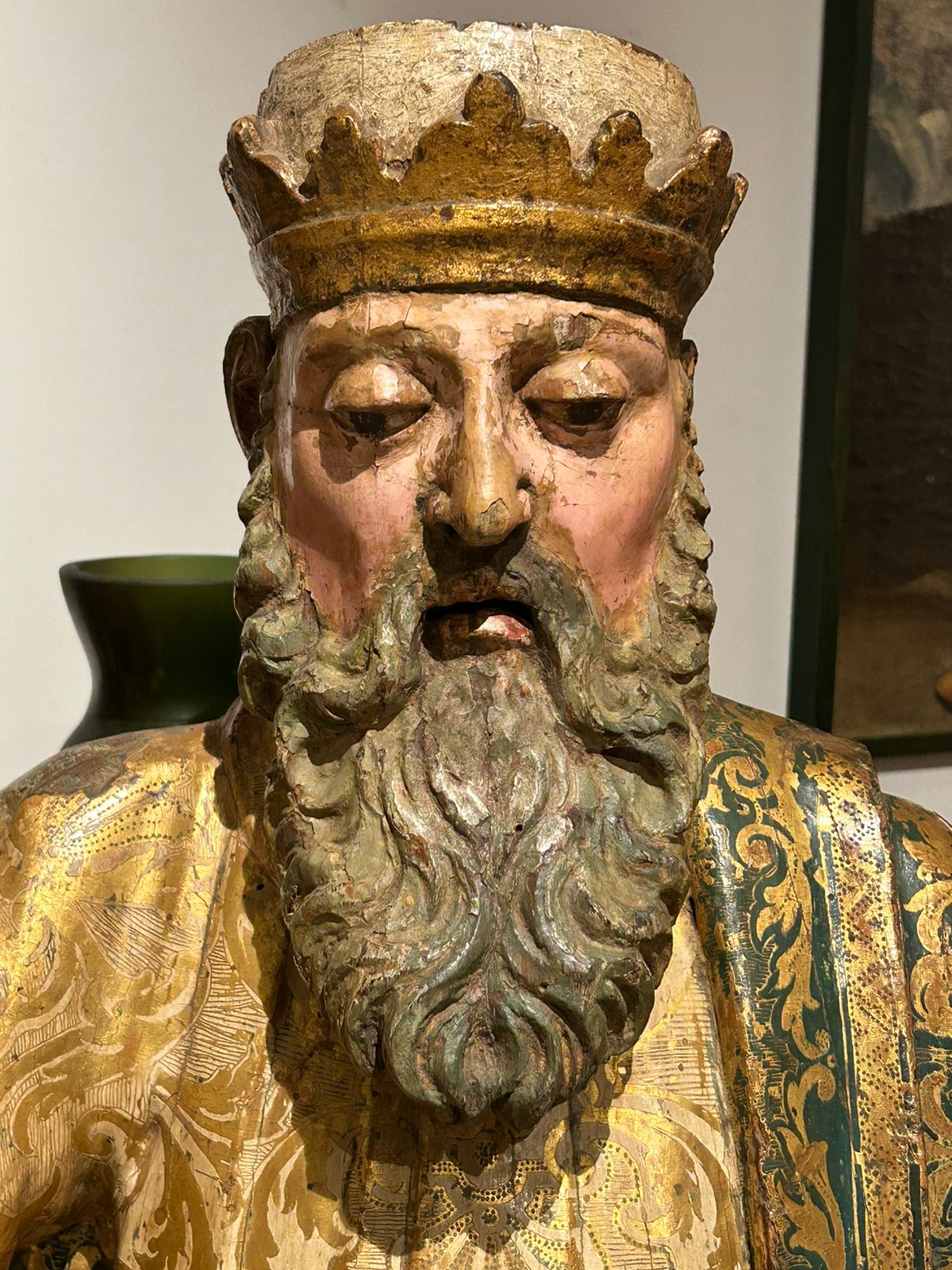
Rare and refined wooden half bust of a saint, probably Saint Peter or God the Father depicted with a papal tiara on his head.
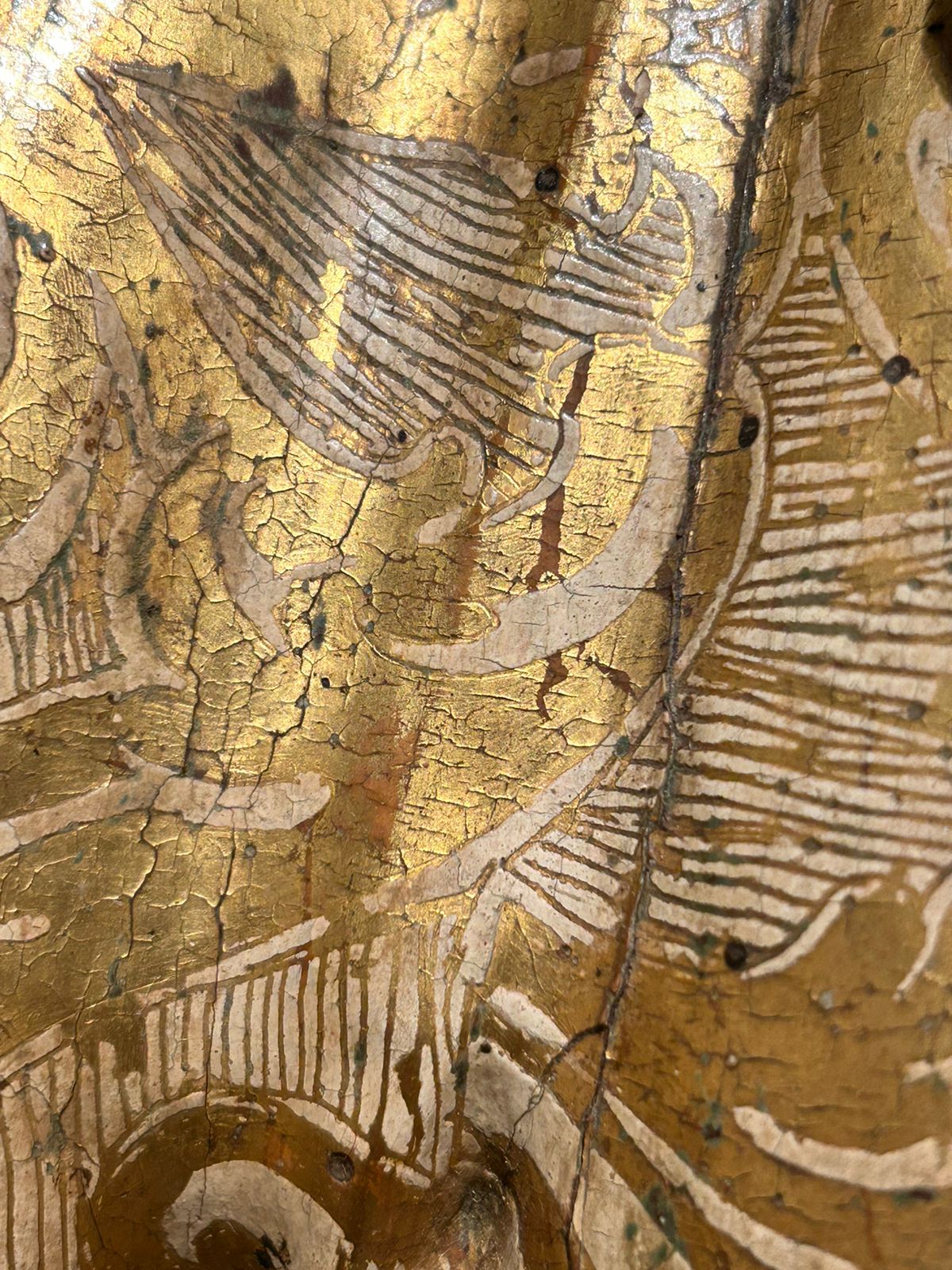
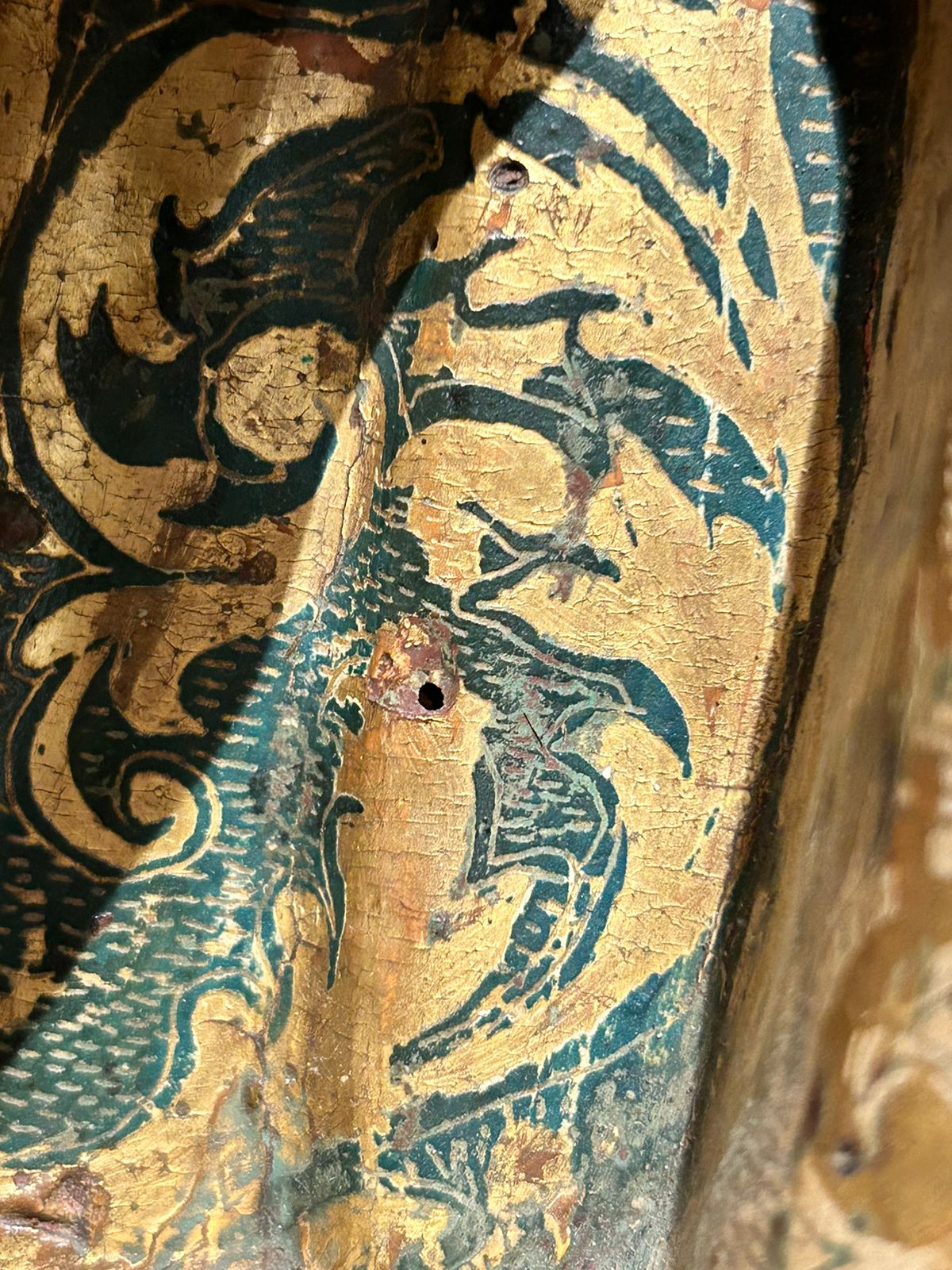
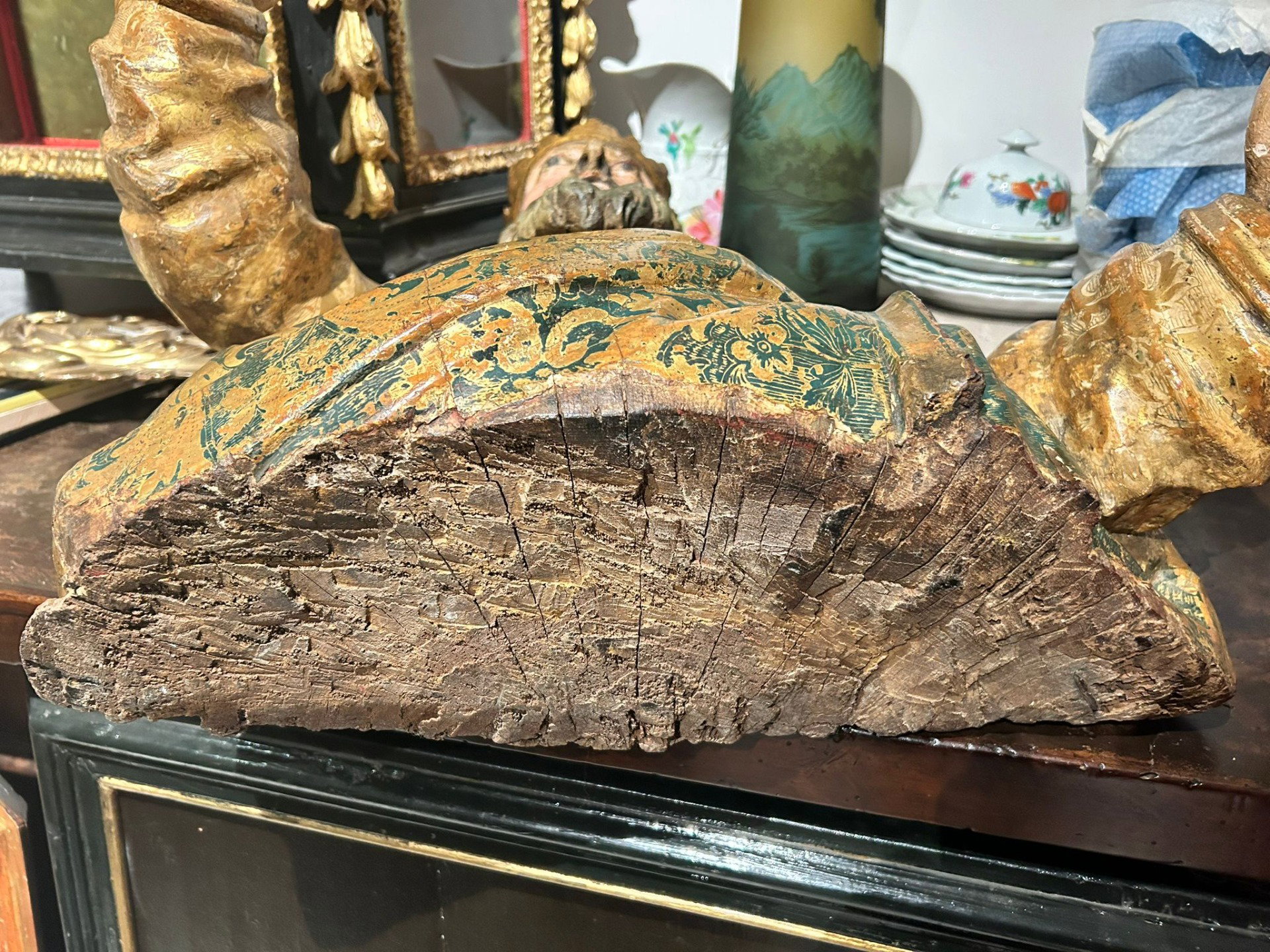
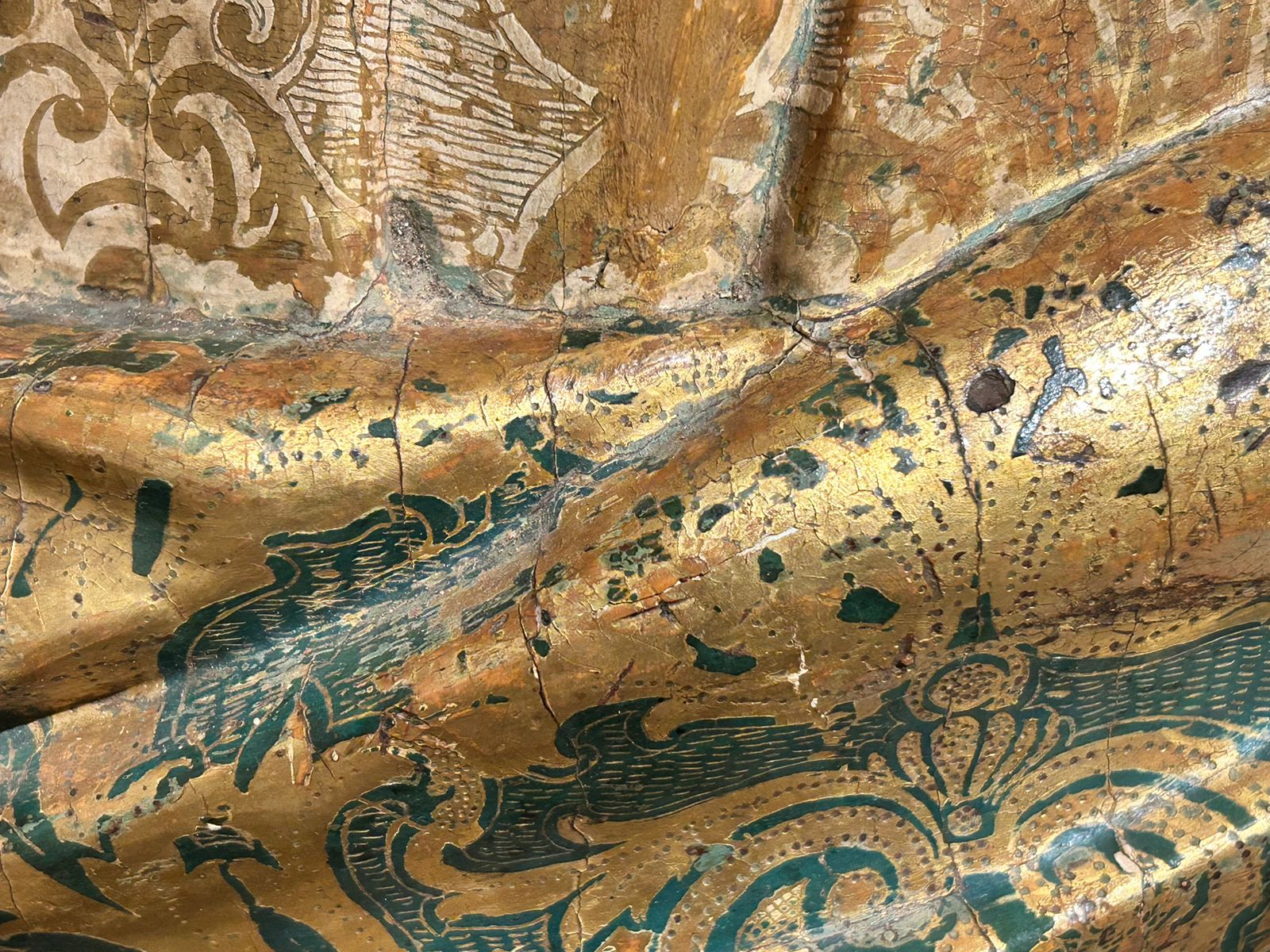
The sculpture retains exceptional polychromy in the face and the robe, finely decorated with "scratched" pure gold, a decorative technique called "Estofado de Oro".
The artistic context to which the sculpture belongs is that of the Italian sculptural workshops, which saw a confluence of significant artistic trends of Spanish tradition following the conquest of the Duchy of Milan and the Kingdom of Naples during the 16th century.
Therefore, the reception and development of these techniques occurred from the 16th century and throughout the 17th century, in all areas under Spanish influence, in the Kingdom of Naples, Sardinia, Sicily, and in the Lombardy area, then Veneto, Piedmont, and Liguria.
Given the sculptural quality and the extremely fine decoration that is exceptionally preserved, it is highly probable that this work can be attributed to the Bergamasco carver Pietro Belverte (second half of the 15th century - 1512), who came to Naples to open a workshop, in which the famous Neapolitan sculptor Giovanni Marigliano, known as Giovanni da Nola (1488-1558), was trained. In fact, it is possible to observe stylistic affinities with Belverte's Neapolitan works and the wooden works of Marigliano's early period.
The Estofado de Oro consists of a particular decorative technique for the creation of sacred images on polychrome wood, in which the carved surface is covered with a layer of pure gold leaf on which a layer of clay bole is applied, which could have colors from reddish-orange to dark brown. Subsequently, the gold leaf was then covered with color. The colors that were applied were different because the contrast with the gold had to be chromatically effective: green, blue, red, black, and white. Subsequently, the color was removed by scratching with a special tool called a lion's tooth to free the parts where it was intended to bring the gold back to the surface. The whole thing took on a brilliant, shimmering color.
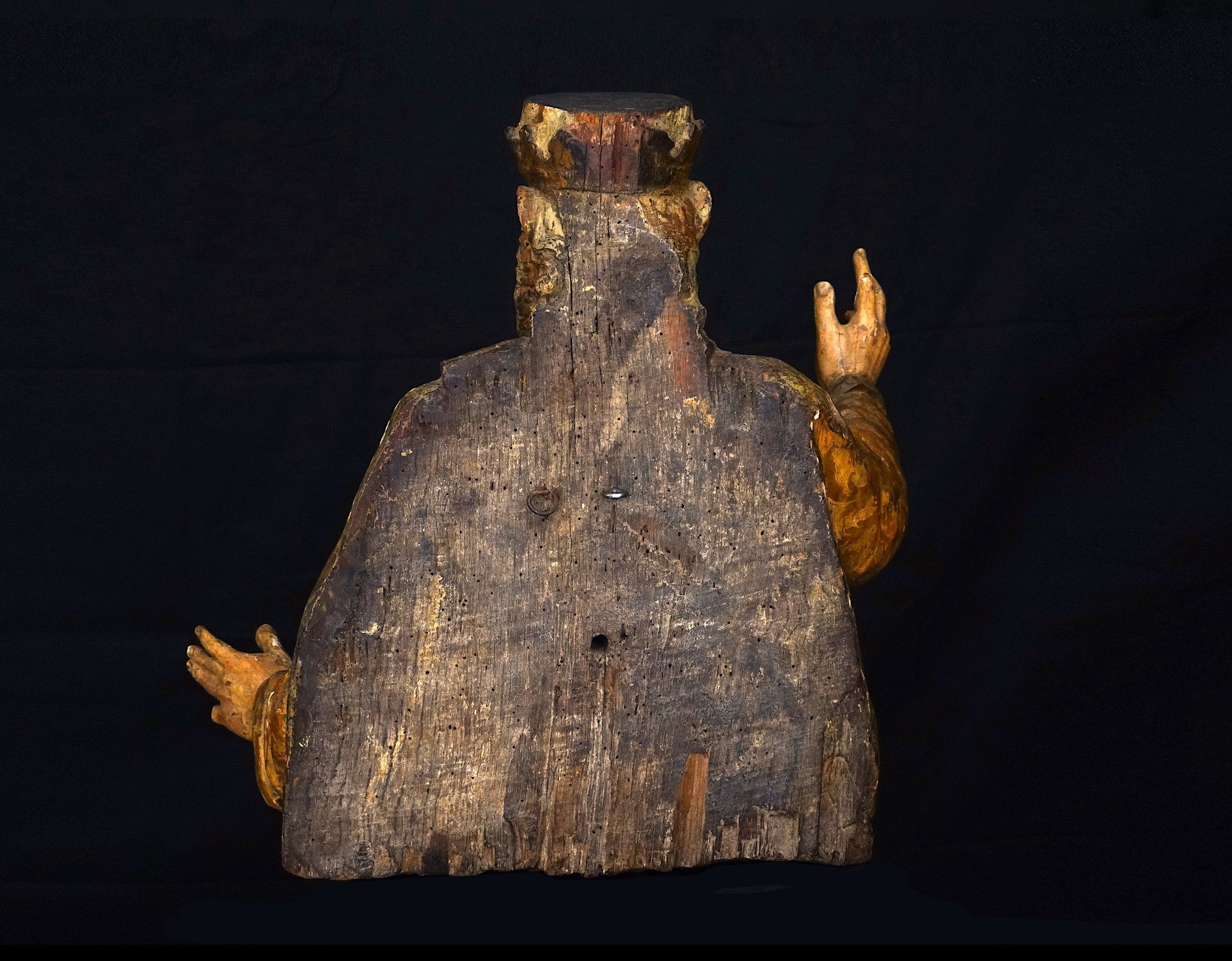
Excellent state of preservation of the work.
Its dimensions are 61 cm in height and 62 cm in width (opening of the arms).
We attach a historical guarantee to the sale that certifies its age and authenticity.



.jpeg)
.jpeg)