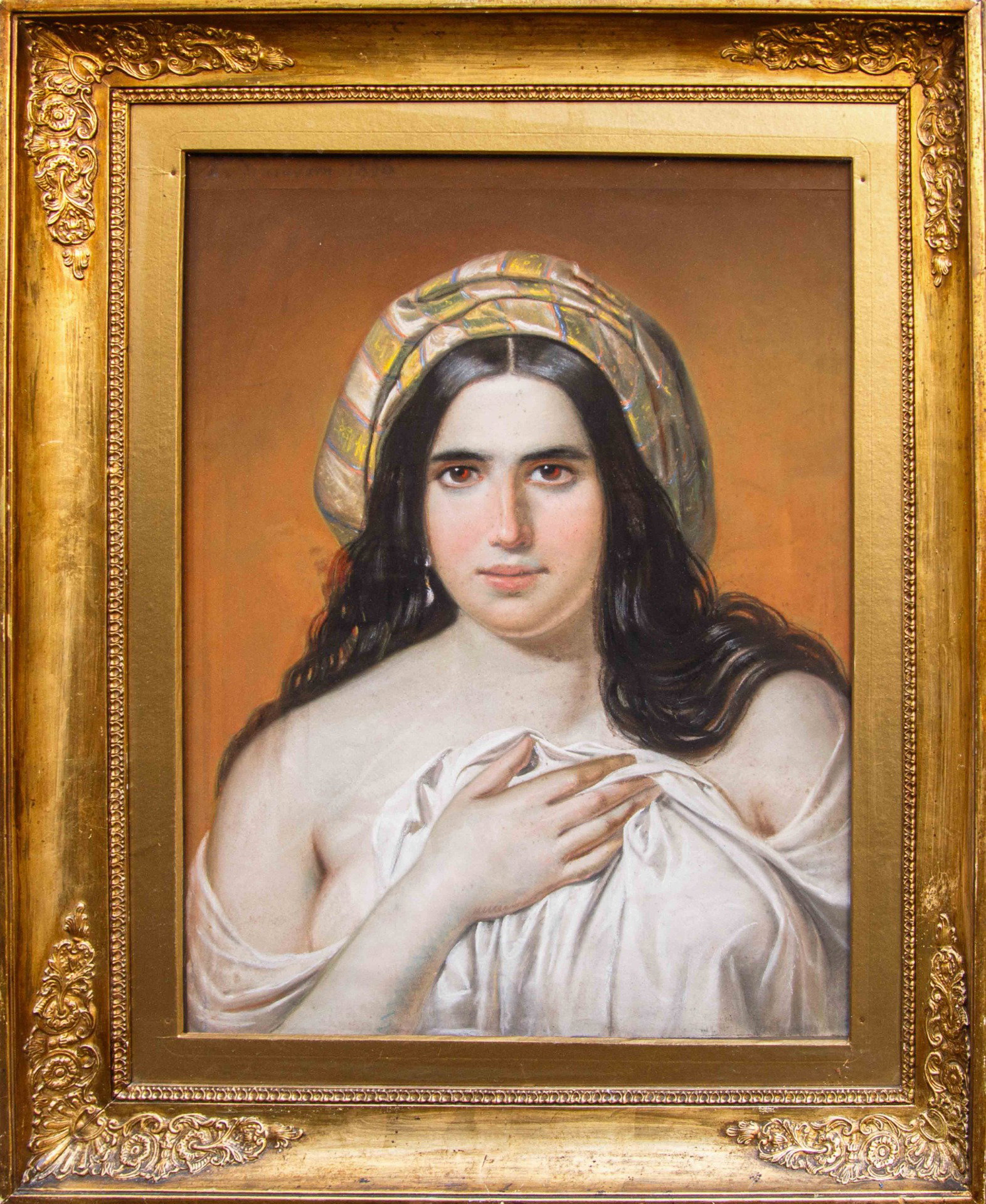
Natale Schiavoni (Chioggia 1777 - Venice 1858)
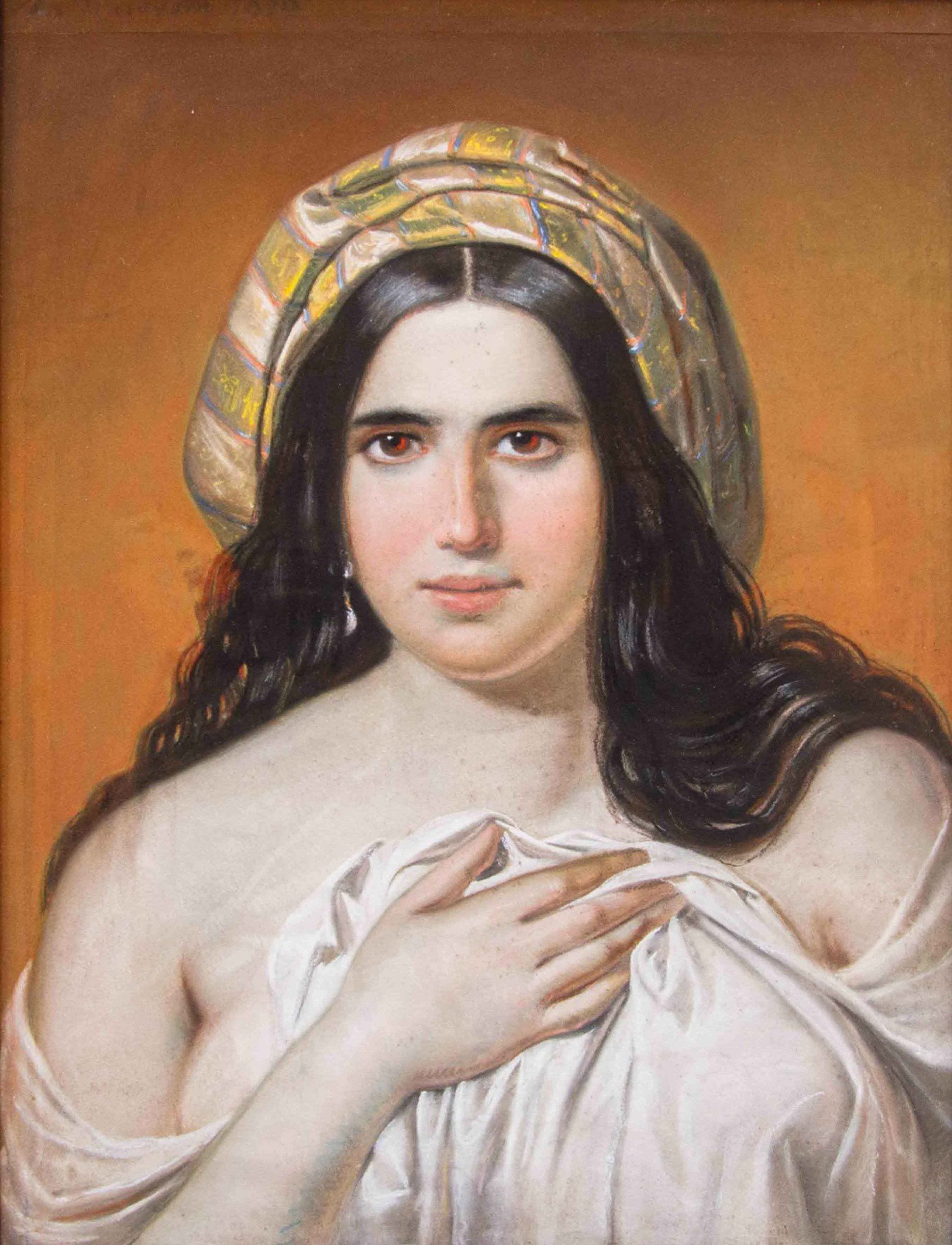
Odalisque
Pastel on paper, cm 60 x 45
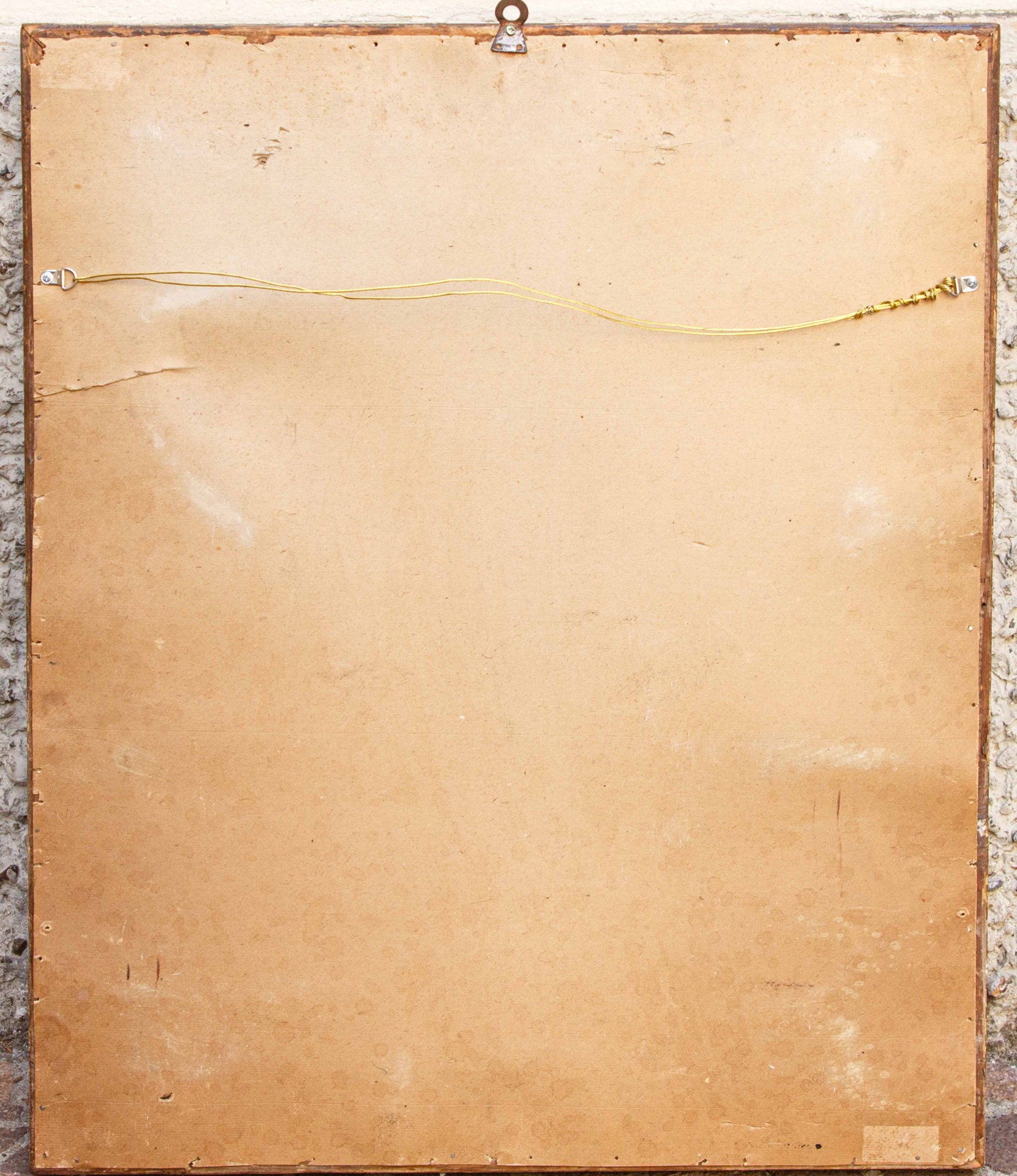
Frame, cm 77 x 64.5
Signed and dated top left: N. Schiavoni 1856
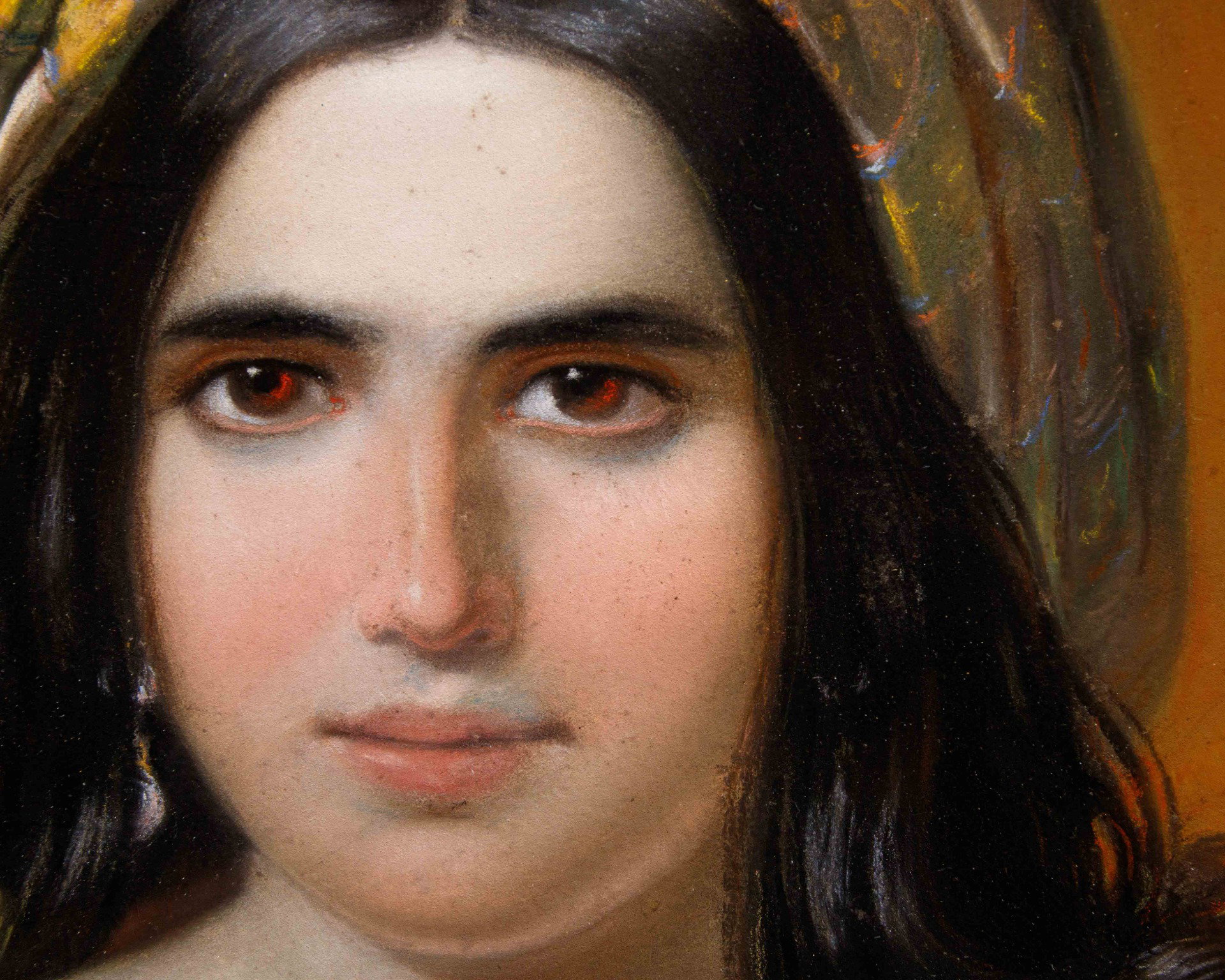
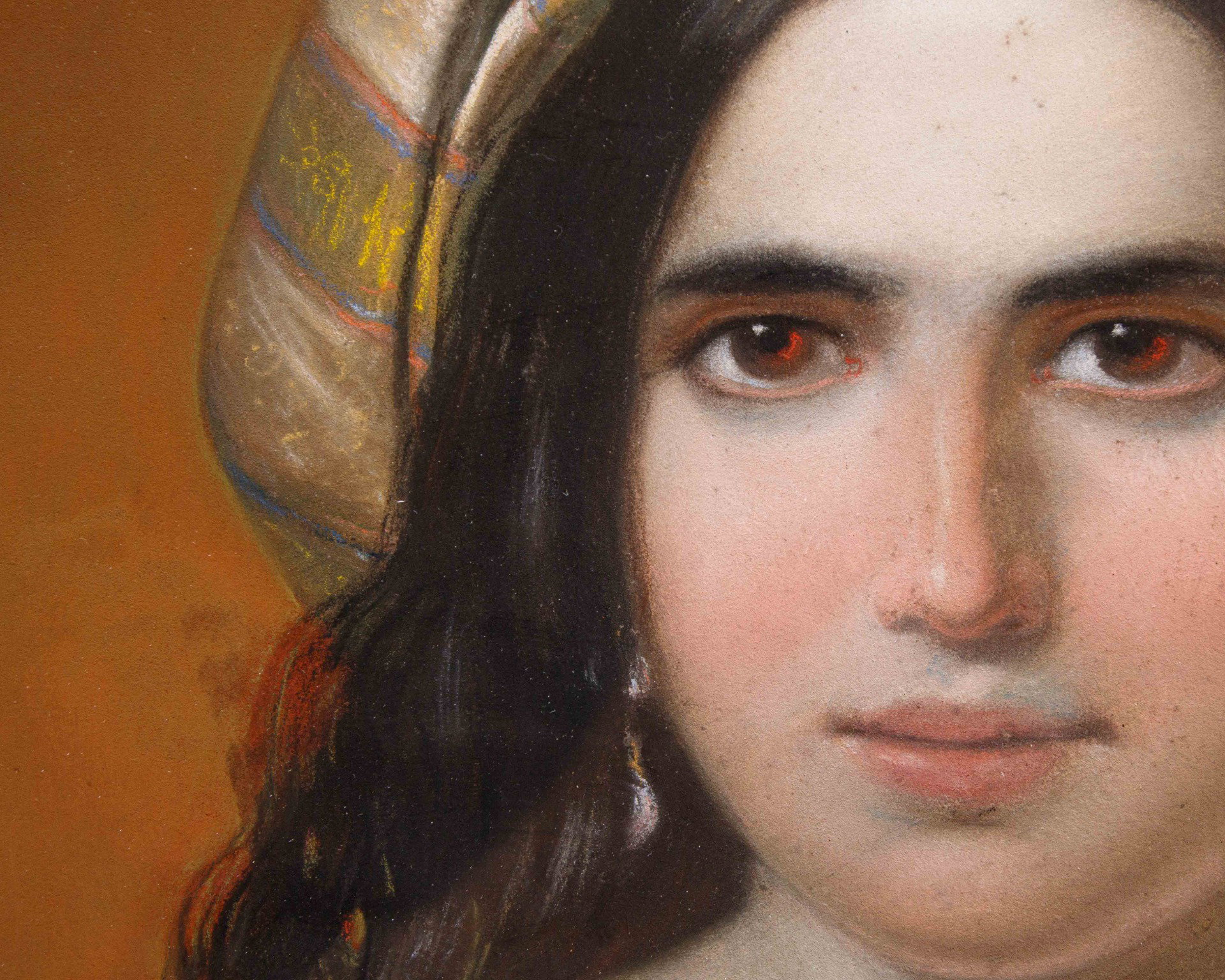
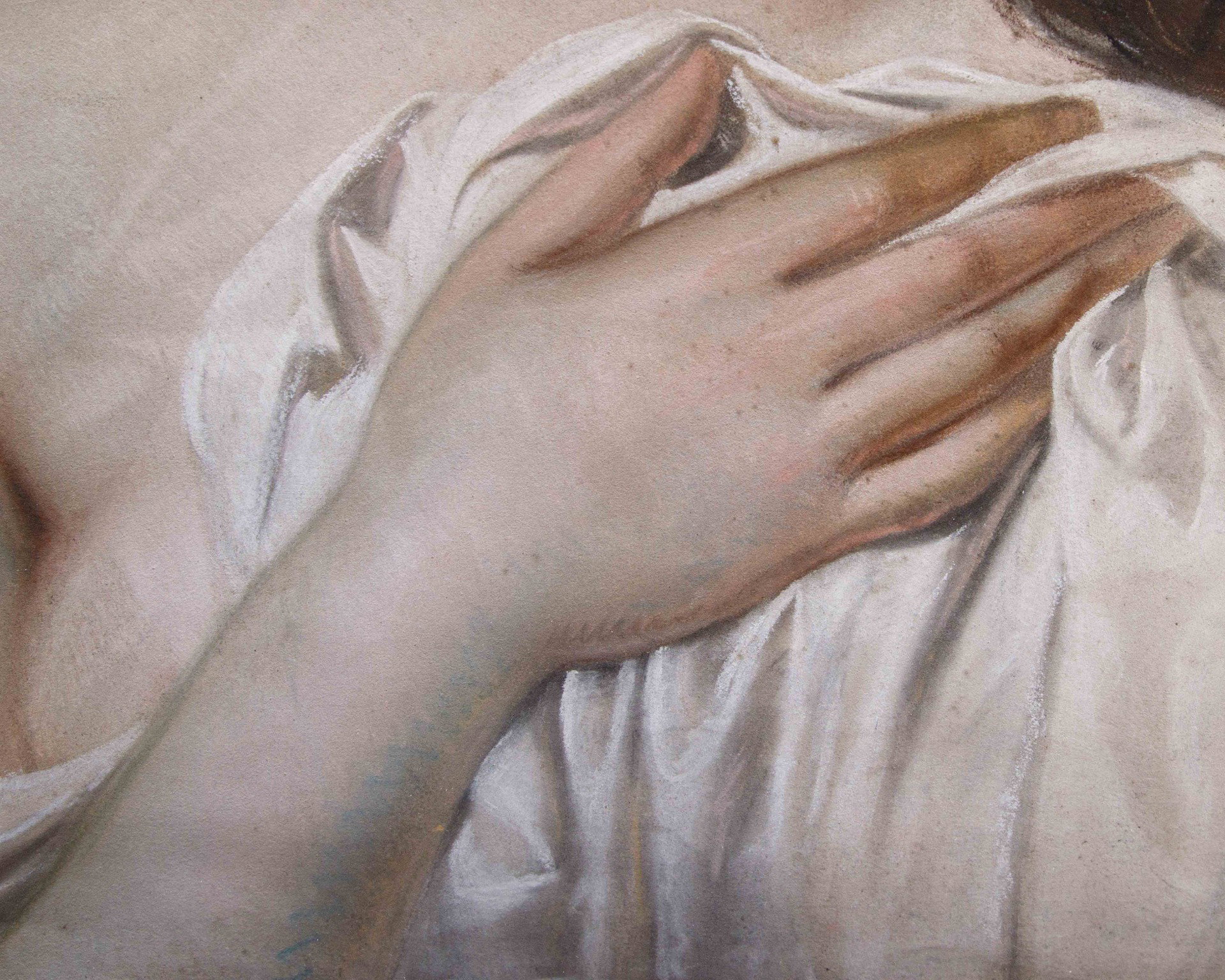
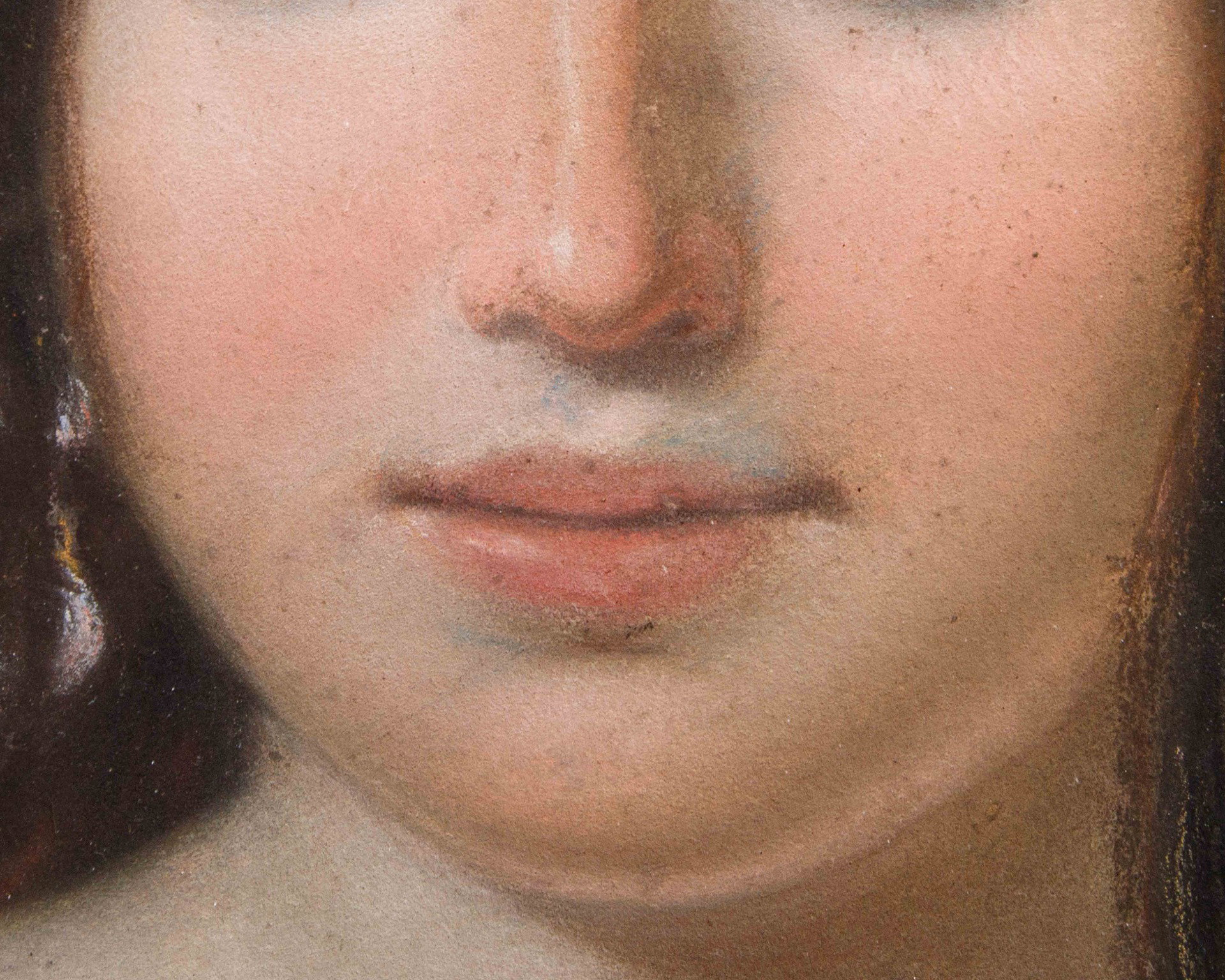
Natale Schiavoni (Chioggia, April 25, 1777 – Venice, April 16, 1858) was an Italian painter and engraver, best known for his portraits and genre scenes characterized by a delicate sensuality and elegant execution. Born into a family of artists – his father Felice was a painter particularly appreciated by his contemporaries – Schiavoni initially trained in his father's workshop. His early artistic inclination soon led him to Venice, where he had the opportunity to study and come into contact with the main exponents of the artistic environment of the lagoon city. His career developed through different phases and influences. Initially linked to the Venetian painting tradition of the eighteenth century, with particular attention to color and light, Schiavoni was able to carry out a profound evolution in his style, incorporating characterizing elements of neoclassicism and romanticism, dominant trends at the beginning of the 19th century, into his works. He became particularly appreciated for his portraits, in which he managed to capture with sensitivity the personality and elegance of the subjects, often members of the high society of his time. His female figures are characterized by an idealized beauty and an aura of refined melancholy. In addition to portraits, Schiavoni also dedicated himself to genre painting, creating intimate and graceful scenes, often with female figures in languid poses or in idealized everyday contexts. His skill in drawing and his attention to detail contributed to making these works particularly pleasant and sought after. Schiavoni often traveled in his career, staying in Trieste and Milan, where he worked as a portrait painter and met important personalities from the cultural and aristocratic world. These trips broadened his artistic horizons and influenced his production. Returning to Venice, he continued his painting activity with success until his death in 1858. His work remains a testimony to a period of transition in the Italian artistic landscape, in which the Venetian tradition opened up to new sensibilities and influences. The Odalisque is certainly one of the most requested subjects by the aristocratic and upper middle-class clientele of the mid-nineteenth century; it was in fact replicated by the artist on several occasions: exemplary in this sense is the painting of the Revoltella Museum in Trieste (inv. 13), an institution that preserves five paintings by Schiavoni. In this version, whose attribution to the artist of Chioggia origins has been confirmed by Fernando Mazzocca, the surface exoticism – and so to speak "masquerade" – of the usual female half-figure merges with the winking smile and the intriguing glance directed maliciously at the observer. The refined sensuality of the alabaster bust, which stands out on the material effects of precious fabrics, particularly fascinated the clients of the time, who particularly appreciated this segment of Schiavoni's production. Although his production is vast and includes oil works, it is in pastel that Schiavoni has demonstrated a peculiar sensitivity and delicacy, capturing with rare precision the nuances and expressions of his subjects. His pastel works are distinguished by the luminosity of the colors and the softness of the textures, elements that give the portraits and subjects of orientalist inspiration a remarkable vitality and a kind of transparency. Schiavoni was able to faithfully render the details of the fabrics, the shine of the jewels and, above all, the depth of the glances, revealing the psychology of the portrayed characters. His skillful use of pastel testifies to a deep knowledge of the potential of this medium, which he used to create works of great visual impact and notable refinement, helping to keep alive the tradition of pastel portraiture in an era dominated by oil. Natale Schiavoni's pastel works remain today precious testimonies of an art that combines technical virtuosity and profound aesthetic sensitivity.