Giuseppe Bossi (Busto Arsizio 1777- Milan 1815)
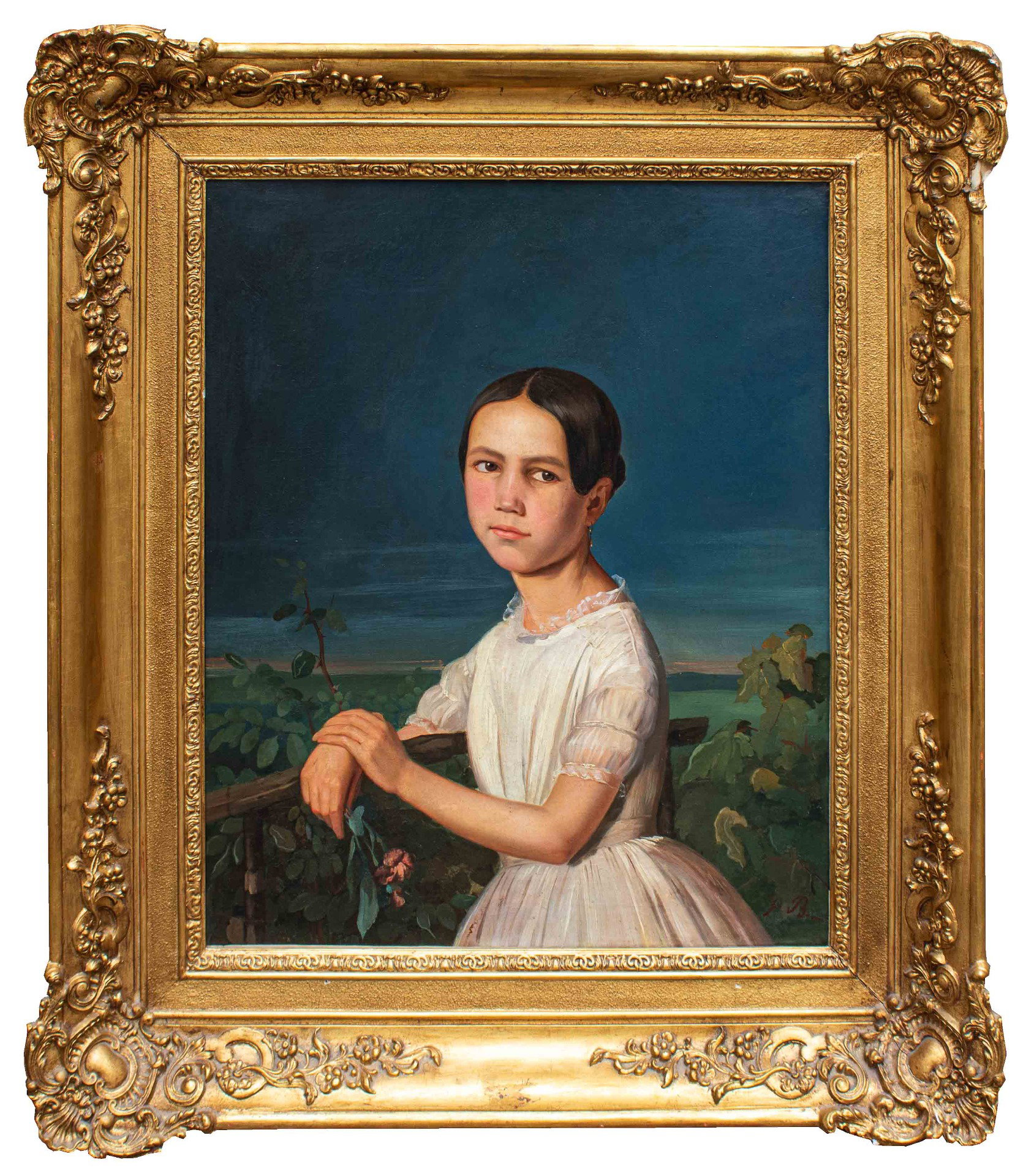
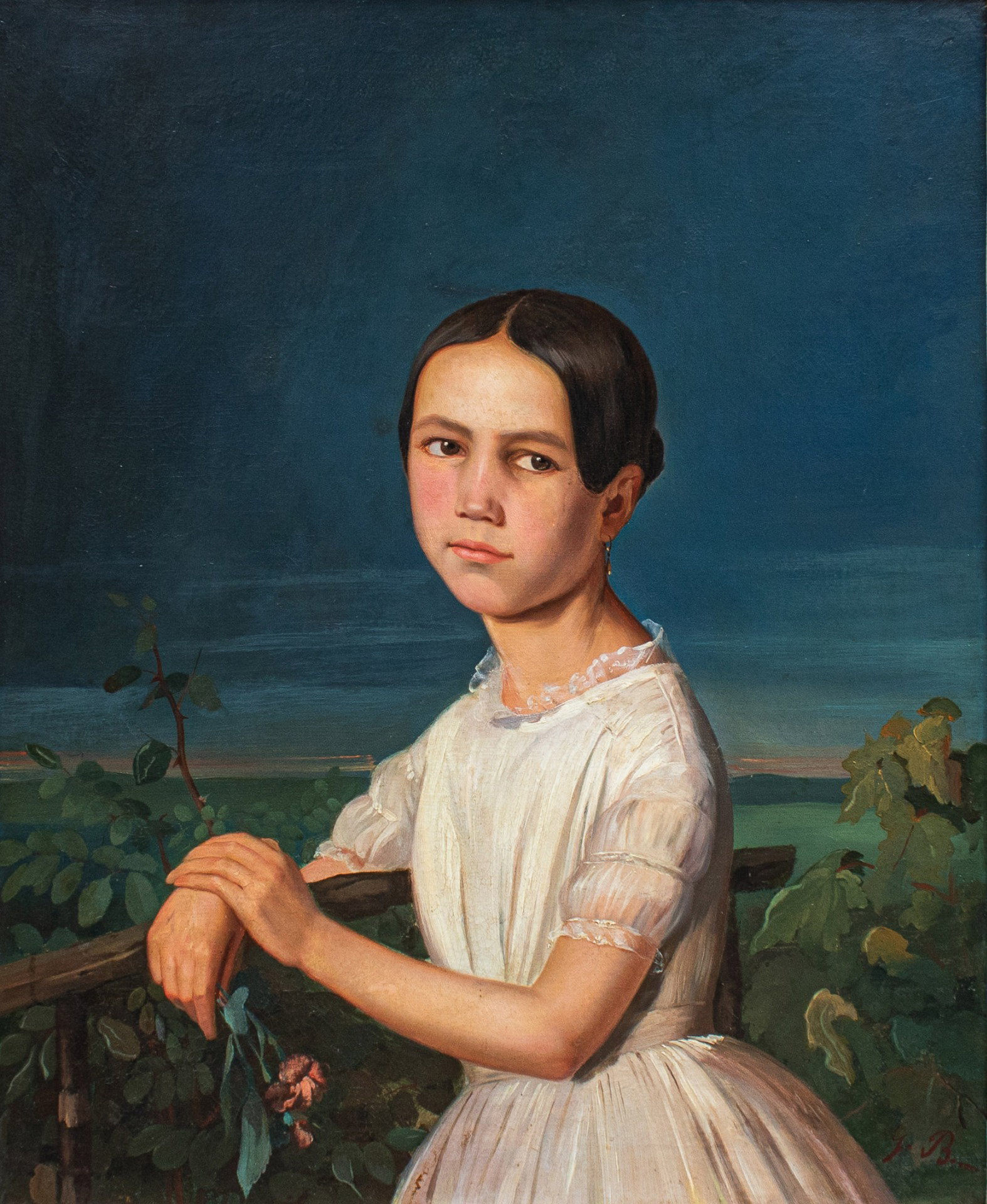
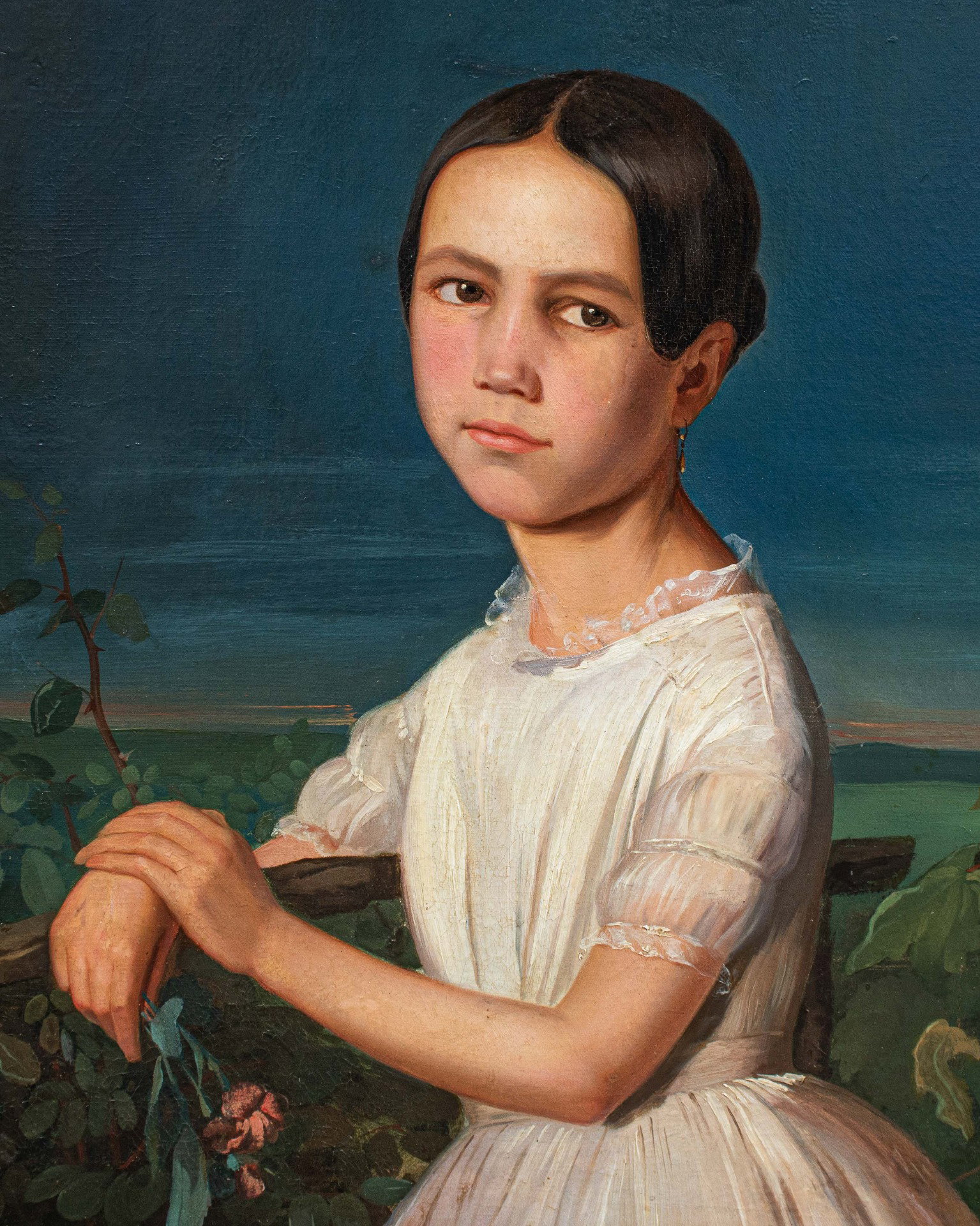
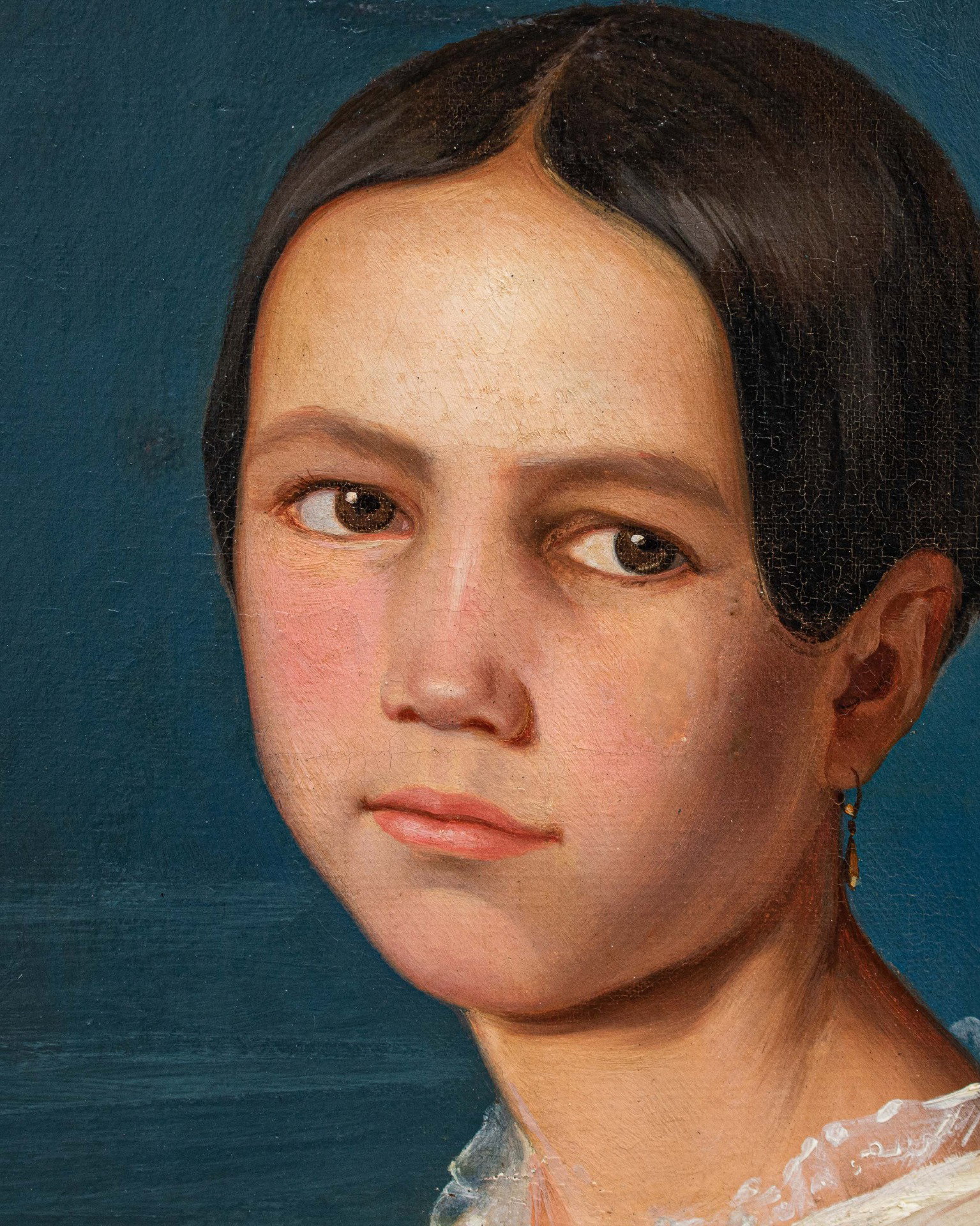
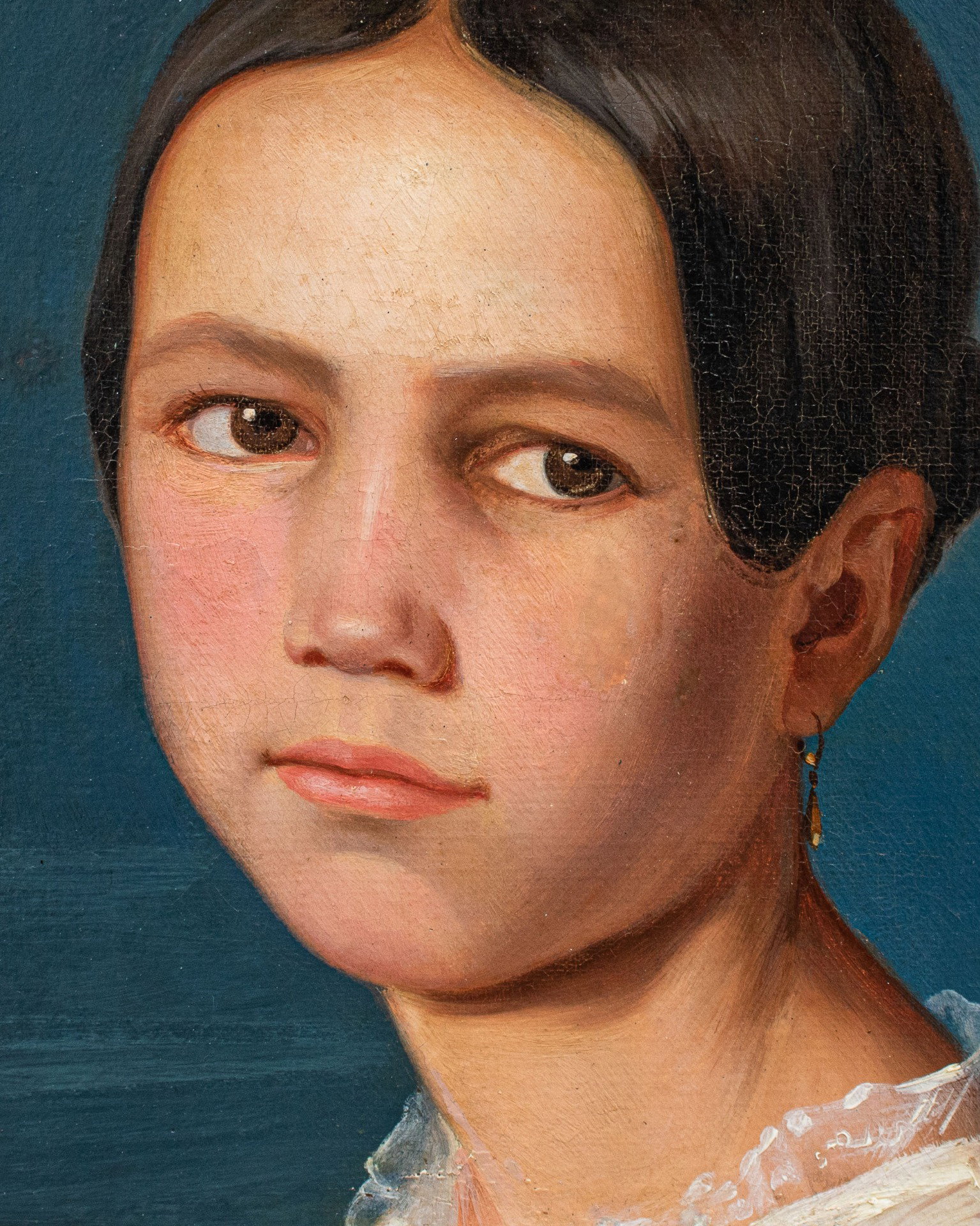
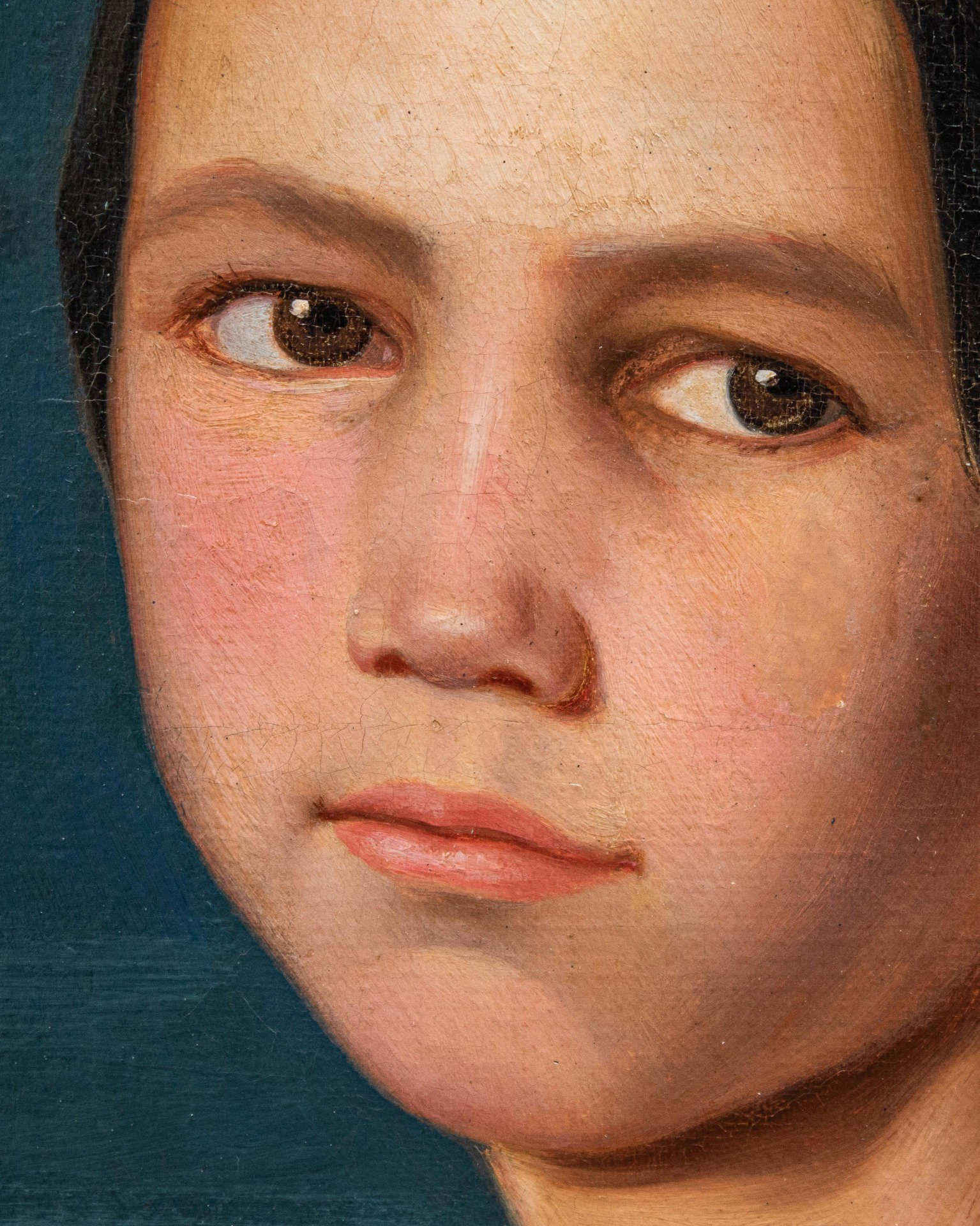
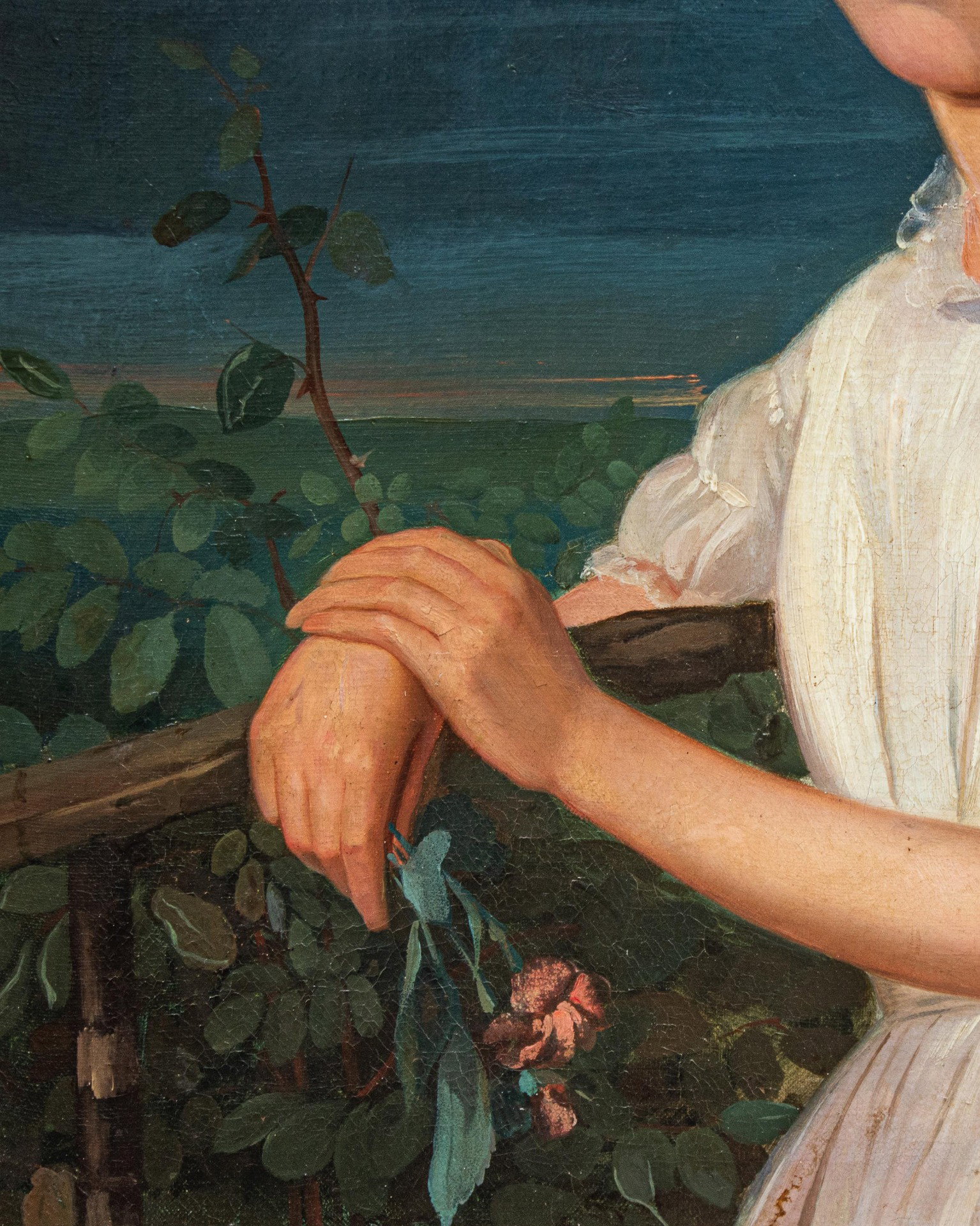
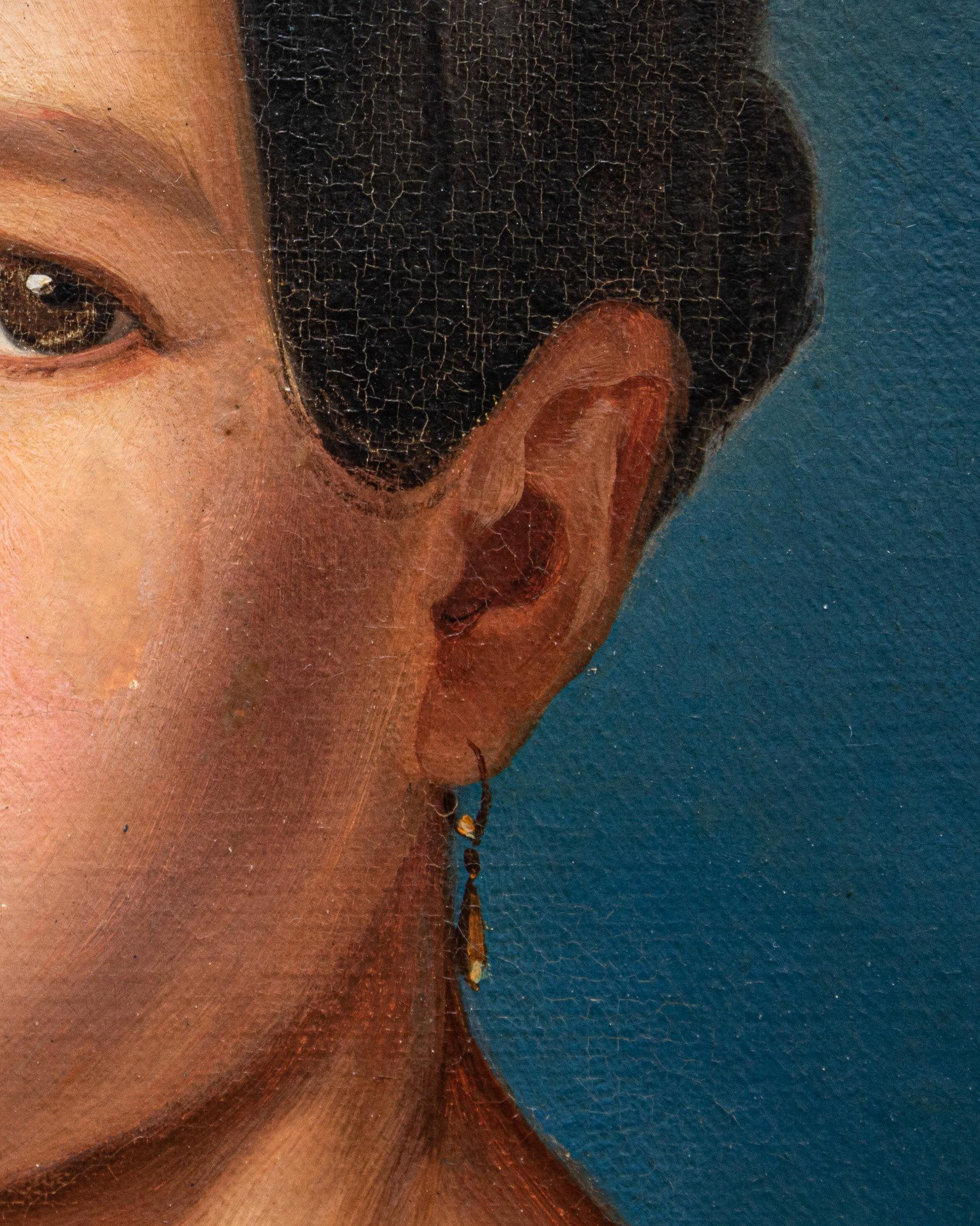
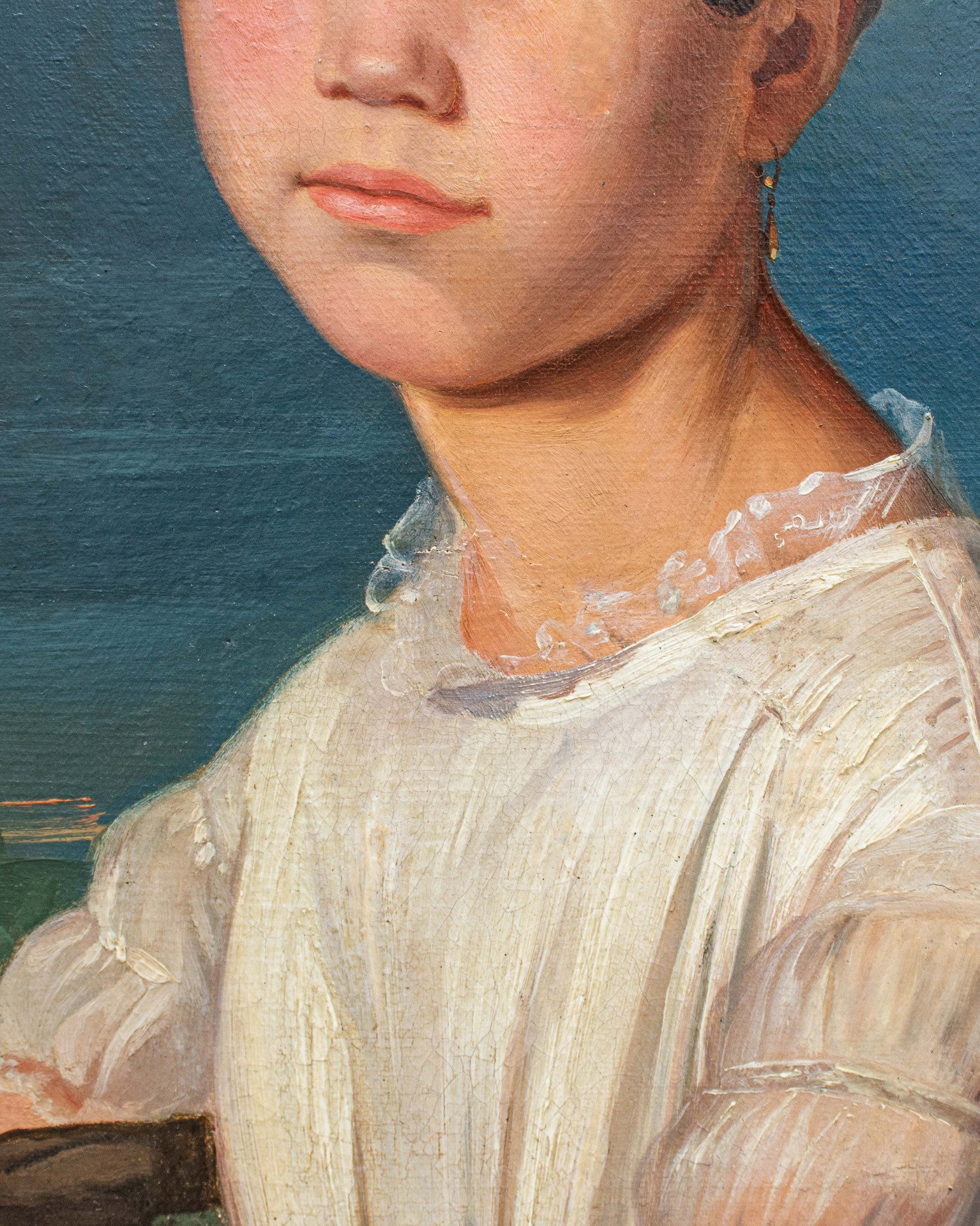
Portrait of a young girl
Oil on canvas, cm 72 x 58
With frame 98 x 84.5
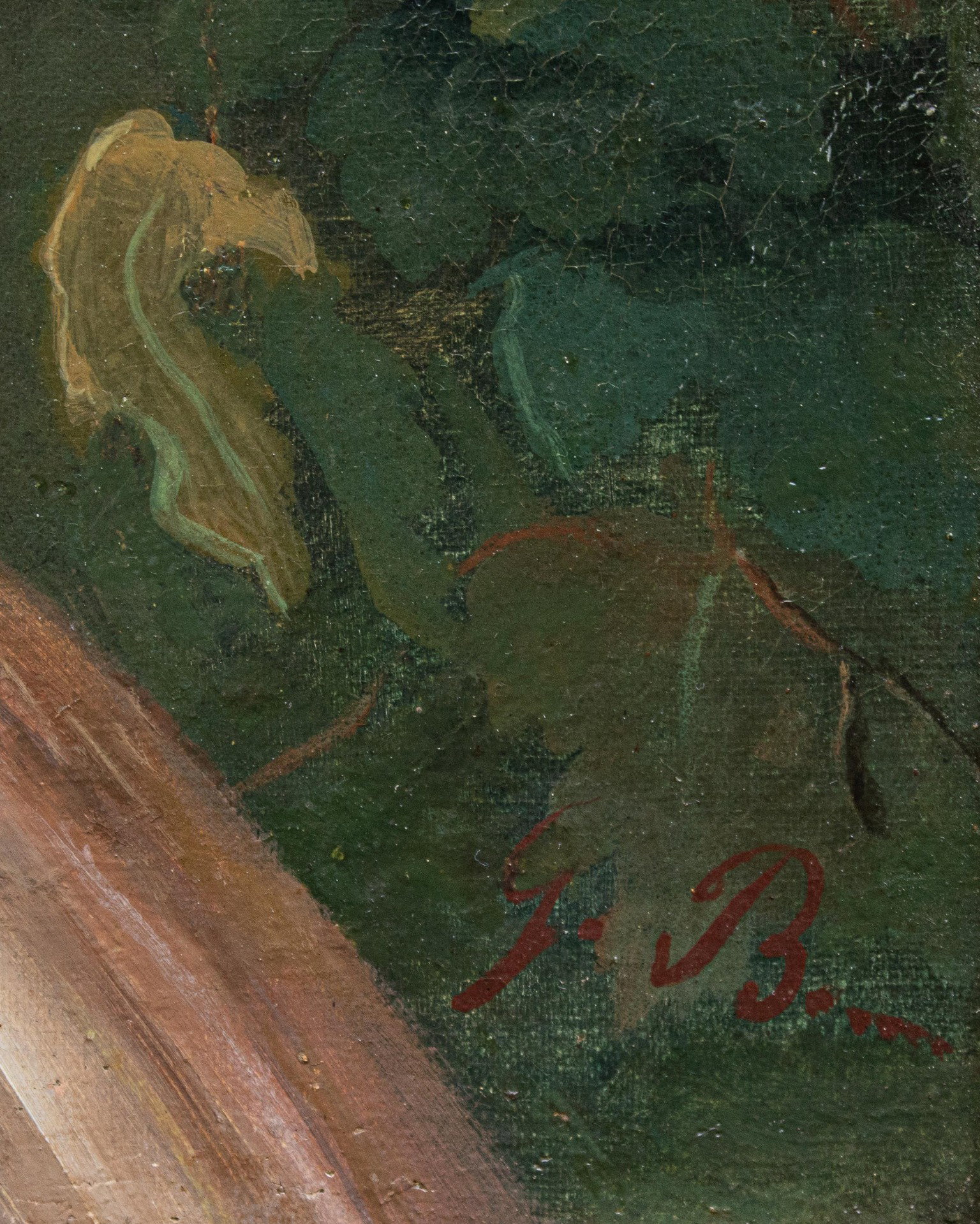
Signed lower right: ” Gio. Bossi”.
Thanks to the signature we can connect the production to the hand of the Milanese painter Giuseppe Bossi, among the most important protagonists of Milanese Neoclassicism alongside Ugo Foscolo, Giuseppe Parini, Alessandro Manzoni and Carlo Porta. The family supported his early inclinations for painting by enrolling him at the Accademia di Brera established in 1786. There he had teachers Traballesi, Knoller, Appiani and G. Franchi. Thanks to a scholarship he was able to travel to Rome, in a particularly favorable moment for the spread of Neoclassical poetics, here he met Agincourt, Raimondo Cunich, Giovanni Giacomo de Rossi, Angelica Kauffmann and Marianna Dionigi. He was friends with Felice Giani and Canova; for him he also designed the bust for the Monument in his honor in the courtyard of the Accademia di Brera (now kept at the Accademia Ambrosiana), while Bossi himself created a youthful portrait of Canova kept at Villa Carlotta. Returning to Milan in 1801 he was appointed secretary of the Accademia di Bera, a role he held until 1807. He developed a reform plan for the Academy that was modeled on that of the Accademia di San Luca but also aimed to give the institution unified directives in order to better discipline the fragmented world of artists. He started the annual exhibitions in which the best students and teachers participated with their works. He was the first to propose the establishment of the Academy Library to encourage study. For the education of young people and those who loved art, he obtained from Napoleon to converge in Brera many paintings seized from suppressed convents and churches, giving life to the first public Milanese art gallery. Thanks to his intervention, the government decided to purchase Raphael's Marriage of the Virgin and after his death the art gallery bought Mantegna's Dead Christ from the heirs. In 1807 the viceroy Eugenio di Beauharnais commissioned him to make a copy of Leonardo's Last Supper in mosaic: Bossi undertook a passionate study of Leonardo's work which culminated in the volume Del Cenacolo di Leonardo da Vinci, while the mosaic created by Giacomo Raffaelli, after the fall of Napoleon, was brought by the Austrians to Vienna (Minoritenkirche).Bossi was a great scholar, passionate about antiquity, Raphael and Michelangelo, as well as literary works; from the Divine Comedy to Petrarch, to the Greek classics. A man of the world, a writer, an orator, a collector, he was also a skilled painter and draftsman, as evidenced by the paintings and drawings kept in various national and interim institutions; such as the cartoon of Parnassus purchased by Duke Charles Augustus of Weimar and placed in the city's Academy, the cartoon of Oedipus at Colonus of the Ambrosiana, The Burial of Themistocles of the Pinacoteca di Brera. Although many of his creations have been lost or destroyed during the Second World War. He was very attracted to portraiture, both of others and his own, not only as a figurative motif, but as an essay of psychological introspection and "excavation" of the character. Among the many executed and received by us there is the Self-Portrait of the Gam of Milan and the Pinacoteca; the Lady in White and the portrait of Gaspare Landi (GAM), portraits of Cesare Baccaria and of Cralo Porta (Museum of Milan).