School of Titian, (Pieve di Cadore, 1488/1490 – Venice, 1576)
Madonna with Child and Saint John the Baptist
Oil on canvas, 158 x 78 cm
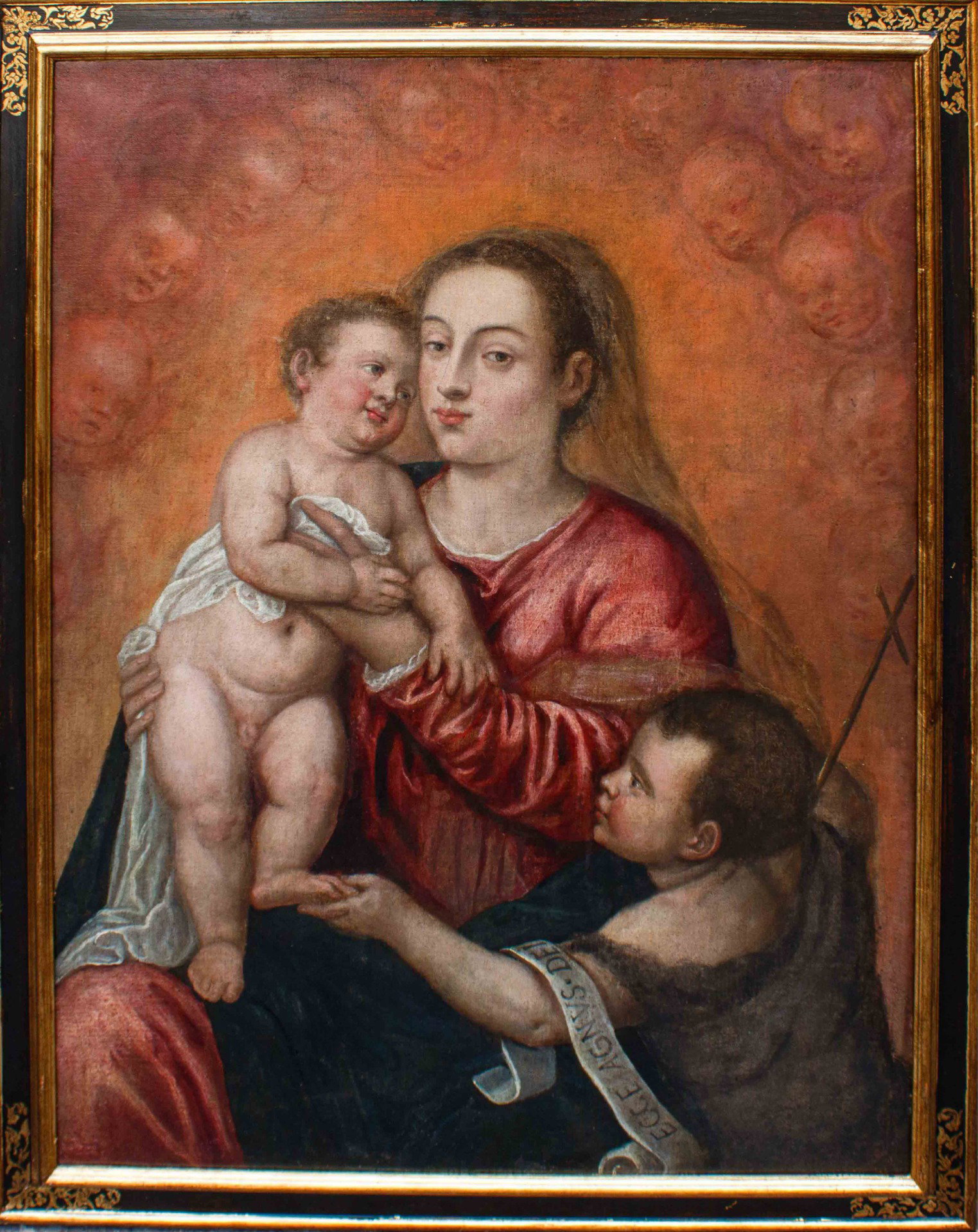
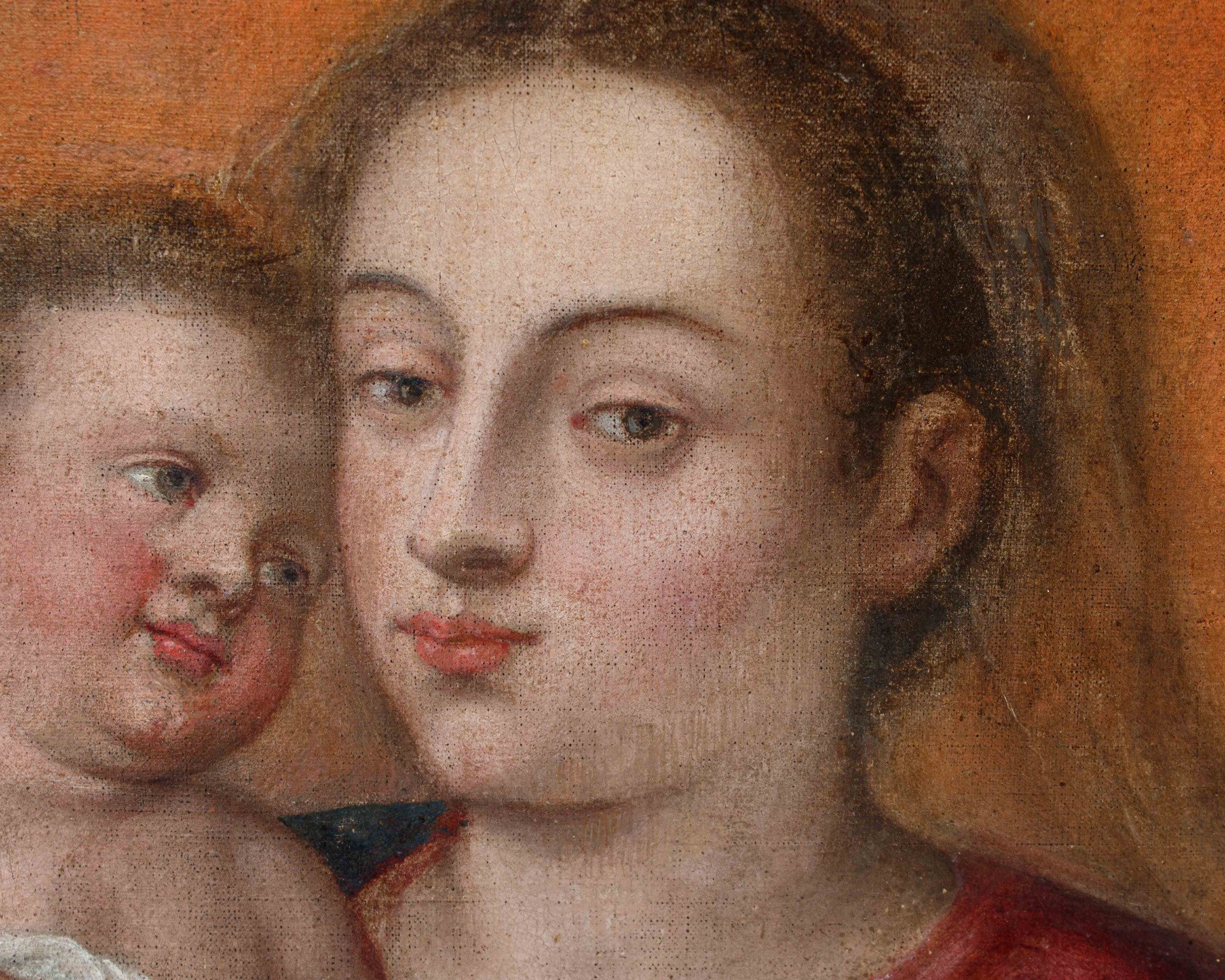
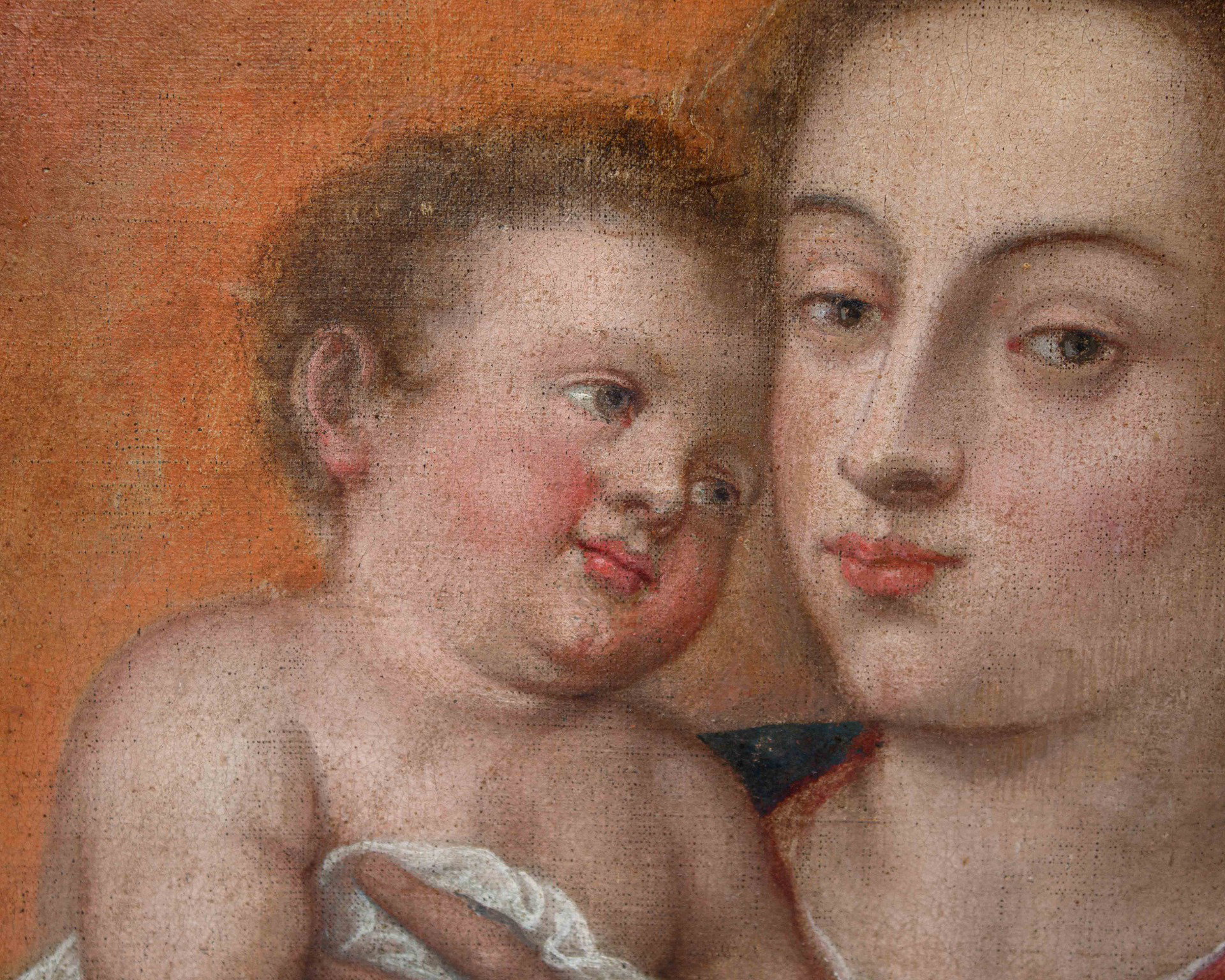
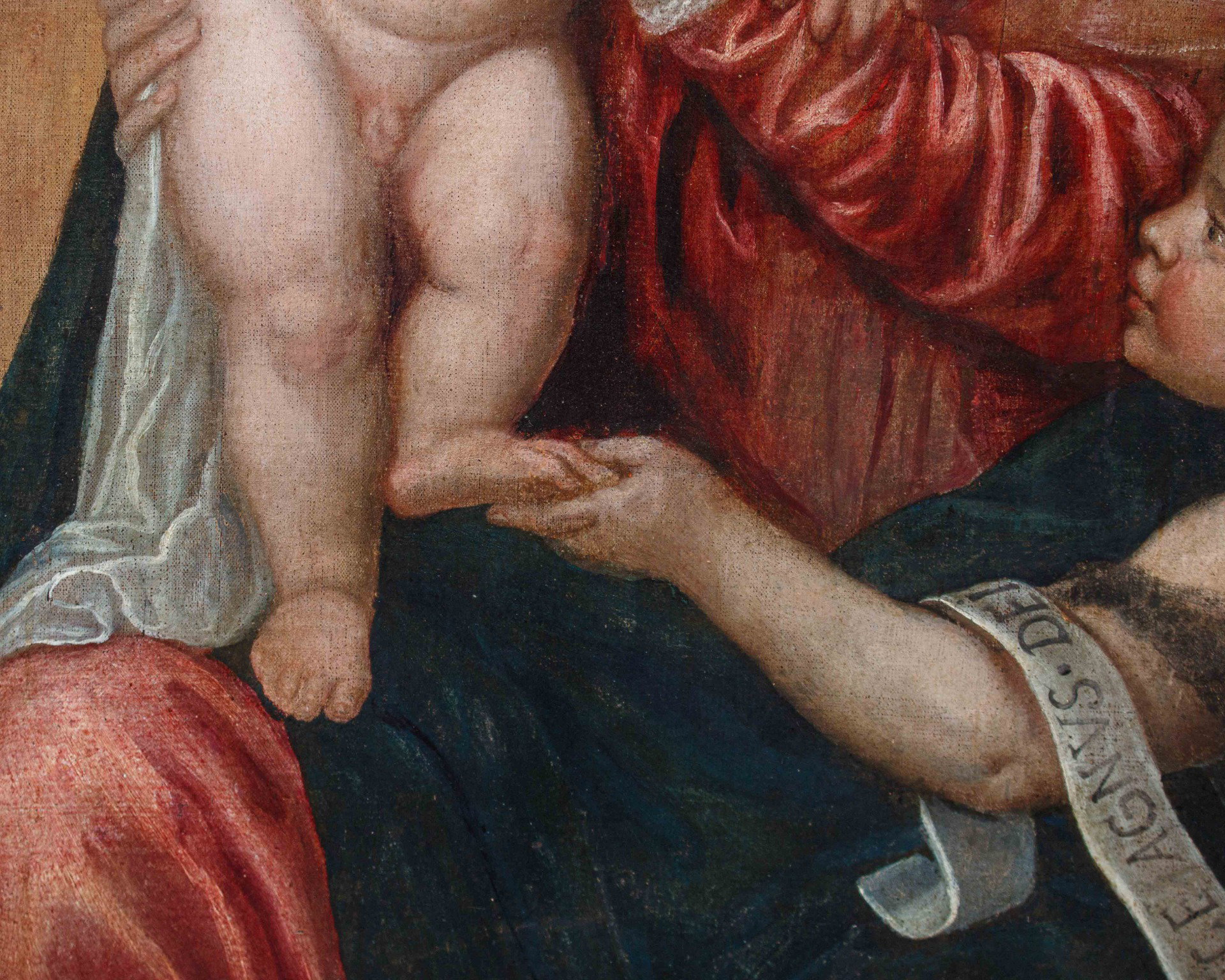
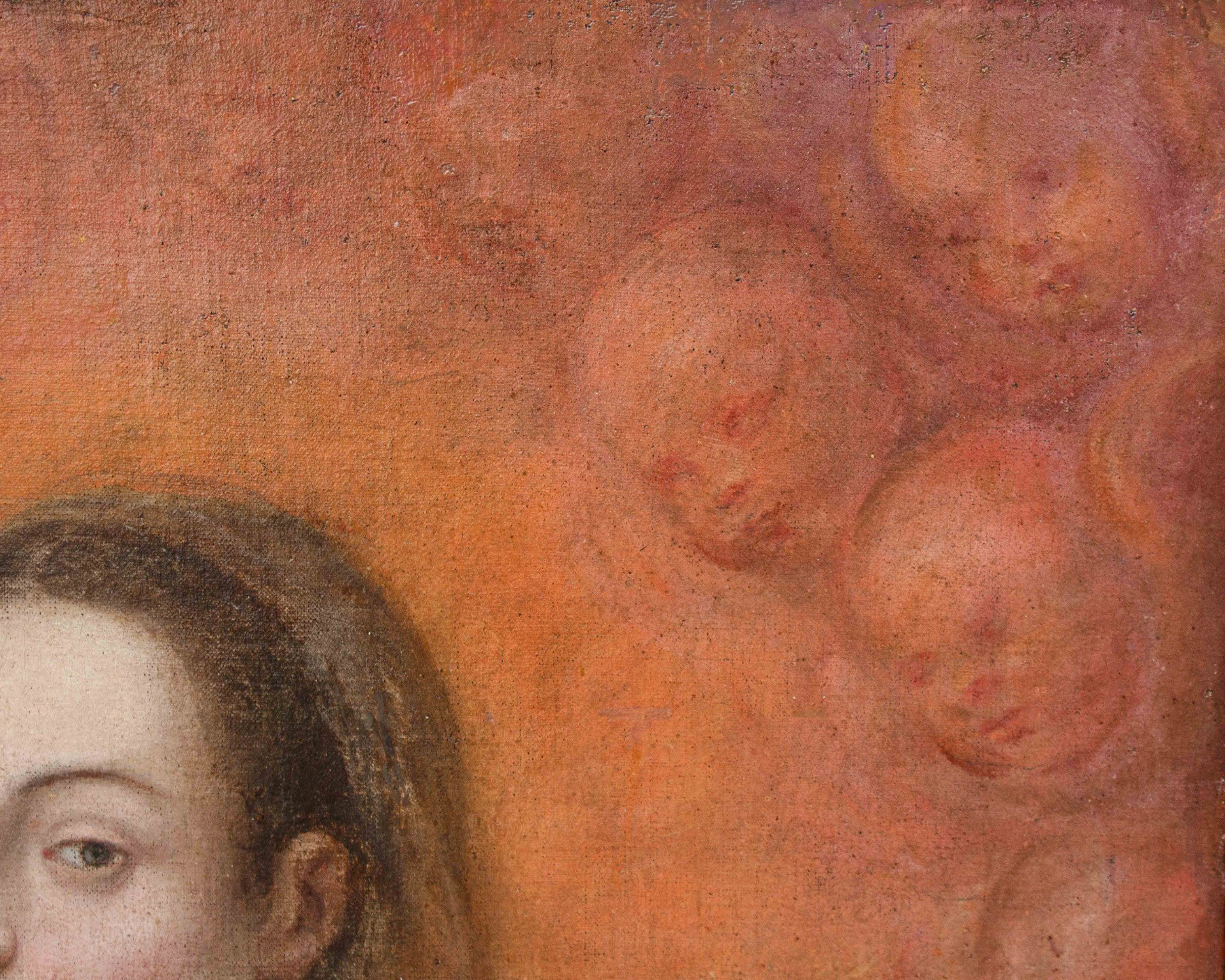
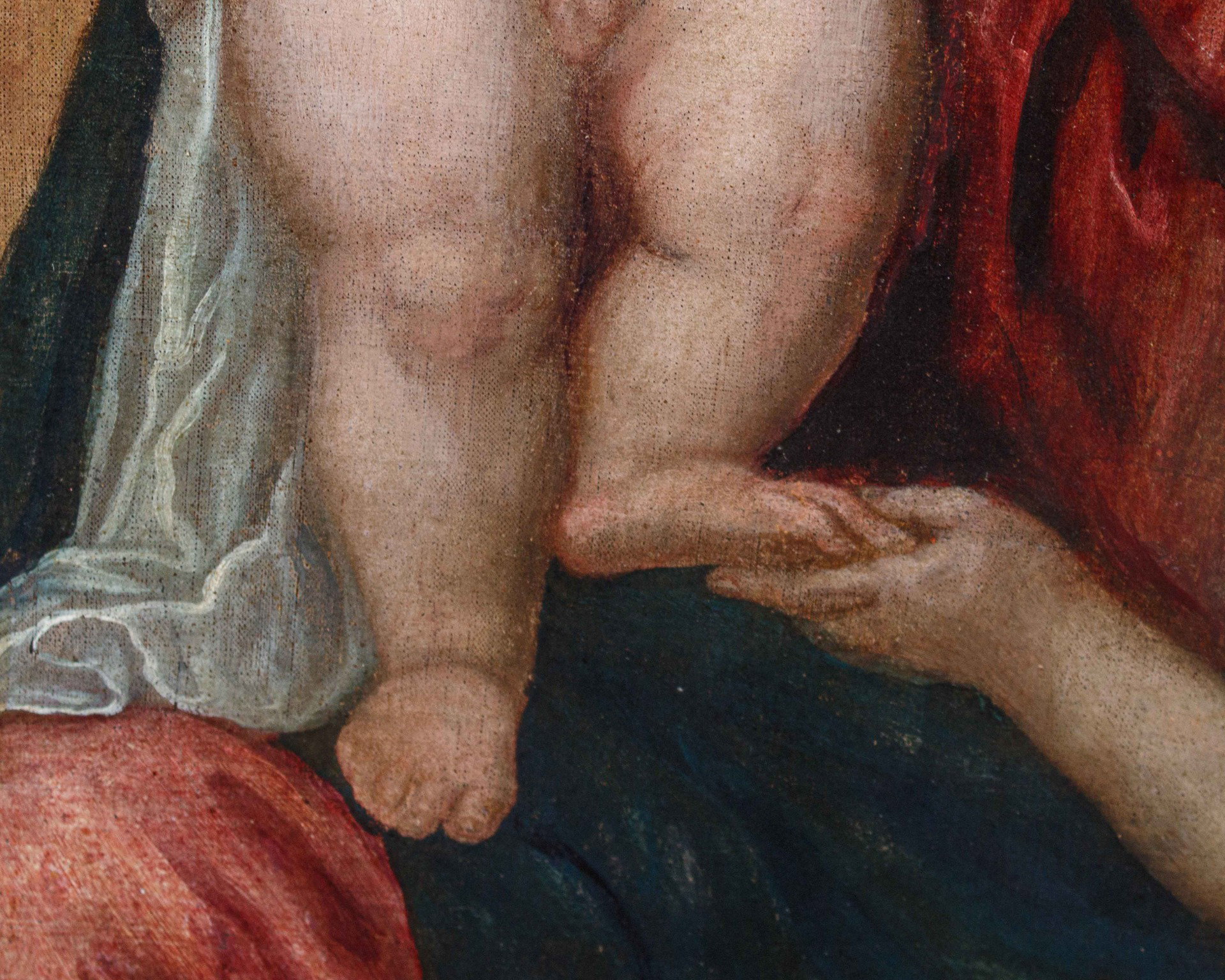
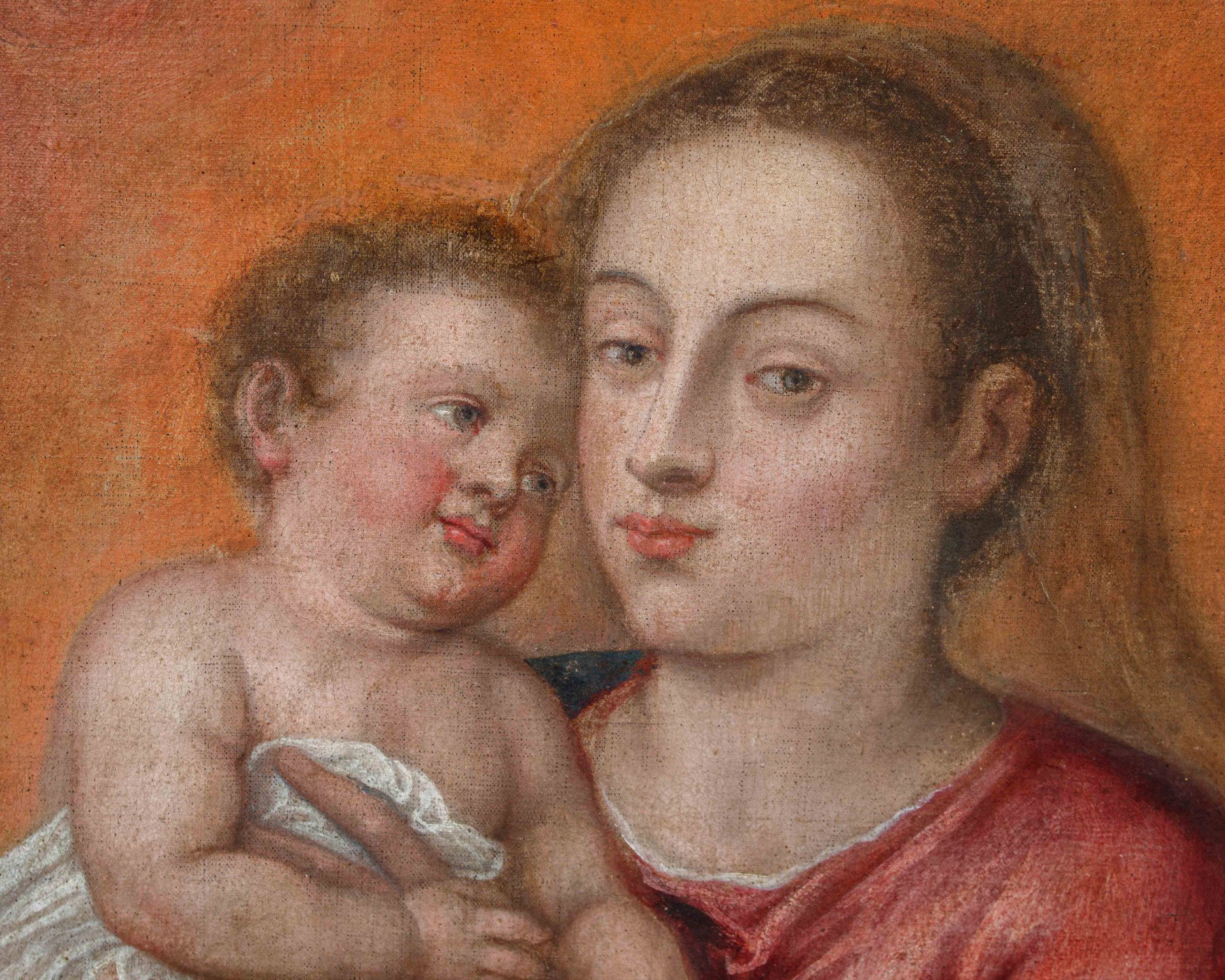
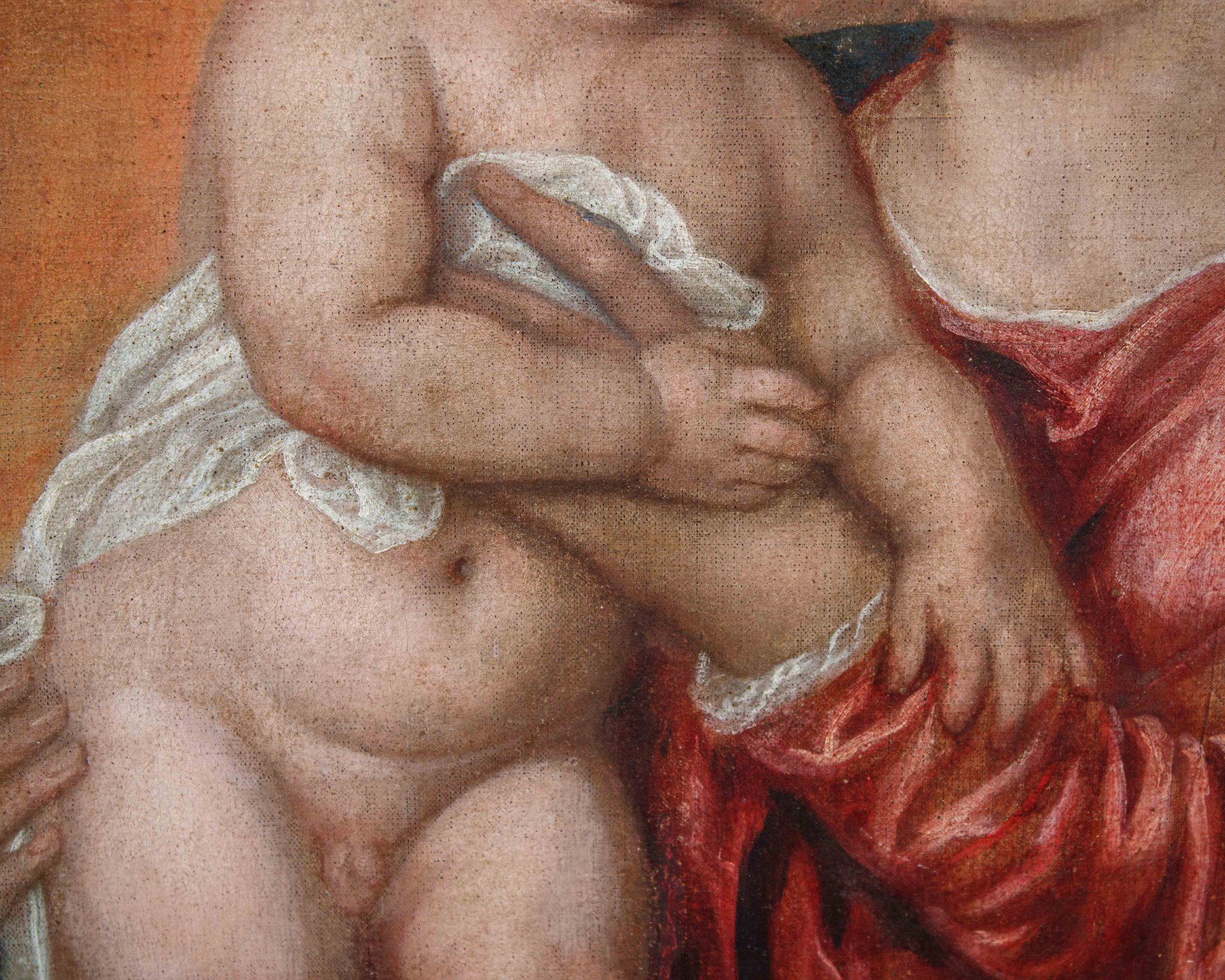
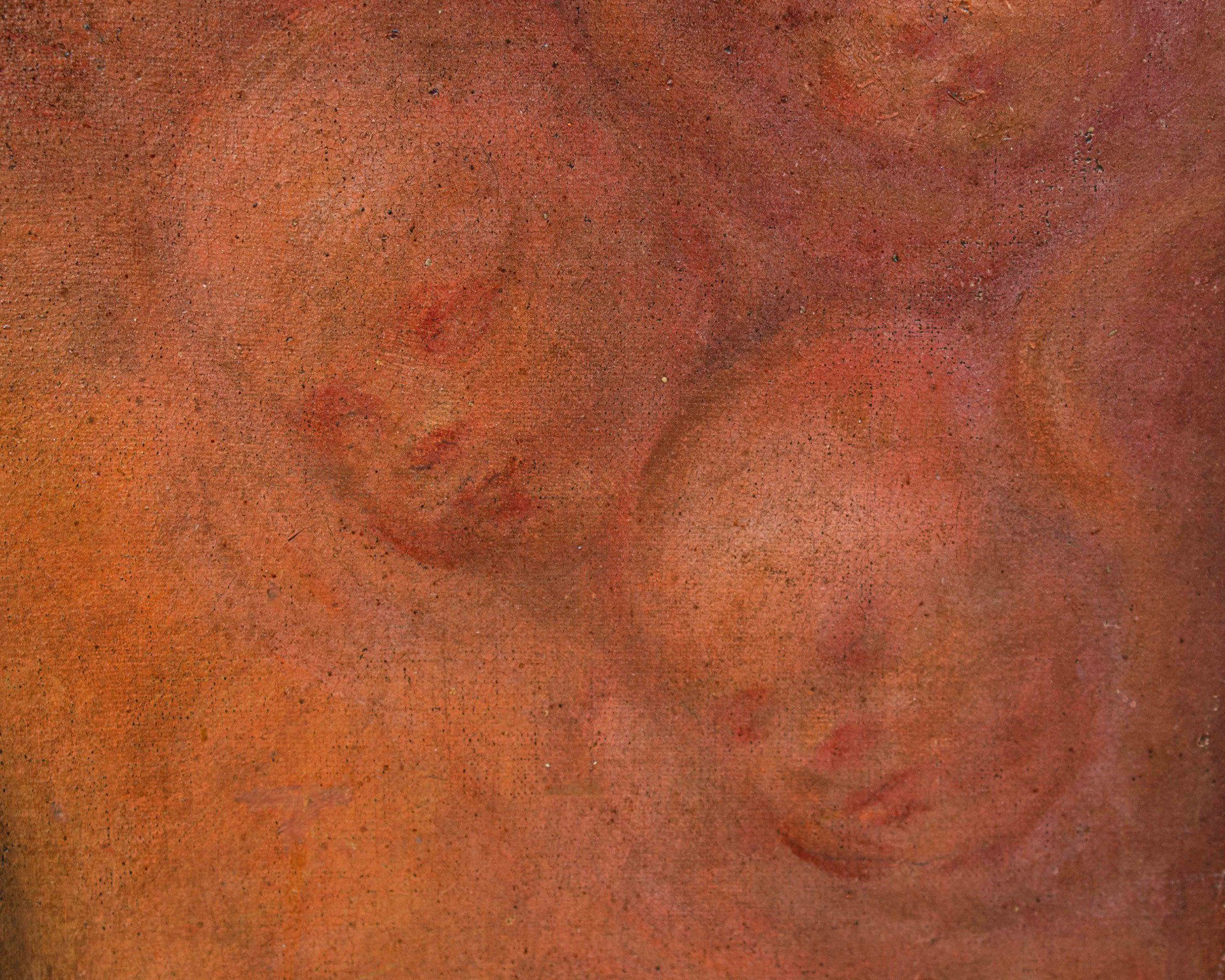
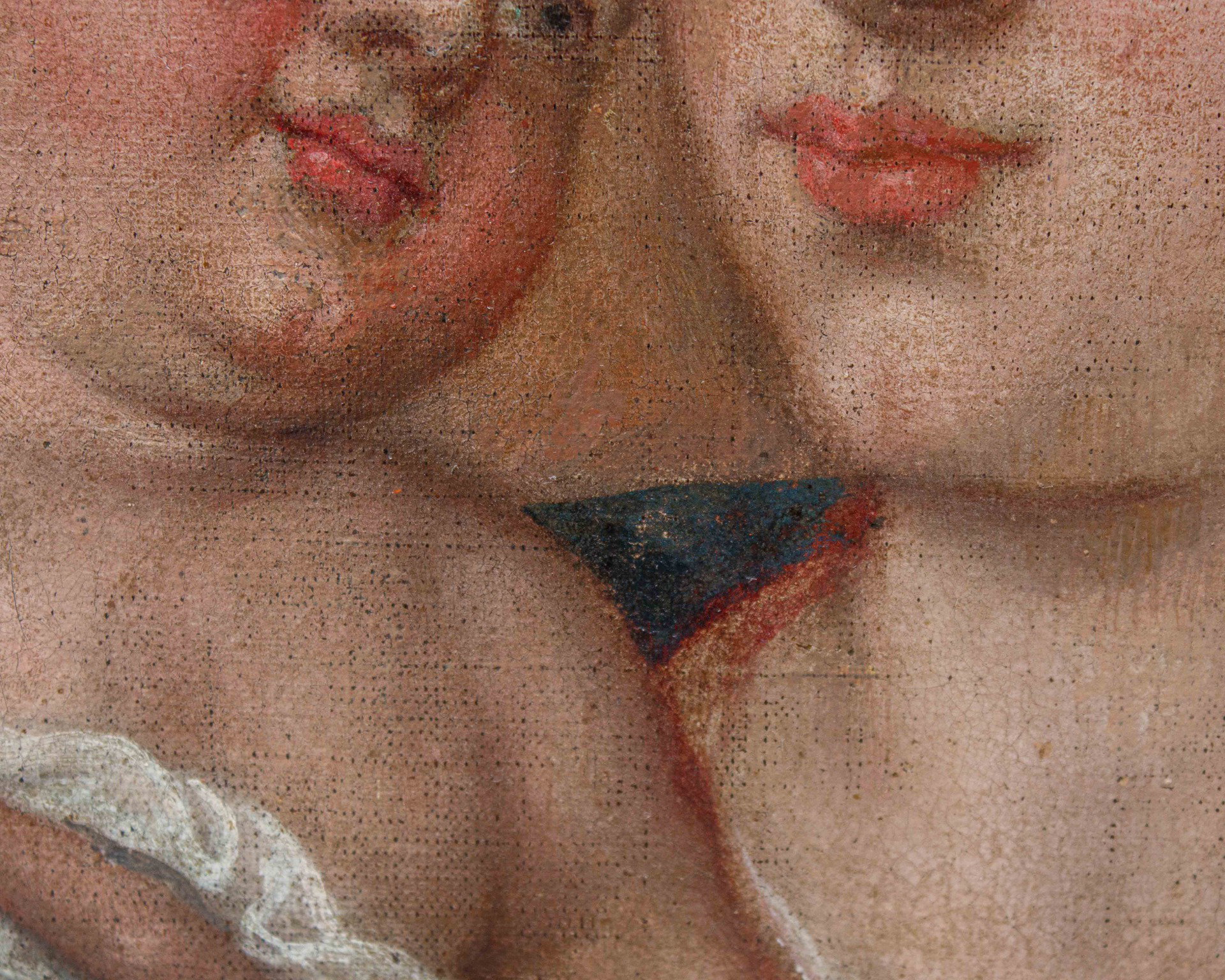
The work in question depicts the Madonna at half-length, supporting the Baby Jesus, who tenderly rests his head on hers. Saint John emerges from the side, taking the child's hand and foot. In the background, a host of cherubs emphasizes the divine character of the representation.
The composition of the examined work repeats, but specularly, that of the Madonna with Child and Saint John the Baptist present at the Uffizi, which until the second half of the nineteenth century was remembered in the collection of Cardinal Leopoldo as a work by the Venetian master Titian Vecellio (1488/1490-1576). Giovanni Battista Cavalcaselle and Joseph Archer Crowe considered the painting at the Uffizi a workshop piece. Some scholars place the Uffizi version in the sixth decade of the sixteenth century, based on a resemblance between the face of the Virgin and that of Venus and Cupid, also known as Titian's wife. Harold Wethey associates the painting at the Uffizi with the one remembered until the mid-eighteenth century at Palazzo Barberini in Rome. A painting depicting the same subject is preserved and recorded as early as the seventeenth century and attributed to Titian in a 1638 inventory in the Palazzo Giustiniani collection, but with the variant of Saint John not grasping Jesus' foot, and the position and hairstyle of the Virgin are also different. An engraving by the Dutch draftsman and engraver Cornelis Bloemaert (1603-1692), published in the Galleria Giustiniana, was also made from this work. Another example of this painting is at the Fesch Museum in Ajaccio.
The existence of many replicas of this painting, several of which were long considered autographs of the master, suggests the existence of a prototype by Titian, now lost, and for which it is difficult to set a chronological indication. The attitude of mother and son may recall that of the Madonna with Child by Andrea Mantegna at the Pinacoteca di Brera in Milan, also surrounded by a rich group of cherubs, which may suggest that the authentic work by Titian may also be an early work.
It has already been said how the painting under examination takes up the composition of the aforementioned versions, but in a specular way; this element indicates that the artist based himself on an engraving, probably not that of Bloemaert which takes up a slightly different composition in the relationship between Saint John and the Baby Jesus. The gaze of the Madonna also varies, not directed towards an indefinite point, but straight towards the viewer. The work stands out for the rendering of the fabrics, particularly highlighted so as to give the idea of the material they are made of, echoing the ways of Titian at the Metropolitan Museum in New York of 1510, or the Madonna with Child, John the Baptist and a saint at the National Gallery of Scotland in Edinburgh, of 1514.
The host of cherubs is comparable to that which Titian inserts in the Apparition of Christ to his Mother, of 1554 in Medole, church of the Assumption of the Virgin.