Follower of Sir Anthony van Dyck (Antwerp, March 22, 1599 – London, December 9, 1641)
Madonna and Child
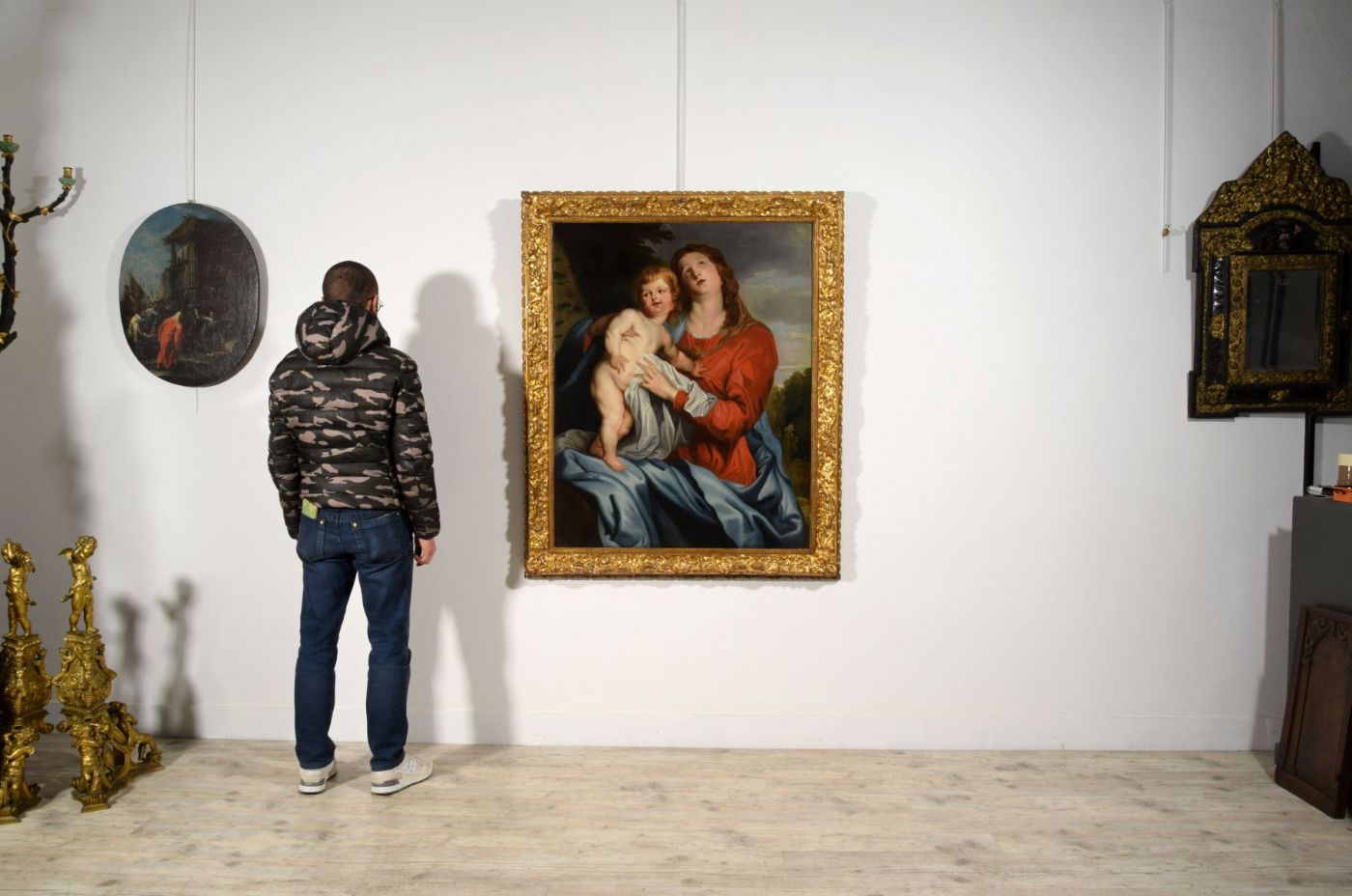
Oil on canvas, cm W 90 x H 113; frame cm W 111 x H 135 x D 7
Price: confidential negotiation
Object accompanied by a certificate of authenticity, diagnostic and expertise analyses (downloadable at the bottom of the page)
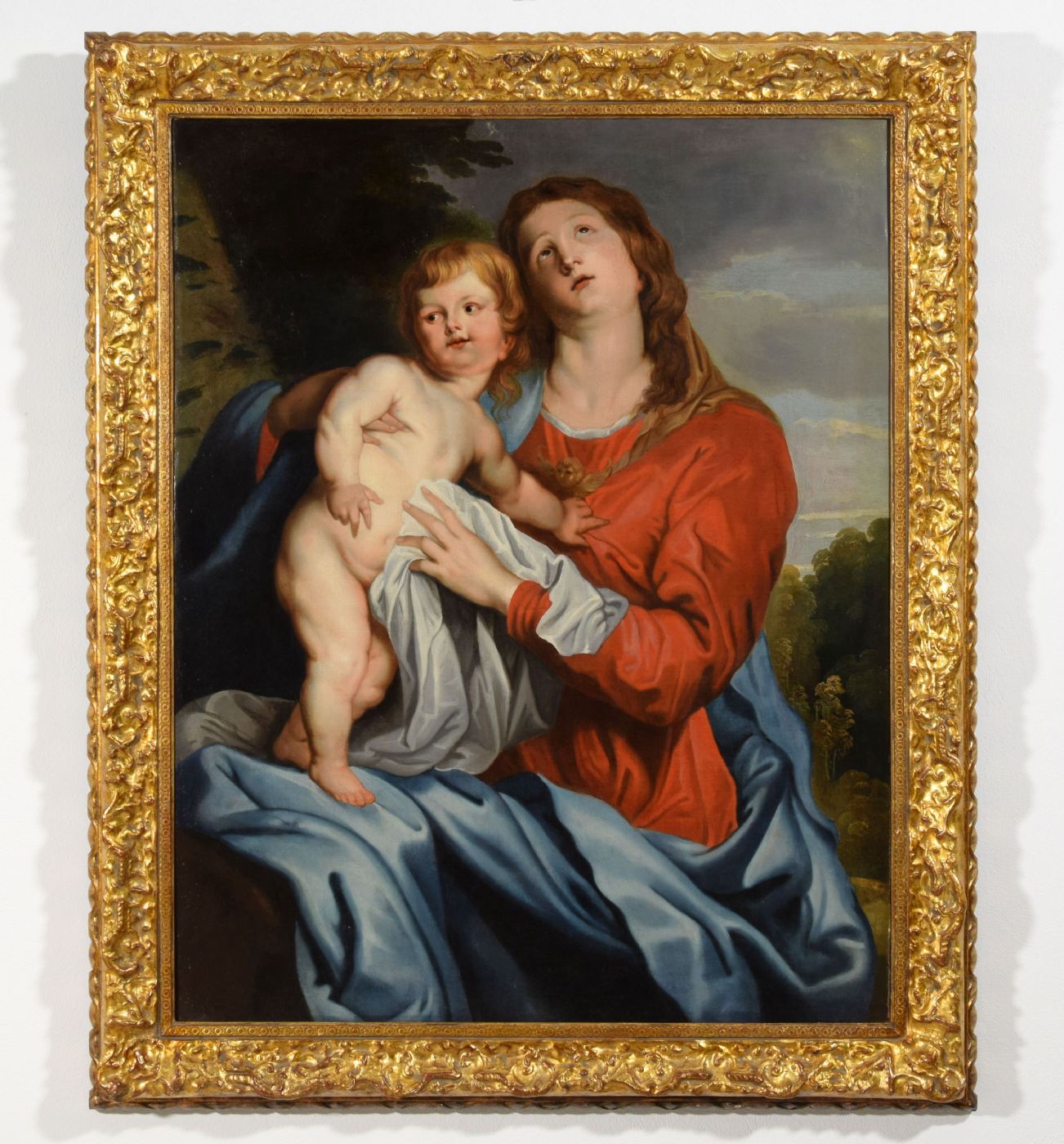
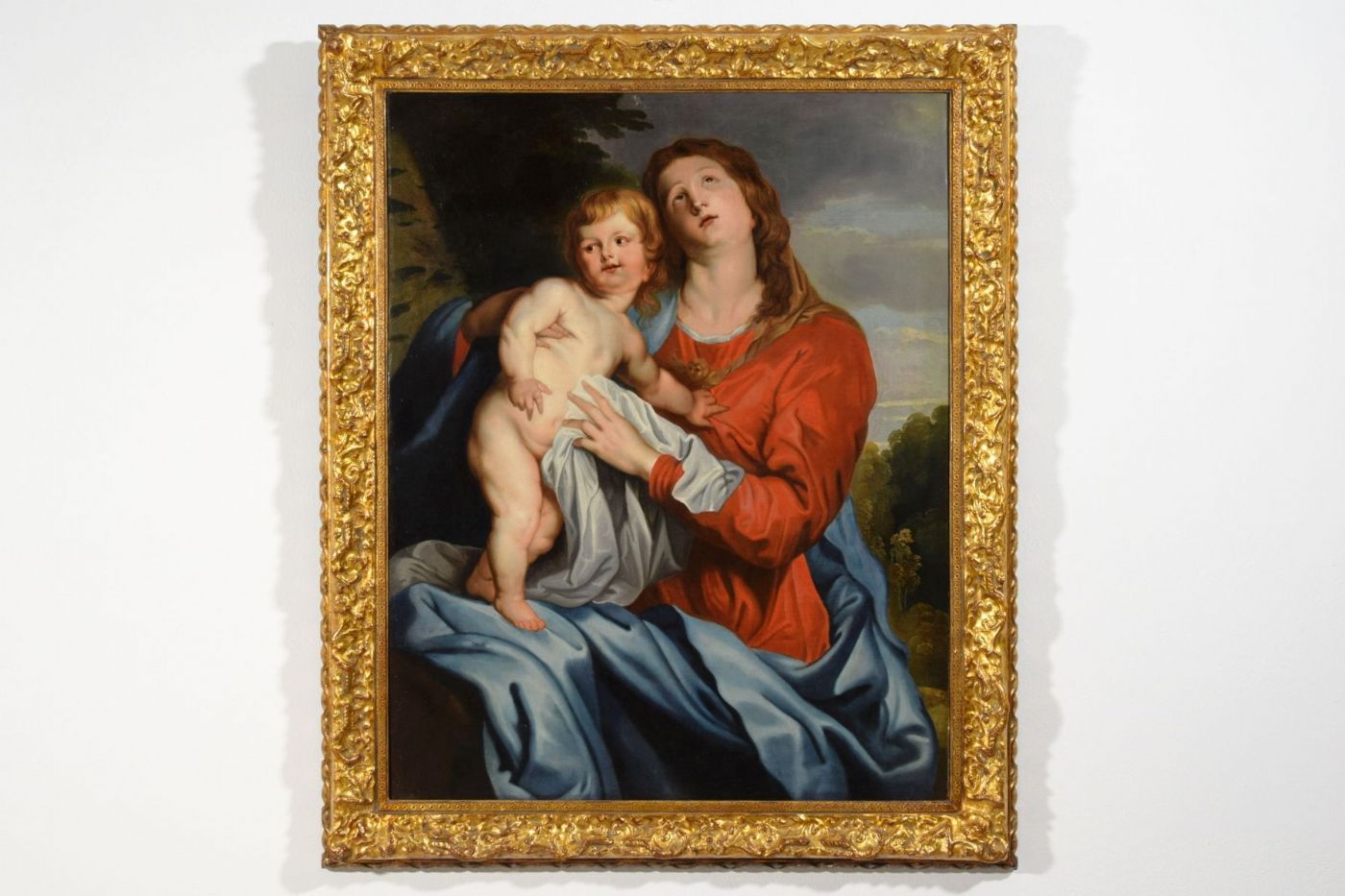
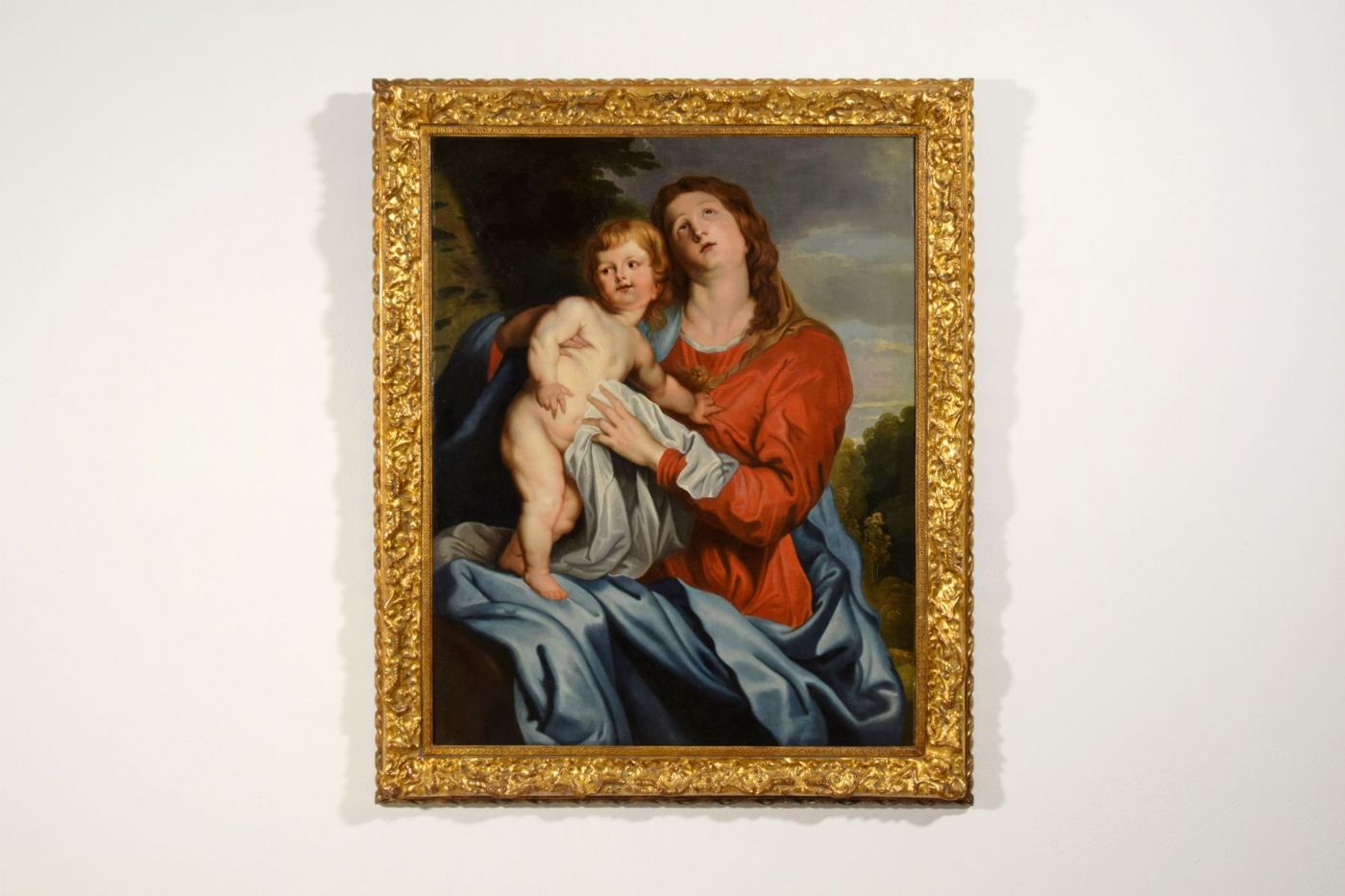
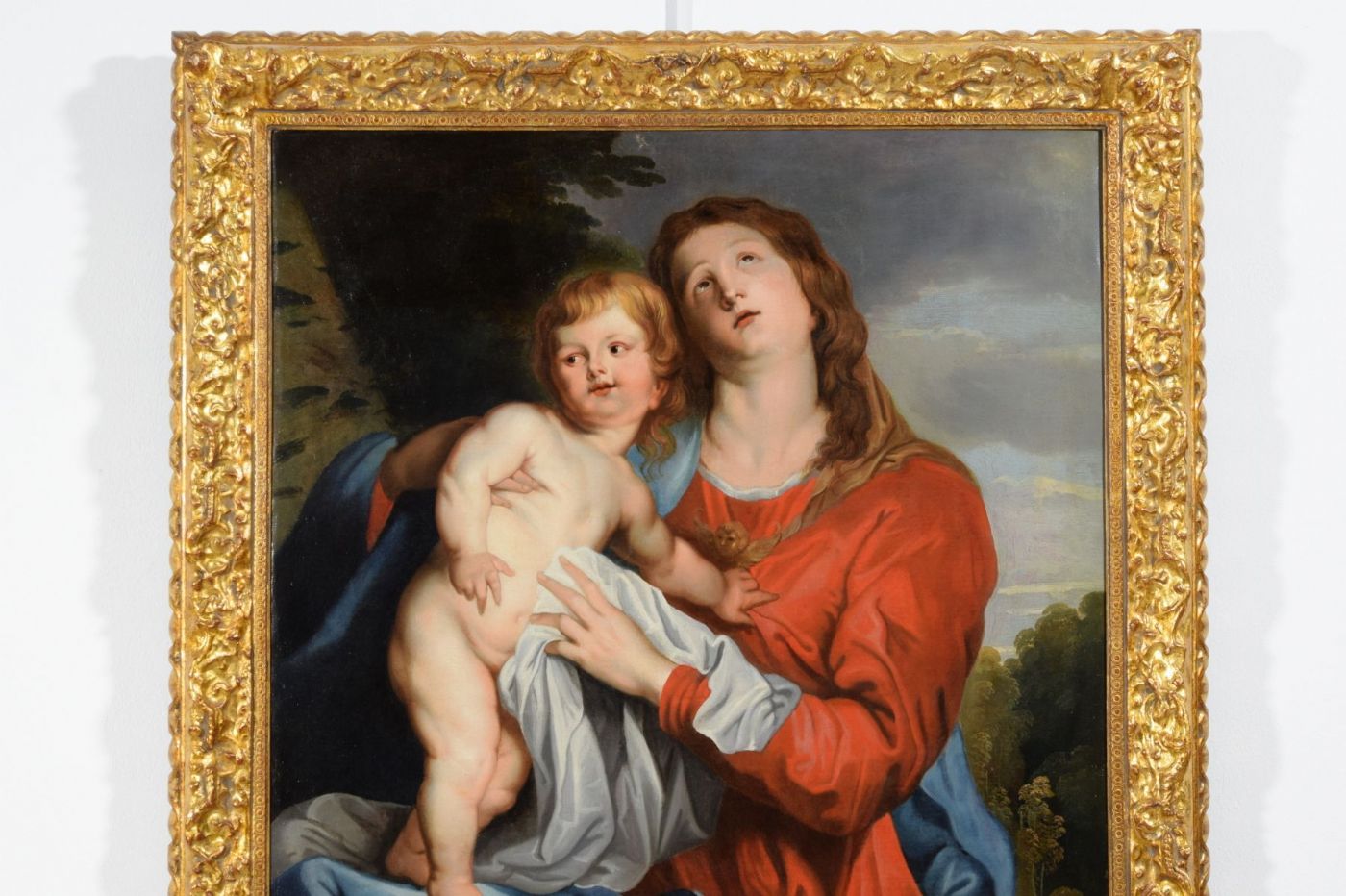
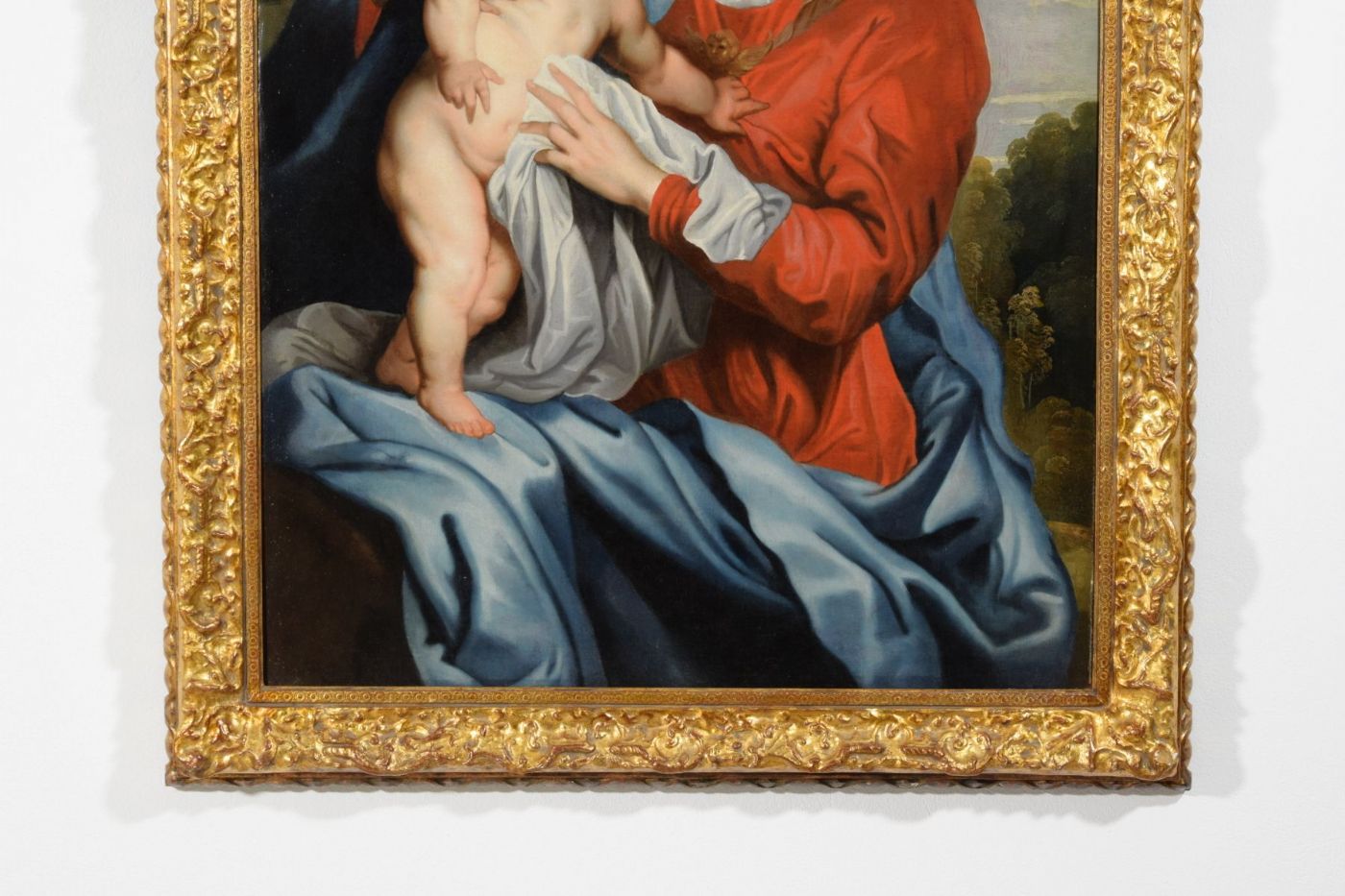
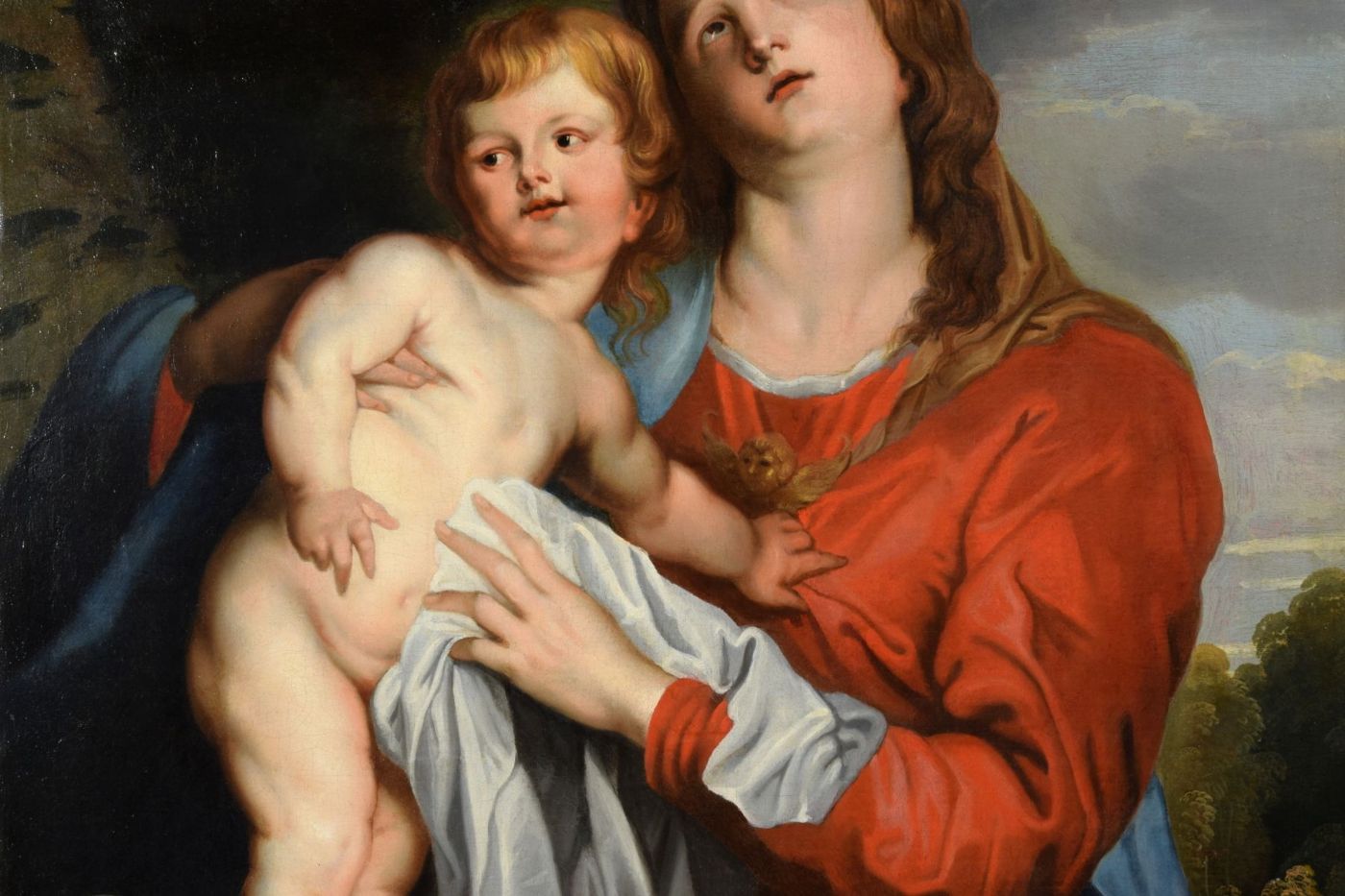
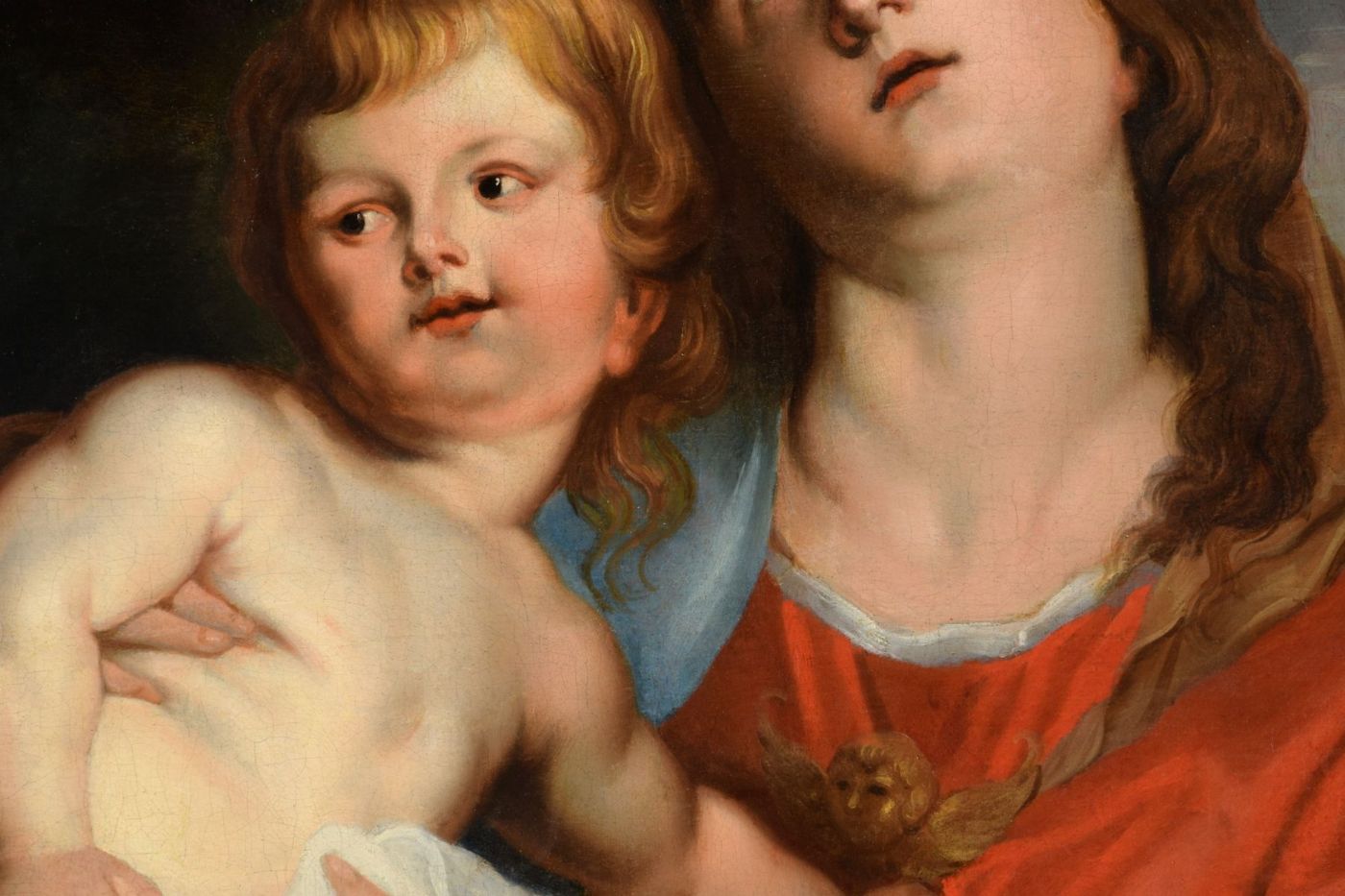
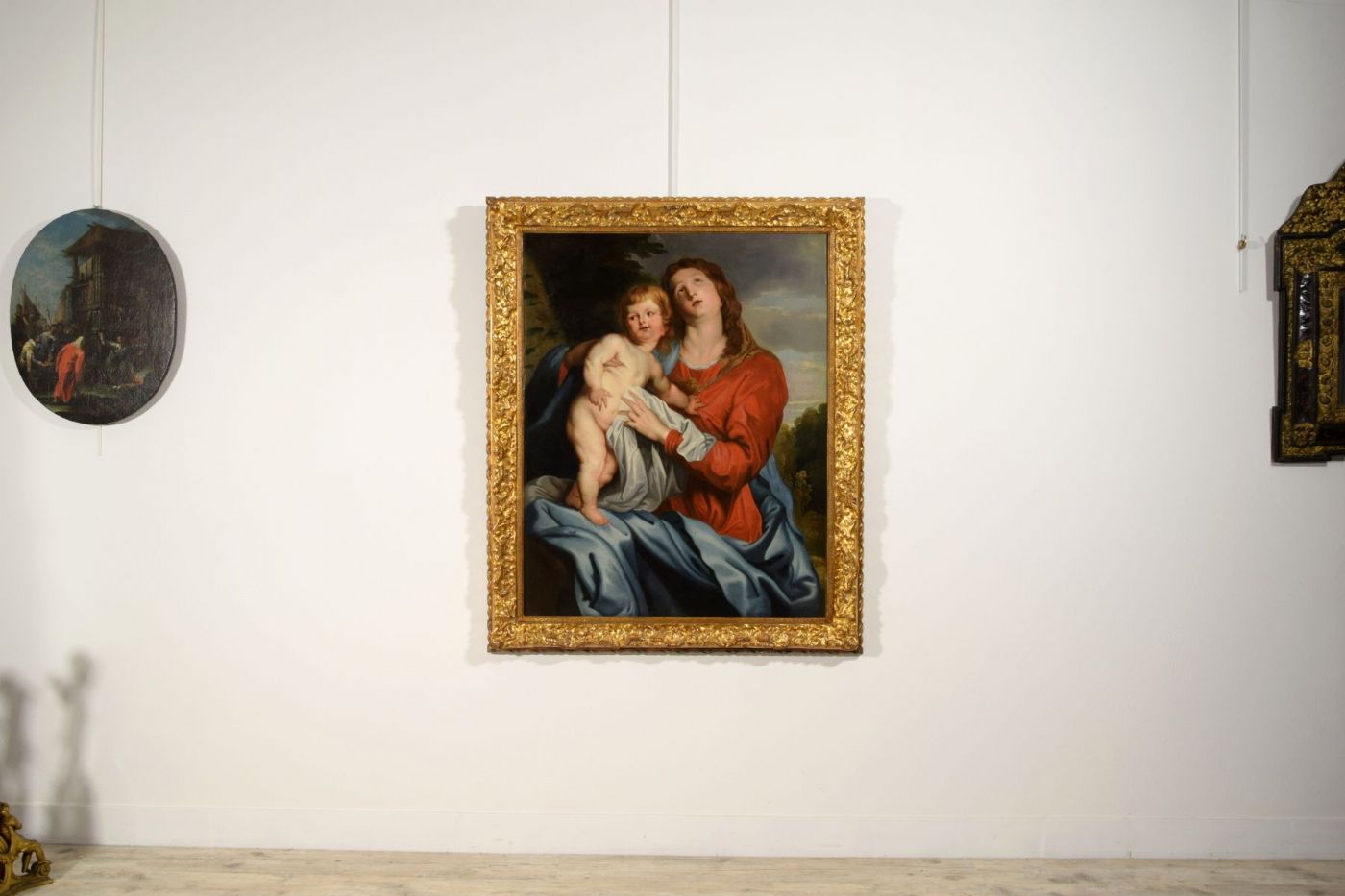
The canvas depicts the Madonna with Child in her lap and is stylistically attributable to a painter active in the second half of the 17th century. The author is inspired by the famous iconographic prototype elaborated in several versions by Sir Anthony van Dyck (Antwerp, March 22, 1599 – London, December 9, 1641) during his stay in Italy, between 1621 and 1625, recorded in his Italian notebook. The numerous versions that the great Flemish painter produced testify to the success that this composition had with noble clients who evidently asked him several times to produce a new version of the subject. The dramatic image, full of pathos, of the Virgin and the swirling drapery of the clothes and the blue cloak that envelop her fully express the artist's typically Baroque taste, influenced, after his stay in Italy, by some painters such as Titian. Among his Italian sources of inspiration, the Emilian classicism of Guido Reni should also be mentioned: in his prototypes, in fact, Van Dyck turns Mary's gaze towards the sky, in an attitude that reflects the ways of representing the Mater Dolorosa and the Lamentations divulged by Reni. Likewise, the strong presence of the figures recalls the examples of the great Italian Renaissance, such as Bellini's Madonnas, although the volumes of the bodies are exquisitely Baroque. Particular attention is given to the contrast between the intense tones of the Virgin's clothes and the dark background from which an imposing column is barely visible. In these works, Van Dyck contrasts the ecstatic and celestial contemplation of the Virgin with the serene and casual gaze of the Child who, in a completely realistic manner, seems unaware of the destiny reserved for him, looking outside the canvas. The success of the composition is undoubtedly due to the high qualitative level, distinguishing itself for the perfect fusion of elegance, magniloquence and descriptive force.
The author of the painting object of this study is inspired by one of the many engravings that were produced from the paintings of Van Dyck. Among these, that of Paulus Pontius (1603-1658) appears to be the closest. The image of the Madonna and Child in our painting, appears in fact in counterpoint compared to those of the Flemish painter. This is because the author evidently had the opportunity to know a print of the engraving that appears specular due to the technique itself. In turn, also the engraving of Paulus Pontius had success among the engravers, as Petrus Clouet (1629-1670) re-engraved it, returning moreover to show the image, again in counterpoint, no longer specular to the work of van Dyck.
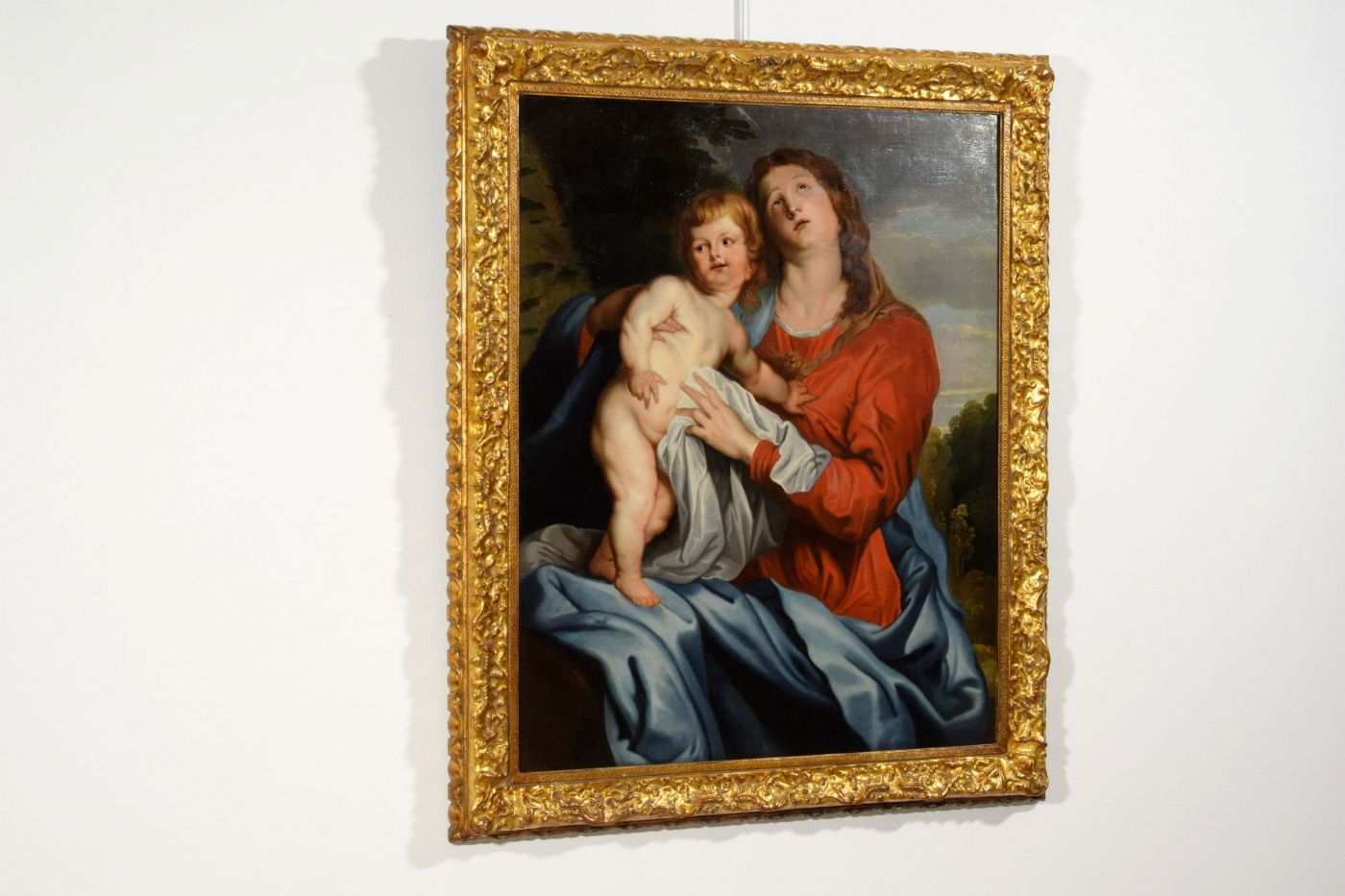
The author of our painting has conferred to the Madonna and the Child, placed standing, a character strongly linked to the classicism of Guido Reni and to the chromatic palette very lively and bright. The browns of van Dyck's backgrounds, in this work are clear, where the classic column is replaced by the trunk of a tree with verdant fronds, as well as the landscape described in the background, with green woods, a blue sky marked by some vaporous clouds, in shades of gray. The bodies of the Virgin and Child, as well as the drapery, are immersed in an intense, almost metaphysical light, which illuminates the candid skin and the folds of the fabrics. There are numerous painters who tried to reproduce this iconographic prototype, evidently sought after by noble and bourgeois collectors who commissioned copies and similar versions.
Carlotta Venegoni