Workshop of Simon Troger
(Abfaltersbach, 1683 Munich, 1768)
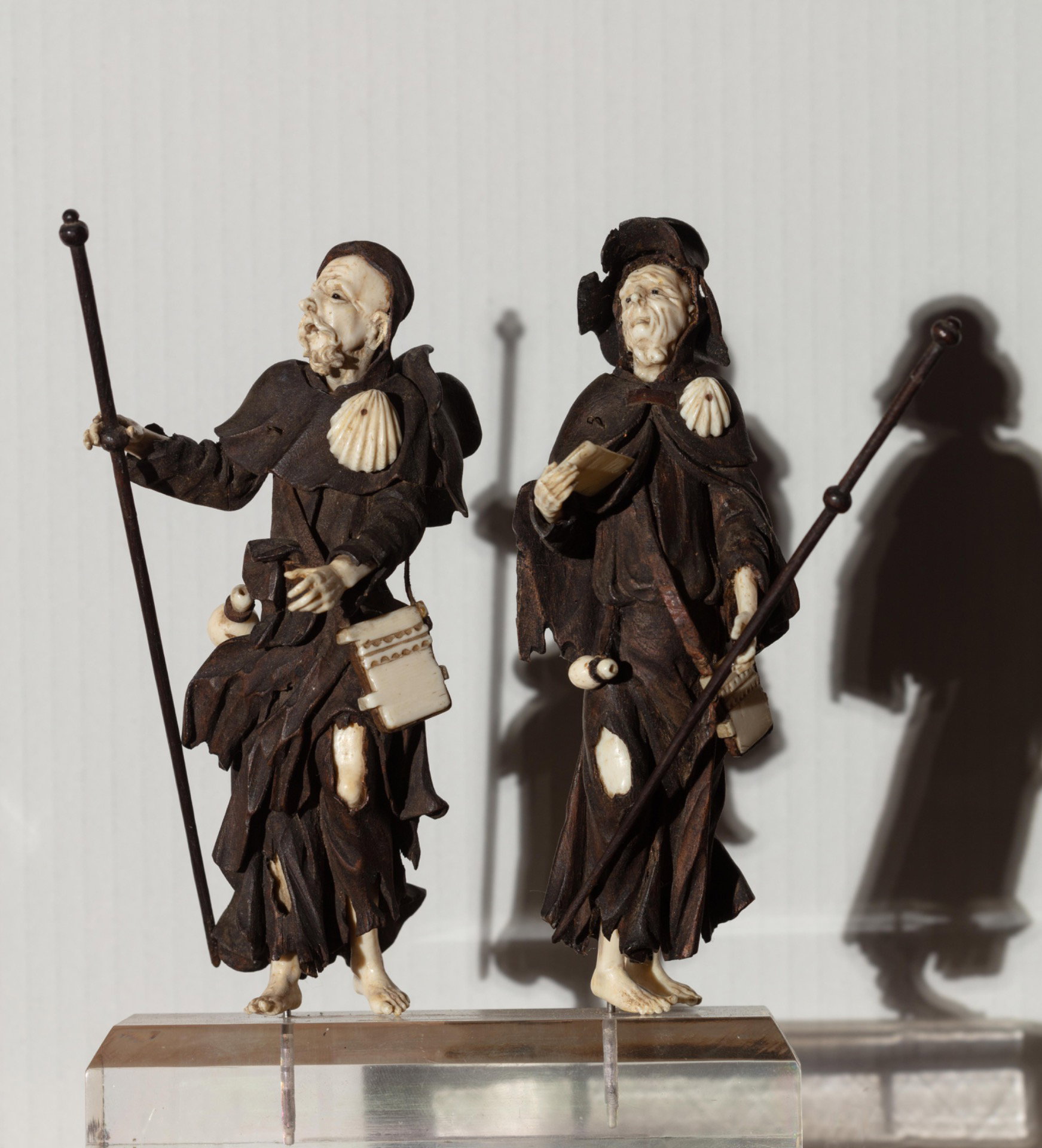
Pair of pilgrims
Sculptures in ivory wood and leather cm. 15 and 15.5
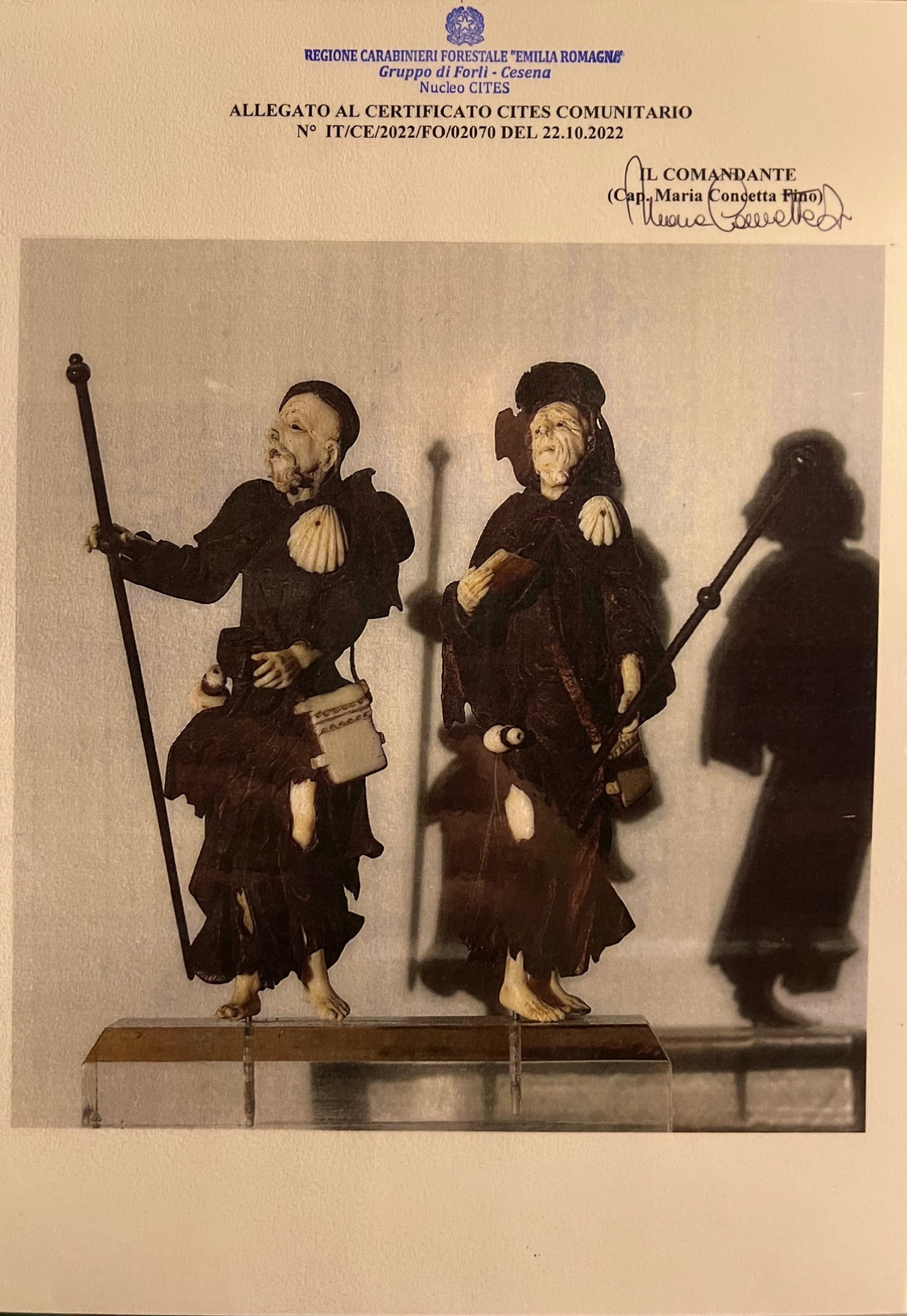
Work provided with Cites certificate n. IT/CE/2022/FO/02070
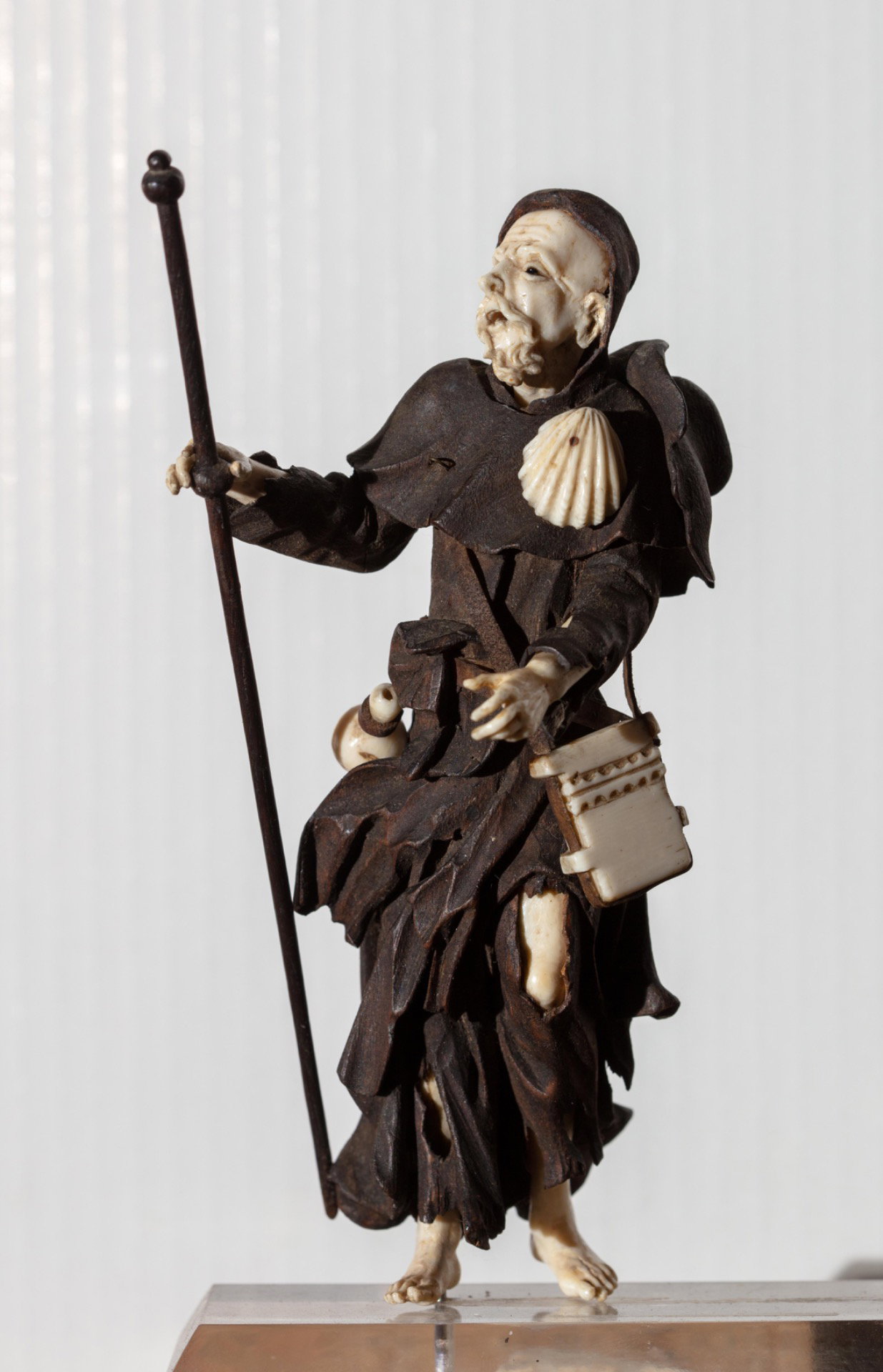
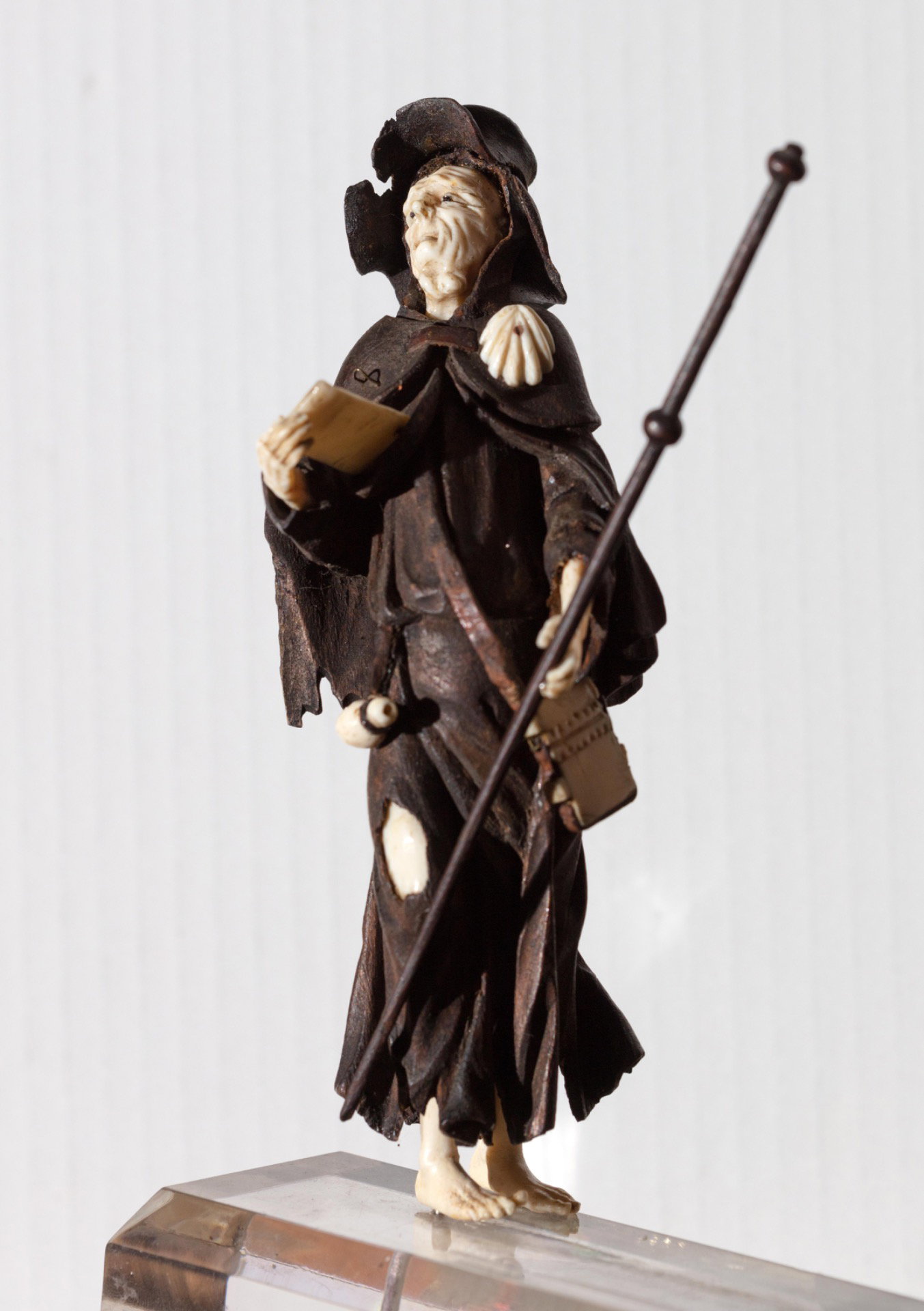
The two pilgrims are depicted in their robes or "schiavine", in rough fabric (rendered here in wood) which, although torn and worn, show precision in detail: long enough to cover themselves from the elements but above the ankle so as not to hinder their pace; defined above by a cape, called the pilgrim's cloak, a metaphor for the humanity of Christ that envelops and protects. Both characters have the "concha" (shell) fixed to their cloak, a sort of shell that symbolized the time to be dedicated to reflection on the nature of feelings, corporeal (the water you drink or give to those who are thirsty), moral, ethical and spiritual (the water that is received from the shell in baptism). A leather bag to remind us that we must all die, was one of the indispensable accessories, it was strictly carried open as a sign of trust. It is made here in ivory. A gourd-shaped water bottle hangs from the right side of the two, hanging from a leather cord (also rendered here in ivory).
The wooden stick called the staff served as support and to defend against wild animals that were encountered along the way; being it the third foot on which to lean, it represented the trinity, which always accompanies and supports.
Rounding out the attire is a large hat, here in wood, or "petaso", with a wide brim that protected from rain and wind, from heat and cold. One of the two wanderers wears it while the other keeps it lowered on his shoulders.
The pilgrim wearing the hat holds a notebook, which usually served to record the places visited. Their faces, hands and feet, as well as some parts of the body protruding from their robes, are made of ivory.
Simon Troger was the main protagonist in the art of creating figures partly in wood, taken from essences of fruit or exotic trees, and partly in ivory. Some scholars argue that this invention of the artist stems from the imitation of ancient sculptures of classical art made with the combination of white and polychrome marbles, or marble and ebony.
Even the very principle of using ivory to depict the complexion of the characters - the most noble parts - and wood for the clothes, sticks and hats, is a reference to the most precious classical art.
The rich drapery with fluttering edges, the twisting of the bodies, the strong expressiveness of the faces and the rendering of details, coincide with the "Trogerian" sculptural styles of the mid-eighteenth century; however, the prevalence of wood over ivory leads to the hypothesis that these two works came out of his workshop, but not by the direct hand of the master.
Anna Maria Cucci