Venetian School, 18th century
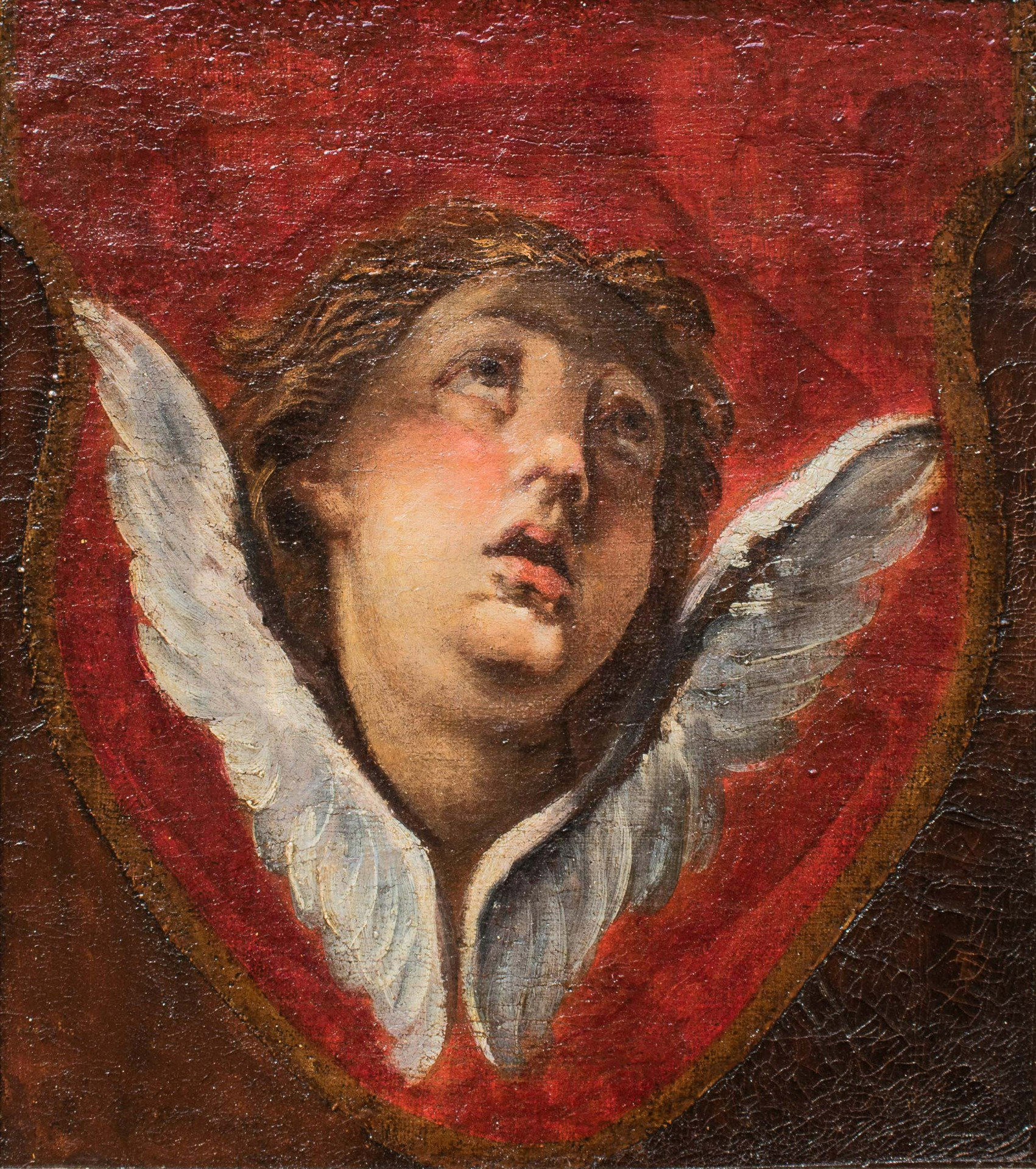
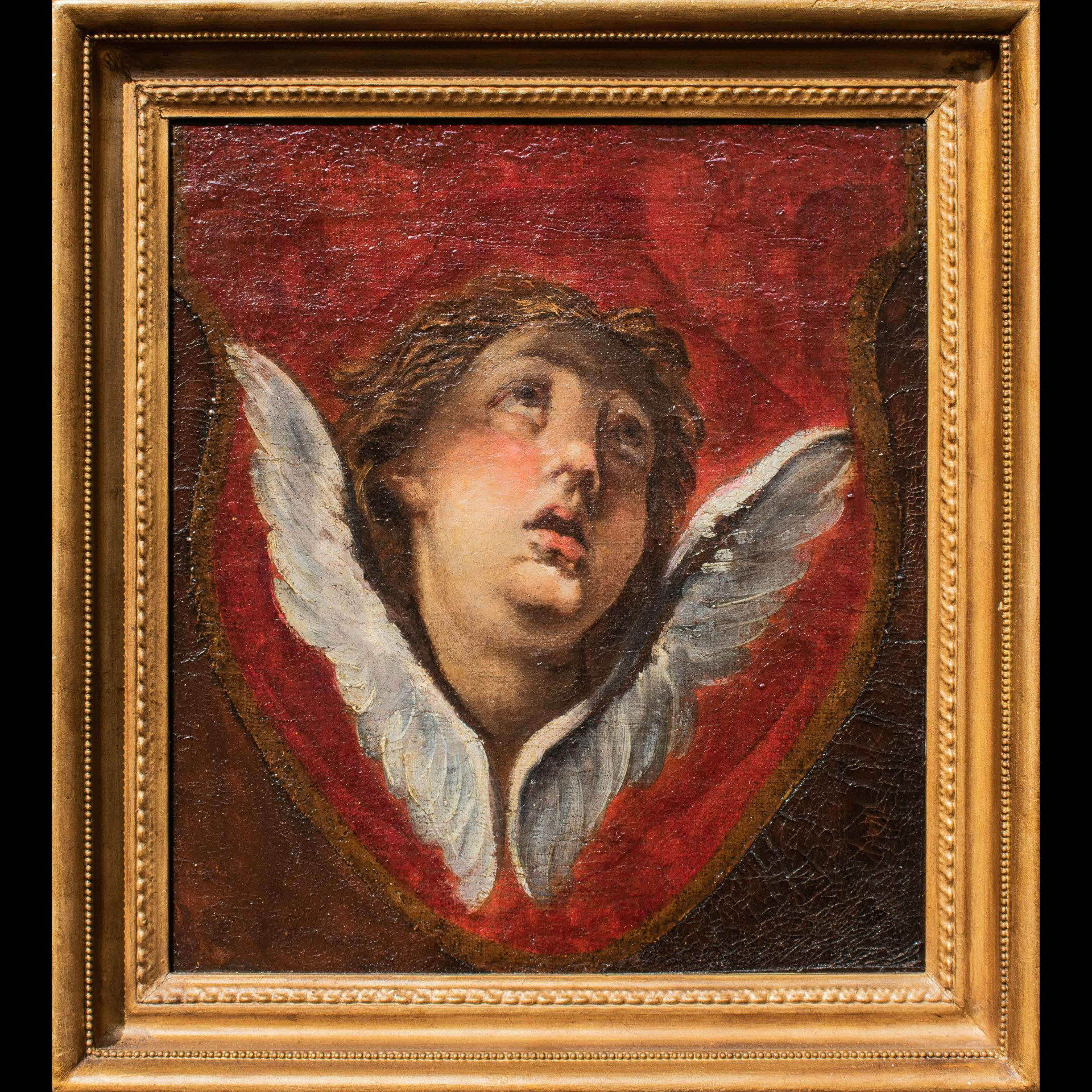
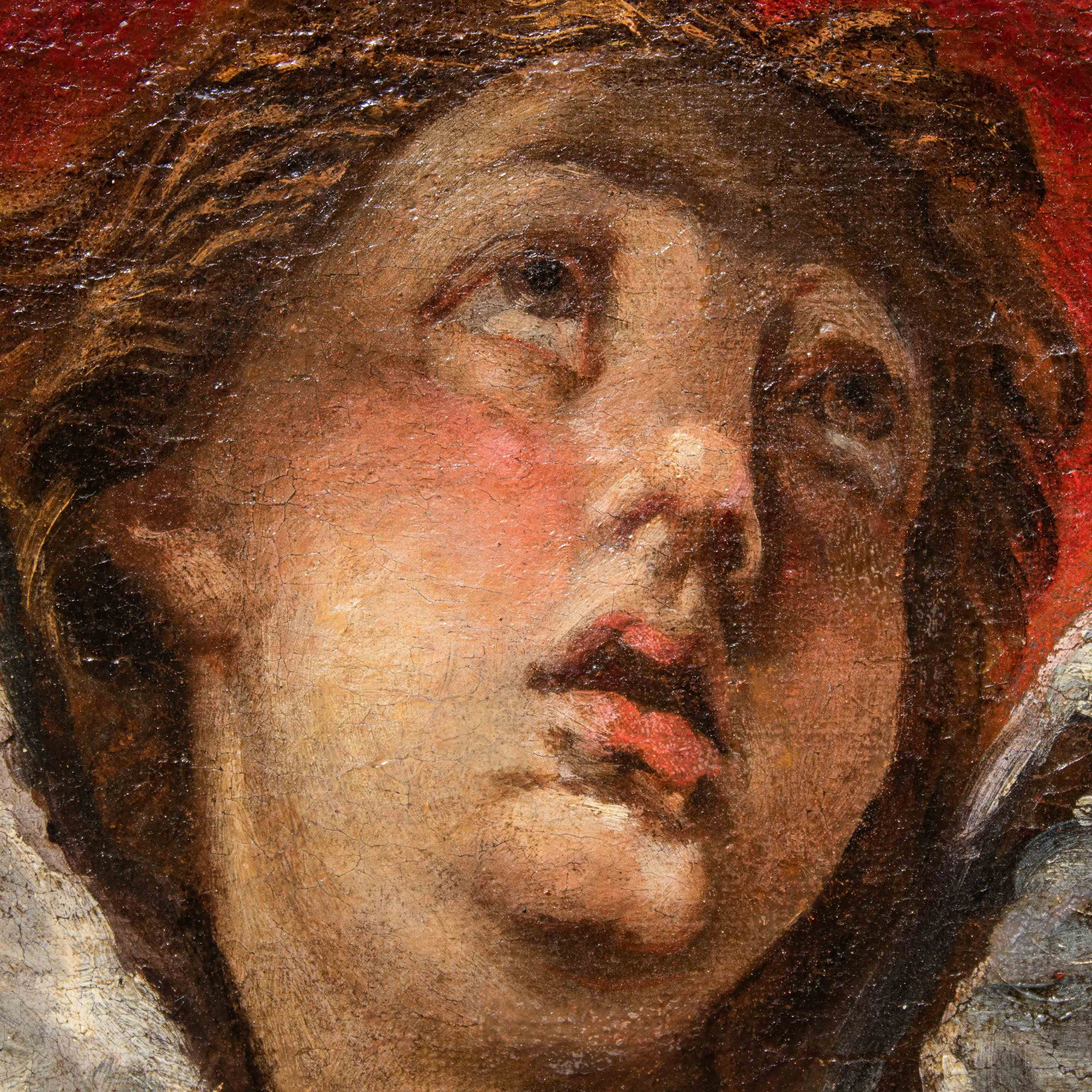
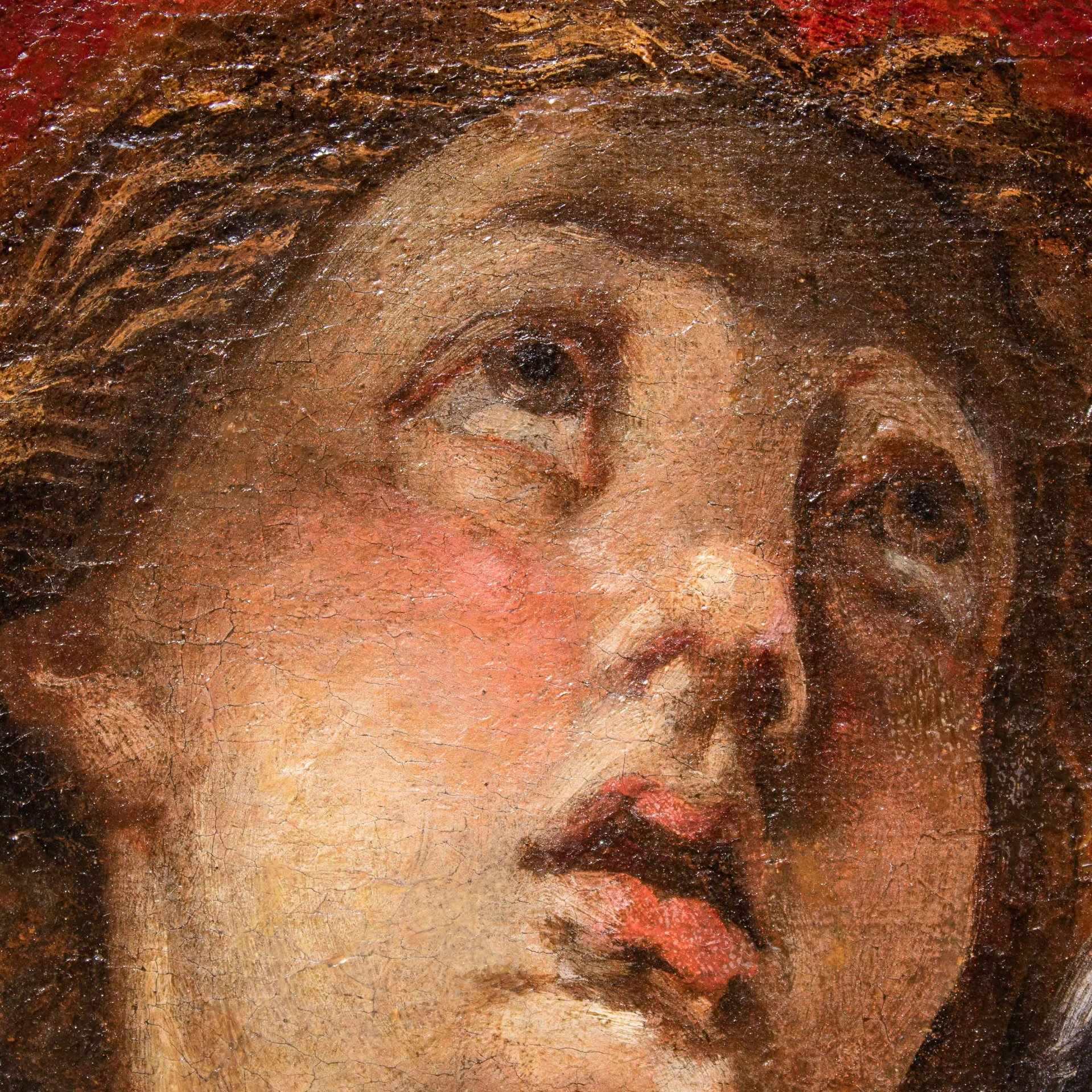
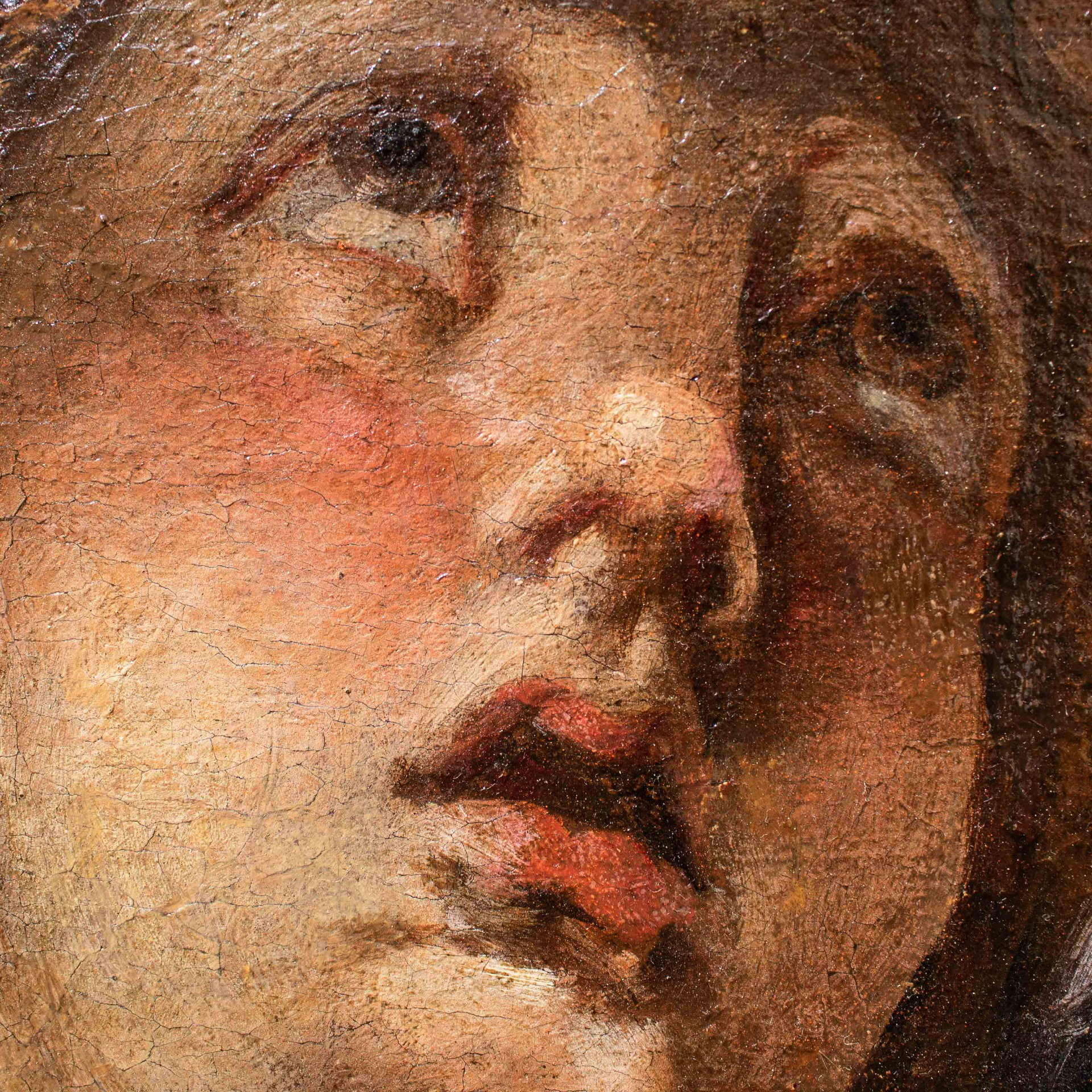
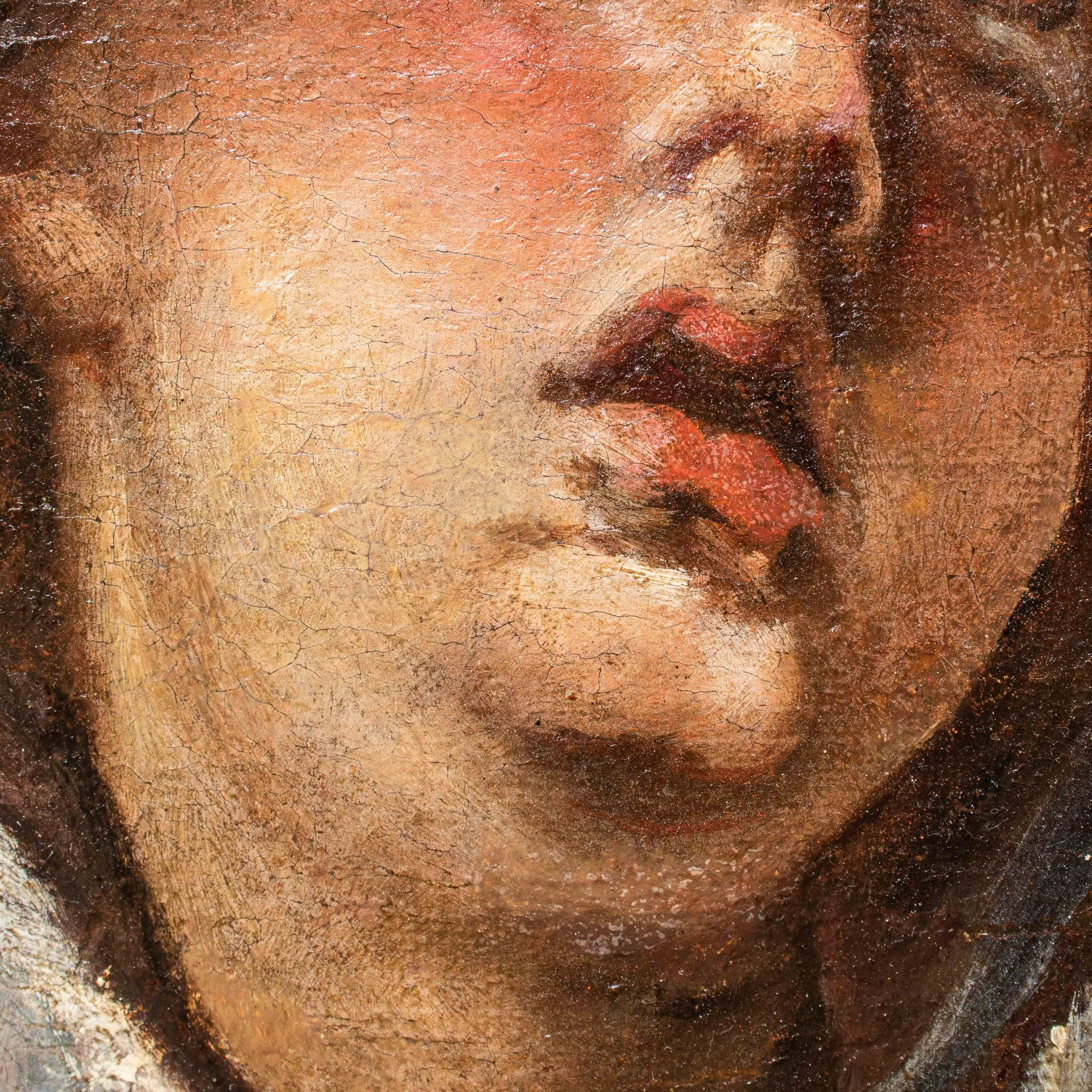
Study with head of a cherub
Oil on canvas, 45.5 x 41 cm
With frame 54.5 x 49.5 cm
This qualifies as a study or preparatory sketch by virtue of its structural and figural layout; based on formal and substantive evidence, it is attributable to the mature style of the Neo-Venetian school, which at the turn of the eighteenth century had begun to produce figures of extreme typological pathos and formal expressionism. The contemporary pictorial experience of Tiepolo dominated the Venetian artistic scene, once the lesson of Pier Francesco Mola (1612-1666) had been superseded.
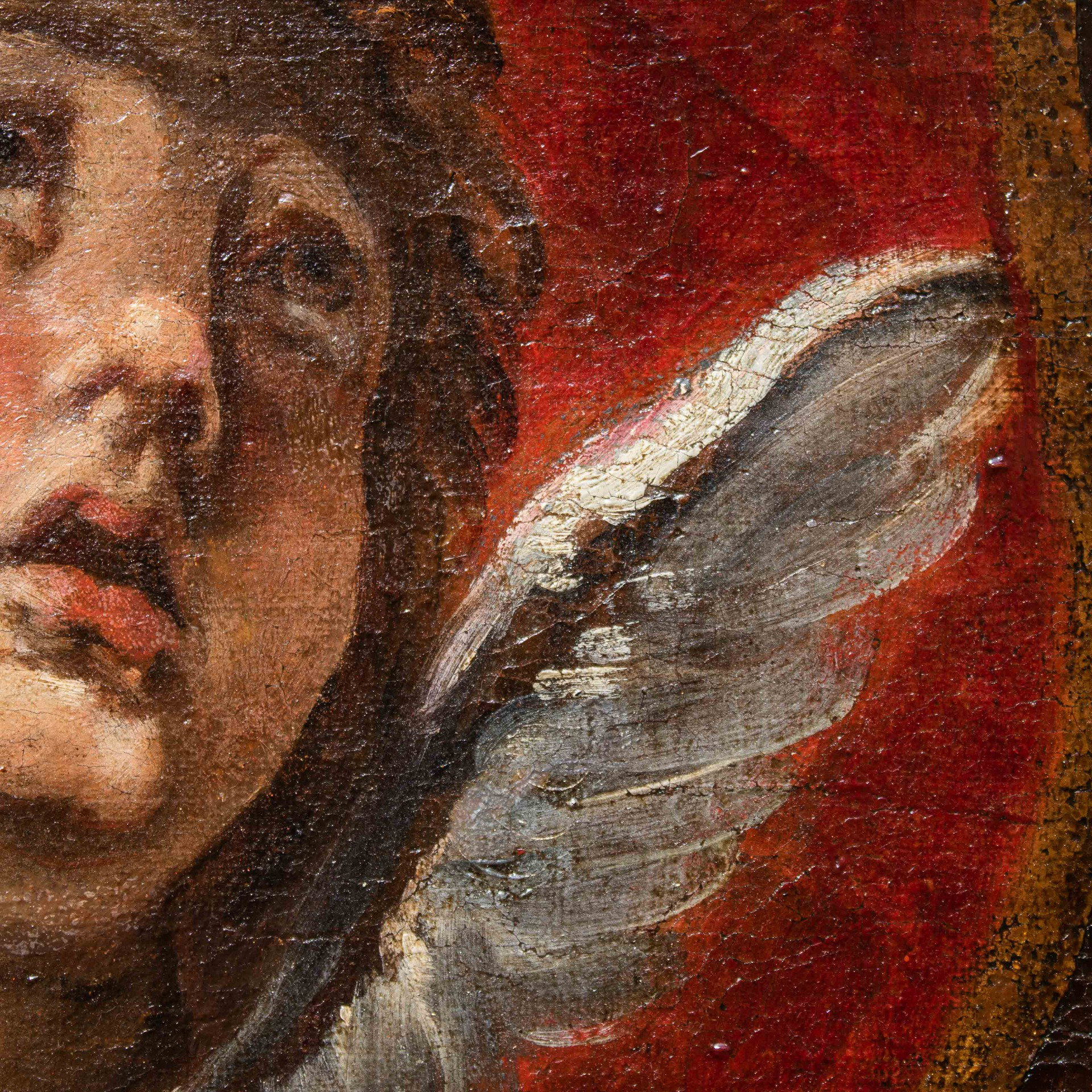
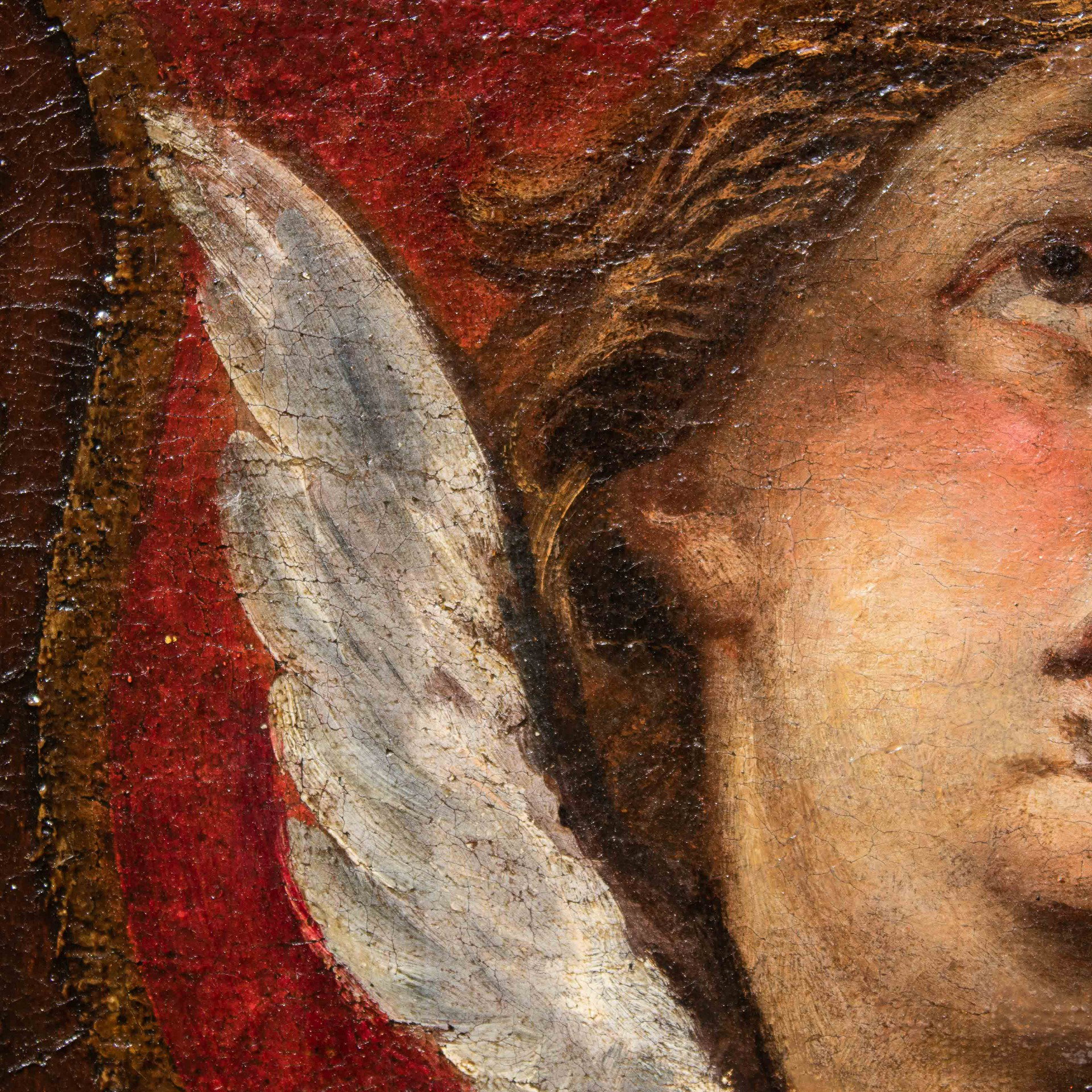
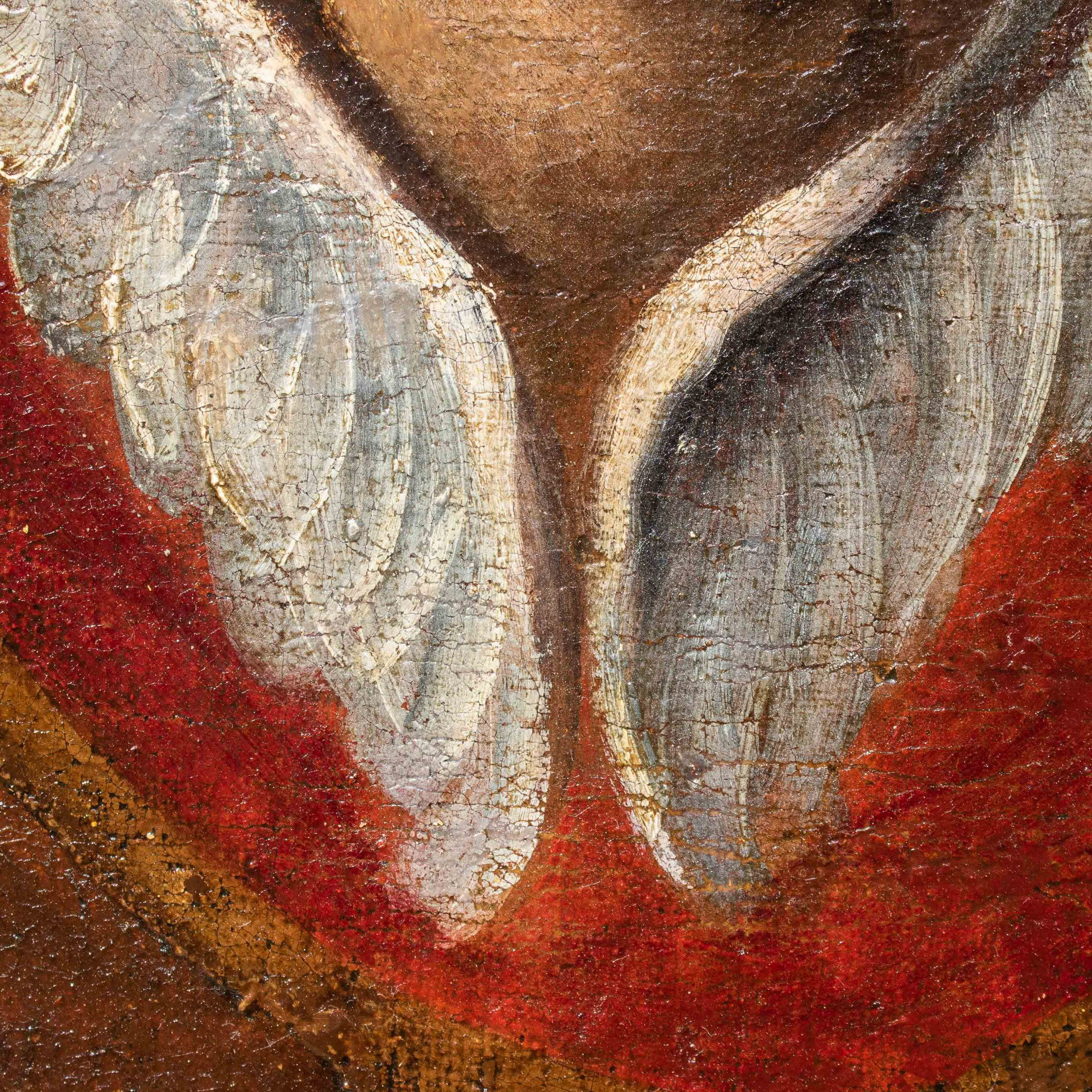
The delicate putto head offered here, in which a cherub is recognizable due to the felicitous iconographic solution of the small wings placed below the angel's face, is characterized by a vigorous vitalism. A foreshortened point of view illuminates the face in a grazing manner, scrutinizing its features with strong shadows and a youthful blush that oranges the cheeks. The veristic perfection with which the artist arranges the countenance is of marvelous expressiveness. The eyes are full of intensity and, together with the general setting of the head, reveal a conscious reflection on physiognomy, peculiar within the emerging context of Venetian painting.
The painting under examination reflects the large-scale, simultaneously monumental and perspective productions then in vogue in the territory of the Serenissima. Conceived through a view from below, the portrait extracts from the Venetian Rococo that particular predilection for open and clear, airy manners, denounced in the first instance by Tiepolo. The conscious detachment from pure Cortonese decorativism and the reiterated layout solutions then in vogue allow us to compare the present work to the production of Francesco Fontebasso, who with Gaspare Diziani had initiated a happy renewal of Venetian painting, through a definitive reflection on the modes now established, even brilliantly, by Ricci, Pellegrini, and Tiepolo. Fontebasso, born in 1707, died a year after Canaletto (1769); with a faith oscillating continuously between Ricci, of whom he was the first pupil, and Tiepolo, Fontebasso was one of the so-called "traveling artists," who, through continuous peregrinations between towns and courts of northern Italy and Europe, allowed the widespread diffusion of Venetian stylistic features, ensuring a rediscovered preeminence. While remaining faithful to the lesson of his master, Fontebasso received a vital impulse from the figural elegance promoted by the Accademia di San Luca in Rome when he arrived in the capital in 1728; then turning to Bologna, the artist gathered the warm classicizing and sometimes quadratura congerie, especially Emilian, and returned to his native Venice. Here he obtained an important commission from Sebastiano Uccelli for the fresco decoration of Ca' Zenobio, near Treviso; then followed the impetuous figures for the Manin in the first chapel of the villa of Passariano (1732) and for the Jesuits of the Church of the Gesuiti, with the scenes of Elijah Taken Up to Heaven and The Angels Appear to Abraham, clearly reminiscent of Tiepolo. In a crescendo of commissions, the artist dedicated himself from 1759, in the city of Trento, to the realization of nineteen canvases relating to the Old and New Testaments for the Great Hall of the refectory of the Buon Consiglio; the artistic apotheosis reached him later, thanks to the pressing request for his works from the major Venetian families: Duodo, Bernardi, Boldù, Barbarigo, Contarini. In 1761, the artist reached Tsarist St. Petersburg to decorate the plafond of the church of the Winter Palace.
Consider, with regard to the present cherub, the splendid physiognomies achieved by Fontebasso in the painting Couple of Peasants and a Child, preserved at the Galleria Fondantico in Bologna, in which the child appears truly Tiepolesque in the setting and almost equal to the present one, in the face; the same children's faces appear in the paintings Apparition of the Madonna to Saint Jerome (private collection) and Europa Rides on the Back of the Bull (Florentine private collection); finally, in the angels descending from the sky of the Saint Francis of Paola in the Bode Museum (formerly Kaiser Friedrich, Berlin)
The object is in good condition.