Description:
ERCOLE DREI
(Faenza, 1886 - Rome, 1973)
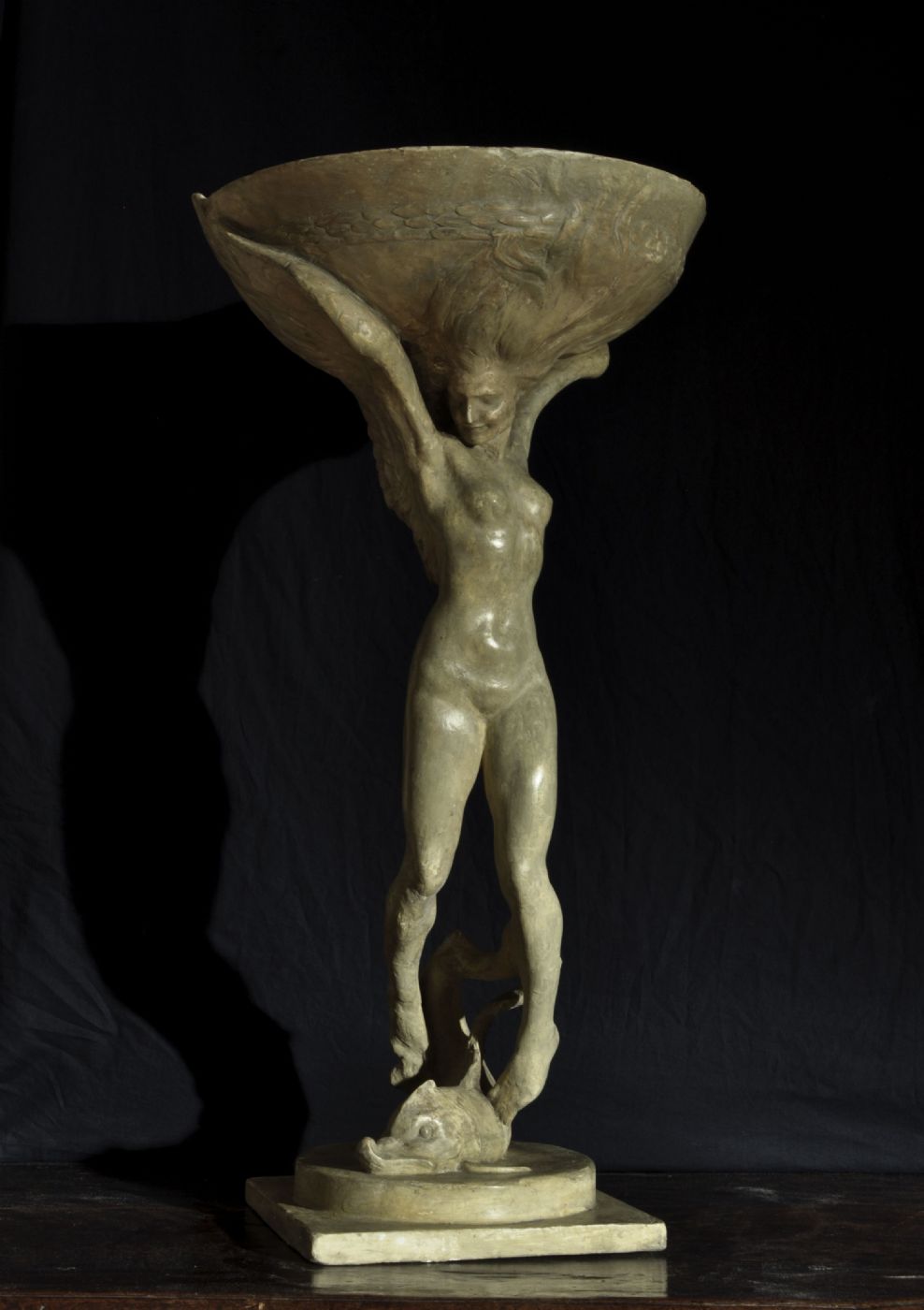
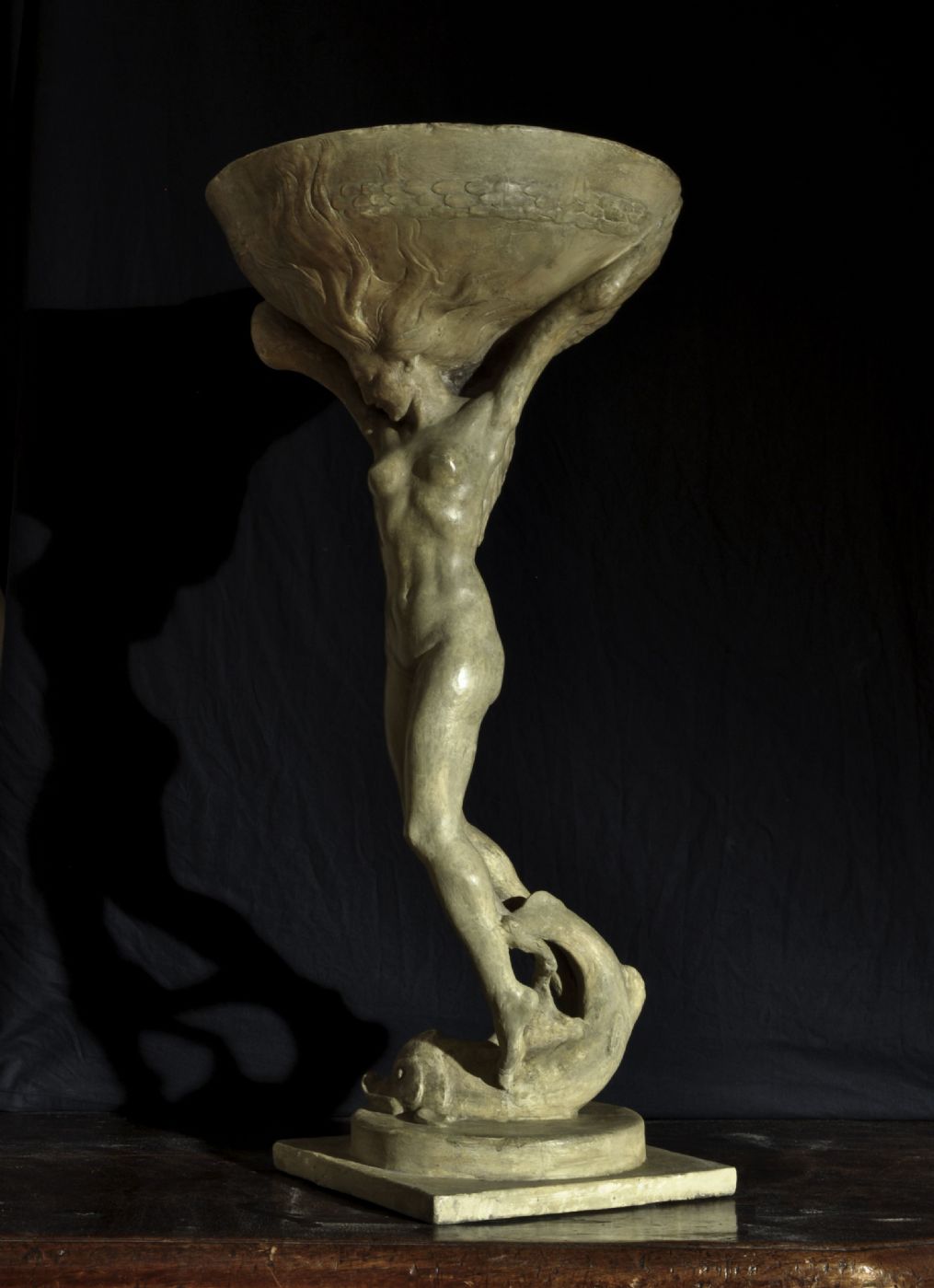
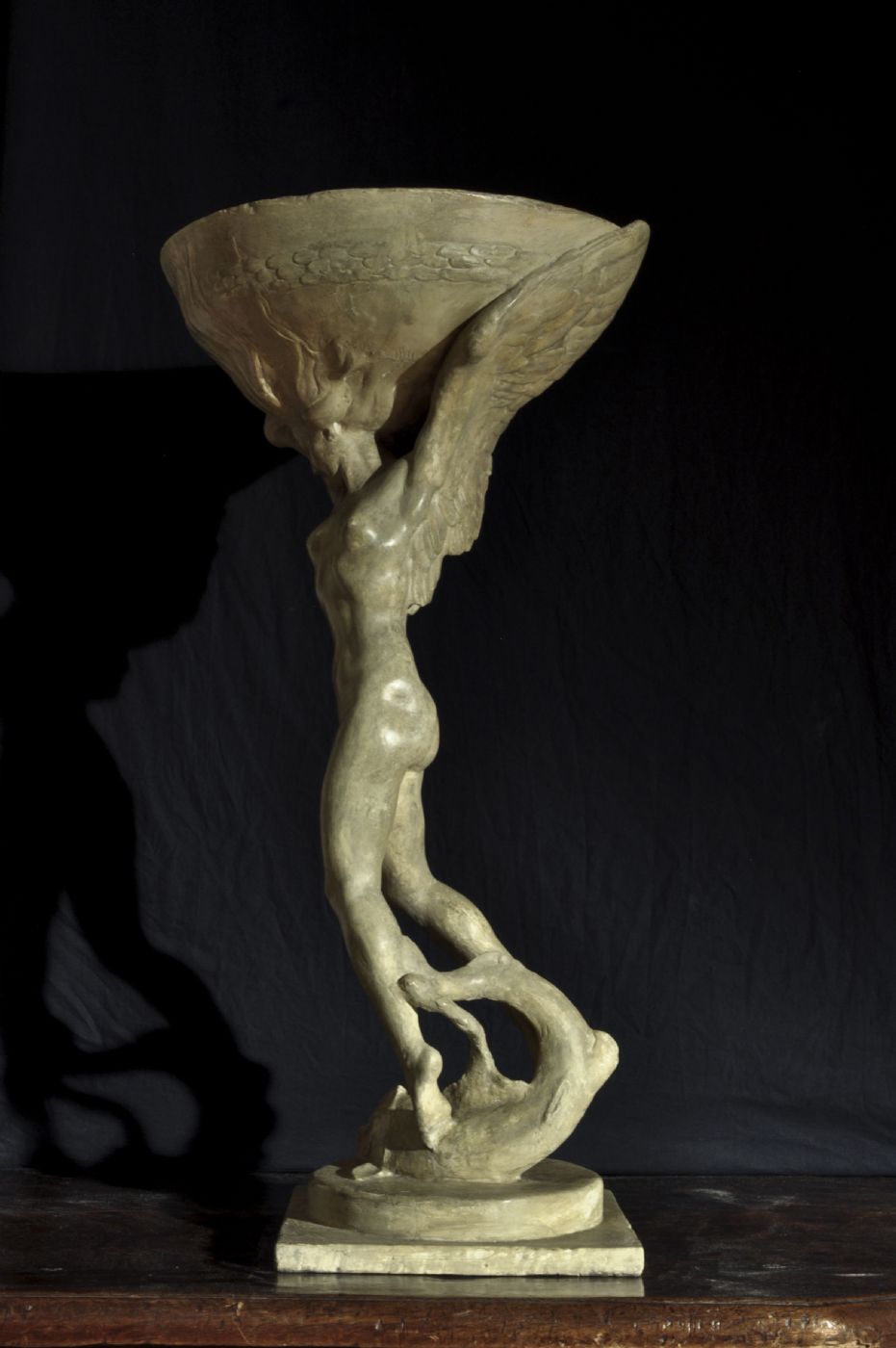
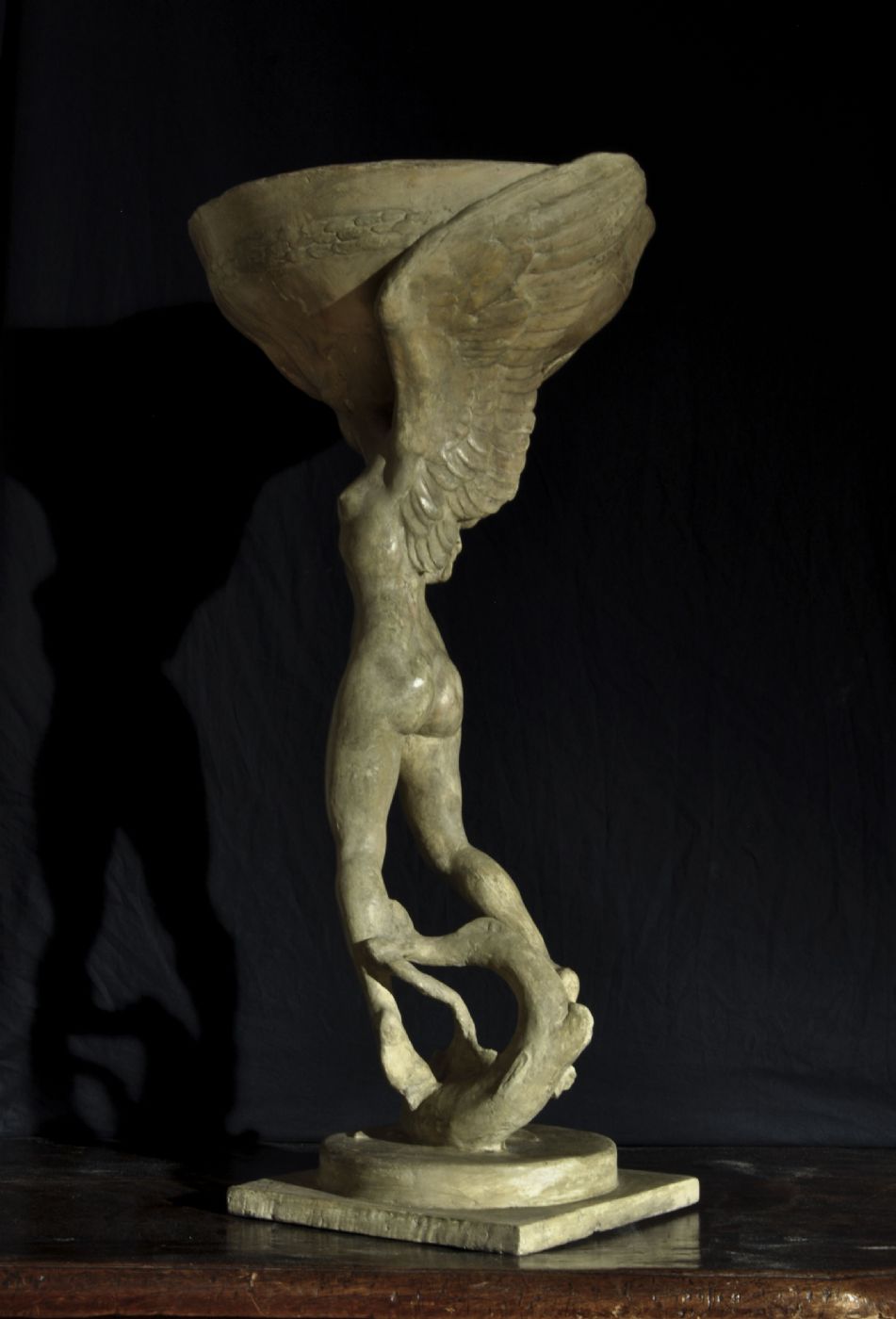
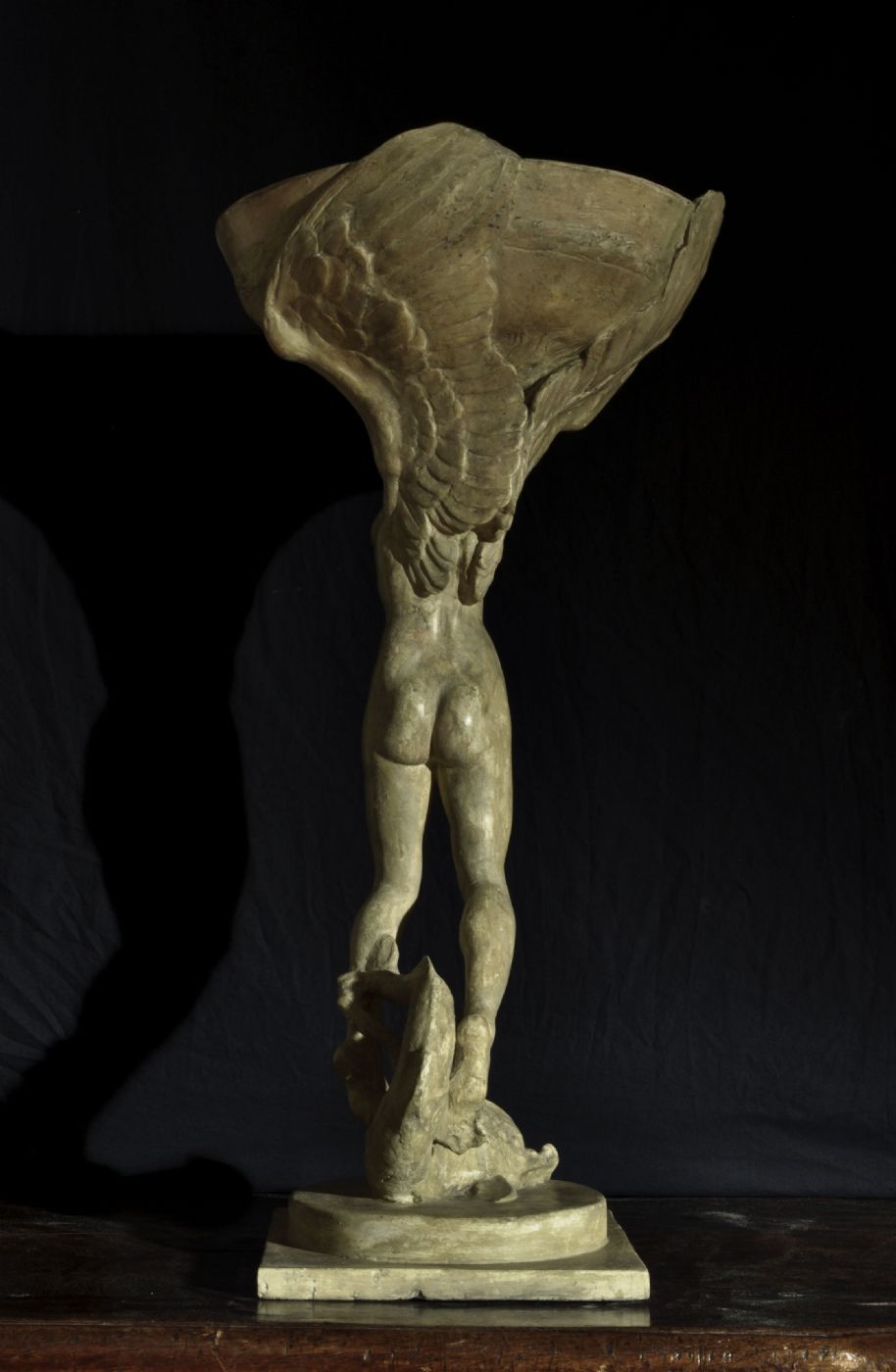
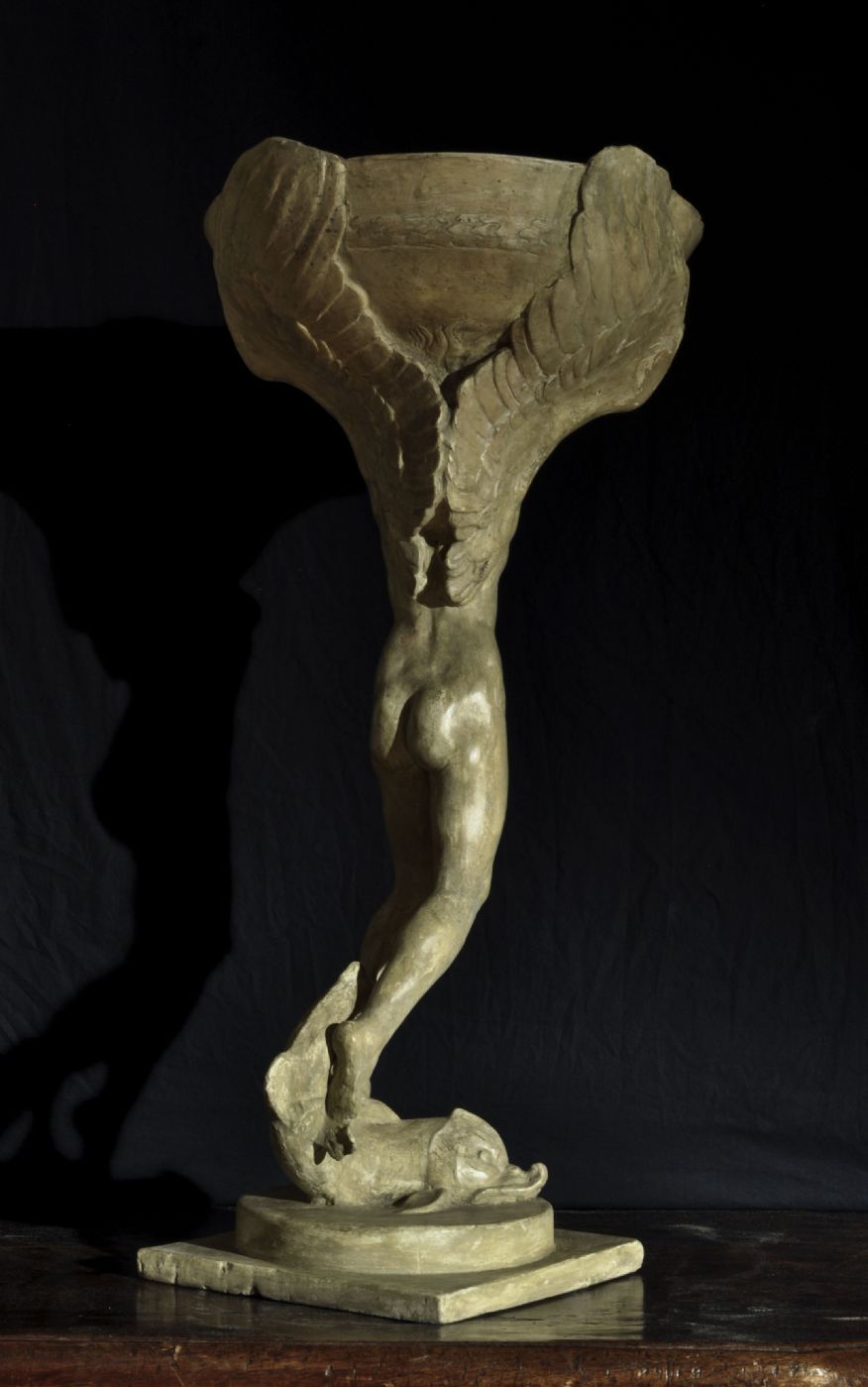
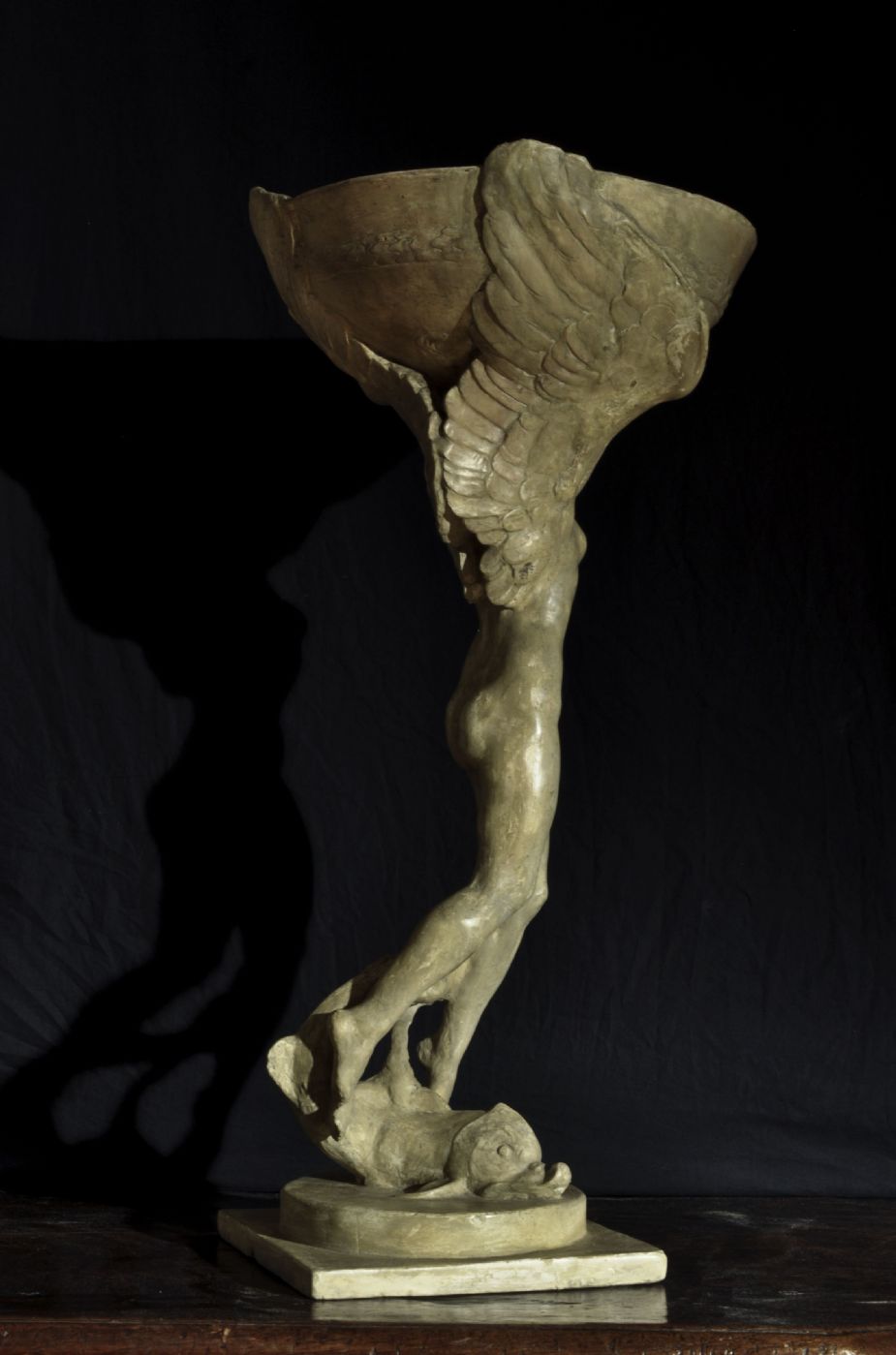
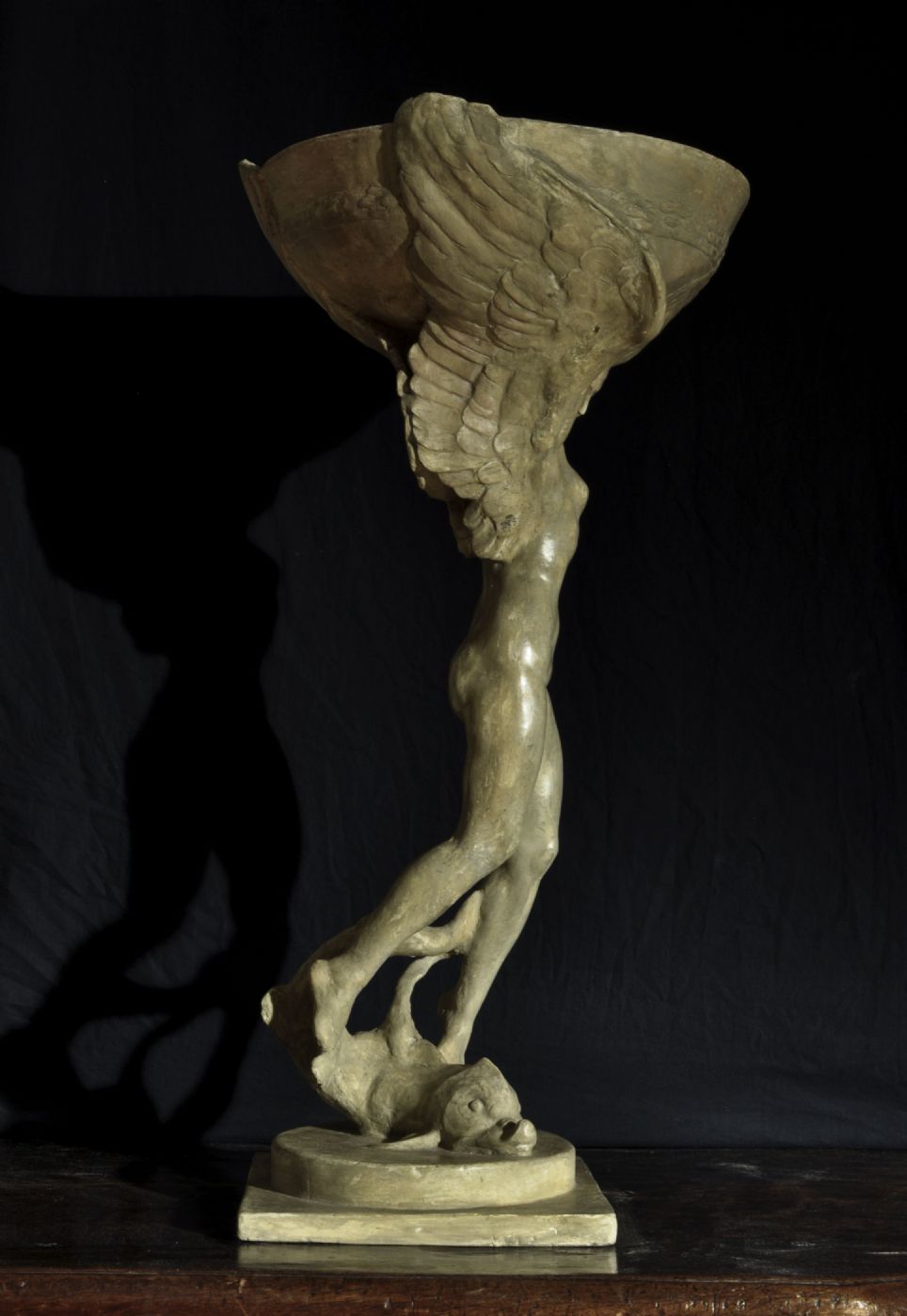
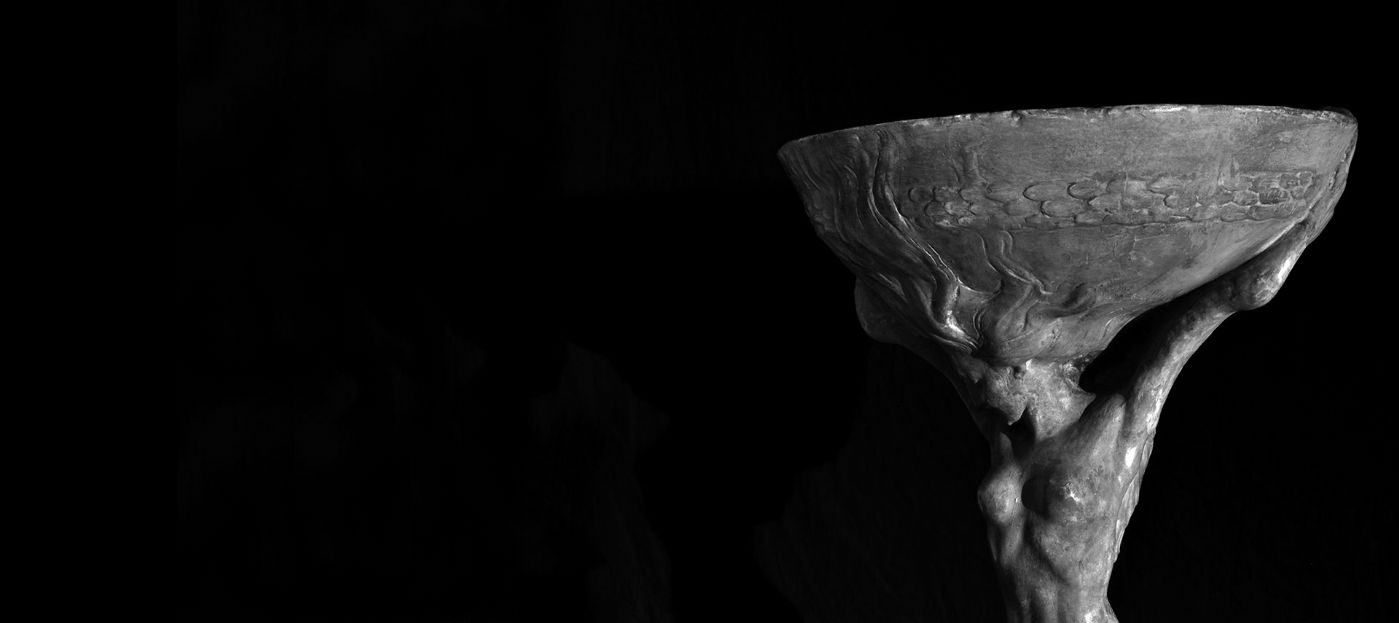
Cup with winged figure, 1925/30
Plaster
Height 68 cm
Base 23x23 cm
Cup diameter 33 cm
Bibliography:
ERCOLE DREI SCULTORE, 1886 - 1973, exhibition catalog edited by F. Bertoni, Municipality of Faenza, 1986, p. 189 (bronze); ERCOLE DREI - from Secession to Classicism of the Twentieth Century, Exhibition Catalog edited by Francesca Antonacci and Giovanna Caterina de Feo, Rome, 2005, pp. 44, 45 (bronze); Art Nouveau in Faenza - The Baccarinian Cenacle. Exhibition Catalog edited by J. Bentini, Electa 2007, fig. 63 (the version presented here); ERCOLE DREI - Eternal modern classic language. Echoes from the Twentieth Century 6 - Studiolo, Milan 2020 edited by G. Cribiori, plate 13; Between the lines, edited by G. Cribiori, 9cento Milano Edizioni, 2023, Plate 123, p. 197
Exhibitions:
ERCOLE DREI SCULTORE, 1886 - 1973, Faenza, Palazzo del Podestà,
edited by F. Bertoni, September 13 - November 2, 1986
ERCOLE DREI - from Secession to Classicism of the Twentieth Century, Rome, Francesca Antonacci, May 16 - June 24, 2005, (glazed ceramic and patinated plaster)
ERCOLE DREI, 1886 - 1973 - Thirty Unpublished Drawings, sculpture and painting, Rome, Nuova Galleria Campo dei Fiori, February 2008
The extensive bibliography and numerous exhibitions underline the artistic significance of the sculpture, which seems to mark a crucial passage in Drei's art in the detachment from the canons of Art Nouveau to settle permanently in a classicism that he feels is more his own.
The cup, conceived to satisfy the requests of the Ministry of Aeronautics, chronologically falls into a fully mature phase of Drei, who decides to dust off the Art Nouveau experiences that have long been set aside.
Franco Bertoni points out the existence of drawings dating back to 1914/15 depicting figures with arms outstretched upwards, which, in his opinion, will be used for this creation.1
This proves, on Drei's part, the use over time of previous inventions, temporarily set aside; the visual suggestion of the sculptor suggests him to return to embrace the canons of Art Nouveau for one last time, considering their lightness and their elegance an indispensable prerogative for the rendering of a sculpture dedicated to the celebration of the air, decidedly against the current compared to the stylistic features that from then on will lead works of this kind to a representation stretched to the glorification of strength, sacrifice and heroism through forms and lines much more structured and solid, albeit no less elegant in their most successful outcomes.
The momentum of the figure in torsion, with the hair and wings that become one with the cup, make it appear as a kind of phoenix woman in flames, ready to be born again from its ashes.
The triton, placed at the feet of the female figure, could represent the dominion reached by man over the sea through transatlantic flights, which in that period became heroic enterprises used as propaganda to demonstrate the presumed strength and quality of Italian war means.
GC
1 in Art Nouveau in Faenza - The Baccarinian Cenacle.
Exhibition Catalog edited by J. Bentini, Electa 2007, p 148