Zeitraum:
Zweite Hälfte des 19. Jahrhunderts
Maße:
Im Rahmen H 45 x B 33 x T 2,5 cm / H 19 x B 13 cm
Im Rahmen H 44 x B 32,5 x T 2,5 cm / H 18,7 x B 12,2 cm
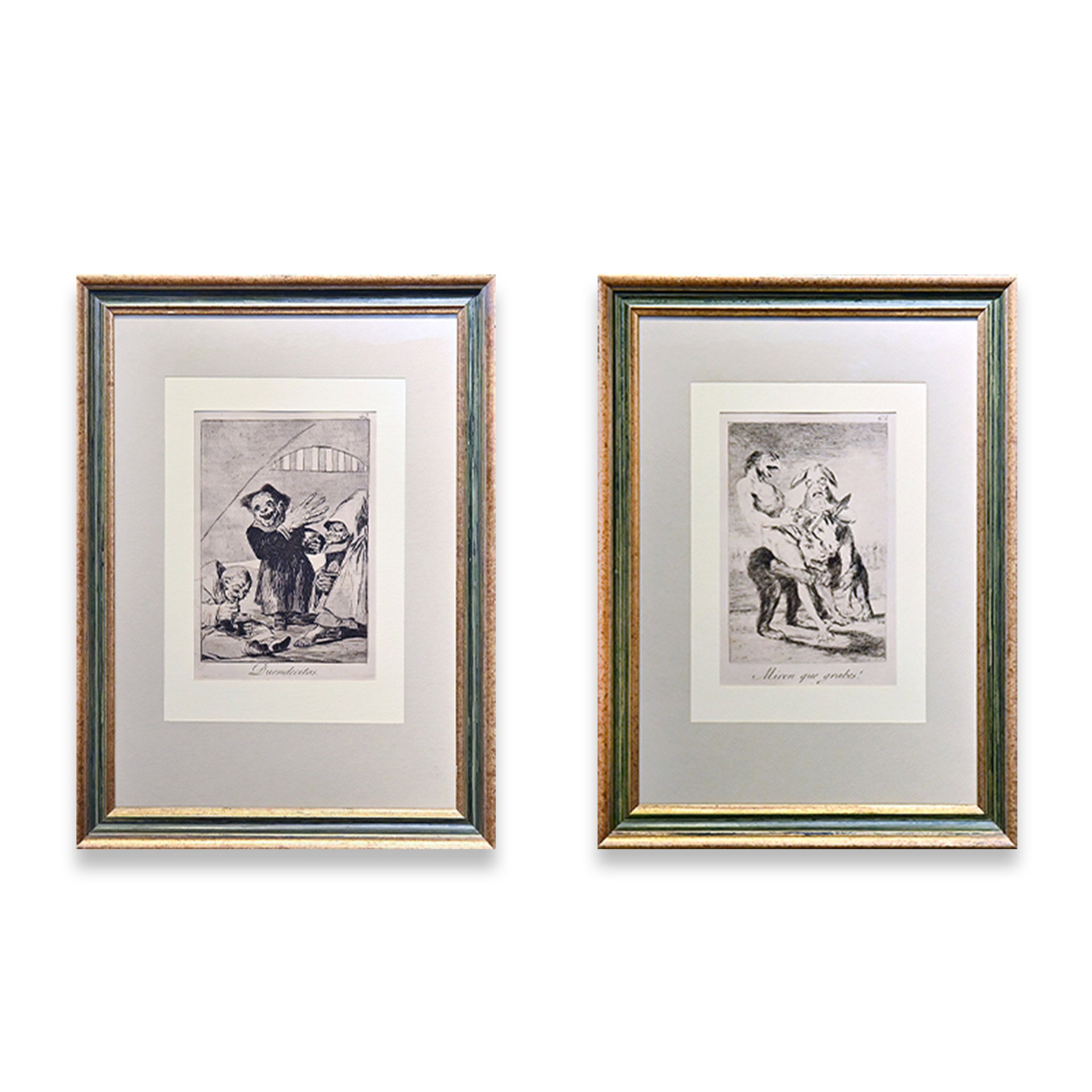
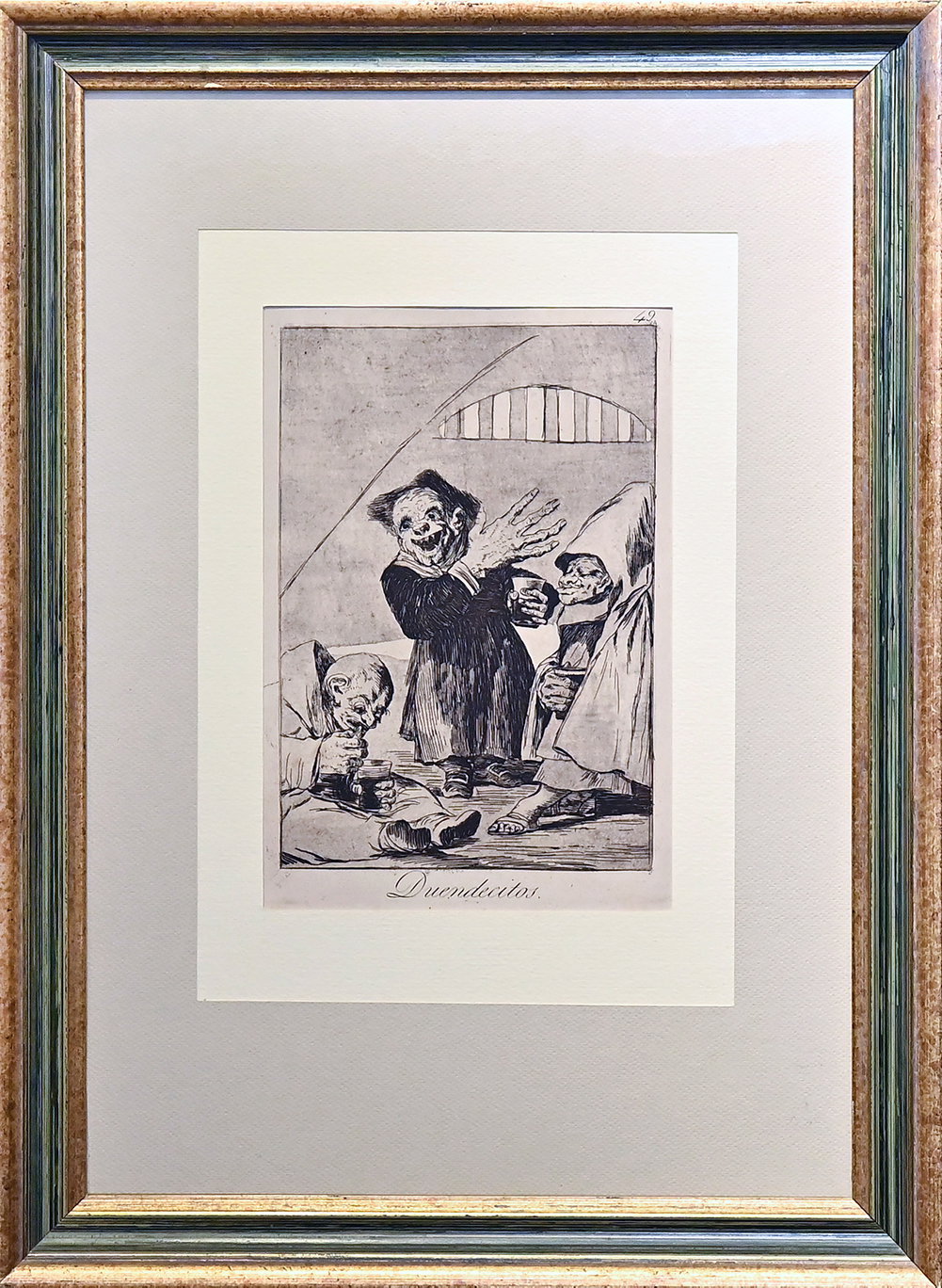
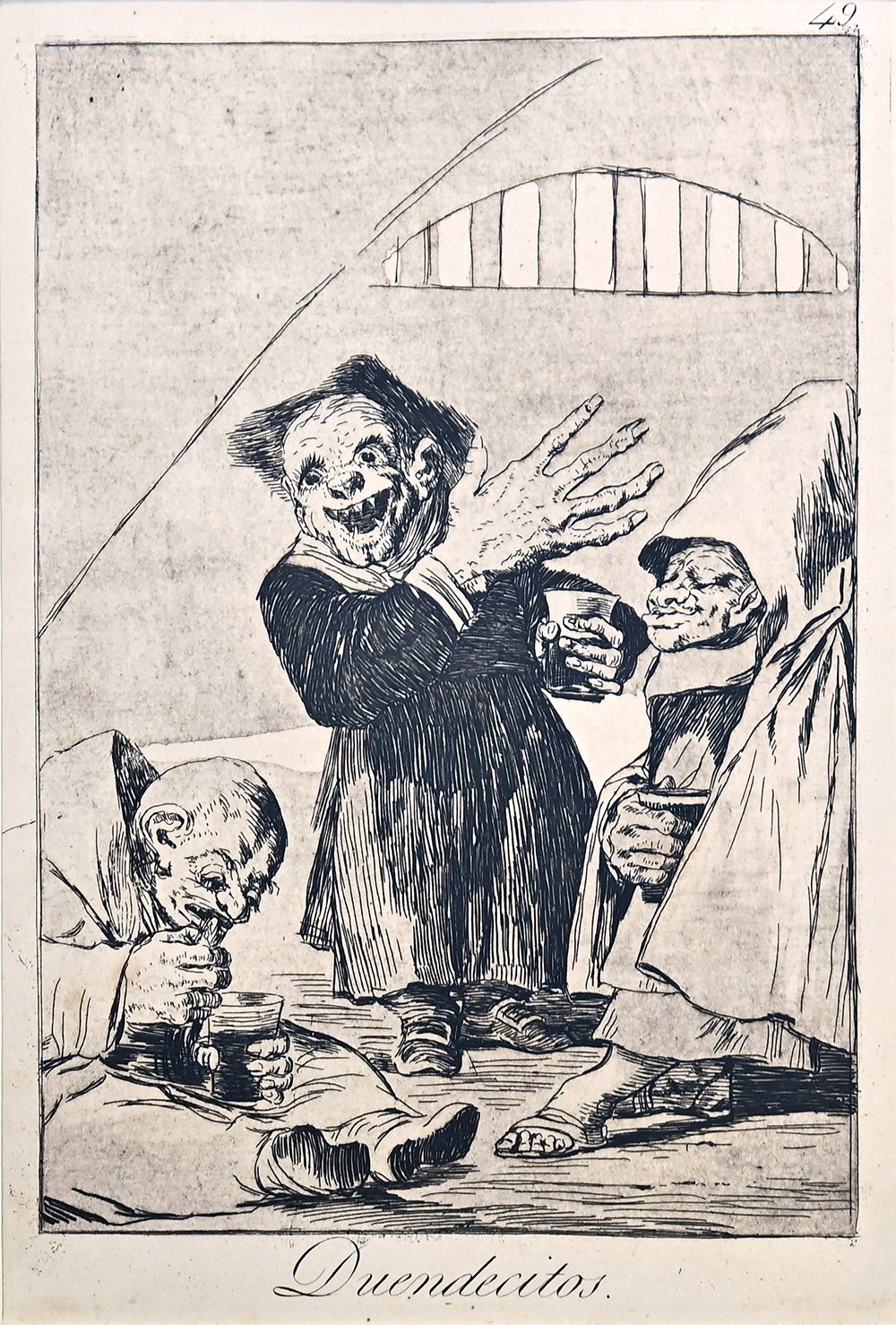
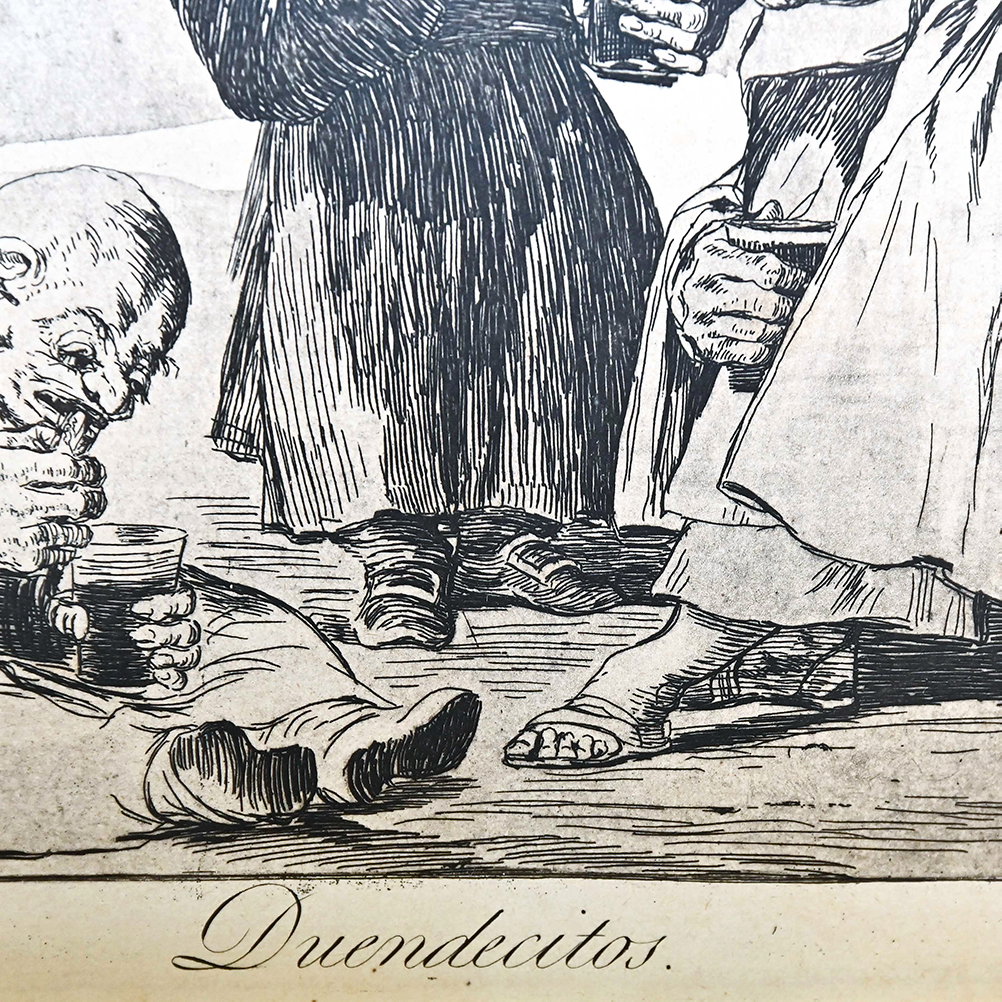
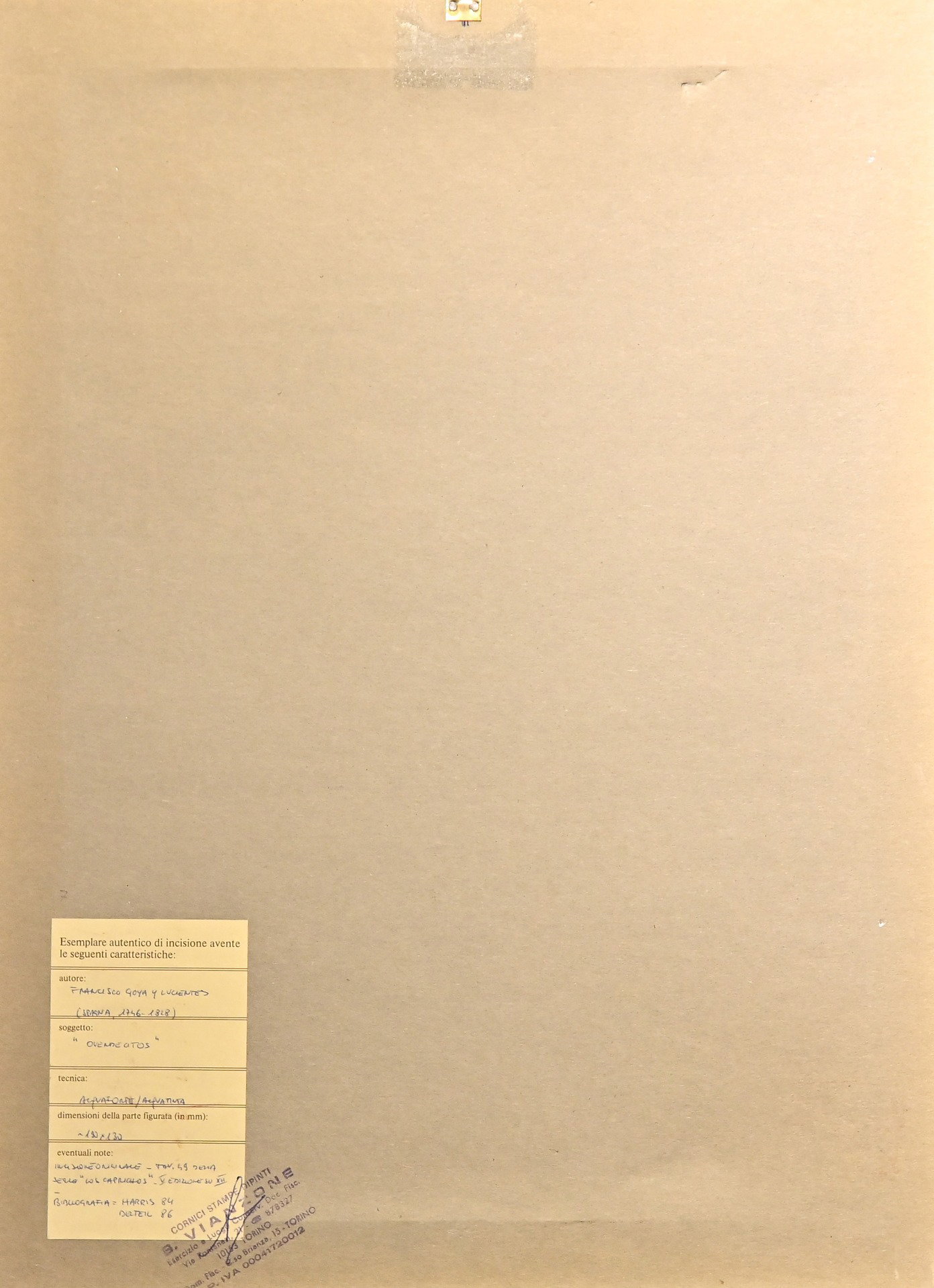
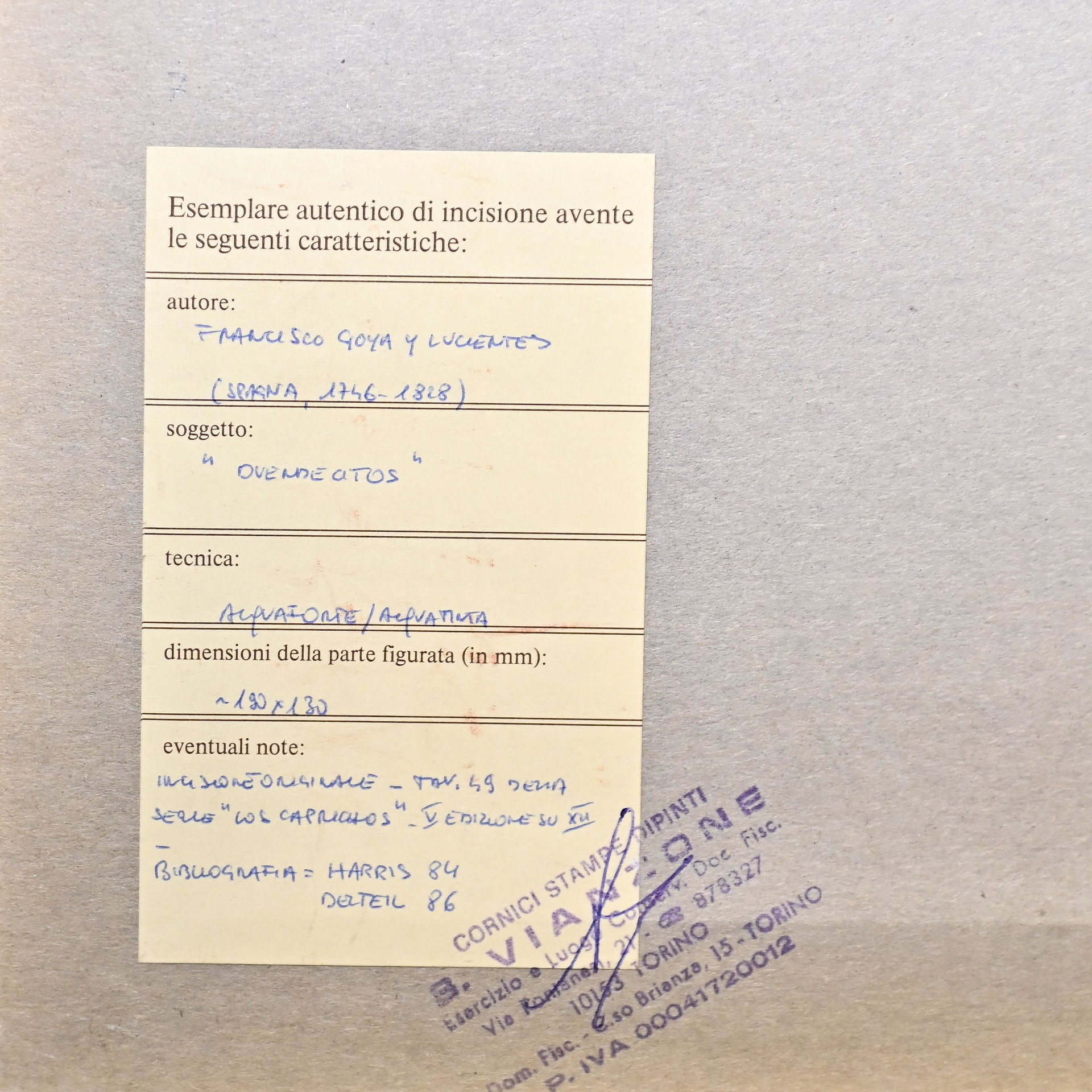
"Duendecitos" Radierung/Aquatinta von Francisco Goya y Lucientes (Fuentedos, Spanien 1746 - Bordeaux 1828).
Originalradierung - Tafel 49 der Serie "Los caprichos" - V. Auflage von XII.
Bibliographie: Harris 84; Delteil 86.
Provenienz Vianzone, Turin.
Maße in mm: 190 x 130"
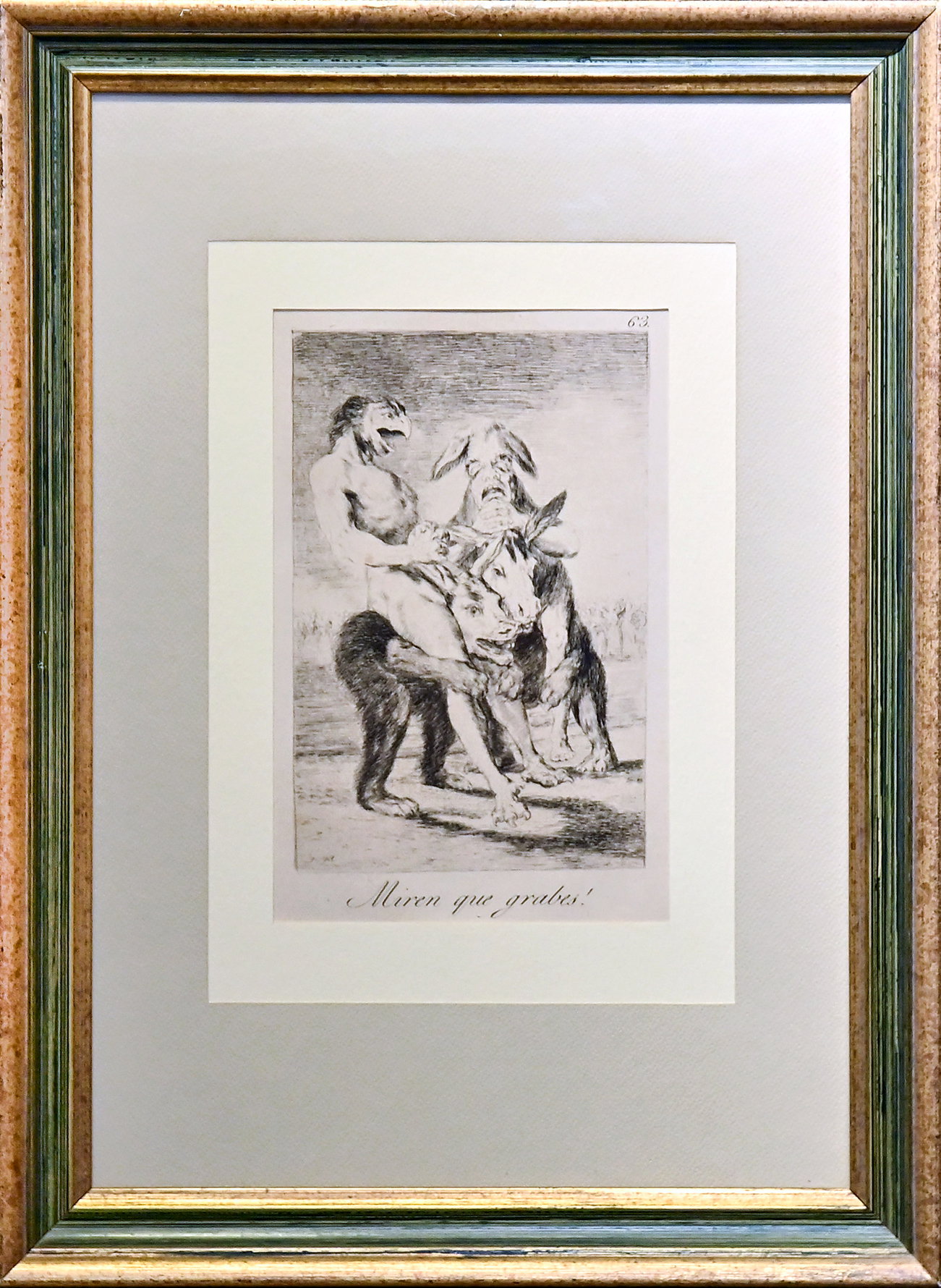
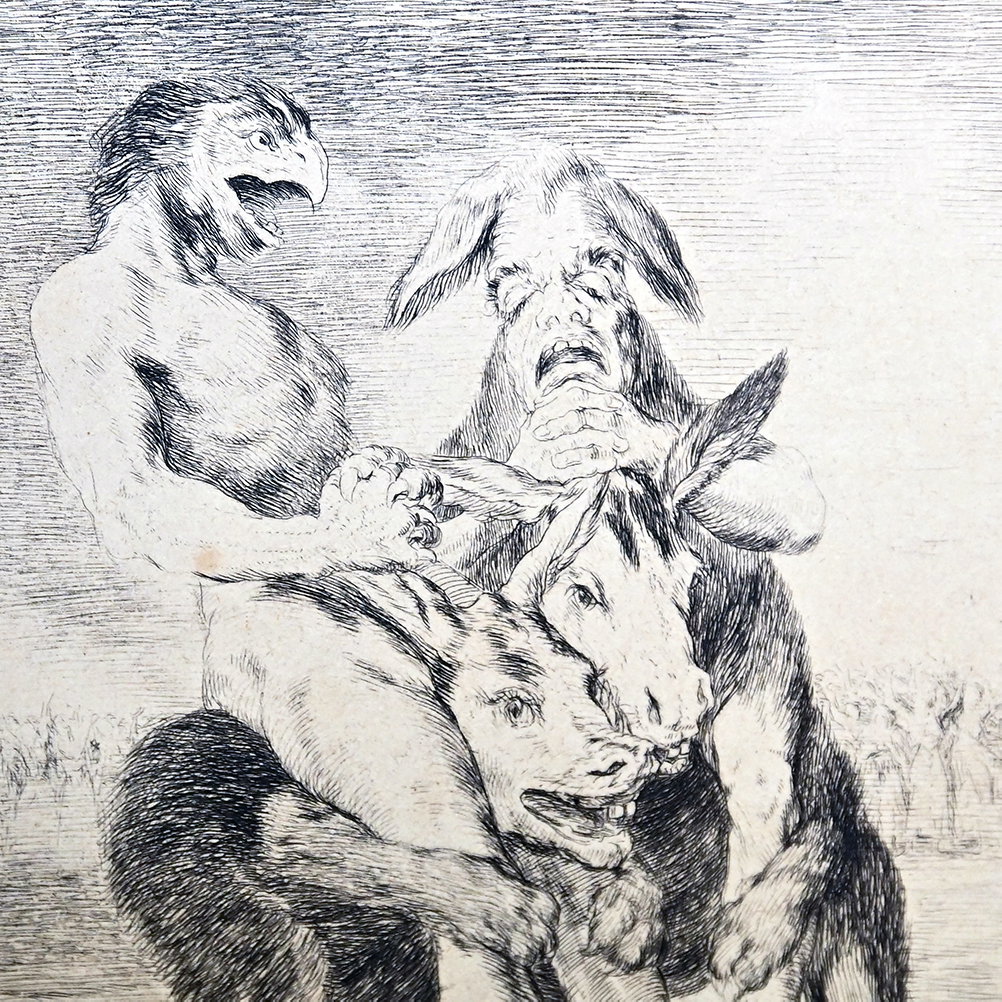
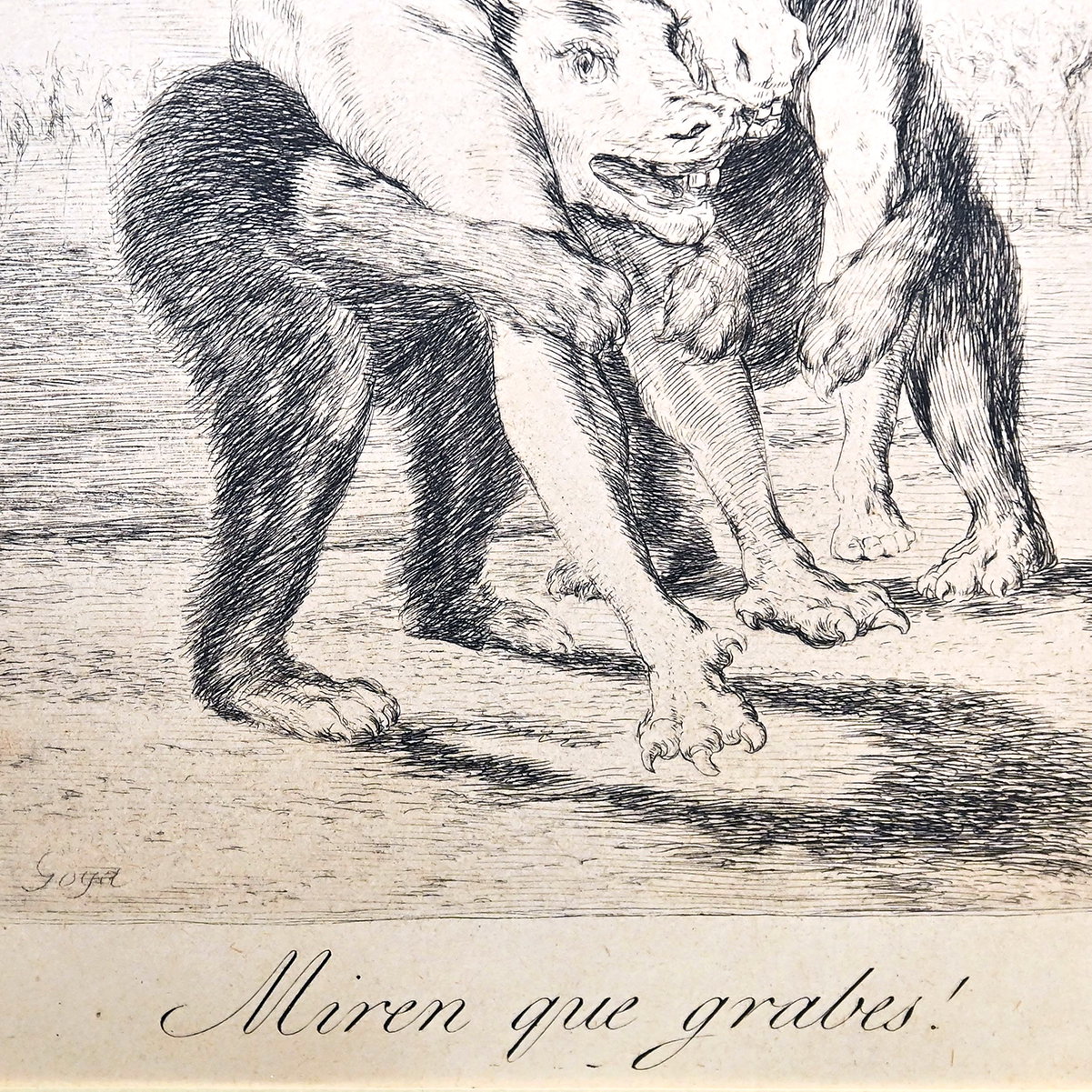
"Miren que grabes!" Radierung/Aquatinta von Francisco Goya y Lucientes (Fuentedos, Spanien 1746 - Bordeaux 1828).
Originalradierung - Tafel 63 der Serie "Los caprichos" - V. Auflage von XII.
Bibliographie: Harris 98; Delteil 100.
Provenienz Vianzone, Turin.
Maße in mm: 187 x 122
Die Capricci stellen die berühmteste Stichserie des spanischen Meisters dar: 80 Tafeln zwischen Radierungen und großformatigen Aquatinten, die 1799 entstanden sind. Es handelt sich um Tafeln, die zu fantasievollen, bissigen und grotesken Darstellungen führen, die stilistisch von einem italienischen Einfluss aufgrund des langen Aufenthalts von 1770 in Rom beeinflusst sind. Das Hauptthema ist die Beschreibung der Übel der Welt, von Täuschungen bis zu Vorurteilen, bis hin zu den Lügen der spanischen Gesellschaft der Jahre, in denen Goya selbst lebte, in einer Kontroverse, die sich gegen den Klerus und den Adel richtete. Zum Zeitpunkt ihrer Veröffentlichung erregten die Zeichnungen großes Aufsehen, gerade weil in ihnen viele Würdenträger der Zeit wiedererkannt wurden. So groß war der Aufruhr, dass sogar die Heilige Inquisition eingreifen musste, um die Veröffentlichung jener Drucke zu verhindern, die als zu übertrieben und blasphemisch galten. Wahrscheinlich war dies der Grund für den geringen Erfolg von I Capricci, so dass der Maler gezwungen war, die gesamte erste Auflage an König Karl IV. zurückzuverkaufen, im Austausch für ein Stipendium für seinen Sohn Javier. Der Erfolg der Serie steigerte sich mit der zweiten Auflage von 1855 und wurde zu einem der wichtigsten und gefeiertsten grafischen Werke der Kunstgeschichte.
"Duendecitos" etching / aquatint by Francisco Goya y Lucientes (Fuentedos, Spain 1746 - Bordeaux 1828).
Original etching - Plate 49 of the "Los caprichos" series - V edition on XII.
Bibliography: Harris 84; Delteil 86.
Provenance Vianzone, Turin.
Dimensions in mm: 190 x 130
"Miren que grabes!" etching / aquatint by Francisco Goya y Lucientes (Fuentedos, Spain 1746 - Bordeaux 1828).
Original etching - Plate 63 of the "Los caprichos" series - V edition on XII.
Bibliography: Harris 98; Delteil 100.
Provenance Vianzone, Turin.
Dimensions in mm: 187 x 122
The Capricci represent the most famous series of engravings of the Spanish master: 80 plates between etchings and large-format aquatints, made in 1799. These are plates that give rise to imaginative, pungent and grotesque depictions, which are stylistically affected of an Italian influence due to the long stay of 1770 in Rome. The main theme is the description of the evils of the world, from deceptions to prejudices, to the lies of the Spanish society of the years in which Goya himself lived, in a controversy turned towards the clergy and the nobility. At the time of their publication, the drawings caused great stir, precisely because many notables of the time were recognized in them. So much was the clamor that even the Holy Inquisition had to intervene, to avoid the publication of those prints deemed too excessive and blasphemous. Probably this was to determine the scarce success of I Capricci, so much so that the painter was forced to resell the entire first circulation to King Charles IV, in exchange for a scholarship for his son Javier. The success of the series increased with the second edition of 1855, to become one of the most important and celebrated graphic works in the history of art.