Epoch:
Second half of the 19th century
Measurements:
In frame H 45 x W 33 x D 2.5 cm / H 19 x W 13 cm
In frame H 44 x W 32.5 x D 2.5 cm / H 18.7 x W 12.2 cm
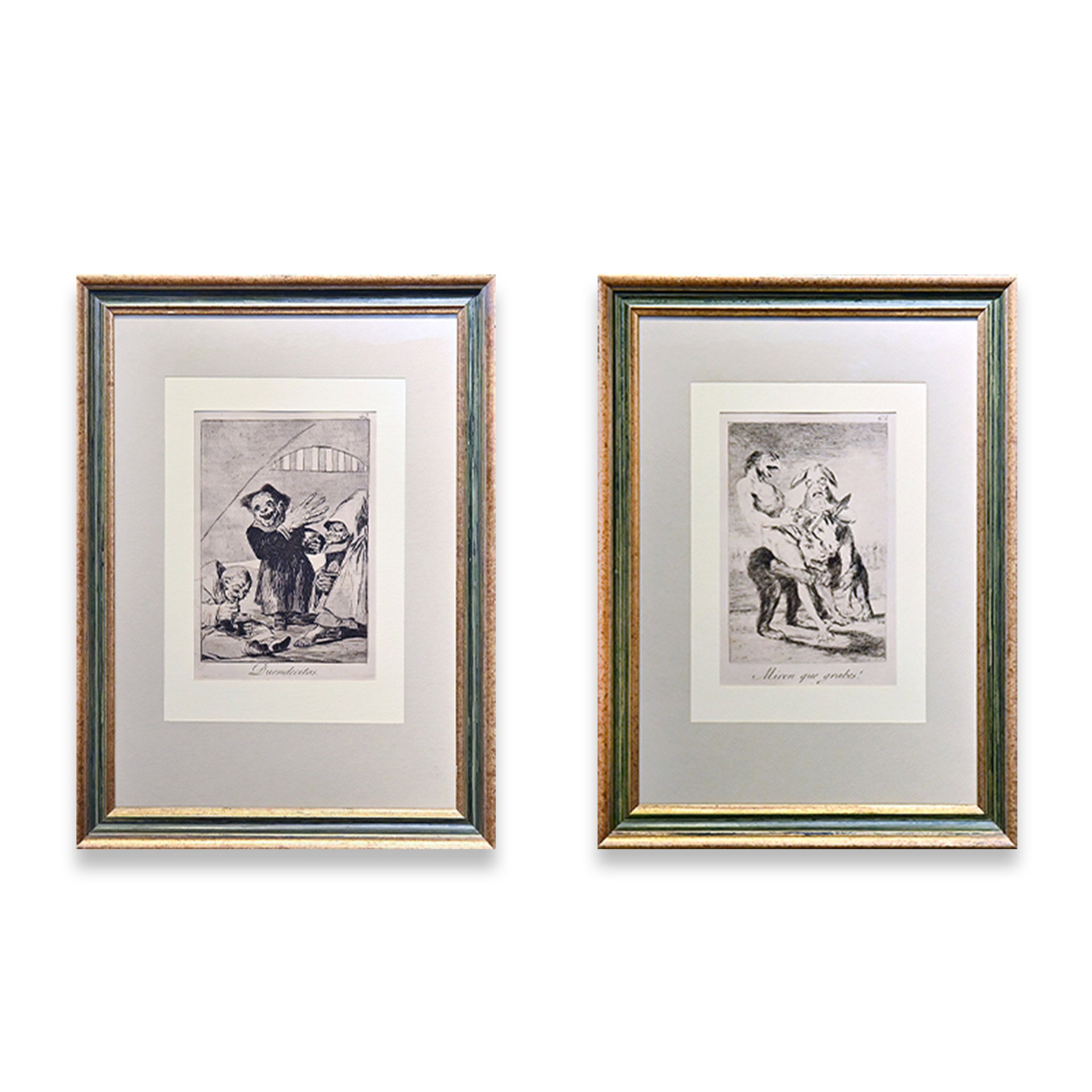
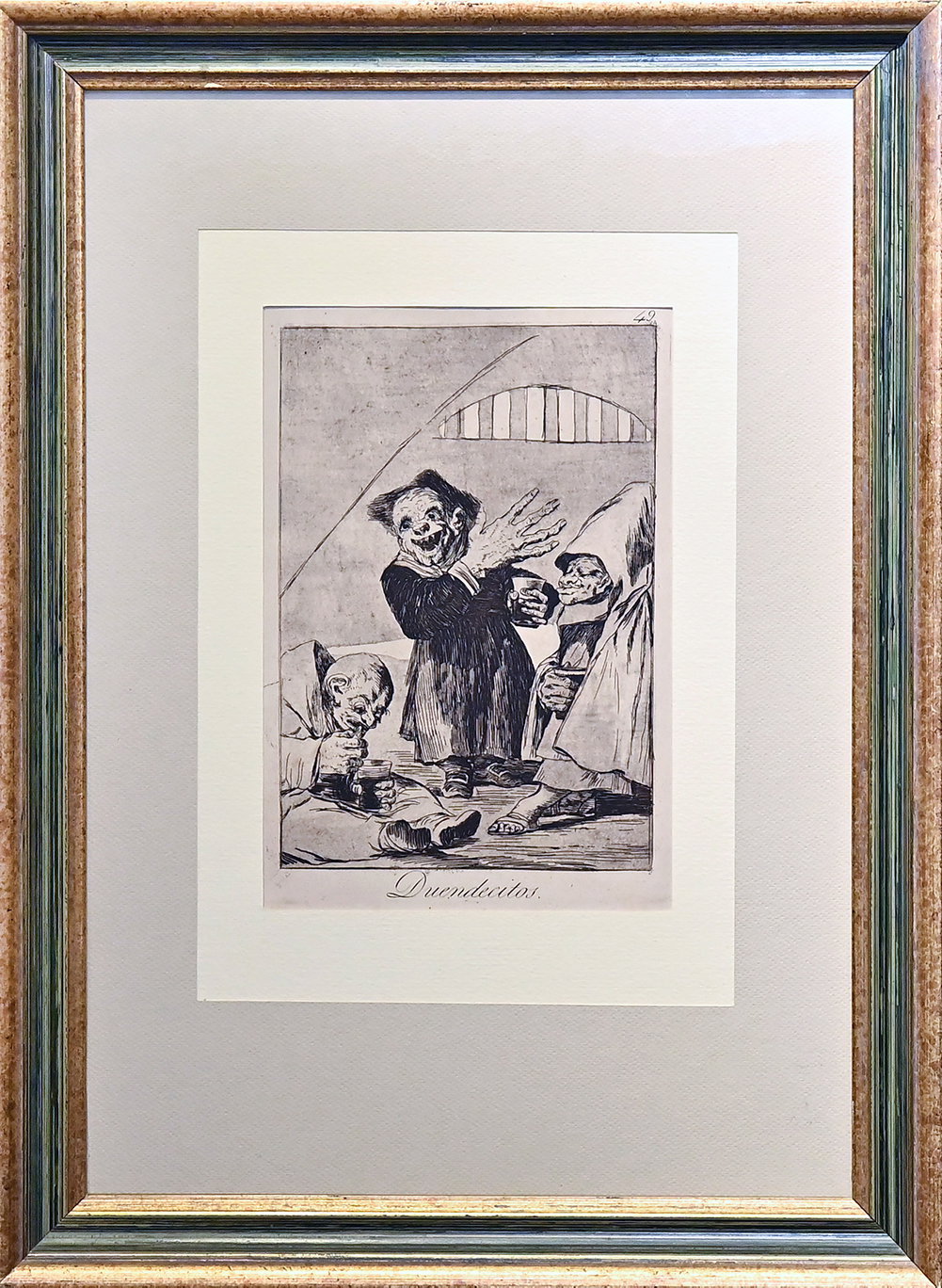
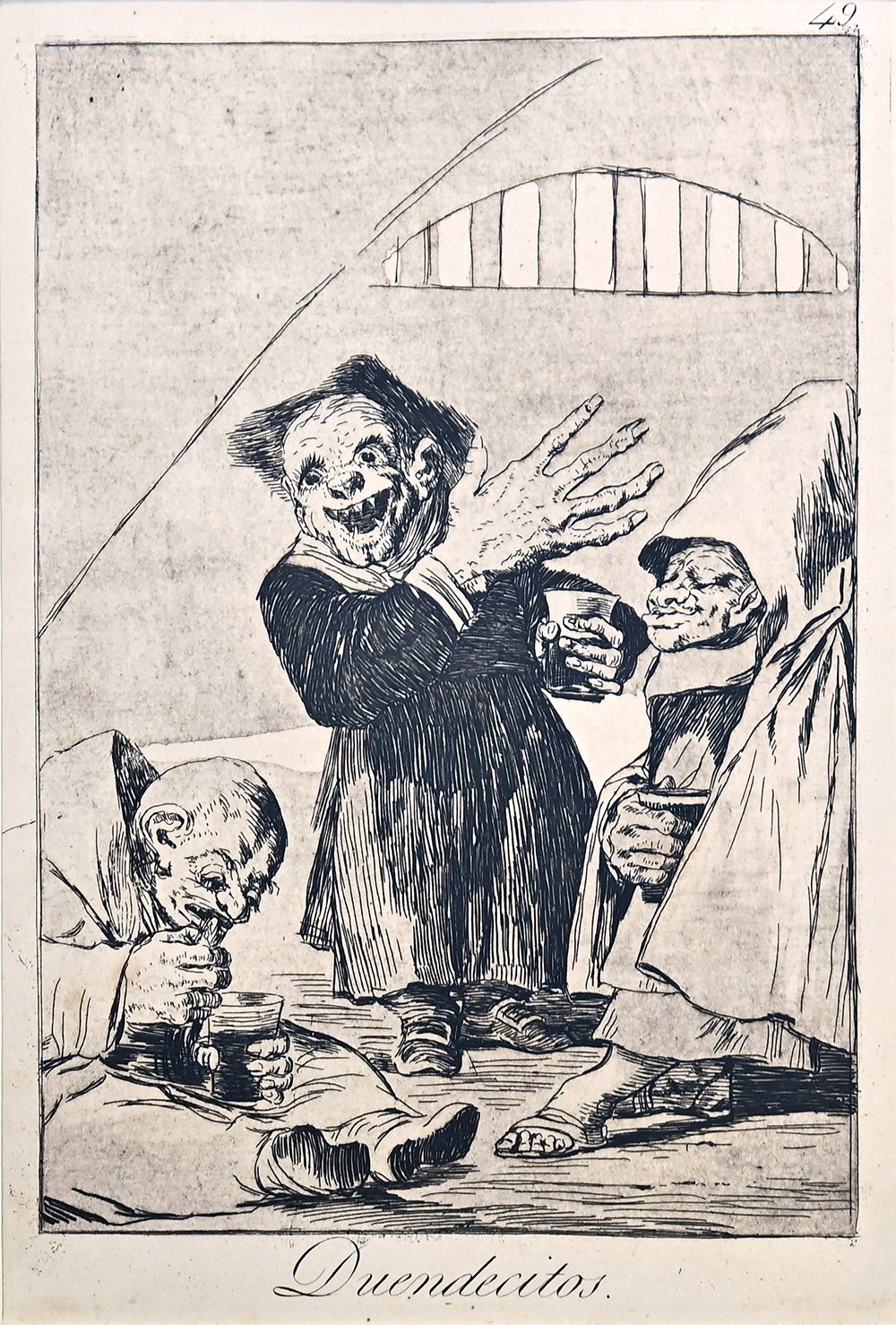
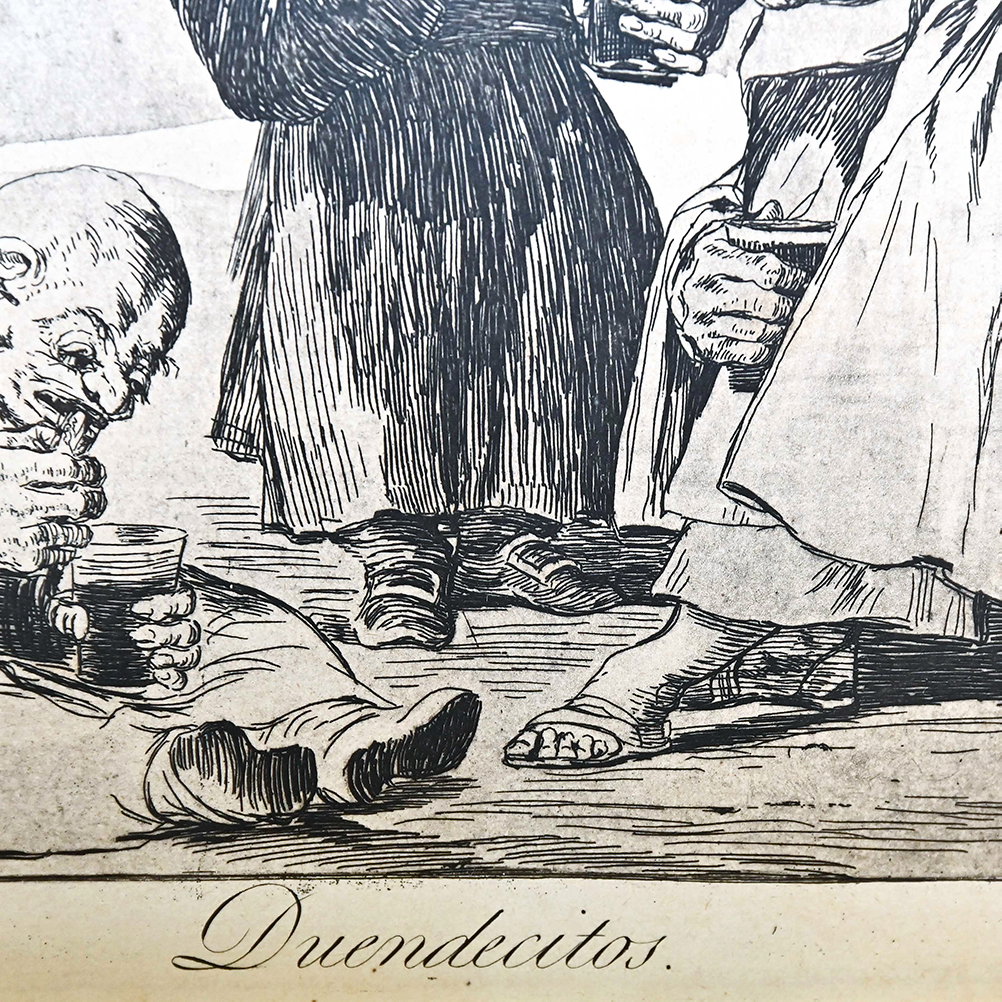
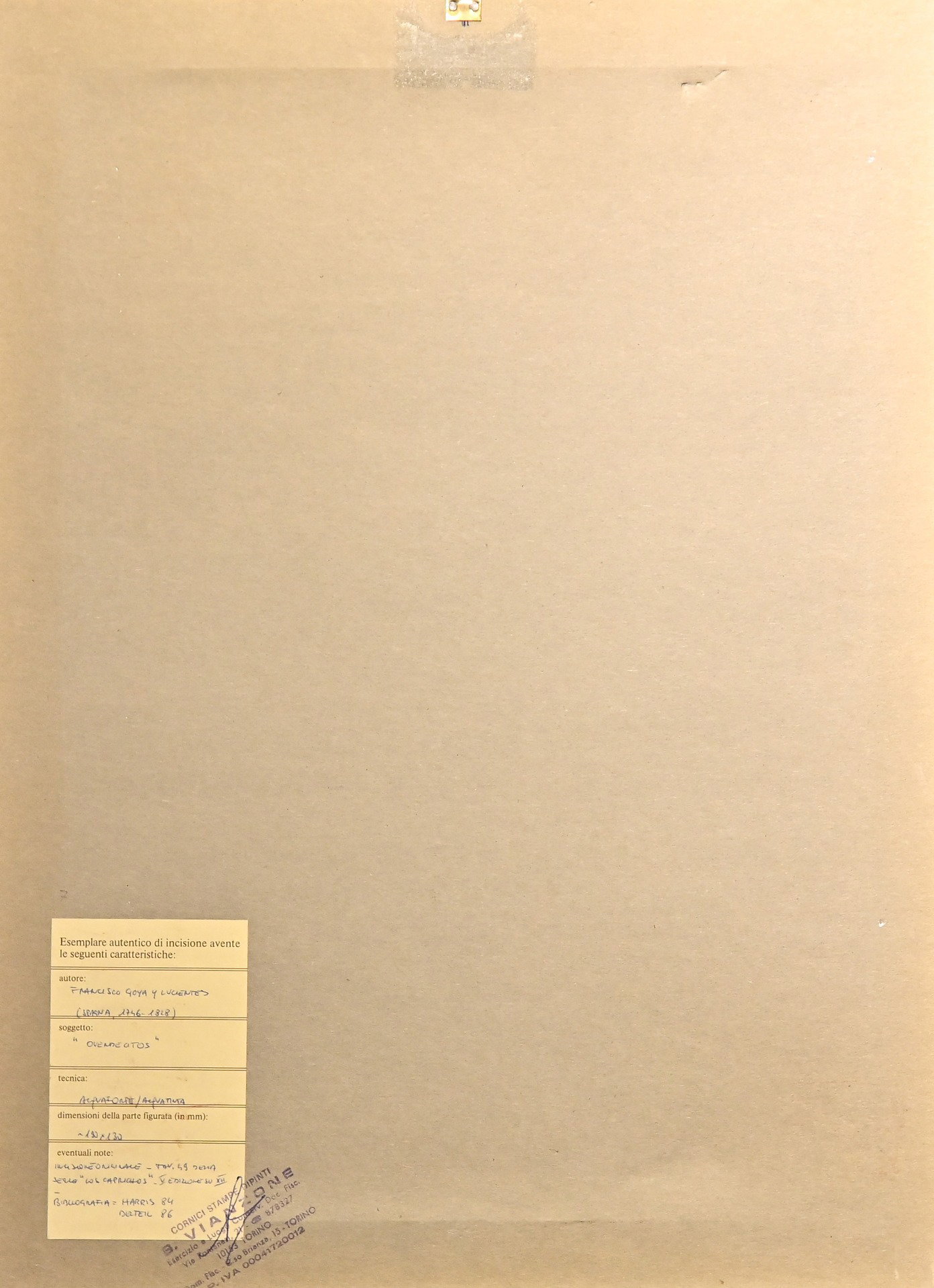
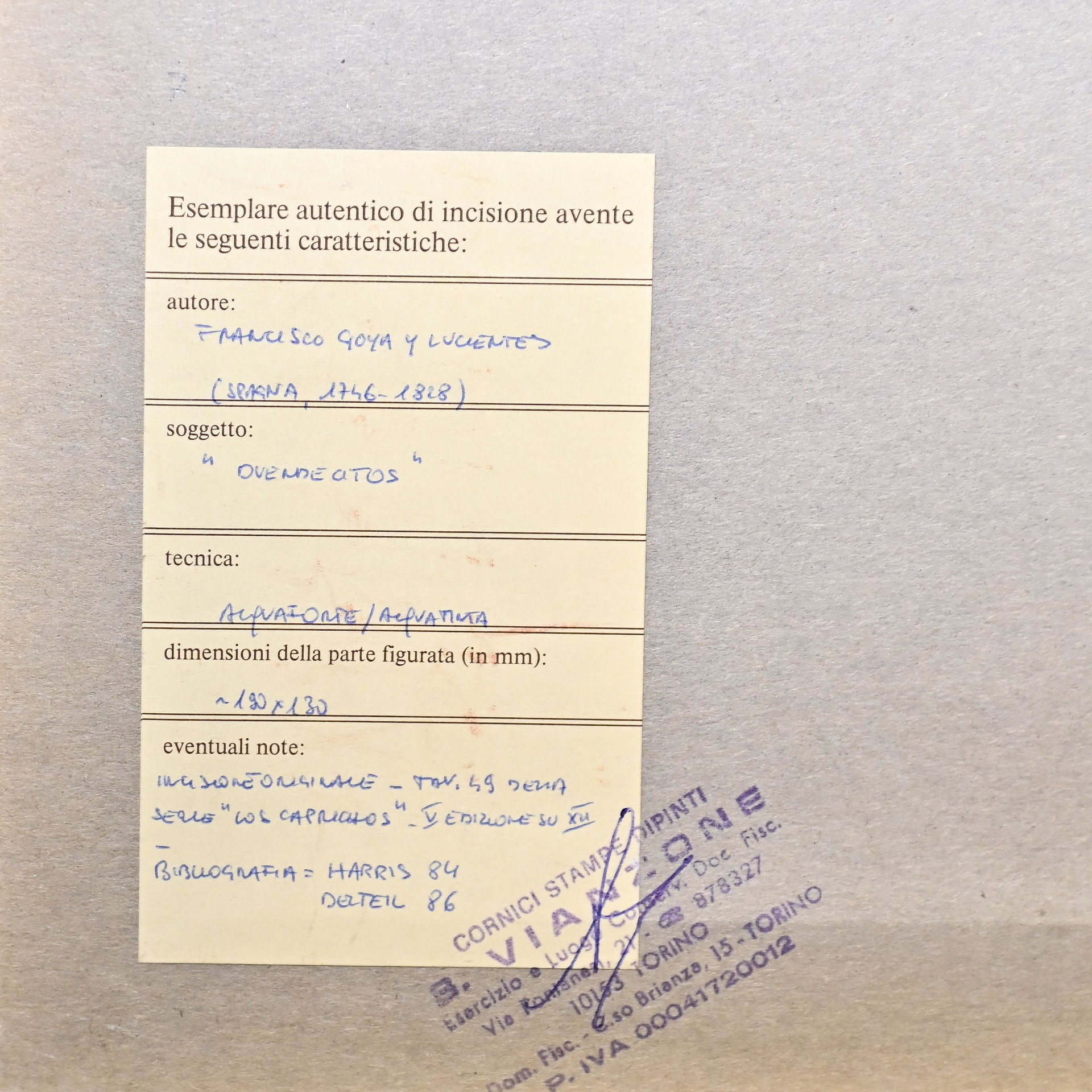
"Duendecitos" etching/aquatint by Francisco Goya y Lucientes (Fuentedos, Spain 1746 - Bordeaux 1828).
Original etching - Plate 49 of the "Los caprichos" series - V edition on XII.
Bibliography: Harris 84; Delteil 86.
Provenance Vianzone, Turin.
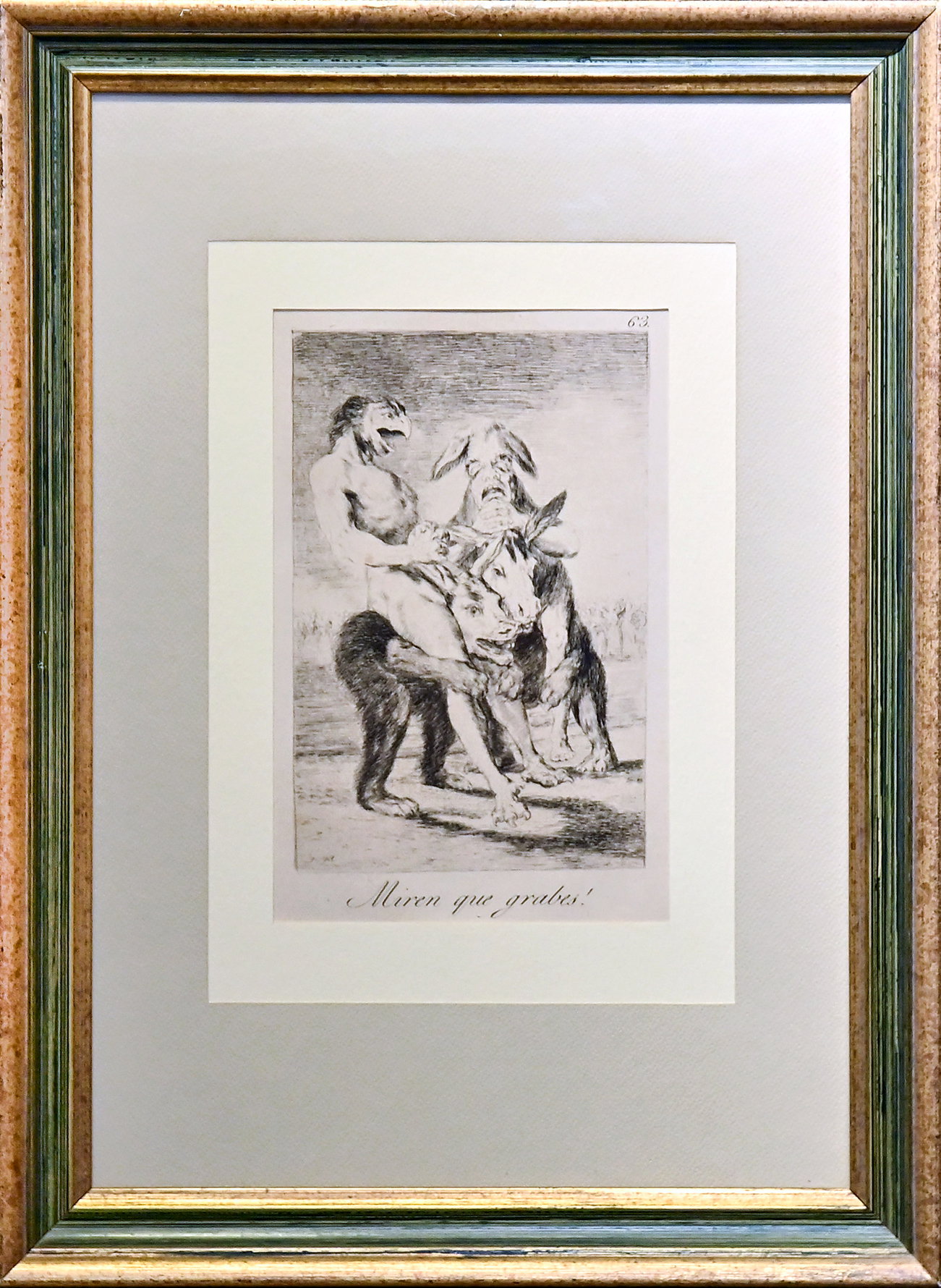
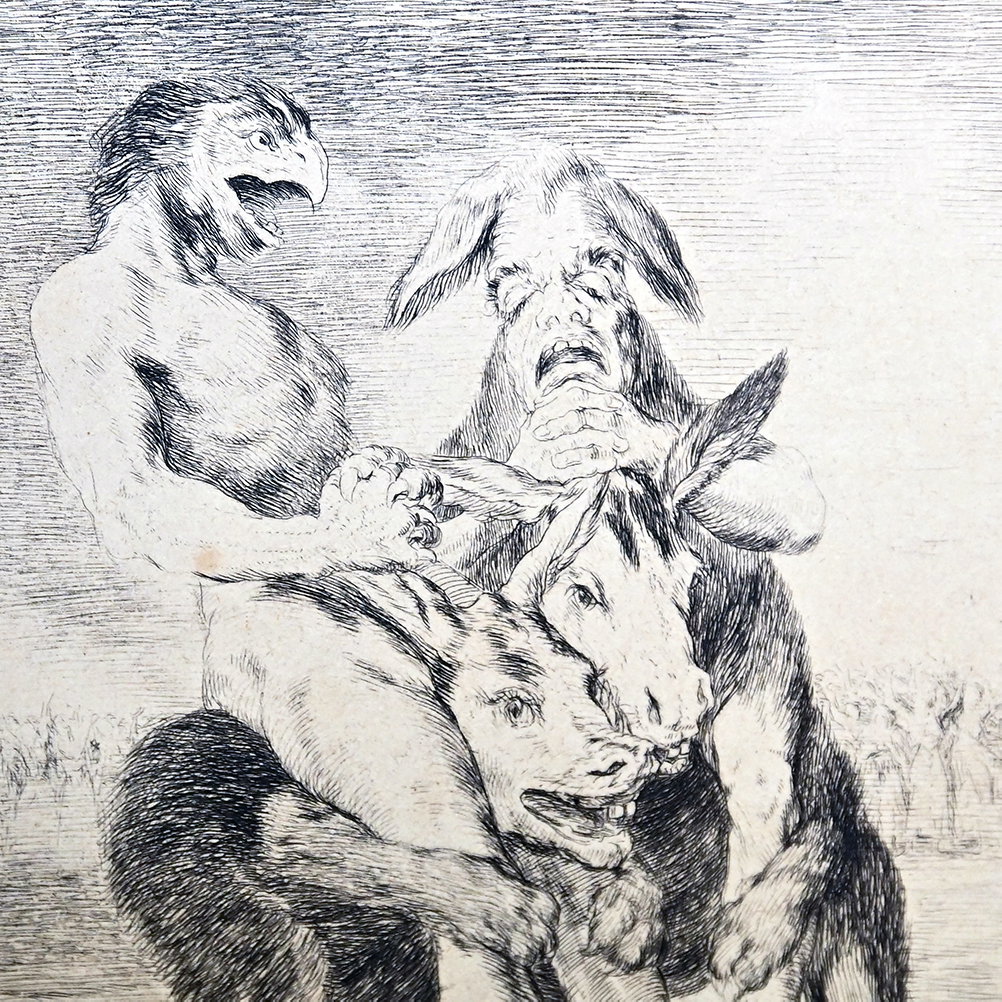
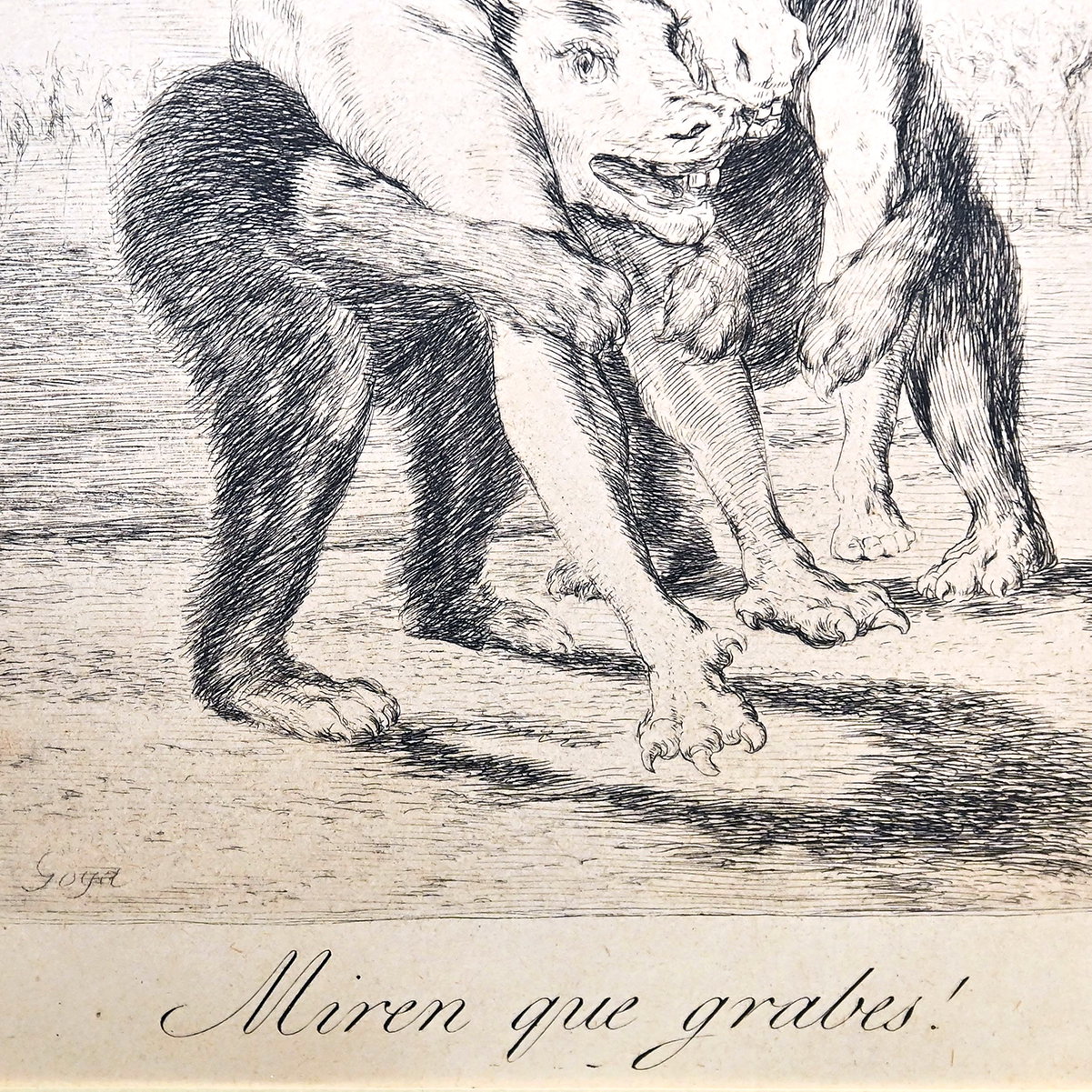
Dimensions in mm: 190 x 130 "Miren que grabes!" etching/aquatint by Francisco Goya y Lucientes (Fuentedos, Spain 1746 - Bordeaux 1828).
Original etching - Plate 63 of the "Los caprichos" series - V edition on XII.
Bibliography: Harris 98; Delteil 100.
Provenance Vianzone, Turin.
Dimensions in mm: 187 x 122
I Capricci represent the most famous series of engravings of the Spanish master: 80 plates between etchings and large-format aquatints, made in 1799. These are plates that give rise to imaginative, pungent and grotesque depictions, which are stylistically affected of an Italian influence due to the long stay of 1770 in Rome. The main theme is the description of the evils of the world, from deceptions to prejudices, to the lies of the Spanish society of the years in which Goya himself lived, in a controversy turned towards the clergy and the nobility. At the time of their publication, the drawings caused great stir, precisely because many notables of the time were recognized in them. So much was the clamor that even the Holy Inquisition had to intervene, to avoid the publication of those prints deemed too excessive and blasphemous. Probably this was to determine the scarce success of I Capricci, so much so that the painter was forced to resell the entire first circulation to King Charles IV, in exchange for a scholarship for his son Javier. The success of the series increased with the second edition of 1855, to become one of the most important and celebrated graphic works in the history of art.