

Auguste Joseph Peiffer, "Bagnante con rondini", biscuit, fine XIX secolo
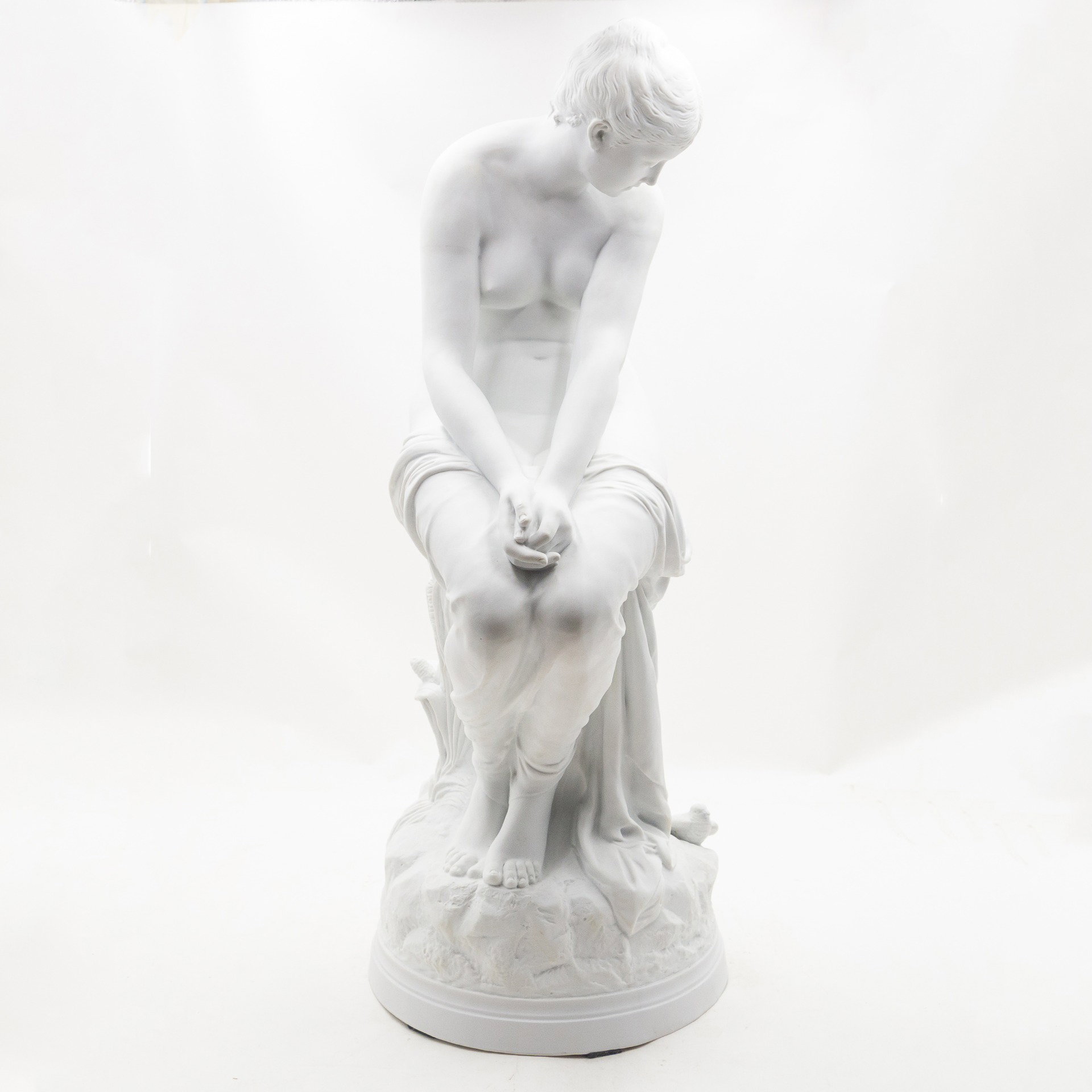
L’opera “Bagnante con rondini” di Auguste Joseph Peiffer, realizzata in Francia alla fine del XIX secolo, è una raffinata scultura in porcellana biscuit bianca.
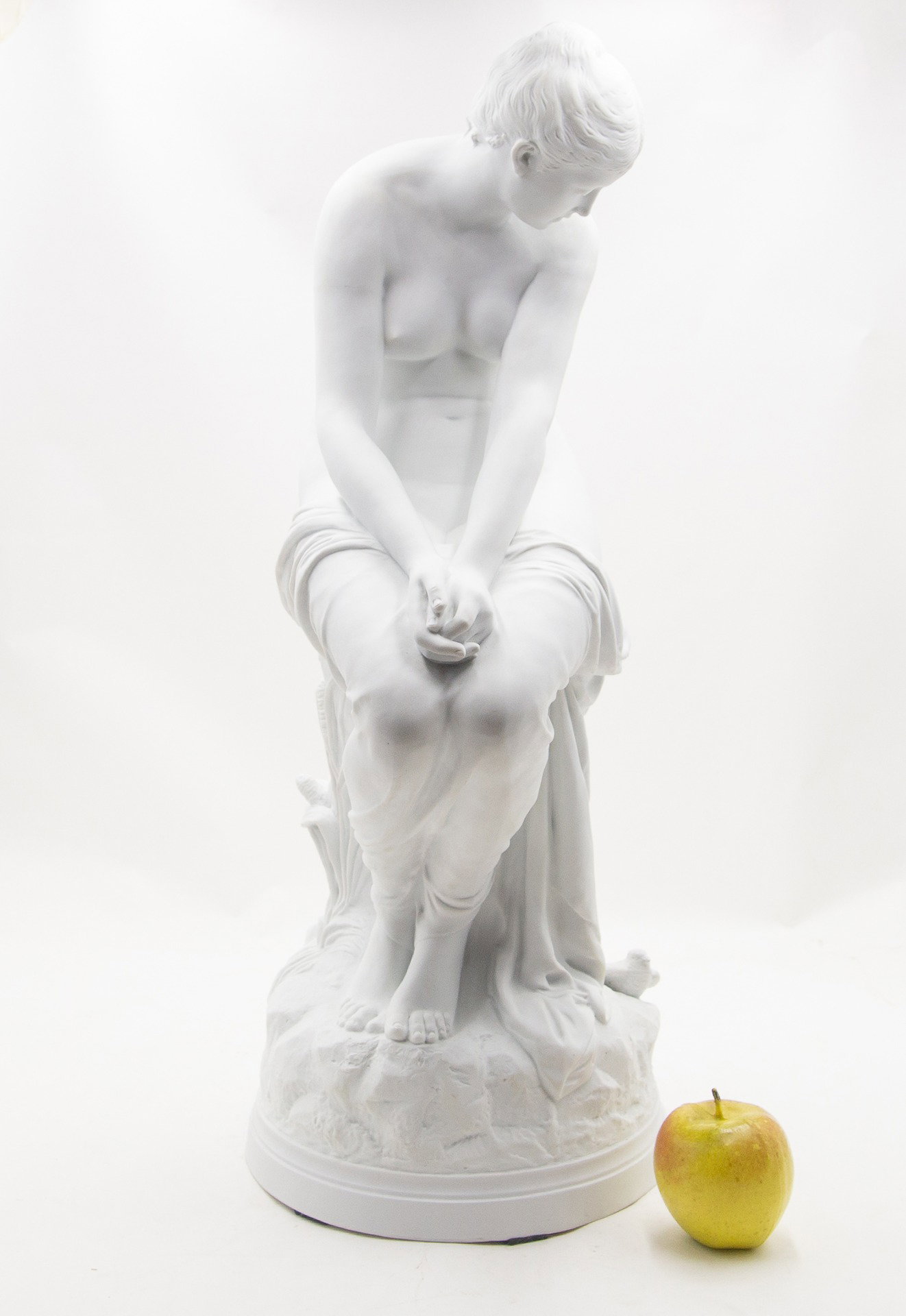
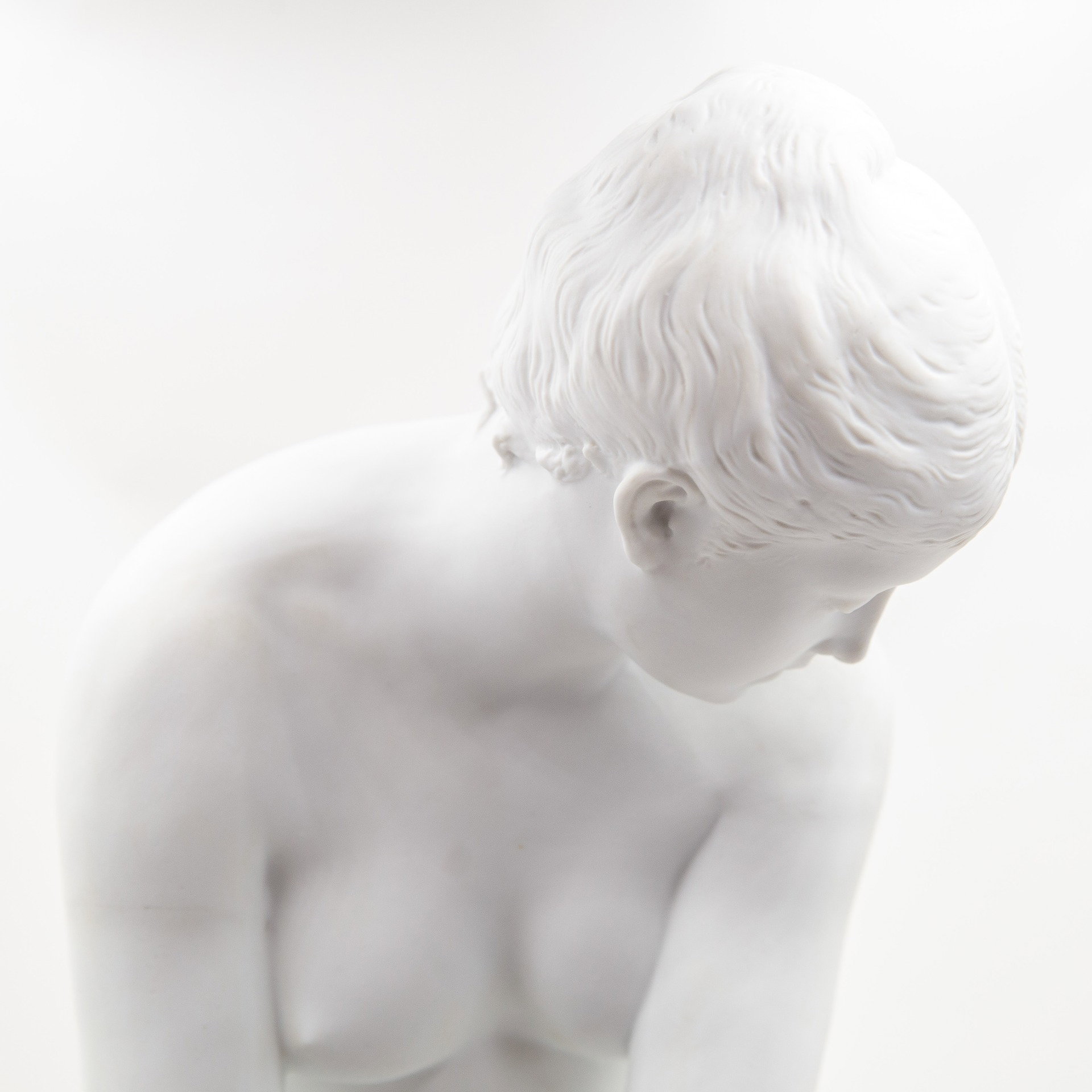
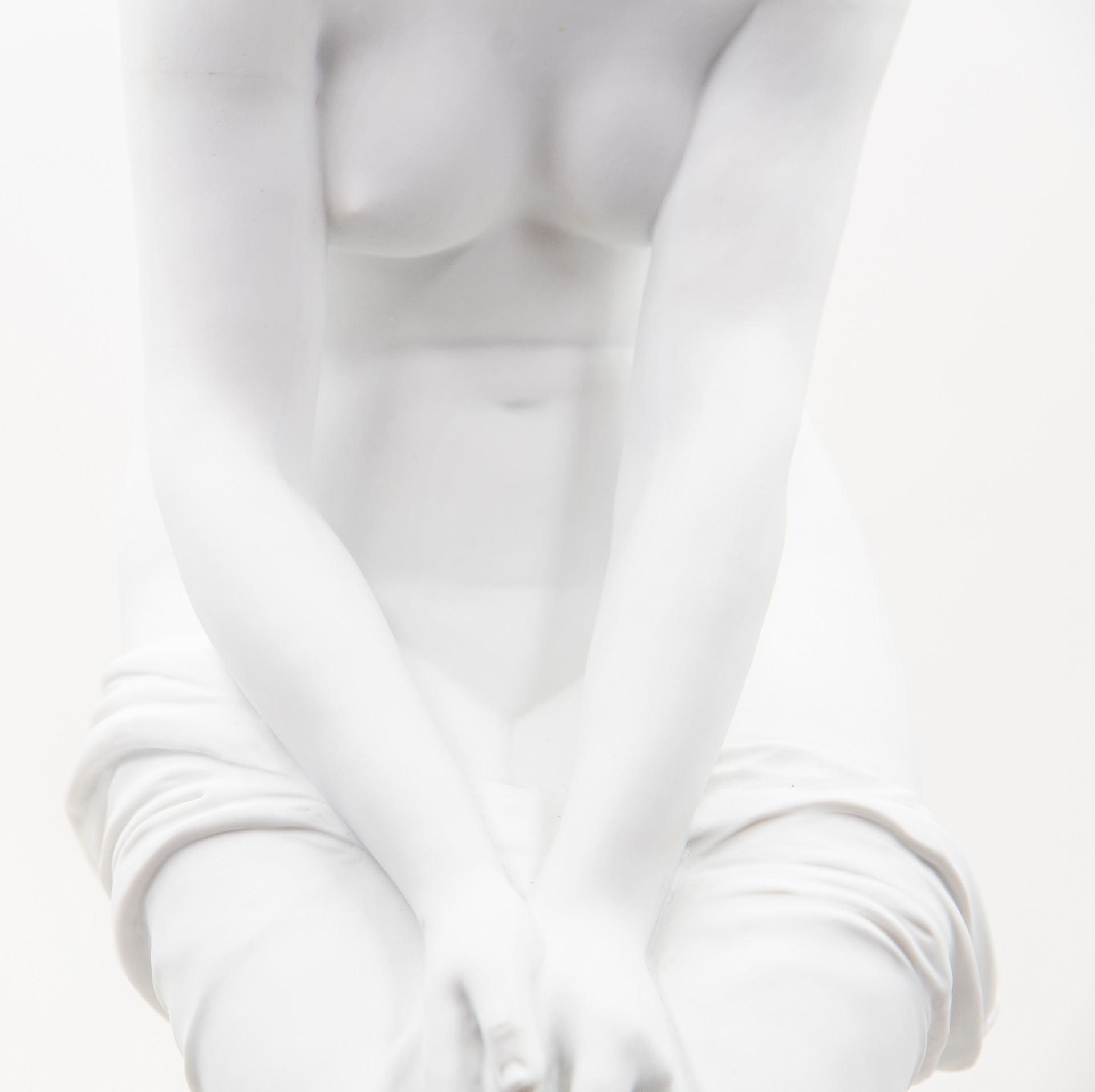
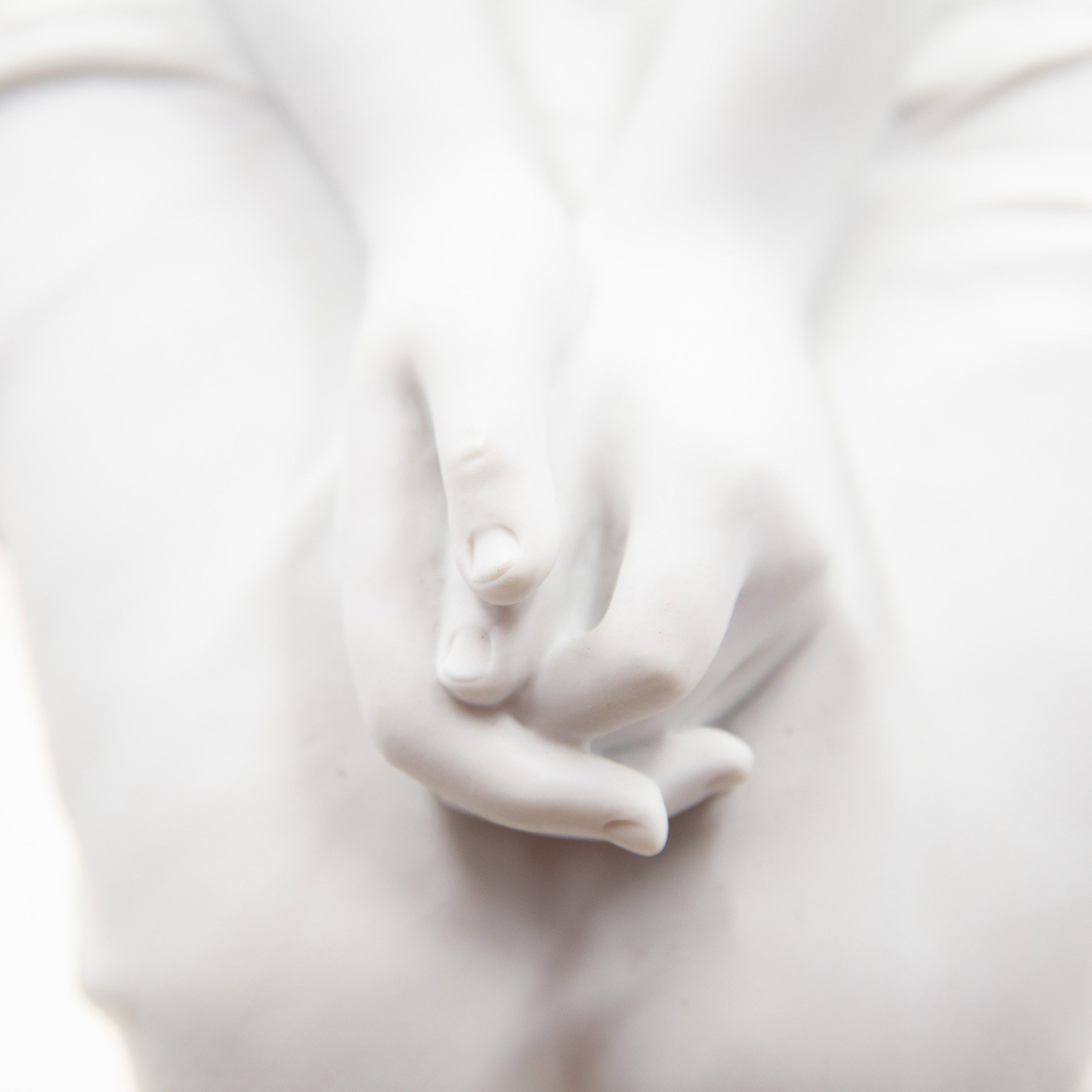
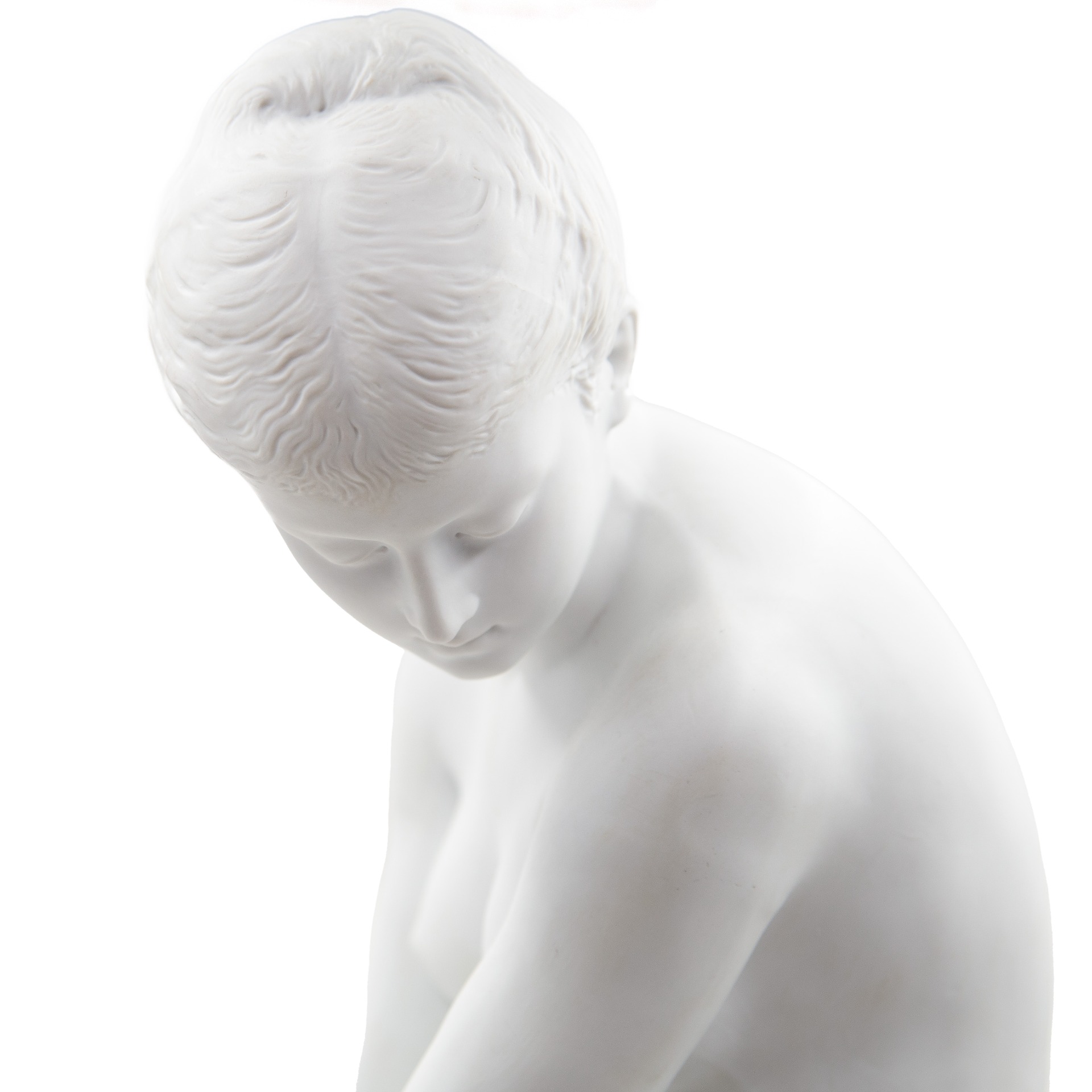
La composizione raffigura una giovane donna seduta su una roccia modellata in modo realistico. La figura è raccolta in una posa intima e contemplativa. La delicatezza dei lineamenti e la morbidezza delle superfici sono esaltate dalla finitura opaca del biscuit, che richiama la purezza del marmo.
Un drappo scivola con naturalezza dalla vita lungo le gambe, introducendo un elemento di movimento e contrasto tra nudità e tessuto. Alla base della scena, tre rondini animano la composizione, aggiungendo un tocco narrativo e simbolico, spesso associato alla leggerezza, al passaggio del tempo o alla rinascita.
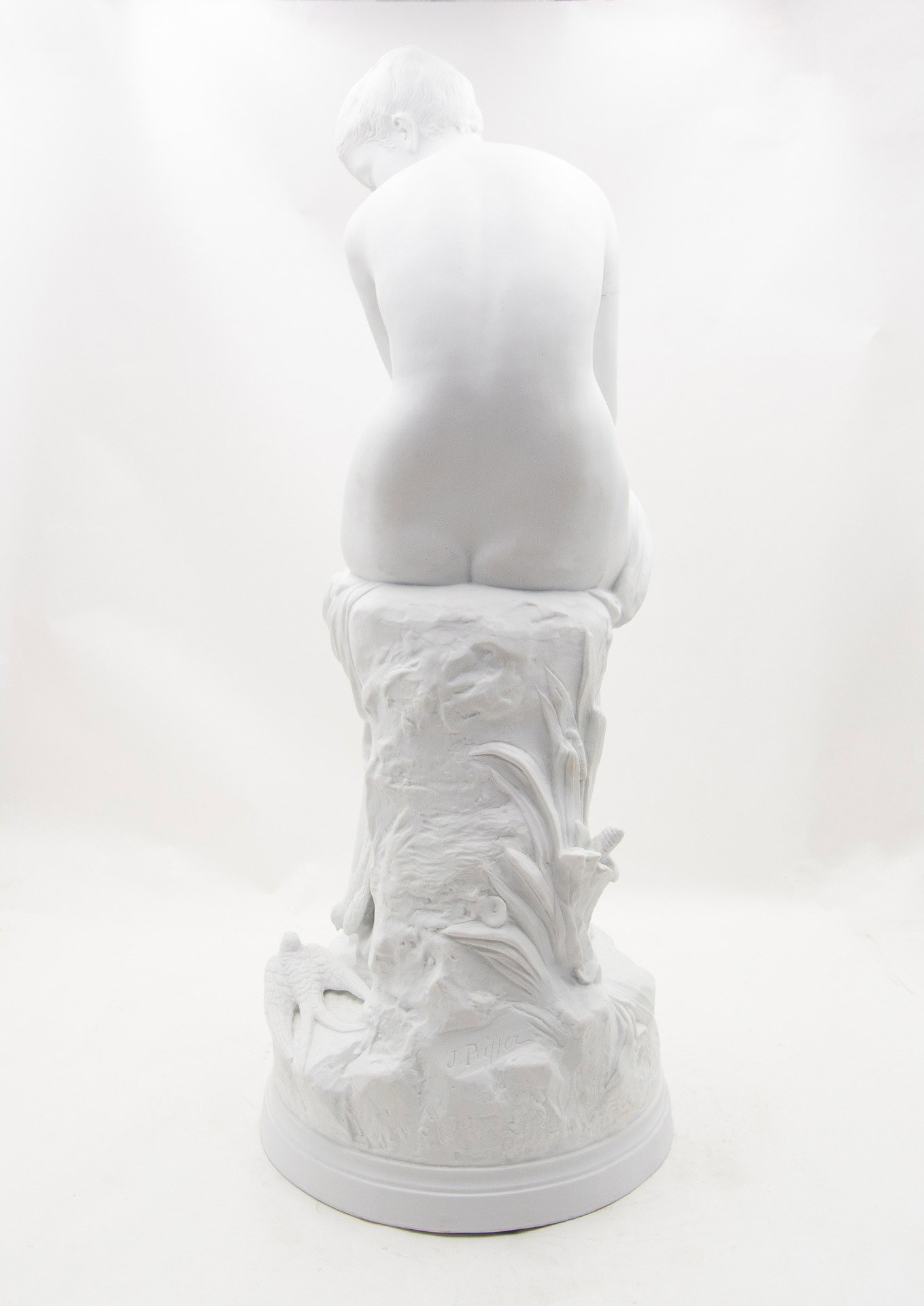
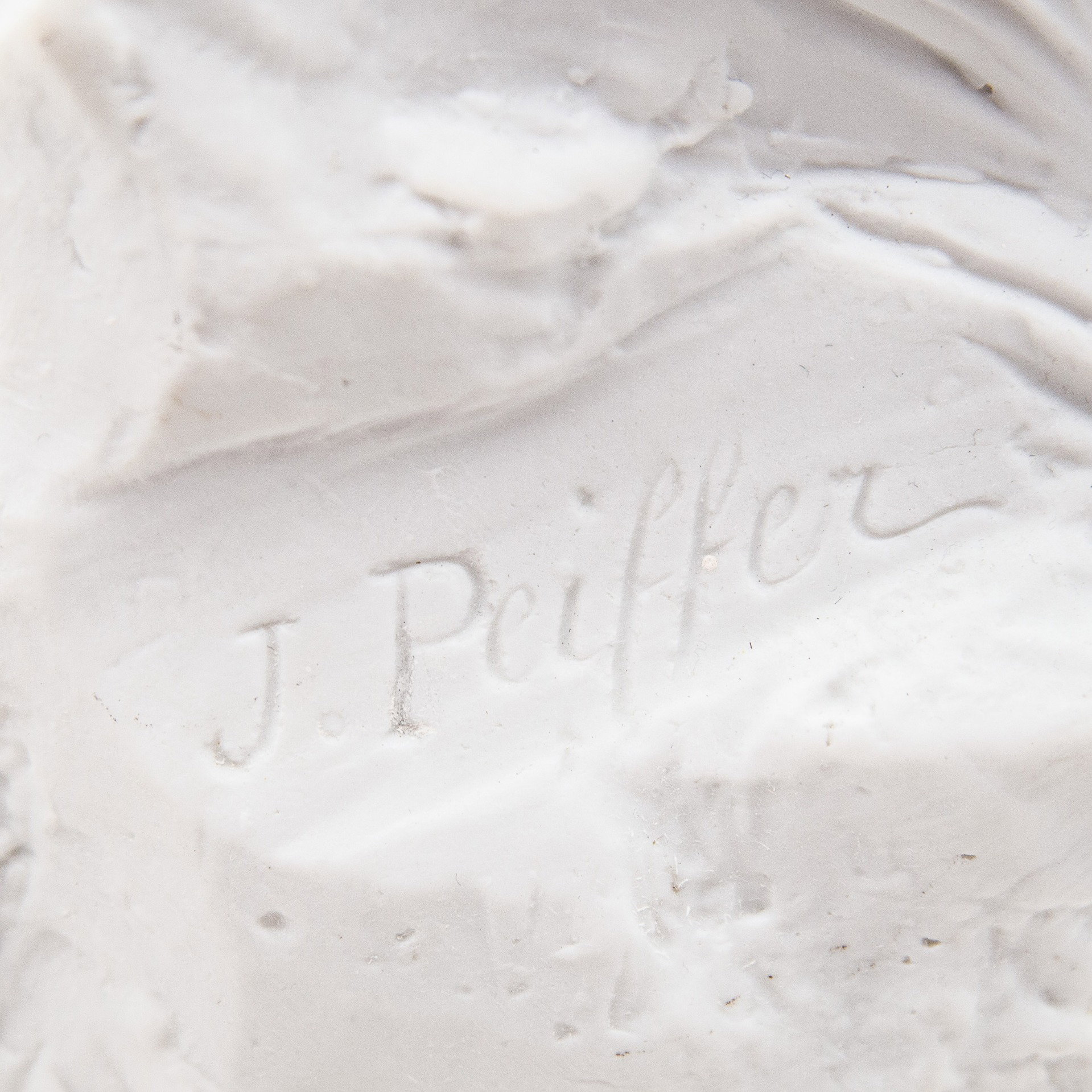
Il retro della base, arricchito da una decorazione vegetale in leggero rilievo, completa l’ambientazione naturalistica. Sulla roccia è presente la firma incisa “J. Peiffer”, testimonianza diretta dell’autore.
Questa scultura è una riproduzione fedele dell’opera in marmo “Les Hirondelles”, presentata da Peiffer al Salon del 1878 e oggi conservata a Champigny-sur-Marne.
Le dimensioni (26 × 29 × 69 cm) conferiscono alla scultura una presenza importante, pur mantenendo un’eleganza intima e raccolta, tipica della produzione decorativa di alta qualità del periodo.
Auguste Joseph Peiffer, “Bather with Swallows,” biscuit porcelain, late 19th century
Auguste Joseph Peiffer’s “Bather with Swallows,” created in France in the late 19th century, is an elegant sculpture in white biscuit porcelain.
The composition depicts a young woman seated on a realistically modeled rock. The figure is poised in an intimate and contemplative pose. The delicacy of her features and the softness of the surfaces are enhanced by the matte finish of the biscuit porcelain, which evokes the purity of marble.
A drape flows naturally from her waist down her legs, introducing an element of movement and contrast between the nude form and the fabric. At the base of the scene, three swallows enliven the composition, adding a narrative and symbolic touch, often associated with lightness, the passage of time, or rebirth.
The back of the base, embellished with a slightly raised plant motif, completes the naturalistic setting. Engraved on the rock is the signature “J. Peiffer,” a direct testament to the artist.
This sculpture is a faithful reproduction of the marble work “Les Hirondelles,” presented by Peiffer at the 1878 Salon and now housed in Champigny-sur-Marne.
Its dimensions (26 × 29 × 69 cm) give the sculpture a commanding presence, while maintaining an intimate and understated elegance typical of the high-quality decorative art of the period.