
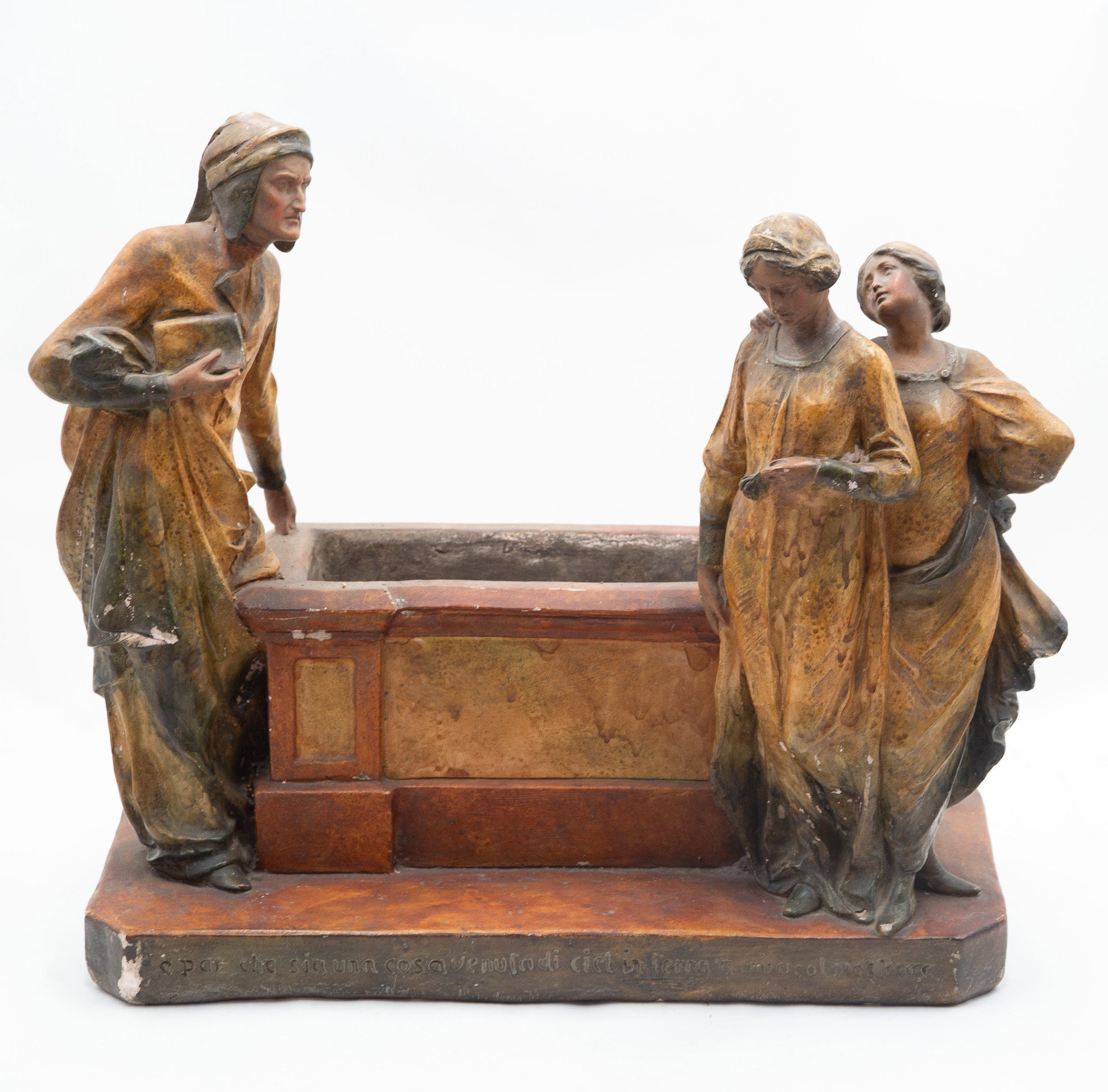



"L'Incontro tra Dante e Beatrice: Il Miracolo del Cielo"
in gesso dipinto, Epoca '900
Misure: H 45 x L 54 x P 22 cm
Sulla base della scultura è riportato un verso famosissimo di Dante Alighieri, tratto dalla Vita Nova (Sonetto "Tanto gentile e tanto onesta pare"):
"e par che sia una cosa venuta di cielo in terra a miracol mostrare"
Il testo celebra la natura quasi divina di Beatrice, descrivendola come un miracolo vivente sceso tra gli uomini.
La figura di Dante, a sinistra, è resa immediatamente riconoscibile dal profilo aquilino e dal mazzocchio trecentesco, mentre osserva Beatrice con un misto di soggezione e ammirazione stringendo un libro, simbolo della sua produzione poetica.
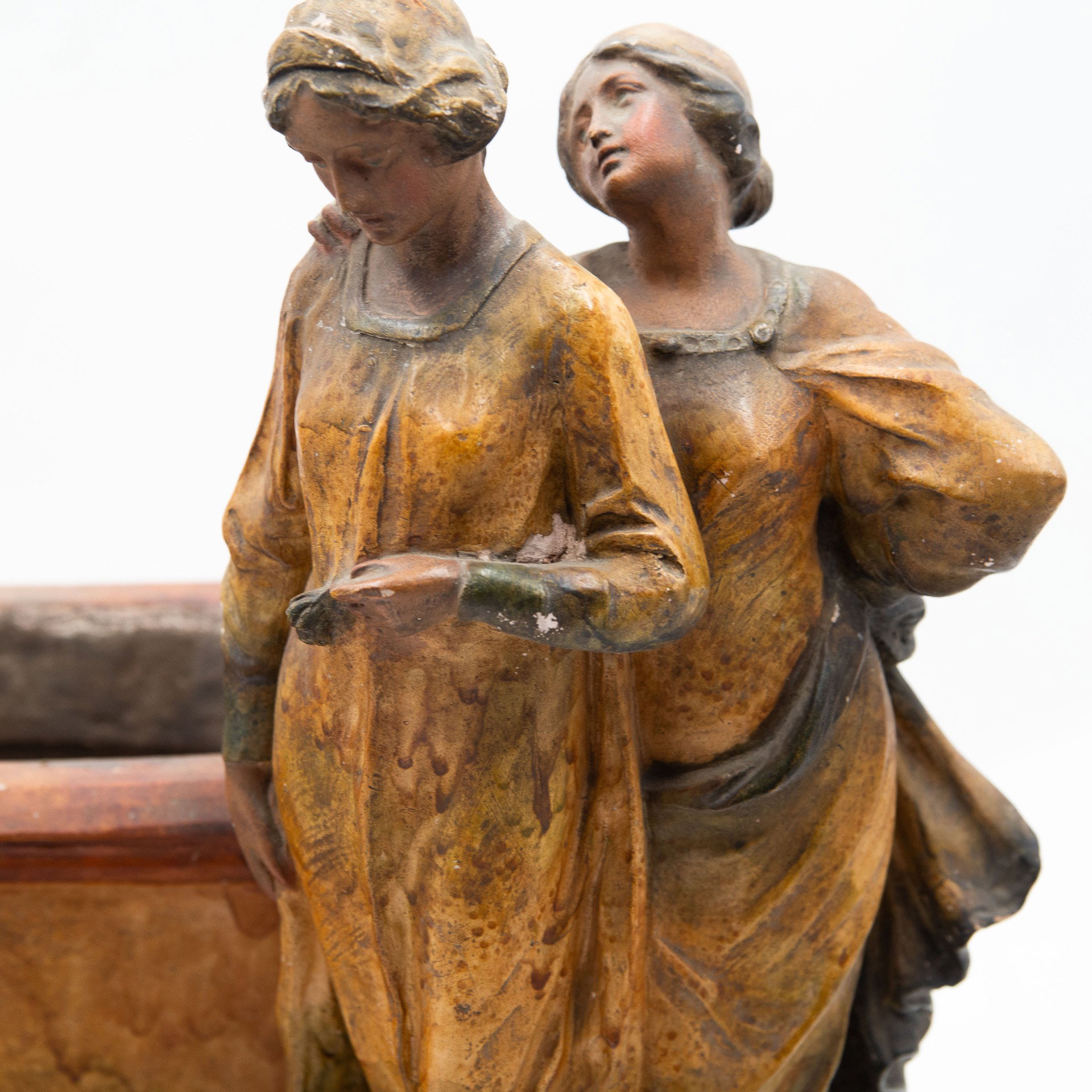
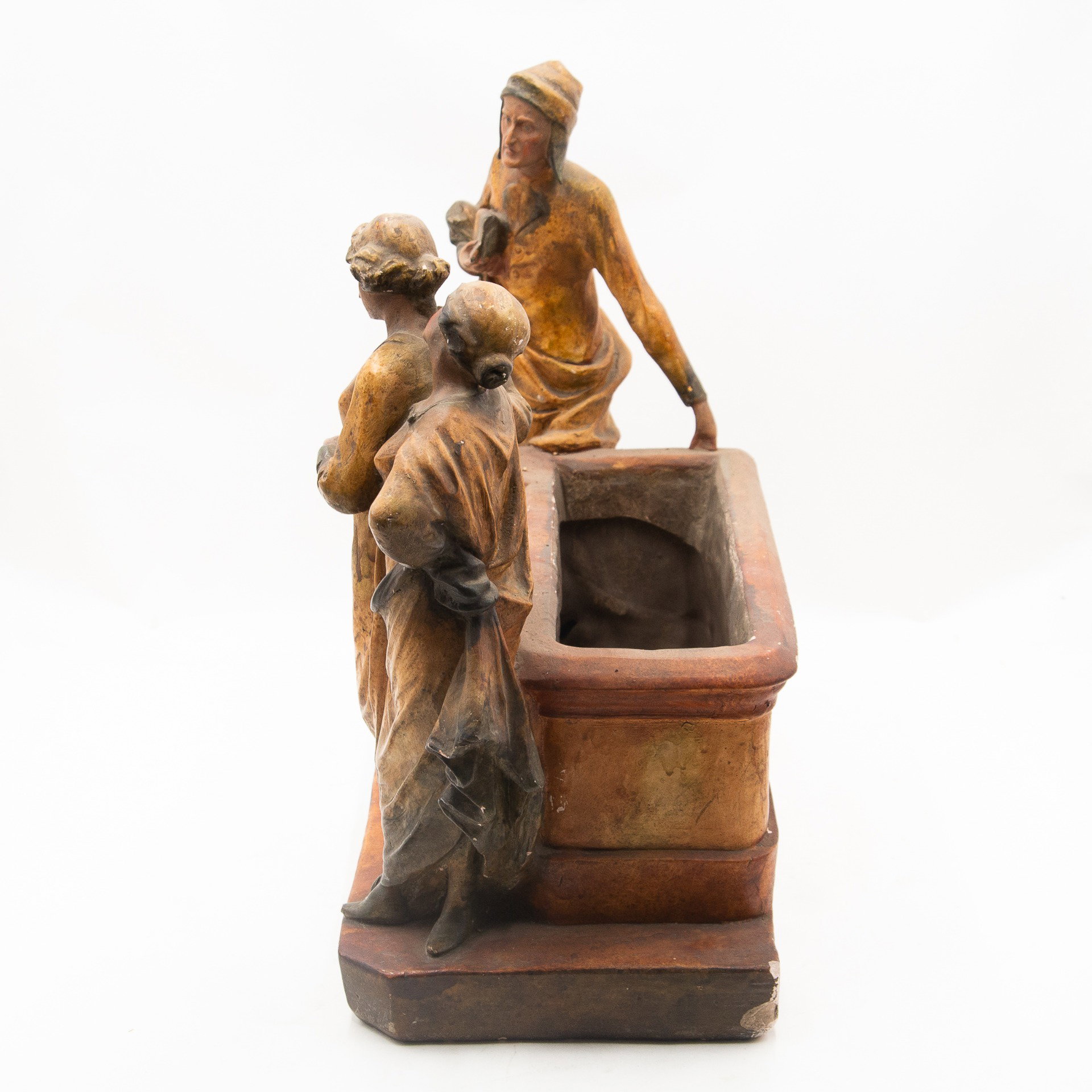
Al lato opposto, Beatrice incarna la grazia e l'umiltà della Vita Nova, accompagnata da una figura femminile tra le strade di Firenze e separata dal poeta da un elemento centrale simile a un antico pozzo, che divide simbolicamente il mondo terreno da quello spirituale.
Il tutto è realizzato in uno stile neogotico di fine Ottocento che utilizza la policromia per richiamare le antiche terrecotte, celebrando con romanticismo il legame eterno tra arte plastica e letteratura italiana attraverso l'immagine dei suoi protagonisti più iconici.
“The Meeting of Dante and Beatrice: The Miracle of Heaven”
painted gesso, 20th century
Dimensions: H 45 x W 54 x D 22 cm
On the base of the sculpture is inscribed a famous verse by Dante Alighieri, taken from Vita Nova (the sonnet “Tanto gentile e tanto onesta pare”):
“and it seems as though she were a thing come down from heaven to earth to show a miracle”
The text celebrates Beatrice’s almost divine nature, describing her as a living miracle descended among men.
The figure of Dante, on the left, is immediately recognizable by his aquiline profile and 14th-century cap, as he gazes at Beatrice with a mixture of awe and admiration while clutching a book, a symbol of his poetic output.
On the opposite side, Beatrice embodies the grace and humility of *Vita Nova*, accompanied by a female figure in the streets of Florence and separated from the poet by a central element resembling an ancient well, which symbolically divides the earthly world from the spiritual.
The entire work is executed in a late 19th-century Neo-Gothic style that uses polychromy to evoke ancient terracotta, romantically celebrating the eternal bond between the visual arts and Italian literature through the image of its most iconic protagonists.