
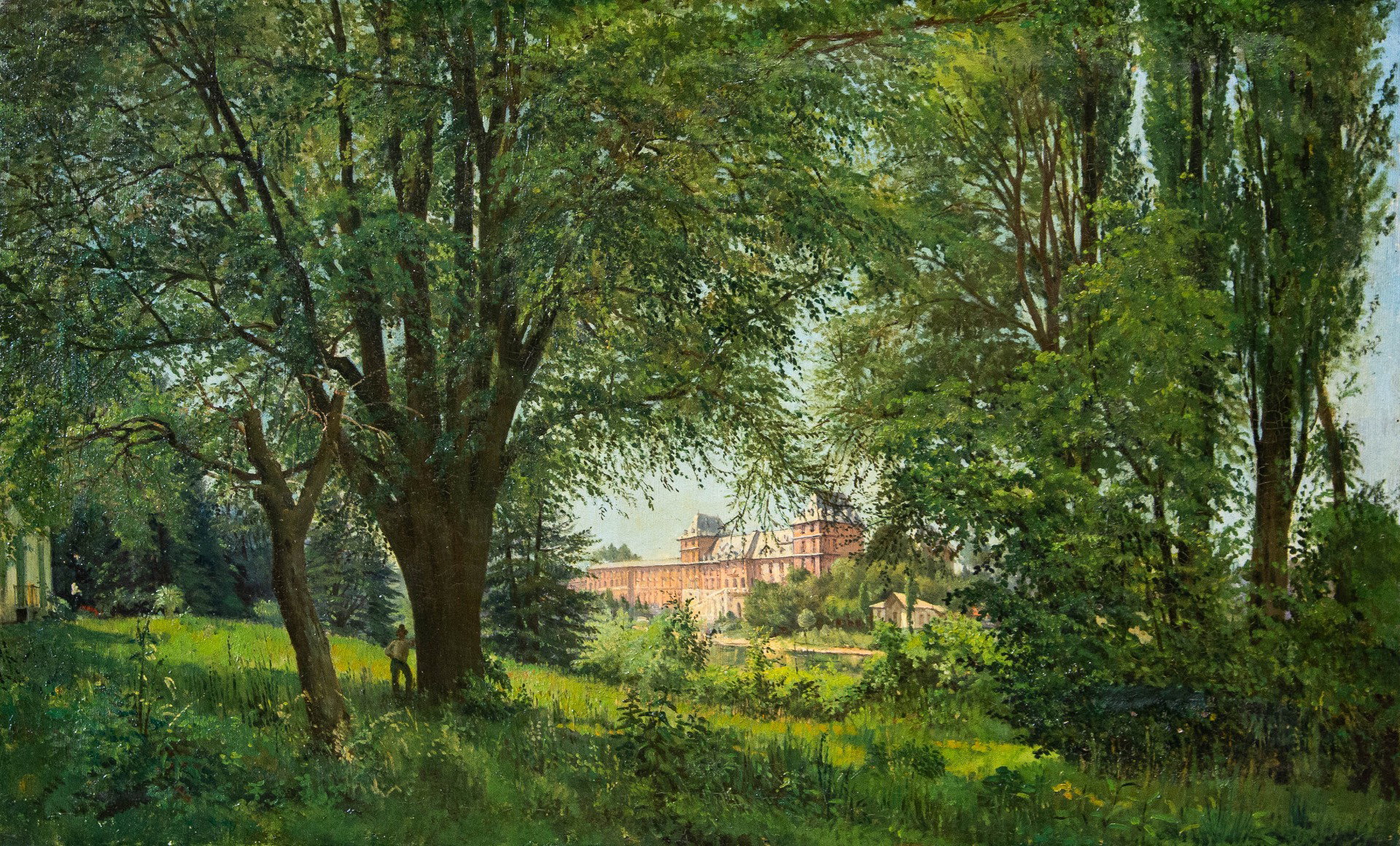
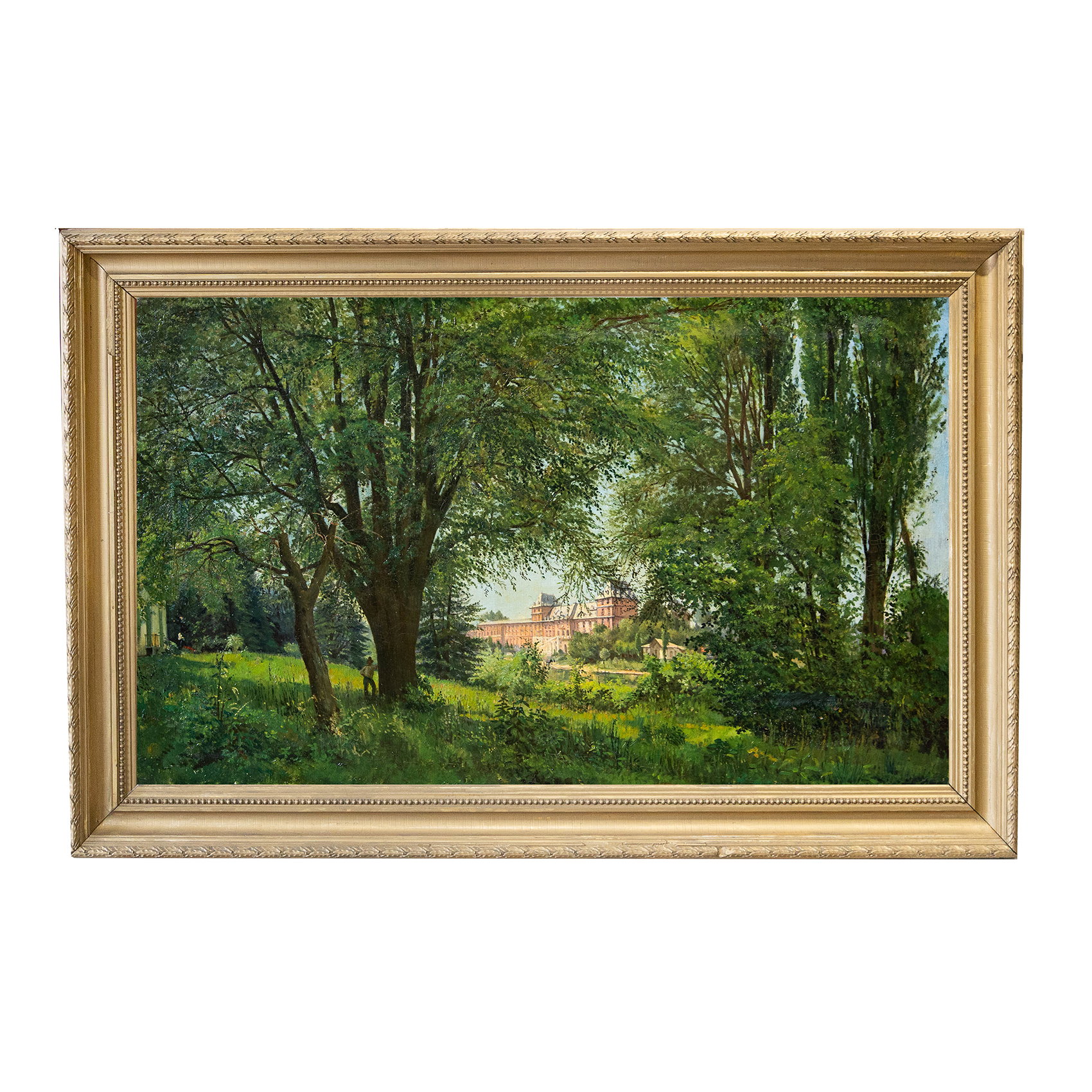




Veduta del Castello del Valentino dal Parco, Torino
Fine XIX – inizi XX secolo
Olio su tela
Misure: cm 62 × 101 (cm 76 × 117,5 con cornice)
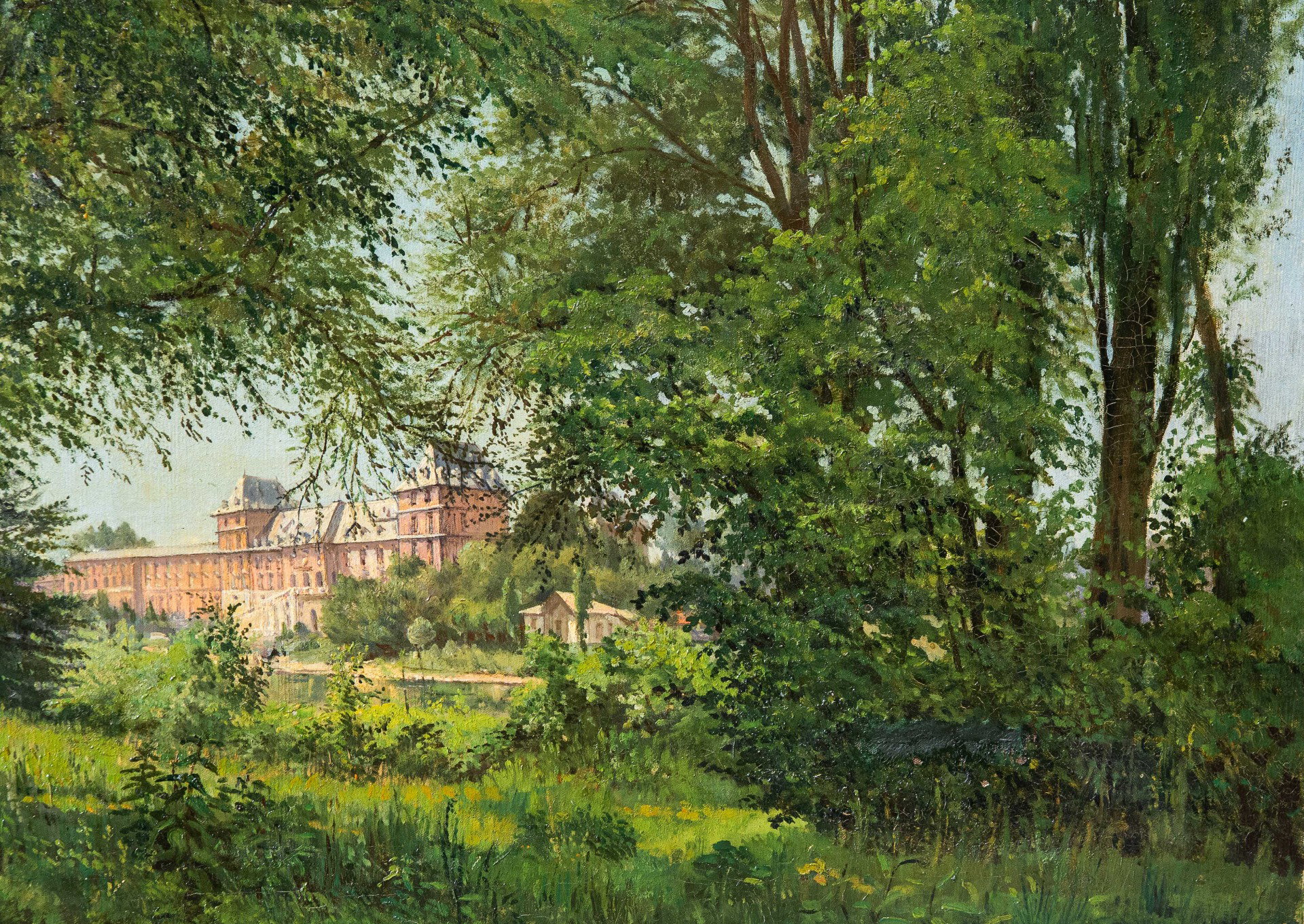
Questa raffinata veduta restituisce con eleganza lirica uno degli scorci più suggestivi di Torino, ritraendo il Castello del Valentino immerso nella quiete rigogliosa del suo parco lungo il fiume Po. L’opera si distingue per una composizione armoniosa, in cui la maestosa architettura sabauda emerge sullo sfondo, incorniciata da una quinta naturale di alberi secolari che filtrano la luce con vibrante sensibilità cromatica.
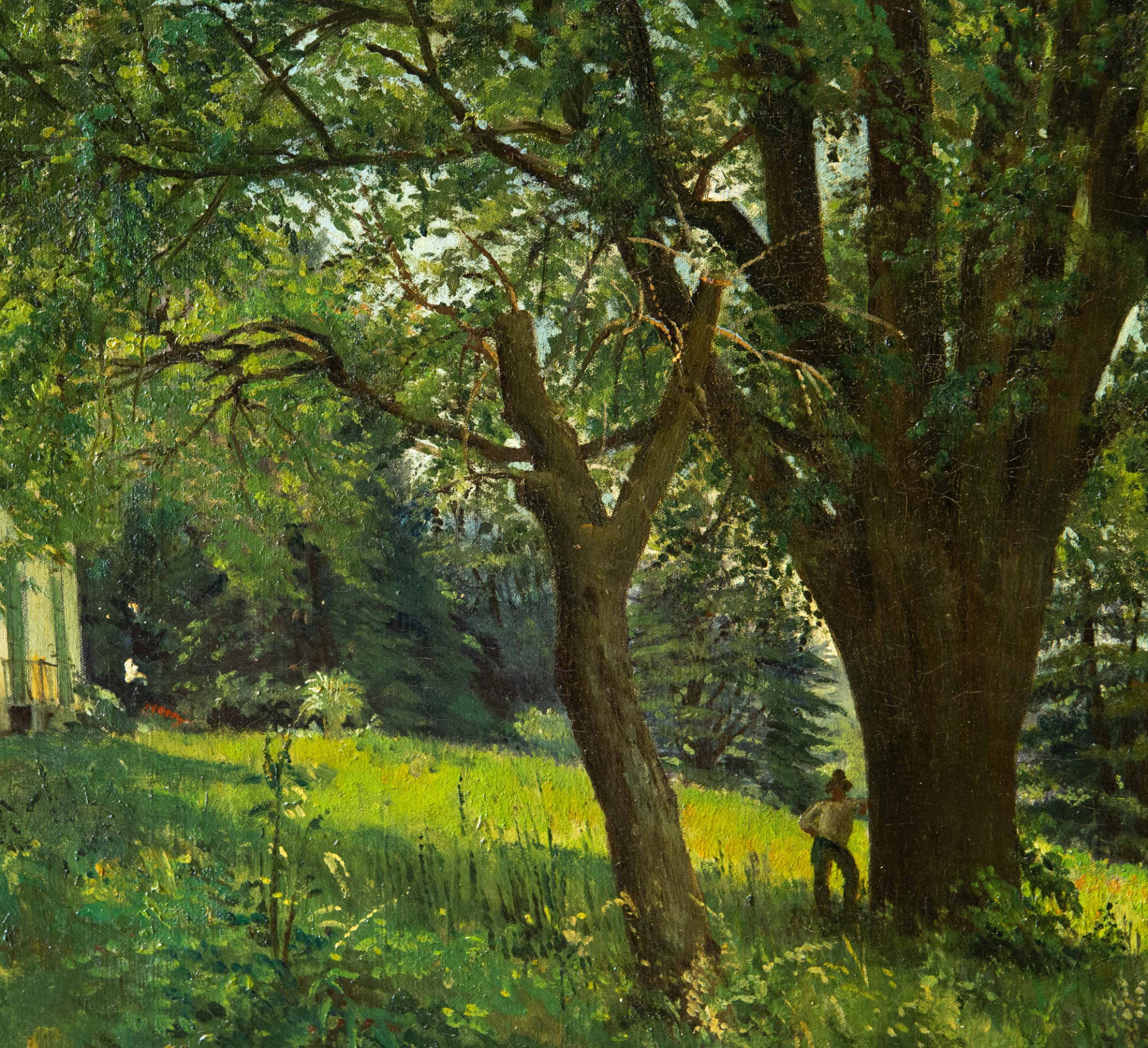
L’esecuzione pittorica rivela una mano esperta, attenta alla resa luministica e alla varietà tonale del verde, con richiami alla tradizione en plein air e alla sensibilità paesaggistica della scuola piemontese tra Ottocento e Novecento. L’opera si configura così non solo come una veduta di grande piacevolezza estetica, ma anche come preziosa testimonianza storica di un paesaggio urbano ancora intatto, prima delle trasformazioni del secolo successivo.
View of Valentino Castle from the Park, Turin
Late 19th – early 20th century
Oil on canvas
Dimensions: 62 × 101 cm (76 × 117.5 cm with frame)
This refined view captures with lyrical elegance one of Turin’s most evocative vistas, depicting the Valentino Castle nestled in the lush tranquility of its park along the Po River. The work stands out for its harmonious composition, in which the majestic Savoy architecture emerges against the backdrop, framed by a natural setting of centuries-old trees that filter the light with vibrant chromatic sensitivity.
The painting’s execution reveals an expert hand, attentive to the rendering of light and the tonal variety of green, with references to the en plein air tradition and the landscape sensibility of the Piedmontese school between the 19th and 20th centuries. The work thus stands not only as a view of great aesthetic pleasure but also as a precious historical testimony to an urban landscape still intact, before the transformations of the following century.