Follower of Joos de Momper the Younger (Antwerp, 1564 – Antwerp, 1635)
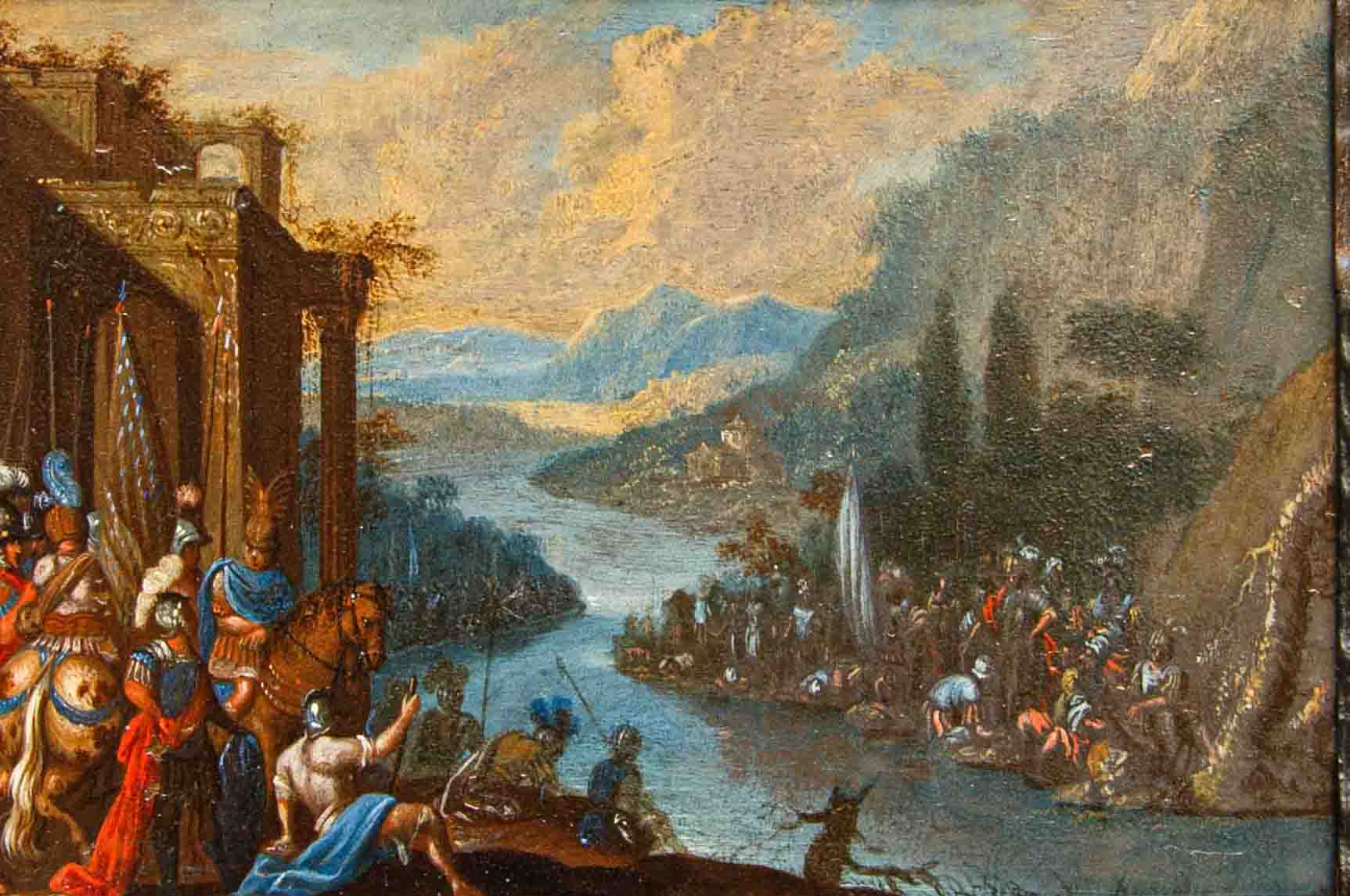
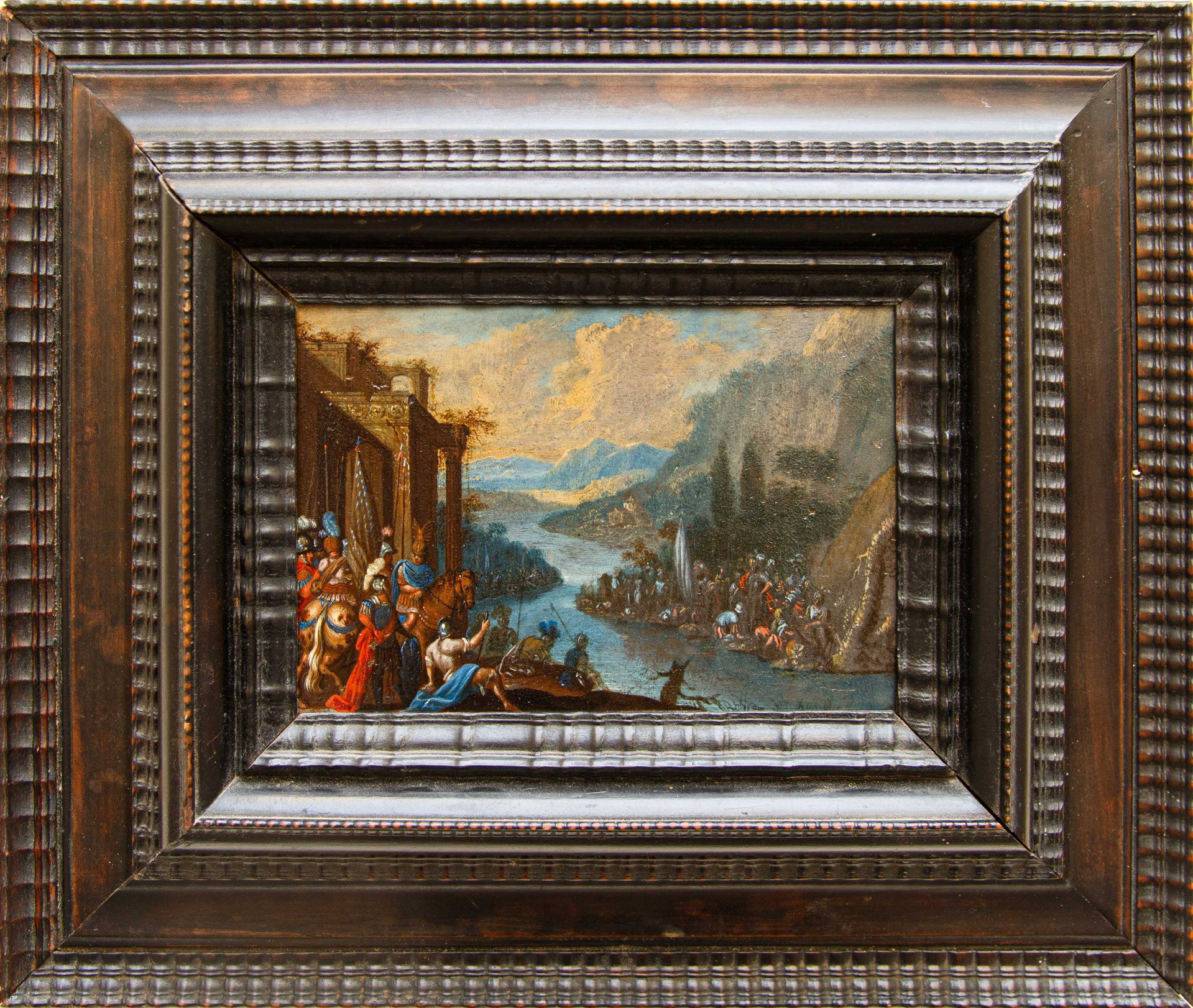
Battle of the Hydaspes River
Oil on copper, 13 x 19.5 cm – with frame, 31 x 36 cm
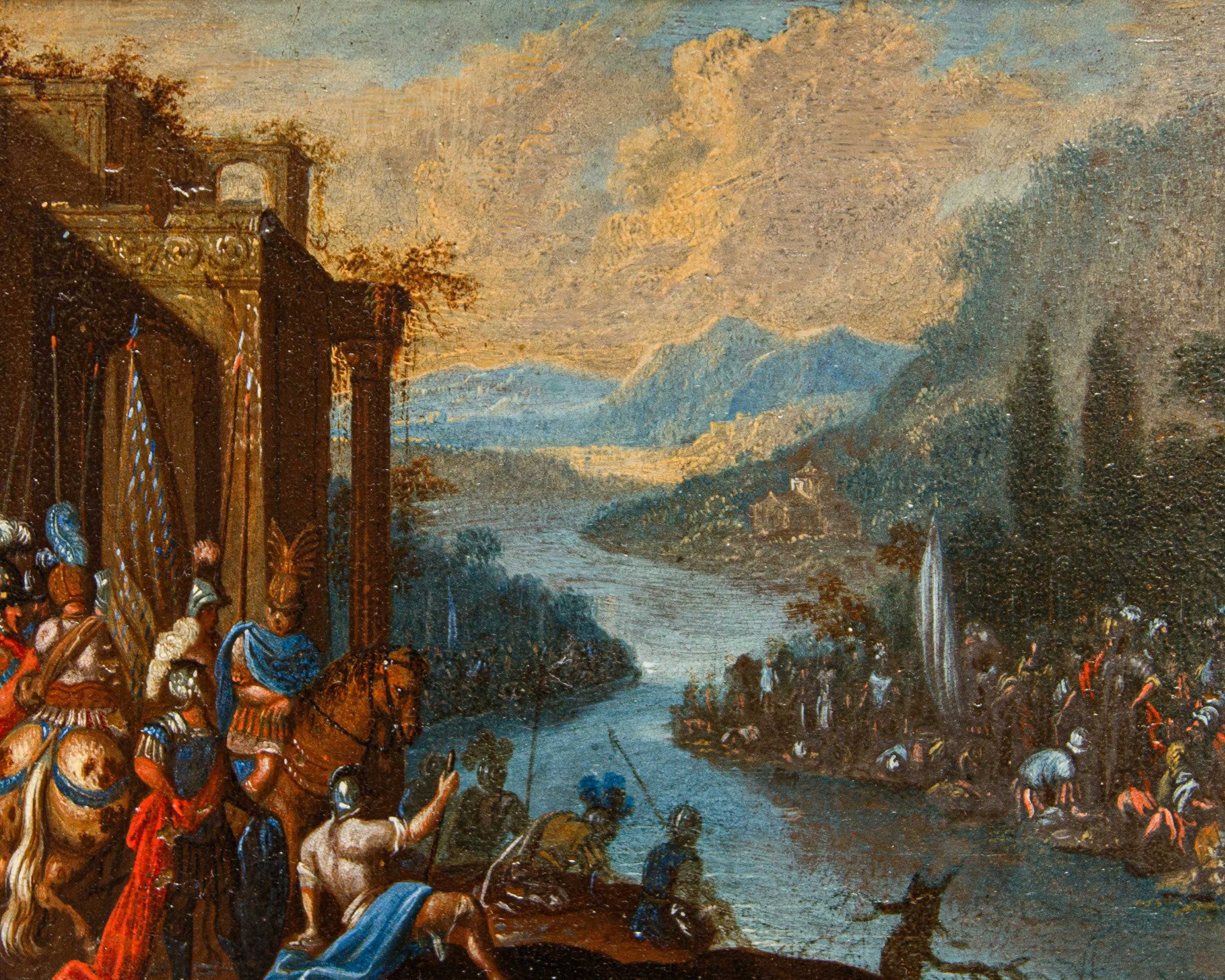
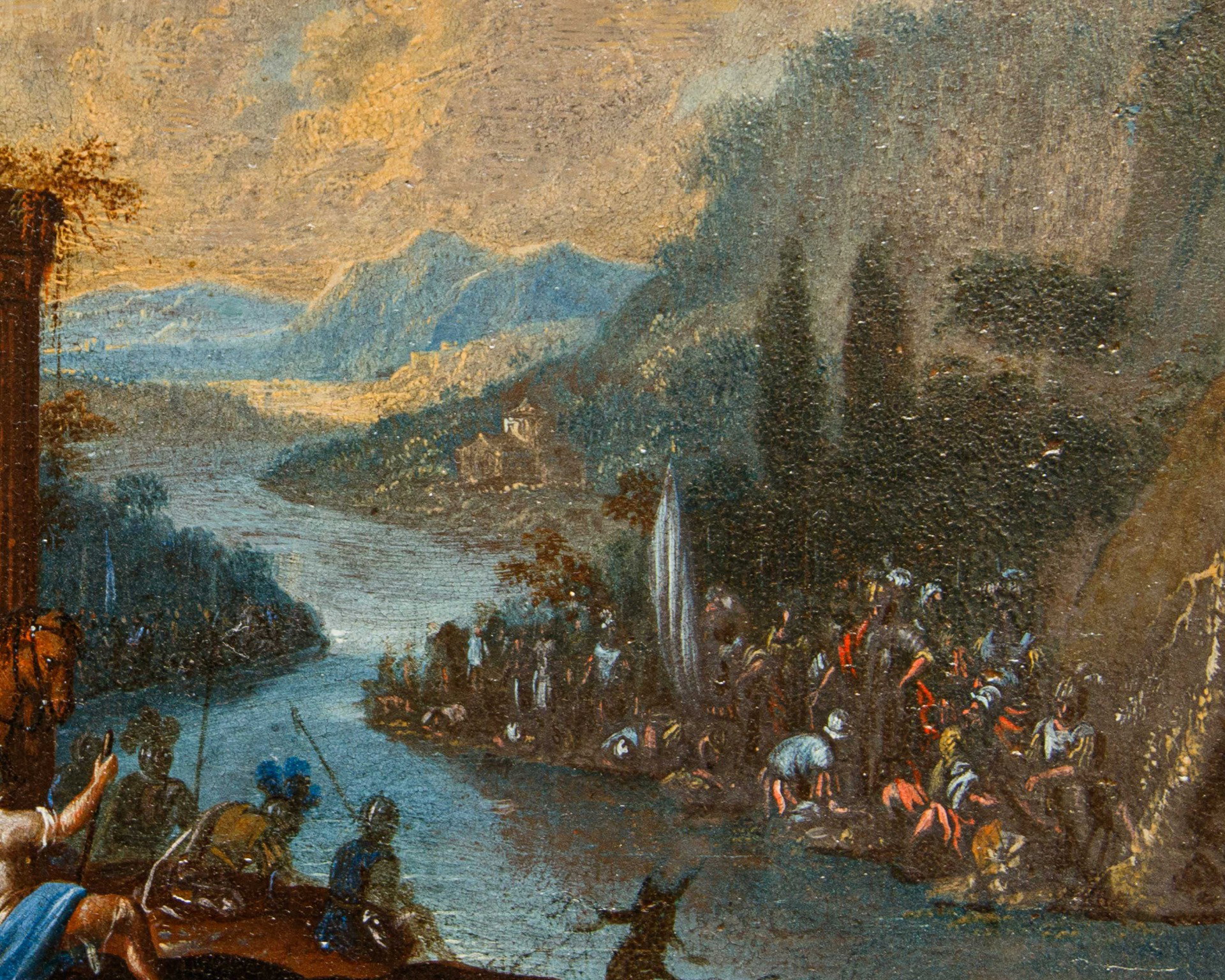
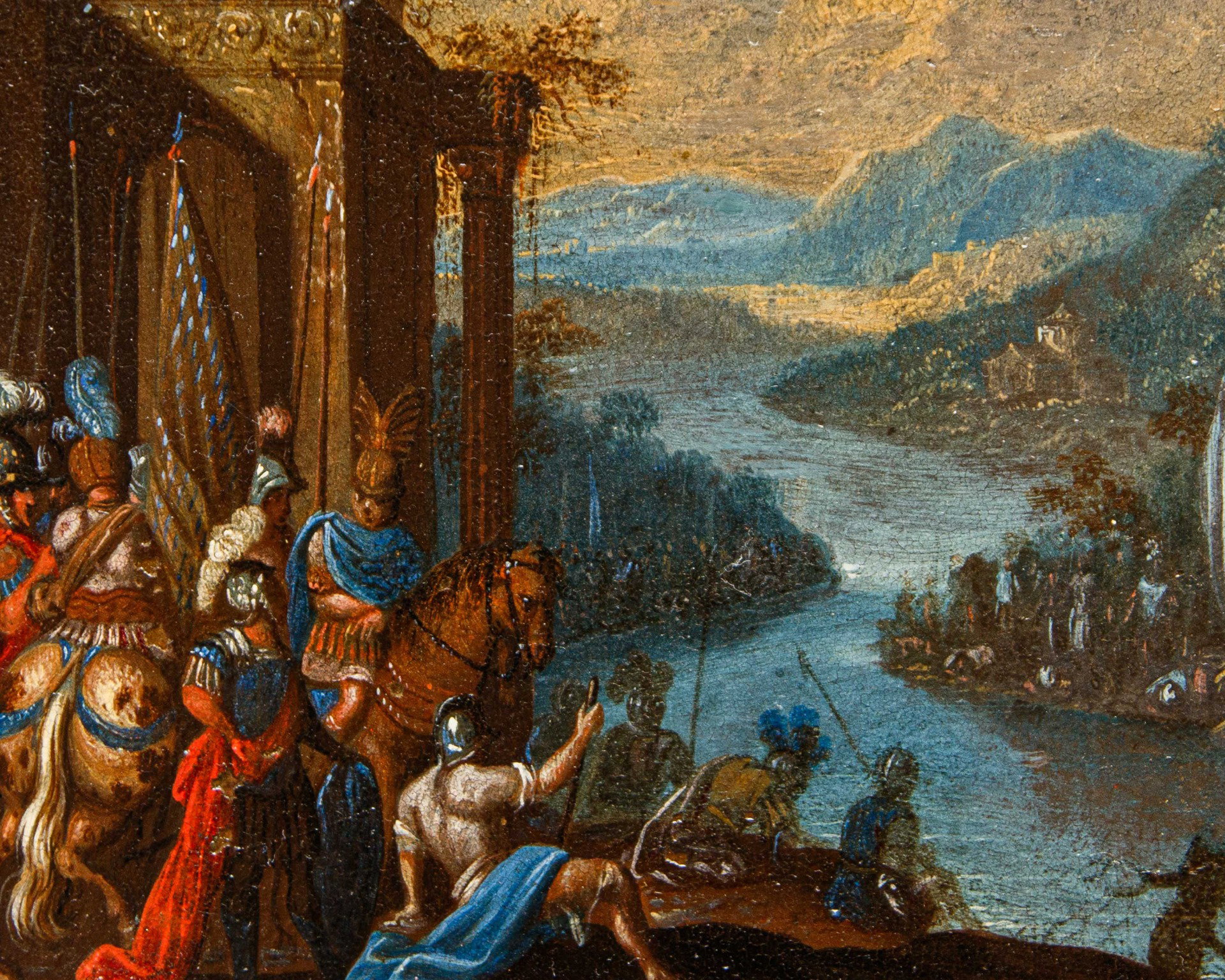
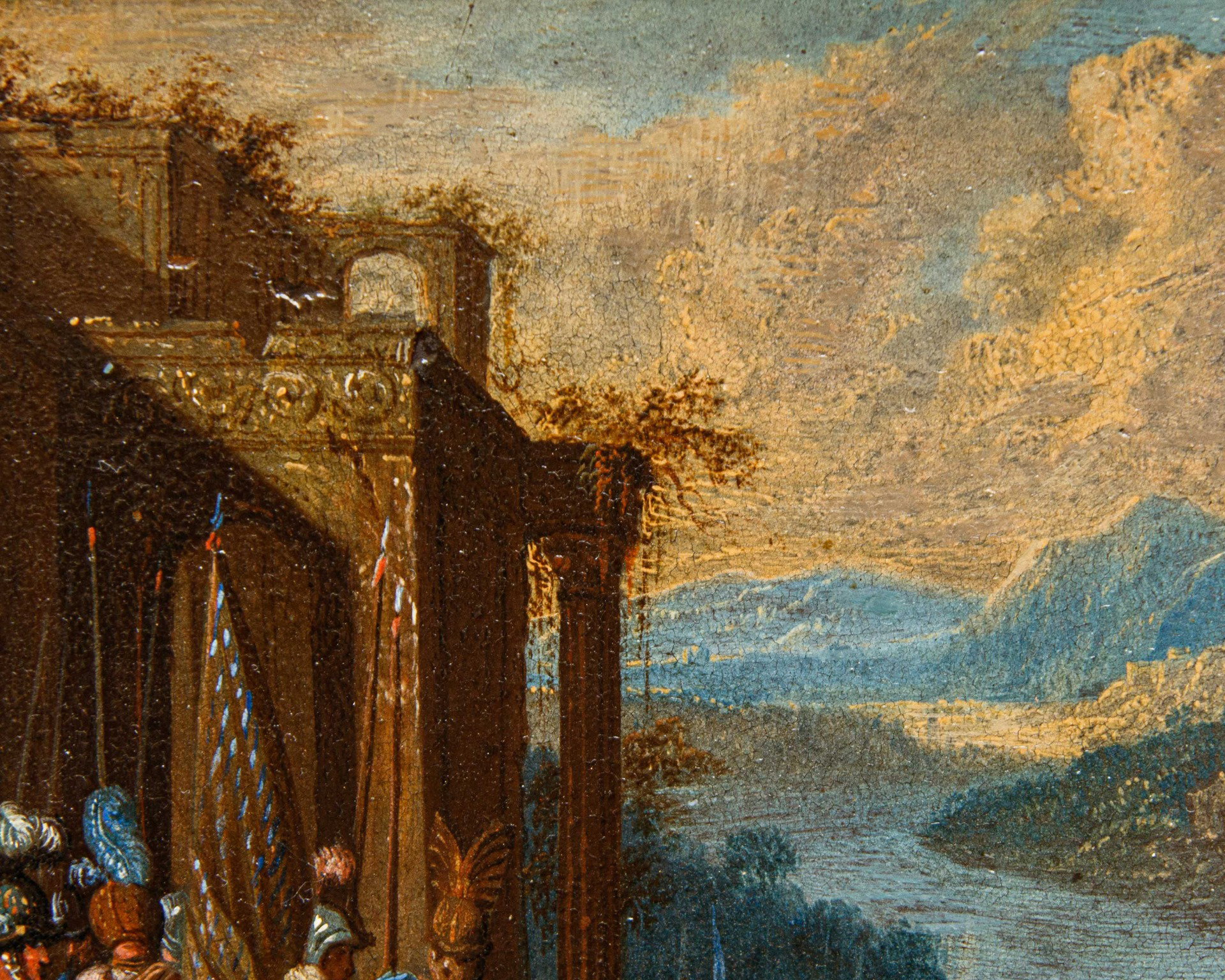
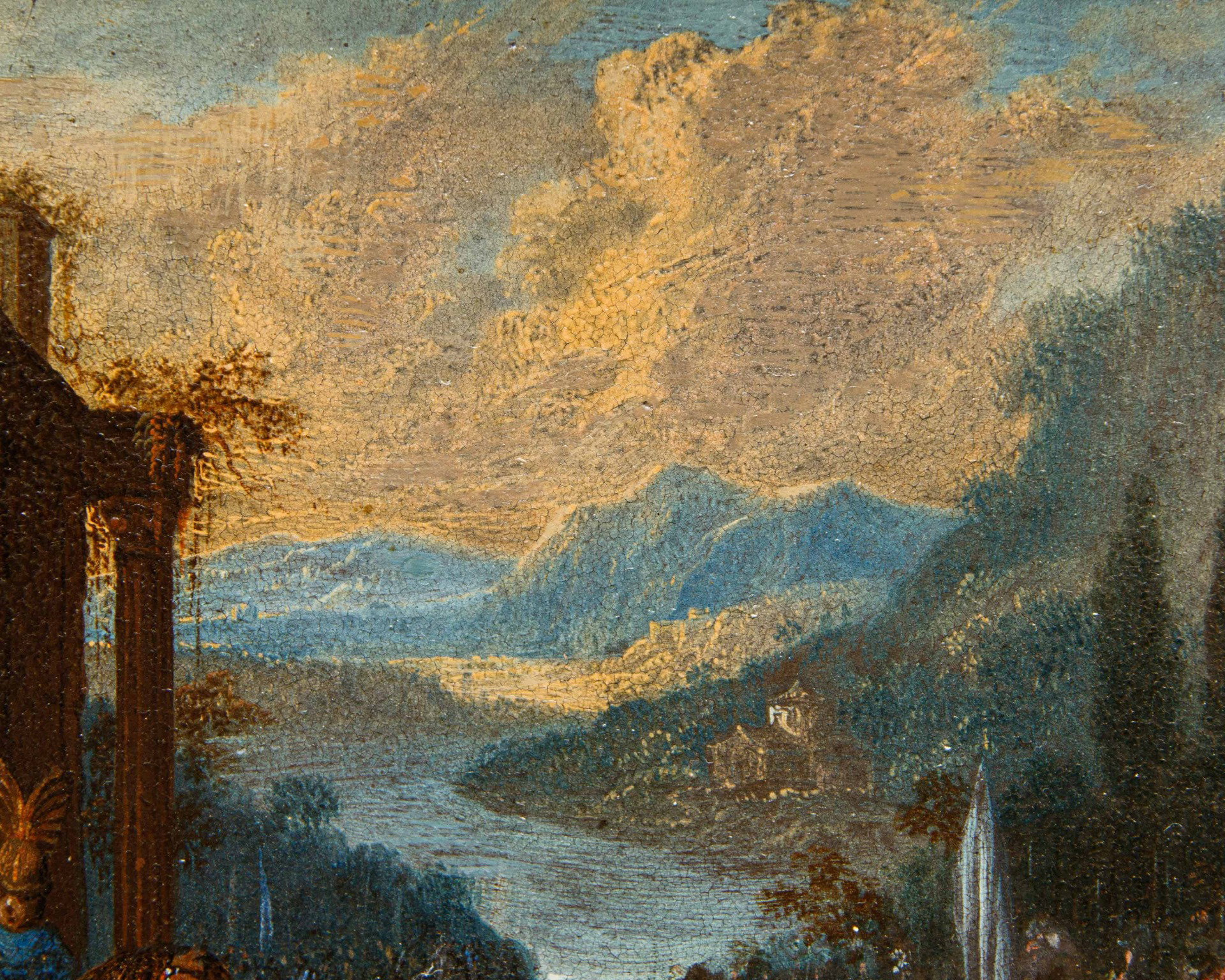
This refined oil composition on copper, attributable to a follower of Joos de Momper the Younger, perfectly embodies the crucial transition between Flemish Mannerism and Baroque naturalism. The work is distinguished by the typical perspectival structure that made de Momper's workshop famous: a tripartite chromatic division where the foreground is dominated by brown and earthy tones, the middle ground lights up with lush greens, and the background fades into crystalline, atmospheric blues, in accordance with the principles of aerial perspective.
Joos de Momper (Antwerp, 1564–1635) is a pivotal figure in the history of European art. Trained within a dynasty of painters and influenced by the cosmic landscapes of Pieter Brueghel the Elder, he successfully transitioned landscape painting from a purely decorative or religious function to an autonomous and vibrant genre. His biography tells us of an artist deeply rooted in Antwerp, where he became dean of the Guild of Saint Luke, but his vision was anything but provincial. De Momper is renowned for his "imaginary landscapes," mountainous scenes, and river valleys interspersed with historical or
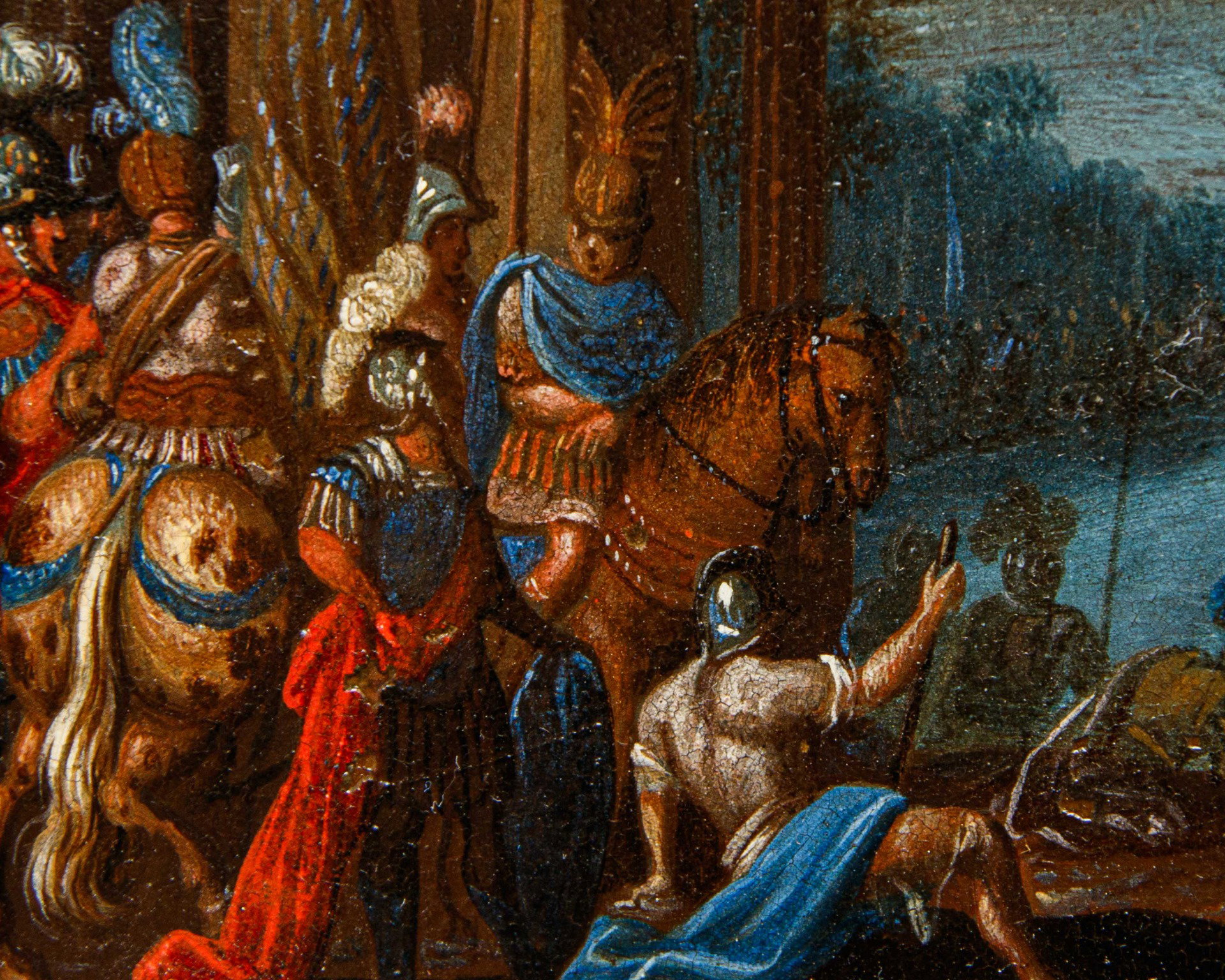
The painting depicts one of the most famous and tactically complex moments of Alexander the Great's career: the Battle of the Hydaspes River (in present-day Pakistan), fought in 326 BC against the Indian king Porus. After crossing the Indus, Alexander confronted Porus's army, arrayed on the opposite bank of the Hydaspes. The river was swollen by monsoon rains, making the crossing extremely dangerous. To overcome the impasse, Alexander used his superior strategic cunning. He implemented a series of diversionary maneuvers to confuse the enemy, making Porus believe he would not attempt to cross until after the rains. On a stormy night, Alexander secretly led a select portion of his troops several kilometers upstream, finally managing to cross the river and surprise the flank of the Indian army. The battle ended with Alexander's victory, but the episode remained famous primarily for its epilogue. Impressed by Porus's valor and dignity (who had fought to the end despite his wounds), Alexander asked him how he wished to be treated. Porus replied: "As a king." Alexander, admiring such pride, not only restored his kingdom to him but also expanded its borders, making him his ally.
The painting reflects a classicist vision typical of European painting, where armor and architecture are idealized according to the taste of the time, rather than for historical accuracy to the customs of 4th-century BC India or Macedon. They do not seek topographical accuracy but aim to evoke a sense of wonder and sublime vastness.
De Momper's importance lies in his free brushwork, which anticipates modern sensibilities. He abandoned the meticulous detail of the Flemish Primitives in favor of a more dynamic rendering of light and rock formations. In the painting under examination, we note how the classicizing architectures on the left and the figures in military or heroic attire serve to give scale and narrative to the scene, a common practice in which de Momper often collaborated with figure specialists, such as Jan Brueghel the Elder or Sebastian Vrancx. This synergy between wild nature and human presence defined the standard for 17th-century Flemish landscape.
De Momper's influence was vast and lasting, spreading through a large number of disciples and followers who continued to explore the theme of the fantastic landscape. Among the most relevant names in his orbit are Louis de Caullery, known for his convivial and architectural scenes, and Frans de Momper, who inherited the master's style while evolving it towards more monochrome tones. The copper artwork presented here, thanks to the intrinsic brilliance of the metallic support, enhances precisely that vibrant luminosity that these followers sought to emulate, confirming how de Momper's lesson on depth and atmosphere remained an indispensable reference point for generations of landscape painters.