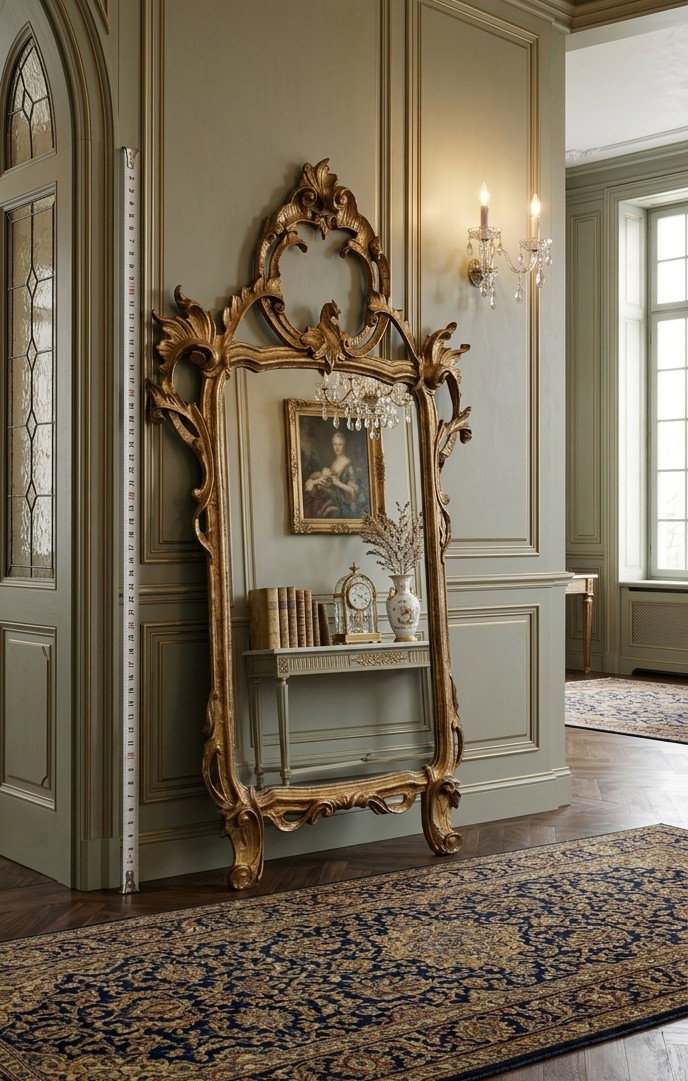
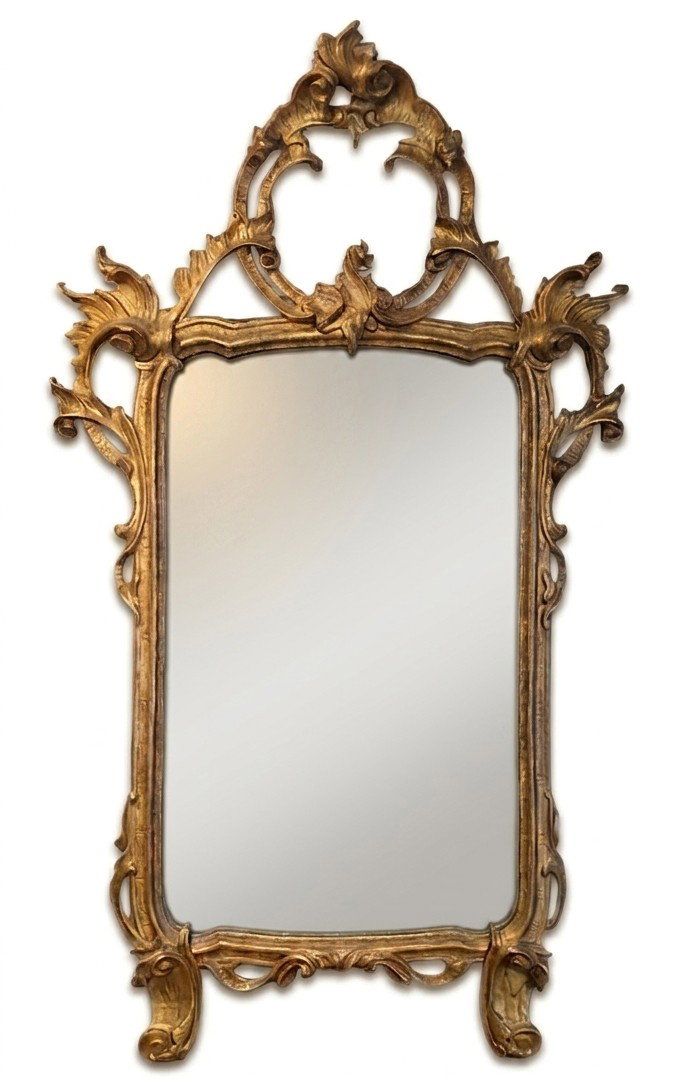
Gilded Lombarda mirror with Mecca
Period: Second half of the 18th century (Barocchetto)
Geographic area: Lombardy, Italy
Materials and techniques: Carved wood, "Mecca" gilding on gesso ground, original mercury mirror.
Dimensions: 159 x 88 cm.
Structural and Stylistic Description
An important mirror in finely carved and gilded wood with Mecca, a superb example of refined and vigorous Lombard cabinetmaking from the mid-18th century. The structure is distinguished by a flowing and eclectic line.
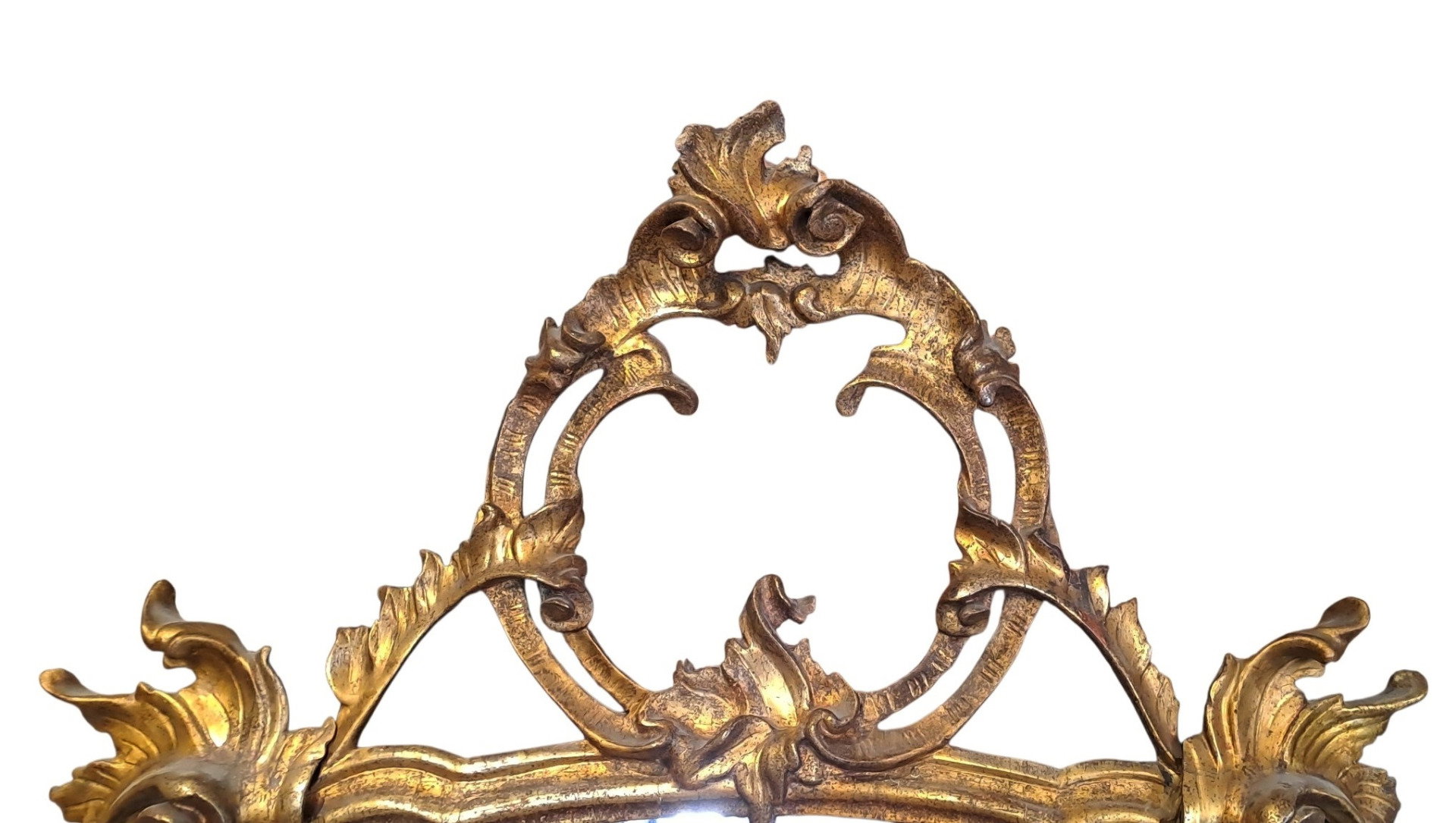
The Crest
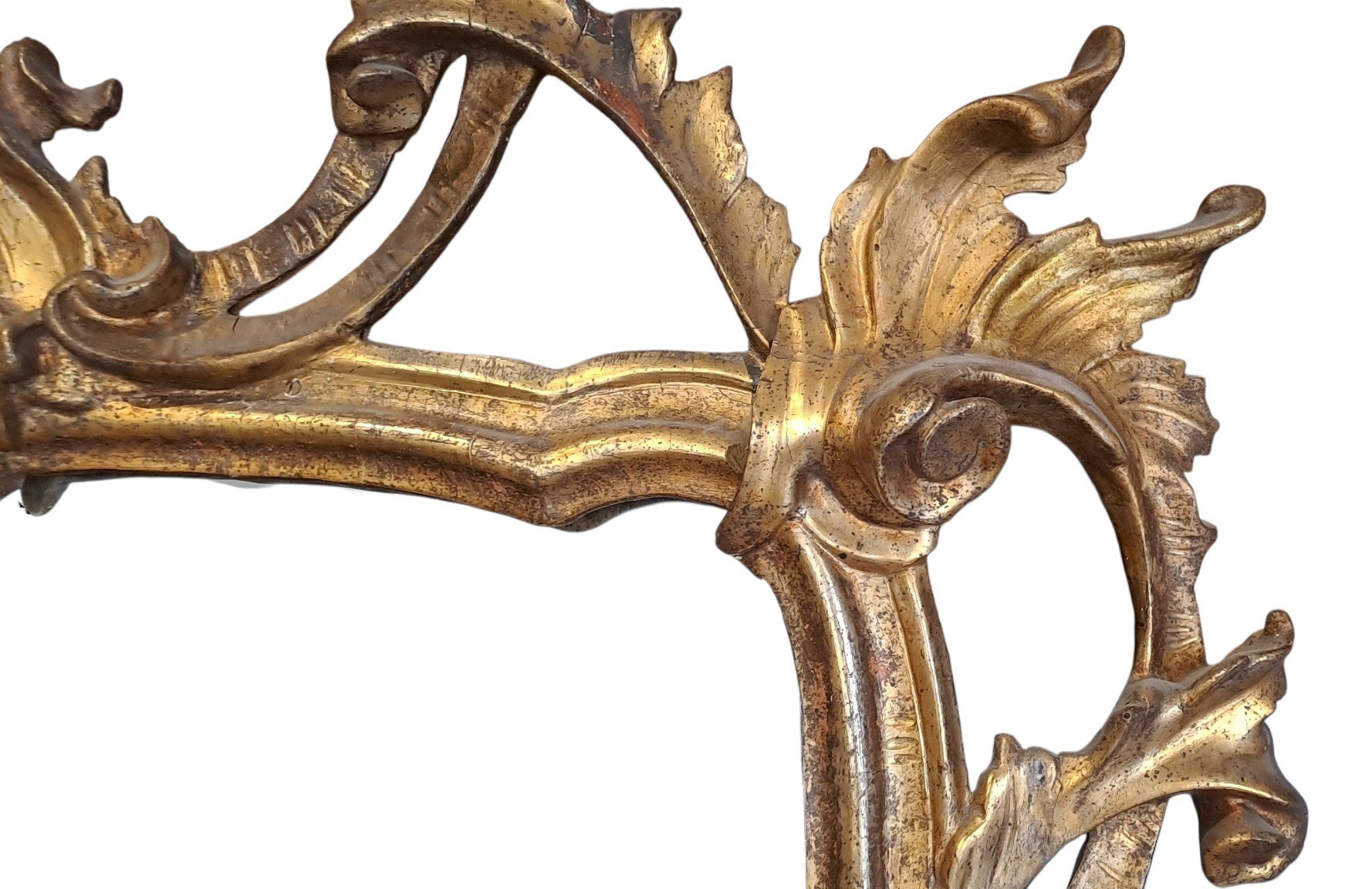
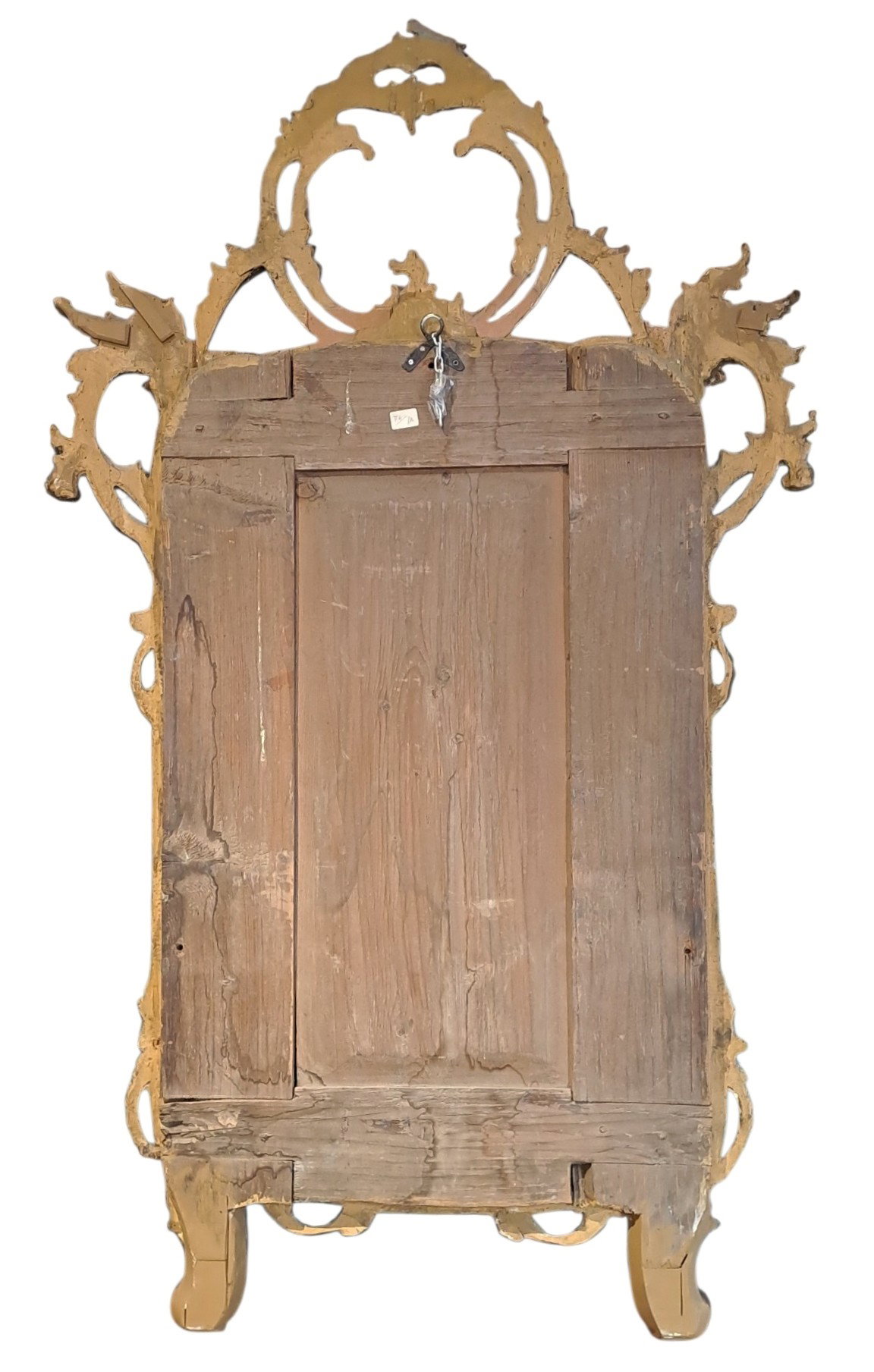
The crest is the element of greatest value and compositional originality. It develops around a central openwork medallion enclosed by a double opposing volute. The crest is crowned and connected to the stem by striking curled acanthus leaves and flowing moldings that create a dynamic interplay of solids and voids.
The Stem and Sides
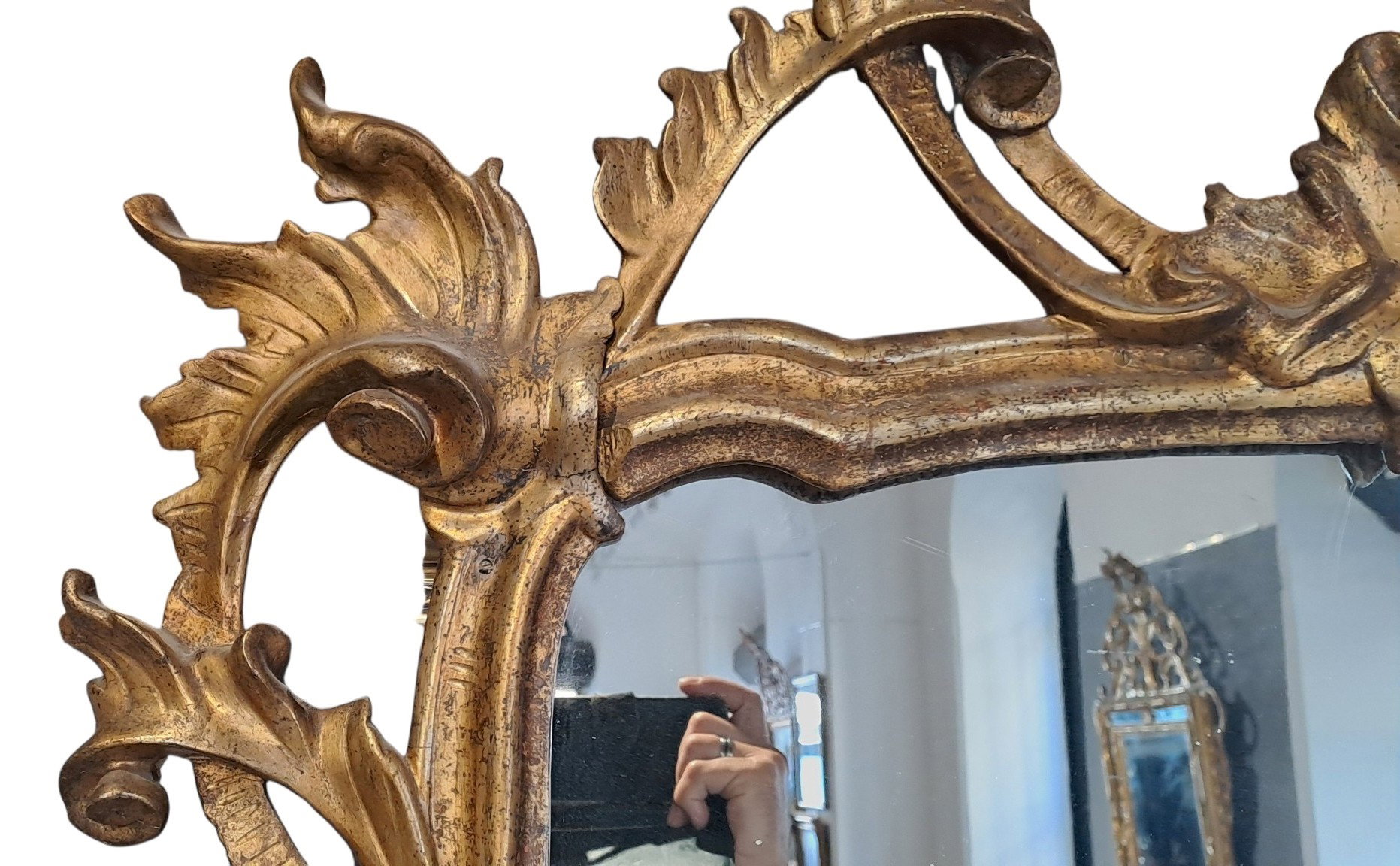
The rectangular frame encloses the mirror's reflection and is enriched along the uprights by striking lateral "ear" elements. These connecting elements consist of large curled volutes, leafy tendrils, and large acanthus leavesmasterfully carved in "beaten calfskin" and repoussé, which extend outwards, expanding the object's volume. The inner and outer profiles feature a double hollow molding.
The Base (Feet and Apron)
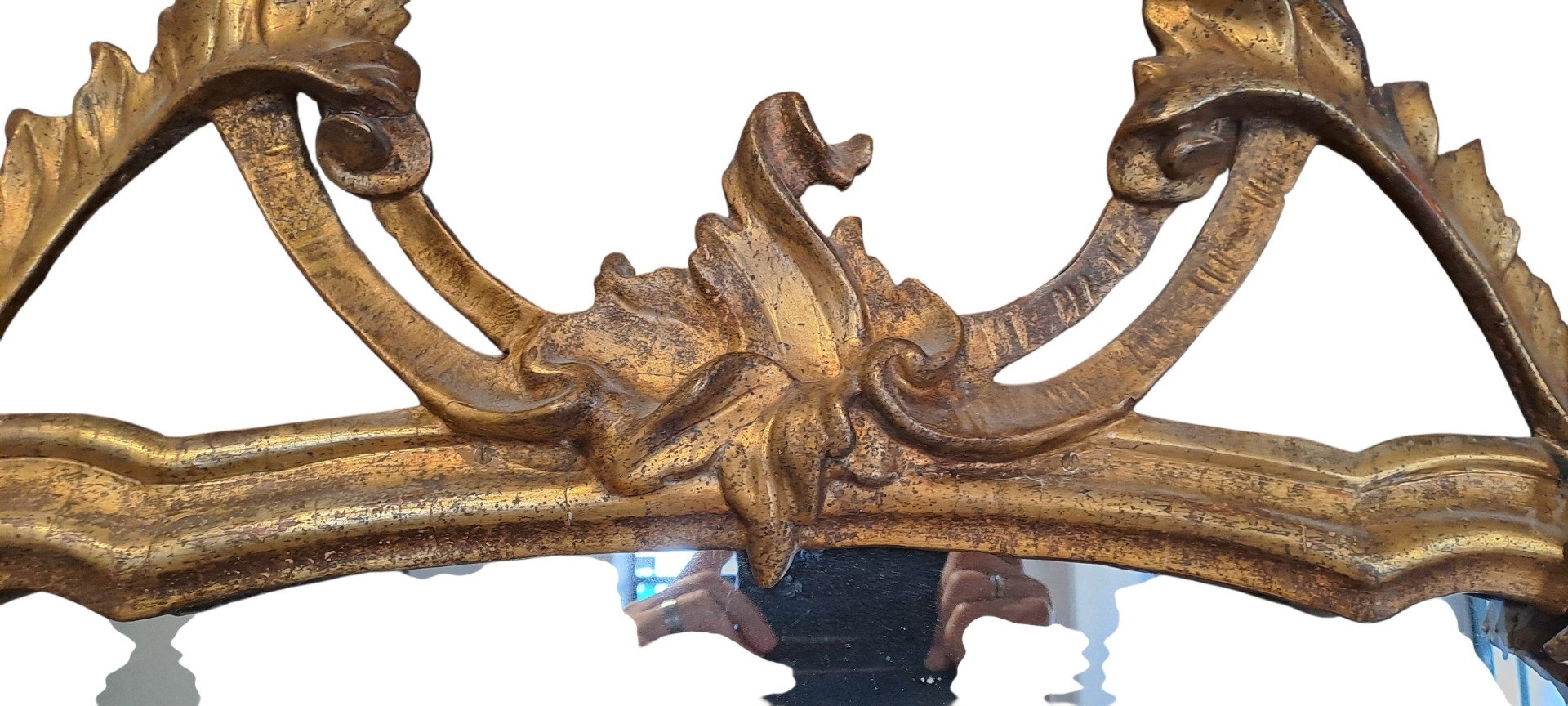
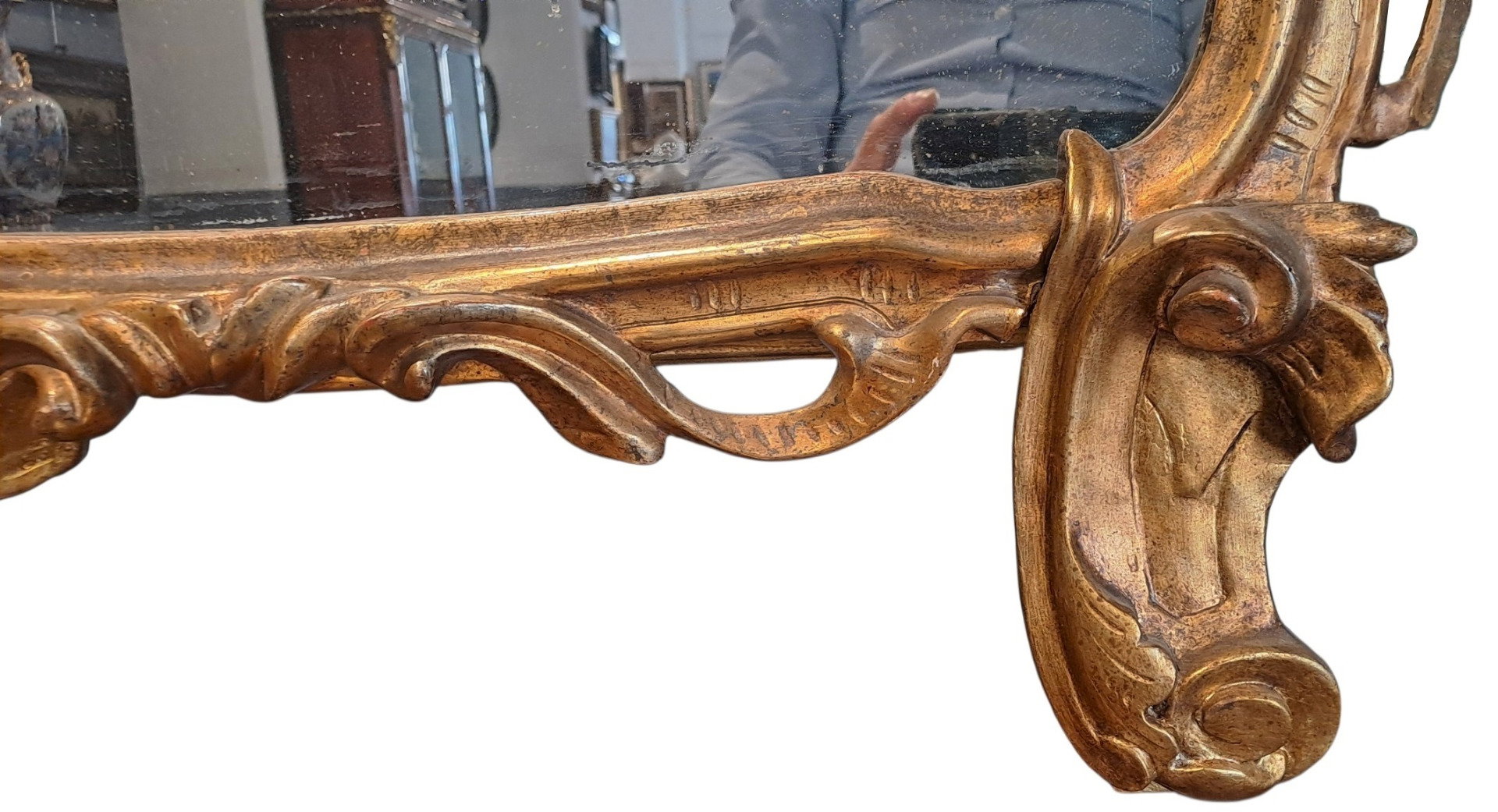
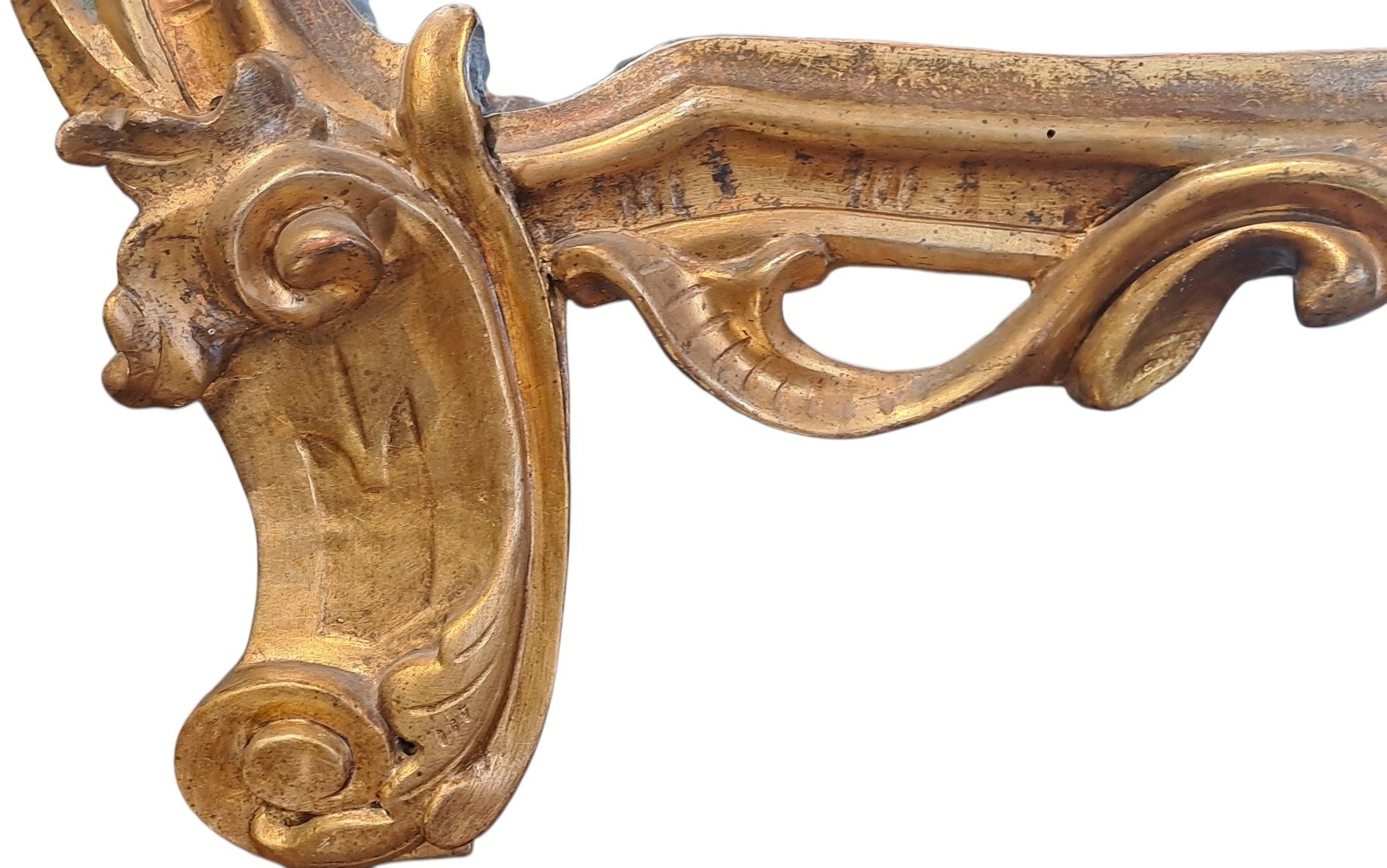
The mirror rests on two robust, flowing, and shaped bracket feet, also richly adorned with curled volutes. The two stable feet are connected by a carved openwork lower apron (crossbar) with a double mirror-image volute motif that lightens the base and coherently echoes the crest's design.
State of Conservation and Gilding
The Gilding: The object retains its splendid original Mecca gilding (a lacquer based on resin and shellac applied to silver leaf to imitate pure gold, typical of high-period craftsmanship in northern Italy). The patina exhibits characteristic warm tones, natural oxidations, and light, charming wear in the most prominent areas, allowing glimpses of the underlying preparation, confirming the piece's authenticity and period.
The frame shows no structural restoration, breaks, or losses.
A regular certificate of authenticity with a photo will be issued. We guarantee a response to your emails within 24 hours. REGISTERED WITH THE ROLL OF EXPERTS AND CTU AT THE COURT OF LA SPEZIA