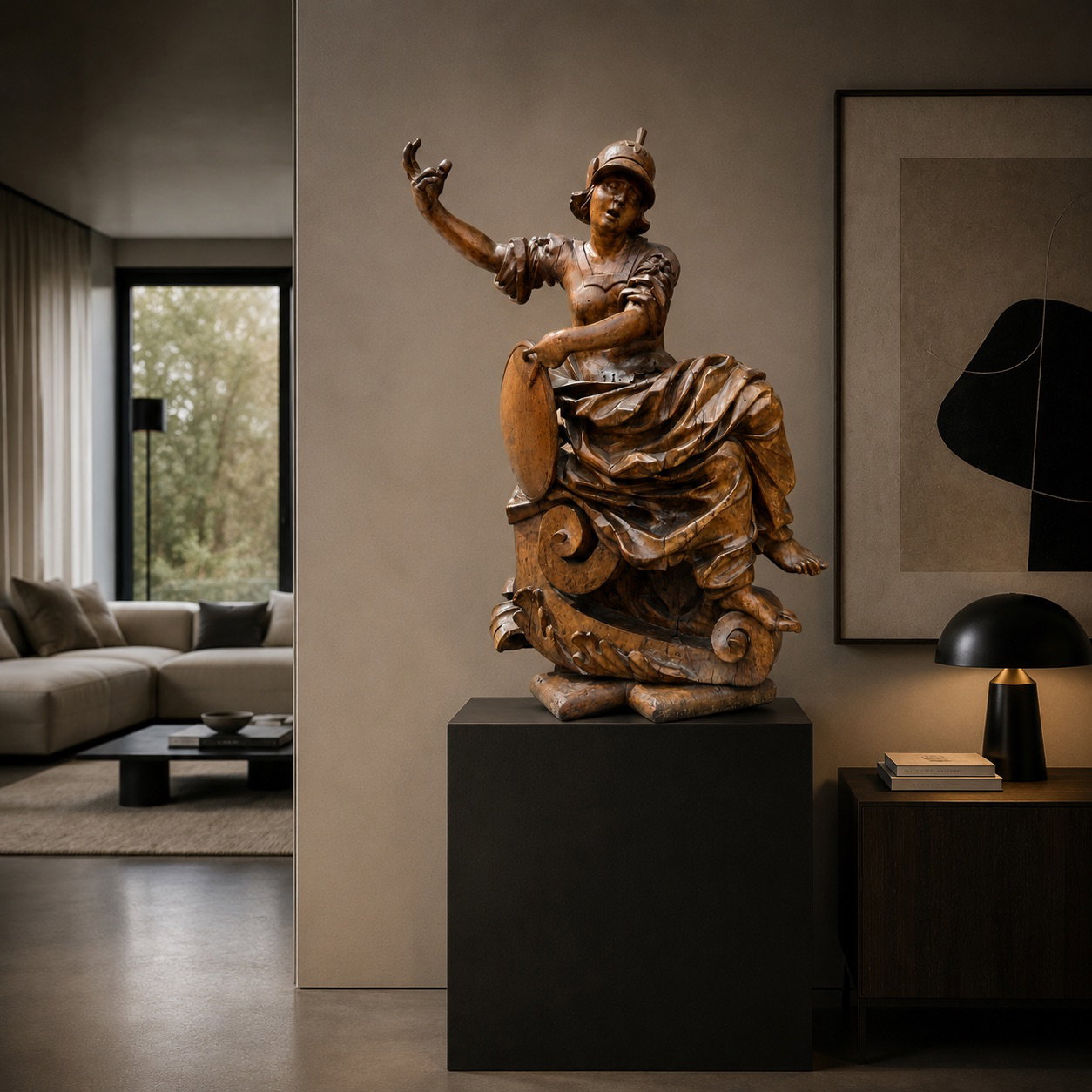
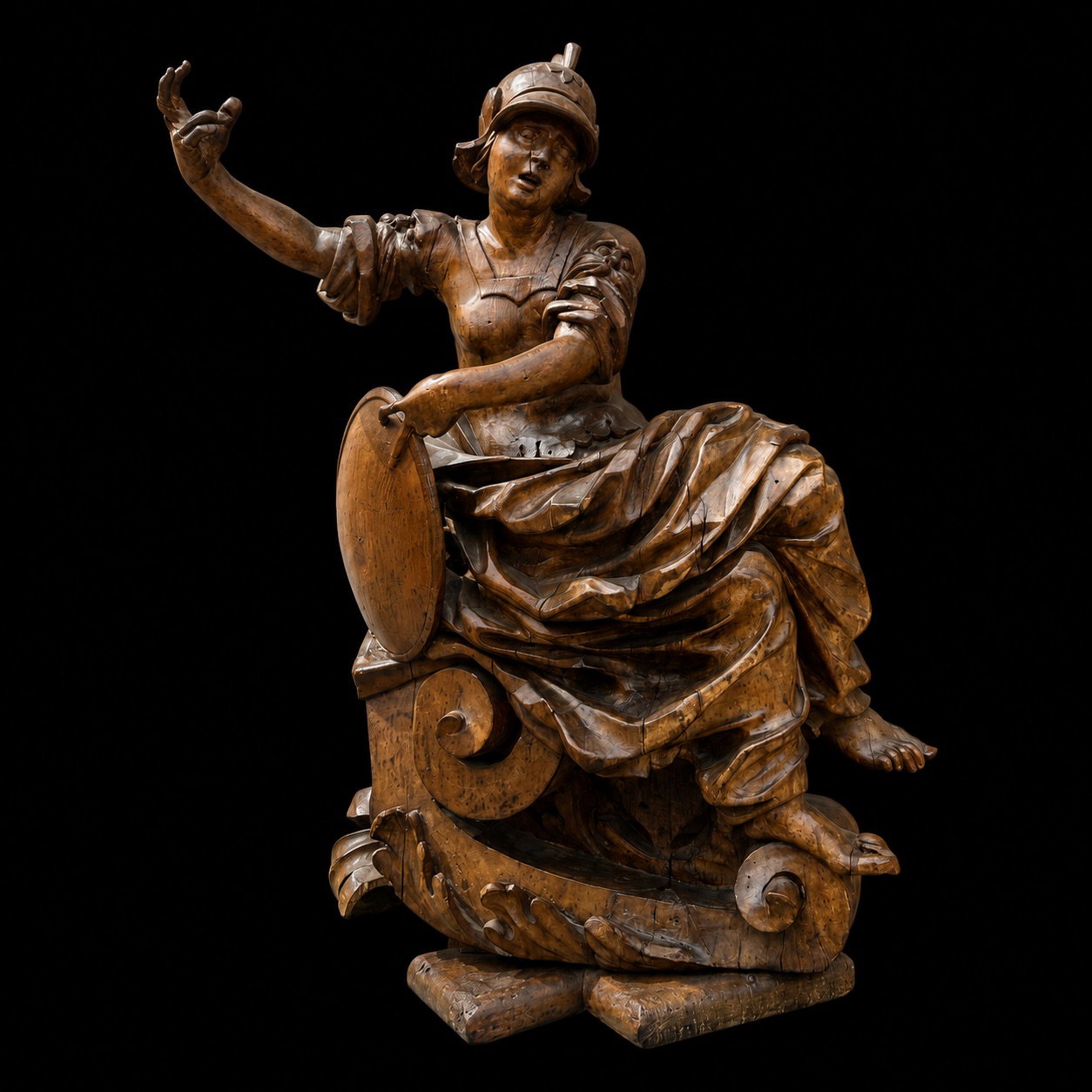
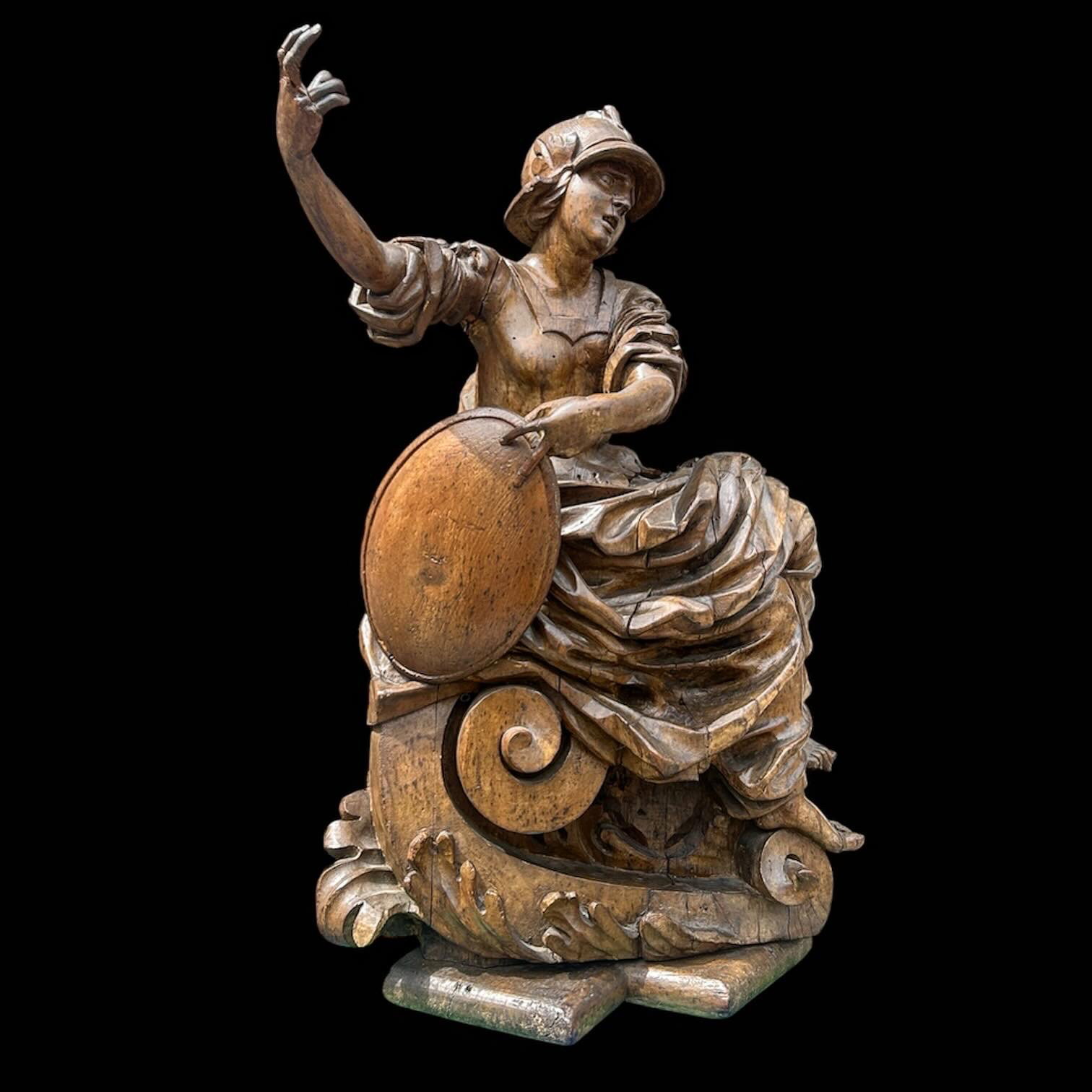
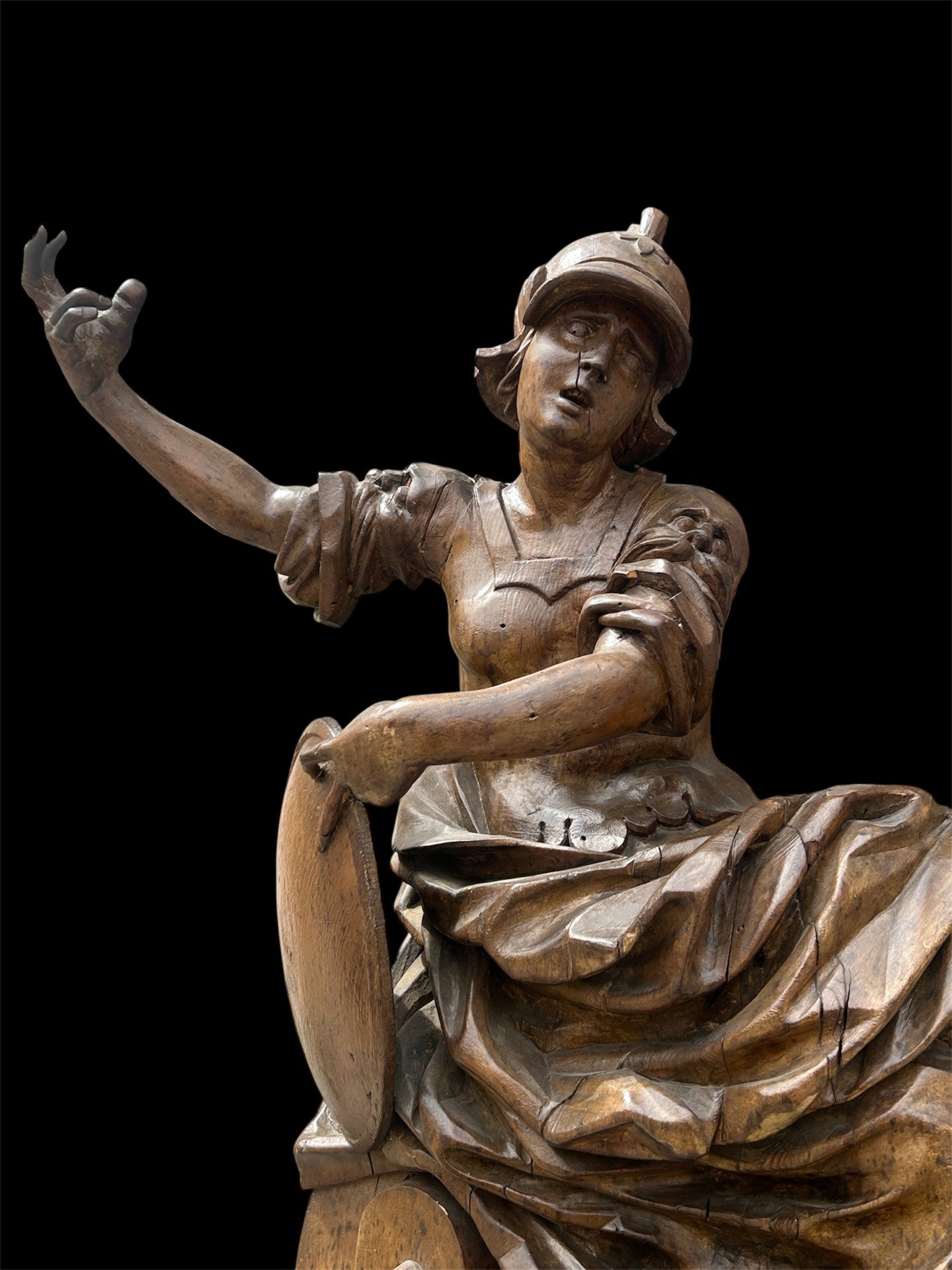
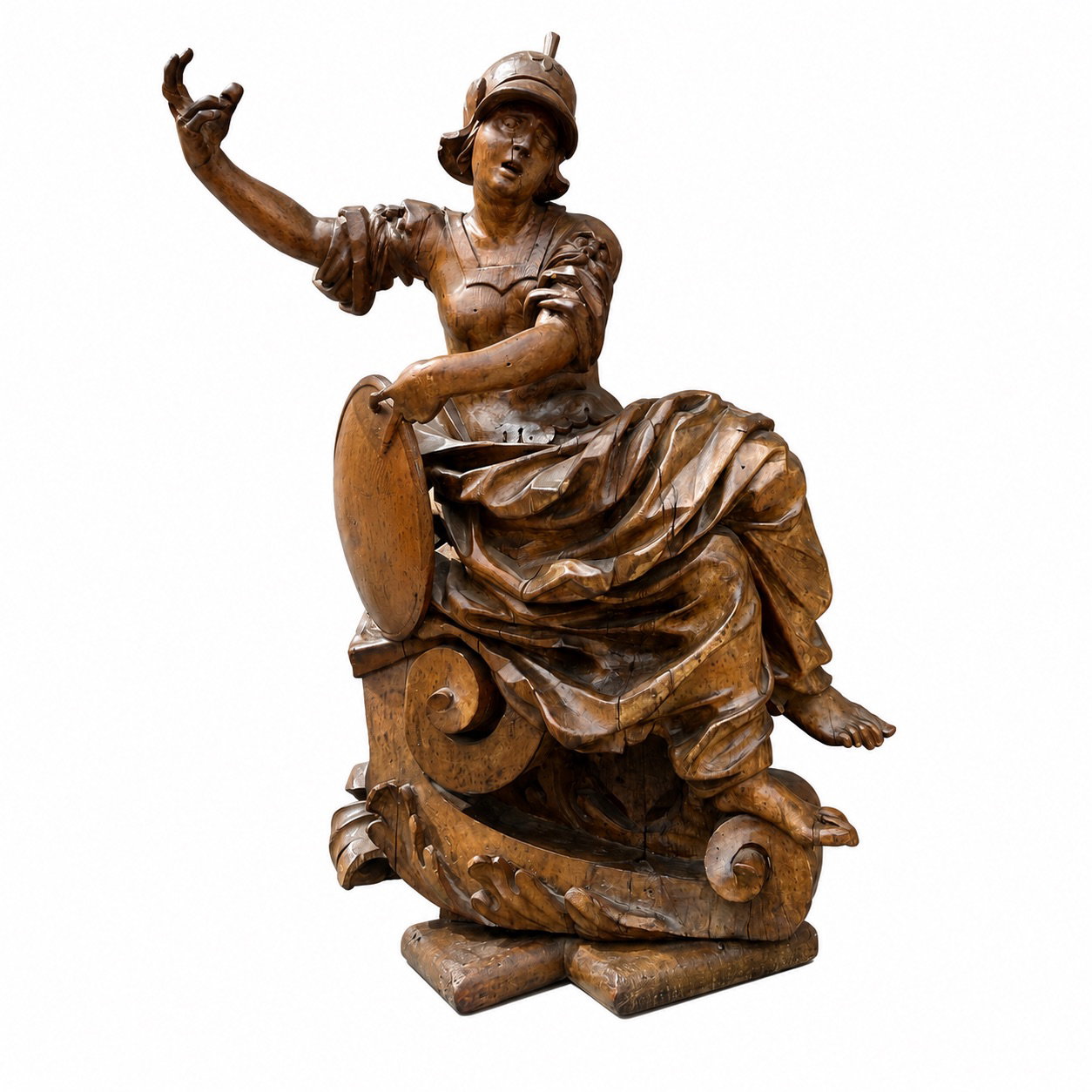
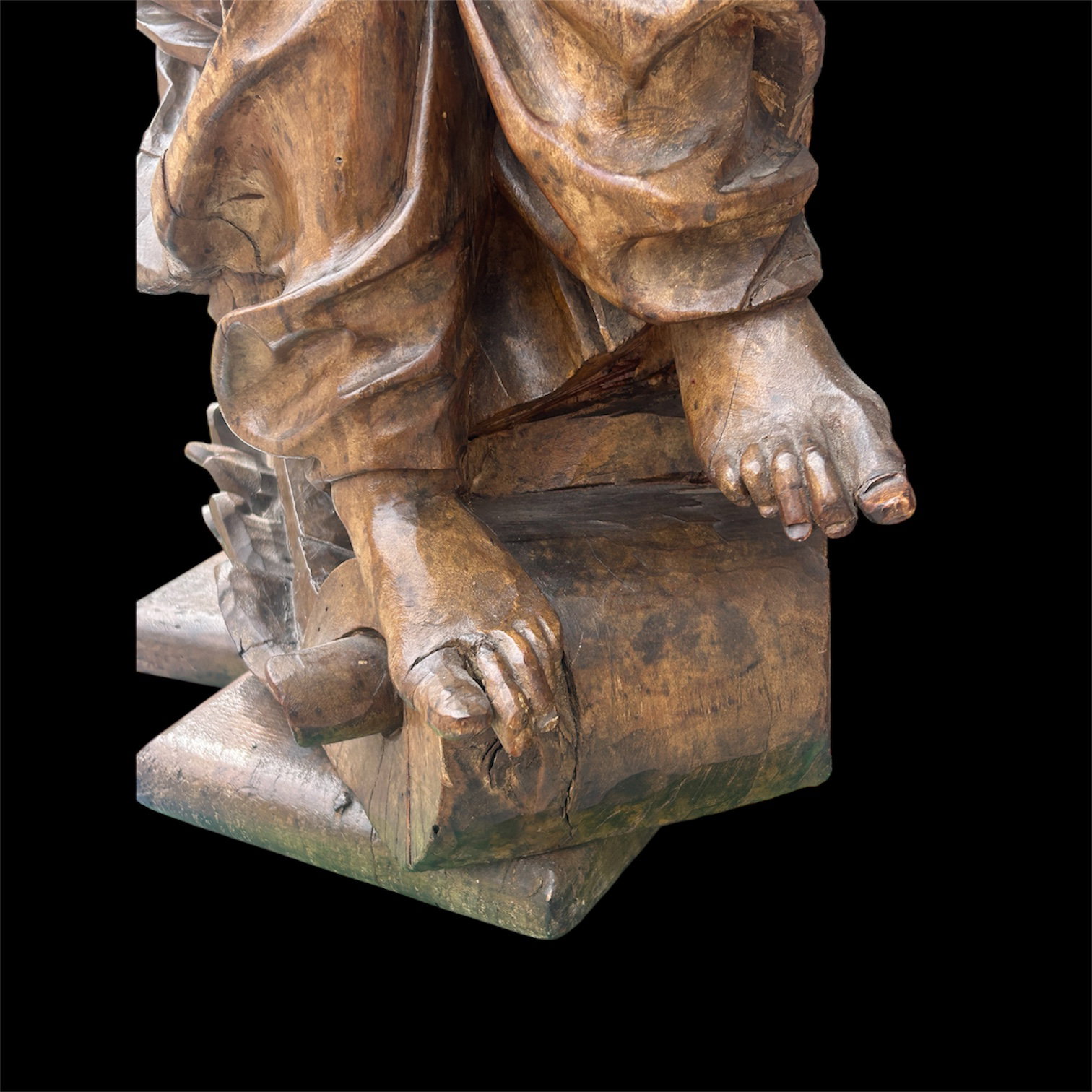
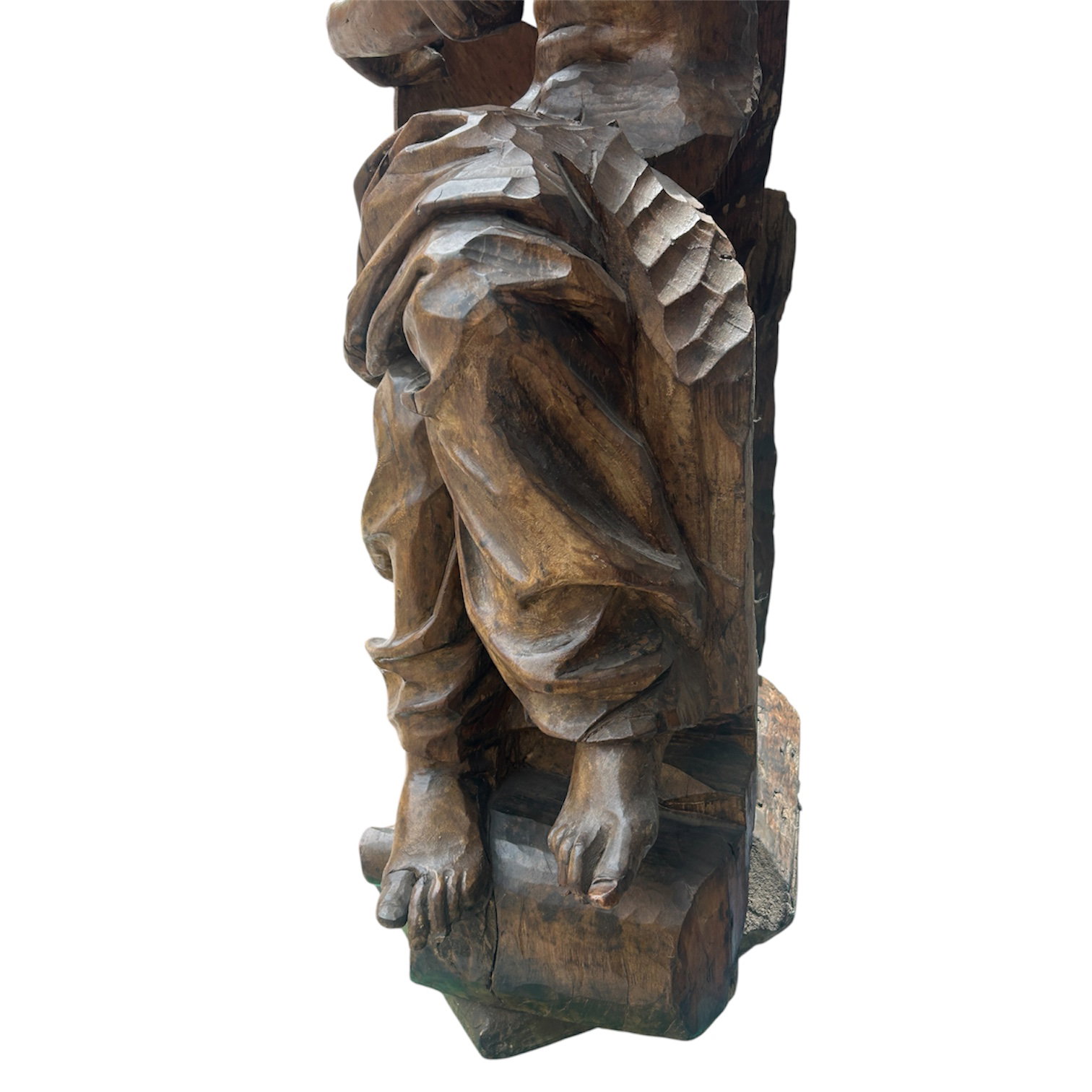
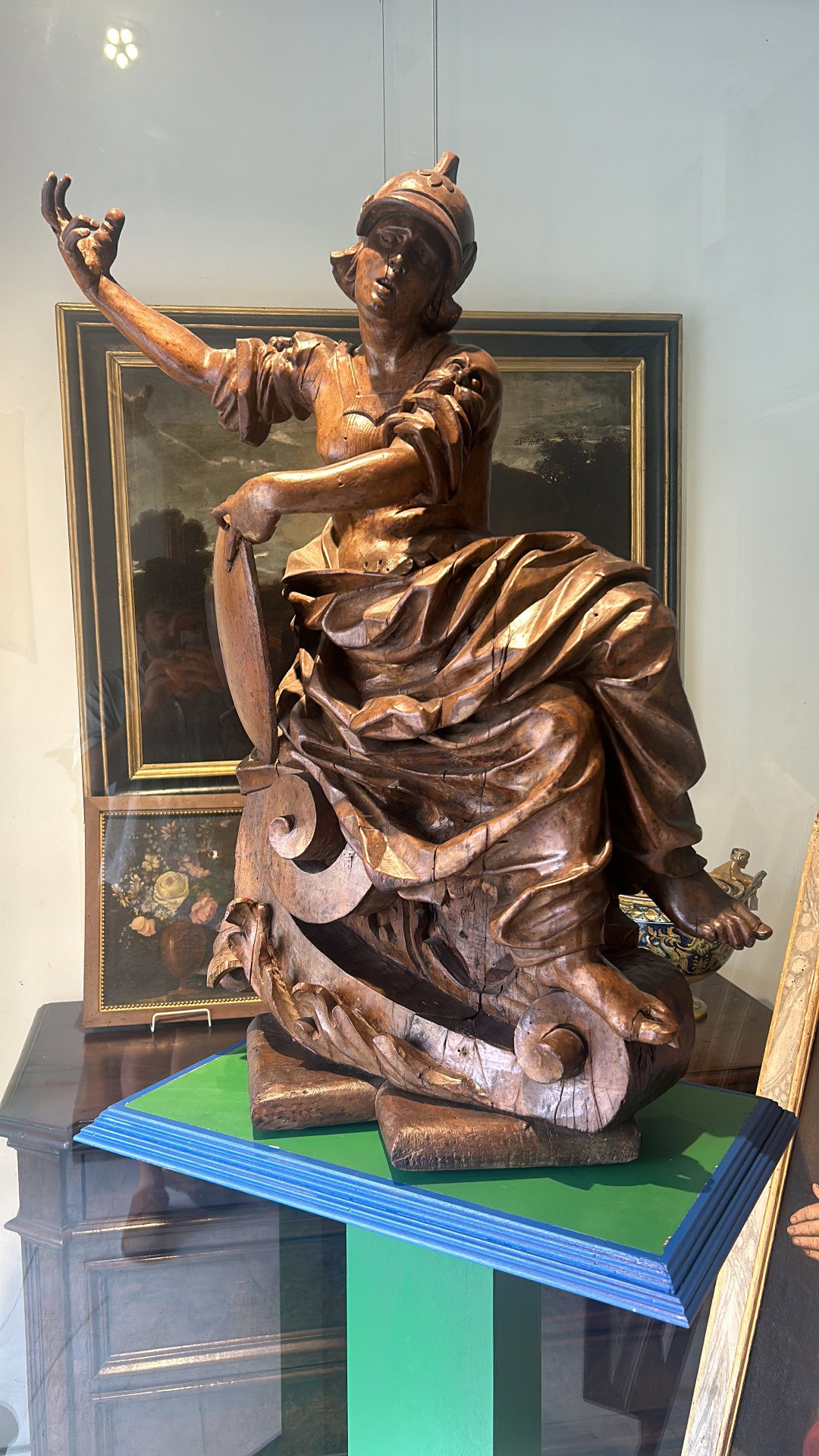
Allegory of Wisdom or Minerva in finely carved wood.
Rome, second half of the 17th century. Height 88 cm.
The sculpture displays characteristics fully in keeping with late 17th-century Roman Baroque culture, with evident Bernini influences in the dynamic and expressive conception of the figure, the theatricality of the gesture, and the highly scenographic construction of the drapery.
Rather than a canonical representation of Minerva, the figure seems to refer to the repertoire of armed allegories, widespread in ephemeral displays, festive decorations, and ecclesiastical furnishings of late 17th-century Rome.
The quality of the carving, combined with the lively ornamental invention of the voluted base, suggests the work of an expert master carver active in the Roman environment, close to the decorative culture of Gian Lorenzo Bernini's circle or scenographers-ornamentalists such as Giovanni Paolo Schor, and other important marble sculptors like Raggi, Ferrata, Guidi, and Foggini.
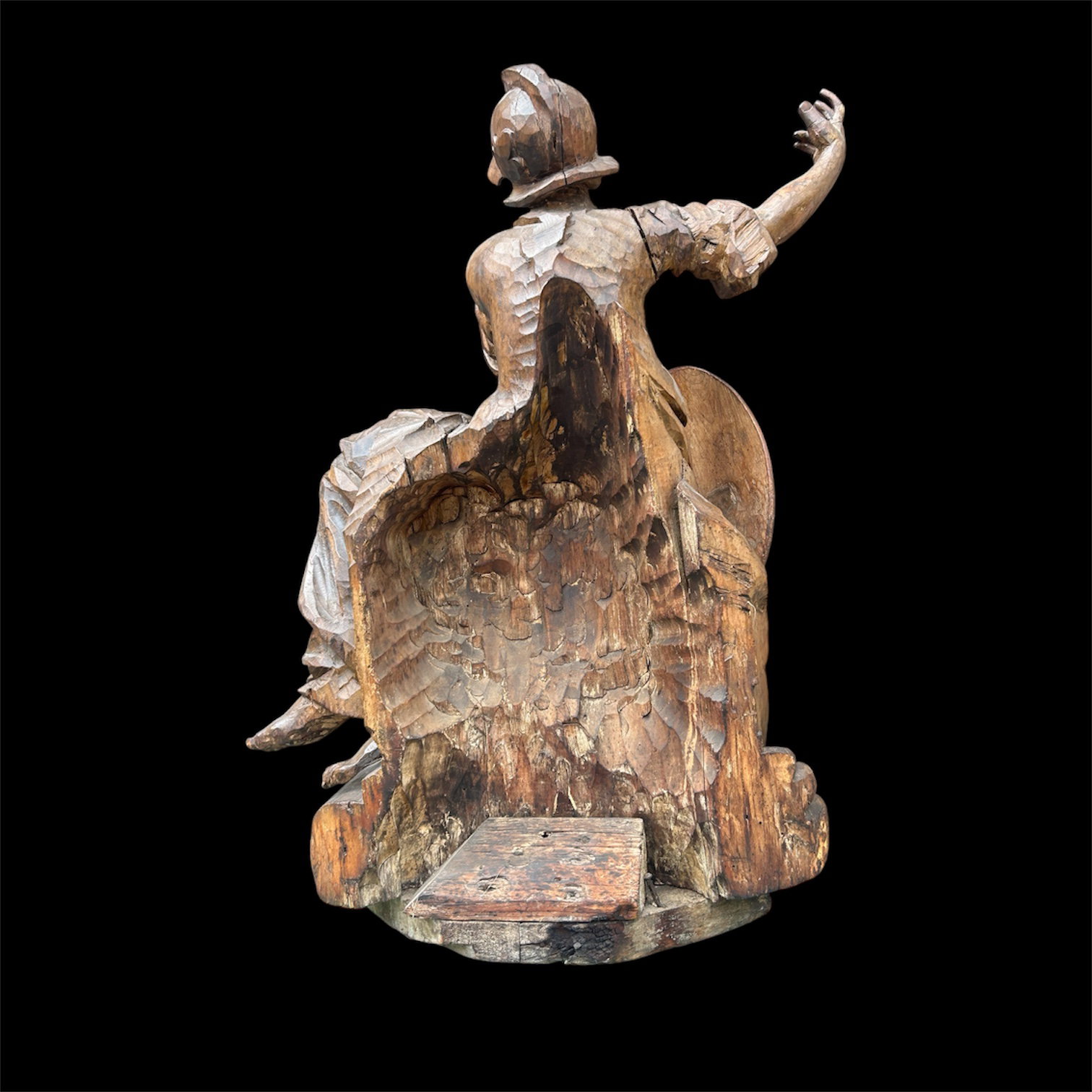
The roughly worked back indicates a probable architectural or decorative purpose for the sculpture, perhaps originally incorporated into a larger complex—a choir loft, a wooden structure, a celebratory machine, or ecclesiastical furniture.