Workshop of Francesco Cairo (Santo Stefano in Brivio, 1607 – Milan, 1665)
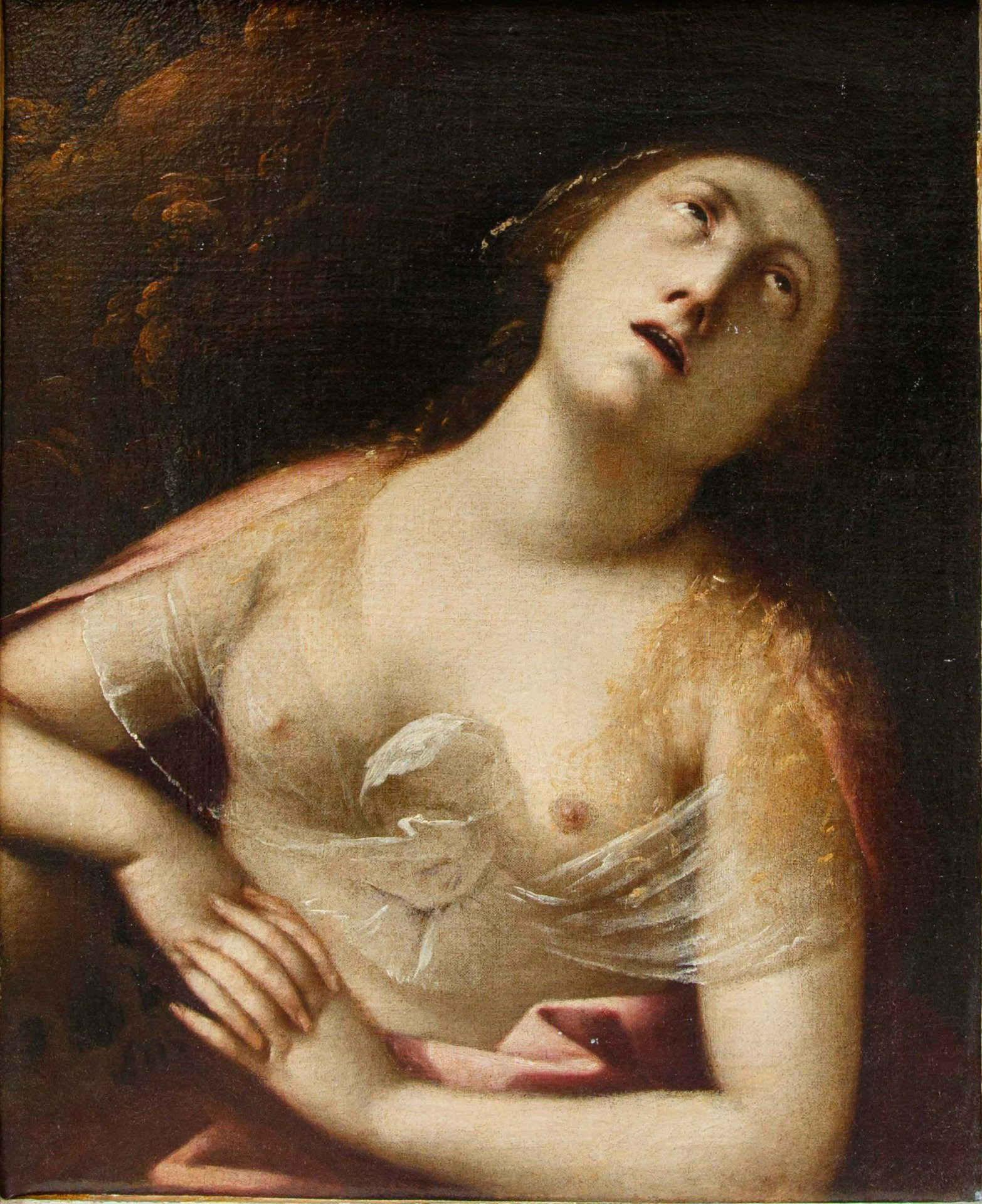
Penitent Magdalene
Oil on canvas, 60 x 48 cm
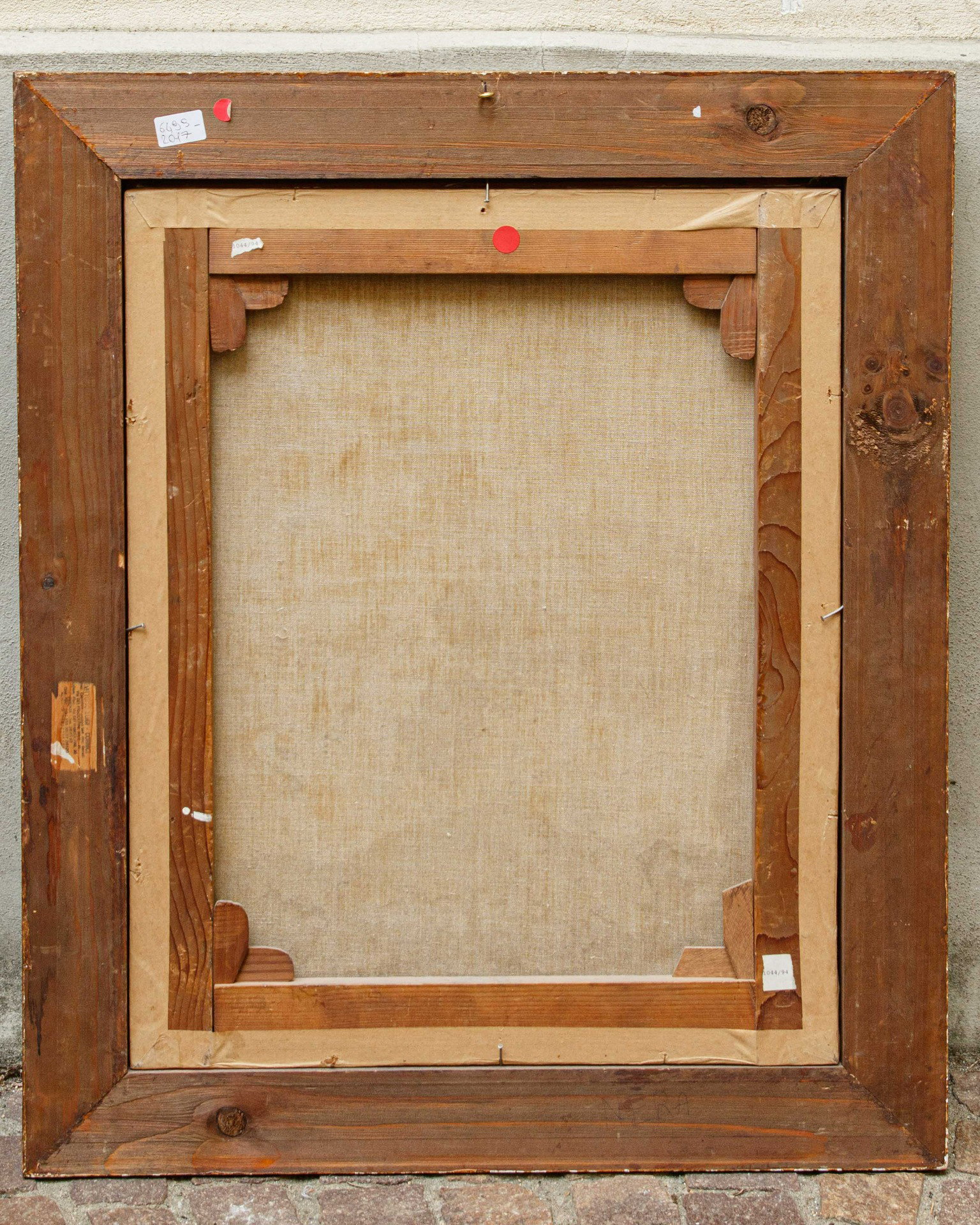
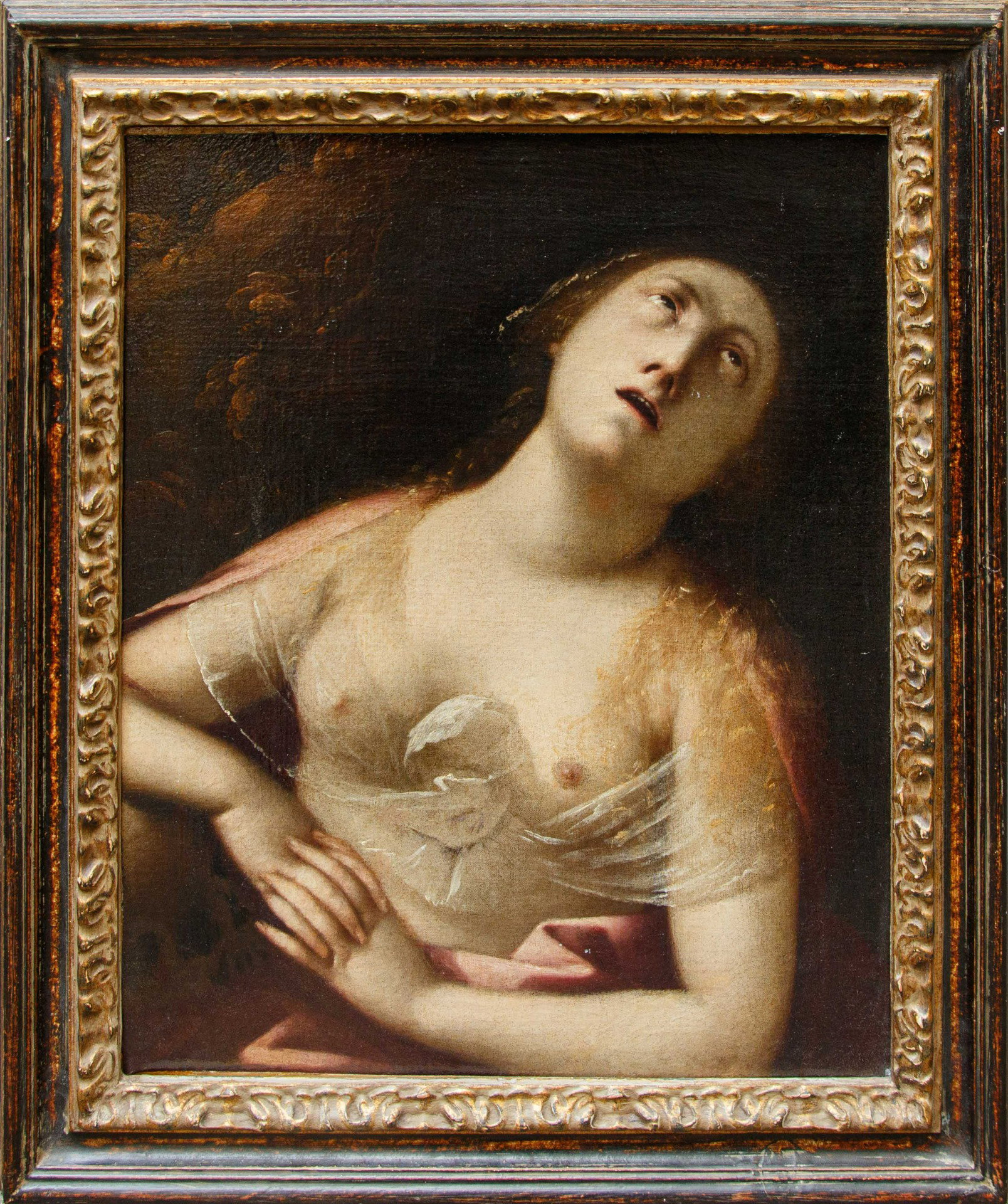
With frame, 75 x 65 cm
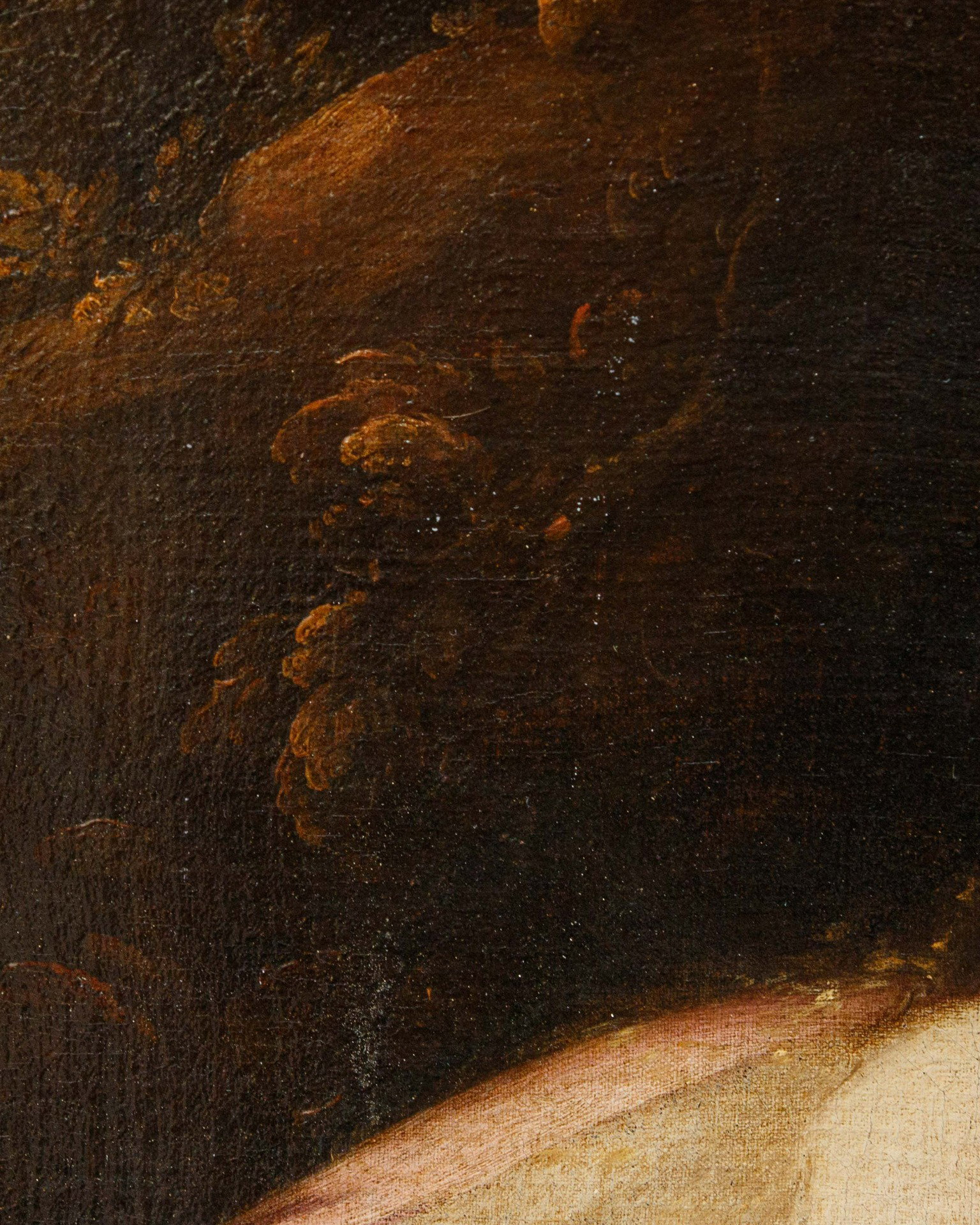
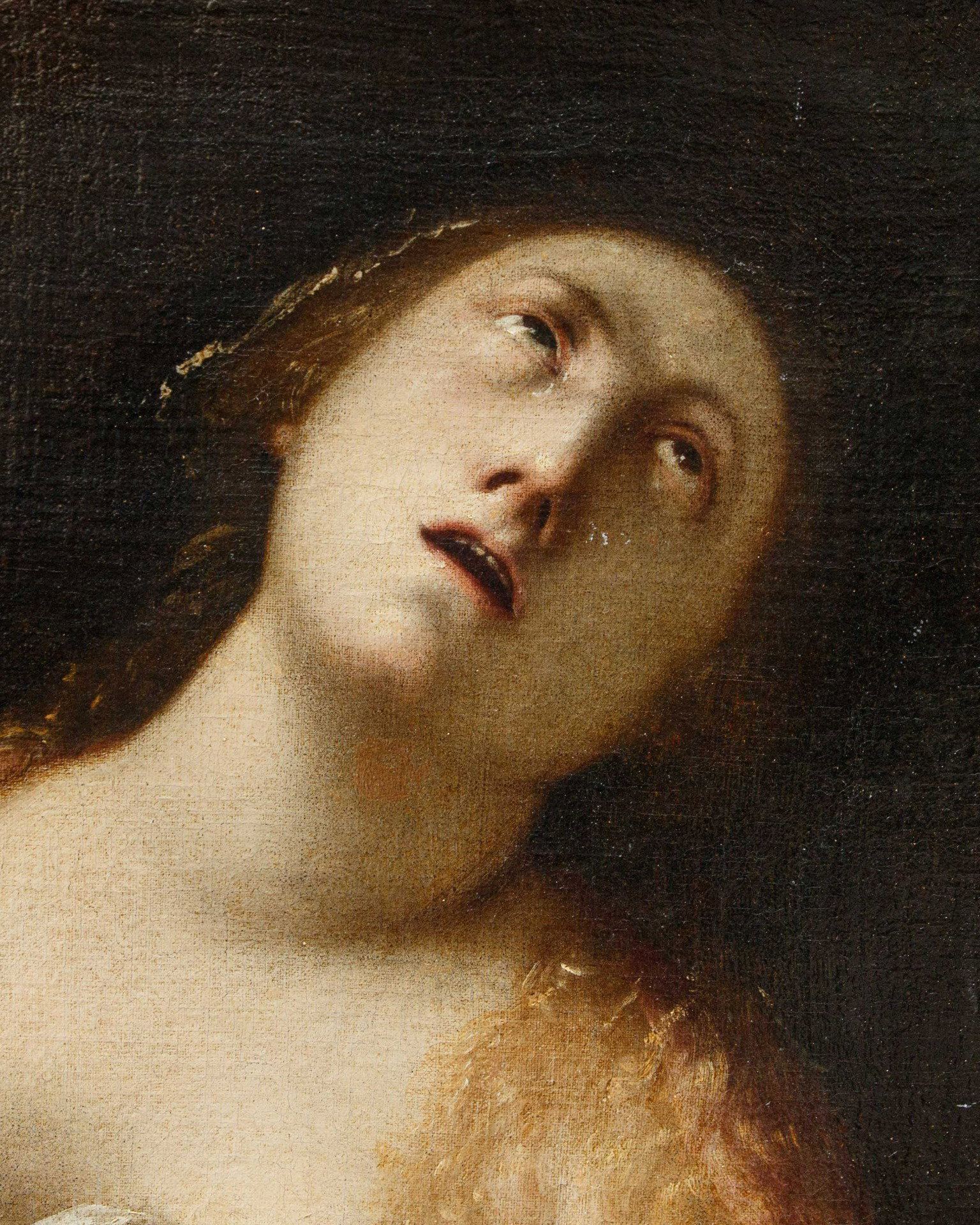
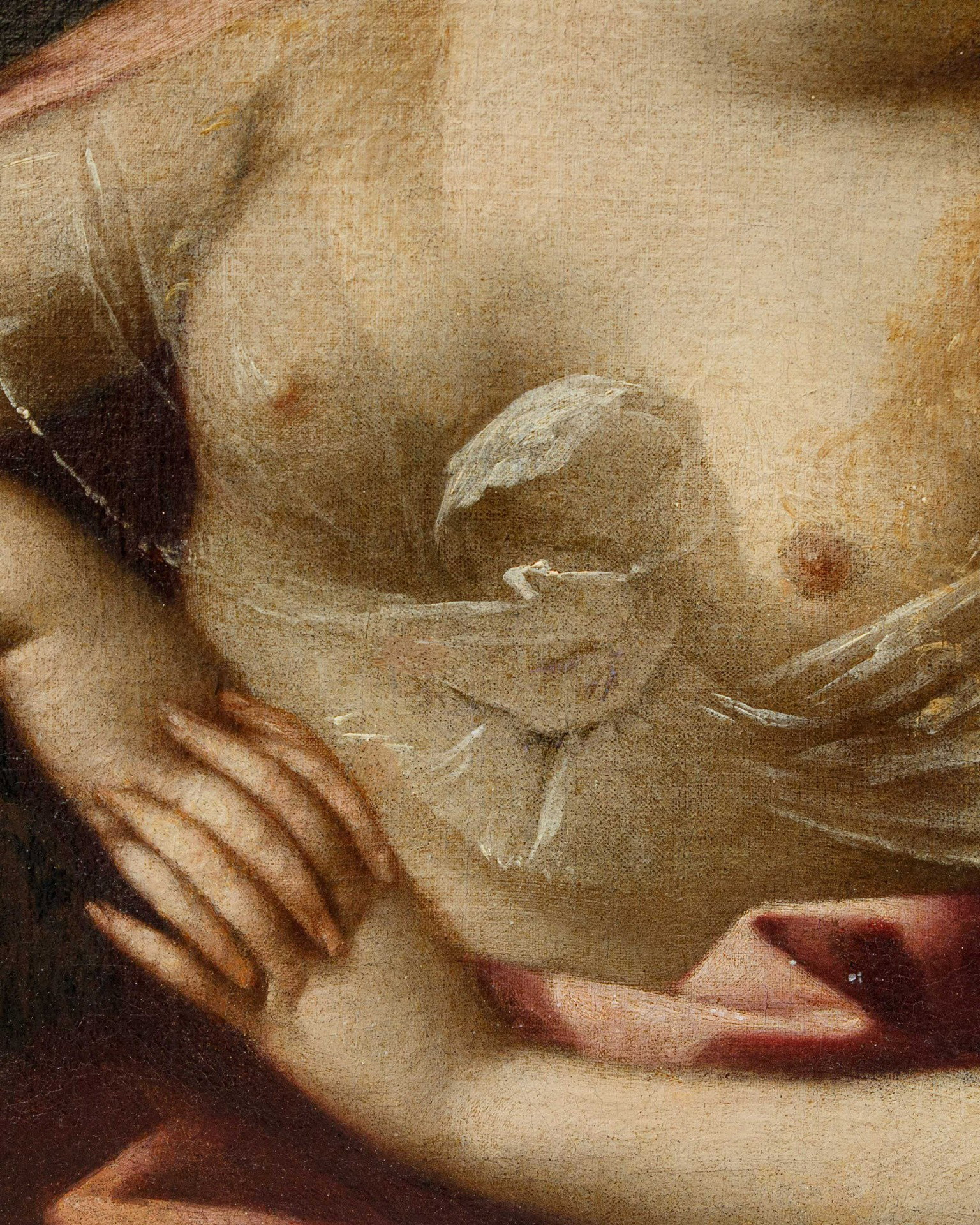
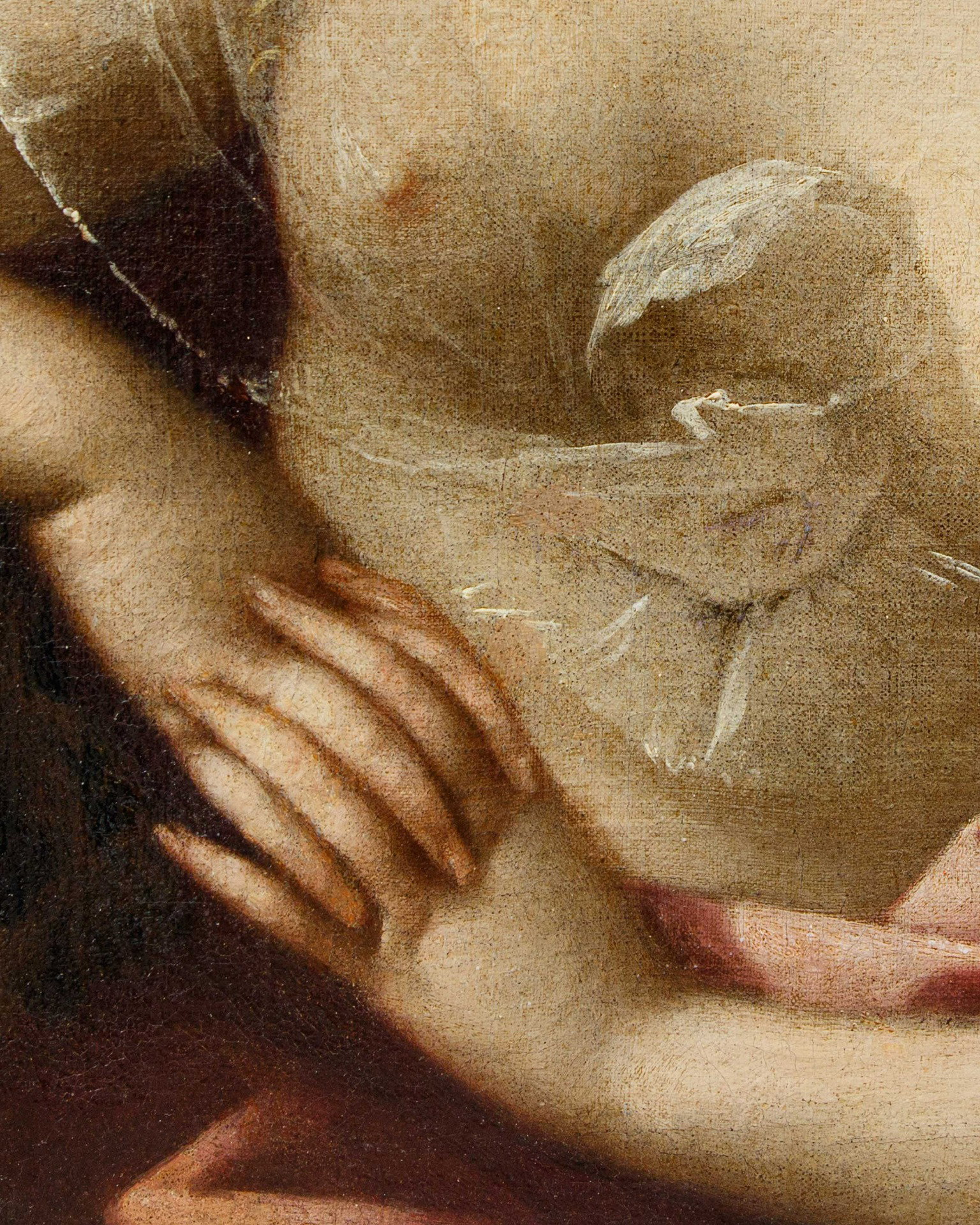
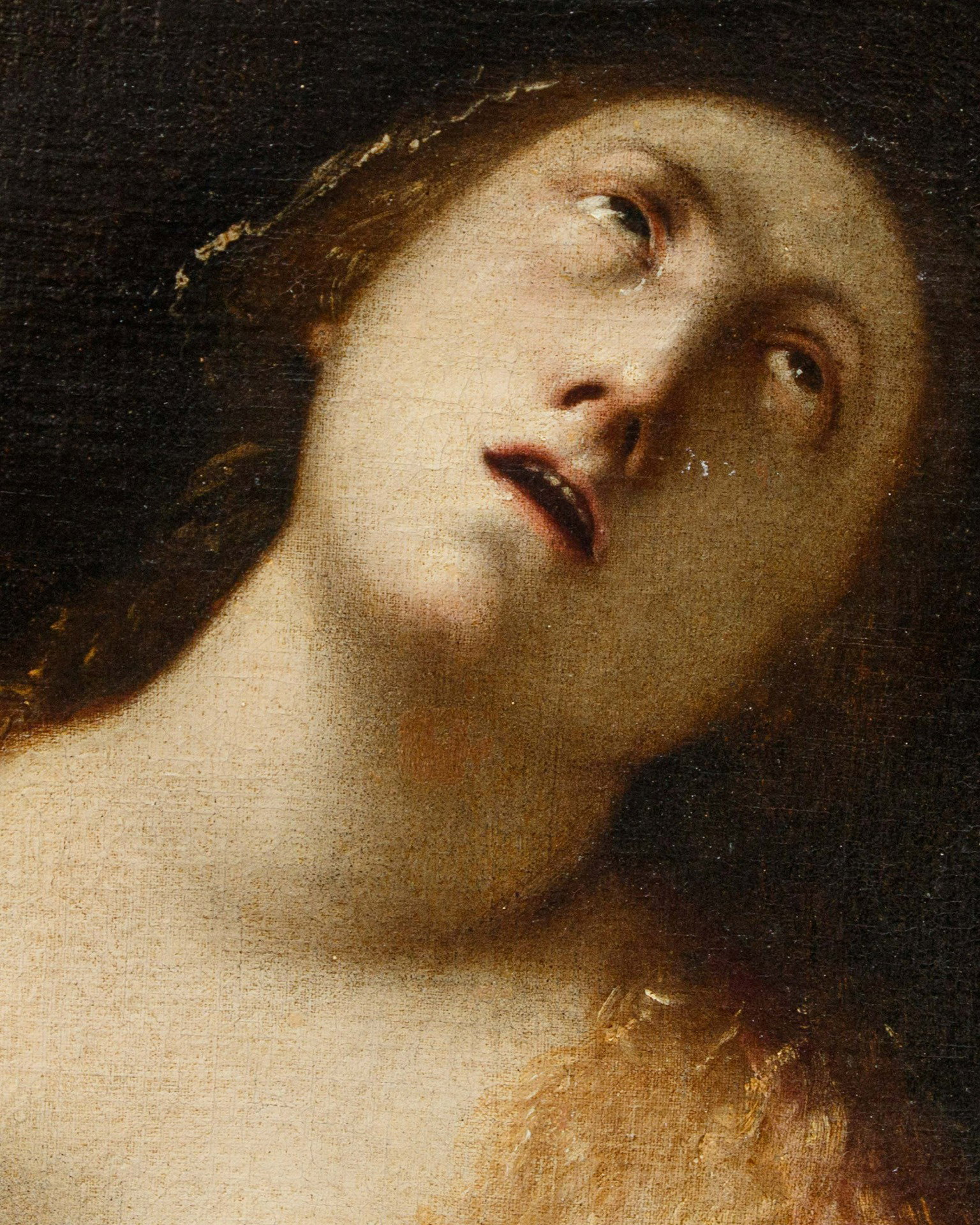
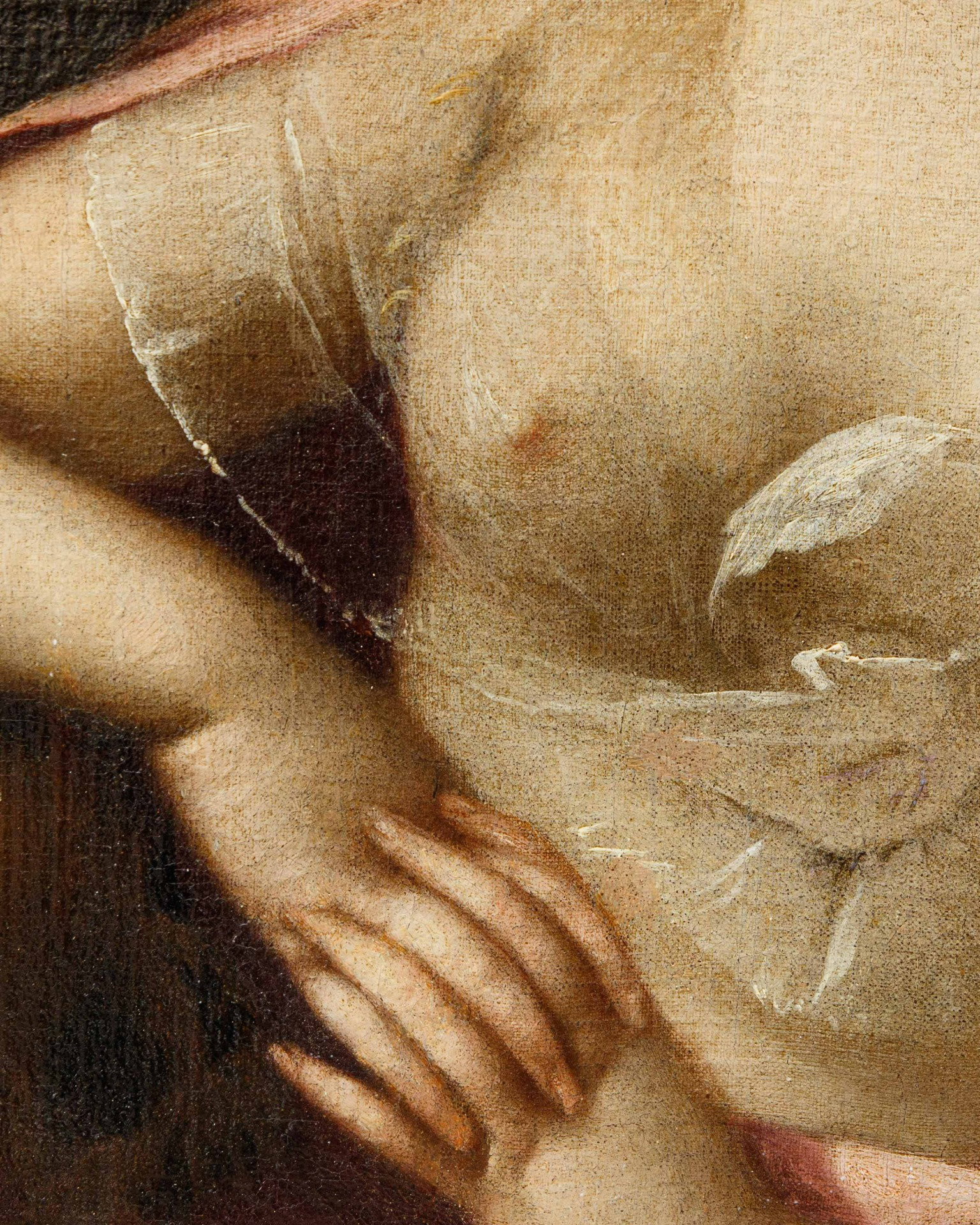
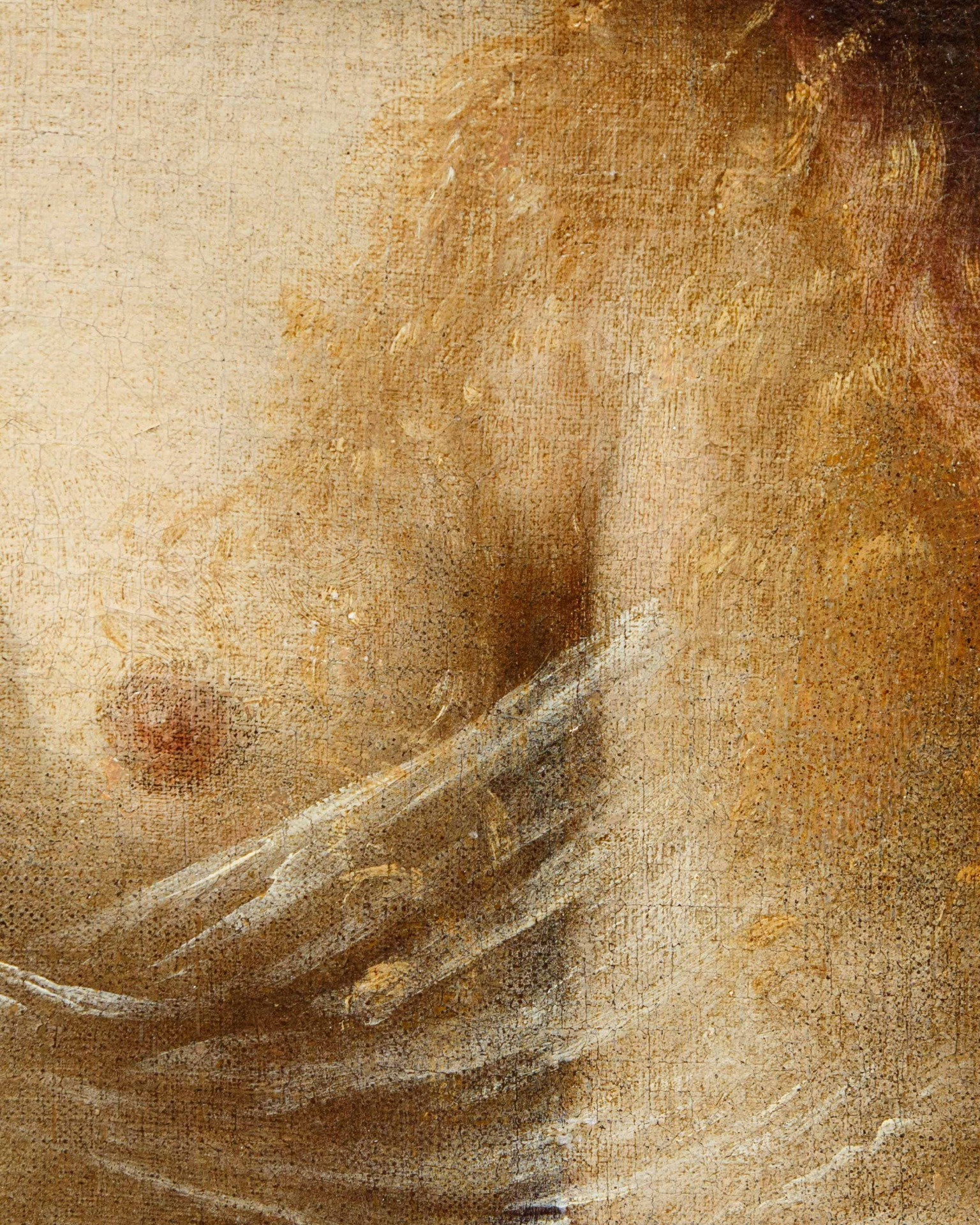
The work in question, depicting the Penitent Magdalene, can be attributed to the workshop of Francesco Cairo, born in 1607 in Santo Stefano in Brivio, a figure who perfectly embodied the Baroque artist suspended between existential unease and great technical mastery. Trained under the tutelage of Pier Francesco Morazzone (1573 – 1626) in Milan, he absorbed from his master a penchant for dramatic gestures and intense colors that characterized his early works, which were already fully mature by 1635. To this legacy was added the lesson of Cerano (1573 – 1632), who pushed him towards a painting filled with almost feverish suffering, a pathos vividly conveyed in his works, such as his various versions of Herodias or, indeed, the Magdalene. These works, immersed in greenish tones and dark atmospheric backgrounds, appear to be a painted reflection of the collective trauma of the 1630 plague, an event that profoundly marked his life and led him to flee to Turin. It was in the Savoyard capital that Cairo managed to transform his inner torment into a highly successful career, becoming court painter by 1633. Although his early years in Turin were still dominated by symbolic subjects like Christ in the Garden of Gethsemane, contact with the nobility and the mediated encounter with Caravaggio's naturalism and Tanzio da Varallo's dynamism led his art towards a new evolution. He began to explore a softer painting style, influenced by Genoese and Flemish masters like Van Dyck, which led him to lighten his palette towards more melancholic and sensual solutions, similar to those of his contemporary Carlo Francesco Nuvolone. After a brief period in Rome, he spent his mature years between Turin and Milan, where he died in 1665, further refining his style through the study of the great Venetian and Emilian traditions: in the works of his final phase, youthful intensity gave way to an opulent and sunny chromatic impasto, blending the grace of Correggio with the tonal richness of Titian. This Penitent Magdalene is an emblematic testament to that Lombard Baroque sensibility that constantly oscillates between the deepest mysticism and unsettling sensuality. The work fits into an iconographic tradition that Cairo explored with almost serial obsession, rendering the theme of the ecstatic saint through a stylistic signature dense with chiaroscuro drama and physical languor. In this version, the Magdalene's face is captured at the culminating moment of spiritual abandonment: eyes turned heavenward, parted lips, and pale complexion reflect the fine line between the pain of repentance and the pleasure of divine vision, an emotional tension that closely recalls authenticated autograph versions housed in prestigious private and public collections, such as that of the Pinacoteca Malaspina in Pavia. Unlike the more composed 17th-century Roman interpretations, here Cairo's workshop draws on that "painterly touch" and those leaden atmospheres typical of the master, where the figure emerges from a shadowy background that enhances its almost marble-like plasticity. The detail of the chest partially veiled by transparent gauze and the reclined posture of the clasped hands are not merely aesthetic affectations but communicative codes aimed at humanizing the sacred figure, making her accessible and vibrant with tormented vitality.