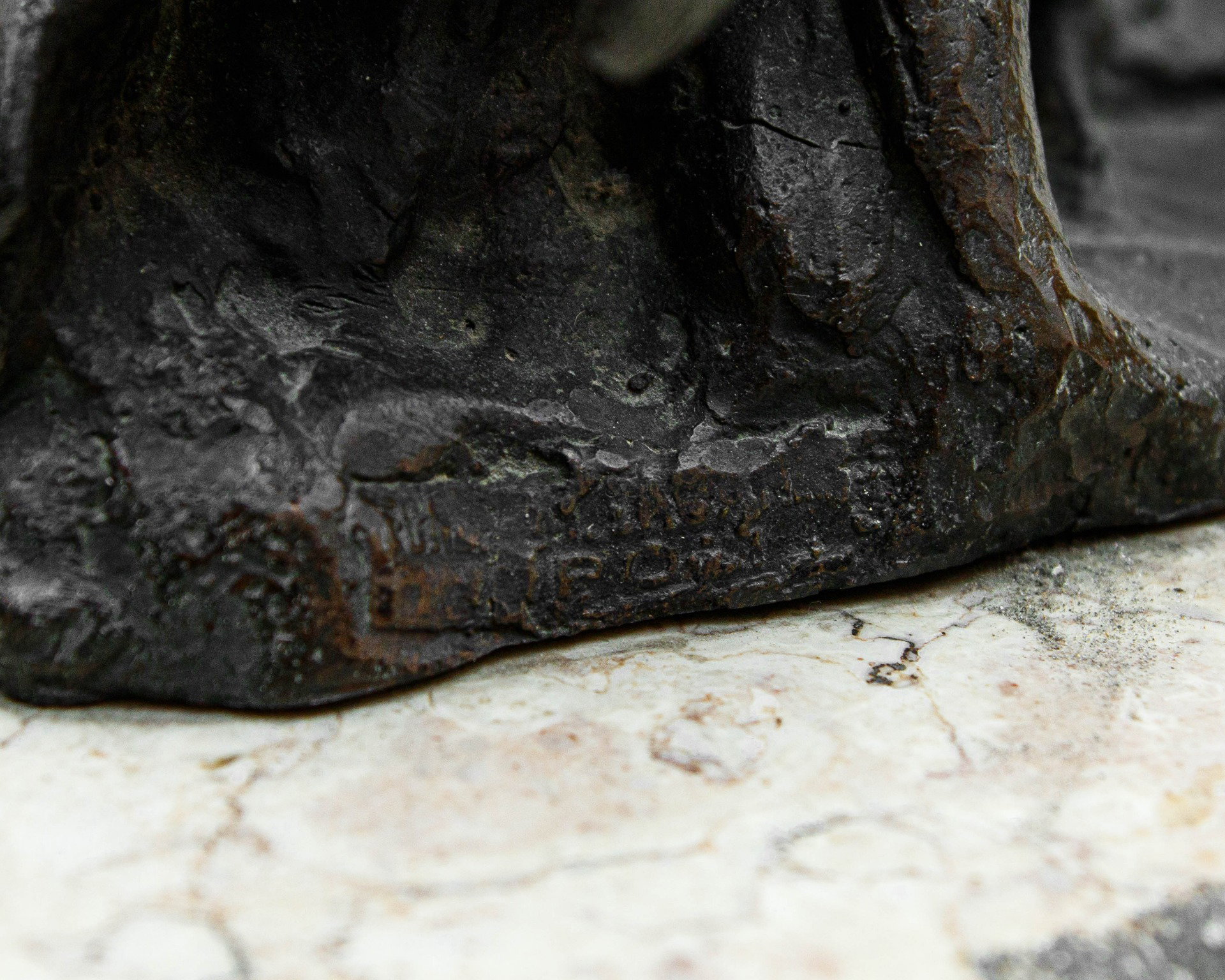
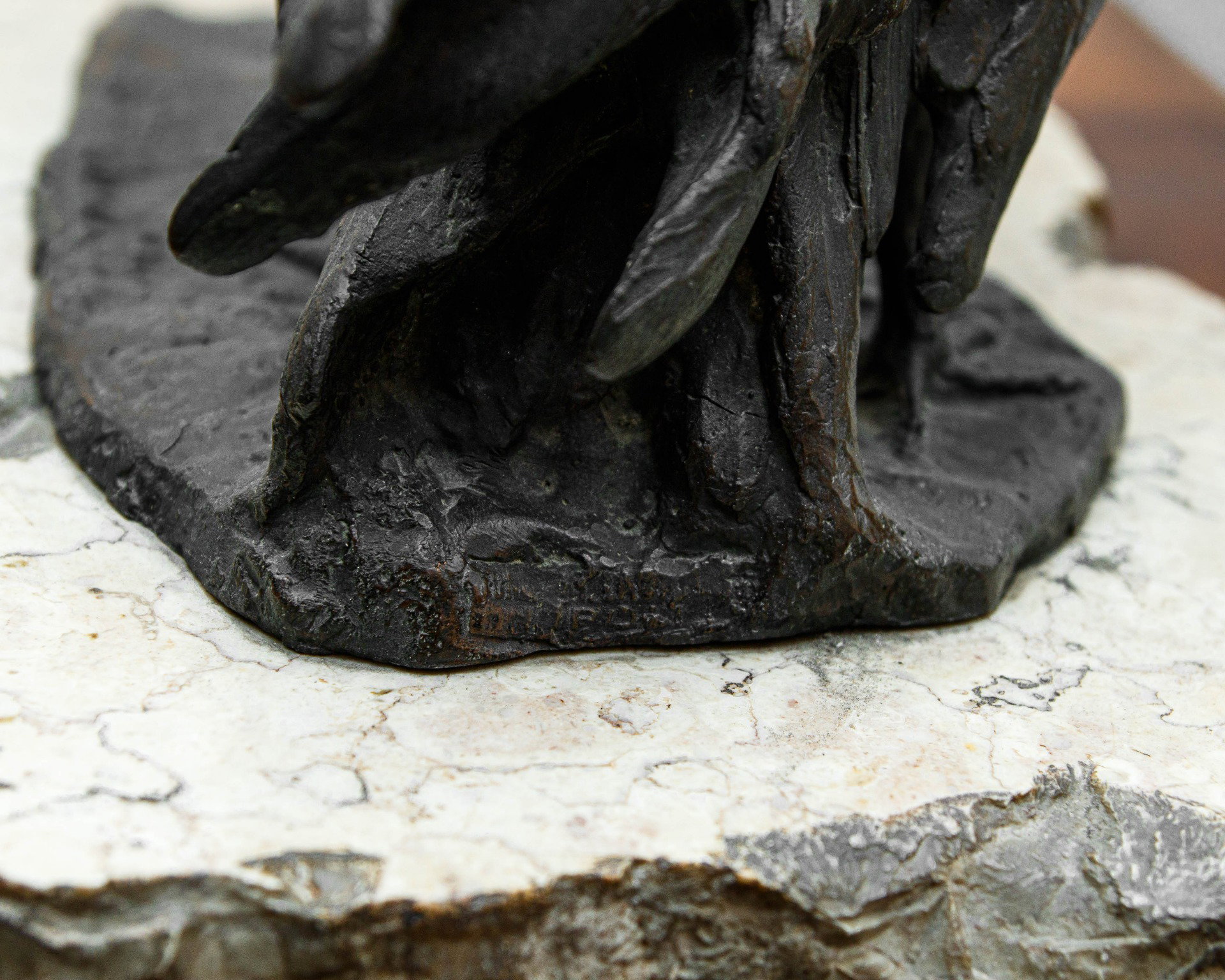
Italo Griselli (Montescudaio, 1880 – Florence, 1958)
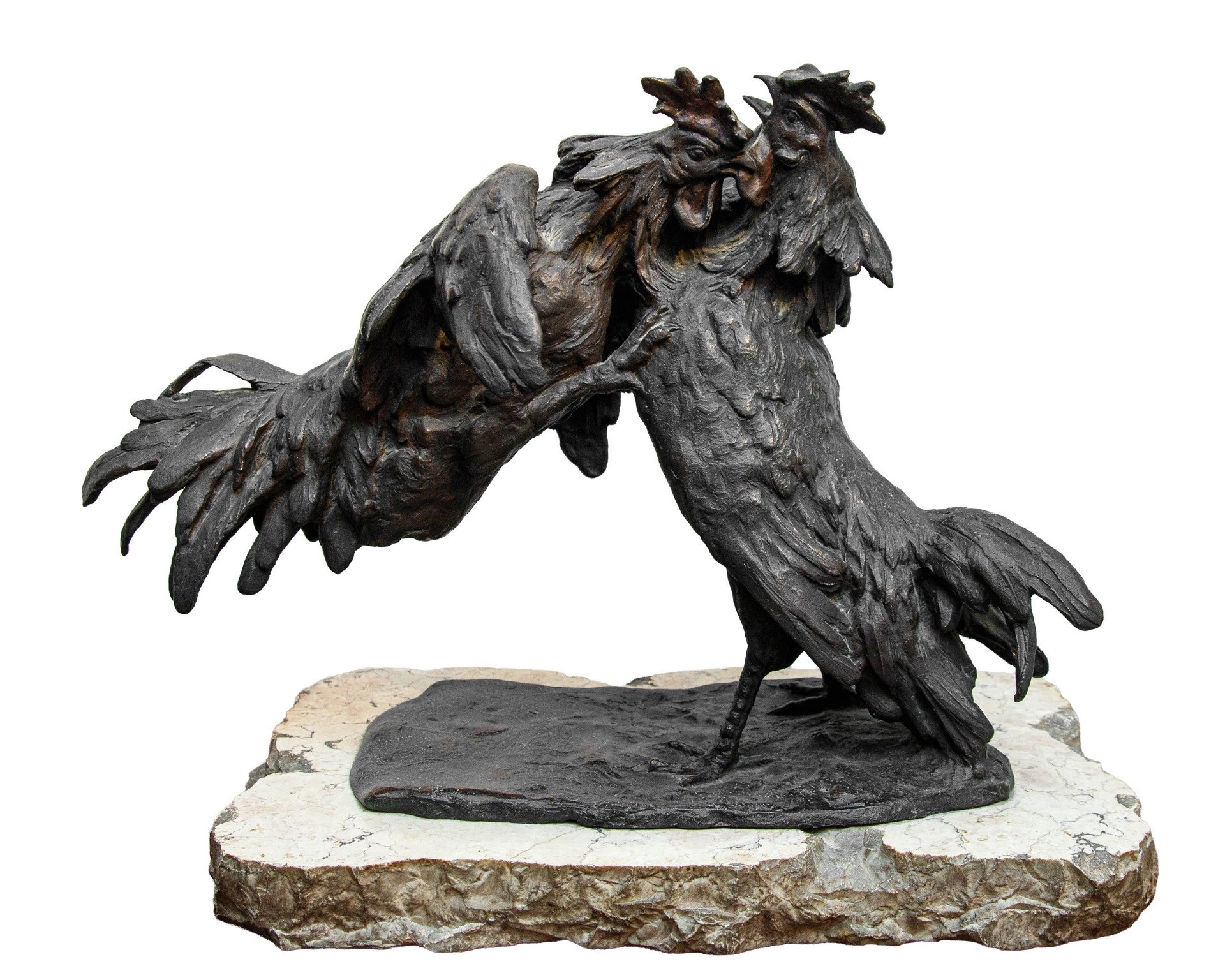
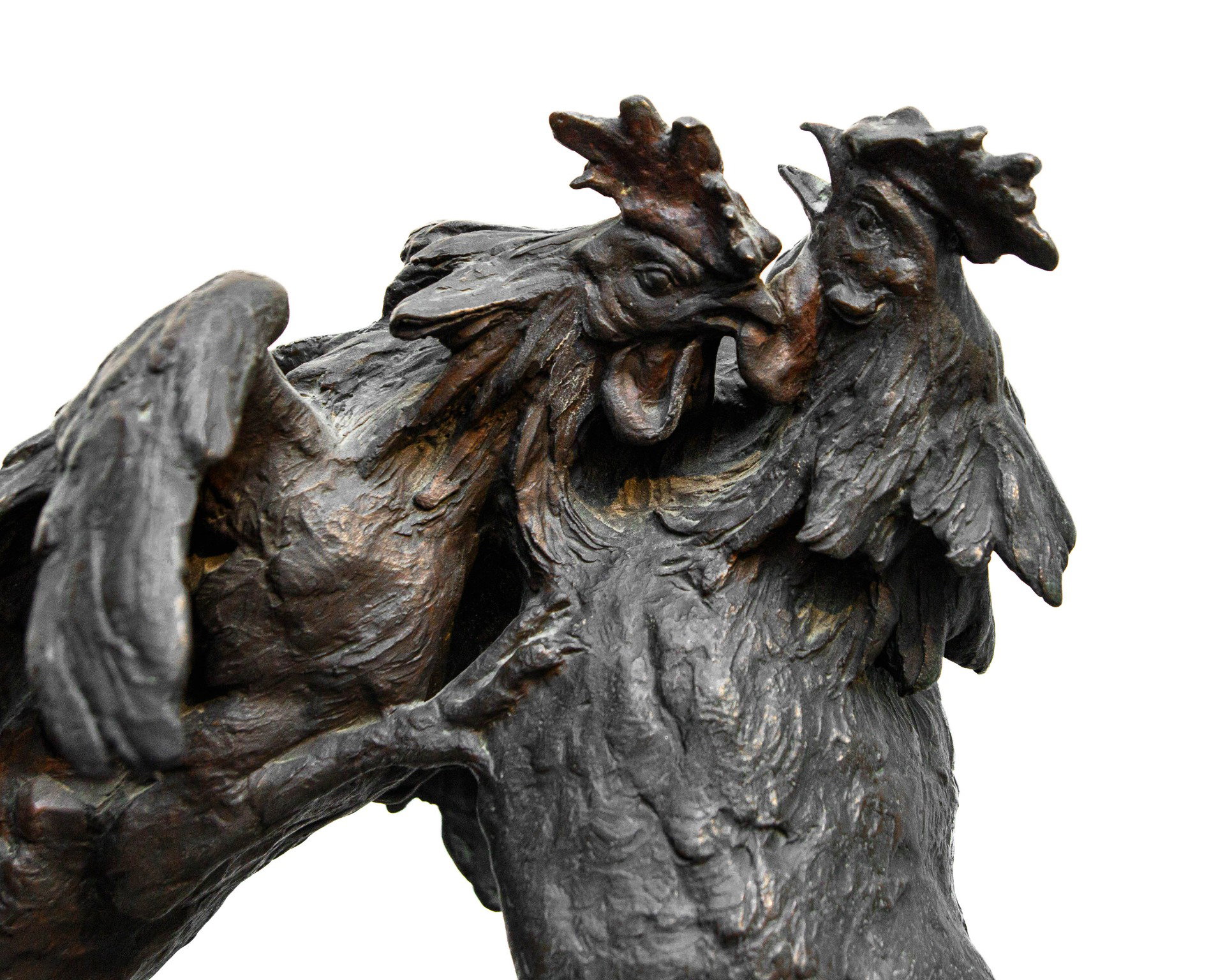
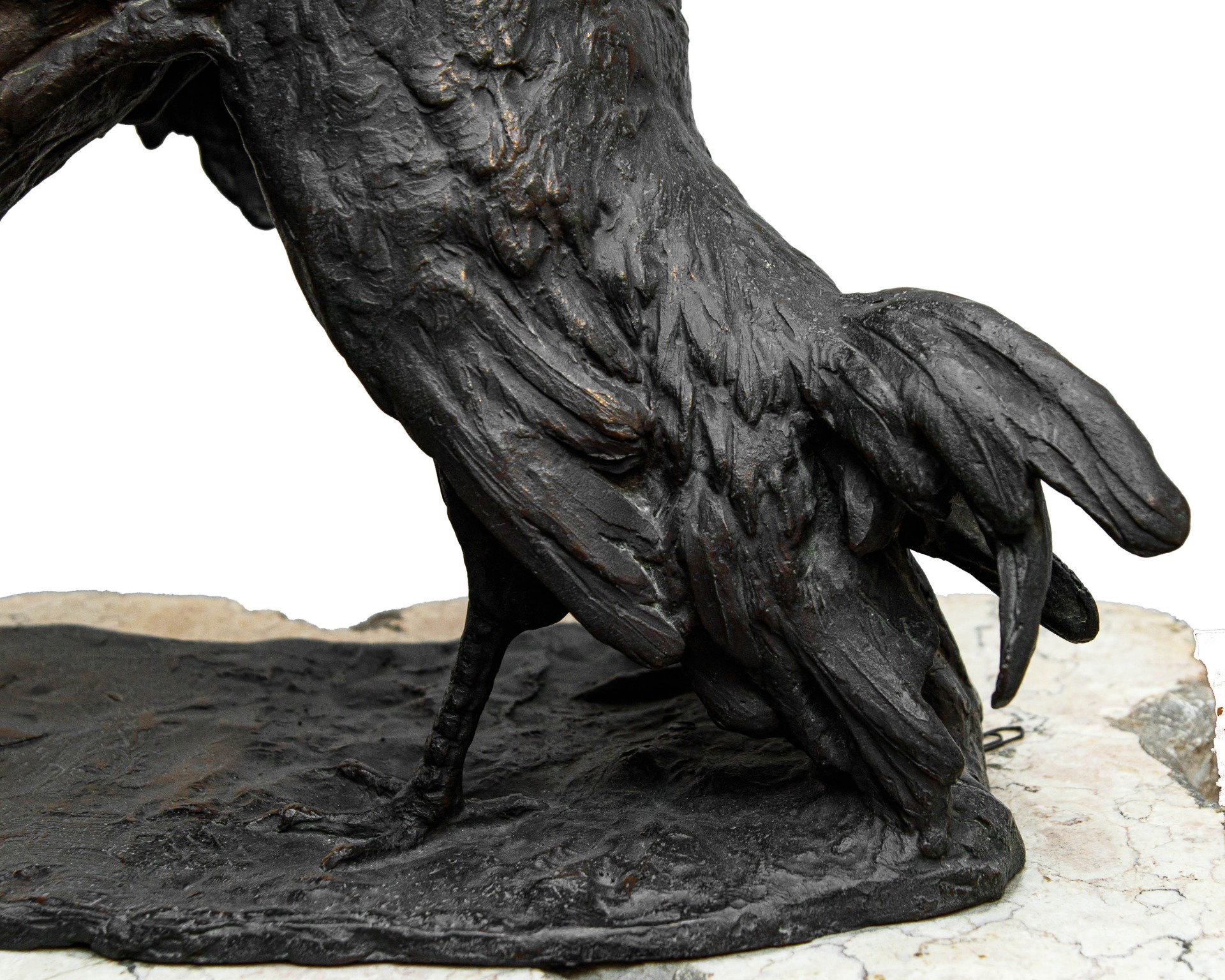
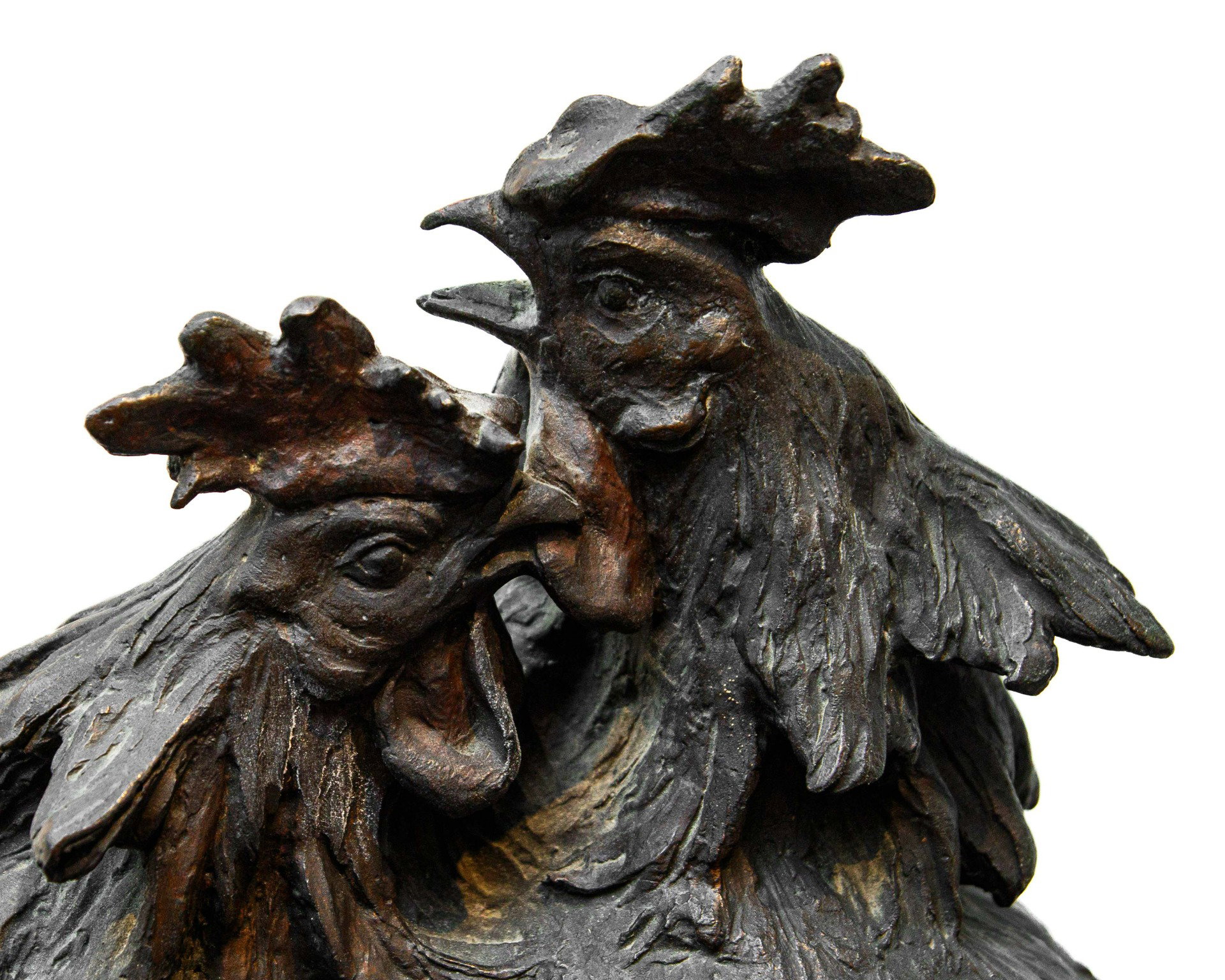
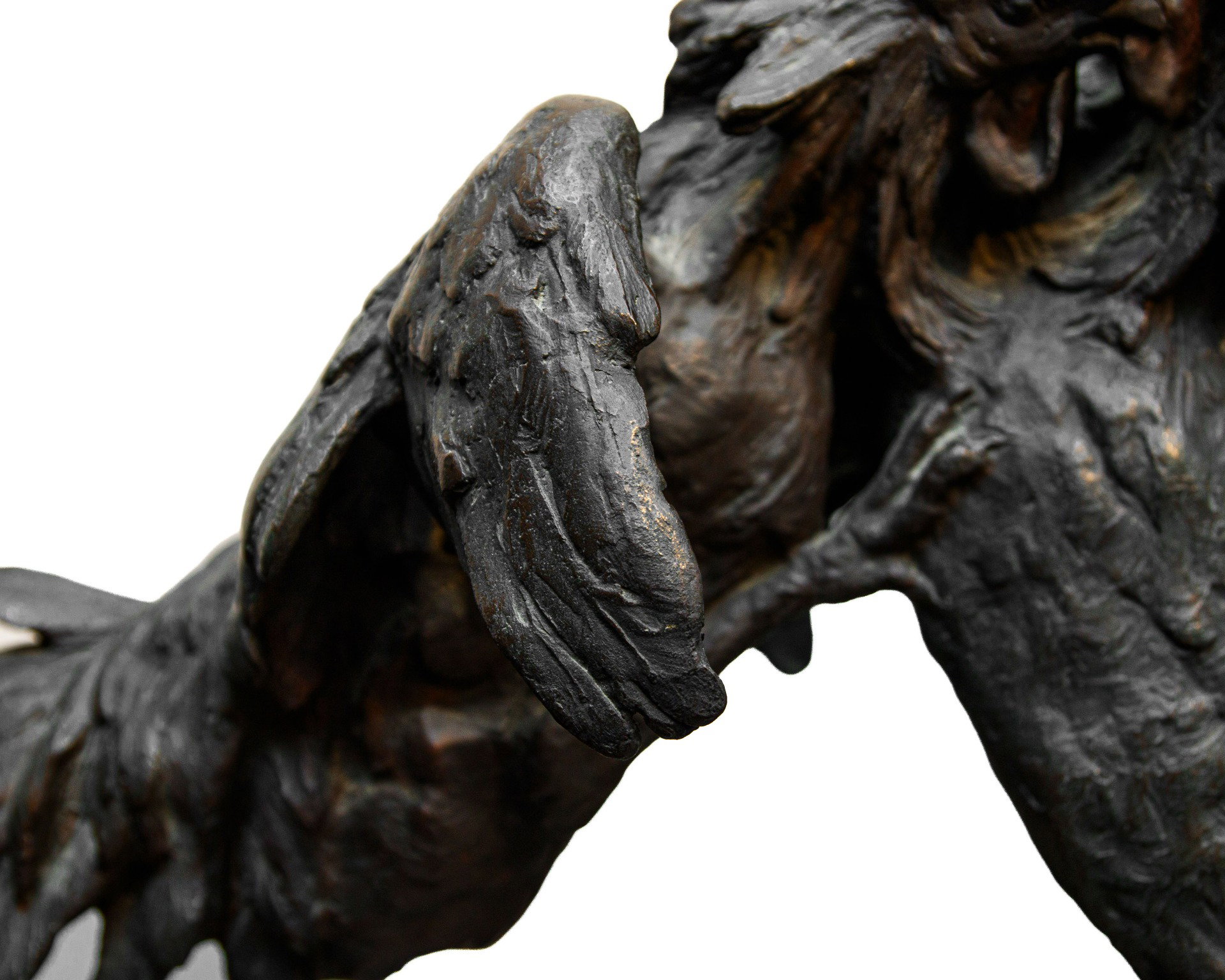
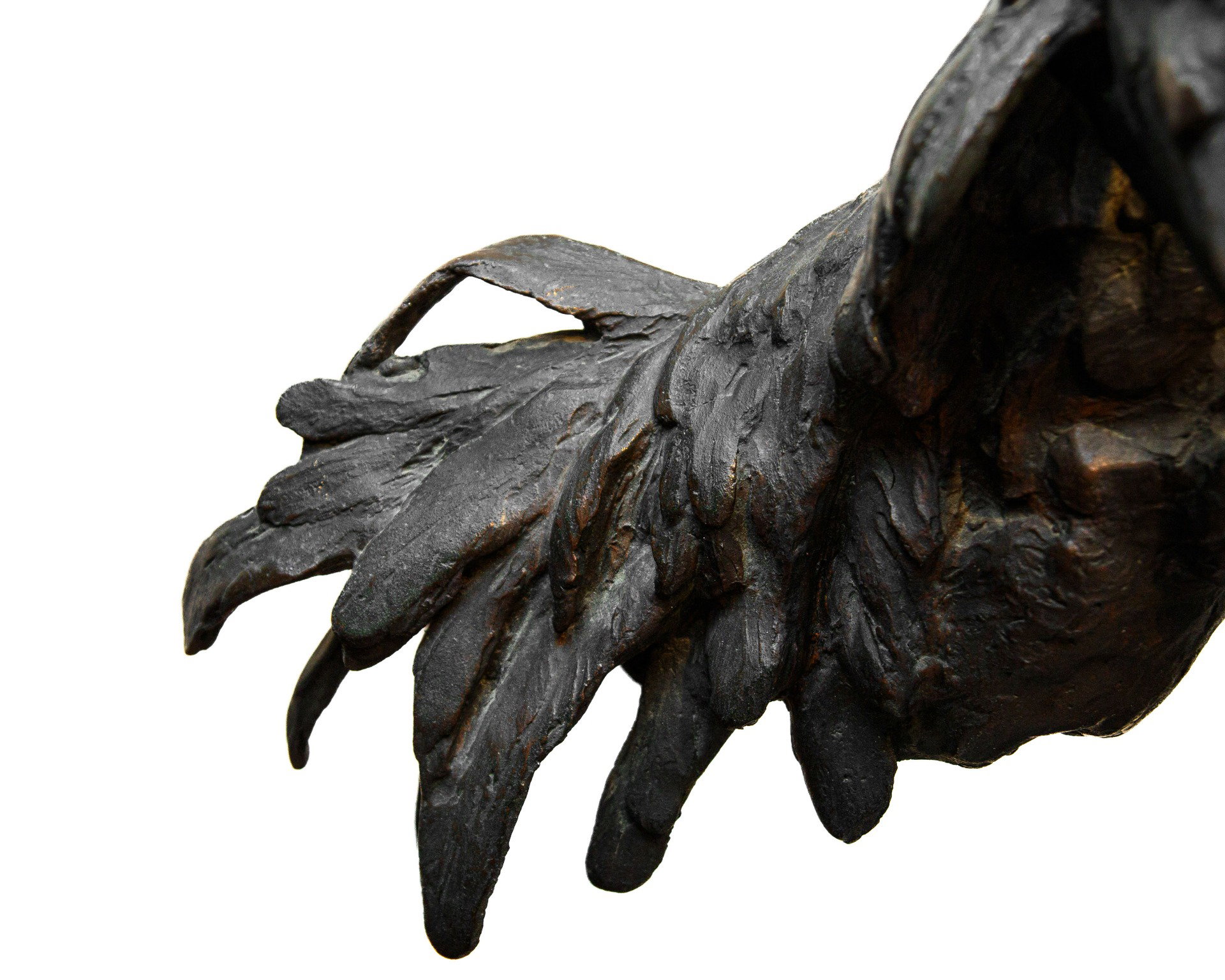
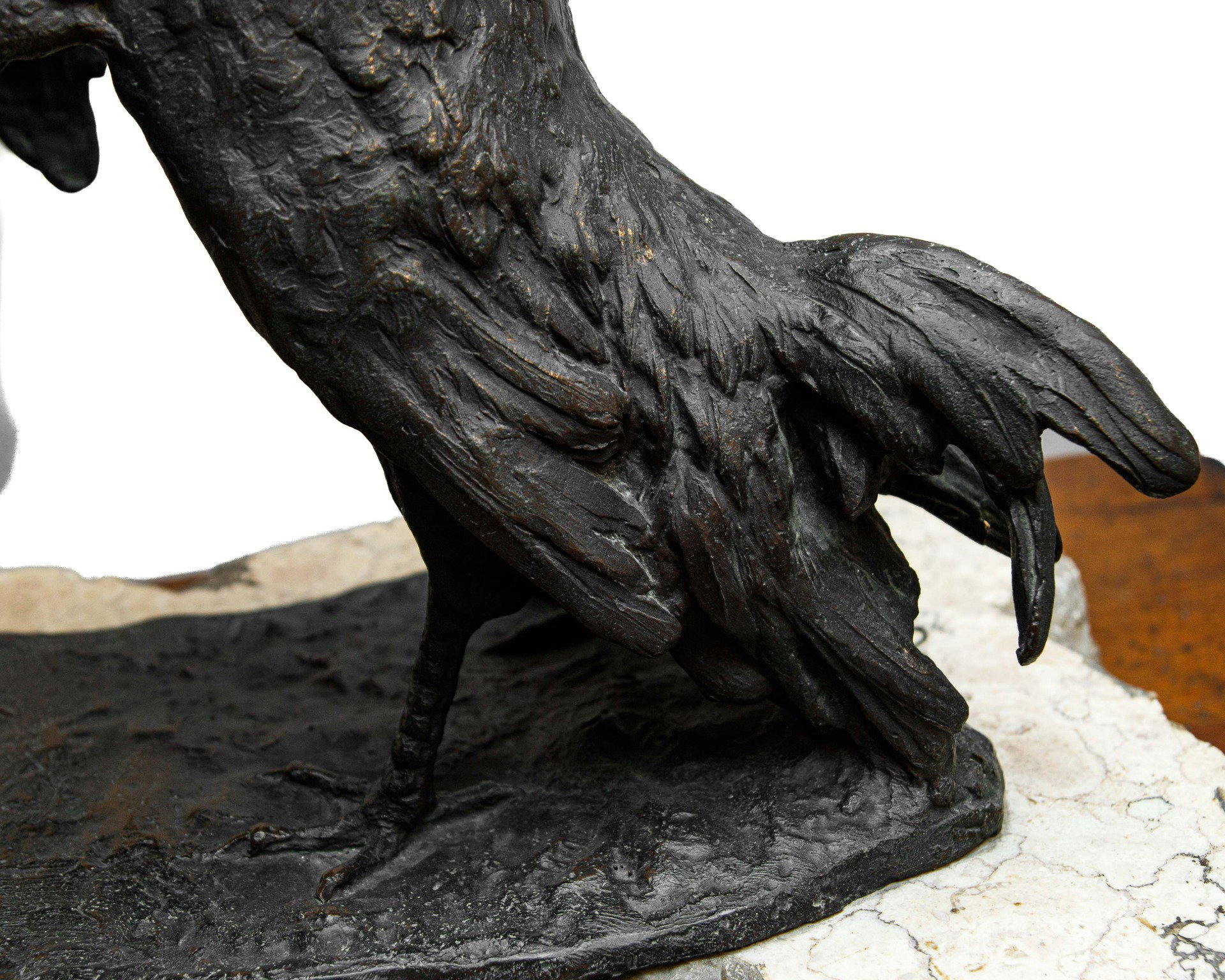
Clash of Roosters
Dark patina bronze, 40 x 38.5 x 25 cm
On a marble base
Italo Griselli (Montescudaio, 1880 – Florence, 1958) represents one of the most solid and technically learned figures in 20th-century Italian sculpture, an artist capable of making the composure of classical tradition dialogue with the monumental anxieties of his time. Born in Montescudaio (Val di Cecina, province of Pisa) in 1880, he trained at the Academy of Fine Arts in Florence under the guidance of Augusto Rivalta, but it was his long stay in Russia, lasting over a decade until the outbreak of the October Revolution, that refined his plastic sensibility and earned him international fame as an exceptional portraitist for the Russian aristocracy and the imperial family. Upon his return to Italy, Griselli skillfully integrated into the "Return to Order" climate, channeling his art in a monumental direction that found ample space in the major public commissions of the fascist regime, while always maintaining stylistic independence characterized by synthetic volumes and a certain archaic solemnity. Among his most famous public works, the colossal "Genio dello Sport" (originally conceived as "Genio del Fascismo") stands out unreservedly, located in front of the Palazzo degli Uffici at EUR in Rome: an athletic figure that, in its salute gesture, perfectly embodies the ideal of strength and balance that Griselli pursued throughout his maturity. In the broad panorama of Italian monumental sculpture, Italo Griselli left a significant mark, contributing to the celebration of some of the nation's most important figures and symbols. Within the Vittoriano complex in Rome, the colossal monument dedicated to Victor Emmanuel II, Griselli tested his technical mastery by creating the statue personifying the city of Florence, placed in the imposing series of sculptures dedicated to the noble cities of Italy that adorn the base of the sommoportico. The inseparable bond with Tuscany and its artistic tradition finds perfect synthesis in the figure of the Arno River, created for the base of the Ponte della Vittoria in Florence. In this work, Griselli interprets the river as a powerful fluvial deity, a personification recalling classical statuary but translated with modern sensibility, where the force of water is evoked by vigorous musculature and the synthetic modeling of the stone, perfectly integrating the sculptural element into the city's architectural and landscape fabric. Moving to the Ligurian Riviera, the artist paid homage to the first Queen of Italy with the Monument to Queen Margherita in Bordighera, inaugurated in 1939 in a picturesque location along the Via Romana, overlooking the sea. Despite Griselli's fame being inextricably linked to monumental statuary and the celebration of human heroism, his animal production, embodied by this bronze "Clash of Roosters," represents one of the most authentic, free, and technically refined veins of his entire career. This interest was not a mere stylistic exercise but a profound exploration of the vitality of form rooted in his Florentine training, influenced by the teachings of masters like Sirio Tofanari. For Griselli, the animal was not merely a decorative subject but an organism through which to explore muscular tension, the rhythm of movement, and a plastic synthesis that often anticipated almost abstract solutions: his animals are often captured in moments of watchful stillness or imminent action, transforming matter into pure energy and demonstrating a profound knowledge of anatomy and volumes.