Giovanni Bernardo Carbone (Genoa, 1616 – 1683)
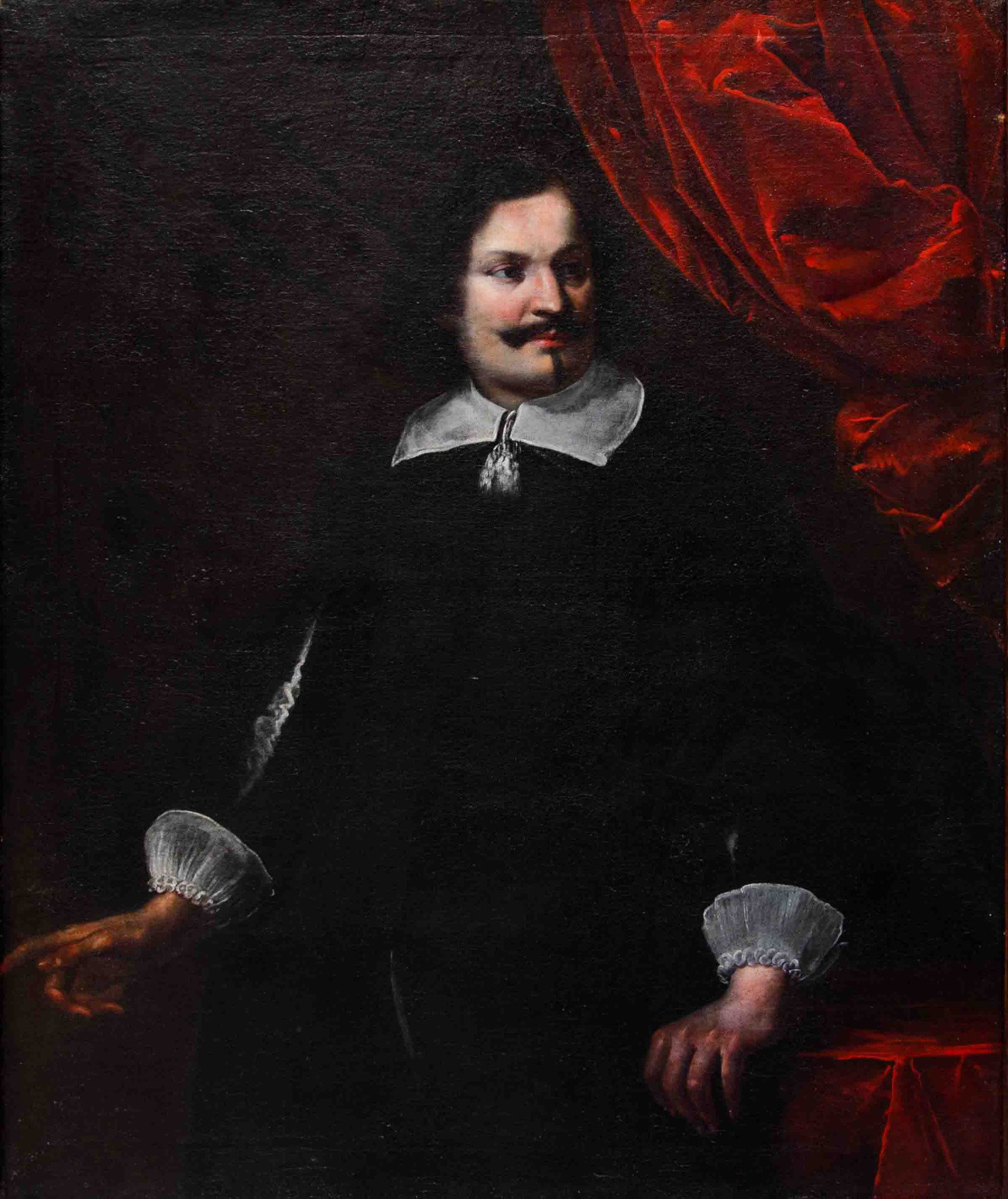
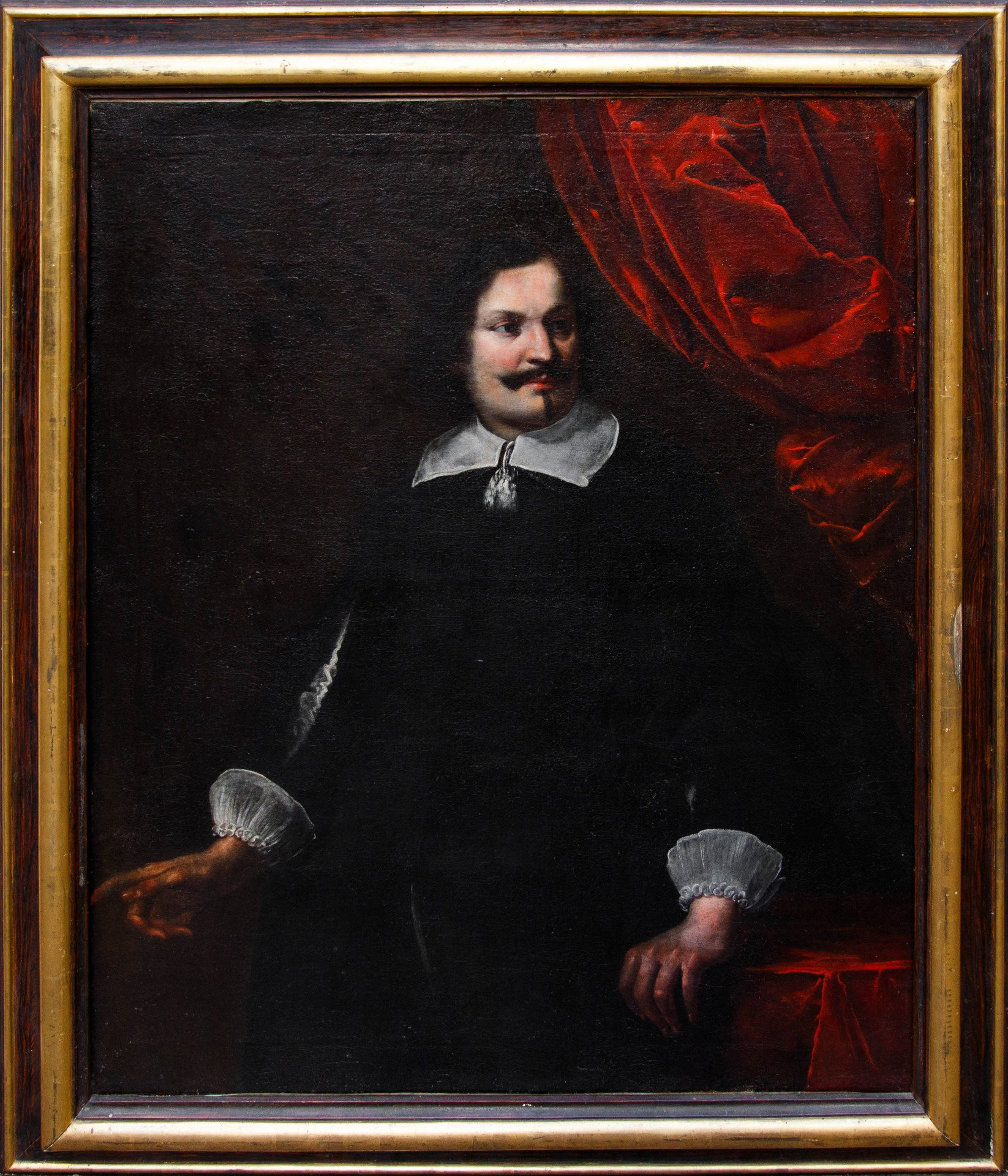
Portrait of a Gentleman, c. 1650
Oil on canvas, 121 x 94.5 cm – with frame, 144 x 119 cm
Critical analysis by Prof. Giacomo Montanari
"...with his beautiful portraits, he still leads even the connoisseurs to mistake them for Van Dyck's": thus Carlo Giuseppe Ratti described, in the context of the Lives of Genoese painters, sculptors, and architects (1768), the portraiture of Giovanni Bernardo Carbone, a master highly appreciated even by his contemporaries. The artist trained in Giovanni Andrea De Ferrari's workshop during the 1630s, a period when the Genoese art scene was influenced by intense external stimuli and lively processes of cultural cross-pollination. In particular, the Flemish element, supported by the presence of eminent figures such as Rubens (in Genoa in the first decade of the 17th century) and, subsequently, Van Dyck, as well as a well-established community of Dutch painters, offered expressive models based on refined and luxurious naturalism, capable of satisfying the demands of aristocratic patronage eager for images that would reaffirm their social prestige. In this context, Carbone skillfully assimilated and reinterpreted - sometimes with astute ability - the teachings of De Ferrari and Domenico Fiasella, along with influences drawn from Van Dyck and Jan Roos, as well as stylistic contributions from Valerio Castello and Domenico Piola. The genre of portraiture thus saw considerable diffusion, and Carbone established himself among the most sought-after painters, distinguished by his ability to adapt the Van Dyckian model to the expectations of the most up-to-date Genoese nobility.
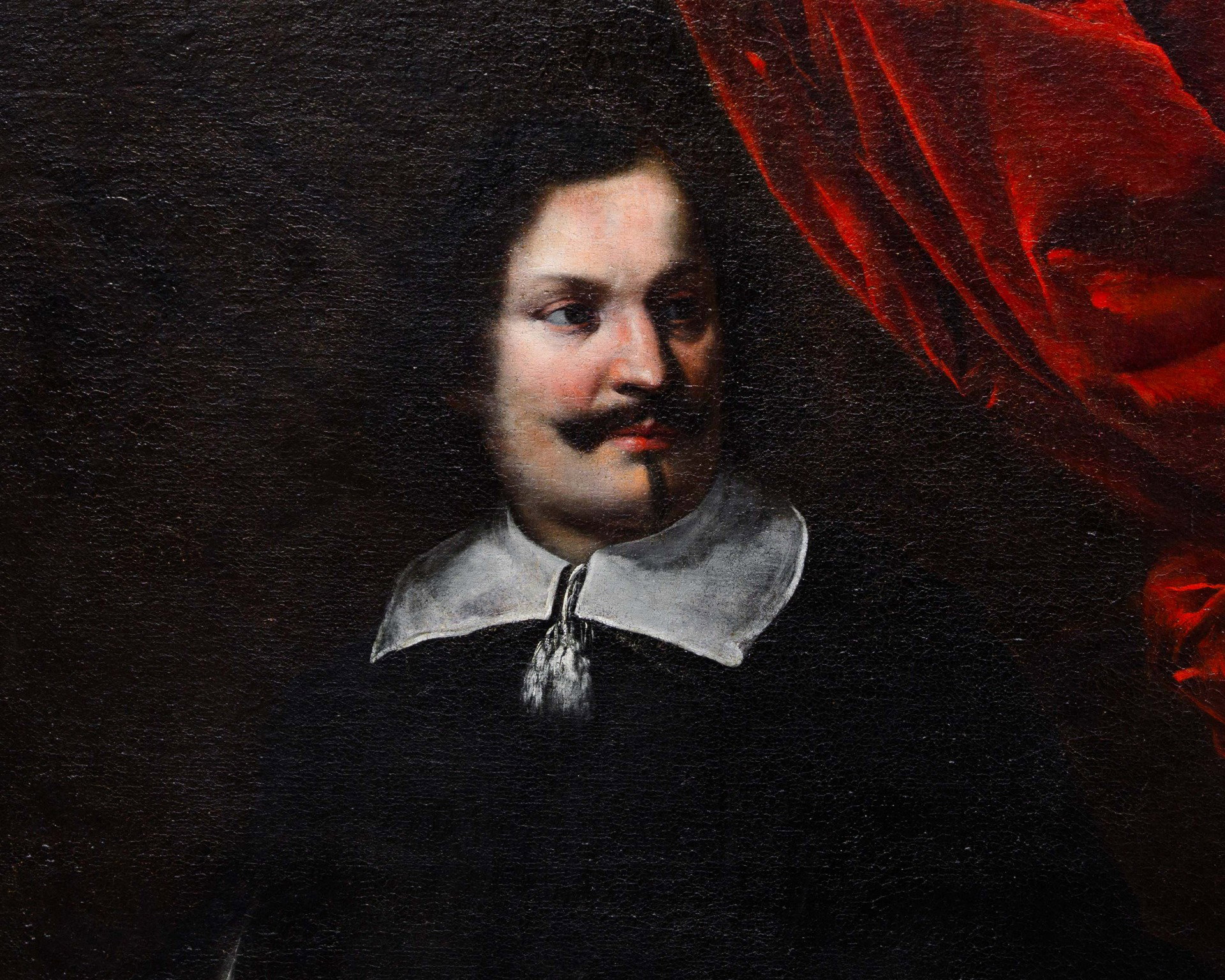
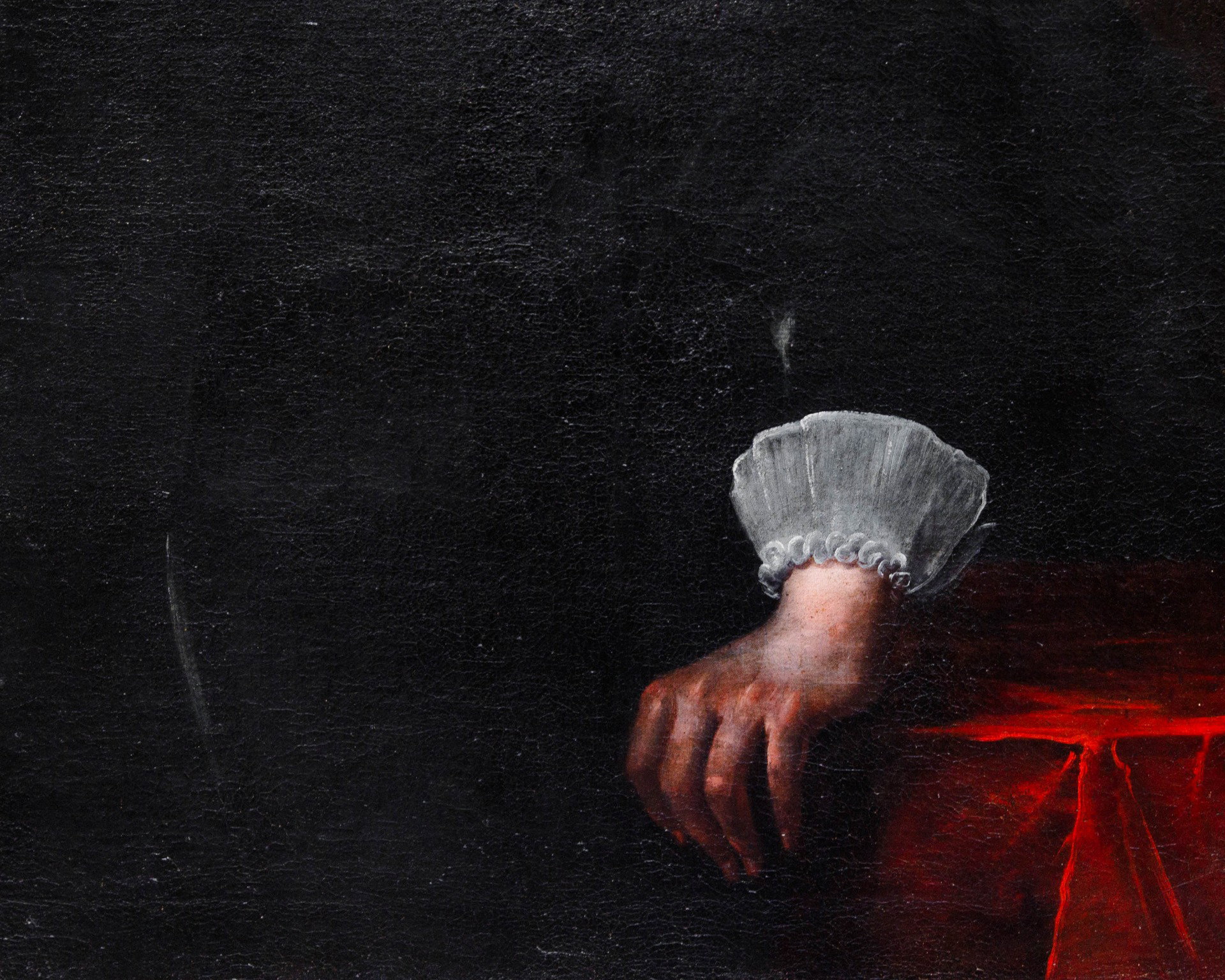
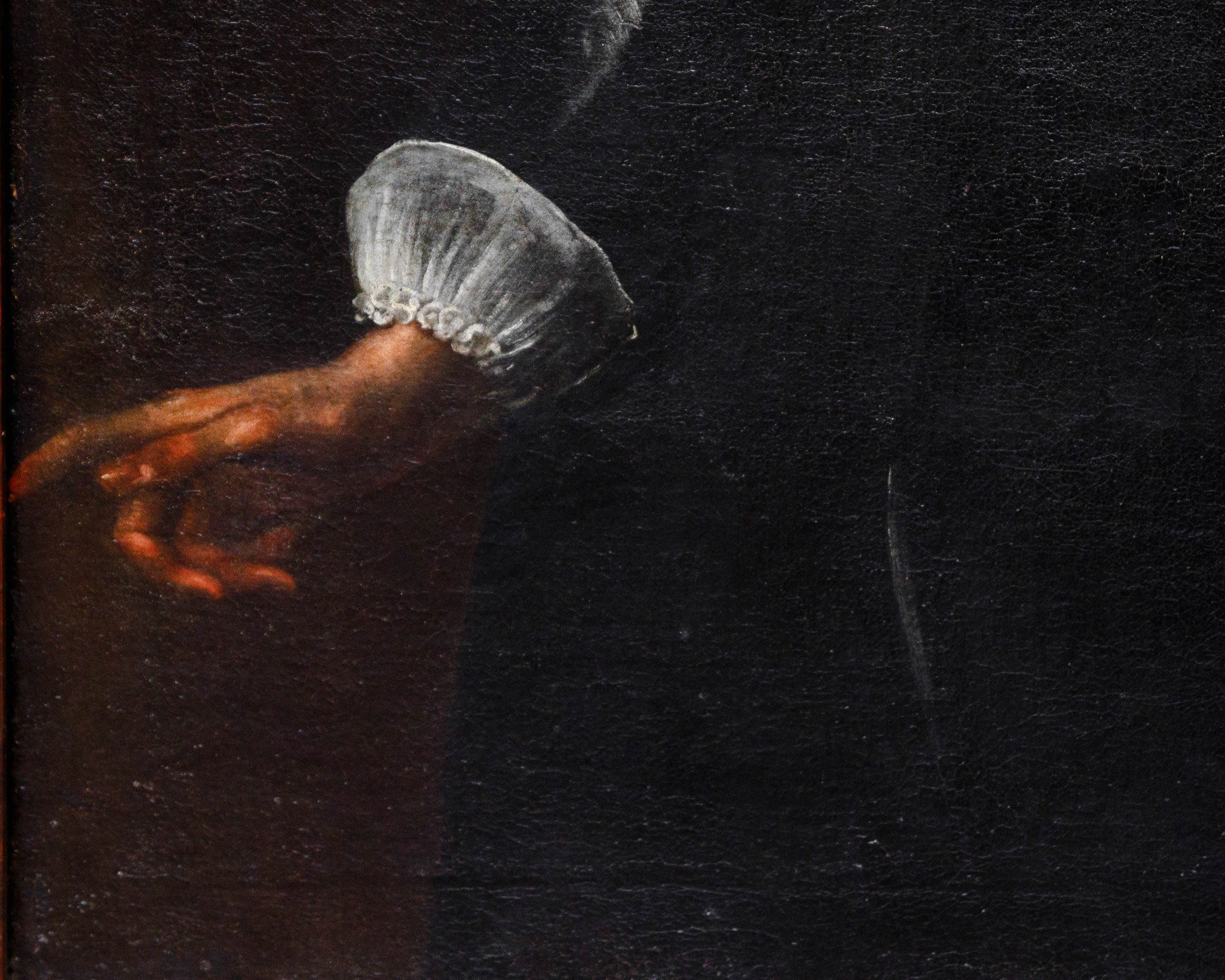
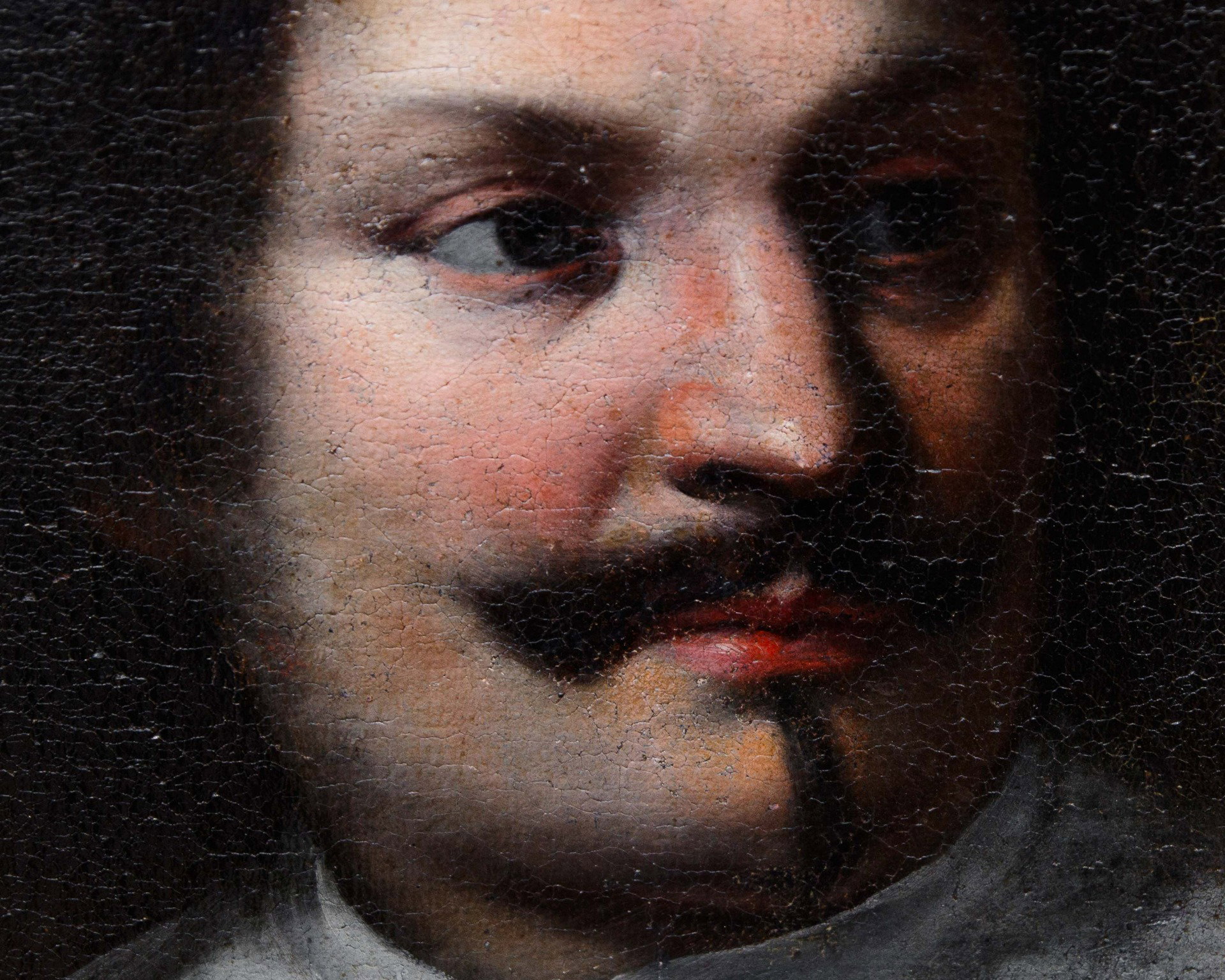
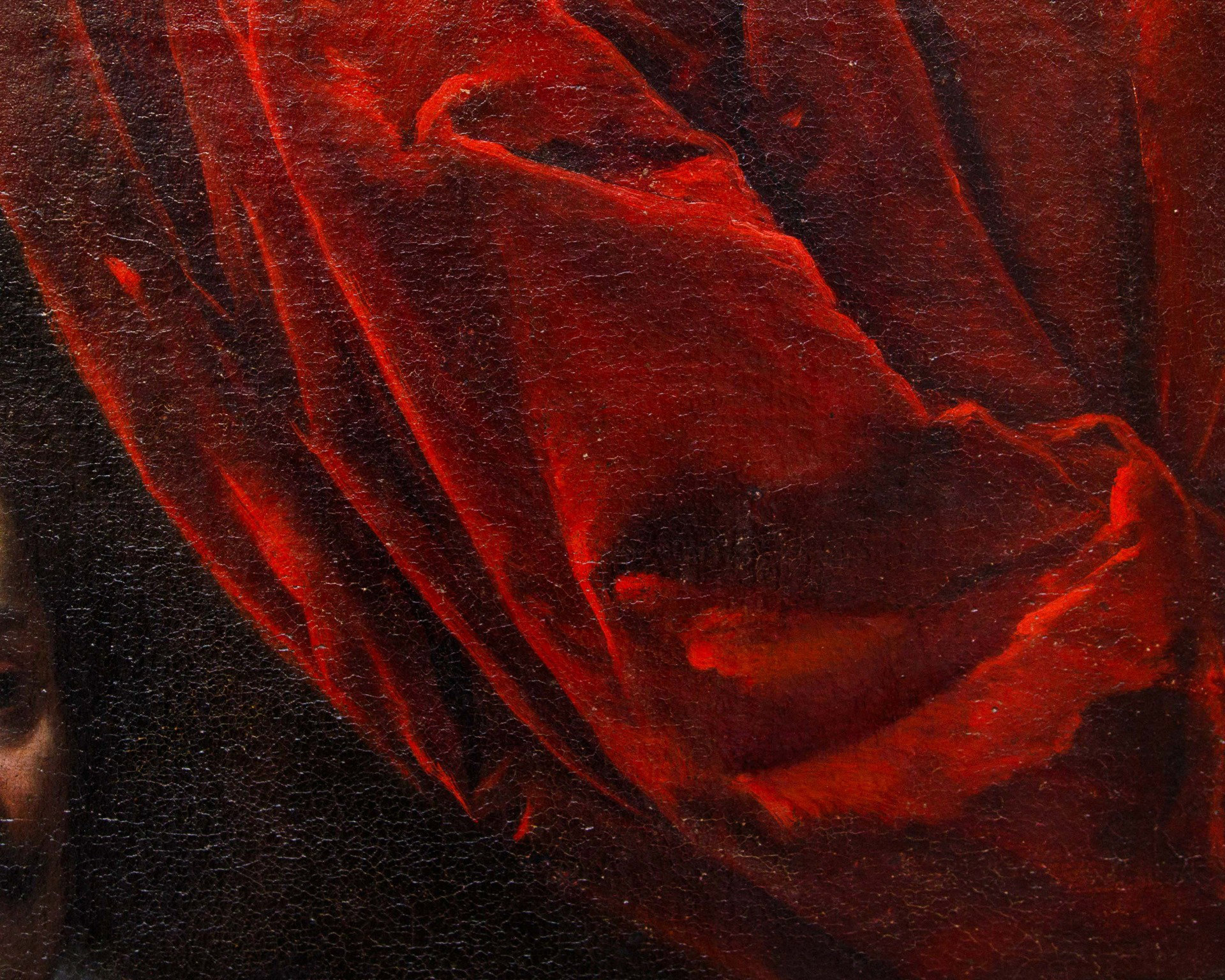
The painting depicts an unidentified aristocrat, caught in the act of turning his head and gaze to the left, as if suddenly distracted by the entrance of a figure into the representational space. Emerging strongly from the dark background are the red drapery, which occupies the right side of the scene and recalls typical solutions by Van Dyck, and the lively tablecloth spread on the small table. The figure's left hand rests on the latter, while the right is suspended in mid-air. The clothing is characterized by elegant slashed sleeves, completed by white cuffs and collar, closed at the neck by a small ornament hanging on the chest. The face, suggesting an age of no more than thirty years, features a lively and slightly flushed complexion, accentuated by full, intensely red lips, set in a composed and impassive expression. The work reflects the formal characteristics of Genoese portraiture that developed from the late 1620s onwards, largely derived from the example of Van Dyck, who was active in Genoa between 1621 and 1627, and shared by other Flemish painters such as Jan Roos and Jan Hovaert, present in the same context in subsequent years. Beyond these influences, however, the painting clearly reveals the hand of an artist with solid Genoese training, such as Carbone. His autograph traits emerge in the vibrant and restless brushwork that defines and illuminates the textile surfaces as well as in the fleshy and vital rendering of the hands and face. The red tones of the drapery find a precise echo in the robe of the Virgin in the Sleeping Madonna and Child in the Musei di Strada Nuova in Genoa. Similarly, the care for complexions and the everyday, concrete rendering of lips, hands, and gazes can be found in the Portrait of Lucrezia Pallavicino, executed around 1658 on the occasion of her marriage to Giovanni Giacomo Brignole, which constitutes a terminus ante quem for the dating of the canvas. Precisely in the late 1650s, Carbone appears to be fully autonomous and capable of imprinting a strong personal mark on his works, without abandoning the Van Dyckian heritage. In an initial phase of this process, around 1650, the painting in question can be placed, still firmly anchored to the compositional schemes and executive characteristics that had so incisively defined Genoese portraiture.