School of Antonio Allegri, called Correggio (Correggio c. 1489 – 1534) Attributable to Pomponio Allegri (Correggio, 1522 - Parma, 1593)
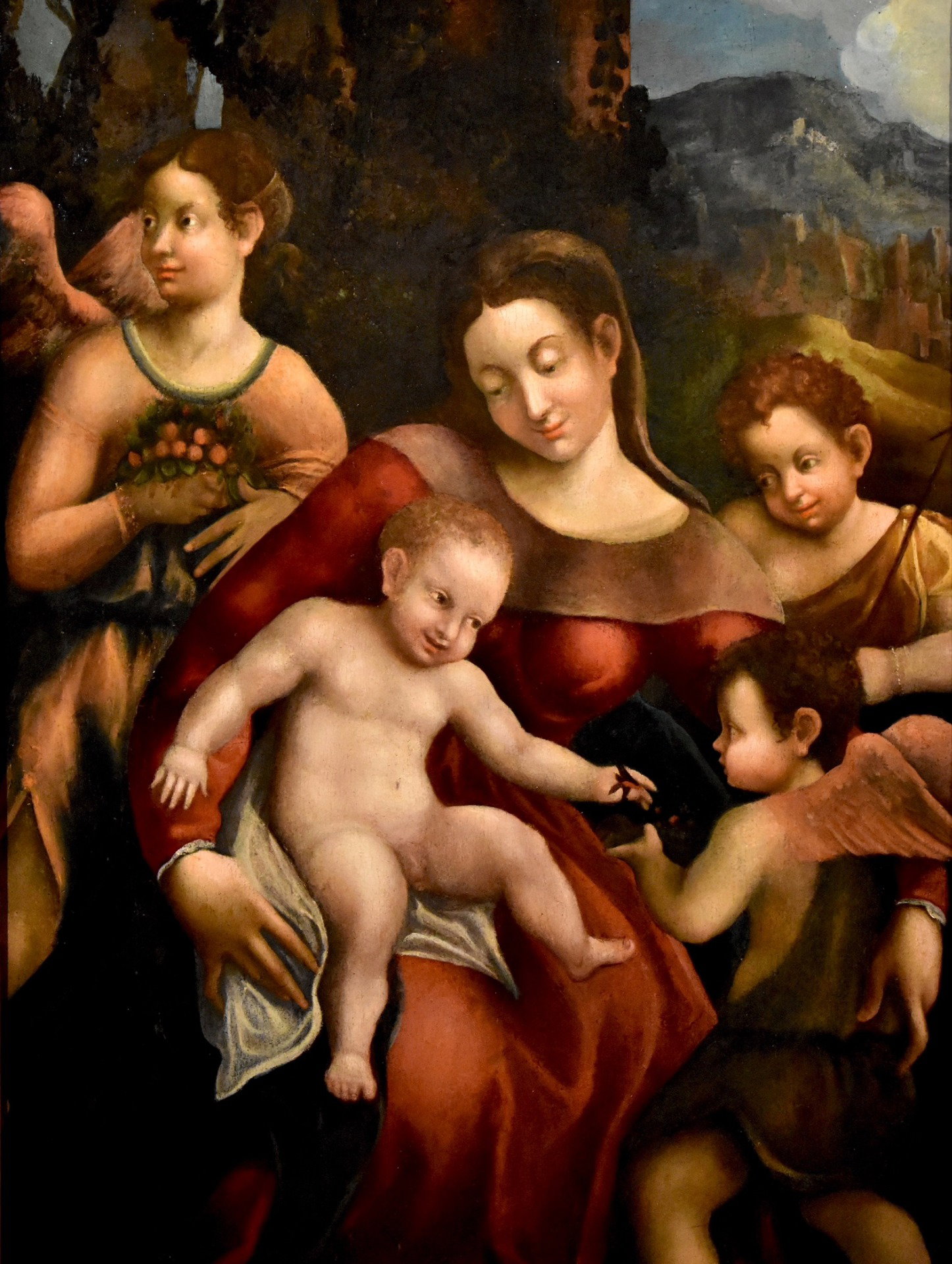
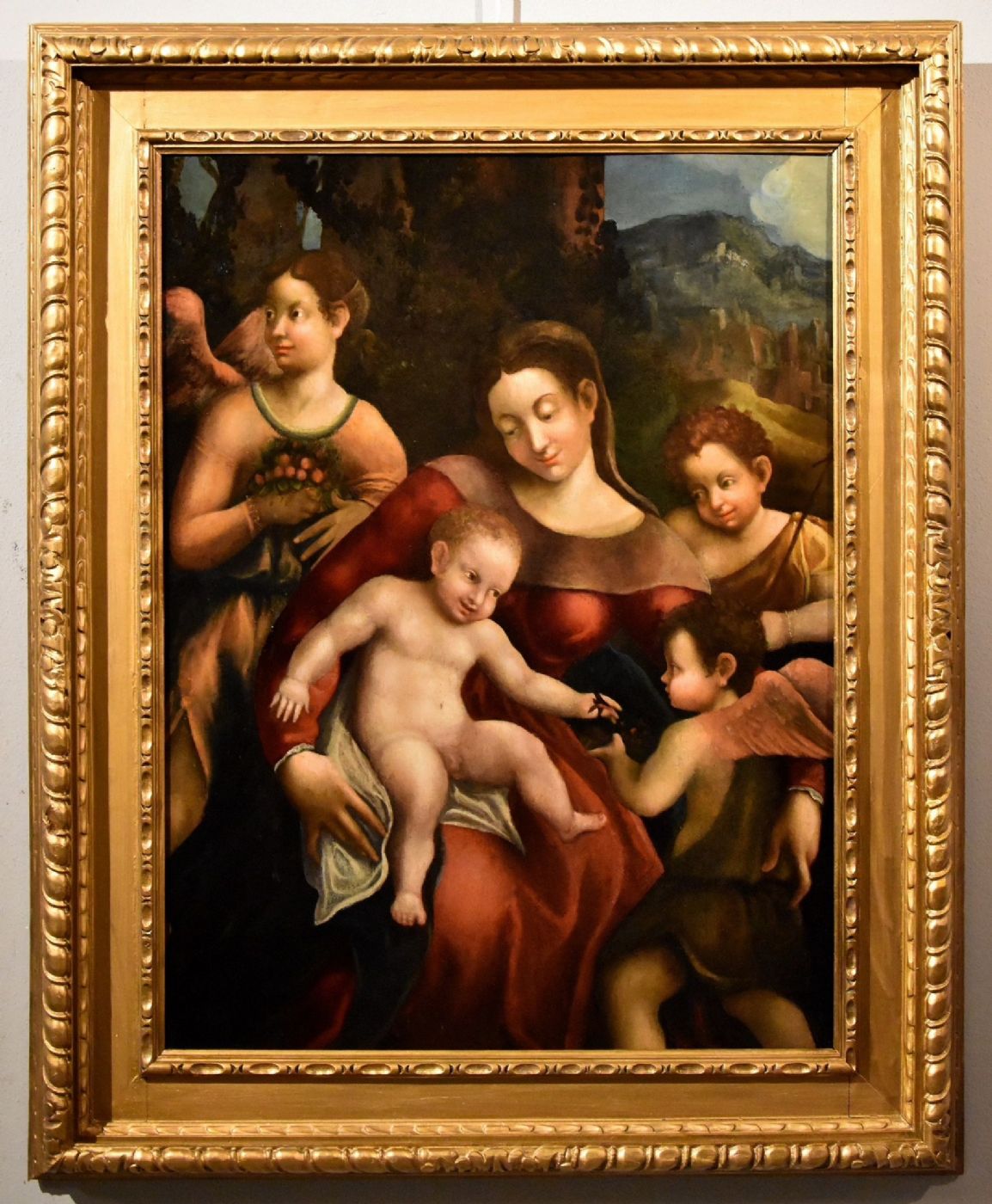
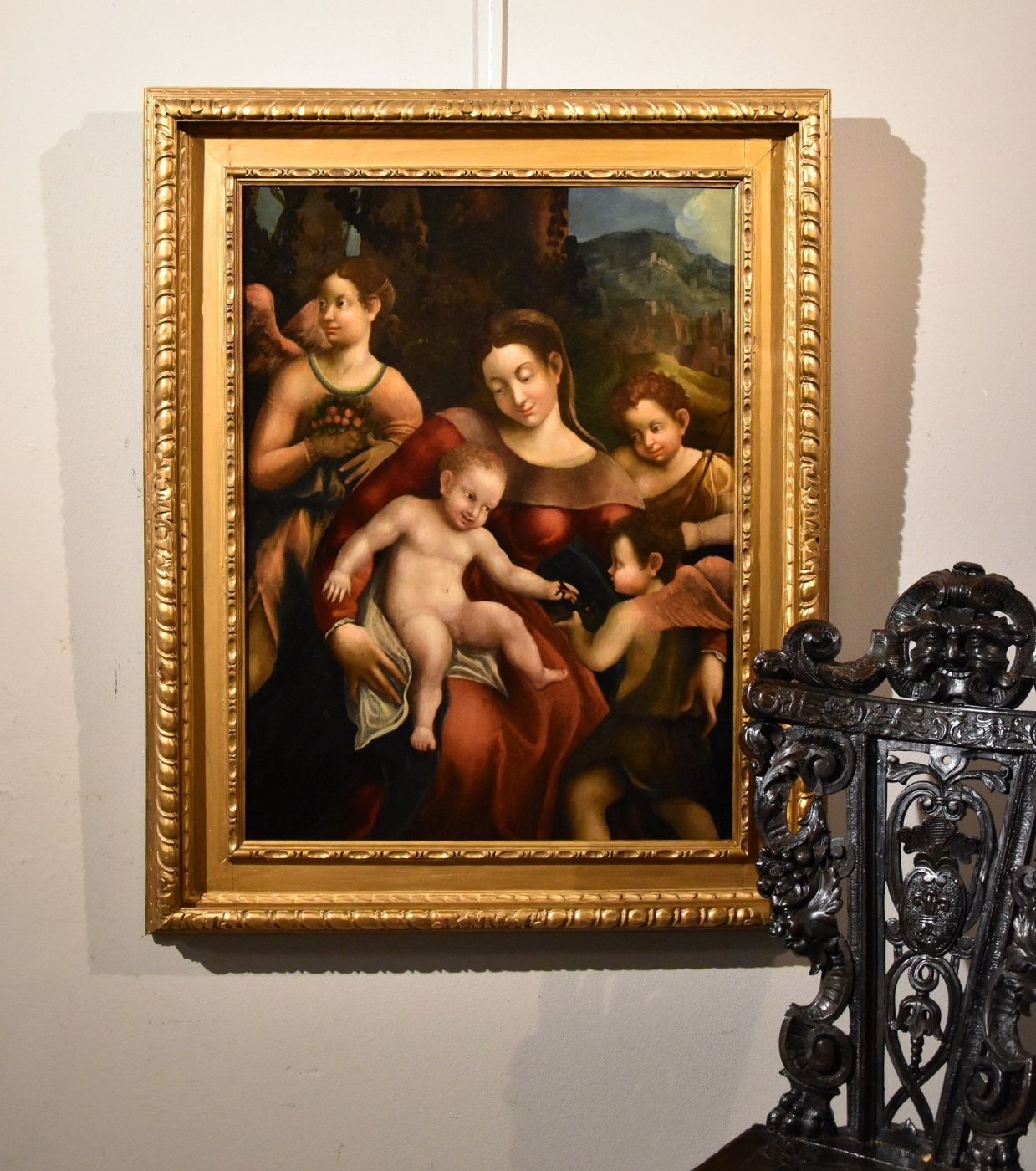
Madonna and Child with Two Angels and John the Baptist
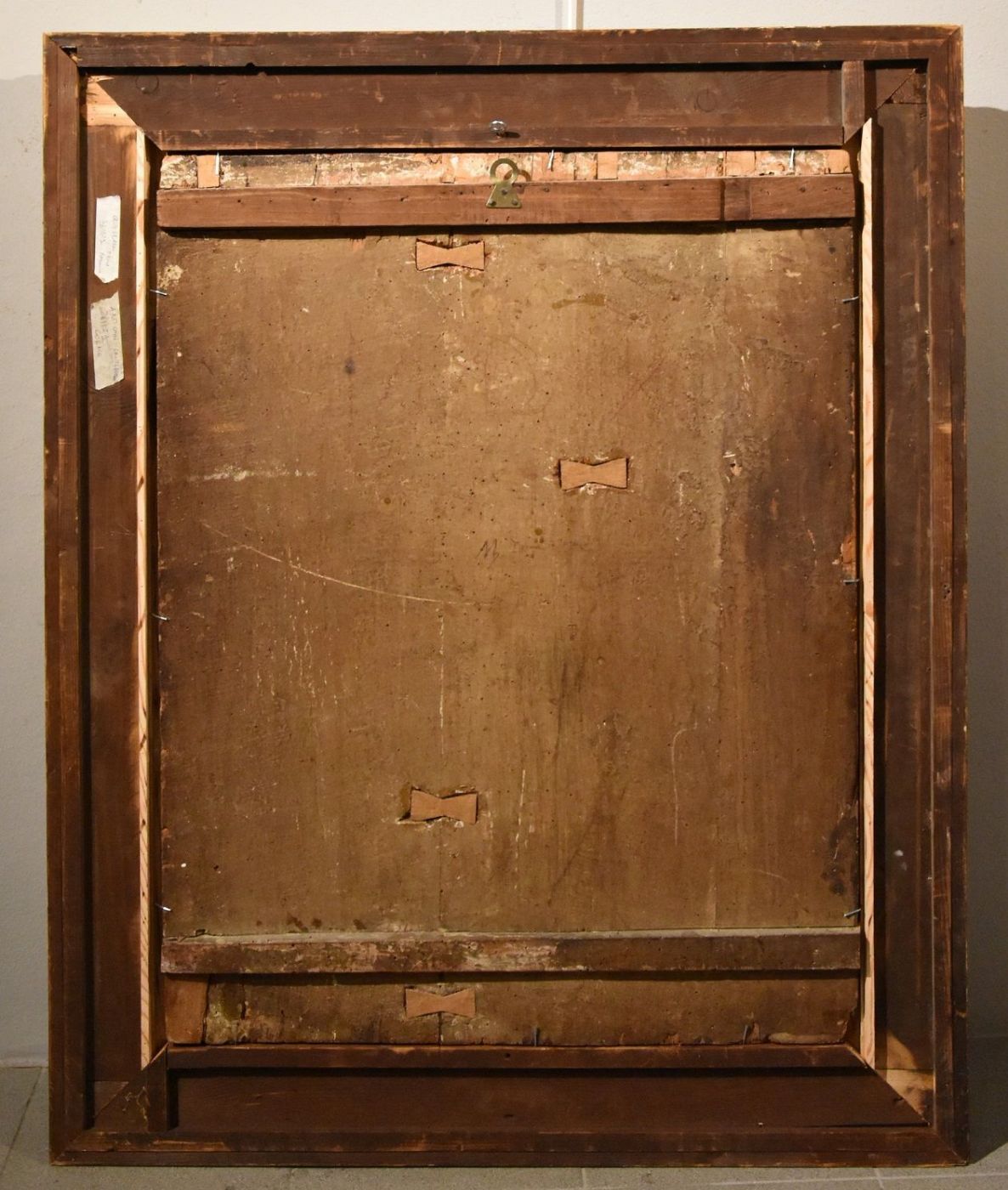
Oil on panel, cm. 92 x 69, in frame cm. 119 x 96
All details related to this painting can be viewed at the following - LINK -
The work, whose format suggests it was intended for domestic devotion, offers a pleasant testament to the art of Emilia in the mid-16th century, with clear references to the school of Antonio Allegri, known as Correggio (Correggio c. 1489 – ibid. 1534), an undisputed master for the great elegance of his creations, perfectly balanced between chromatic subtlety and dynamic effect, achieved through a concatenation of gestures and gazes.
Bringing Leonardo da Vinci's lesson to its ultimate fulfillment, he managed to capture the most authentic connection between the various figures, and furthermore, by virtue of the expressive sweetness of his characters and the extensive use of perspective, he established himself in the Po Valley as the most modern and daring bearer of Renaissance ideals.
As we can also observe in our beautiful panel, he contrasted the explosion of Venetian color and Roman Mannerism with a fluid, luminous style of strong emotional involvement.
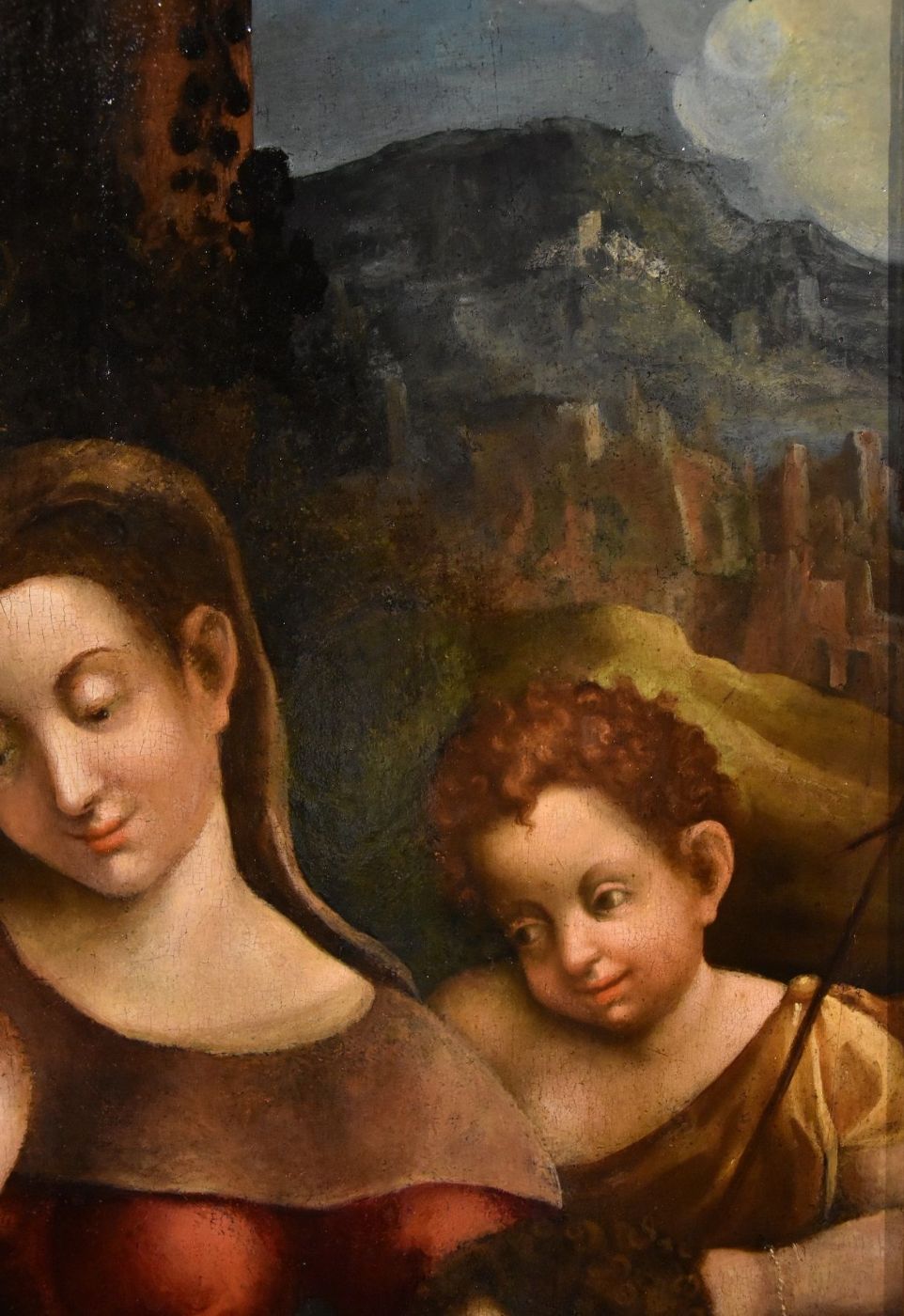
Upon further stylistic analysis, it is easy to attribute paternity to Pomponio Allegri; the pose of the Virgin, in particular, with her head slightly tilted, her gaze lowered, and her body's posture recalls, pays homage to, almost copying, the "Madonna of Milk" in Budapest created by her father.
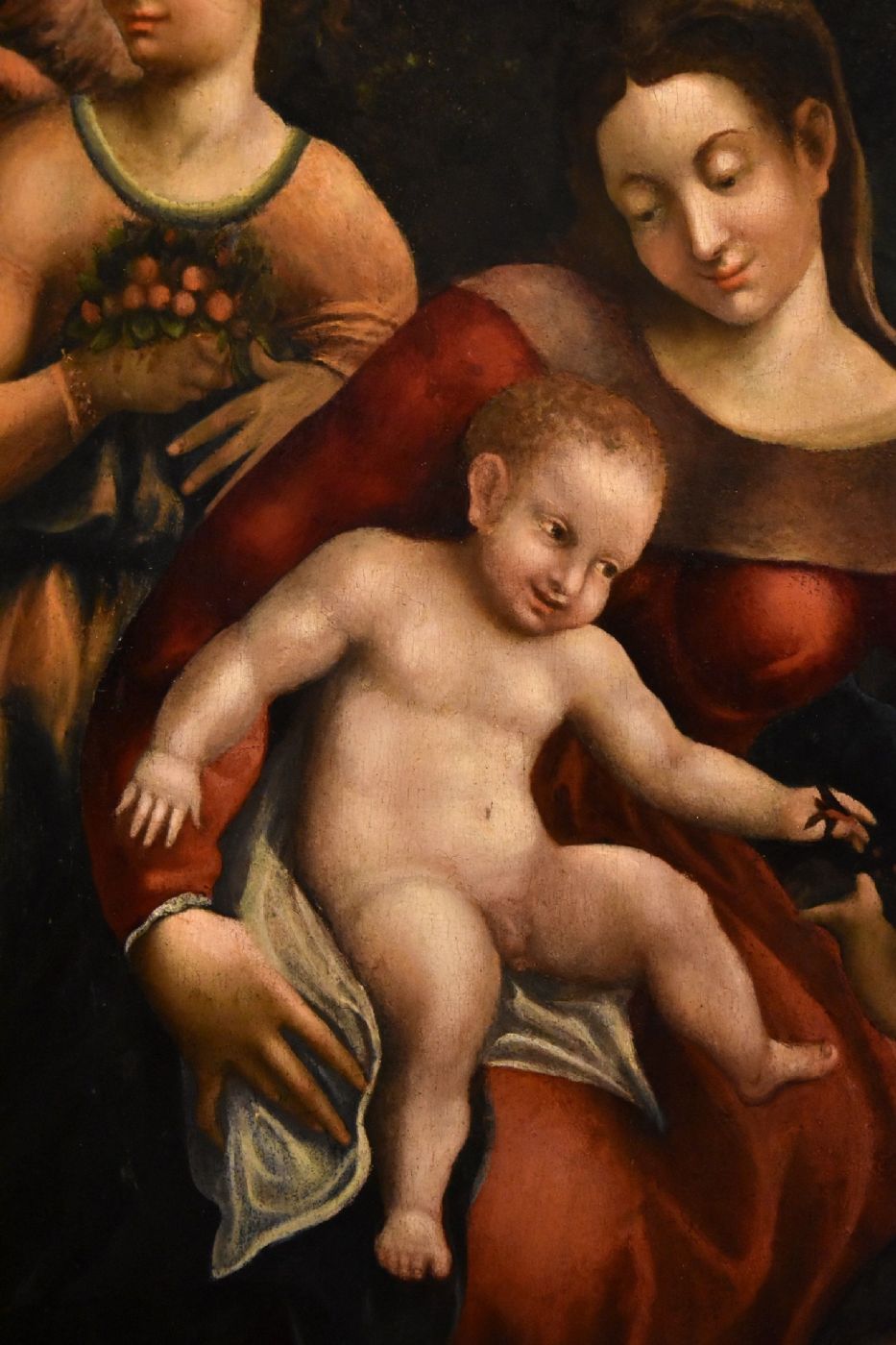
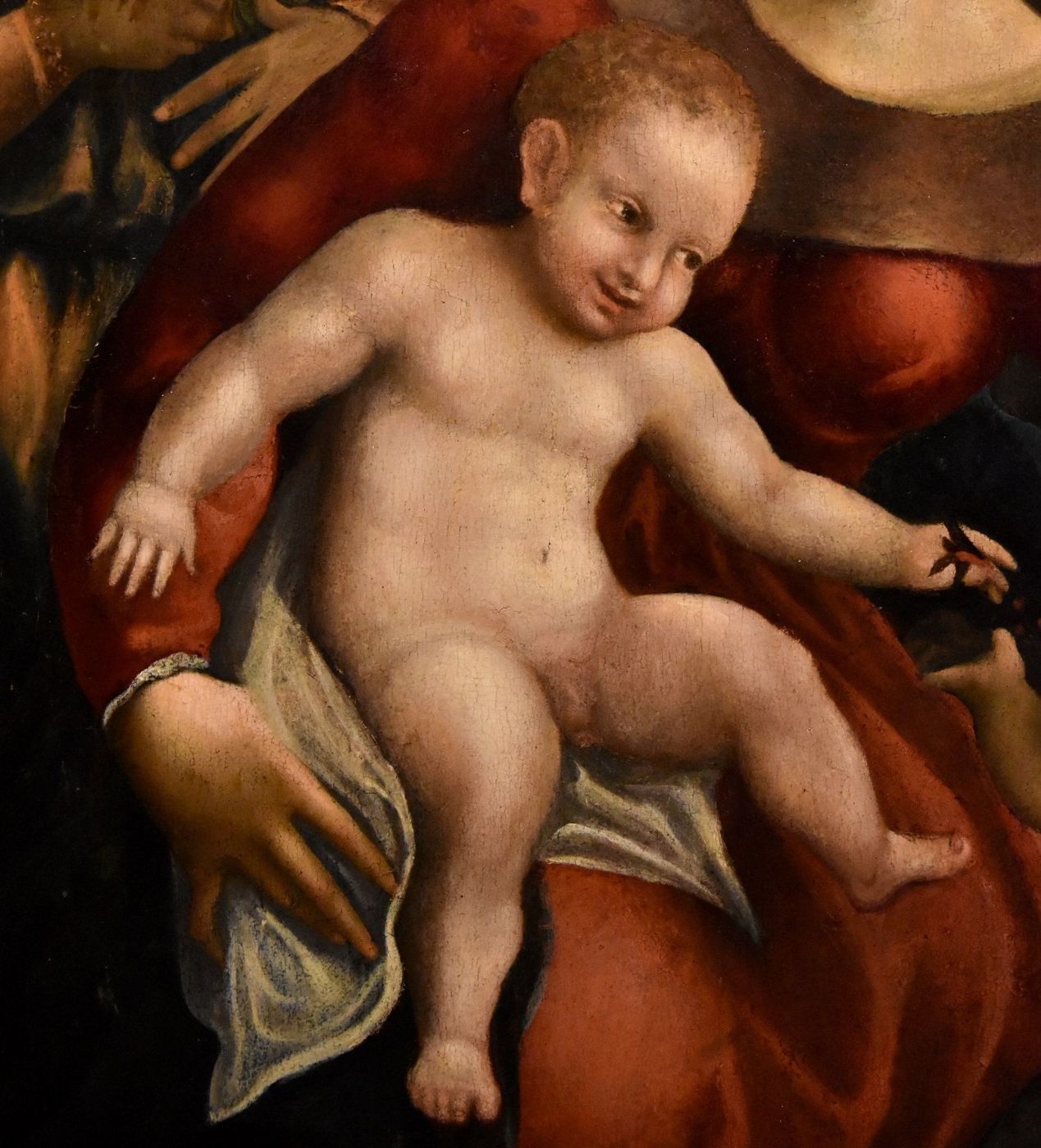
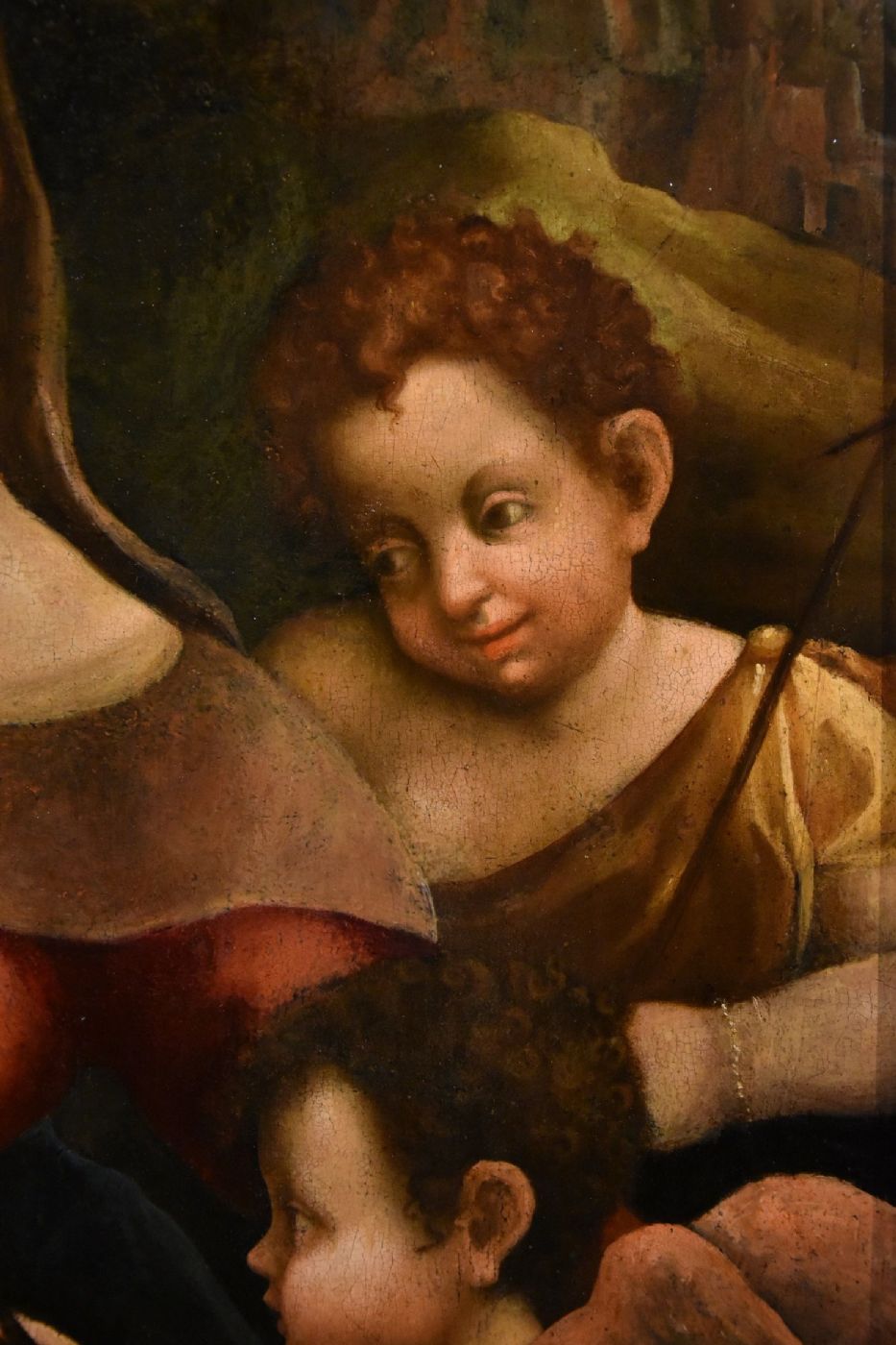
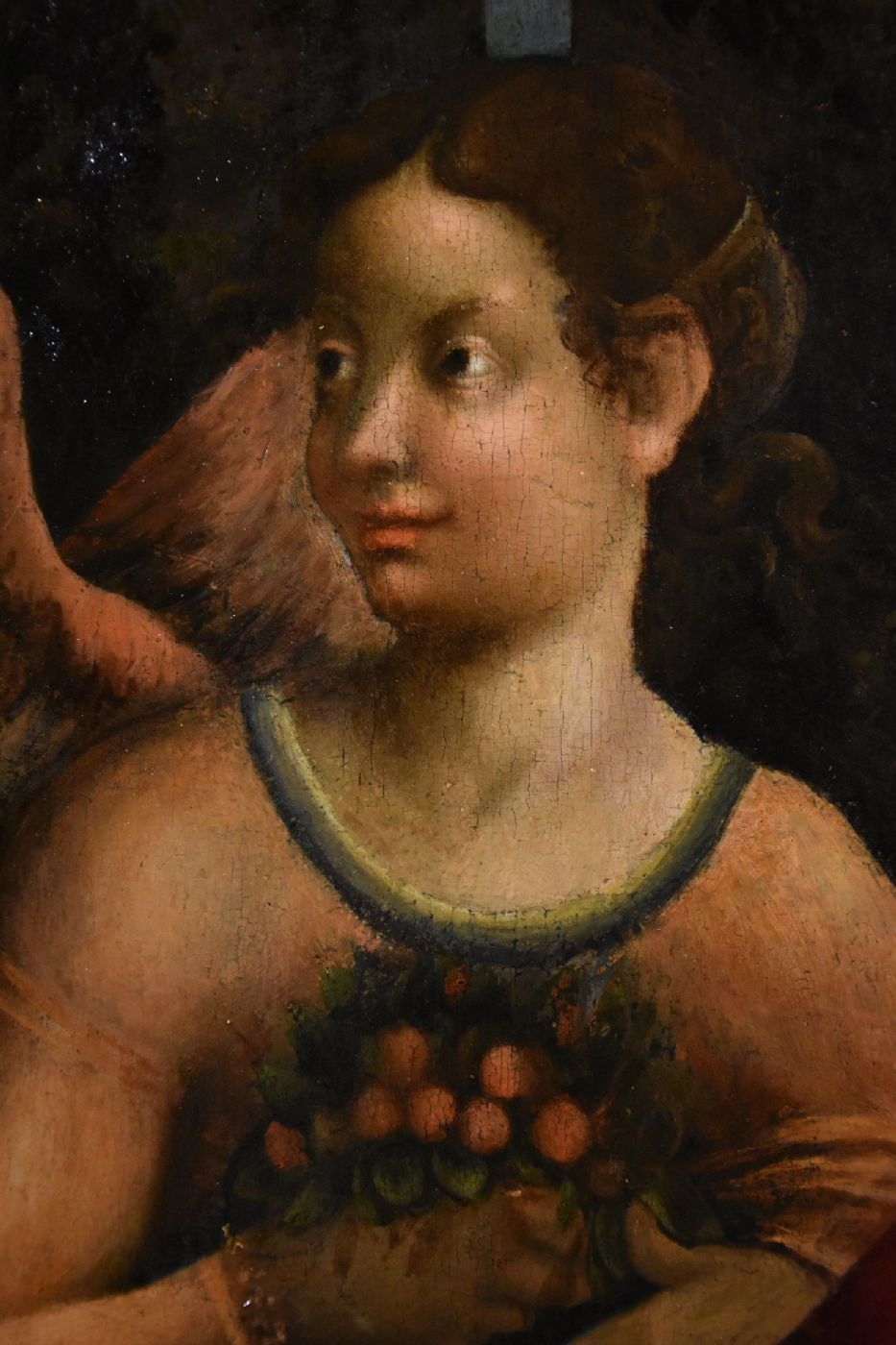
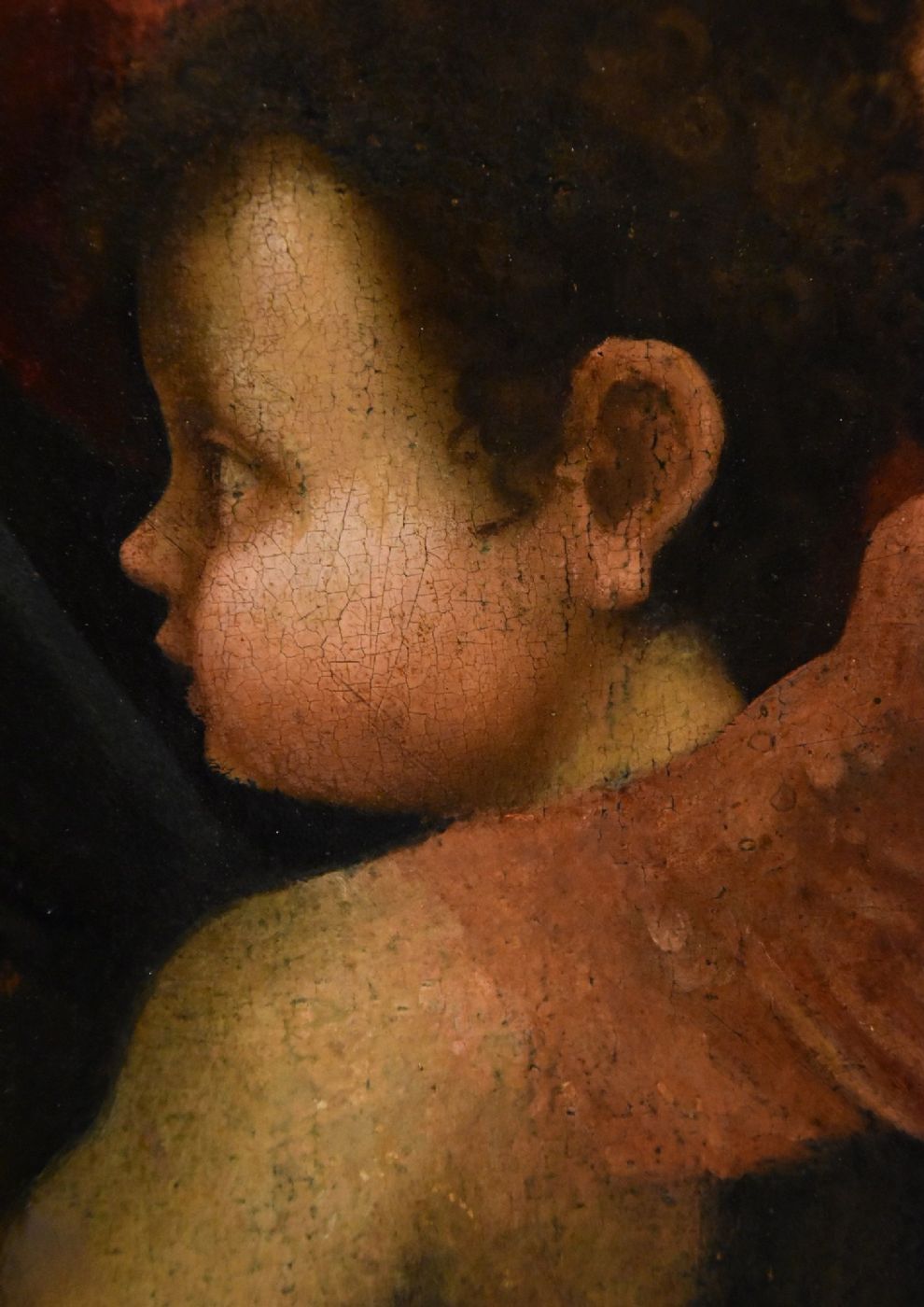
The highly refined composition features the Madonna seated with the Child on her lap, and is enriched by the presence of two angels, one holding a branch laden with cherries, and the other offering some to the child; these fruits are allusive to Original Sin, due to the red color of the Blood of the Passion. Finally, behind them, on the right, stands a young St. John the Baptist, already with his typical attributes as a hermit in the desert, namely the camel skin and the staff with the cross.
A detail of pure poetry is the view we can glimpse on the right, rendered with a vigor and modernity rare for the time, characterized by brilliant colors and clear light, hinting at a village and a picturesque hilltop castle.
The production of Pomponio is very detailed, as in his works we can see a blend of the formal research and linearity of the late Parmesan Mannerists and, above all, the distinctly classical styles close to the art of his father, Antonio Allegri, known as Correggio (Correggio c. 1489 – ibid. 1534).
He trained in his father's workshop and was his pupil, albeit for a very short time, demonstrating a clear adherence to the master's taste and style, and fidelity to his compositional and typological models, which attest to the dependence of Pomponio's art on that of Correggio.
Pomponio's early works date to around the mid-century, and the frescoes for the chapel of the Corpus Domini in the church of San Quirino in Correggio date to 1546. In 1555, he is known to have been in Reggio Emilia, where he stayed until his final move to Parma in 1559, achieving moderate success with local patrons.
In the panel, which can be placed in the artist's full maturity, the typology of the Virgin corresponds to a peculiar model of his production, characterized by a massive corporeality and, as we have already anticipated, an iconographic conception typical of Correggio.
The figurative scheme proposed in the painting also draws from his father's graceful compositions: the figures, characterized by rigid and restrained gestures, are arranged diagonally, interrupted by the figure of Mary, firm and immobile in her still rather centralized position.
For further information, please contact us.
The work, like all our objects, is sold with a legal photographic certificate of authenticity.
Follow us also on :
https://www.instagram.com/galleriacastelbarco/?hl=it
https://www.facebook.com/galleriacastelbarco/