Pierre Charles Trémolières (Cholet, 1703 - Paris, 1739)
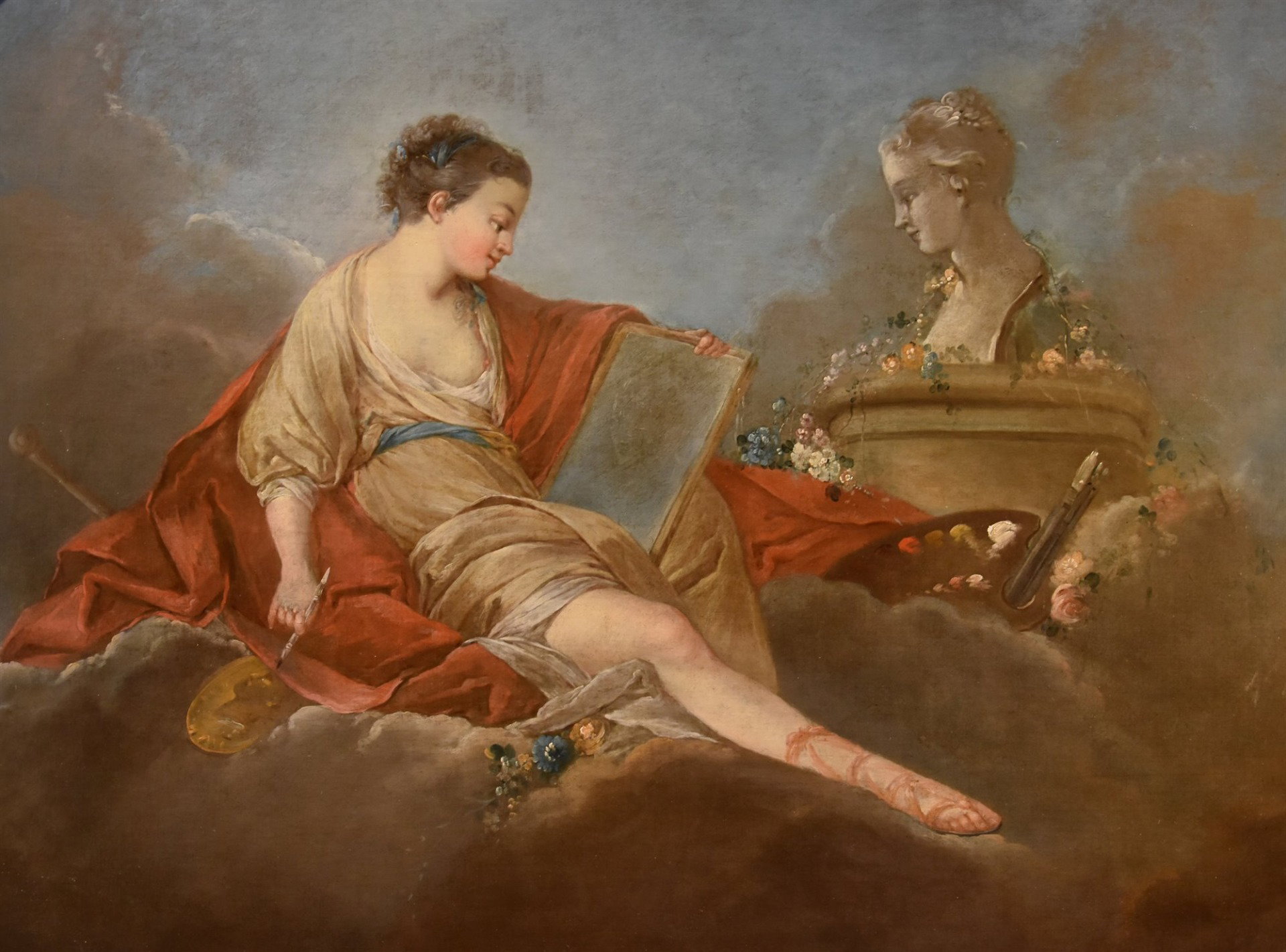
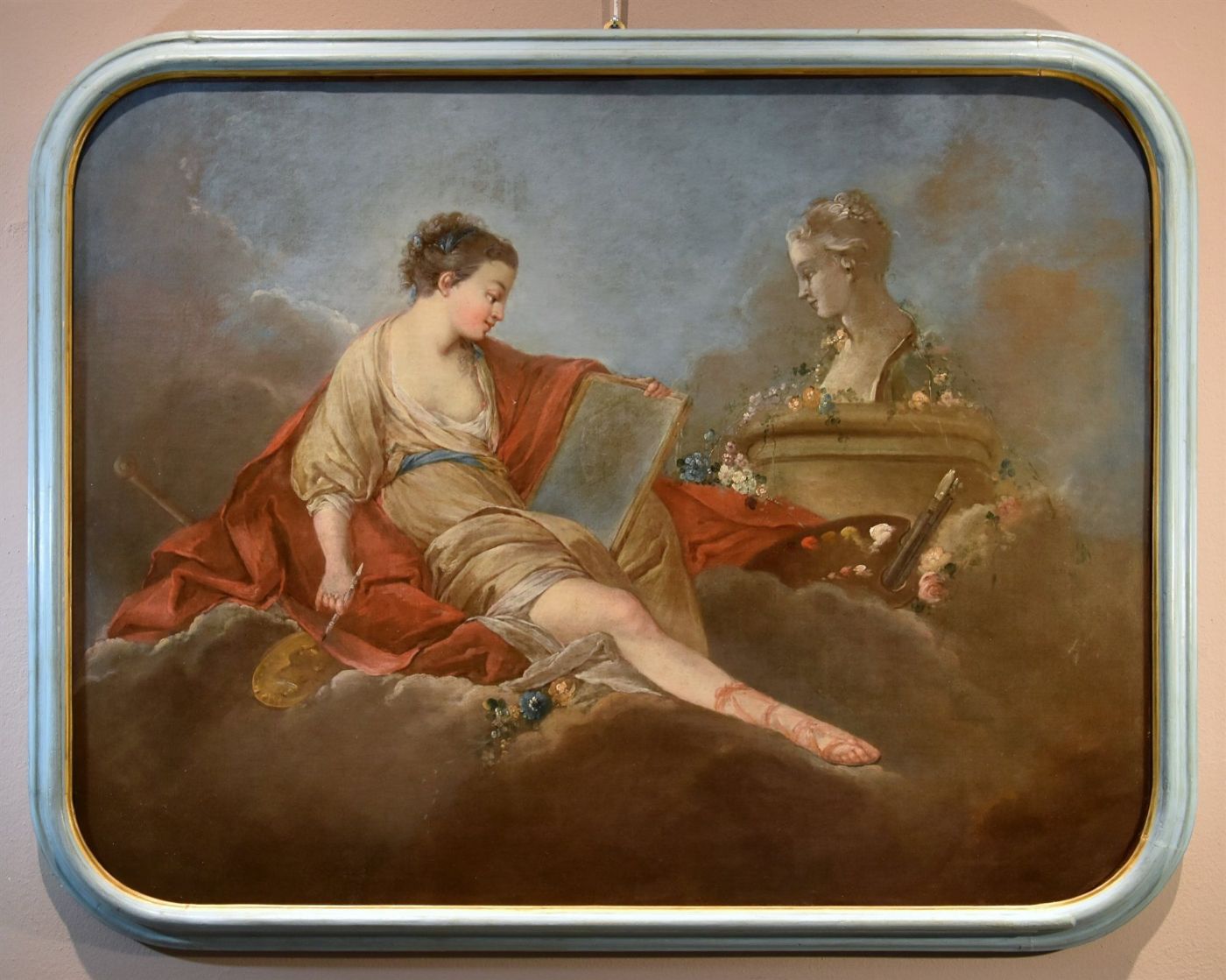
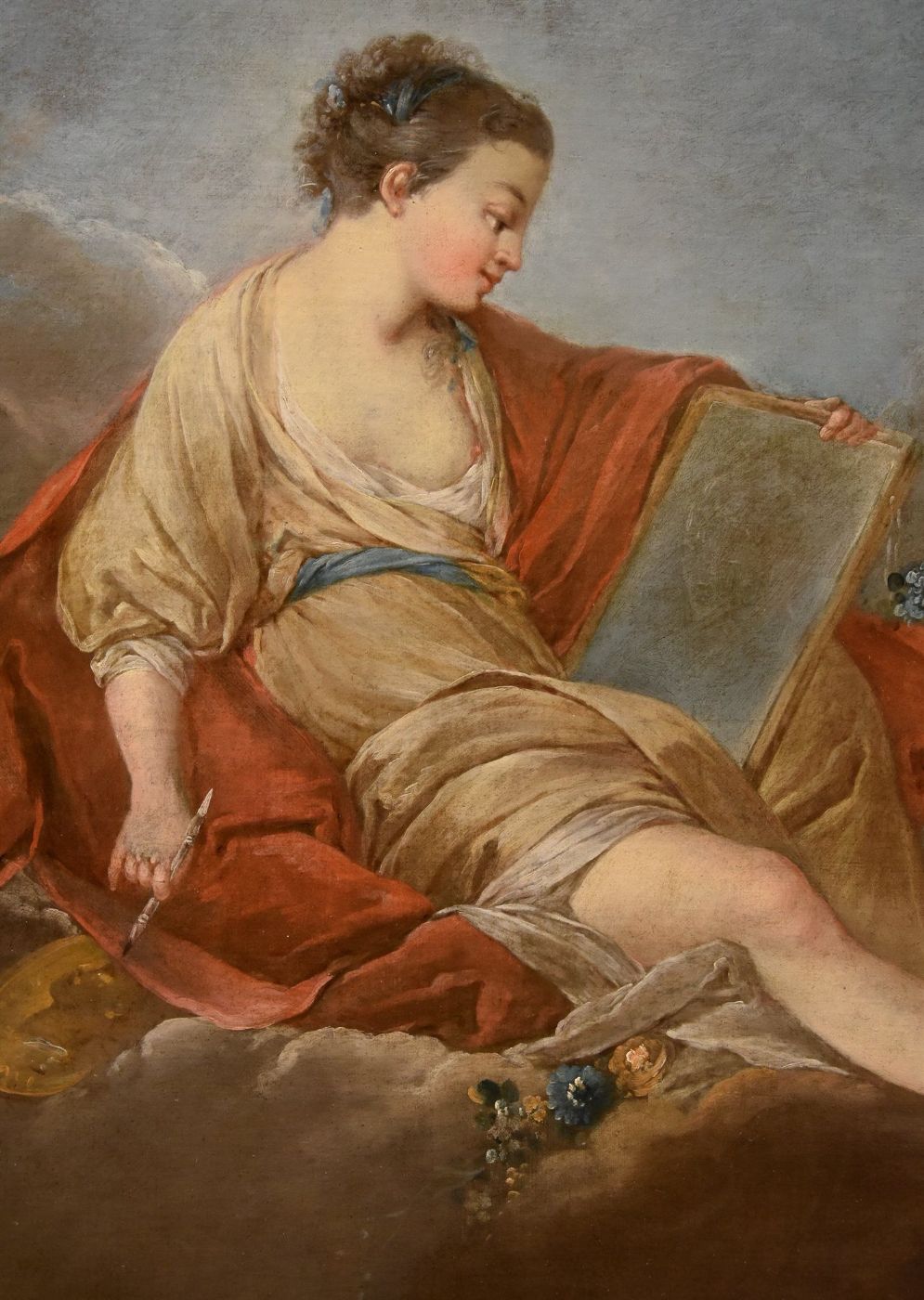
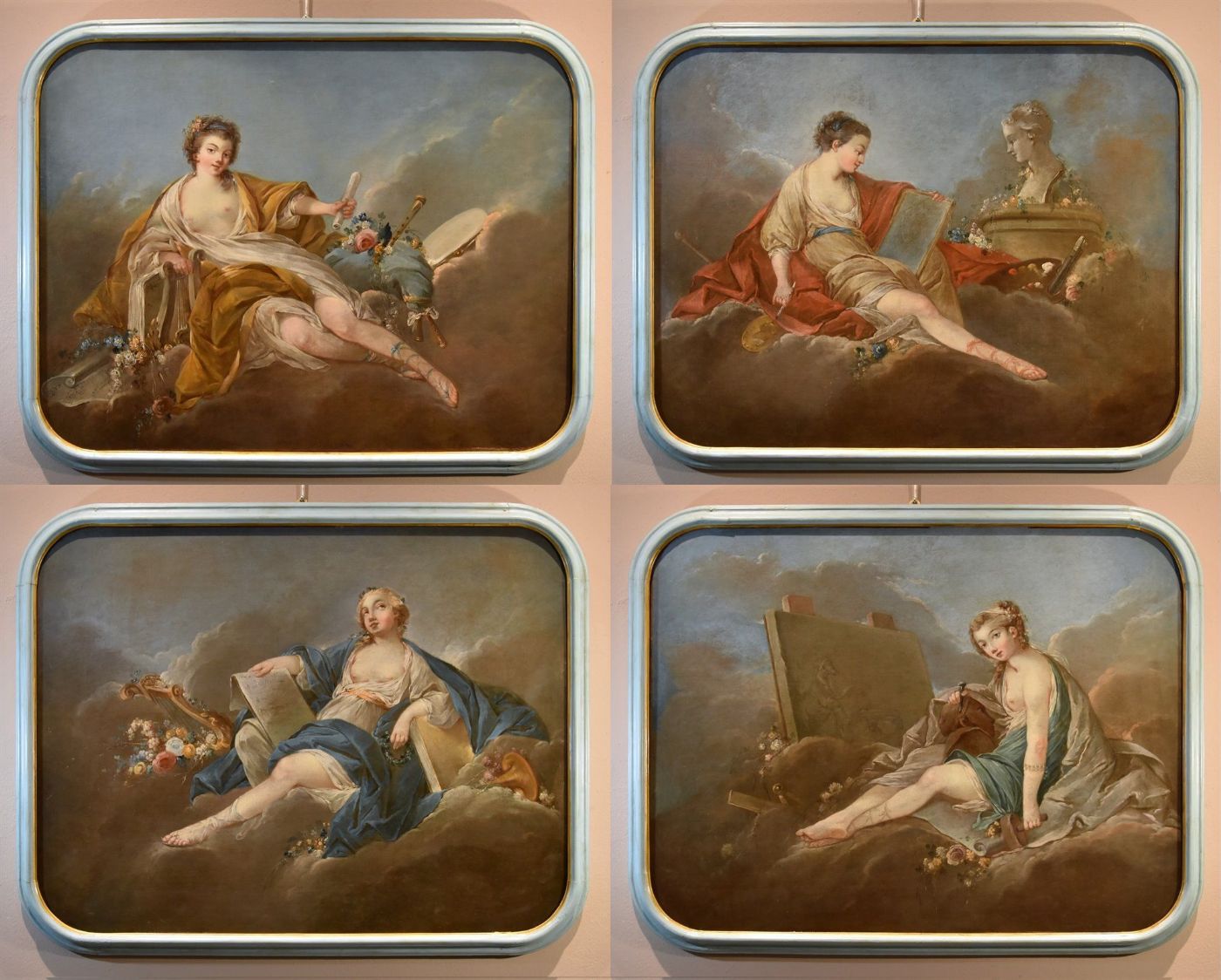
Allegory of Painting and Drawing
Oil on canvas (cm 86 x 112 - In original lacquered frames 122 x 95 cm.)
Work accompanied by an expert opinion from Prof. Emilio Negro
Full details of the work (click HERE)
The painting is well preserved and depicts a refined iconography inspired by learned classical literary models related to the myth of Mount Parnassus, the Greek elevation where the Temple of Delphi stood and from which flowed the waters of the famous Castalian spring, dedicated to Apollo and populated by the Muses, the source of inspiration and poetry.
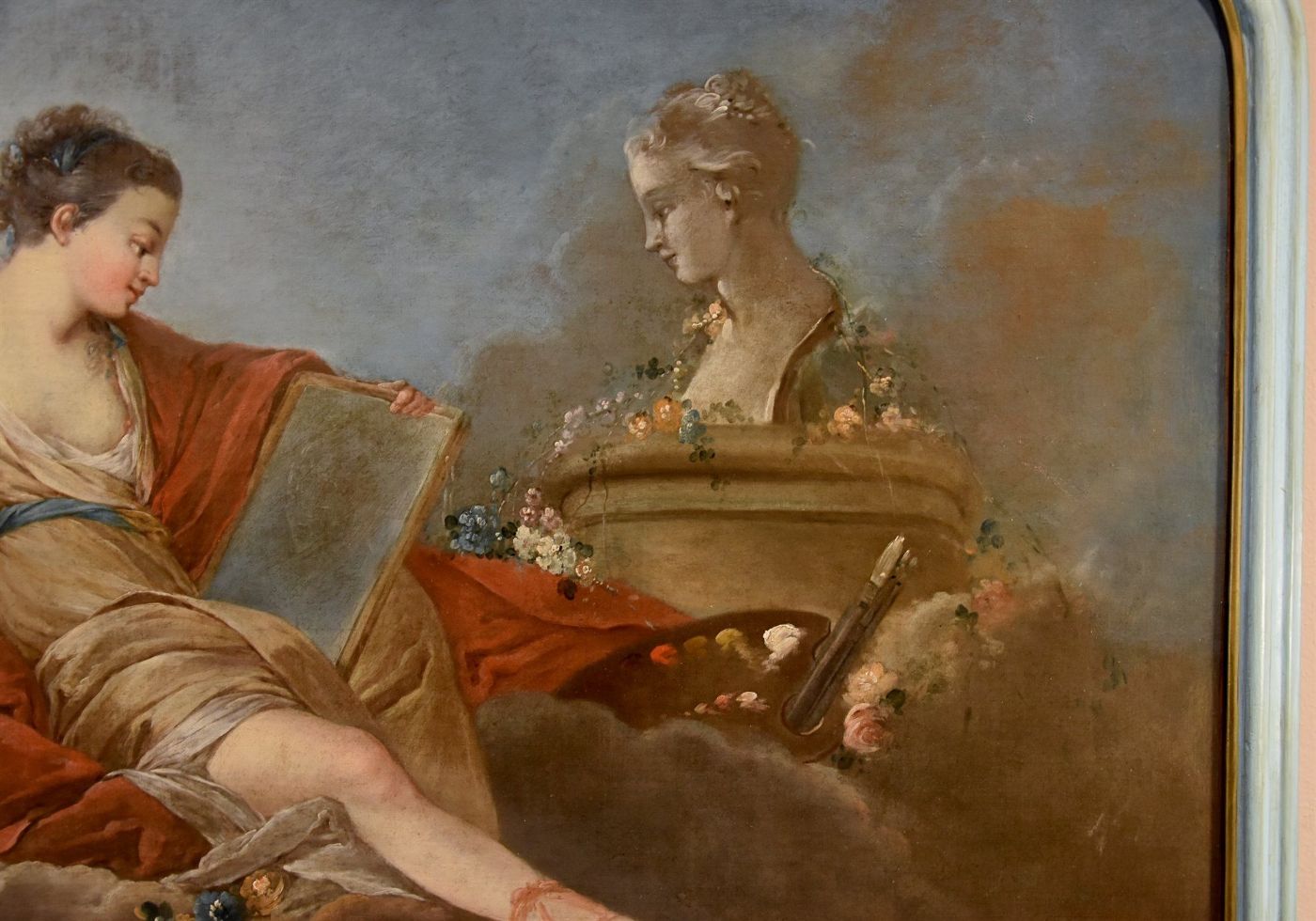
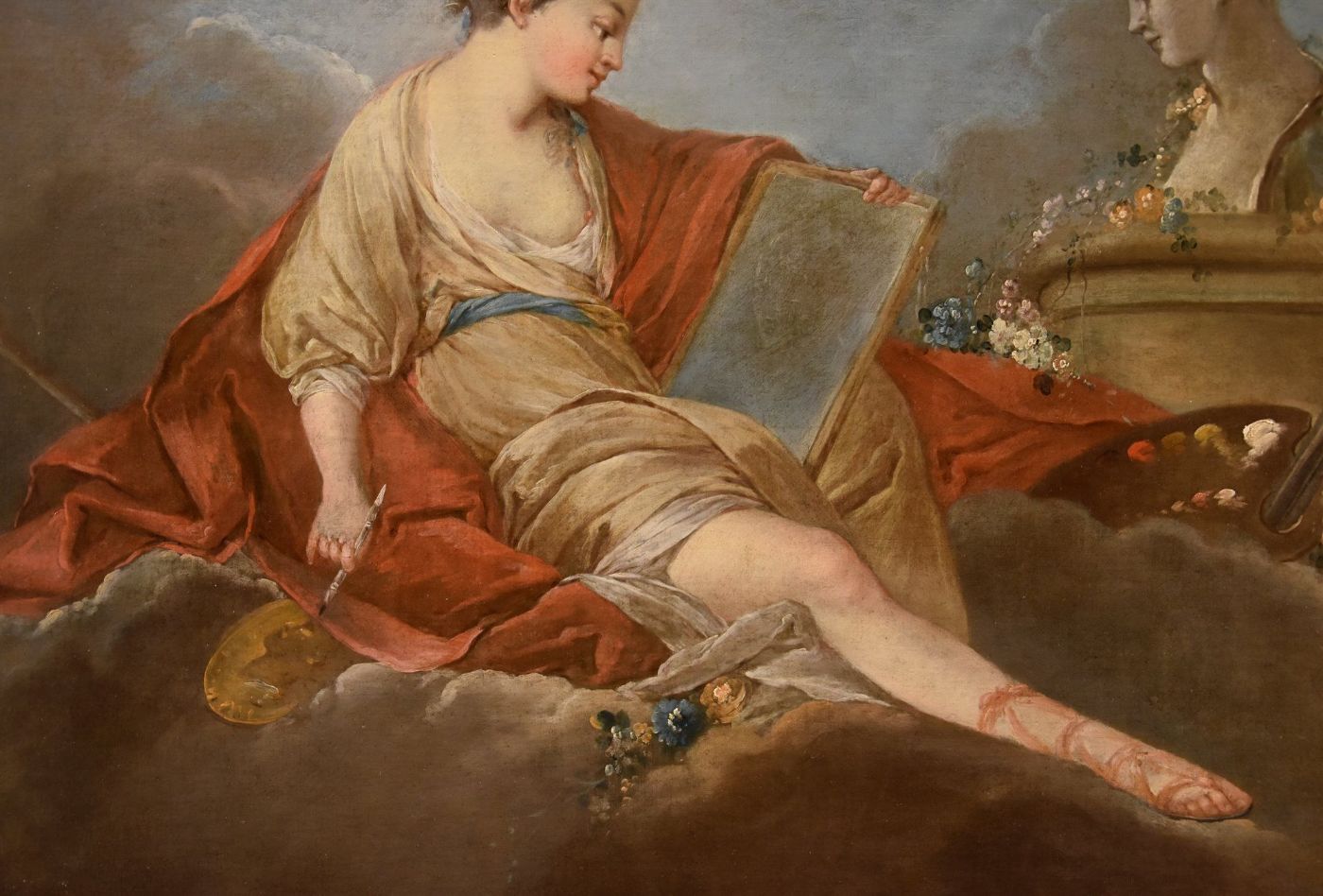
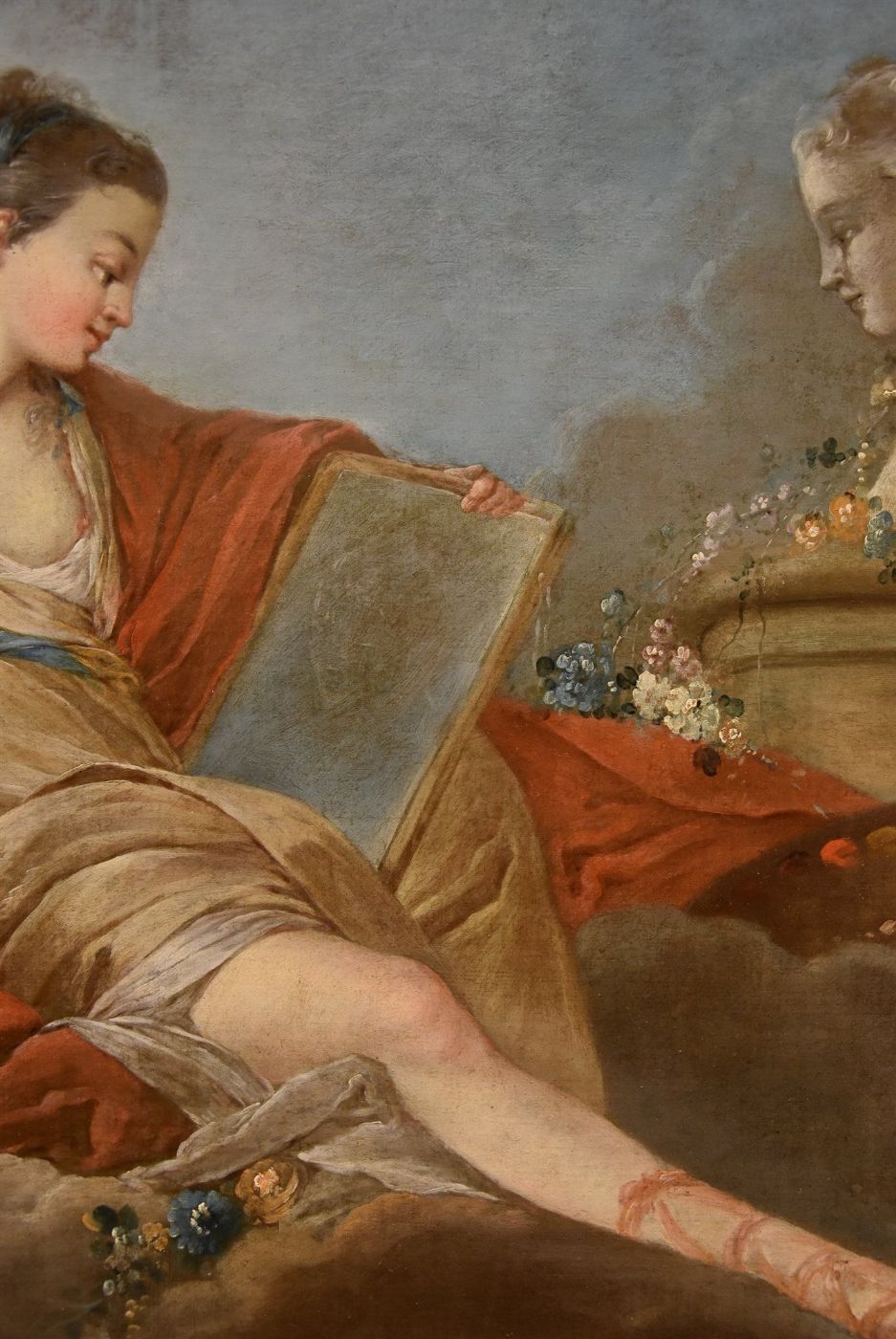
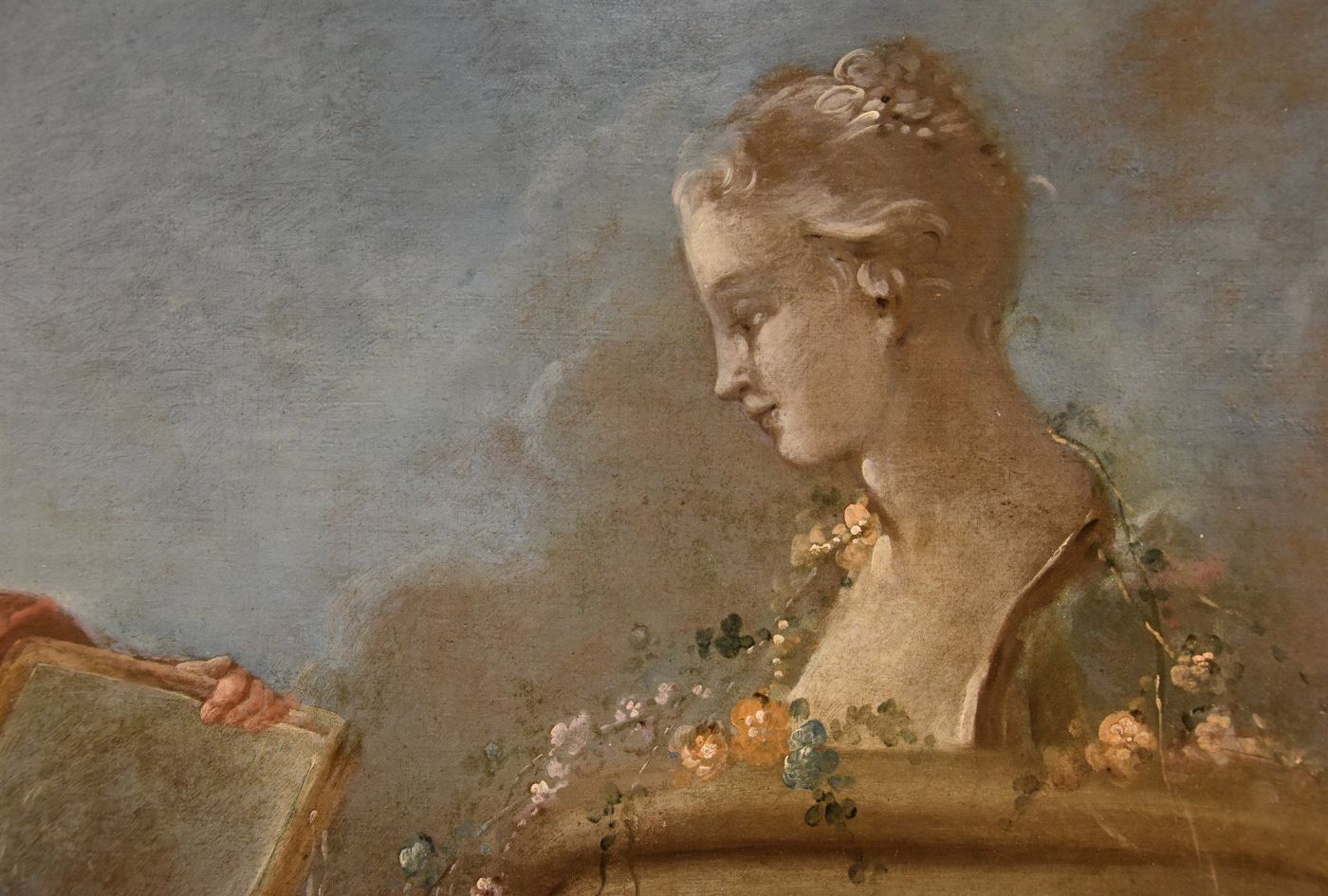
On our canvas is depicted one of the legendary inspiring deities of creative fervor who, over the centuries, acquired specific influence in the fields of art and knowledge: in this case, the Allegory of Drawing and Painting is portrayed, seated on the clouds amidst flowers and painting tools (a hand rest, a palette, brushes), elegantly dressed in silk while holding a drawing board and a sheet of paper on which she is drawing the sculpted bust of the young woman in front of her.
The learned subject illustrated and the peculiar dimensions of the painting suggest that it was originally an elegant "overdoor" intended to adorn the boiserie of the "studiolo" in an ancestral noble palace owned by a man of letters with a love for music and the arts.
Regarding the stylistic characteristics of this Allegory, they highlight the work of an artist of the French school active in the 18th century, possessing an elegantly nonchalant creative vein and a happy predisposition for easel paintings of a profane theme. The seductive depiction is indeed inspired by the best models of similar subjects produced between France and Italy in the mid-eighteenth century: primarily the compositions of the French master Jean-Baptiste van Loo, from whom our Allegory draws inspiration for its refined style imbued with joyful theatricality.
Both the fluid painting style with bright yet blended colors, and the effective scenic composition, indeed refer to the finest French and Italian figurative culture of the Age of Enlightenment, and the comparison with similar works by Pierre Charles Trémolières (Cholet, 1703-Paris, 1739) allows us to connect our painting to the modus operandi of this interesting painter.
A talented scion of a noble family originating from the Loire region, Trémolières was invited to Paris by his close relative, the Count of Caylus, who managed to have him admitted to the prestigious Parisian workshop of Jean-Baptiste Van Loo, enabling him to win the second prize of the esteemed Grand Prix de Rome (1726) and subsequently be admitted to the French Academy in Rome.
After a multi-year stay in the papal capital, by then famous and established, he was recalled to his homeland where, at the height of his career, he was appointed responsible for the decorations of the Hôtel de Soubise, one of the most important Parisian residences (now home to the French National Archives), alongside other great painters such as François Boucher and Carle Van Loo.
In 1738, he previewed at the Paris Salon a beautiful painting, 'Hercules and Hebe,' destined to adorn the walls of the aforementioned important noble residence, which is still located in the prince's bedroom today.
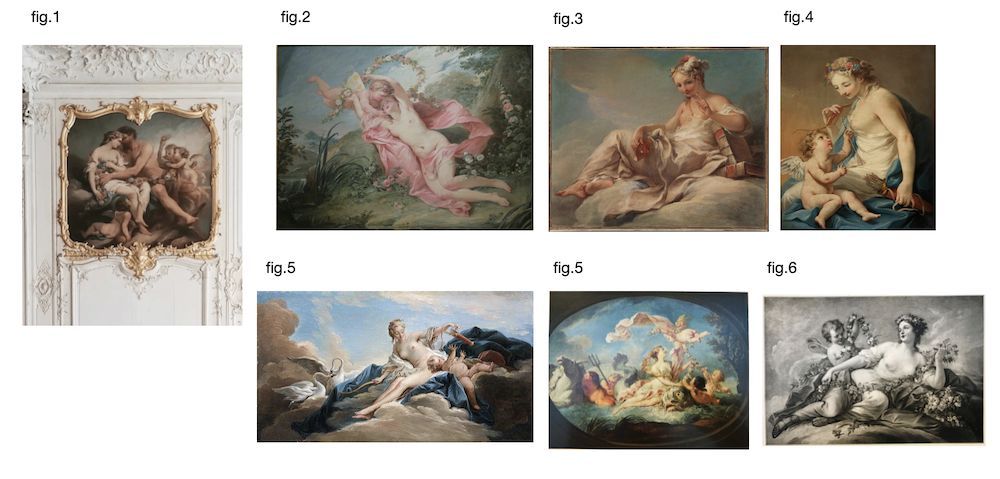
Pierre-Charles Trémolières, Hercules and Hebe, Paris, Hôtel de Soubise (Prince's Chamber) (fig. 1)
These prestigious commissions, along with the pleasantness of his paintings, earned him a deserved fame that made him one of the most sought-after artists by Parisian nobles and wealthy bourgeois.
Therefore, to support the proposed attribution, it will suffice to compare our beautiful Allegory, as well as with the aforementioned work, with others attributed to the French master, works in which the refined stylistic elements habitually used by Pierre Charles Trémolières similarly stand out.
Among these, for example:
Pierre-Charles Trémolières, Venus and Cupid (Louvre, Paris) (fig. 2)
https://collections.louvre.fr/en/ark:/53355/cl010054925
Pierre-Charles Trémolières, Allegory of Comedy (The Metropolitan Museum of Art, New York) (fig. 3)
https://www.metmuseum.org/art/collection/search/437844
Pierre-Charles Trémolières, Venus holding a bow and quiver and Cupid holding an arrow
(Christie's 31.01.2023, Old Master Paintings and Sculpture Online, New York) (fig. 4)
https://onlineonly.christies.com/s/old-master-paintings-sculpture-online/pierre-charles-tremolieres-...
Pierre-Charles Trémolières, Venus and Cupid (Artcurial, Paris France, November 08, 2011) (fig. 5)
https://www.artcurial.com/ventes/1995/lots/31-a
Pierre-Charles Trémolières, The Triumph of Galatea (Tajan Auction Paris, June 12, 1995) (fig. 6)
Pierre-Charles Trémolières, Flora and cherub, private collection (fig. 7)
ADDITIONAL INFORMATION:
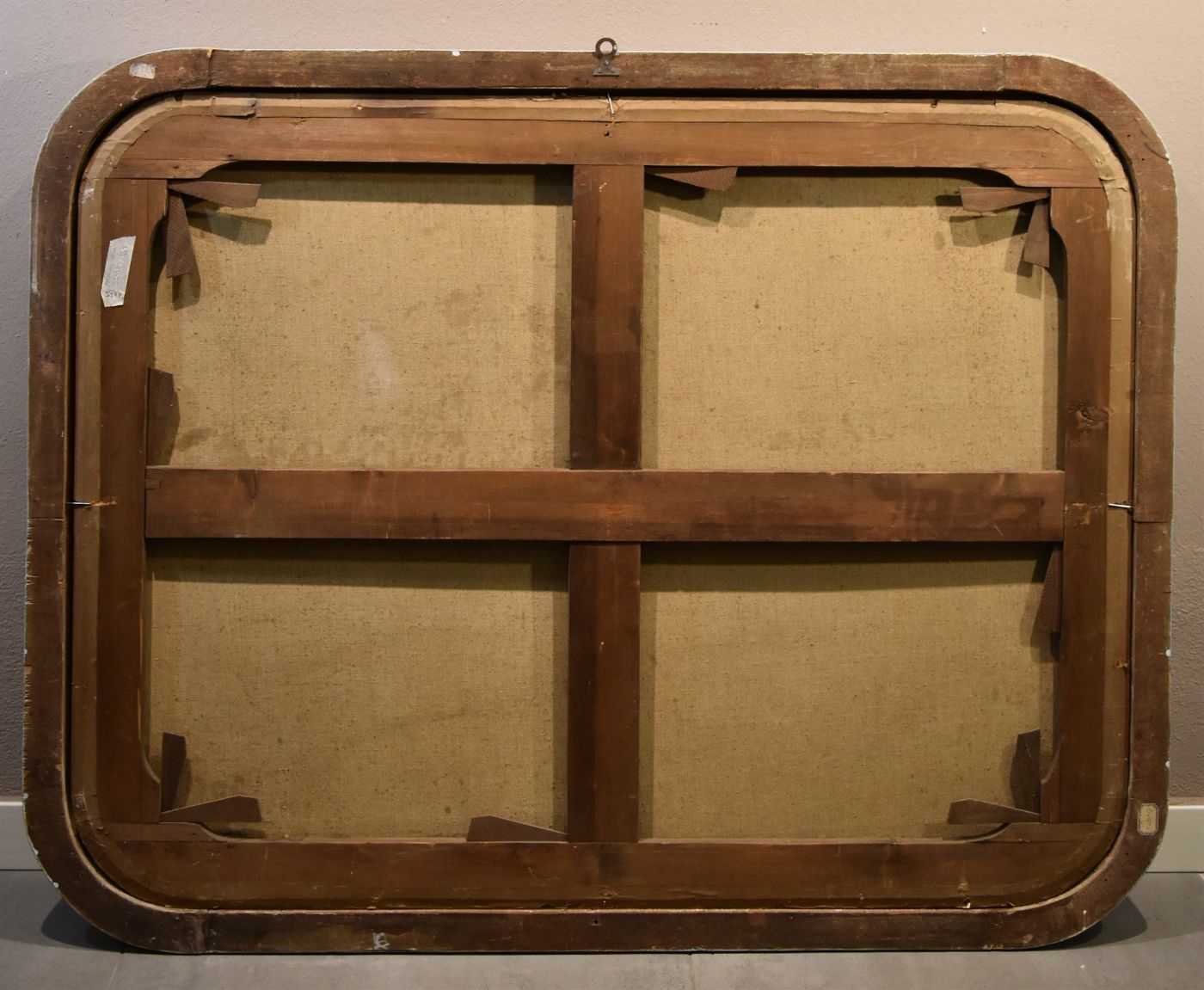
The work is completed by a pleasant antique turquoise lacquered wooden frame and is sold with a certificate of authenticity and a descriptive iconographic sheet.
We handle and organize the transportation of purchased works, both for Italy and abroad, through professional and insured carriers. Should you wish to view this or other works in person, we will be happy to welcome you to our new gallery in Riva del Garda, at Viale Giuseppe Canella 18. We look forward to seeing you!
Contact us for any information, we will be happy to answer you.
Follow us also on:
https://www.instagram.com/galleriacastelbarco/?hl=it
https://www.facebook.com/galleriacastelbarco/