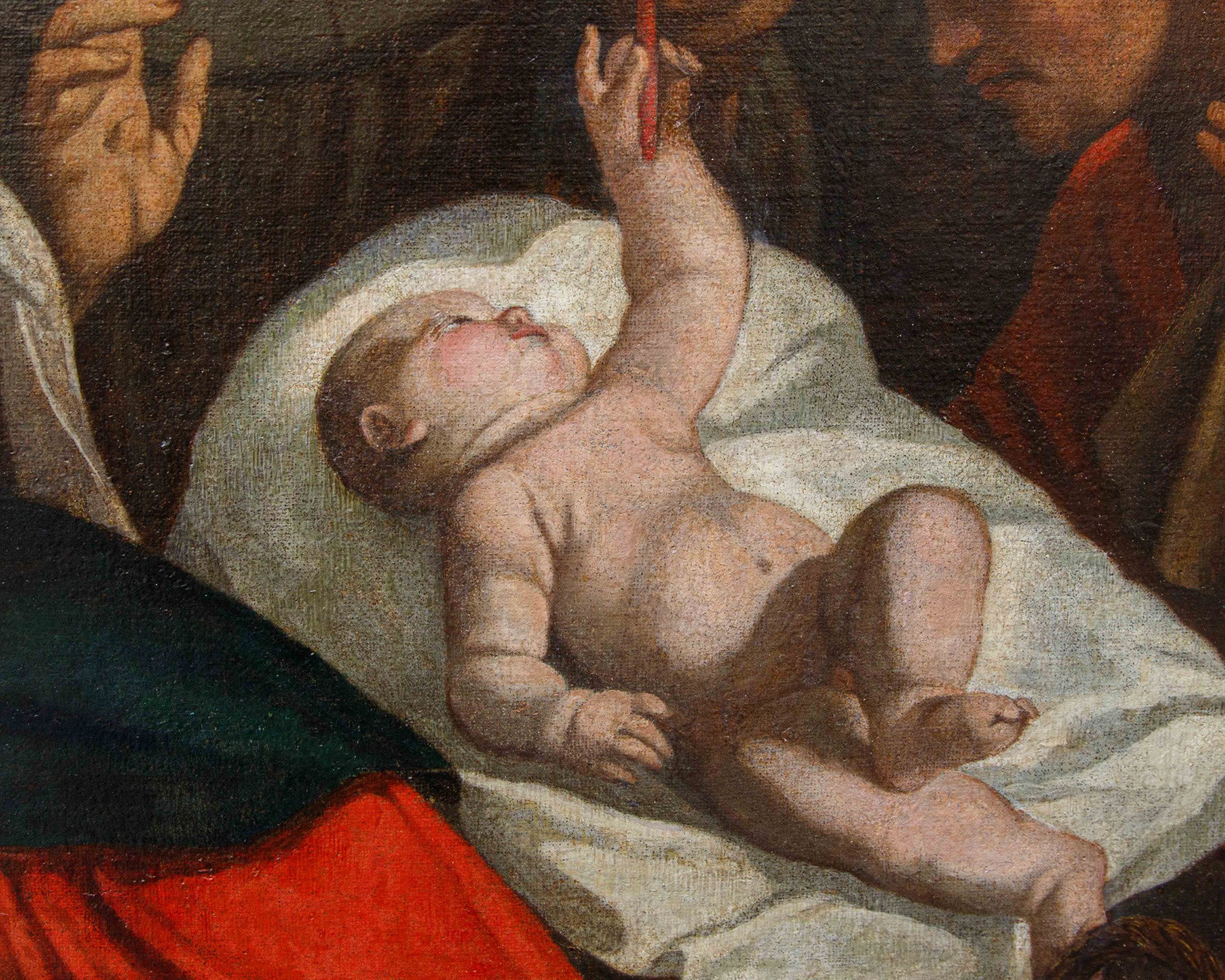
Workshop of Bonifacio de' Pitati (Verona, c. 1487 – Venice, 1553)
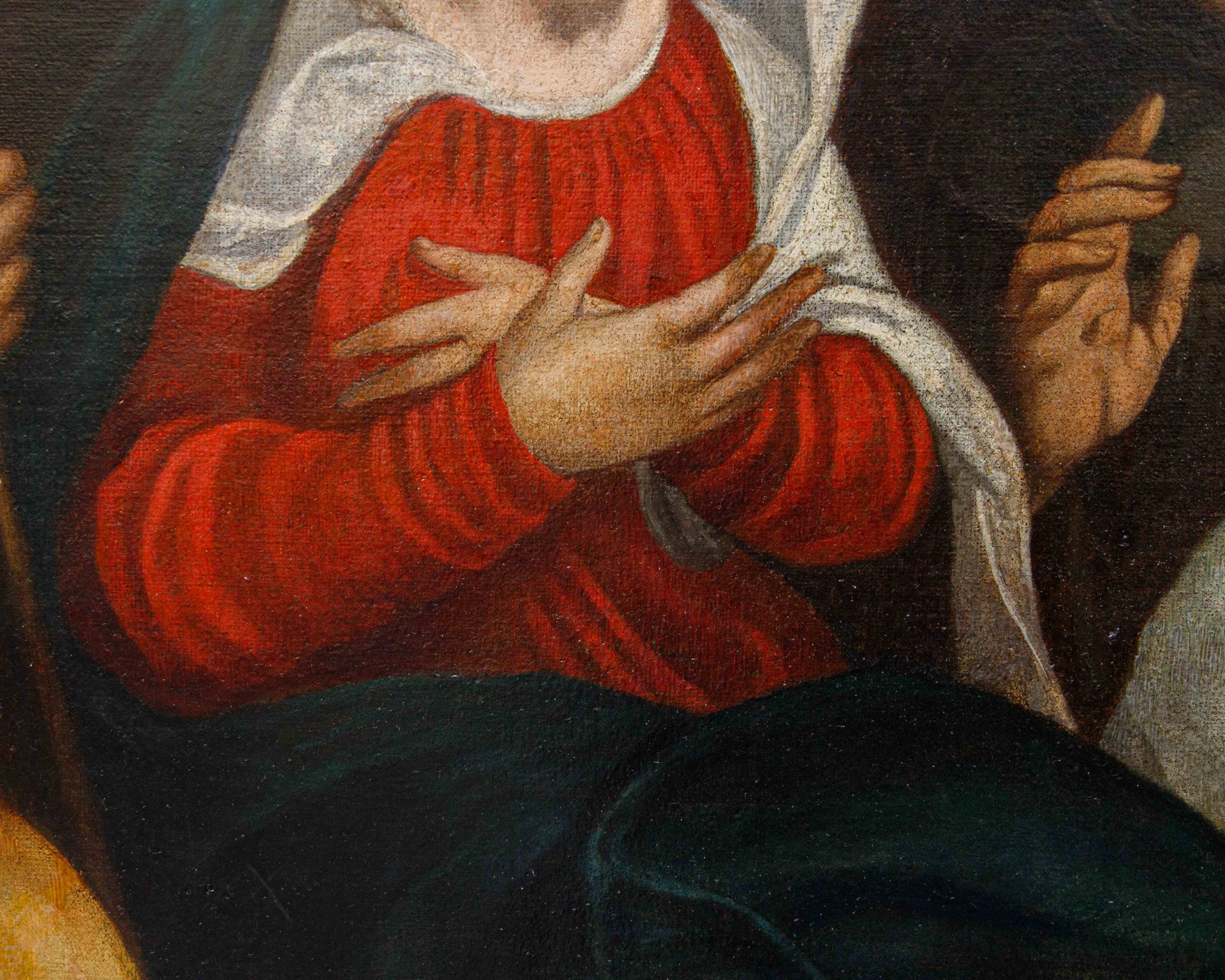
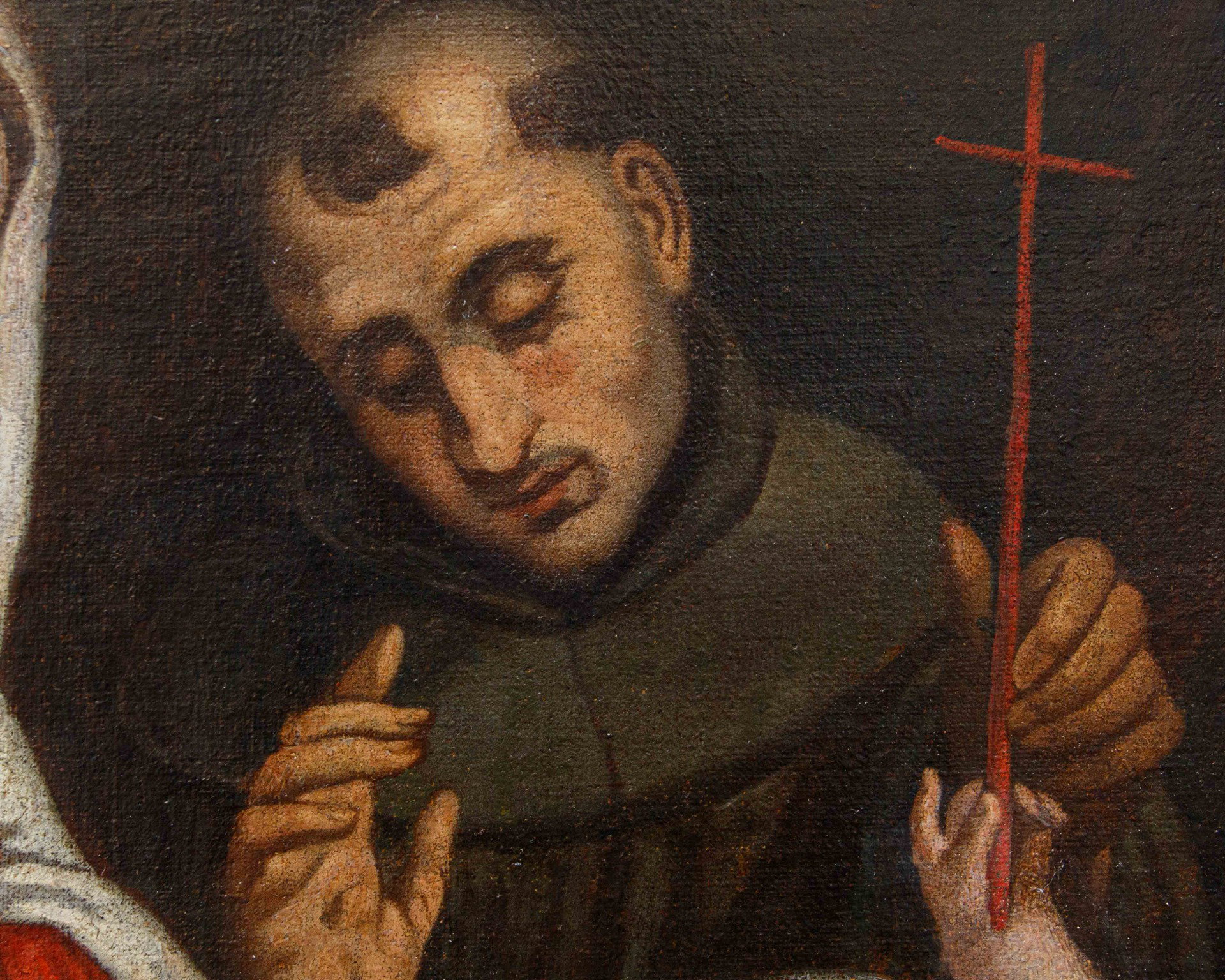
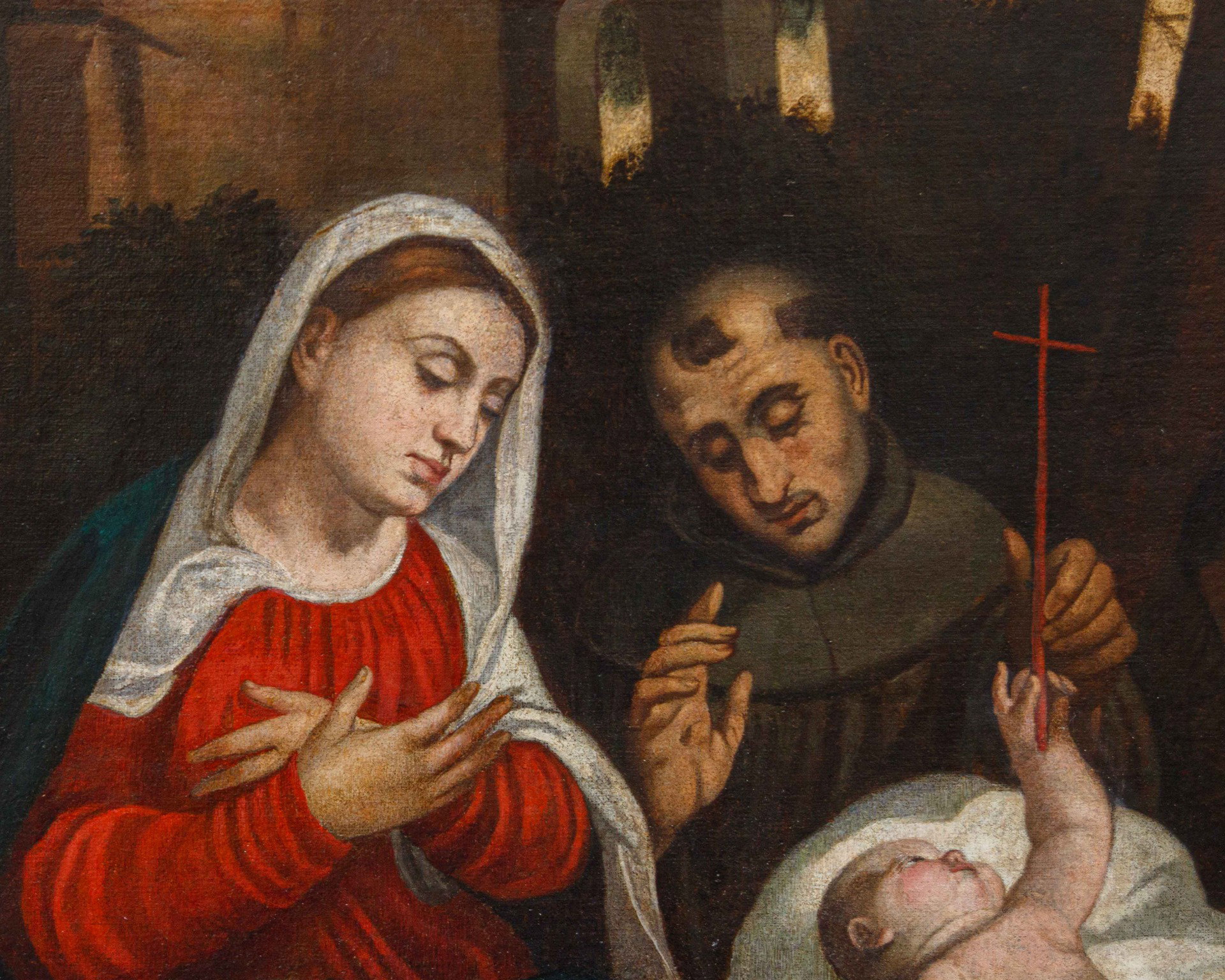
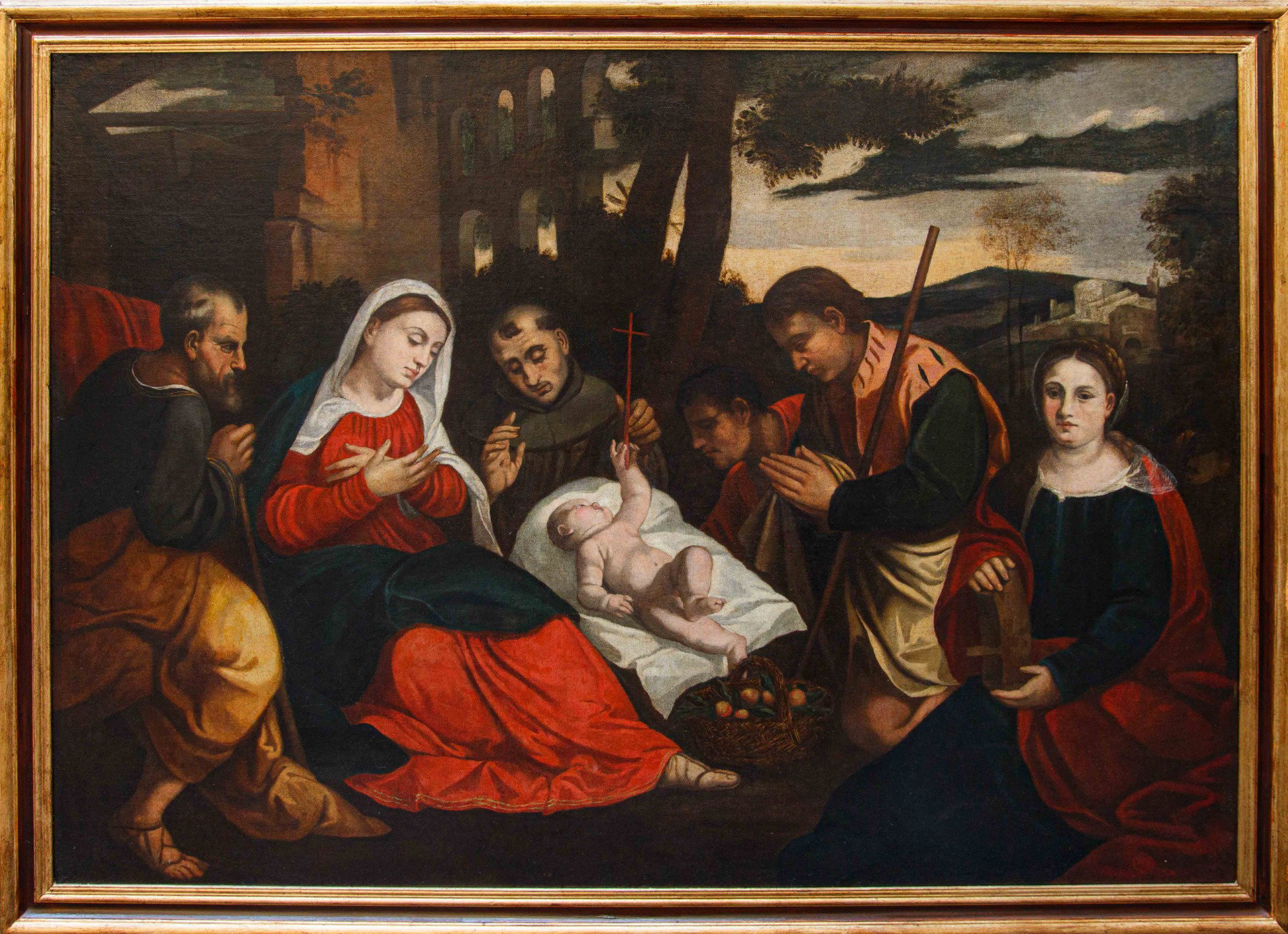
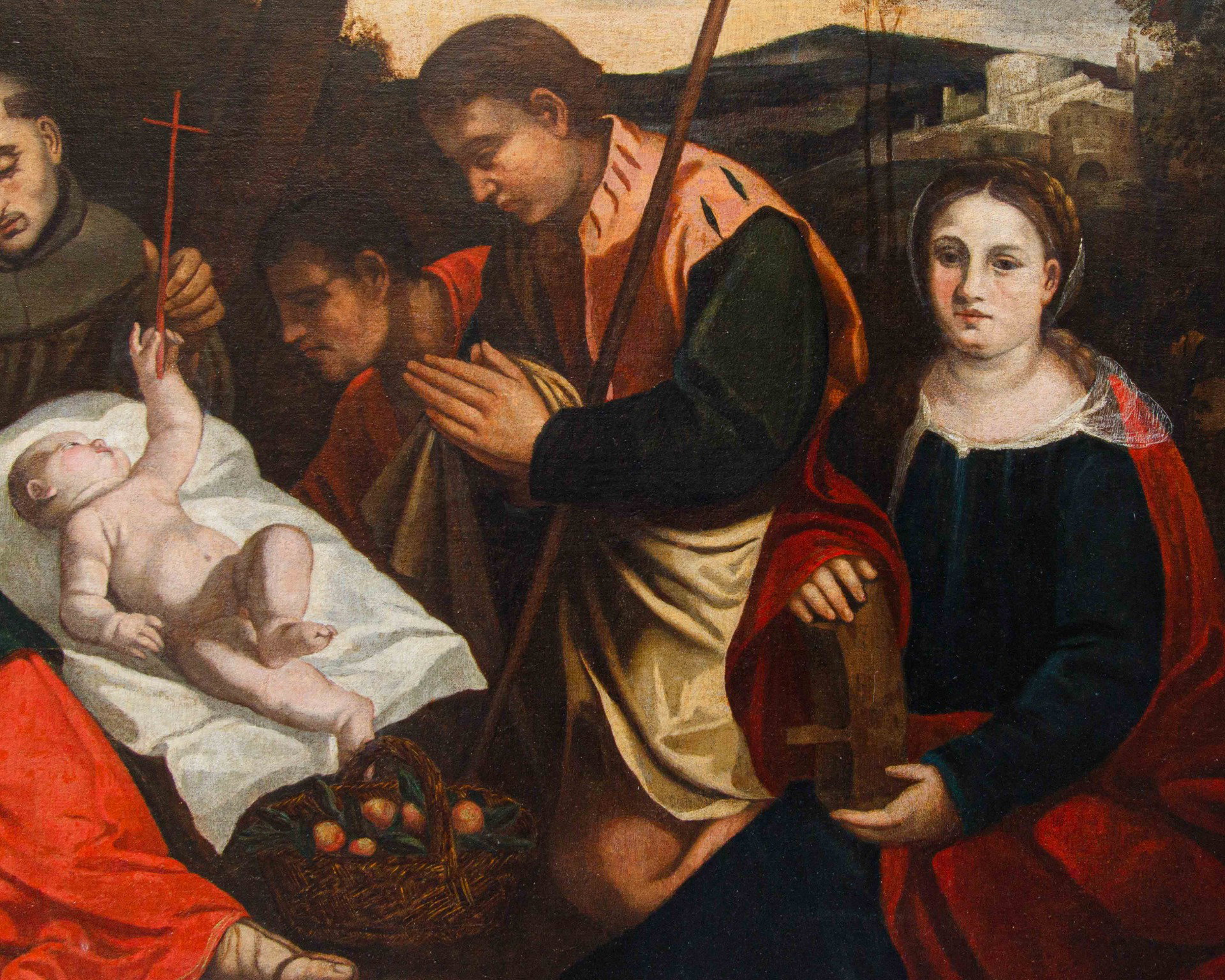
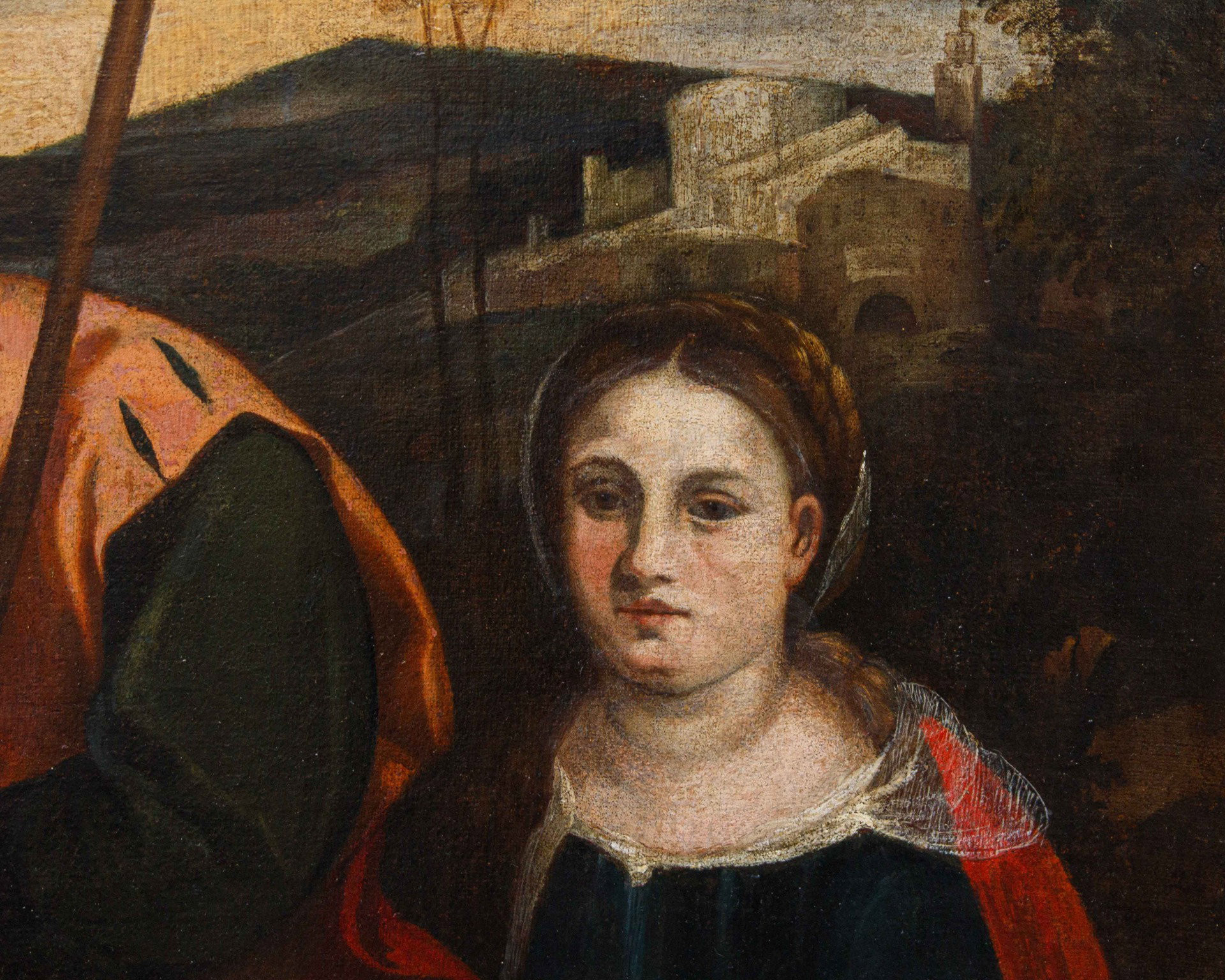
Adoration of the Shepherds with Saints Francis and Catherine
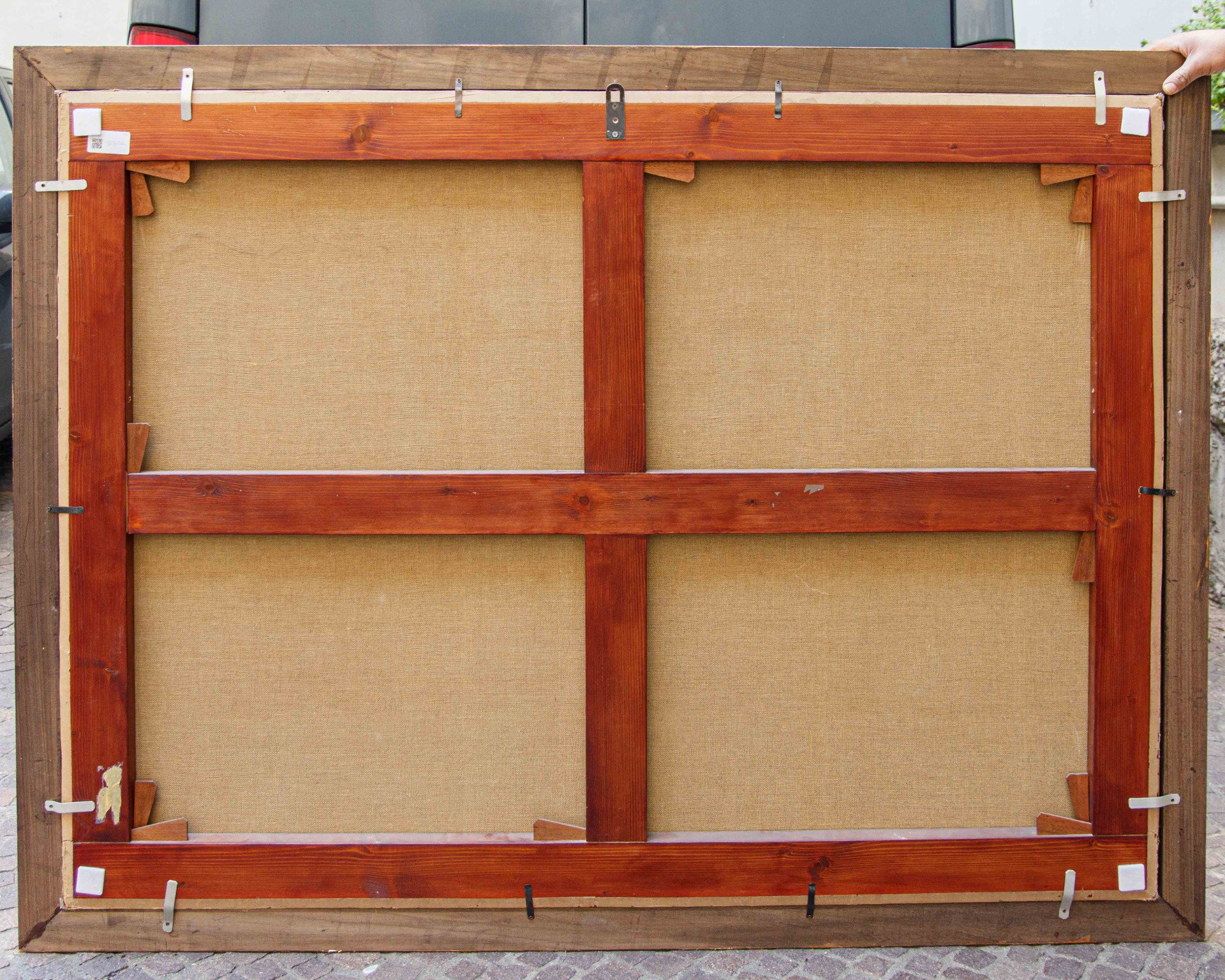
Oil on canvas, 125 x 168 cm
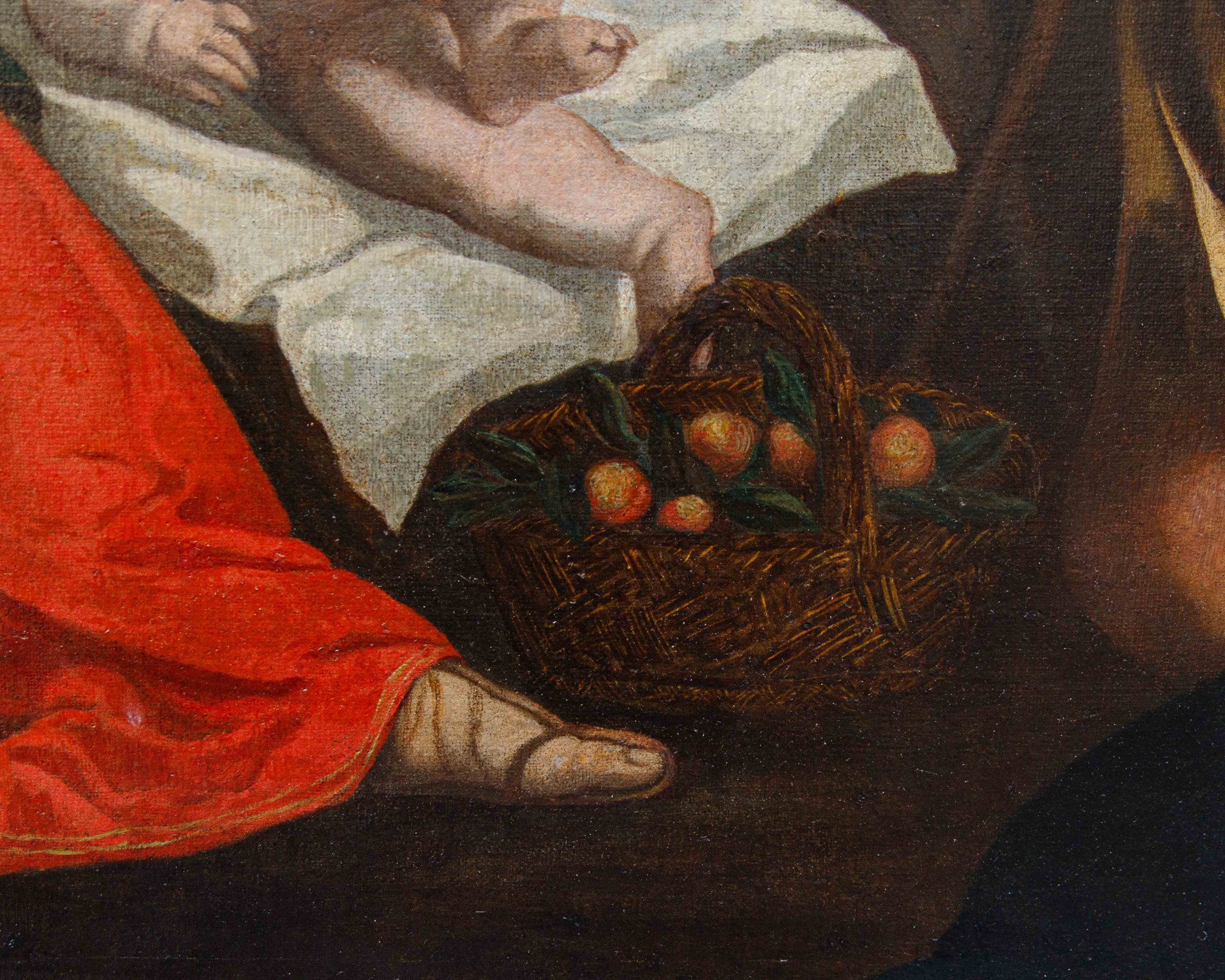
The work is a derivation from the model by Bonifacio de' Pitati preserved in the Church of the Eremitani in Padua, depicting the Adoration of the Shepherds with Saints Francis and Catherine, datable stylistically to the first half of the 16th century. However, the documentary lacuna regarding the formation of the Veronese artist has marred the correct placement of works from his early production, particularly concerning the thirty-year period from 1501 to 1528. The formal and typological characteristics of his early work, however, already place him in Venice, likely between 1510-15. These elements lend credibility to the account by Carlo Ridolfi (1648, 1914, p. 284) that Pitati spent a period of apprenticeship in the workshop of Jacopo Palma il Vecchio, a relationship that, after an initial apprenticeship, transformed into a genuine collaboration.
From the 1520s onwards, Bonifacio de' Pitati began to establish a circle of patrons, creating paintings for both private and public devotion, demonstrating a continued reliance on Palma's motifs while also showing a degree of autonomy. With the death of his master and colleague Palma il Vecchio on July 30, 1528, one of the most important Venetian workshops of the early 16th century disappeared, allowing Bonifacio to assert himself as a leading figure on the Venetian art scene. The canvases from these years are indeed characterized by the Northern inspiration of the landscapes, in contrast to Palma's solemn lyricism, although the spirituality of the locus amoenus of the verdant landscape populated by divine presences always lingers.
It is likely that initially Bonifacio Pitati could count almost exclusively on the help of the young Antonio Palma (1515-1575, father of Jacopo Palma il Giovane), who must have completed his apprenticeship with him from 1528 onwards (Ludwig, 1901, p. 74). However, he quickly managed to adapt the workshop to the peculiarity of the commissions, which required guaranteeing a high level of quality with rapid execution times, especially for the rapidly changing public commissions. Taking advantage of the prestige acquired by his workshop, which attracted talented young artists such as Jacopo Bassano and Jacopo Tintoretto (1518-1594), and later Andrea Meldolla, known as Schiavone, Bonifacio employed them first as apprentices (c. 1530-35) and then as collaborators (at least until 1540).
In 1530, the artist was registered in the lists of masters of the craft. His Venetian school continuously drew vitality from Giorgionesque colorism and Palma's narratives, primarily respecting the figurative rhythms of the hinterland, unlike Pordenone (1483-1539) and Sebastiano del Piombo (1485-1547), who instead drew flamboyant Tuscan-Roman translations from their Roman sojourns. Around the 1530s, De' Pitati's painting showed an approximation to the typical style of Lorenzo Lotto (1480-1556/7), also a solitary itinerant artist, so much so that it is possible to presume the involvement of both artists in the same commission circuits. Concurrently with the market of the artisan bourgeoisie, Bonifacio managed to secure some important ecclesiastical commissions, the most prestigious of which was the decoration of the Altar of the Relics in the church of S. Maria dei Servi, datable to 1533.
This work splendidly underscores the typically Venetian importance attributed to light and the use of color, which served as a springboard for the international recognition of the 16th-century Venetian school, born from the mosaics of St. Mark's and directed by Bellini on a path of eternal ascent.
Only for Italy: with Ars Antiqua, it is possible to defer all amounts up to a maximum of € 7,500 at ZERO INTEREST, for a total of 15 INSTALLMENTS
Ex. Tot. € 4,500 = Monthly installment € 300 for 15 months.
Ex. Tot. € 3,600 = Monthly installment € 720 for 5 months.
For amounts over € 7,500 or for longer deferrals (over 15 installments), we can provide a personalized payment plan.
Contact us directly for the best quote.
LIVE TV
– SUNDAY 5:00 PM – 9:00 PM Digital Terrestrial 126 - Sky 824
– Streaming on our website www.arsantiquasrl.com and on our social media Facebook and Youtube
All works offered by Ars Antiqua are sold with a certificate of authenticity in accordance with the law and an accurate in-depth analysis.
It is possible to view the works directly at the gallery showroom in Milan, at via Pisacane 55 and 57.
We personally organize transport and delivery of the works, both for Italy and abroad.