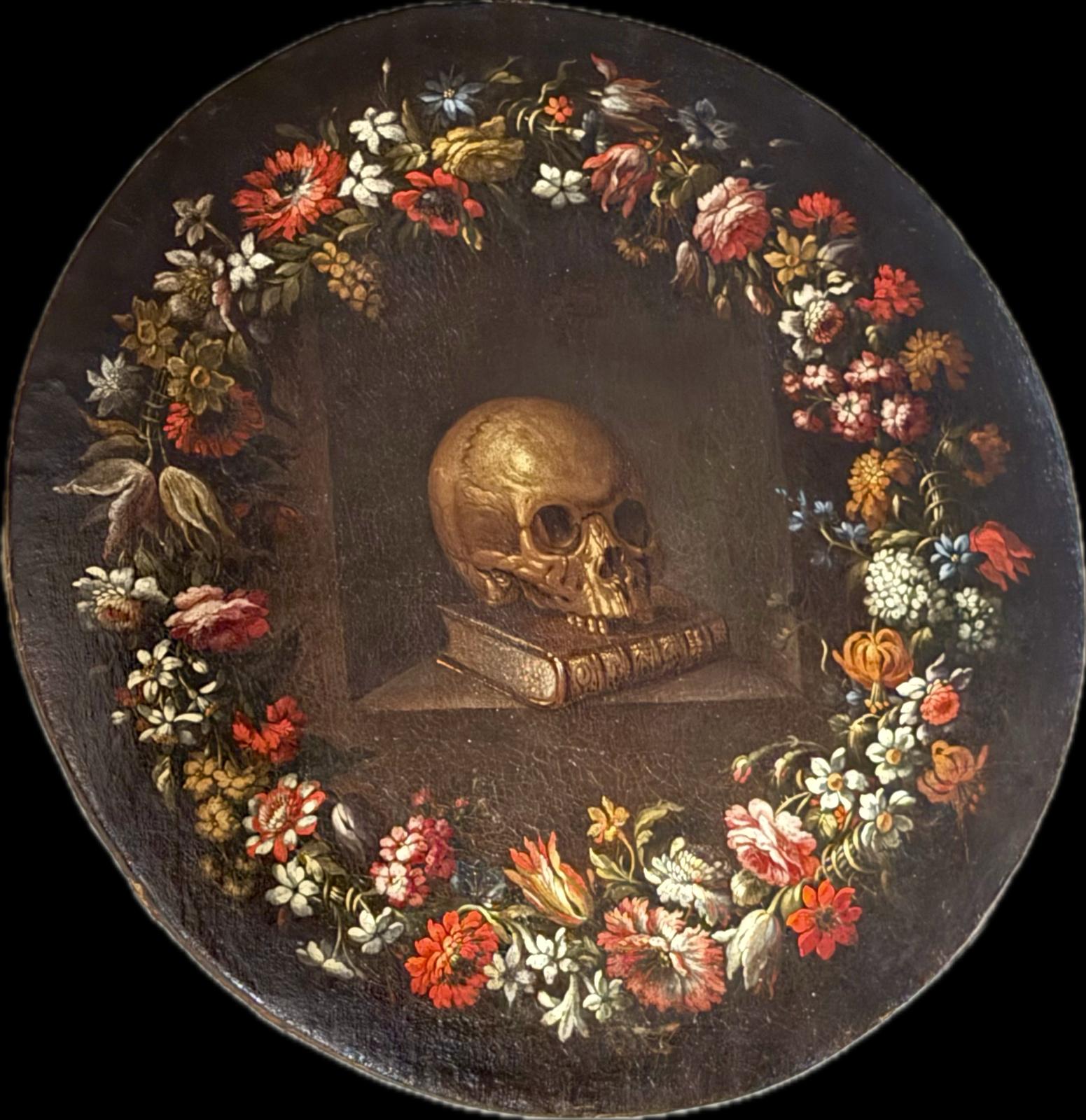
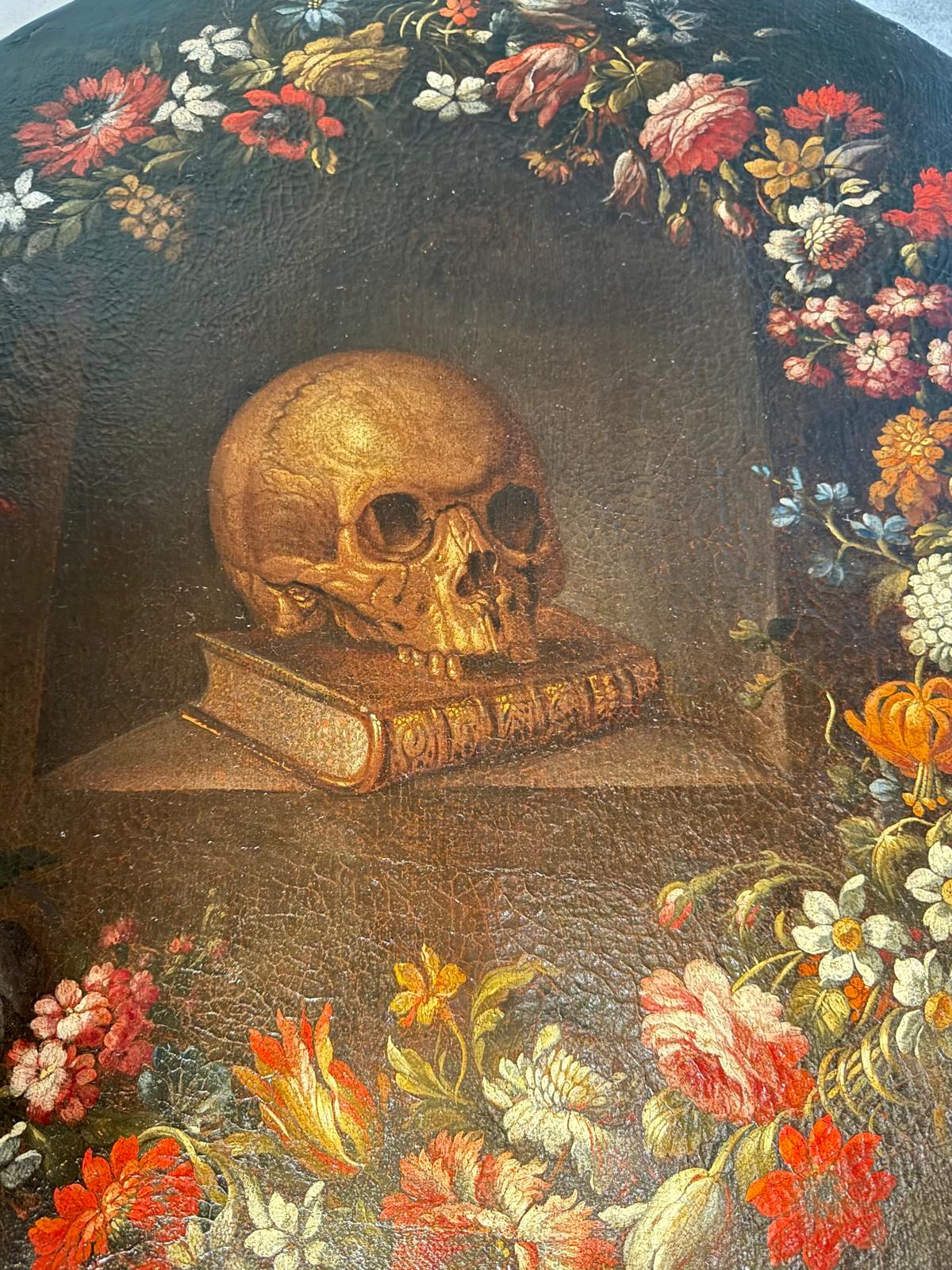
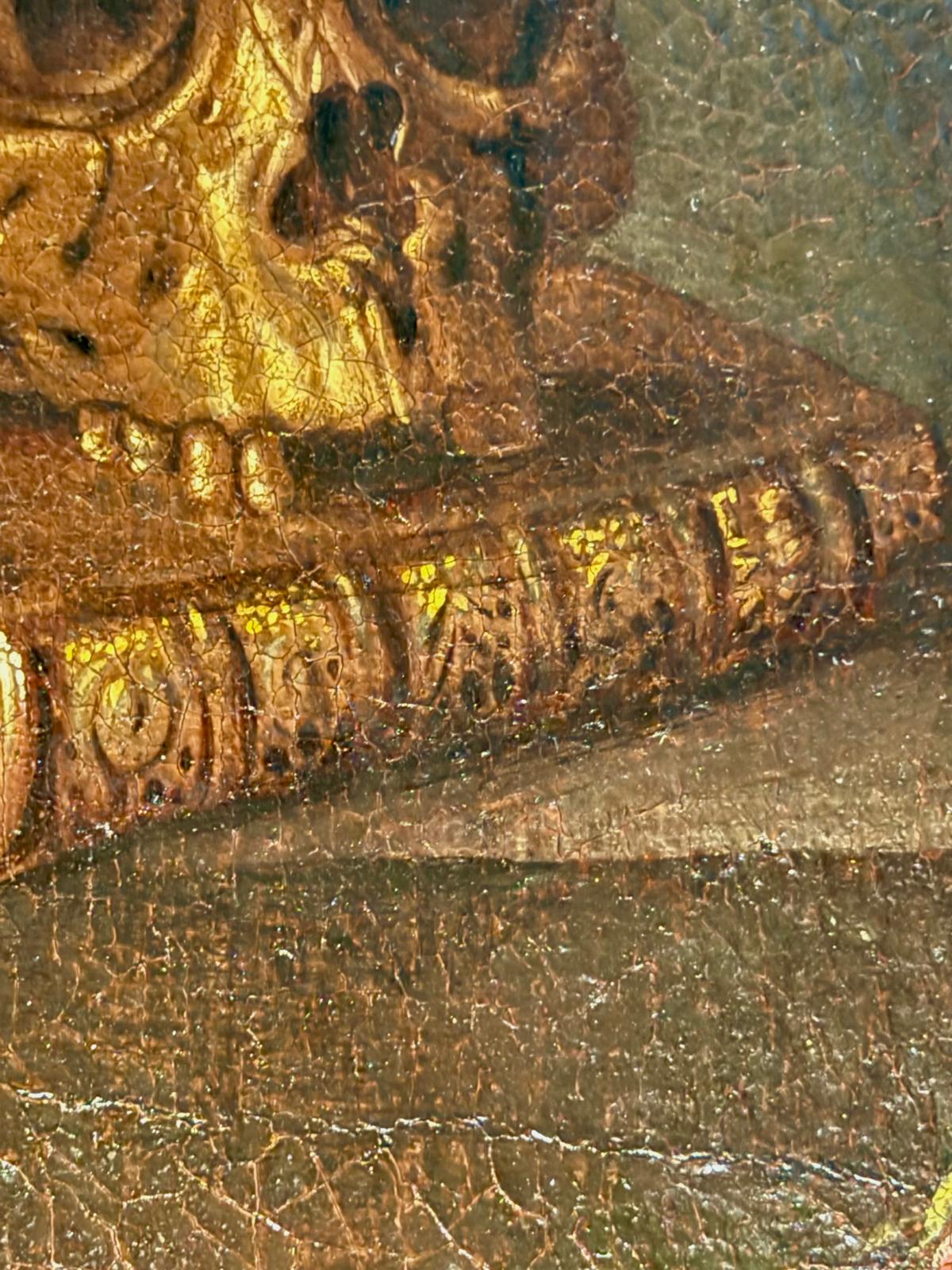
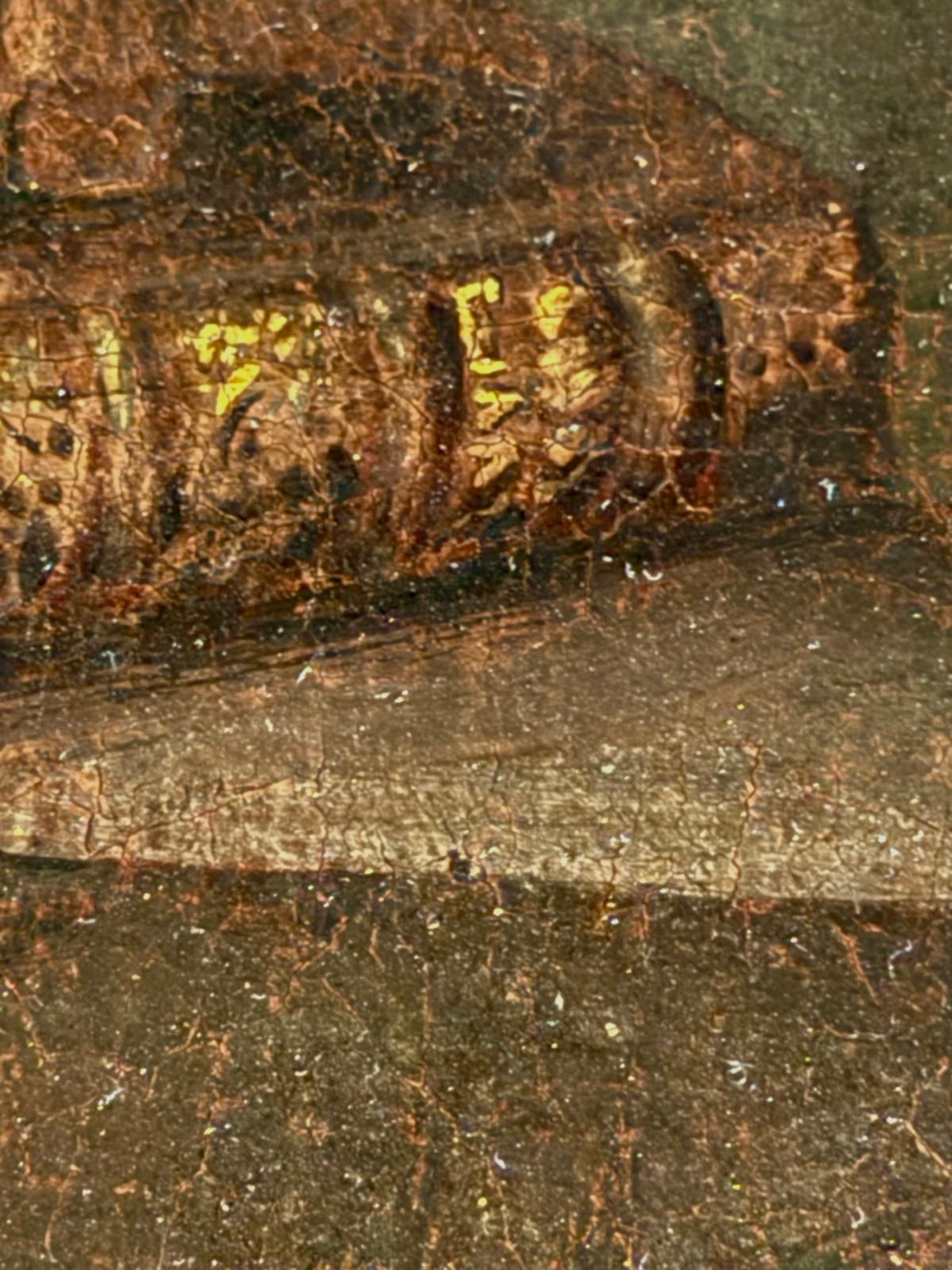
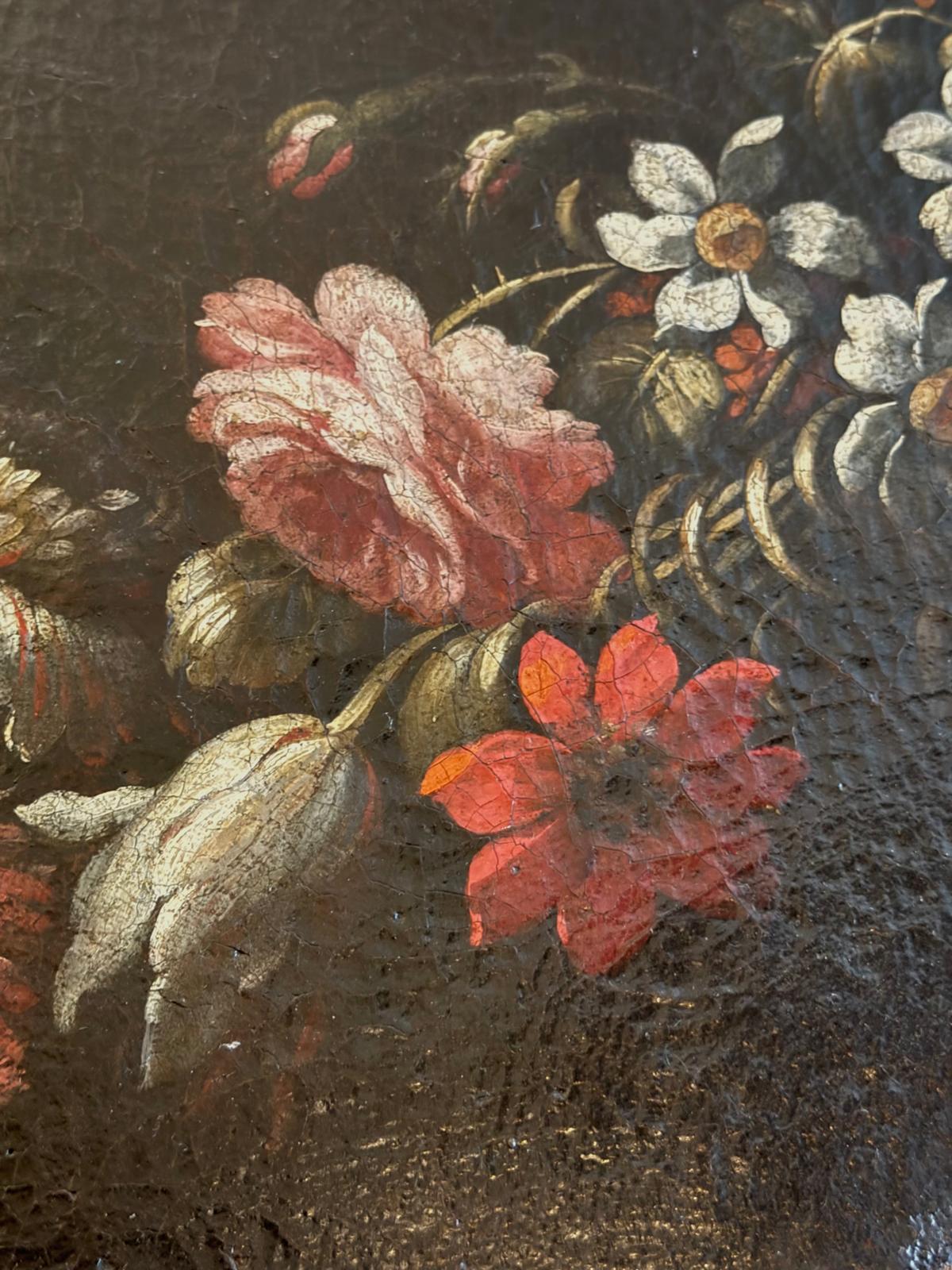
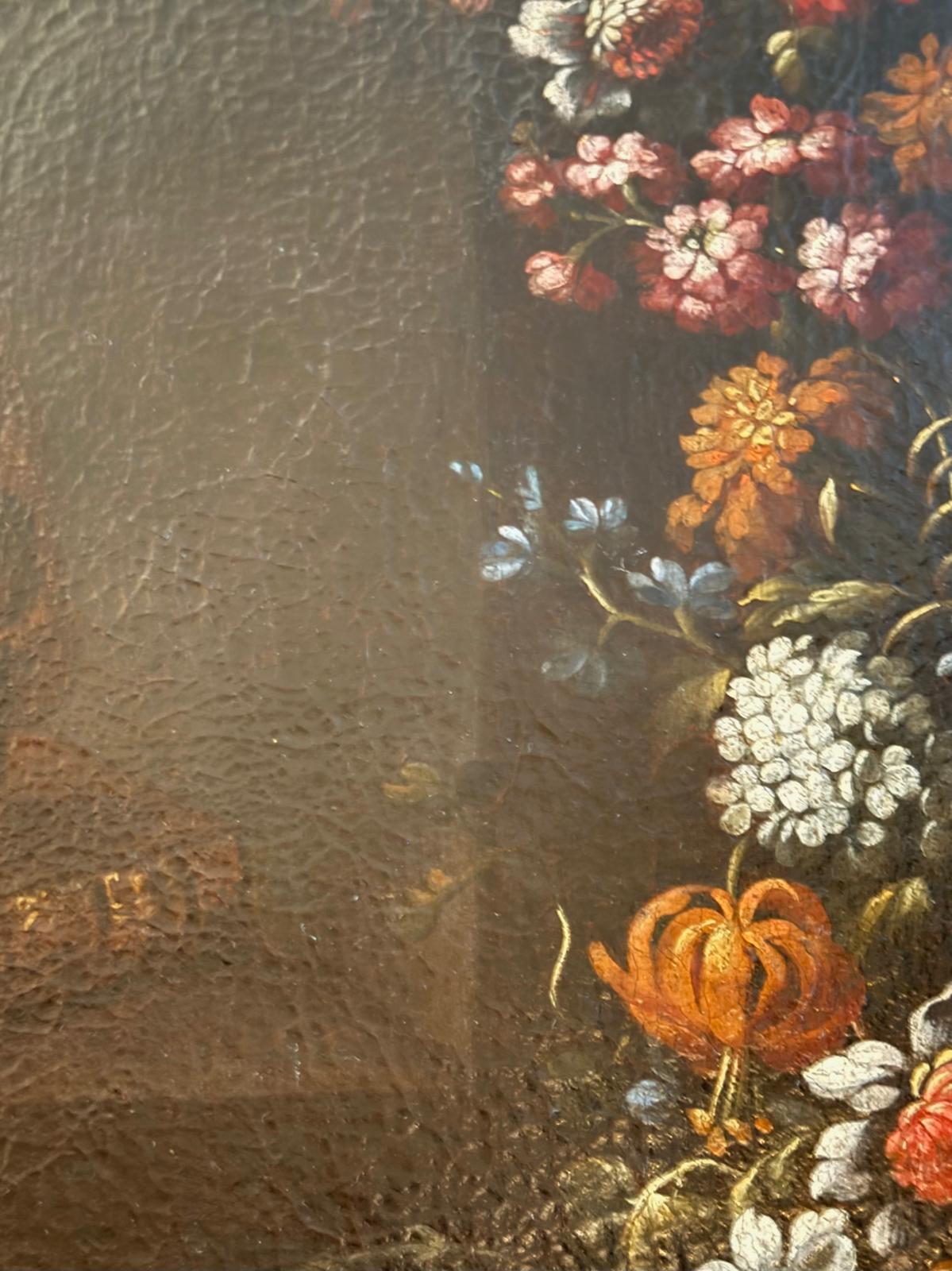
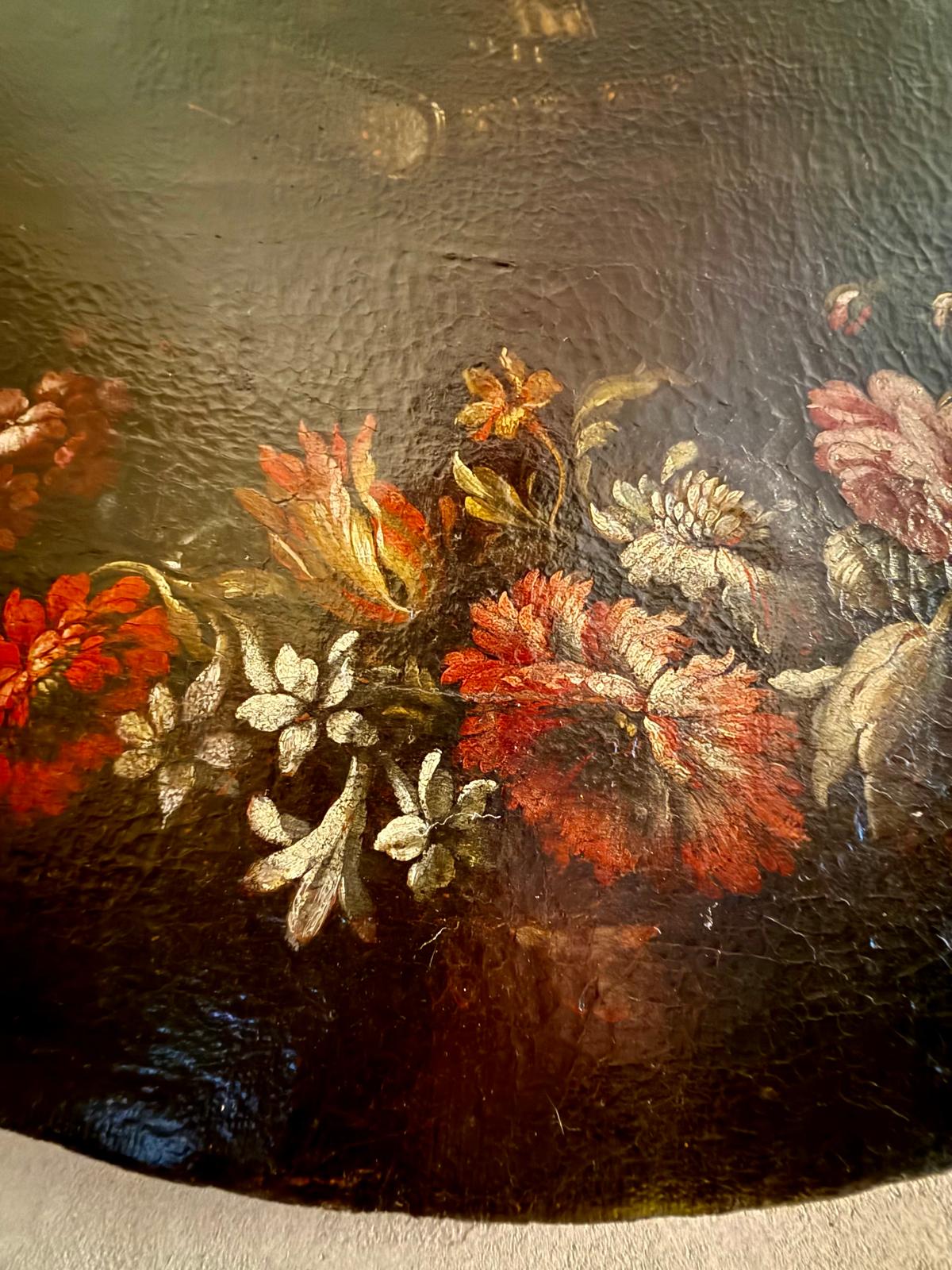
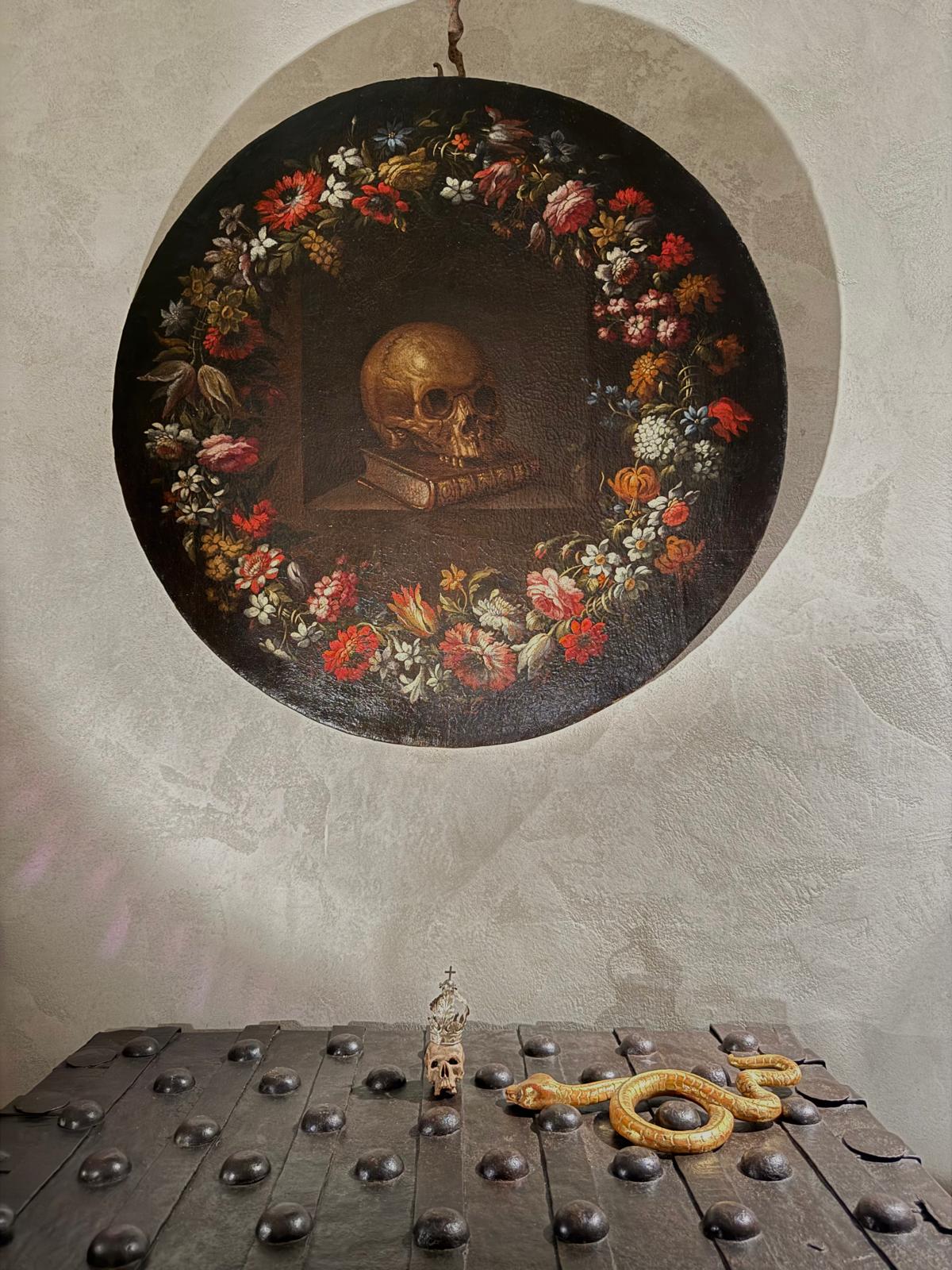
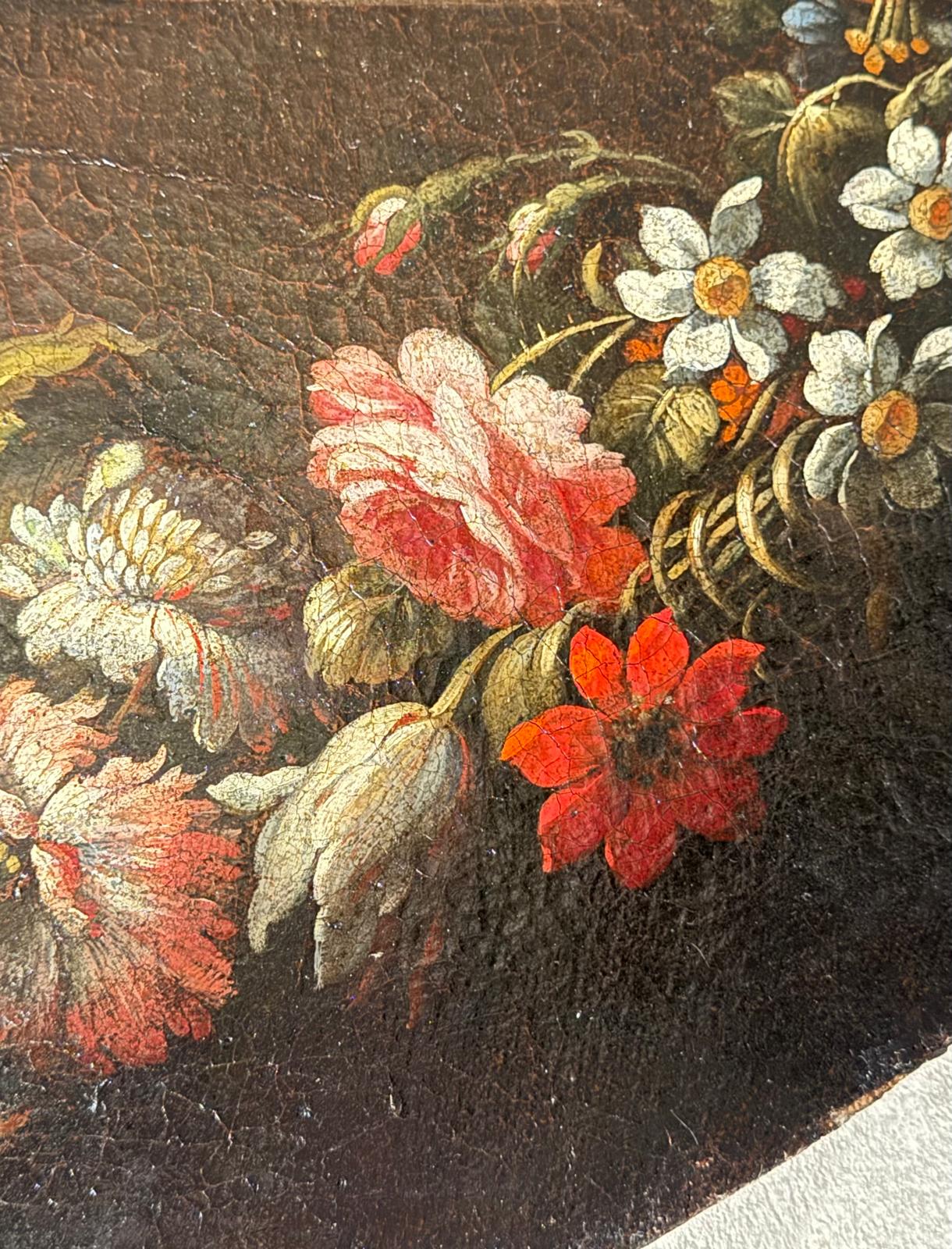
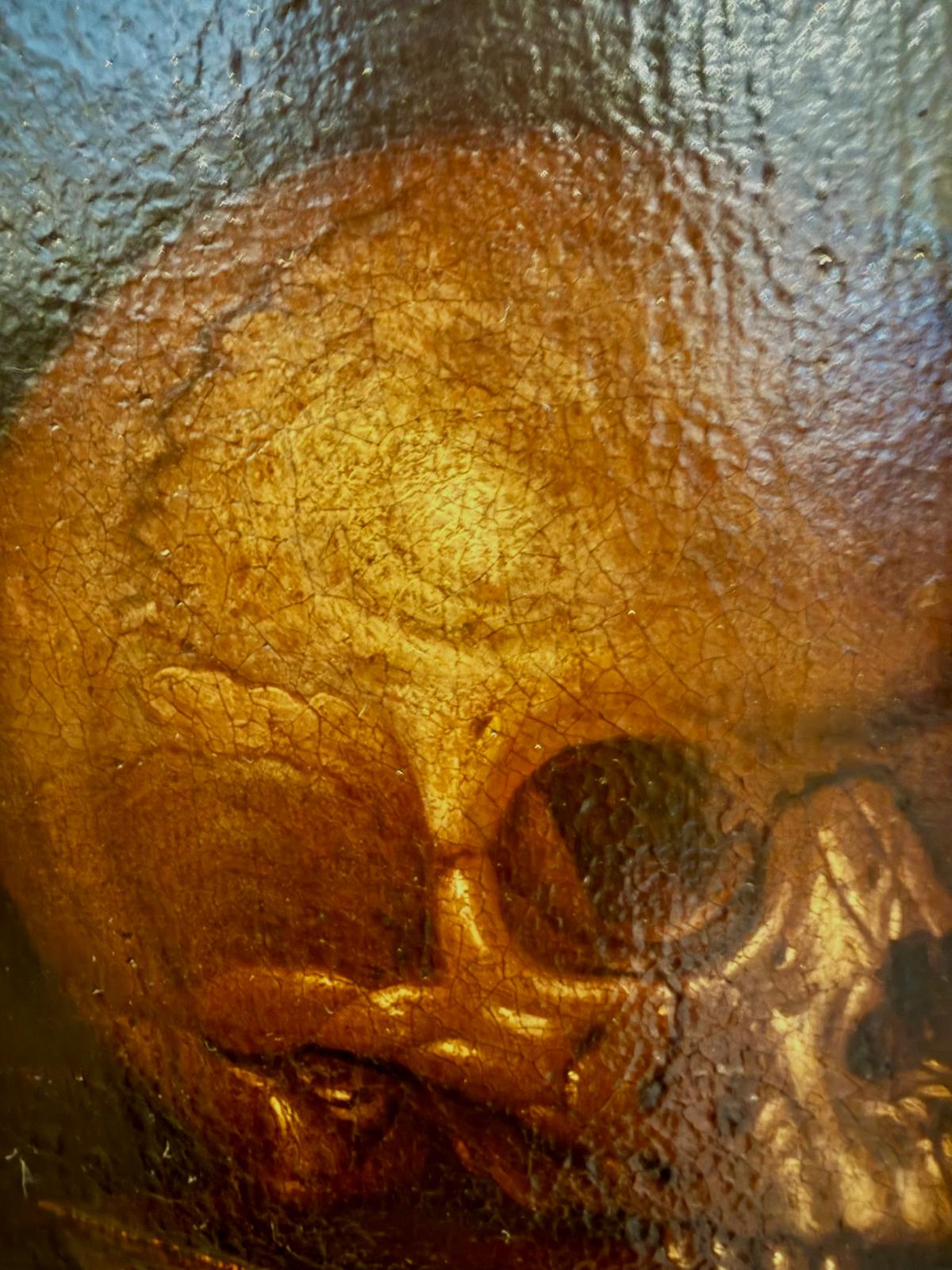
Work by multiple hands: Circle of Giovanni Stanchi dei Fiori and Roman still-life painter (circle of Carlo Manieri) Rome, second half of the 17th century (circa 1650–1680) Oil on canvas (19th-century relining), diameter 83 cm. The refined circular oil painting features a garland of flowers framing a central panel created by a faux perspectival opening. At the center of the niche is a skull resting on a single bound volume, an iconographic motif typical of 'memento mori' and 17th-century Vanitas. The execution of the garland, in terms of quality, botanical type, and chromatic brilliance, points to the circle of Giovanni Stanchi dei Fiori, one of the leading flower specialists active in Rome in the 17th century. The rendering of the petals, the symmetrical arrangement of the bouquets, and the precision of the floral varieties (carnations, roses, daisies, tulips, buttercups) are characteristic of the Stanchi workshop and their extensive collaborations in aristocratic decorative contexts. The skull, however, is the work of a different hand: the painting appears warmer, more golden, built up with glazes rather than small touches; the impasto is denser, and the modulation of light is more atmospheric. These elements strongly suggest a Roman artist specializing in symbolic still lifes, close to the circle of Carlo Manieri, active in Rome between 1650 and 1700 and known for his refined 'memento mori'. The differing brushwork quality, the distinct craquelure, and the clear technical distinction confirm that the work was executed by multiple hands, a common practice in Roman workshops of the late 17th century: flower specialists created the decorative garland, while a distinct painter worked on the central panel with the allegorical subject. The round painting belongs to the Vanitas tradition, where the skull and book represent the fragility of knowledge and the human condition, while the floral garland emphasizes the ephemeral beauty of the visible world. The circular shape accentuates the contrast between the sensual vitality of the flowers and the inexorable nature of the skull symbol, creating a thoroughly Baroque dialogue between splendor and contemplation. The painting's typology – a round format with an ornamental garland and a central niche – is particularly recognizable in 17th-century Rome and frequently found in noble commissions. The work represents a significant example of collaboration between ornamental specialists and painters of allegories, a production highly valued today for its pictorial quality and symbolic power.