Giovanni Battista Beinaschi (Fossano c. 1634 - Naples 1688)
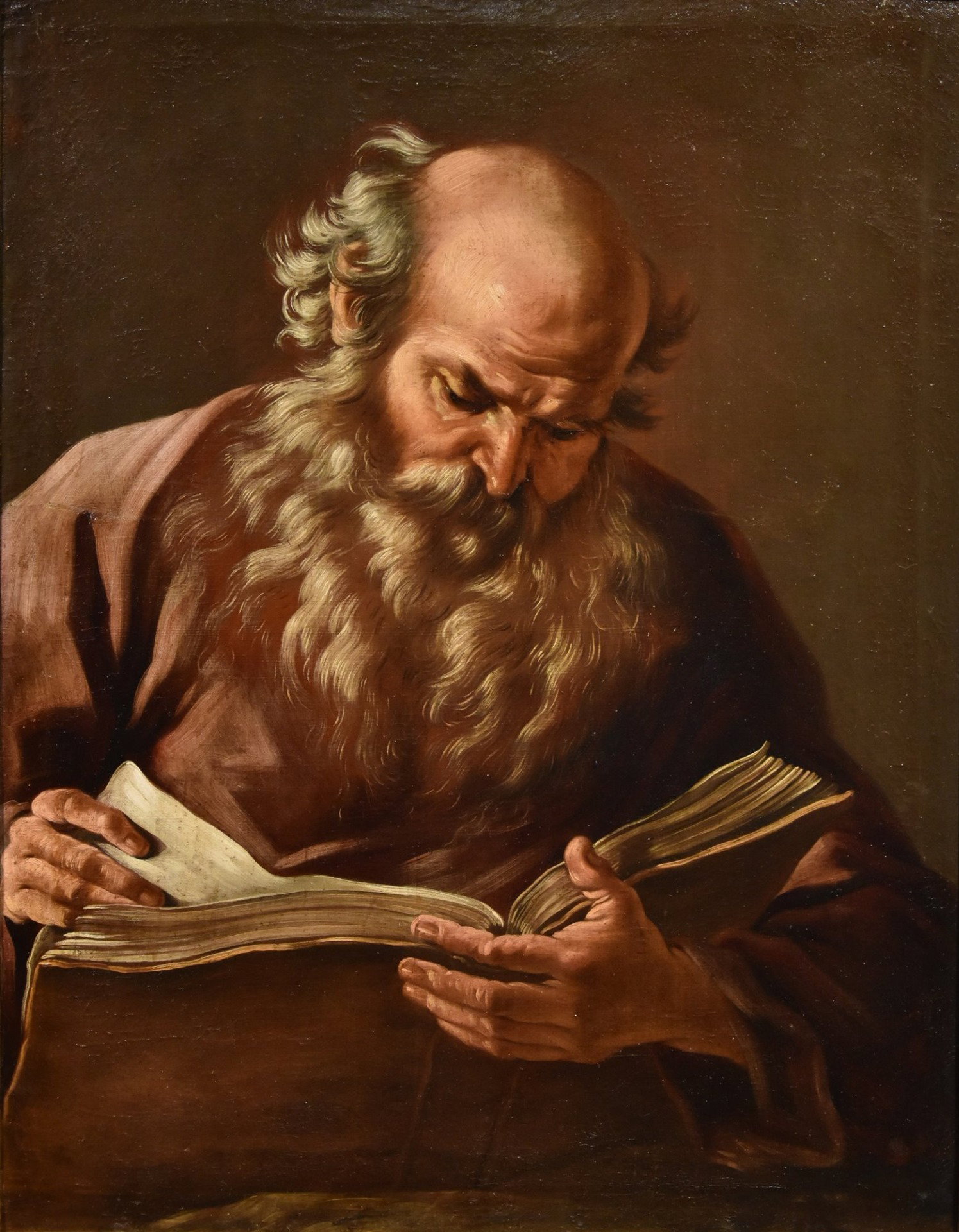
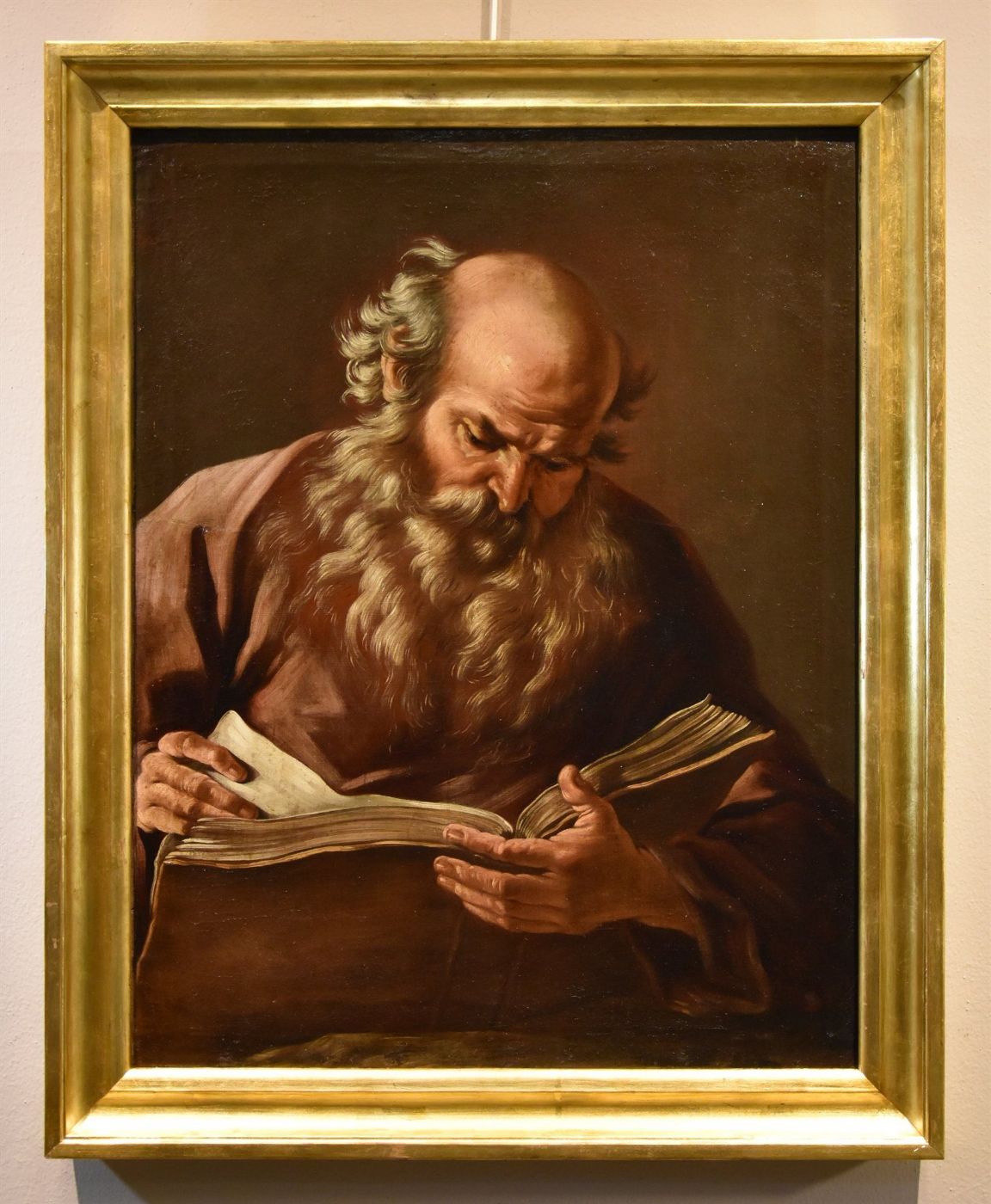
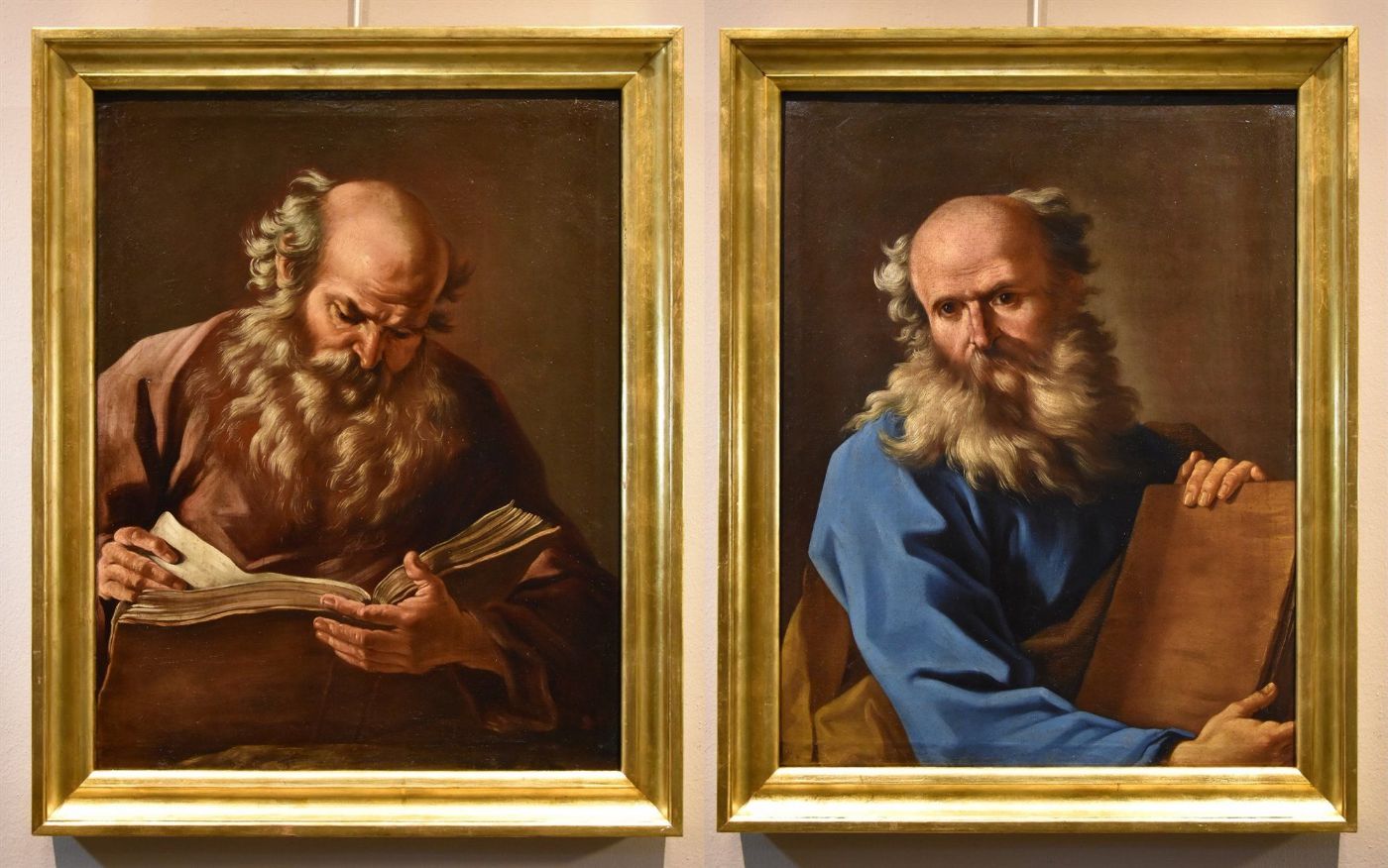
Portrait of the philosopher Heraclitus (absorbed in reading)
Oil on canvas (82 x 64 cm - Framed 95 x 75 cm.)
Painting details (click HERE)
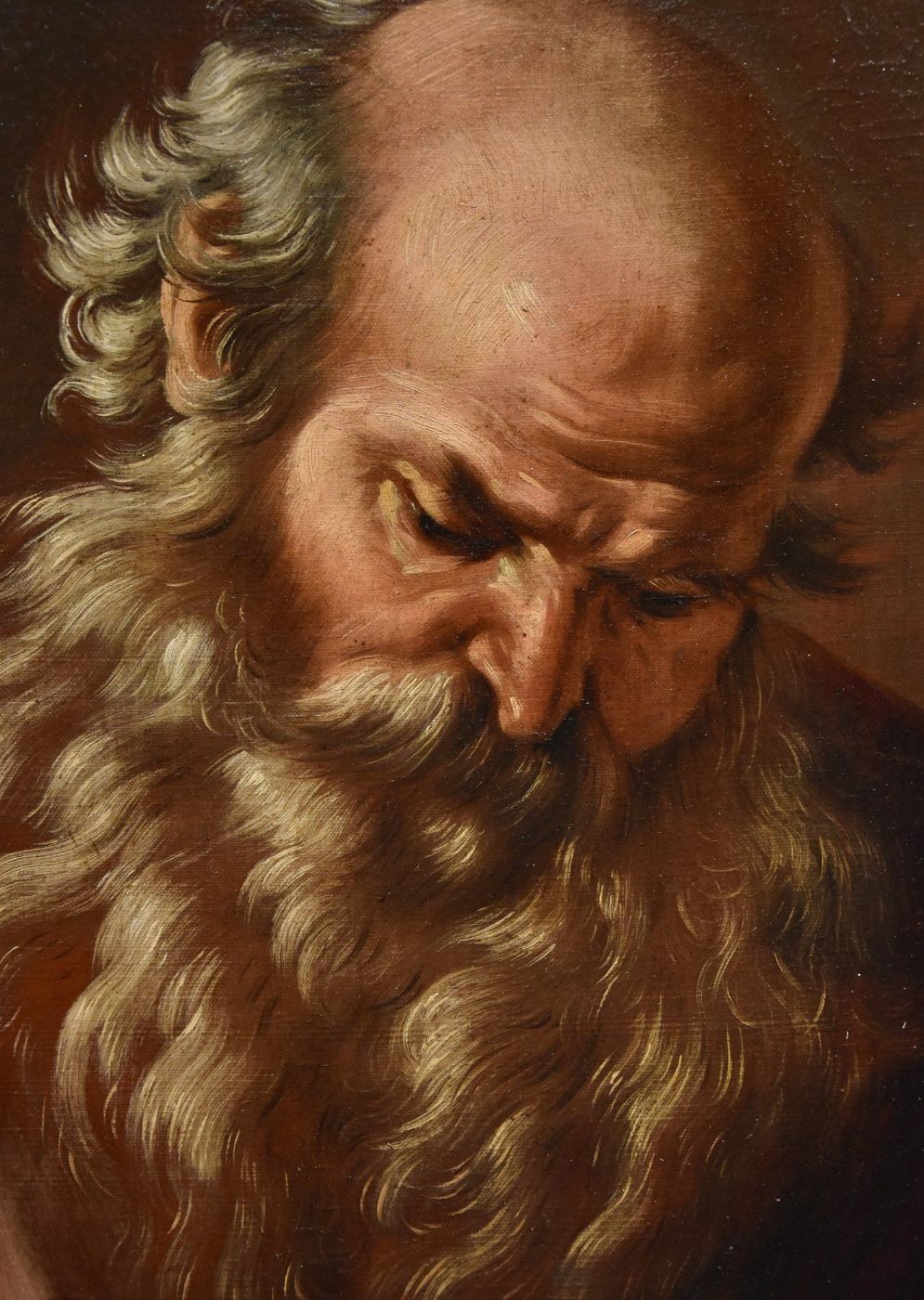
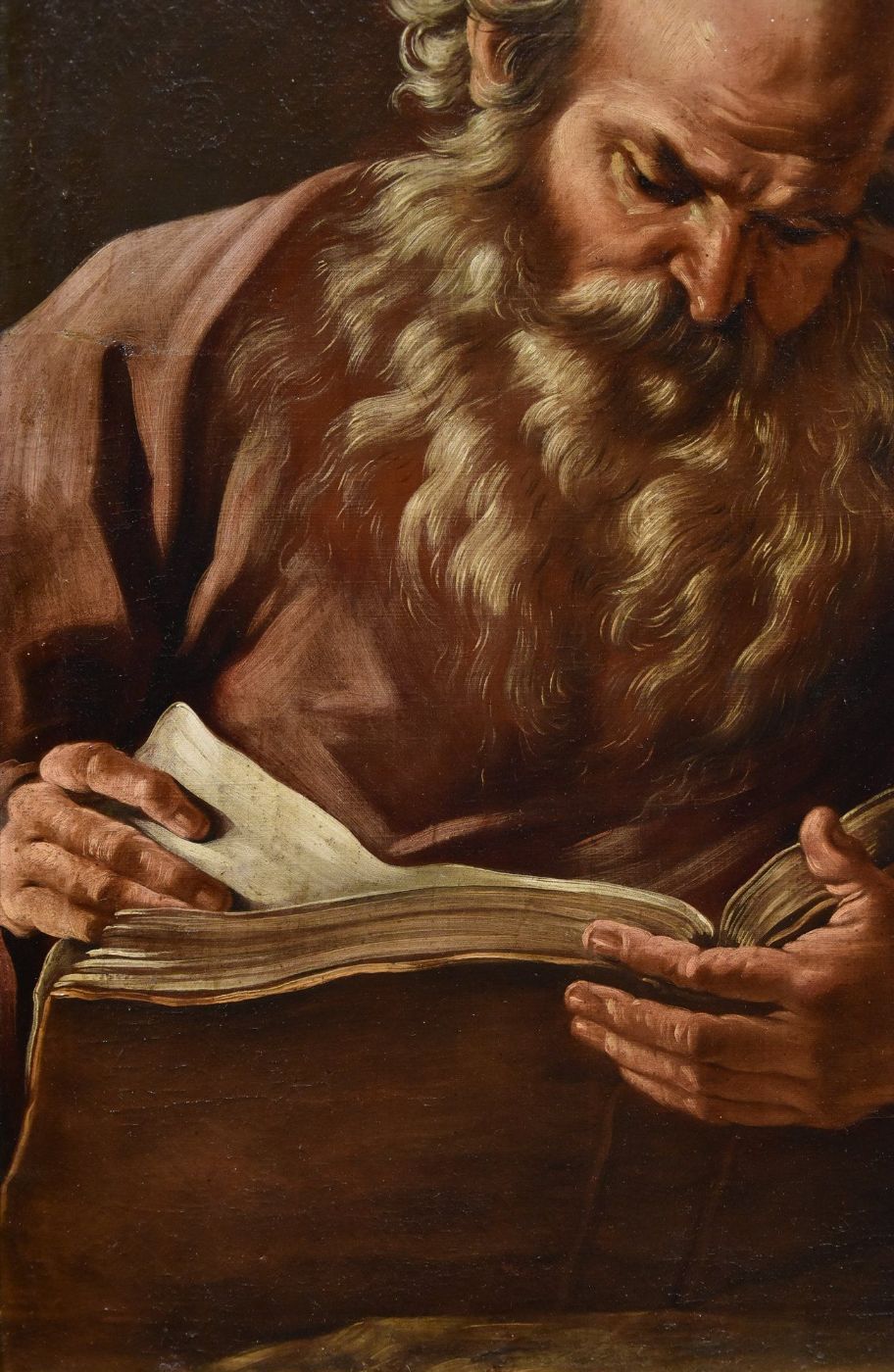
The painting shows an intense image of the Greek philosopher Heraclitus, portrayed as a mature man holding a book in his hands, an emblem of a life dedicated to study, and is proposed here as a pendant to the portrait of the philosopher Democritus (see photos in the details).
This type of subject, dedicated to the great philosophers or scholars of antiquity, was very dear to the figurative tradition and the collecting tastes of the seventeenth century: in our case we have one of the two key figures of pre-Socratic philosophical thought, often placed side by side because of their opposing and complementary vision of the human condition.
If we go into the details of the iconography of the two philosophers, Heraclitus and Democritus, the portrait presented here follows the tradition that generally contrasts the somber and contemplative character of the former with a more open and detached character from the becoming of the world of the latter.
This opposite attitude towards reality and the human condition has made them symbolic figures in thought and a favorite subject of various artists, especially in the Baroque era, due to the strong symbolic value and its implications in the interpretation of the human condition (1).
In the proposed painting, in particular, Democritus 'the atomist philosopher' directs a fixed and detached gaze at the observer, which represents his vision of life.
According to his philosophy, in fact, all reality is only a meaningless dance of atoms and it is therefore useless to try to find a meaning to existence. There is no need to agonize over the absurdity of the world, but on the contrary to distance oneself from passions and face them with lightness.
The observer is captivated by the enigmatic nature of his expression and the book with the white cover that the philosopher holds in his hand becomes its symbol.
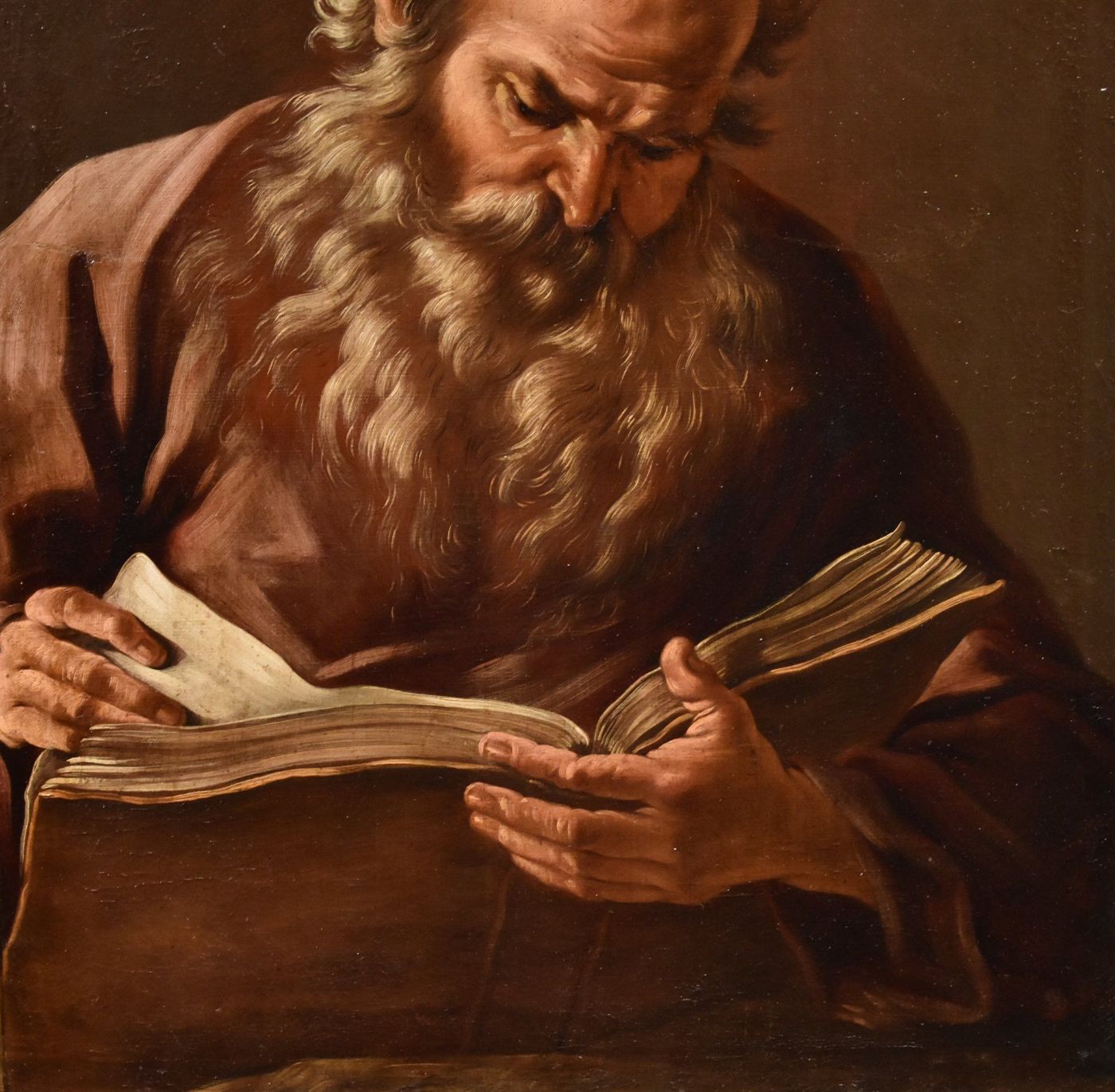
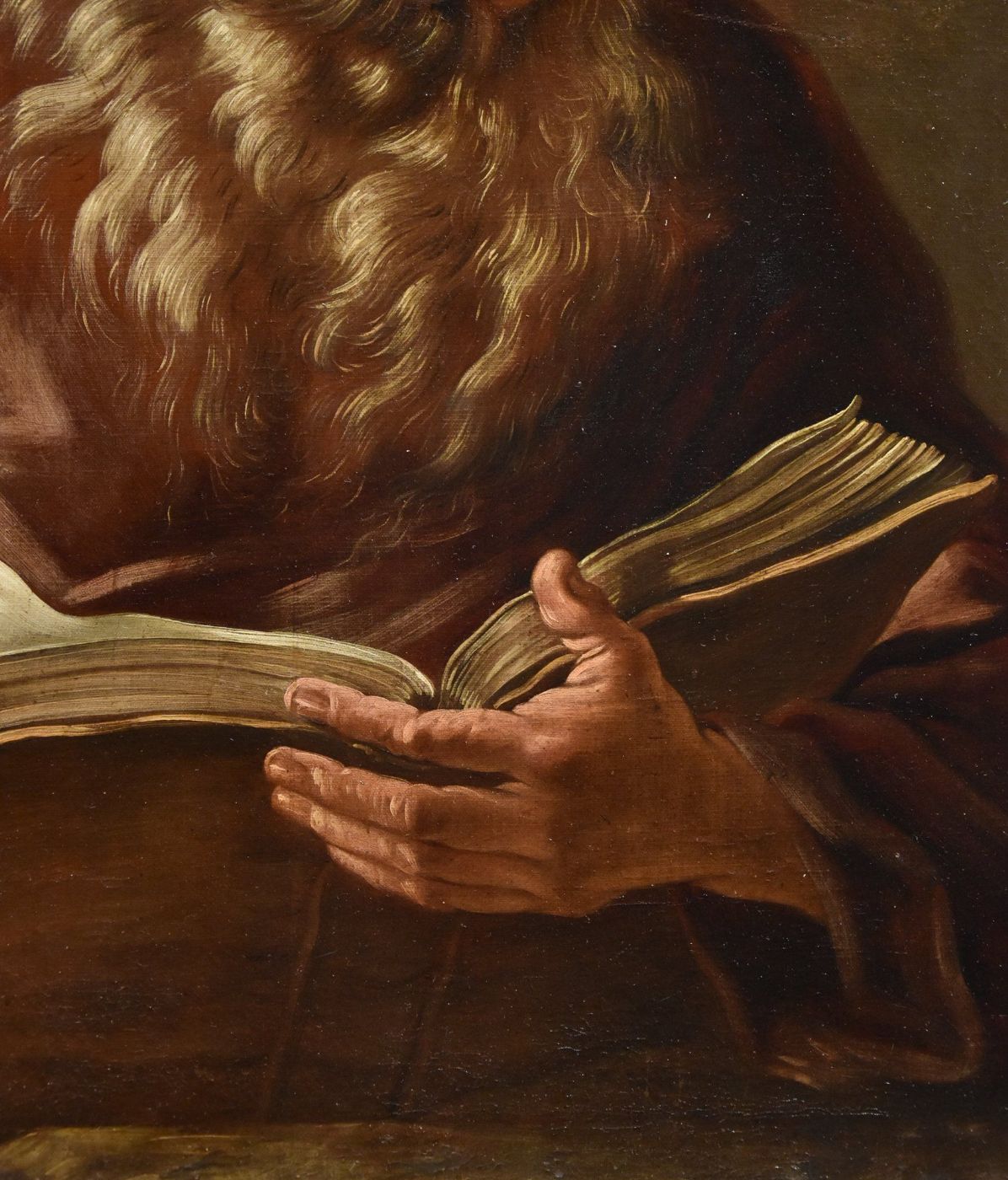
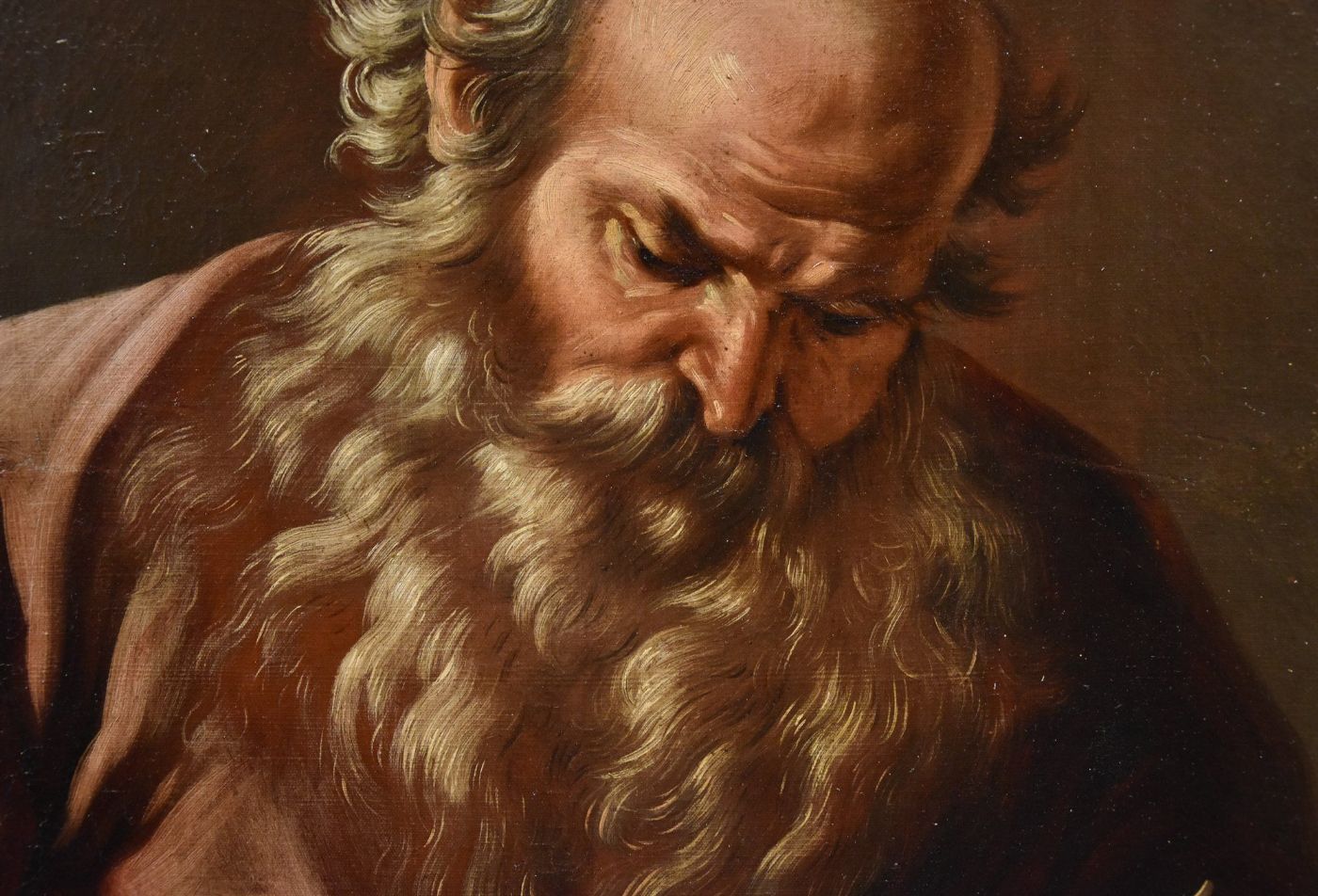
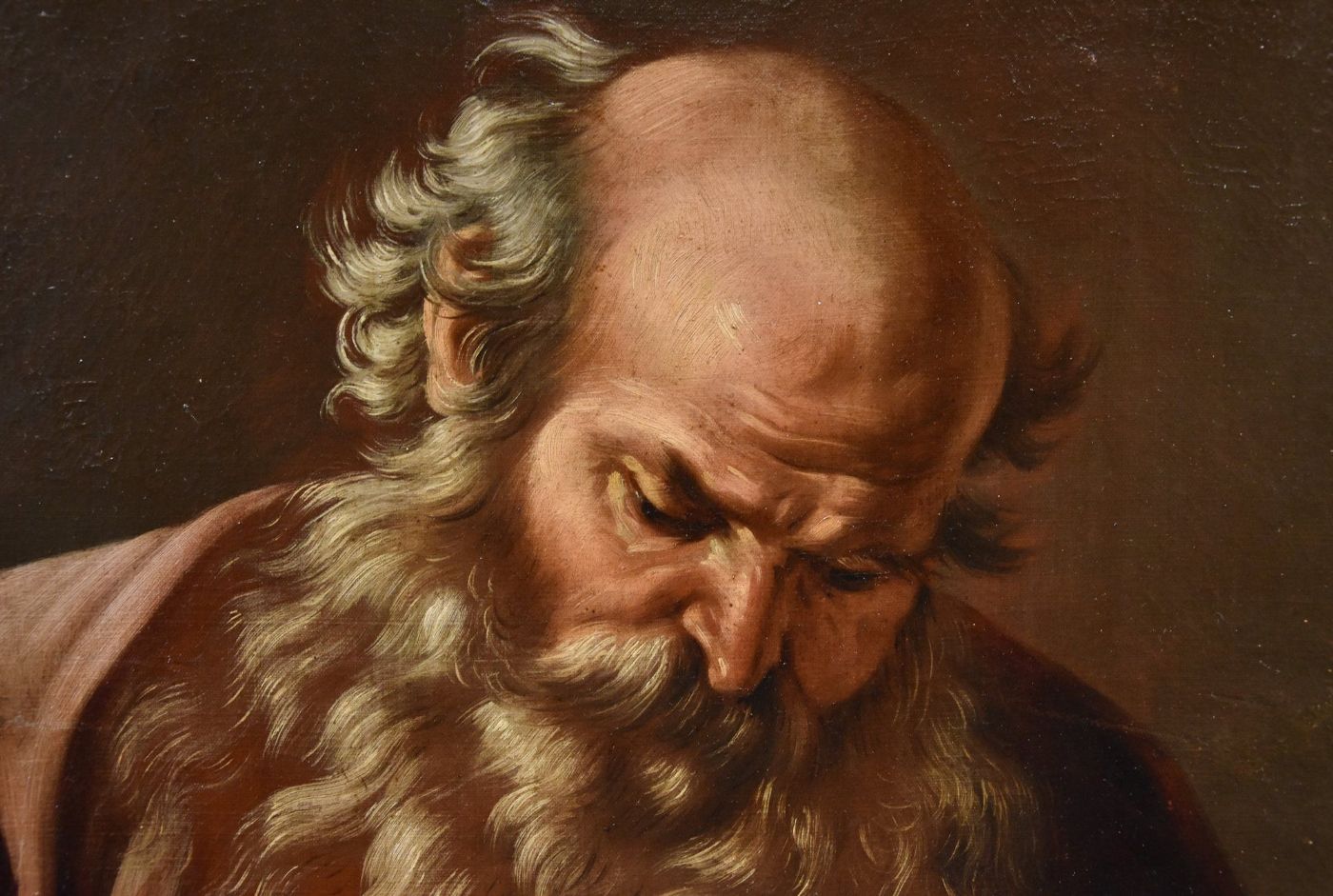
In the painting proposed here, in particular, Heraclitus ‘the obscure philosopher’, turns his frowning gaze to the open book, aware of the tragic fragility that overwhelms things, with the gesture of turning its pages.
Regarding the style of the proposed work, the scholar is described with a deep scenographic setting in a vigorous Baroque style, with marked somatic features. The backlighting effects and a magical chiaroscuro atmosphere make the character dynamic, oriented towards a light source that touches his face.
By studying the characteristics and related details, we can circumscribe the attributive scope to the late-Baroque painter Giovan Battista Beinaschi (1634 - 1688), whose prolific activity was concentrated between Rome, where he trained, and Naples. Nevertheless, he moved frequently throughout his career between Turin, Parma, perhaps Bologna and Genoa, assimilating varied artistic influences from each place.
If, at first, he showed a propensity for Roman classicism, this influence was soon supplanted by an increasingly pronounced approach to the Baroque cultural front.
(1) We can find in art many examples with this interesting iconography, for example in the “Heraclitus and Democritus” by Hendrick ter Brugghen (1619, property Christie's, London, https://www.christies.com/en/lot/lot-6298681?ldp_breadcrumb=back ), or in the same subject by Gregorio Preti (https://mattia-preti.it/279-eraclito-e-democrito/ ).
ADDITIONAL INFORMATION:
The work is sold complete with a gilded wooden frame and is accompanied by a certificate of authenticity and descriptive iconographic sheet.
We take care of and organize the transport of the purchased works, both for Italy and abroad, through professional and insured carriers. It is also possible to see the painting in the gallery of Riva del Garda, we will be happy to welcome you to show you our collection of works.
Contact us, without obligation, for any additional information.
Follow us also on :
INSTAGRAM https://www.instagram.com/galleriacastelbarco/?hl=it
FACEBOOK https://www.facebook.com/galleriacastelbarco/