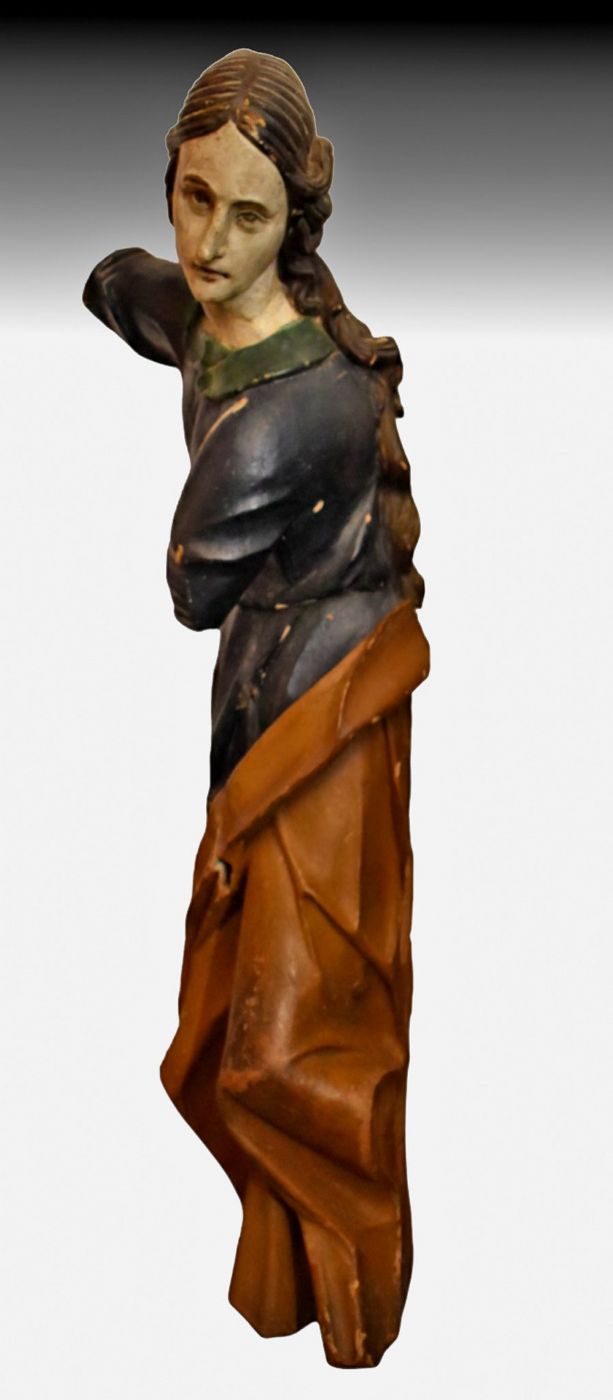
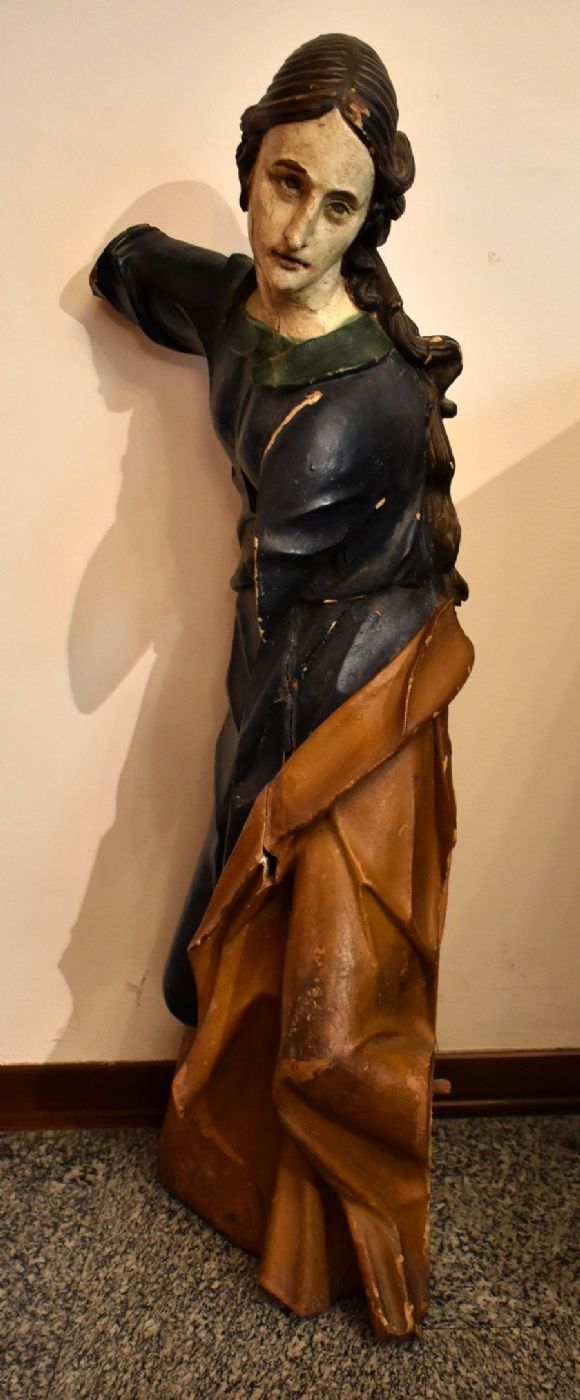
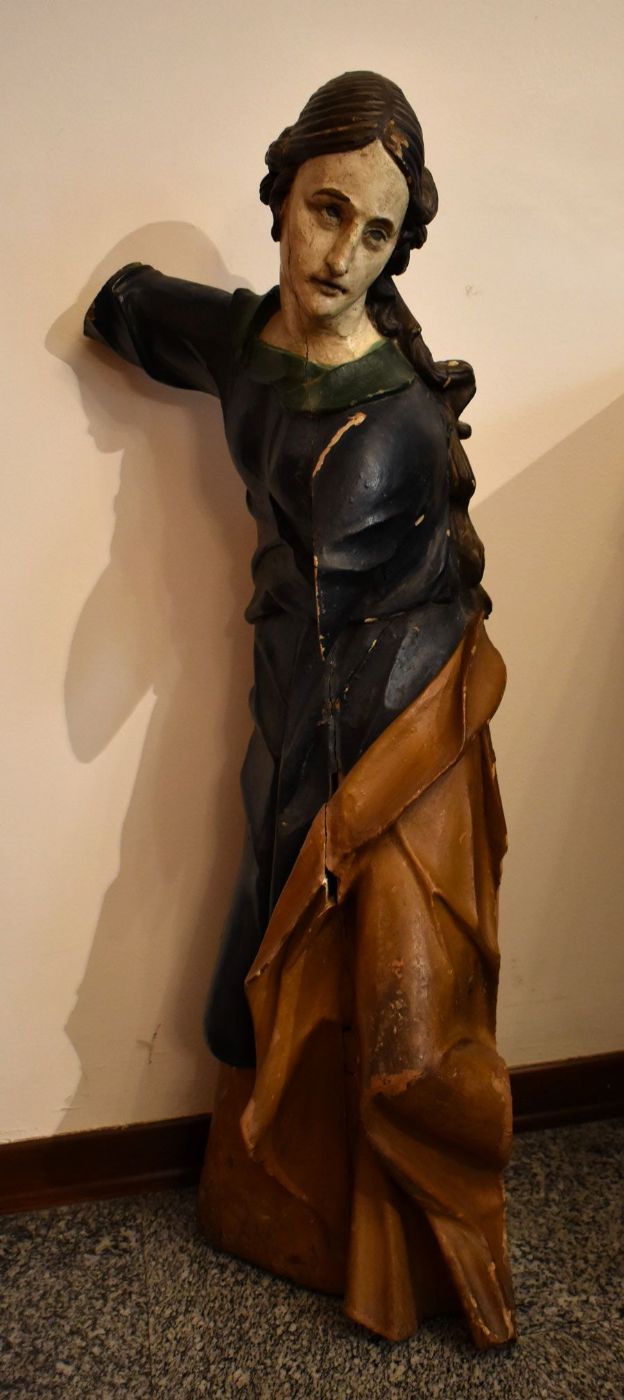
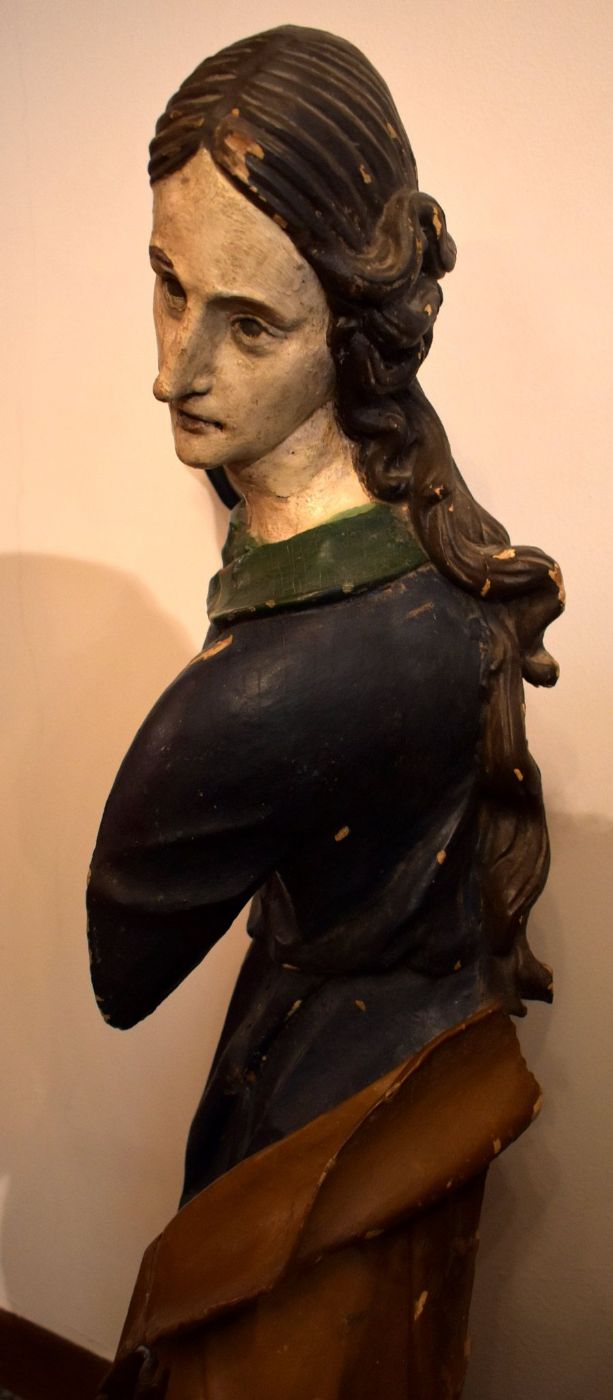
Skilled Friulian / Venetian sculptor of the 18th century from the school of Giacomo and Giovanni Martini. Valuable limewood sculpture with original polychromy depicting Mary Magdalene. Small and circumscribed polychrome restorations from a later period, invisible, identified with UV luminescence but limited to no more than 3 - 5 percent of the surface. Provenance from a private collection of the Udine bourgeoisie. Dimensions: 100 cm high, 37 cm wide.
In compliance with the provisions of the New Code of Cultural Heritage, the selling company provides, at the time of sale, a detailed written photographic guarantee of the originality and provenance of the works sold. The data with which the works are described and then contained in the written guarantees are express determinations resulting from accurate and documented technical/historical/artistic investigations, even of expert importance. Copying and duplication are prohibited for commercial reasons and/or to describe other works for sale, even if deemed in some way similar.
Expert technical sheet - analysis of the work. Highlights
Style: The dynamic, almost "spiral" pose (the so-called rotary motion), and the treatment of the drapery with deep and angular folds, are typical of the mature Baroque/Rococo style of Friuli/Veneto.
Technique: The sculpture is made of carved limewood with a polychromy that, although presenting circumscribed gaps, preserves sober tones (dark green, ochre/burnt sienna). This type of finish is very common in Friulian workshops (such as those in Udine or Carnia) which were influenced by both Venetian and transalpine masters.
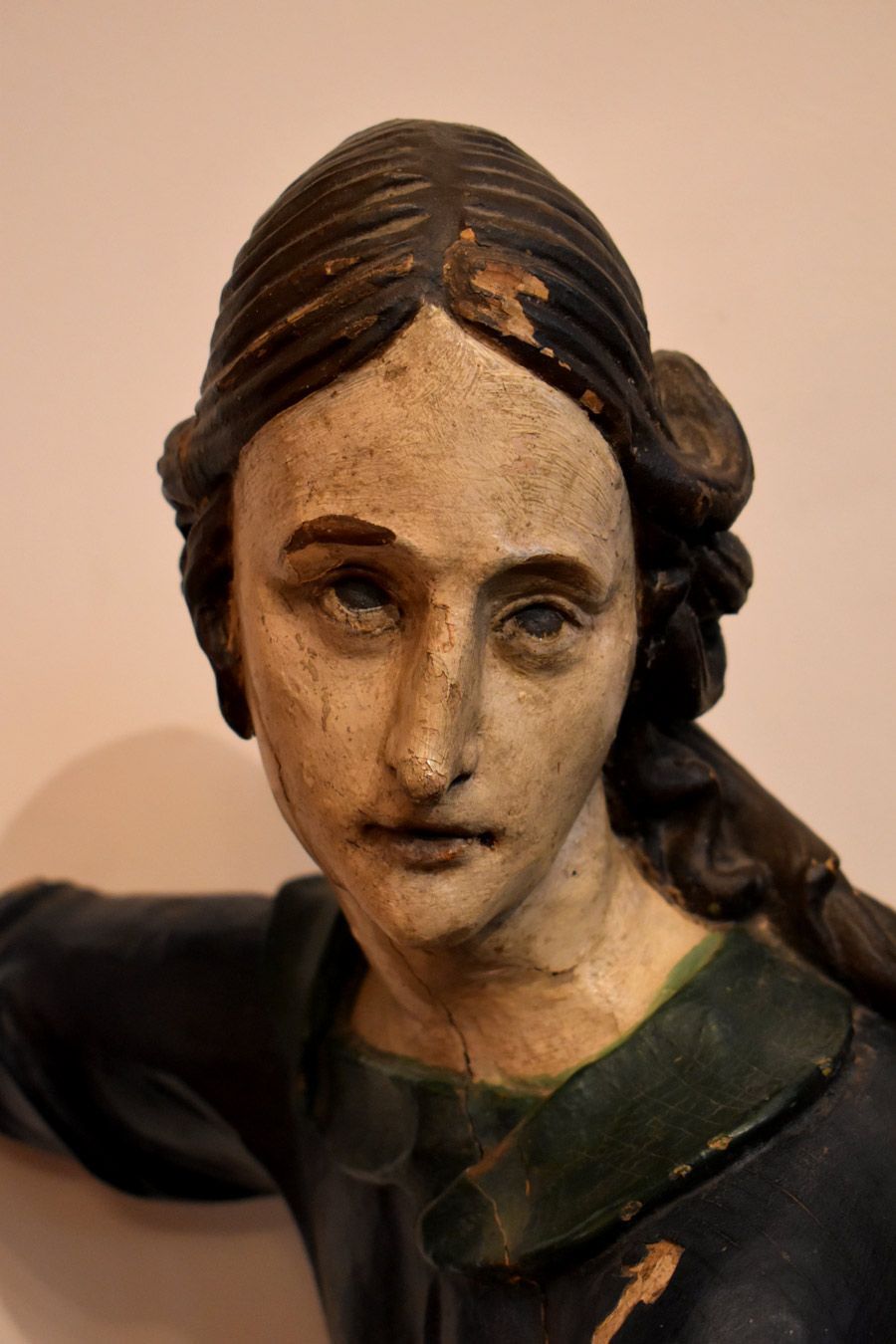
Identification of the Character: The female figure presents iconographic elements that strongly suggest the identity of Mary Magdalene. The hair, which is long, loose and falls on the shoulders, is the main attribute of the Saint who, according to tradition, dried Christ's feet with her hair.
The expression and pose: The face is marked by a composed but intense pain, with the gaze turned downwards (or towards a cross/object now missing). The twisting of the body suggests that it may have originally been part of a larger group, probably a Crucifixion or a Lamentation over the Dead Christ, where Magdalene is usually depicted at the foot of the cross in despair.
Clothing: The dark dress and enveloping cloak reflect the state of penance and mourning.
Attribution: the style recalls the production of important workshops or authors in the Friuli and Cadore area who were active in the eighteenth century, inheriting the sculptural tradition of the previous Giacomo and Giovanni Martini. Many Magdalenes or Marys produced in this context have the same hairline, very neat and parted in the center, which then explodes into ringlets on the shoulders. The treatment of the face of our sculpture, with the sharp nose and slightly recessed eyes, is very reminiscent of production in the Udine area. The "cartoccio" drapery, that is, the folds that look almost like crumpled paper (visible on the right side of your statue) are typical of a taste that looked to Austria, very present in Friuli.
Analysis of symbolic language.
The folds of the clothes reveal several fundamental aspects:
1. Dynamism and Dramatic Tension: The folds are deep, angular and "crumpled" to convey a sense of inner turmoil. The fragmentation of light on the irregular surfaces creates a strong chiaroscuro that emphasizes the pathos. The dress "reflects" the torment of the soul through the complexity of the folds.
2. Rotary Motion (Twisting): Observing the course of the folds that wrap around the body, we note a diagonal line that rises from the bottom upwards. Meaning: This serves to guide the observer's eye towards the face of the sculpture. The folds "push" the figure into a twist that suggests a sudden movement, typical of the late Baroque and early Rococo, making the statue alive and not static.
3. The Structural Function (Carving) In the Veneto-Friuli area, the use of wood (generally Swiss pine or lime) allowed for very deep undercuts. The marked folds also served to hide the joints of the wooden blocks and give volume to the figure without weighing it down excessively. The rigidity of some "cartoccio" folds is a direct influence of German and Austrian wooden sculpture, filtered through Friuli.
4. Symbolism of Rank and State: The way the cloak (the ochre part) overlaps the dark tunic served to define the volume of the underlying body, despite the chastity of the dress. The contrast between the tight-fitting tunic on the bust and the large volume of the lower cloak served to give monumentality. A figure with many fabrics was a symbol of importance; in the case of a saint, it indicates the dignity of the character despite her condition as a penitent.
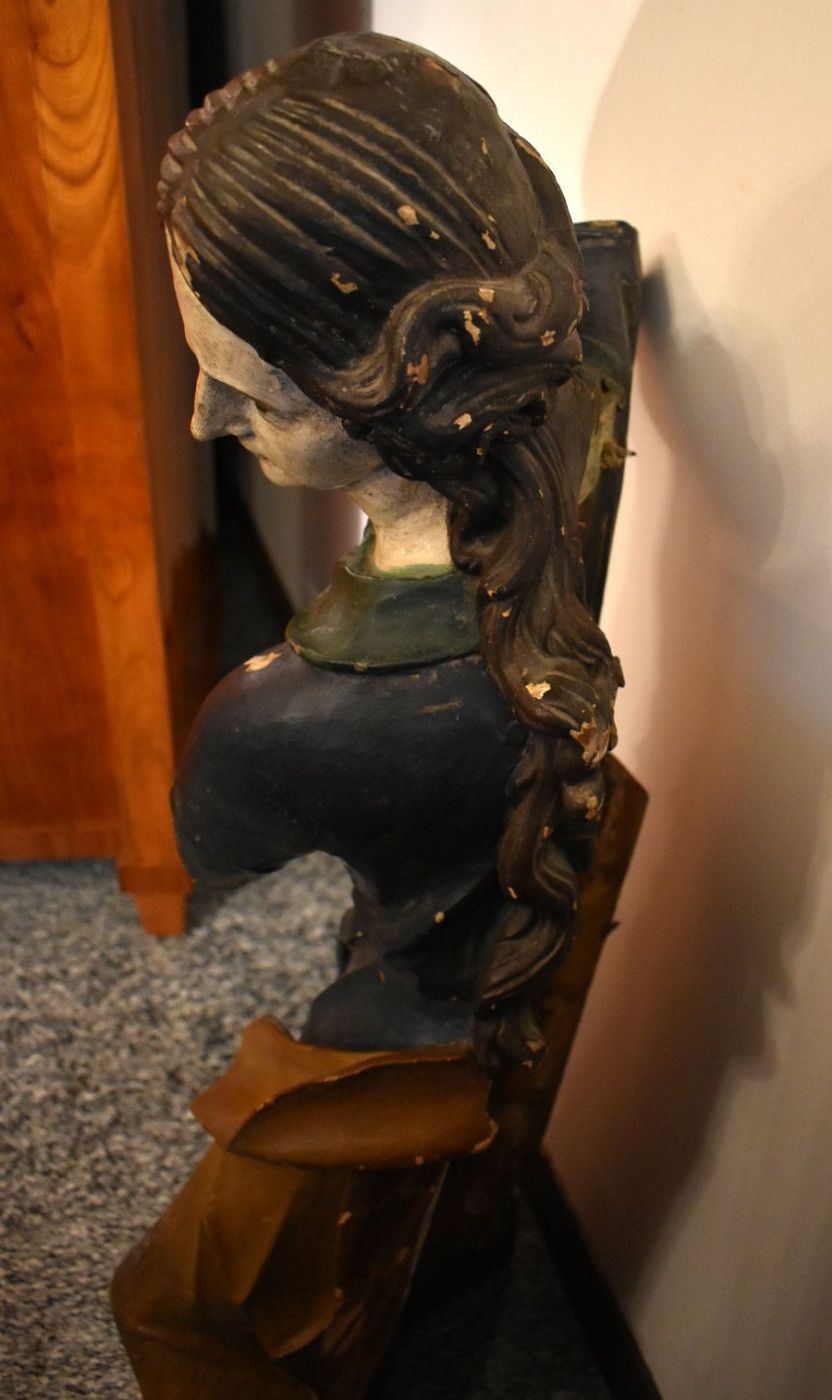
NOTES : The hair in this sculpture is an element of particular executive value.
1. The "V-groove" Technique The carver did not limit himself to suggesting the mass of the hair, but used very thin gouges to carve each individual strand. The grooves are deep and parallel, creating a rhythmic effect that captures the light. This type of clear incision served to give three-dimensionality even under the painting, preventing the color from "flattening" the volume of the head.
2. The Central Partition and Tension: The part in the center is typical of the iconography of the penitent Magdalene or the grieving Virgin of the 18th century. The tension of the hair that adheres to the temples and then swells on the ears accentuates the thinness of the face. This contrast serves to emphasize the ascetic or suffering character of the character, a trait much loved by the Friulian religious patrons of the '700.
3. The Passage from Rigor to Movement: While on the top of the head the hair is ordered and symmetrical, as it descends on the left shoulder it becomes a fluid and moving mass. This controlled disorder symbolizes surrender to pain. In the Veneto area, the ability to make the softness of the hair into hard wood was the definitive test to assess the skill of a master. Here we see a masterful passage from the almost sculptural rigidity of the forehead to the softness of the braid/strand that falls on the back.
4. The "Sparing" Polychromy You can see how the dark paint (brown or umber) has been spread to accumulate in the grooves of the carving. This creates a natural shadow that makes the hair almost "alive". The small gaps in the polychromy allow you to see the background (a plaster preparation), confirming that the work has not undergone heavy modern repainting that would have altered the subtle details.
Further details of the Construction technique
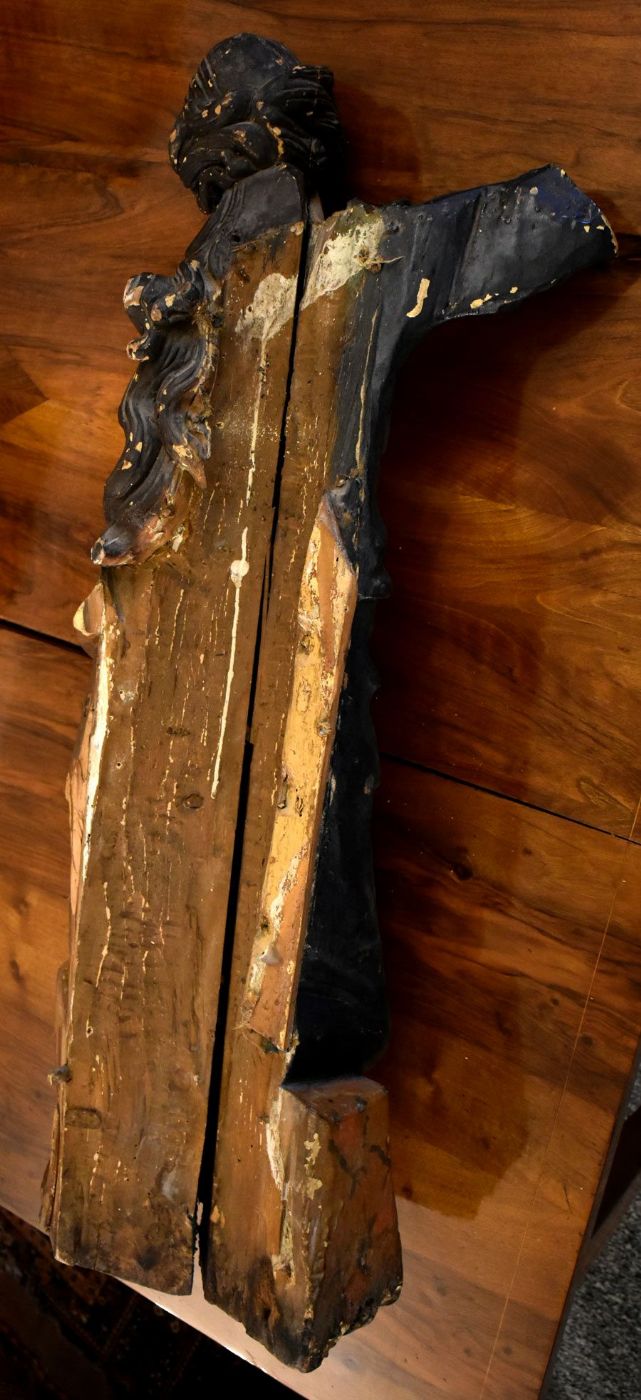
1. The excavation of the trunk (emptying of the heart of the wood) By eliminating the marrow, the densest and most unstable part of the trunk, the wood was allowed to "move" and breathe without splitting with changes in humidity over the centuries. Reducing the weight was essential for statues intended to be placed high on altars or transported during processions.
2. Vertical cut: There is a very clear central crack. This may indicate that the sculpture was made by joining two blocks of wood or that it suffered structural stress at the point of least thickness, typical of eighteenth-century works that have experienced thermal shocks.
3. Traces of History There are residues of preparation (plaster and glue) and perhaps original fixing holes. The back "speaks": the rough surface shows the signs of the gouge and axe, testifying to direct craftsmanship, far from the industrial finishes or plaster casts later on.
Conclusion It is a work of authentic devotion. The combination of the refinement of the frontal carving (seen first in the hair and drapery) and the functionality of the hollowed back is typical of Friulian workshops, which combined valuable art and technical pragmatism.
Our gallery of antique sculptures. Click on the following link:
Principessa Sissi ® antiques. High antiques and antique experts in Udine