Lombard painter of the early 17th century
Daniele Crespi (Busto Arsizio, 1597-1600 – Milan 1630) Circle of
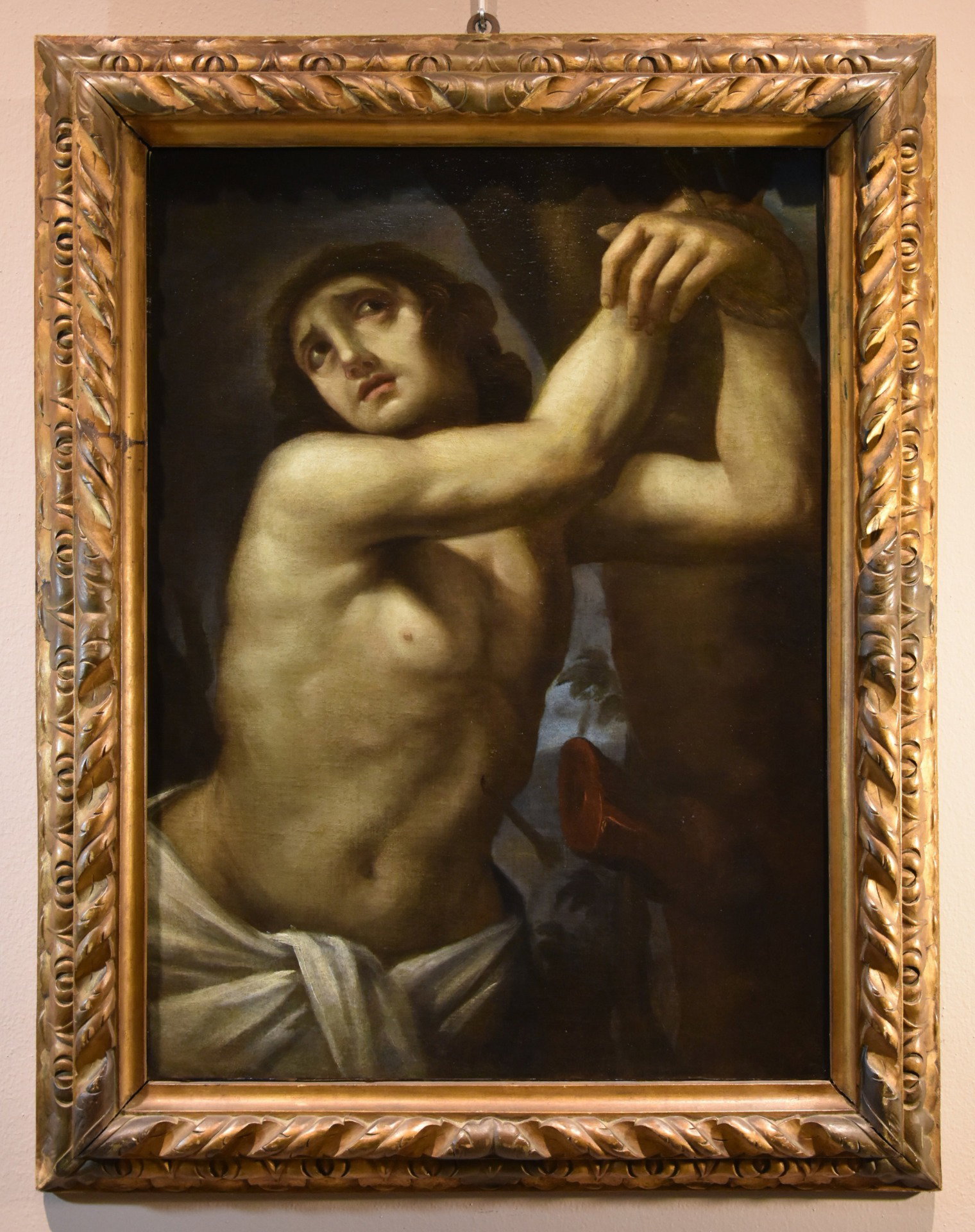
Saint Sebastian
oil on canvas (82 x 60 cm - framed 100 x 79 cm)
Full painting details (click HERE)
Saint Sebastian, soldier and martyr of Christ, is a evocative figure that reappears in art with incredible frequency as one of the most represented saints of the Catholic Church.
Protector against pandemics, anciently considered signs of celestial wrath imposed on the world for its sins, he was copiously depicted for this reason, especially between the 16th and 17th centuries.
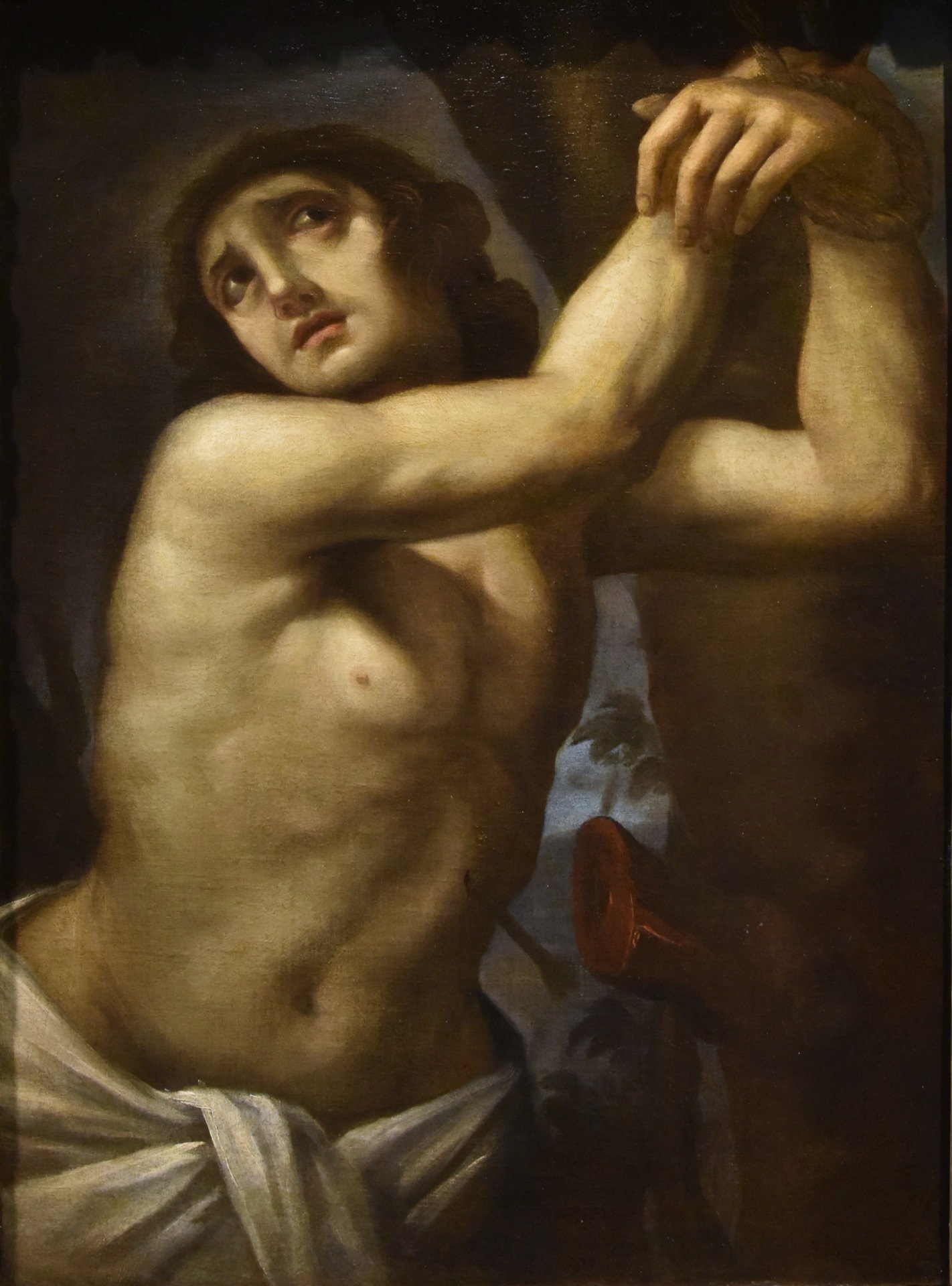
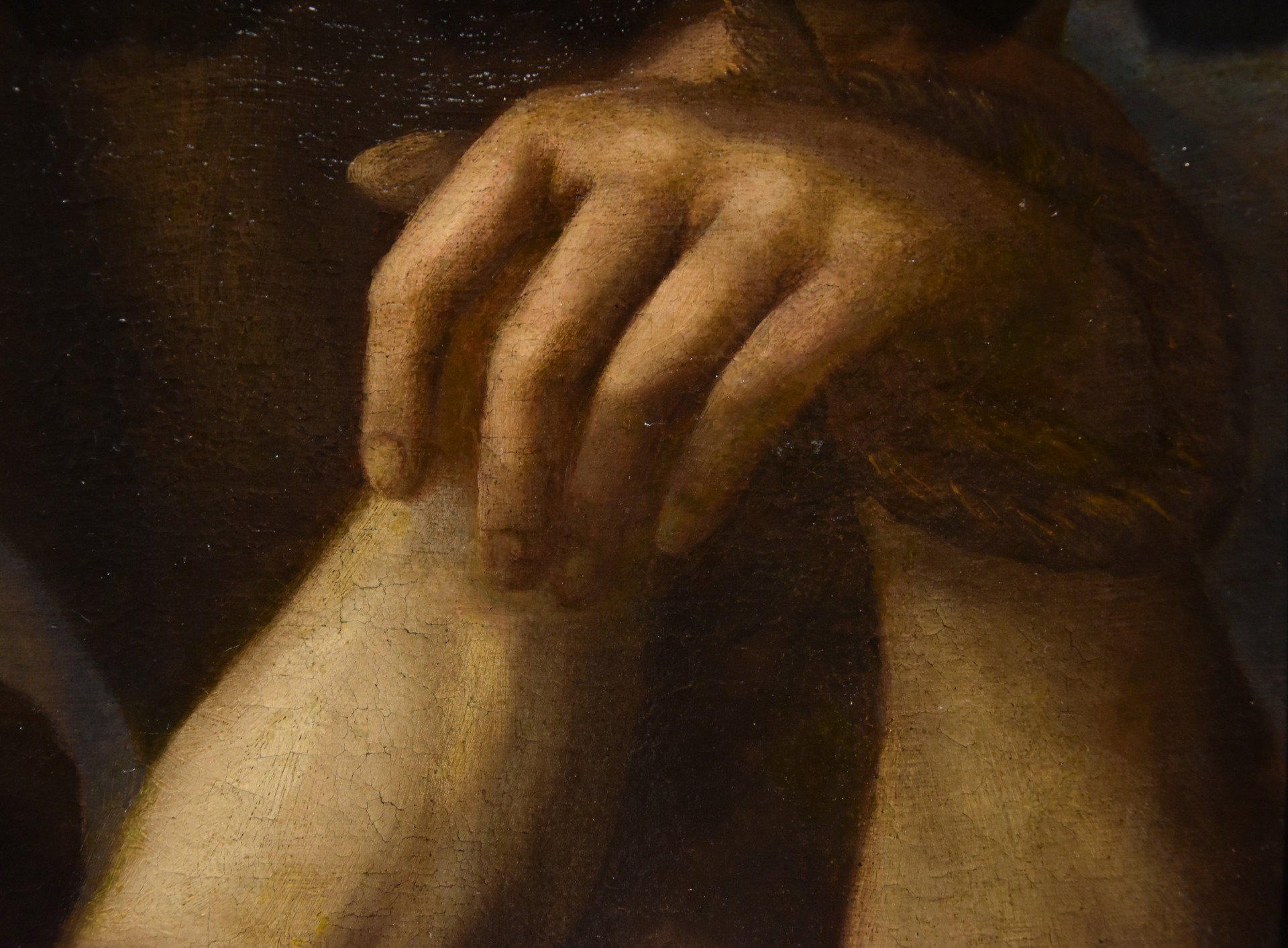
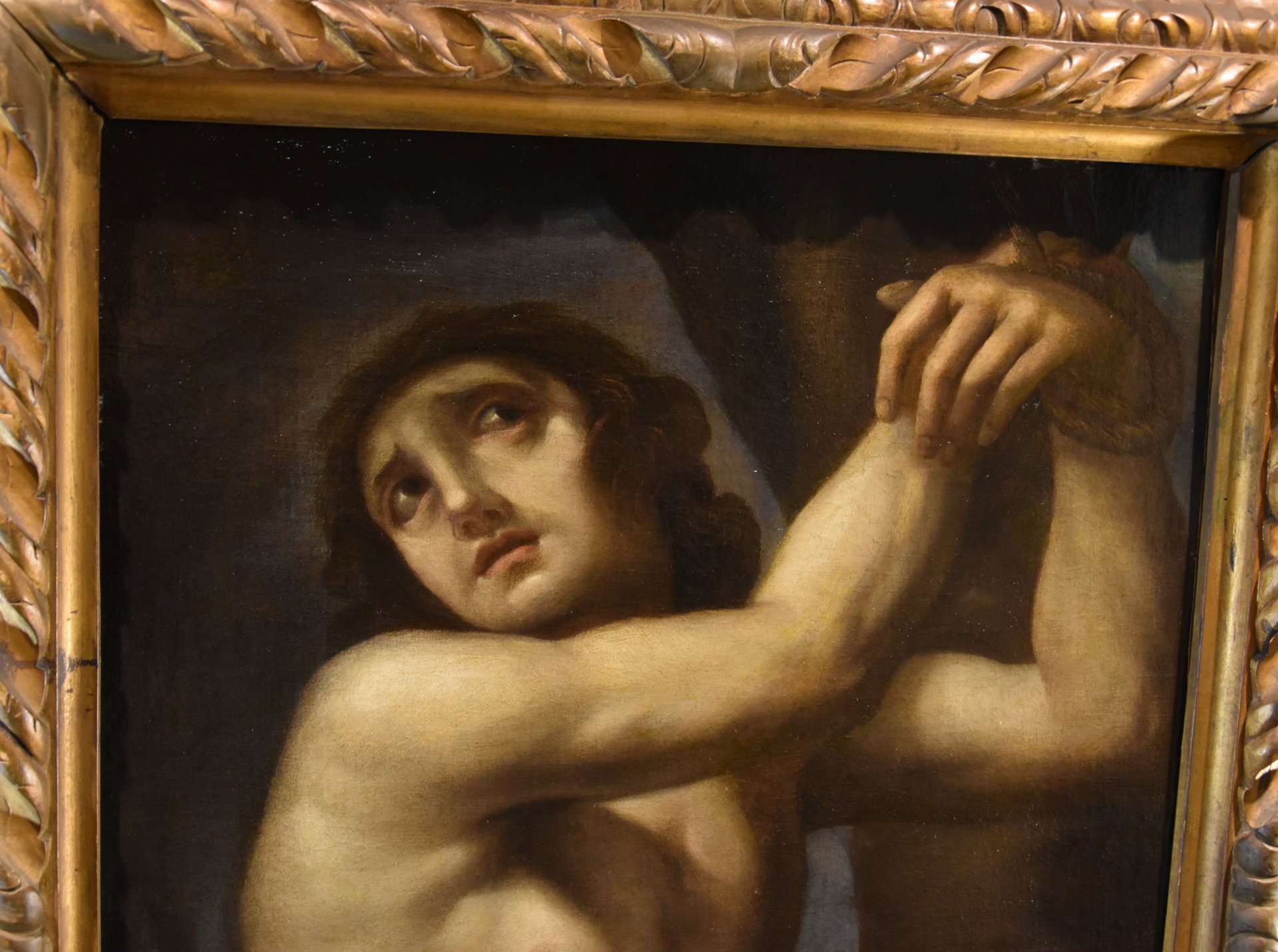
Immortalized at the moment of his martyrdom, following the death sentence inflicted on him by Diocletian, the Saint is depicted here with great realism: the scene, faithful to the classical iconography, portrays him tied to the trunk of a tree, with his hands joined and raised above his head, and suffering with an arrow piercing his flesh.
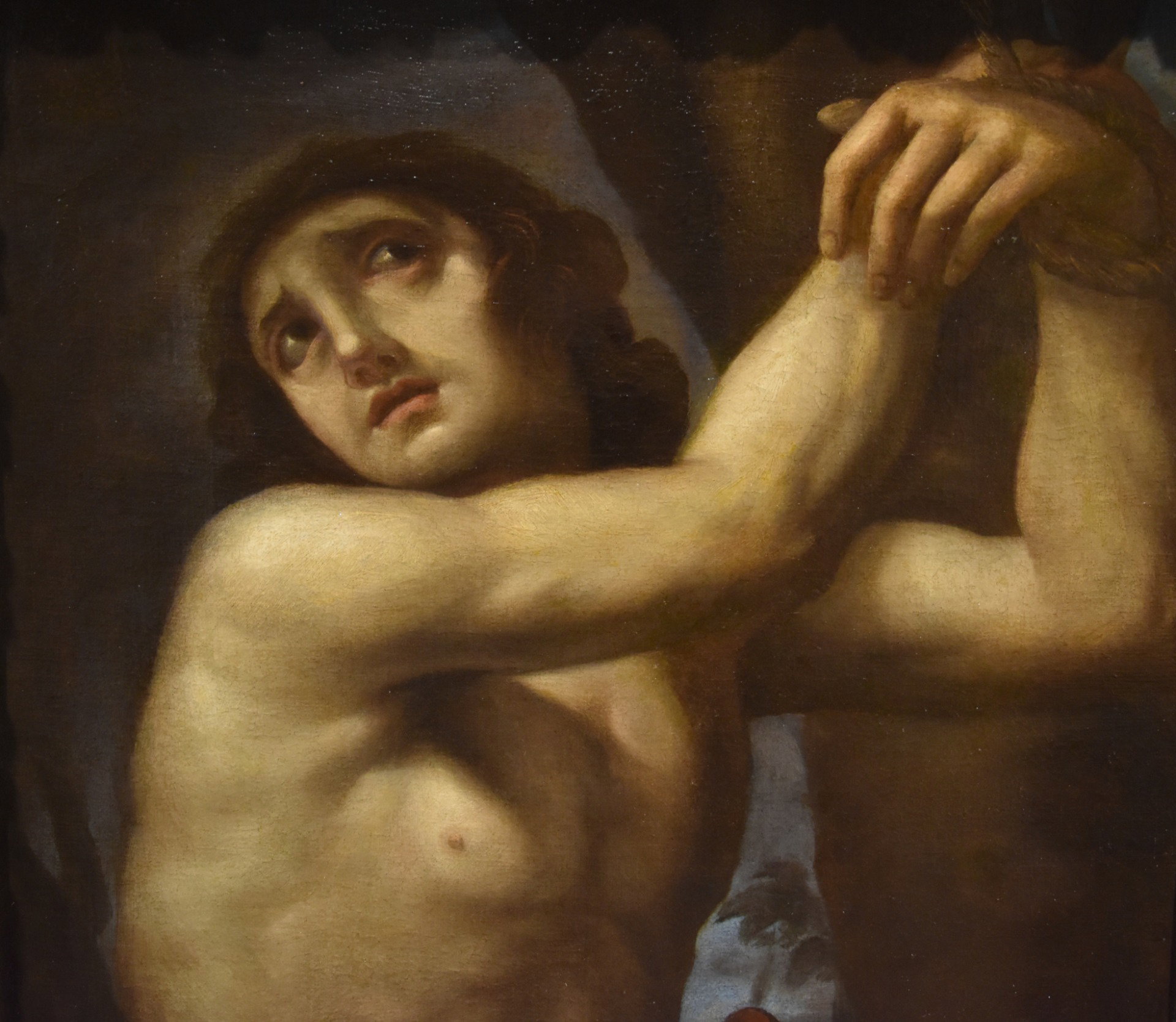
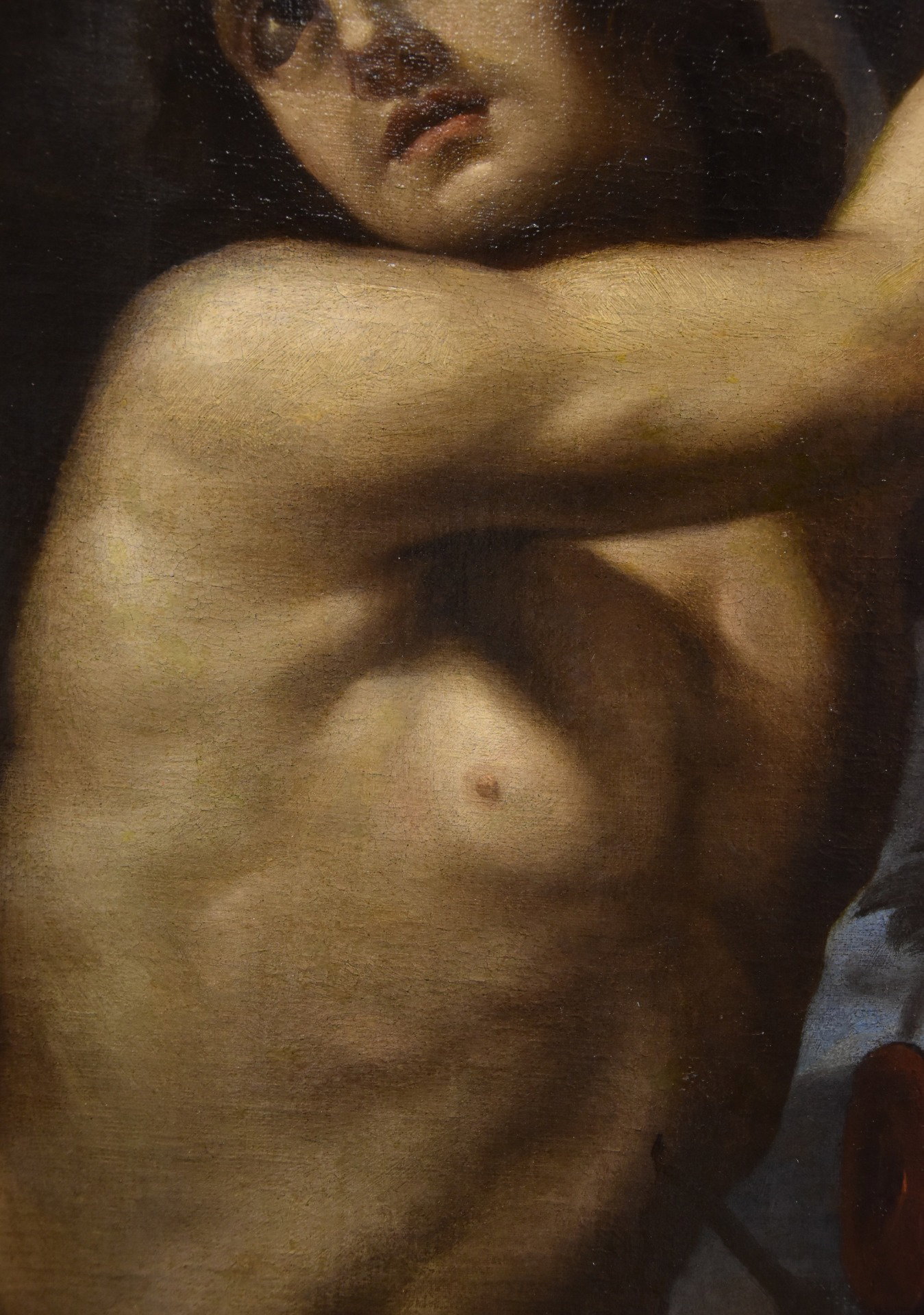
The composition focuses attention on the muscular anatomy of the Saint and on his expression: often depicted as a beautiful naked young man with a light drape around his hips, he became in the Renaissance and Baroque a pretext for artists to represent the aesthetic ideal of the male body. More than a suffering martyr, he sometimes appeared as a classical hero, with an "equivocal charm" that made him particularly captivating for art connoisseurs.
Although the traditional iconography requires that he be pierced by arrows, in this specific painting only one is visible. The focus is entirely on the emotional expression and on the anatomical rendering of the body, struggling between life and death.
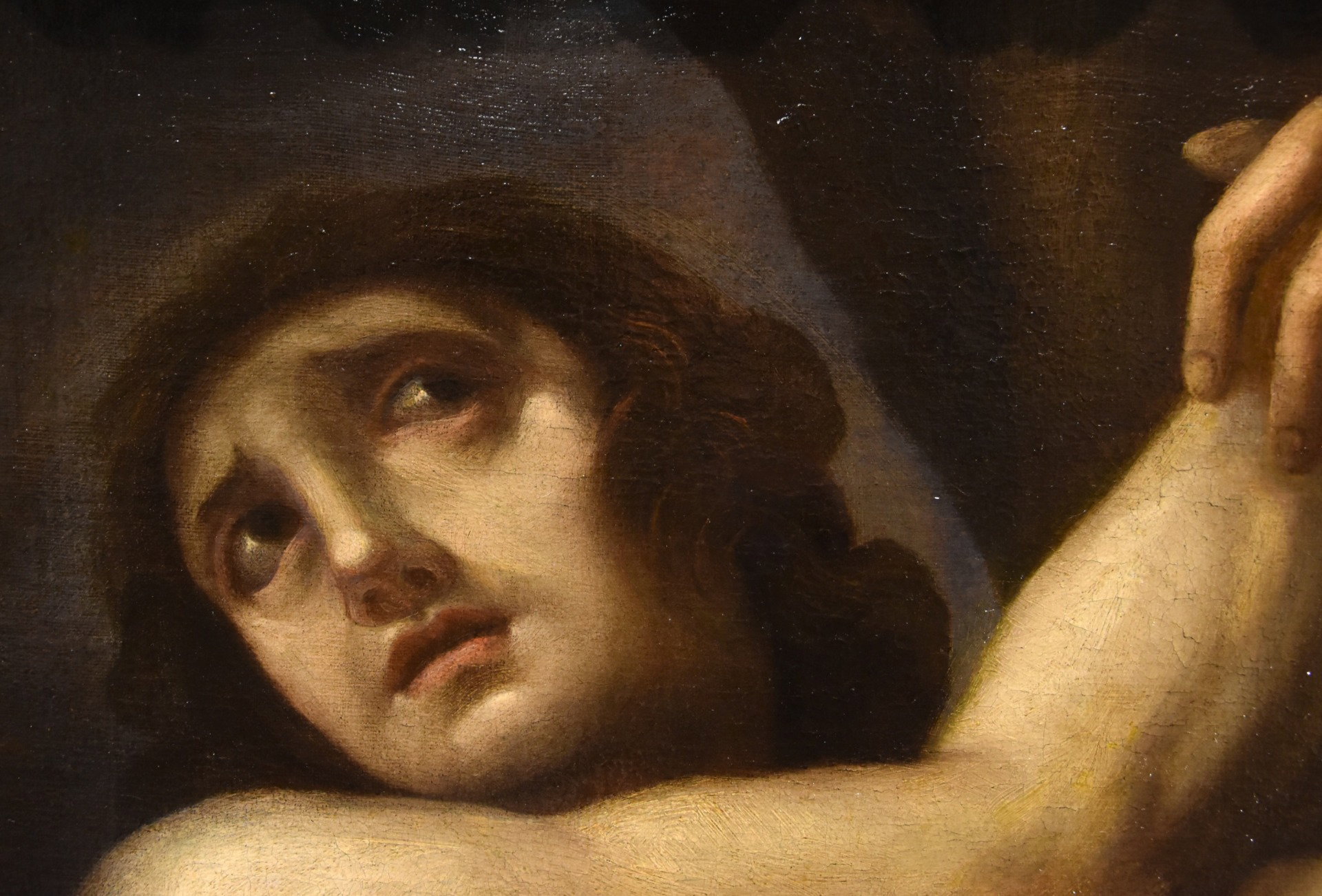
The intensity that transpires from his body is of great emotional impact, illuminated by a powerful light that highlights his figure and illuminates his body and face with his eyes turned to the sky, in an ardent sentimental expression of dramatic anticipation;
The marked realism leads the paternity back to the Lombard school of painting of the early seventeenth century, an extraordinarily happy artistic period which, precisely in the first half of the century, saw a host of excellent artists succeed each other, making Milan in every respect one of the nerve centers and most influential of Italian painting of the time.
The characteristics of the canvas, and in particular the physiognomic traits of the face distinguished by a strong phatos, are elements that recall the style of Daniele Crespi (Busto Arsizio 1598 – Milan 1630), one of the greatest exponents of the Milanese seventeenth century, with a pictorial manner that seems to progressively detach itself from the still Mannerist current in vogue, towards a classicism of Carraccian matrix.
ADDITIONAL INFORMATION:
The images were created using a photographic set and professional lighting.
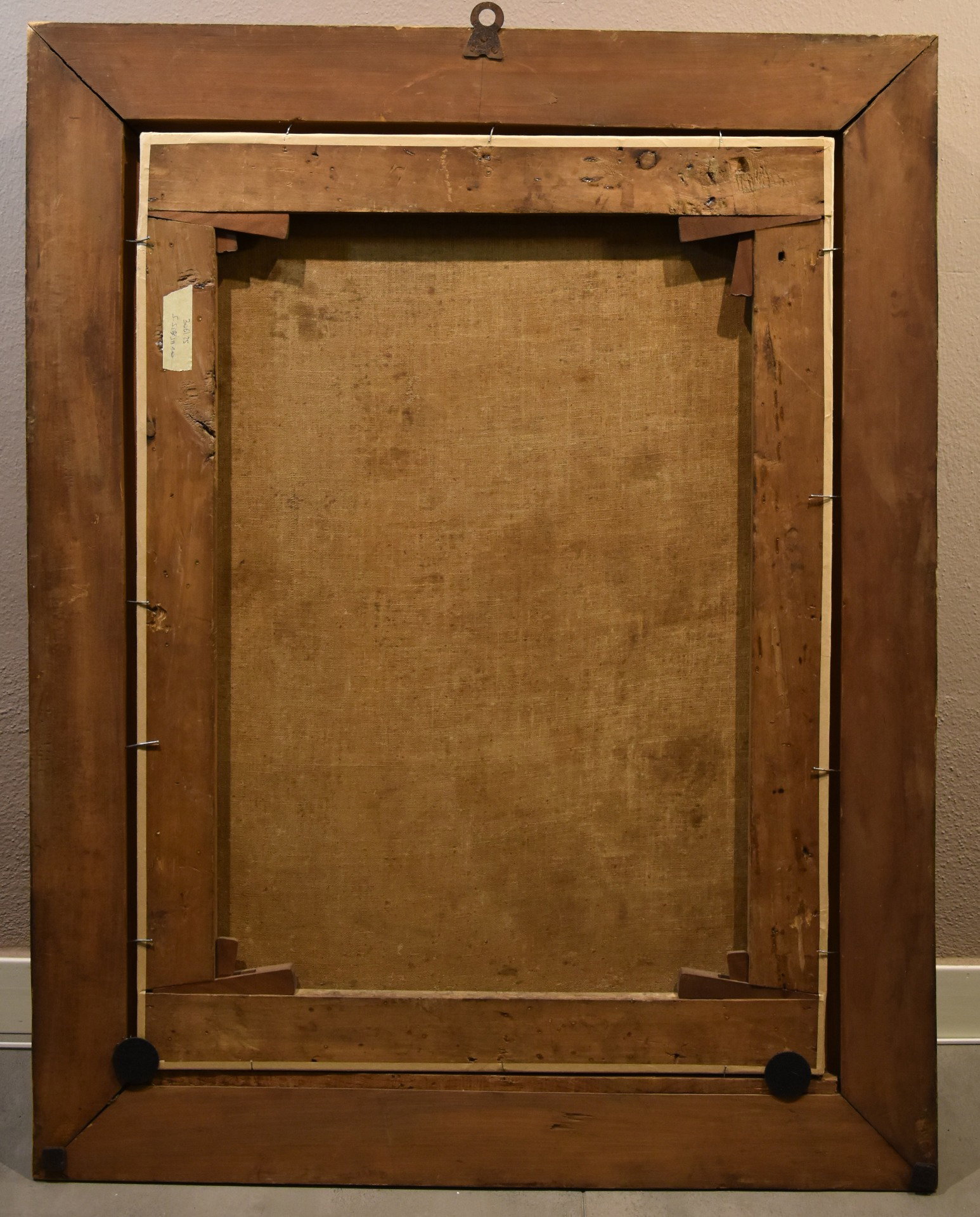
The work is sold complete with a pleasant frame and is accompanied by a certificate of authenticity and descriptive iconographic sheet.
We take care of and organize the transport of purchased works, both for Italy and abroad, through professional and insured carriers.
In case of purchase of the work by non-Italian customers, it will be necessary to obtain an export permit which takes about 10/20 days, our gallery will take care of the entire phase until it is obtained. All costs of this procedure are included.
It is also possible to see the painting in the gallery in Riva del Garda, we will be happy to welcome you to show you our collection of works.
Contact us, without obligation, for any additional information.
Follow us also on :
https://www.instagram.com/galleriacastelbarco/?hl=it
https://www.facebook.com/galleriacastelbarco/