17th-century Lombard School
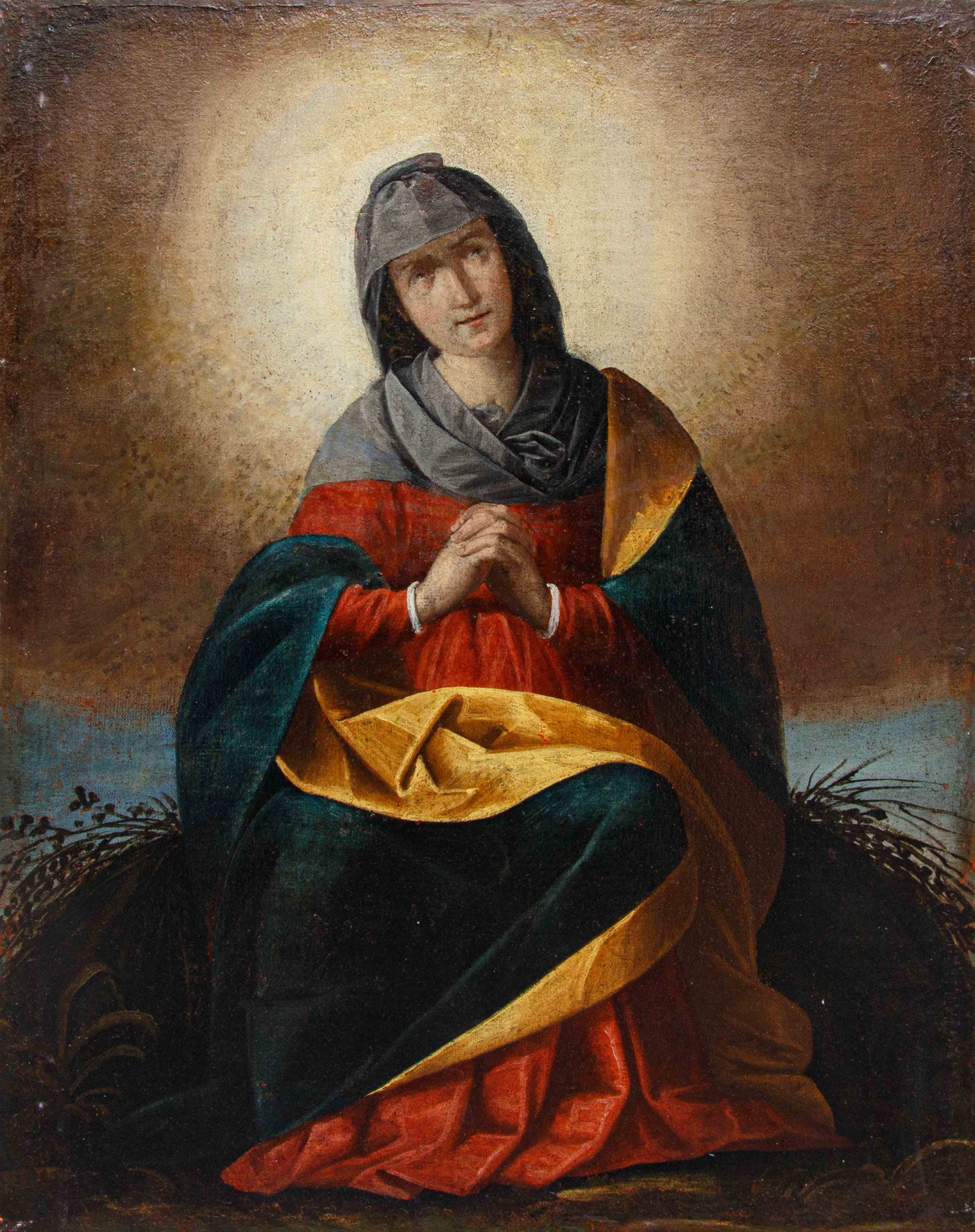
Praying Madonna
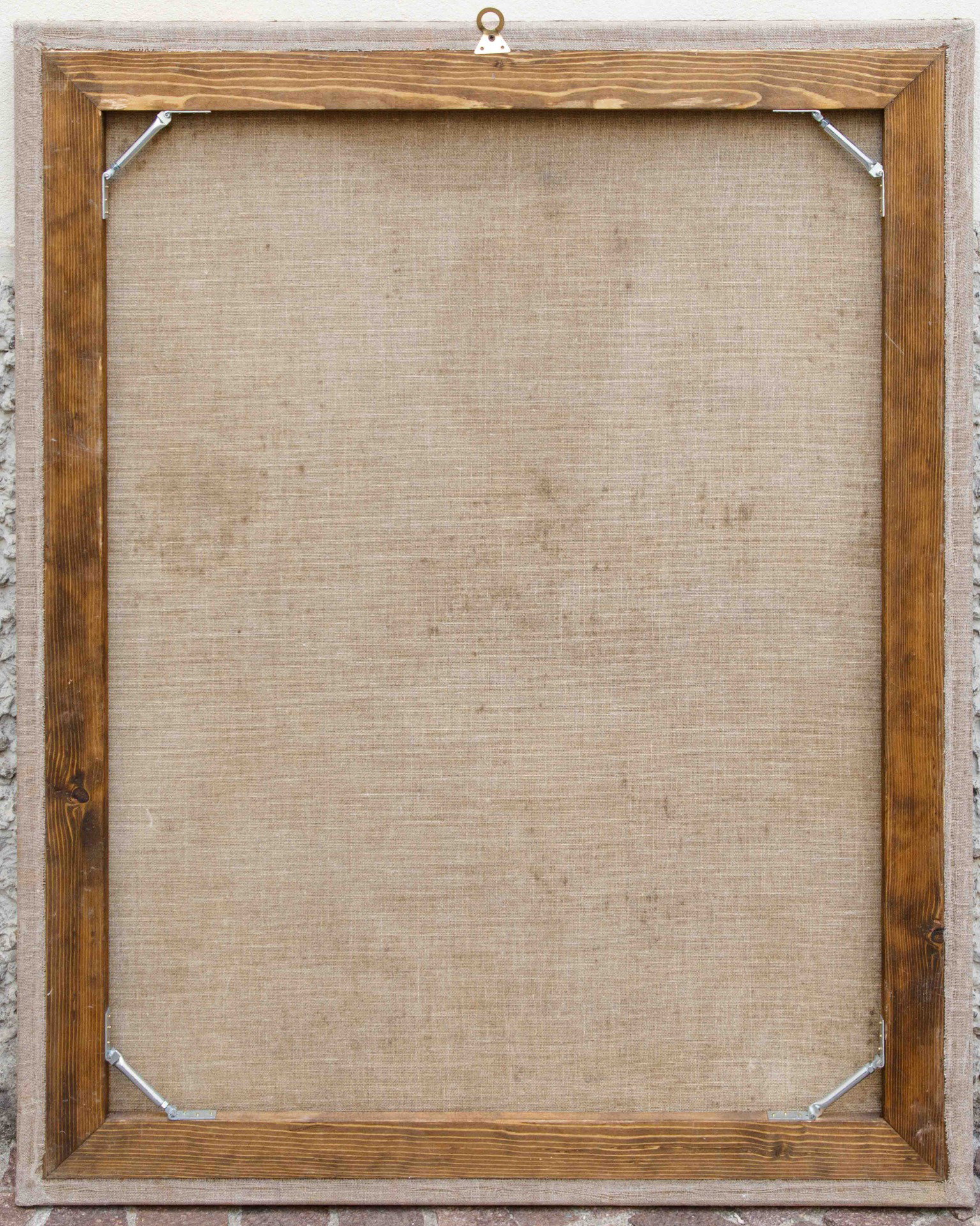
Oil on canvas, 95 x 75 cm
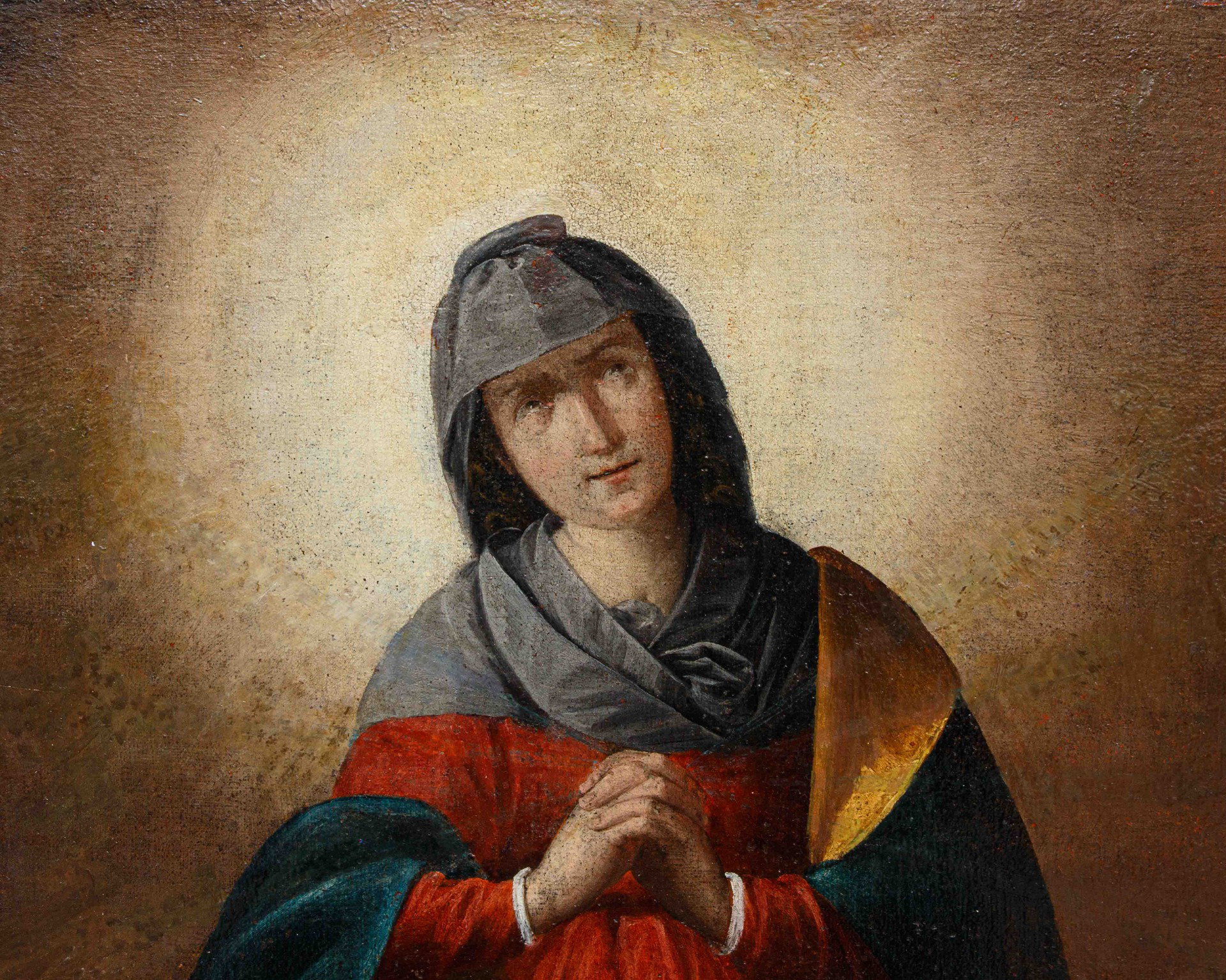
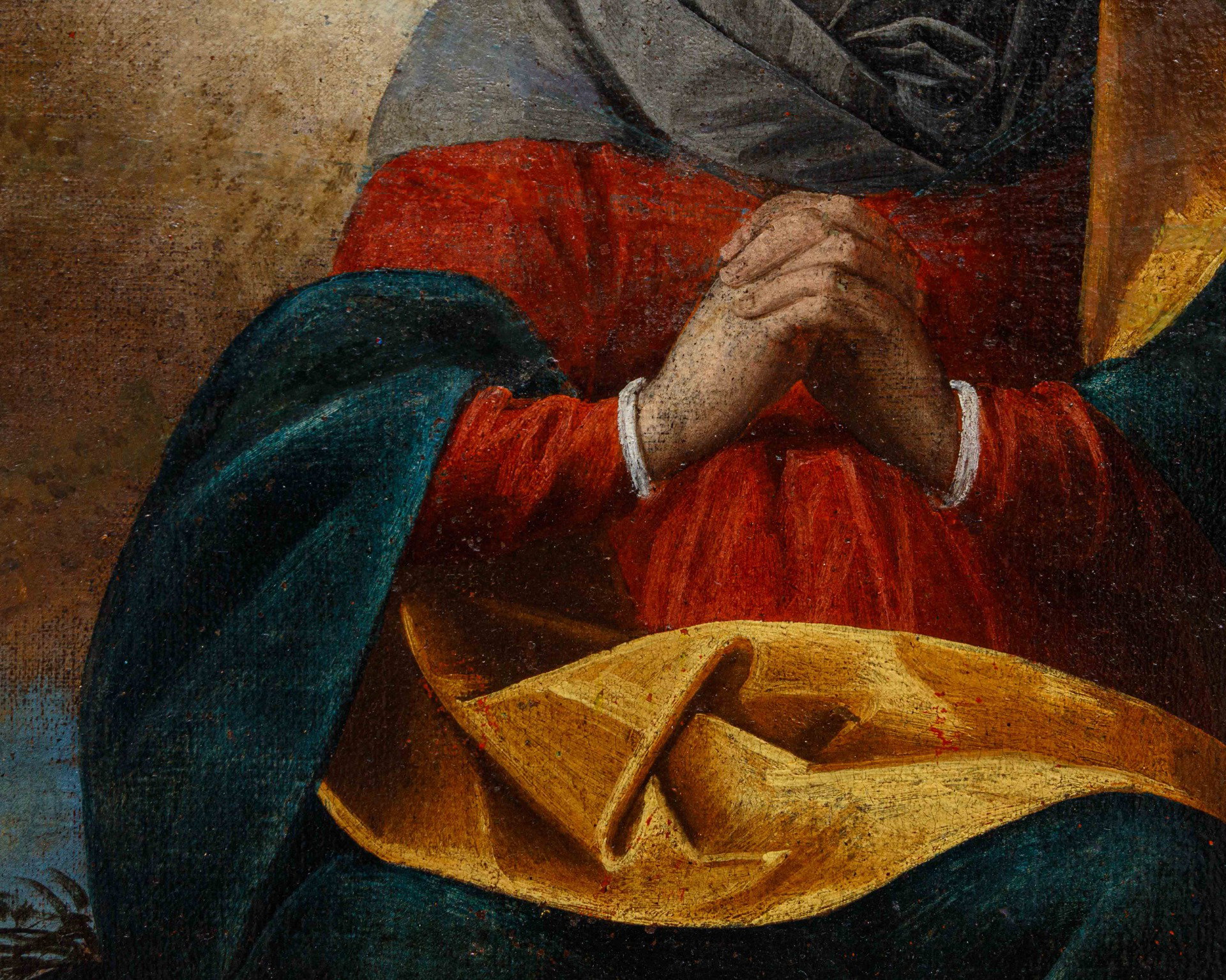
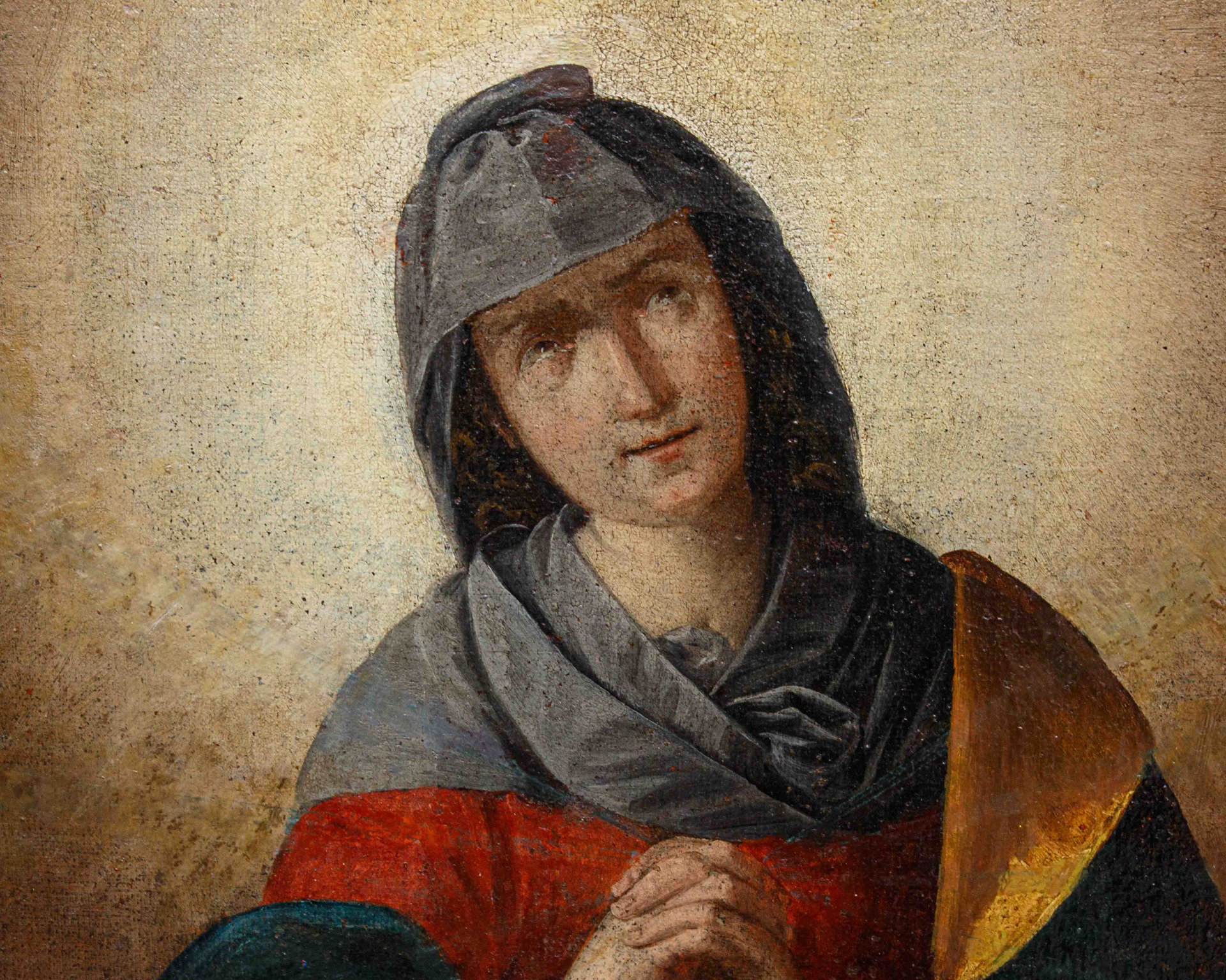
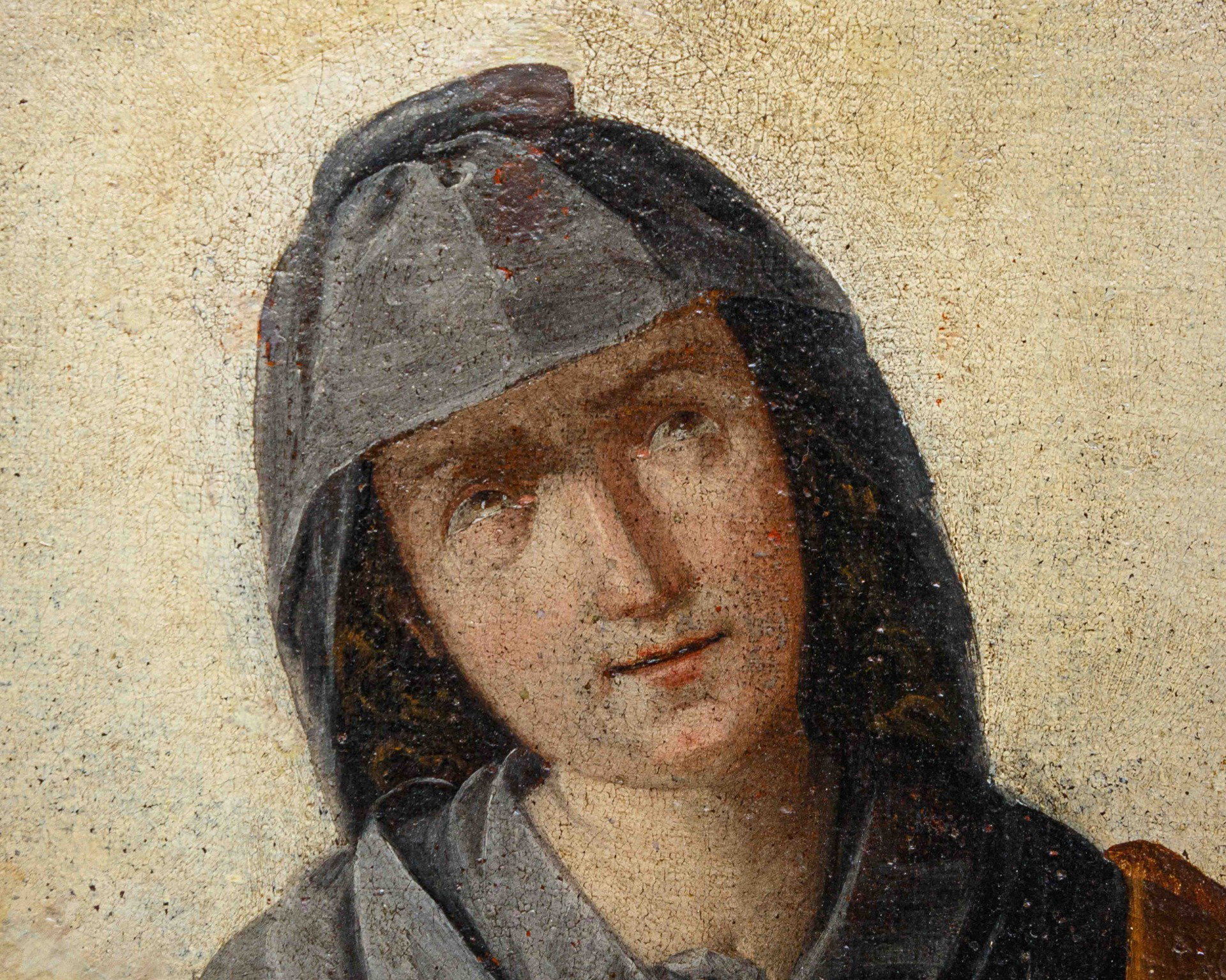
The painting depicts the Virgin Mary kneeling in prayer, enveloped in a divine aura of light. The work features stylistic elements that place it within the 17th-century Lombard School, with particular references to the style of Pier Francesco Mazzucchelli, known as Il Morazzone (1573-1626).
17th-century Lombard painting is characterized by intense emotional drama and a deep adherence to the dictates of the Counter-Reformation, which emphasized devotion and meditation. This current, influenced by the teachings of Saint Charles and Federico Borromeo, aimed for a representation that was both realistic and spiritually elevated.
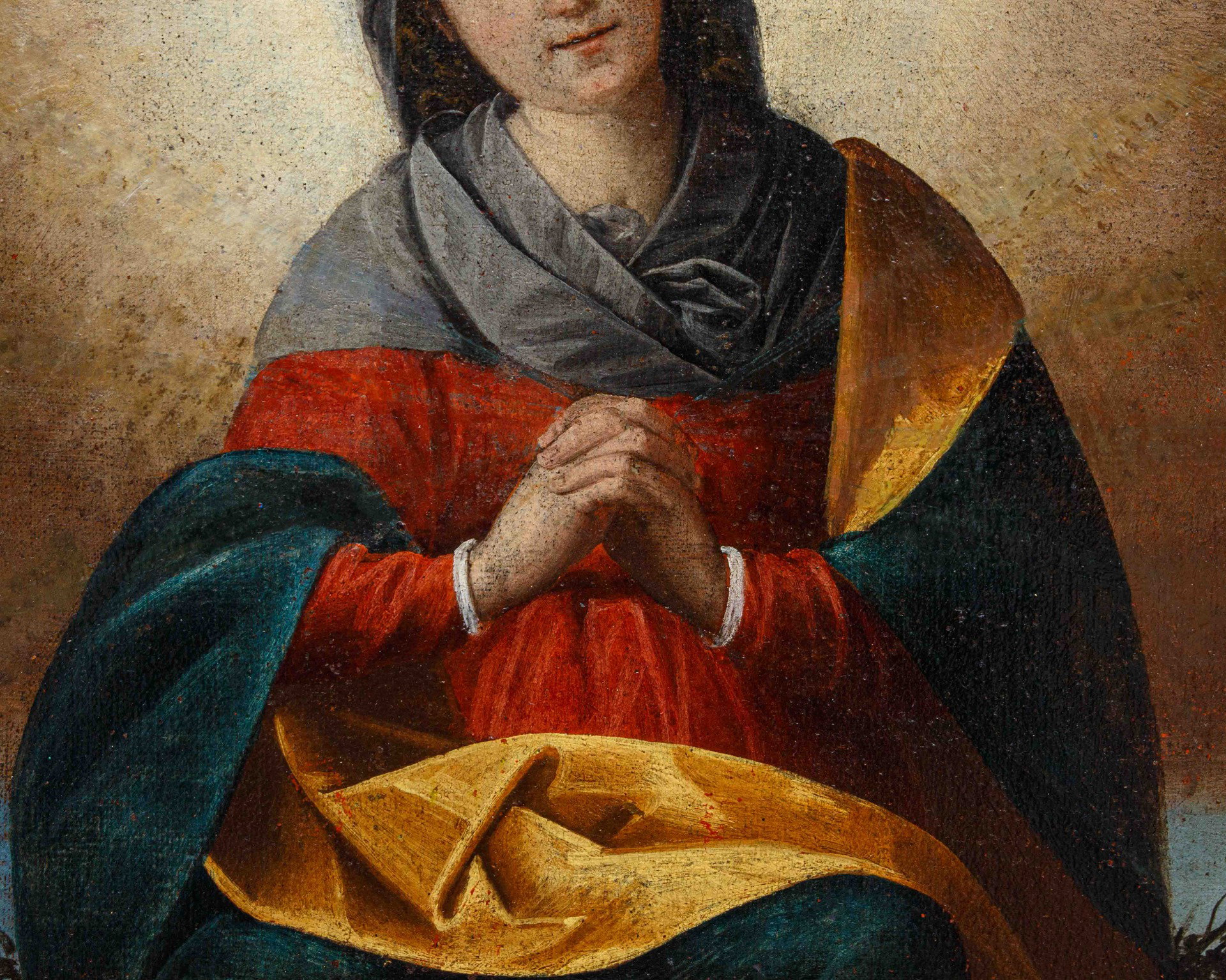
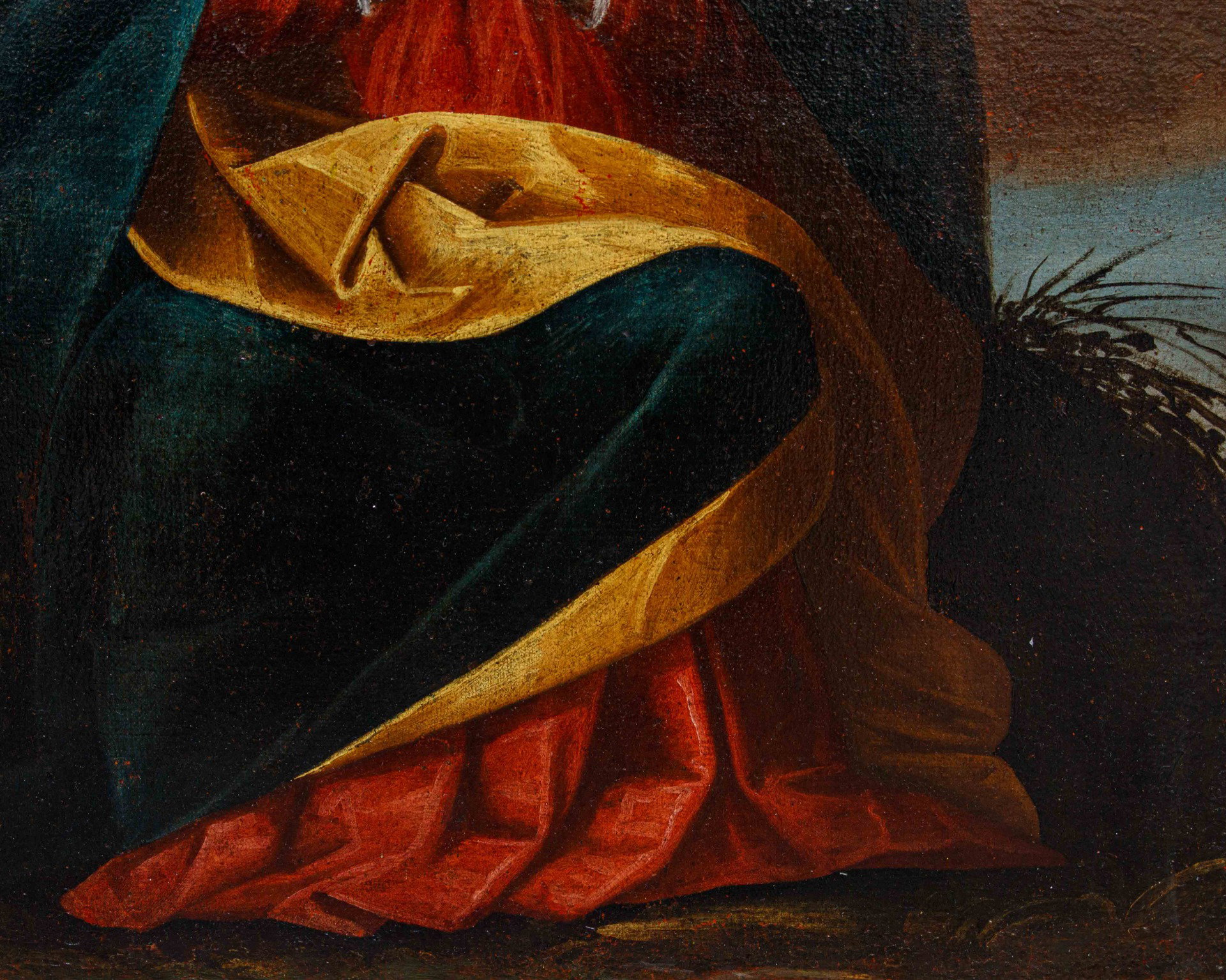
Lombard painters of this period (such as Morazzone, Cerano, and Giulio Cesare Procaccini, often referred to as the trio of the Plague Painters) combined a legacy of Mannerism (visible in the dynamic composition and iridescent colors) with a nascent naturalistic and Baroque sensibility. Powerful and sometimes "tenebristic" lighting effects were sought, creating an atmosphere of mystical fervor and emotional torment, while the colors are often rich and deep, used to enhance the drama of the scene in contrast to the shadows.
The work can be considered an example of the diffusion and reinterpretation of Morazzone's compositional and stylistic ideas within the early 17th-century Lombard school, a period when sacred painting reached heights of intense emotional and spiritual involvement.
The use of decisive, almost angular folds that energetically define volume (as seen in the red, blue, and yellow garments) is a distinctive stylistic characteristic of Morazzone, reflecting his Roman experiences (such as those with Ventura Salimbeni and Giuseppe Cesari, known as Cavalier d'Arpino).