Pompeo Massani (Florence, 1850 - 1920)
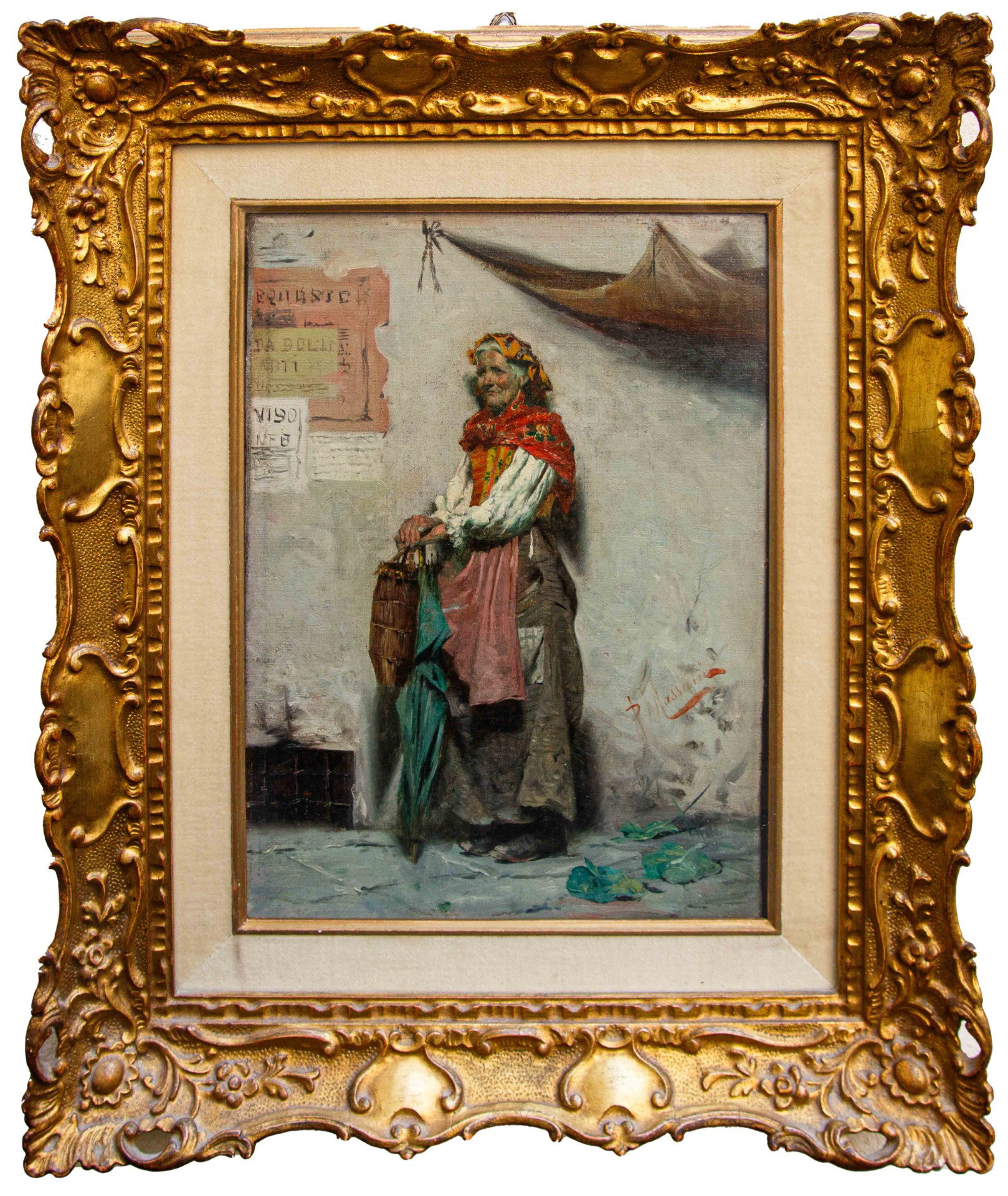
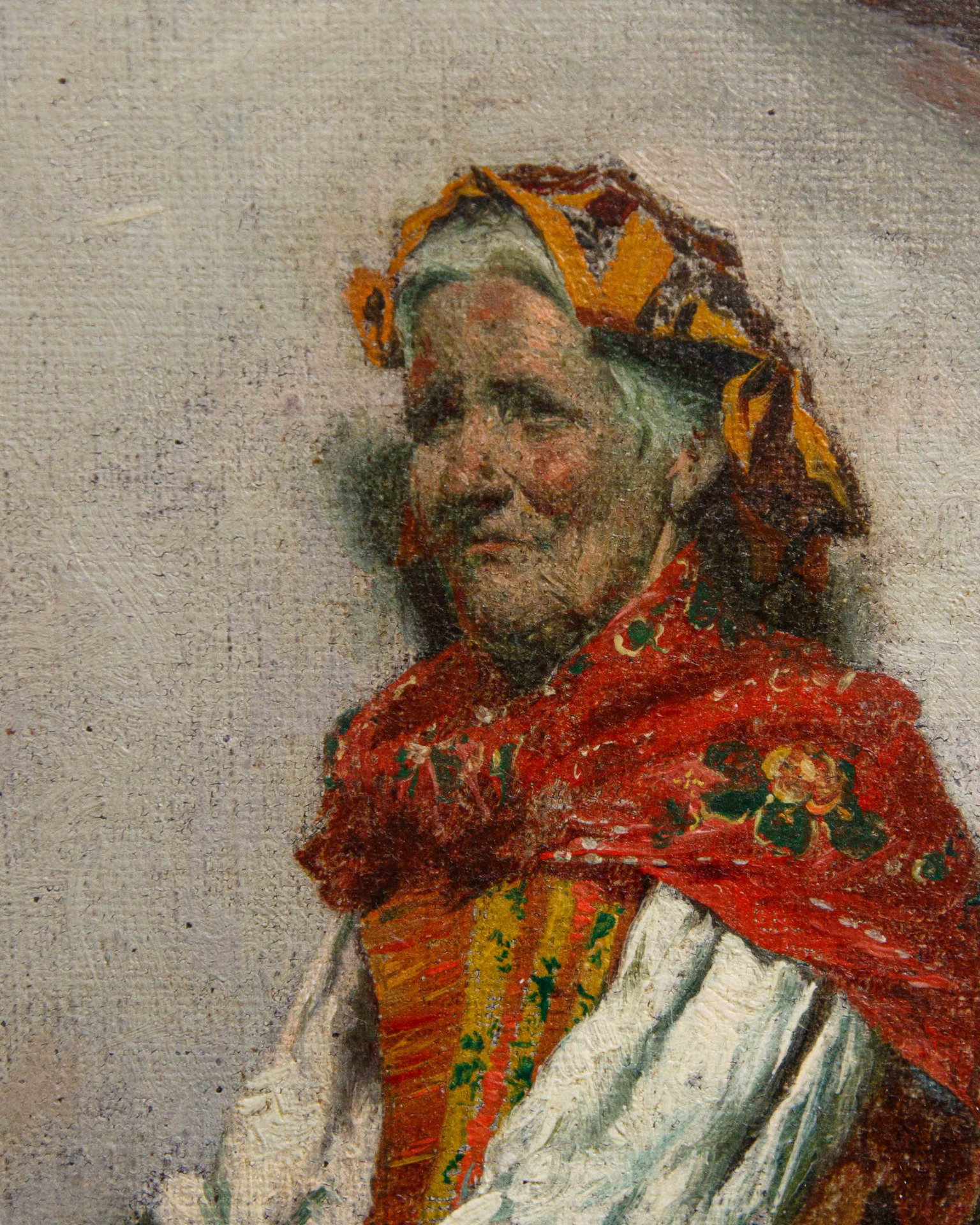
Elderly commoner
Oil on canvas, 31.5 x 22 cm
With frame, 47.5 x 38 cm
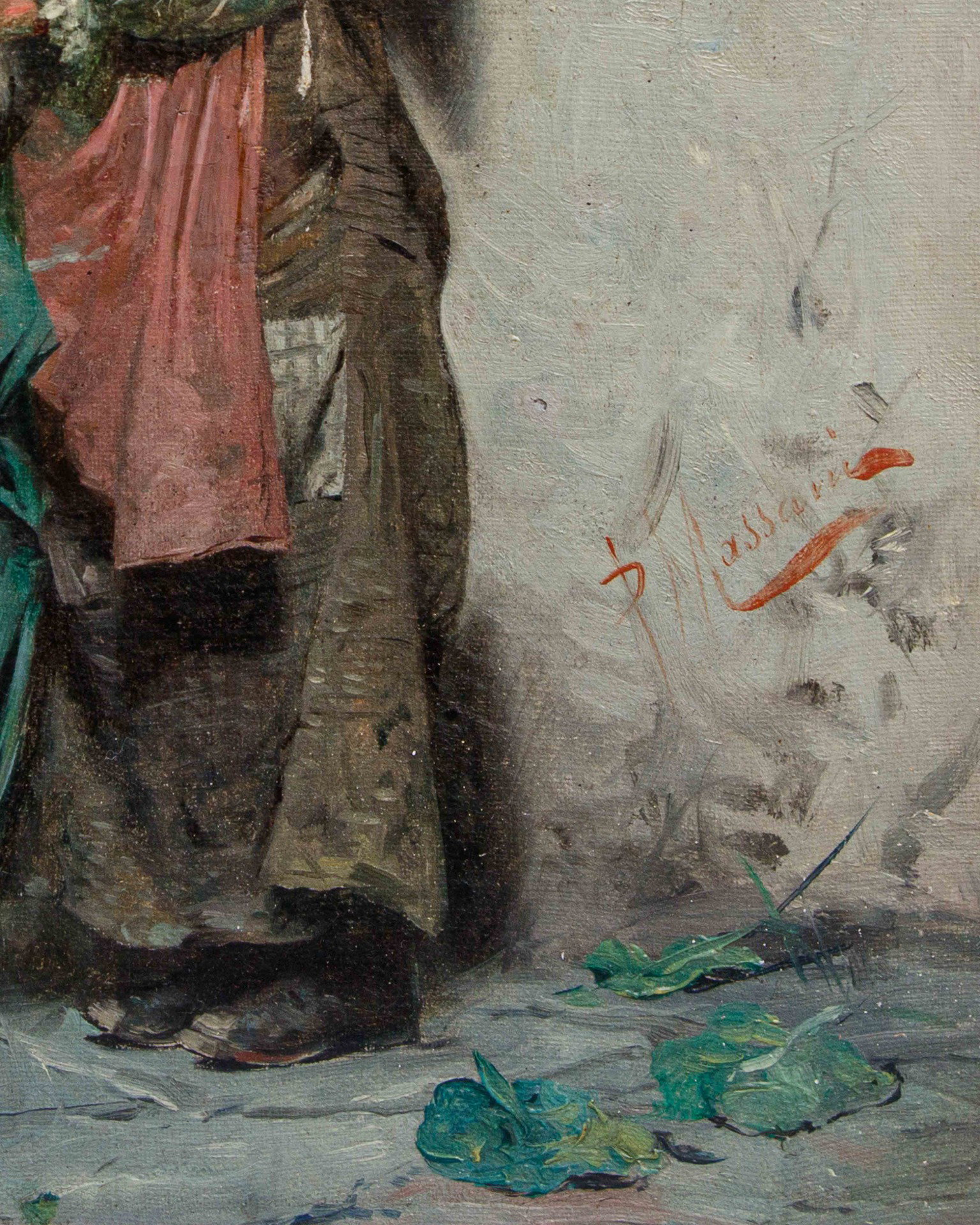
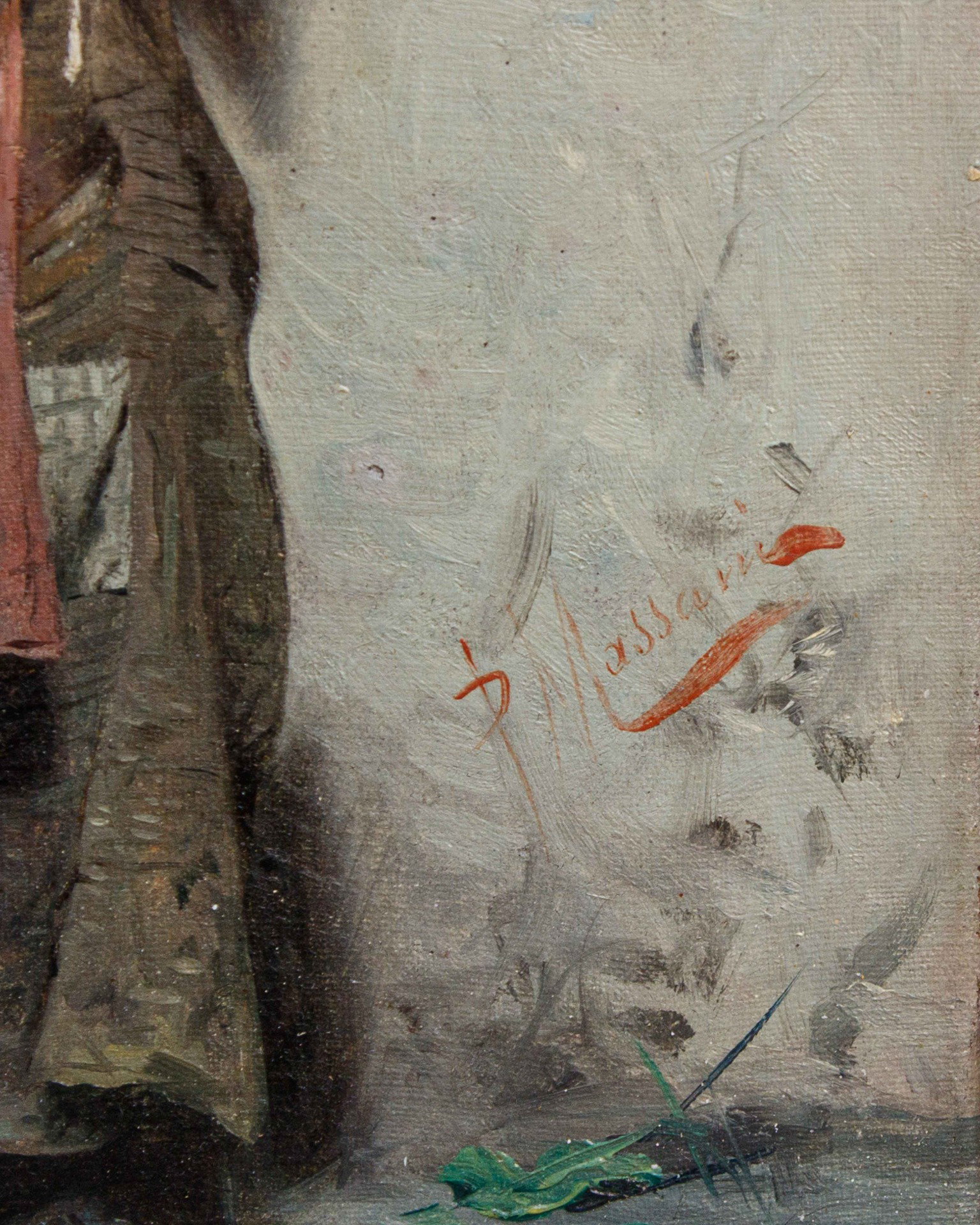
Signed on the lower right
Pompeo Massani (Florence, December 1850 – August 25, 1920) was an Italian painter who distinguished himself in the artistic scene of his time for his genre painting, often characterized by a touch of irony and a particular attention to the costumes of the era. His career, entirely linked to the city of Florence, saw him emerge as a prominent figure and, subsequently, as an esteemed academic. His artistic training took place at the Academy of Fine Arts in Florence, an environment that provided him with the technical and cultural foundations to develop his talent. Crucial was also the three-year period spent in the studio of the painter Michele Gordigiani, an experience that certainly contributed to refining his technique and directing him towards portraiture and figure painting. A Portrait of Michele Gordigiani at the easel is now preserved in the Gallery of Modern Art of Palazzo Pitti, a testimony to his bond with the master. Massani first made himself known to the public in 1875, exhibiting a Portrait at the Society for the Encouragement of Florence. His success grew rapidly, and works such as Politics in the rectory (1879), which earned him a silver medal at the Rovigo Exhibition, and A toast to the friar (1881), awarded in Genoa, consolidated his reputation. Pompeo Massani's style is strongly linked to genre painting, with a predilection for scenes that depict daily life, often set in bourgeois or popular interiors, with costumed characters. His works are animated by keen observation and an ability to capture expressive details, often with a narrative and sometimes satirical slant. He loved to depict elderly people, immersed in moments of seemingly comical or celebrated lightheartedness, such as scenes of drunkenness or card games. This humorous and good-natured vein earned him widespread popularity both in Italy and abroad, particularly in the American market. In addition to genre scenes, Massani was also an appreciated portraitist, executing, among others, the portrait of Vittorio Emanuele II and the Countess of Mirafiore. He also engaged in delightful "from life" panels, showing a taste that at times recalled the post-Macchiaioli experiences, and occasionally dedicated himself to Orientalist subjects. His career was marked by official recognitions: in 1887 he was awarded the Cross of Knight of the Order of the Crown of Italy by King Umberto, and was appointed Honorary Professor of the Academy of Fine Arts in Florence. He also actively participated in the organization of cultural events, such as the historical ball and the festivities during the May celebrations of 1887 in Florence. Among his most famous works, in addition to those already mentioned, are Equestrian Circus (exhibited in Munich in 1889), The grand round (sold in Boston), The drawing lesson (purchased by the Goupil house in Paris), The old bachelors, A card game, The concert, In the cellar and The greeting to the hunchback. His ability to create paintings rich in anecdotes and to capture daily life with an eye attentive to the customs of the time has made his works highly sought after on the art market, guaranteeing him constant and lasting success. Pompeo Massani died in his hometown of Florence in 1920, leaving an artistic legacy that testifies to his role as an acute and amused interpreter of the society of his time.
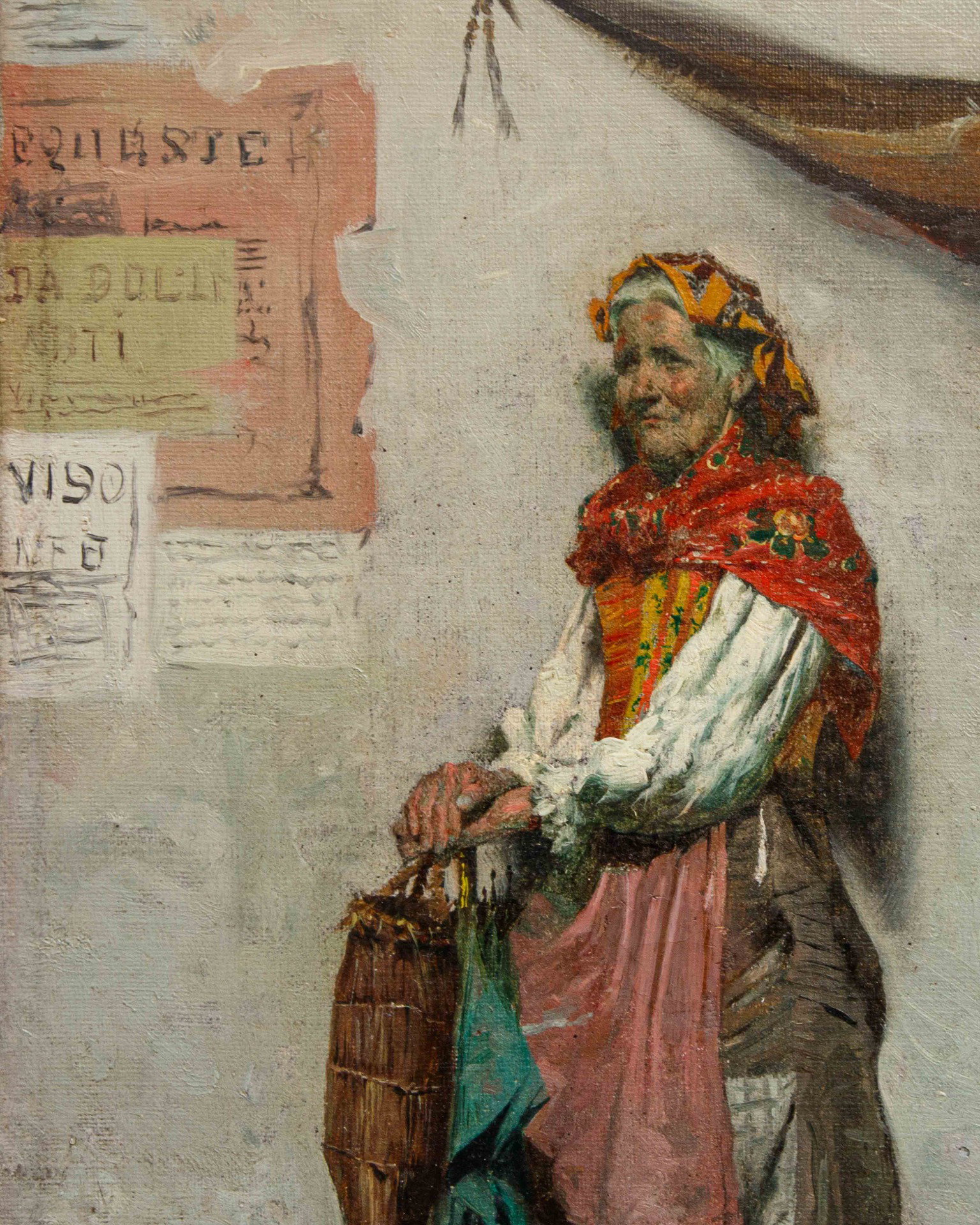
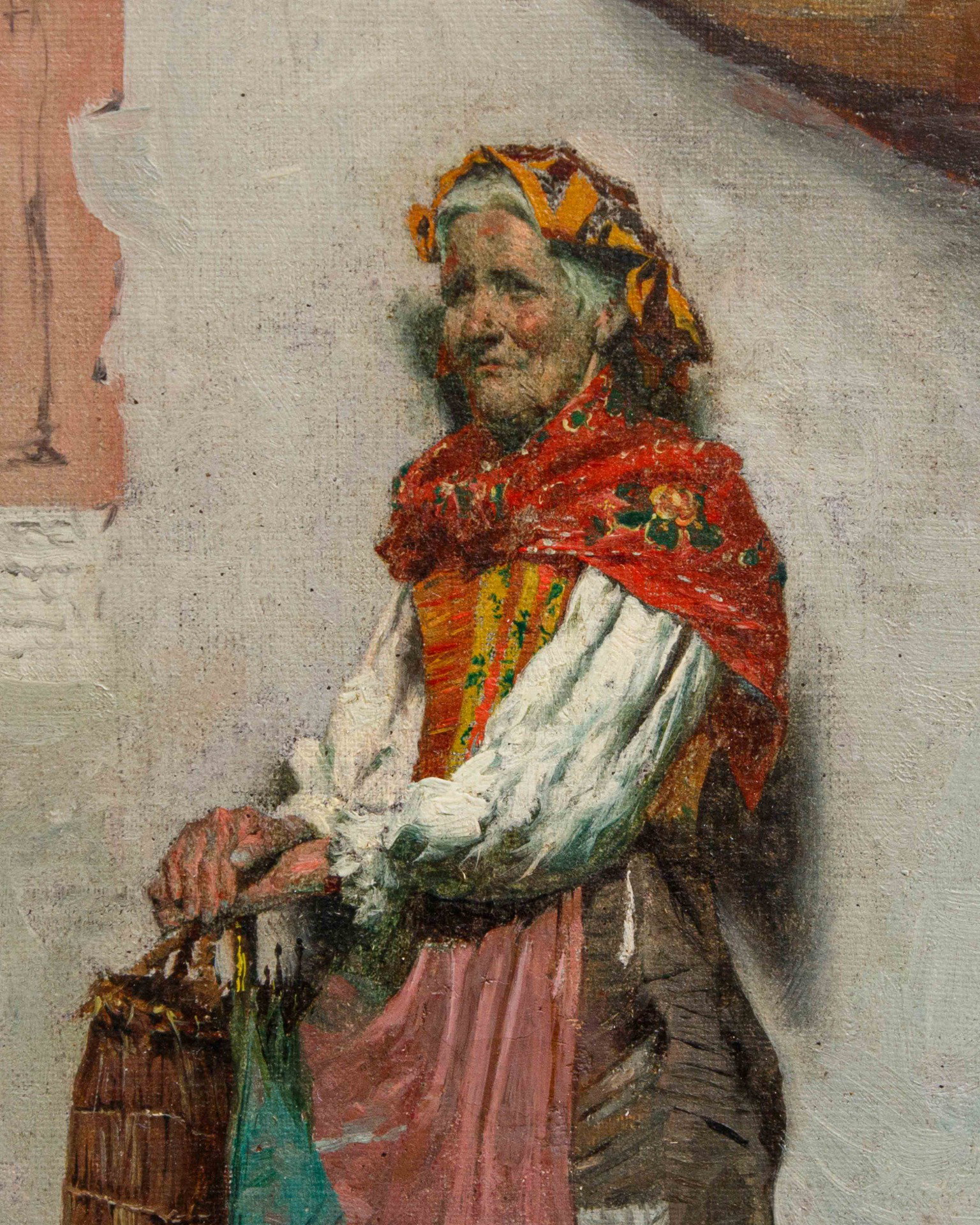
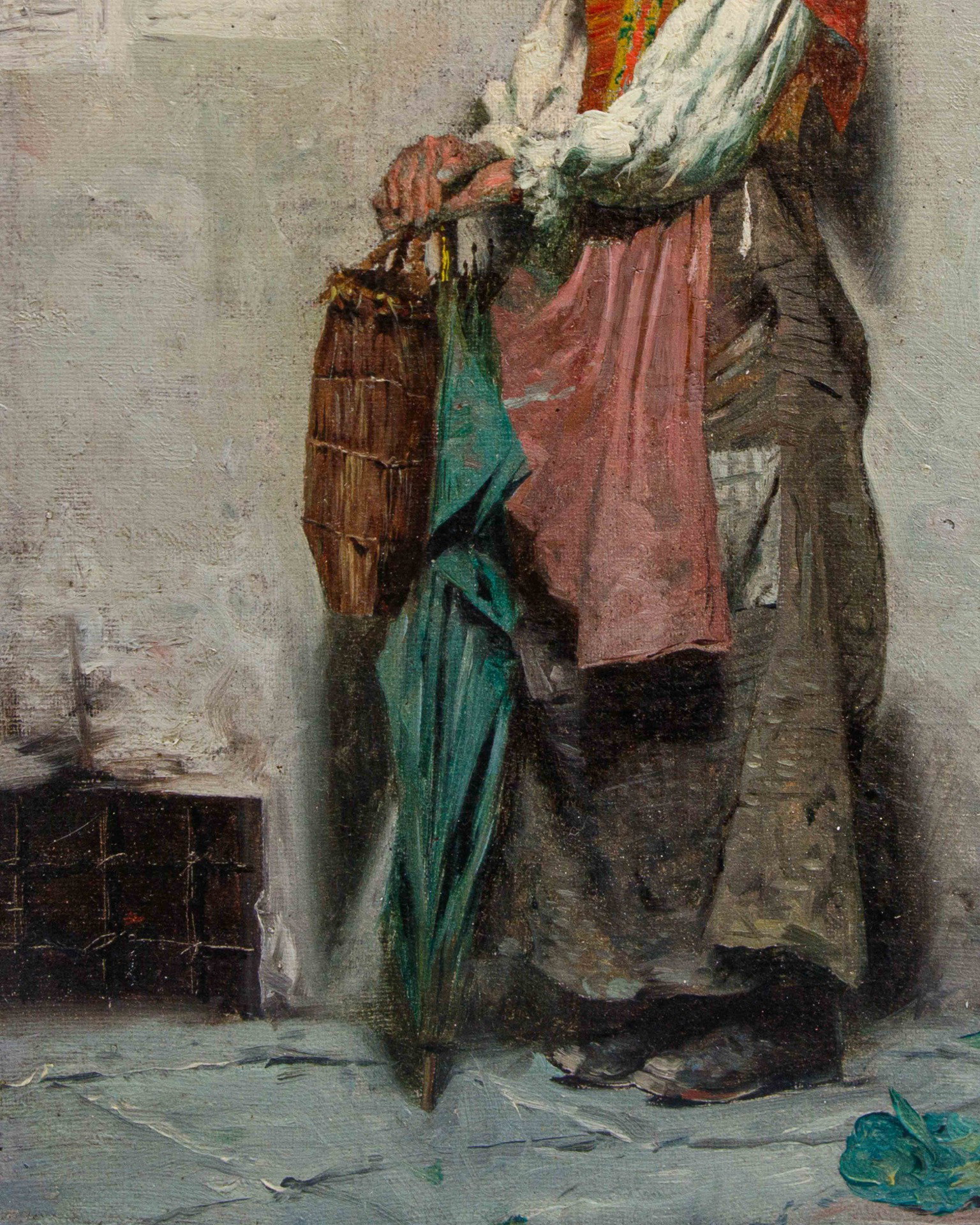
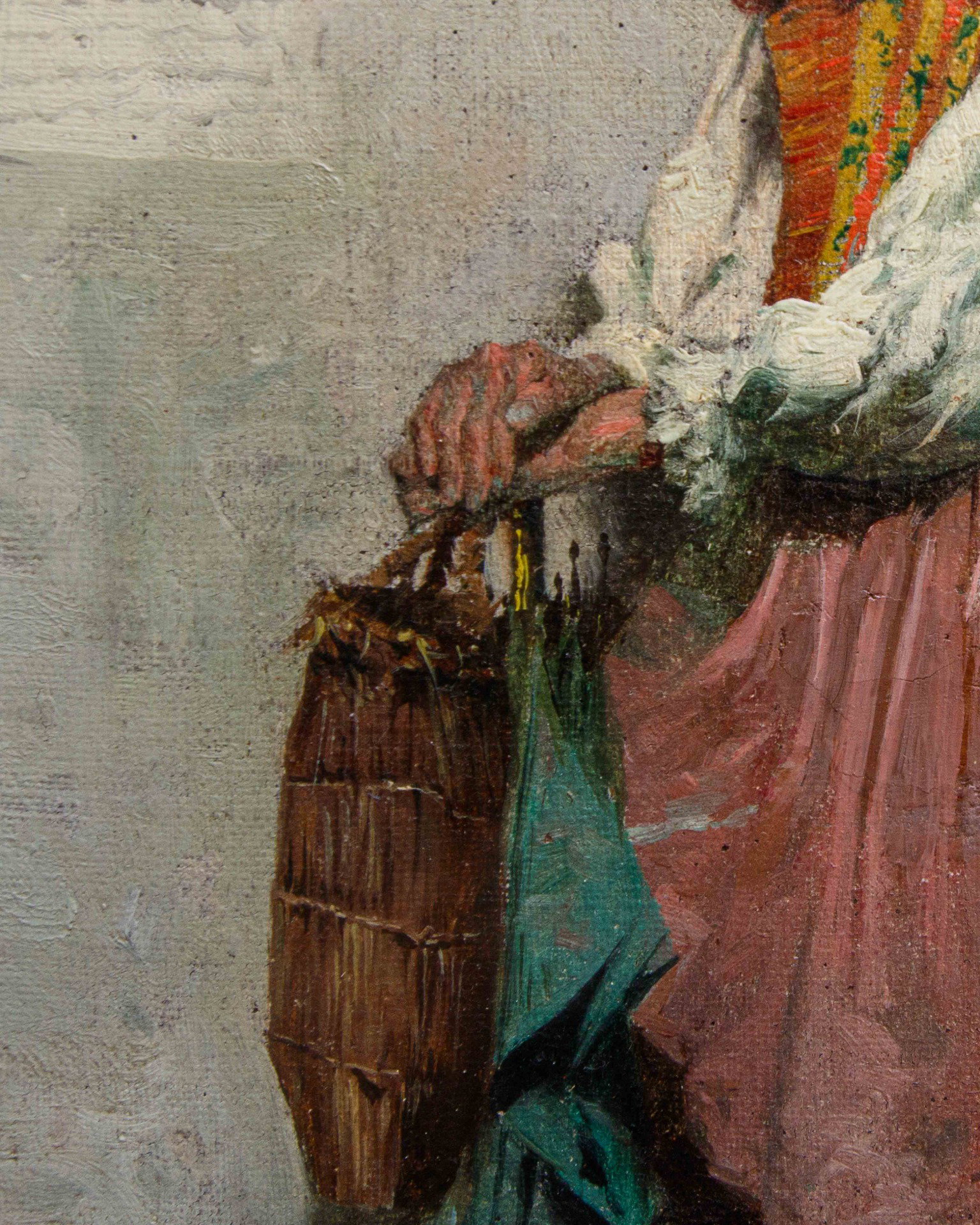
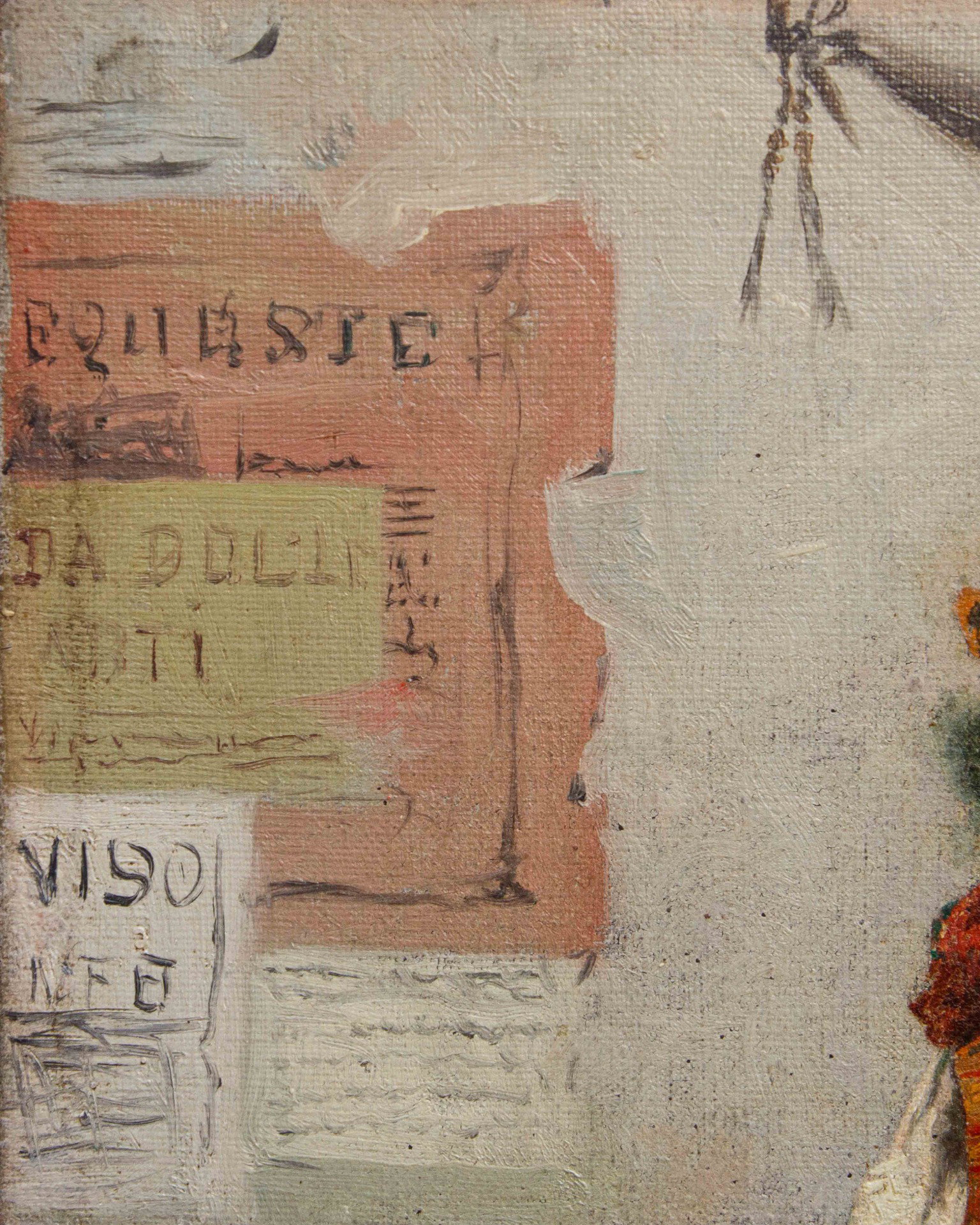
The painting in question presents an elderly female figure, presumably a commoner or a beggar, standing and leaning against a rough wall. The work is an excellent example of Massani's style, characterized by attention to detail and the representation of daily life, often with a touch of realism and dignity. The woman is the focal point of the composition. Her face is marked by time, with deep wrinkles that testify to her advanced age. Her gaze is directed towards the observer, with an expression that seems a mixture of resignation and dignity. On her head, she wears a brightly colored scarf, predominantly yellow and orange, which contrasts with her aged skin. Her clothing is traditional and modest: she wears a white shirt with wide sleeves, covered by a colored bodice or vest, with shades of red and yellow that add a touch of vibrancy. On her shoulders, she has a red shawl, full of folds and details that suggest an elaborate fabric. A pale pink apron covers the front of her skirt, which appears in a gray-brown color, with a worn and patched appearance. Next to her, on the left, she also holds a wicker basket, an element aimed at distinguishing popular figures or street vendors. On the wall that serves as a background, there are some torn and illegible posters, which add a sense of authenticity and street life. Massani uses a visible and material brushstroke, especially in the rendering of the clothes and the background, which gives texture and depth to the painting. The colors are warm but sober, dominated by earthy and ocher tones, with accents of red, yellow and blue-green that capture the attention on the figure. The work conveys a sense of realism and empathy for the subject, typical of Massani's genre painting, which loved to explore the figures of the people and their living conditions, while maintaining a certain dignity in the representation.