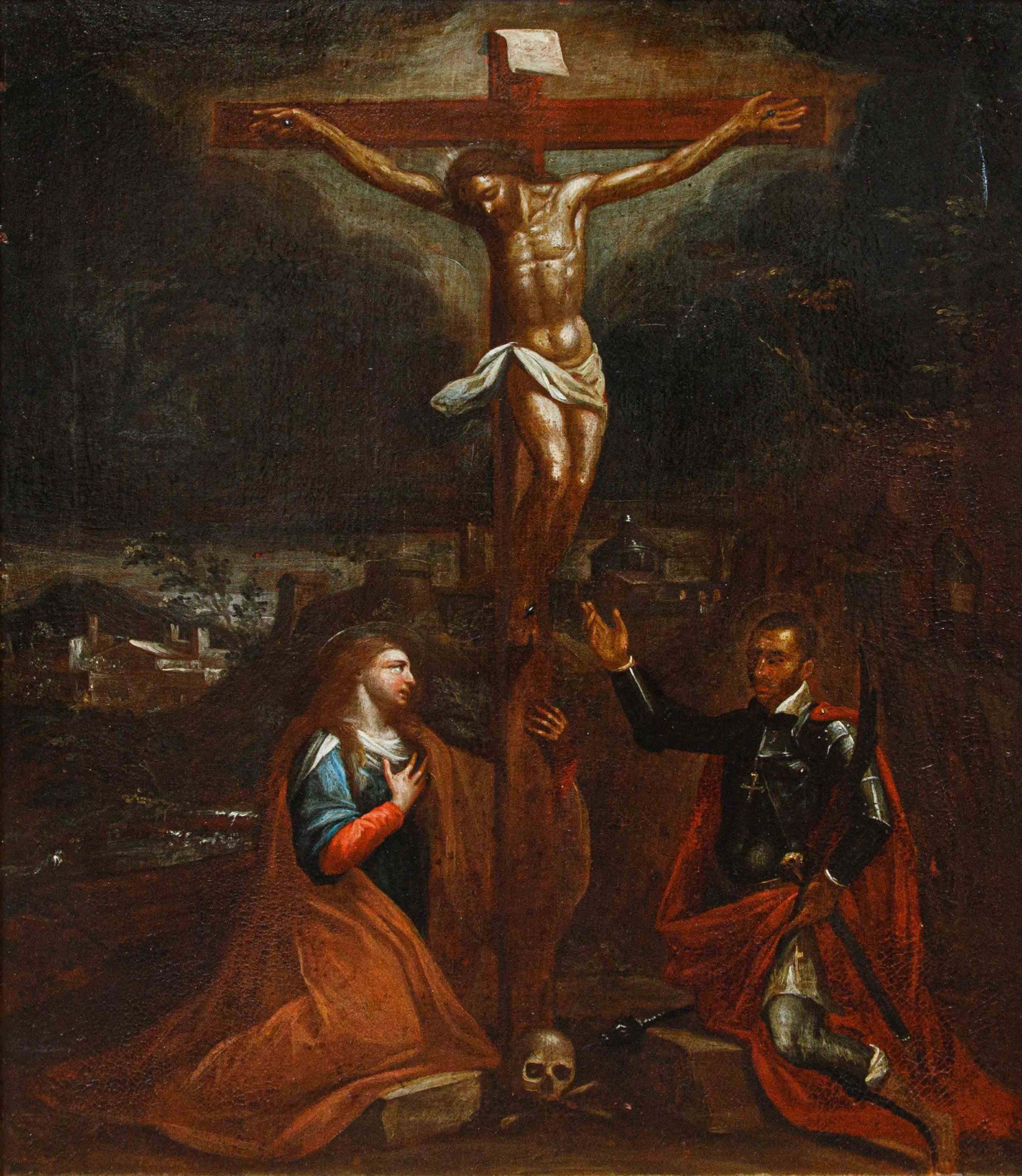
Francesco Zucco (Bergamo, approx. 1570 – Bergamo, May 3, 1627)
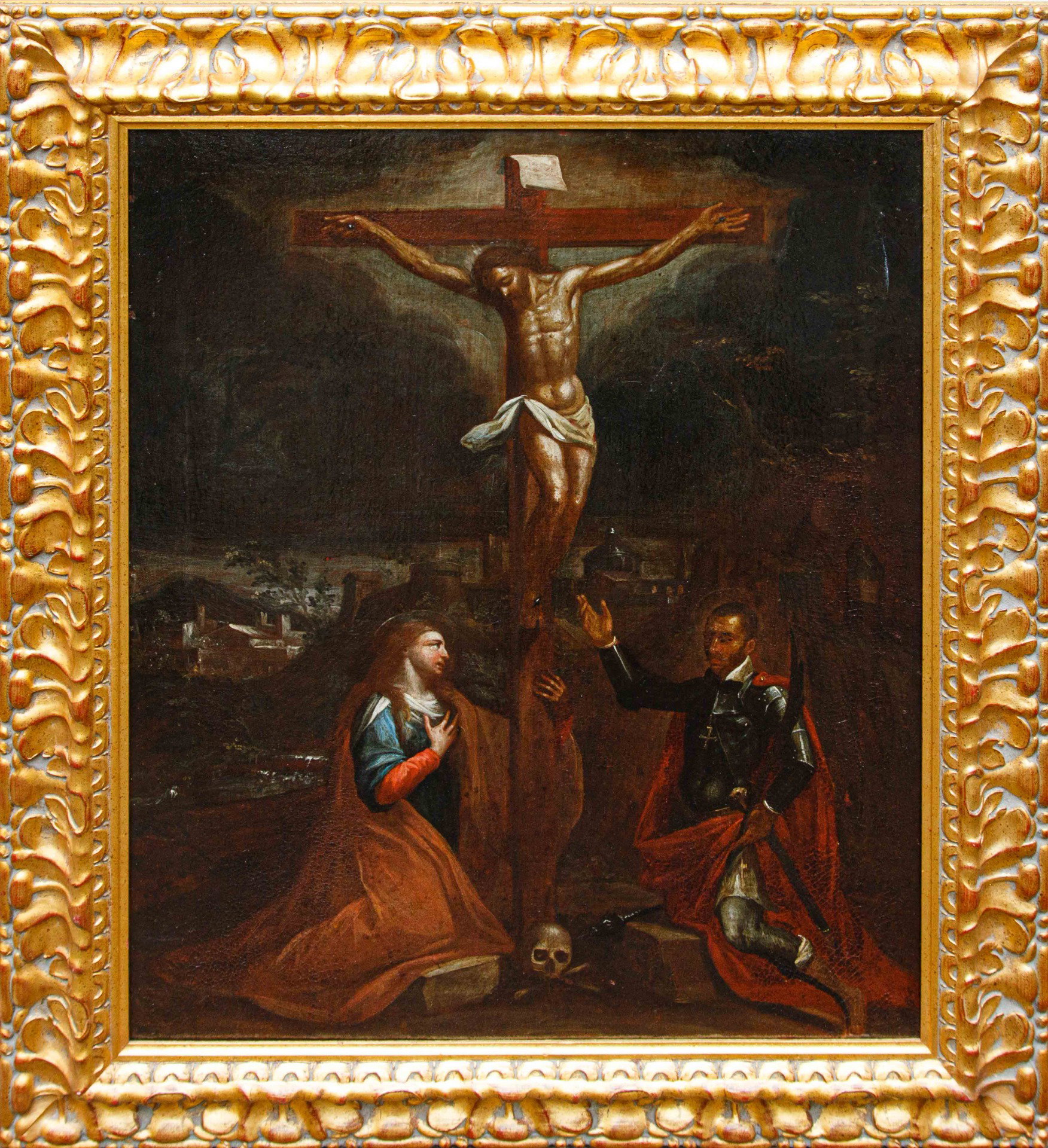
Crucifixion with Saints
Oil on canvas, 76 x 60 cm
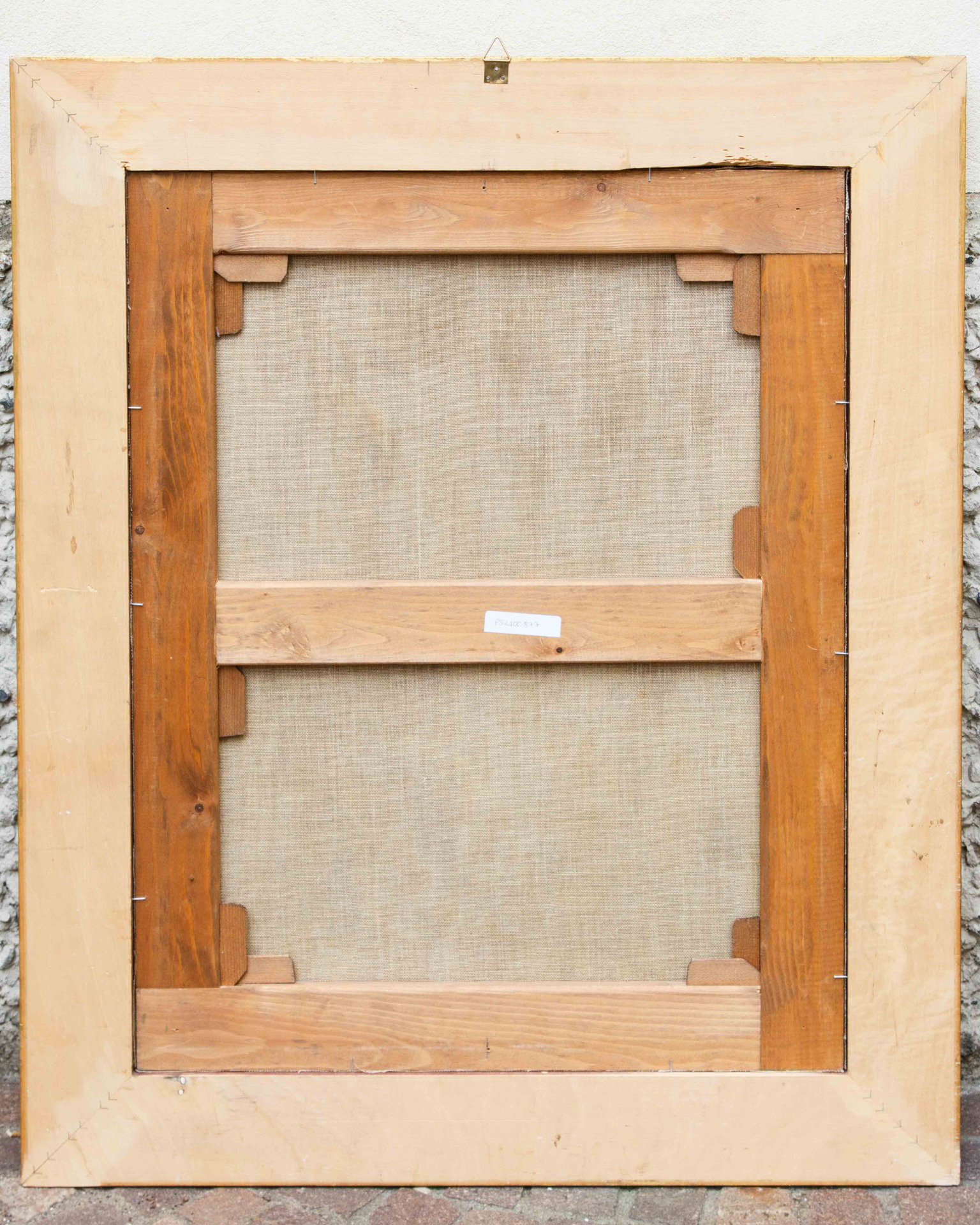
With frame 95 x 79 cm
Critical note by Professor Giuseppe Sava
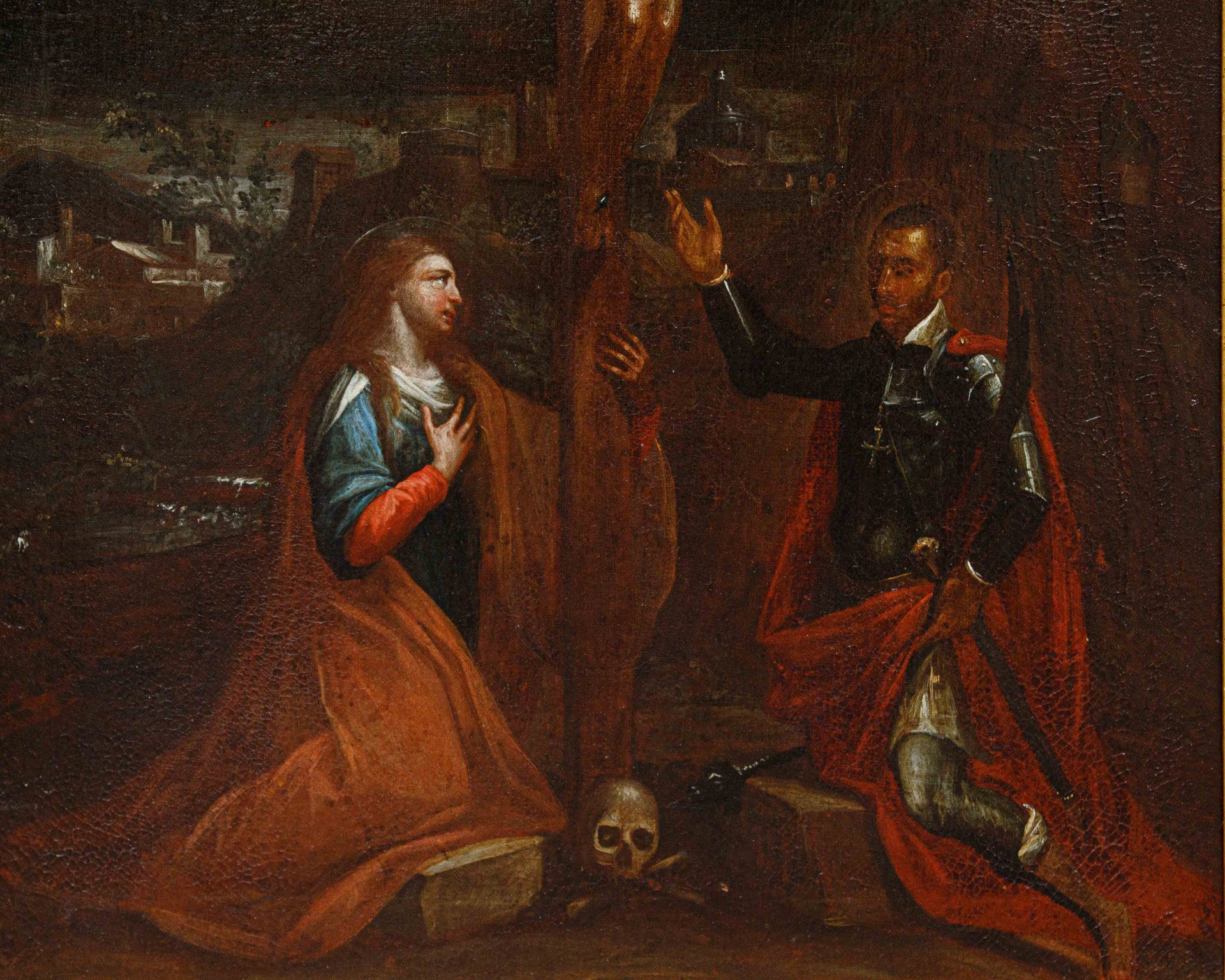
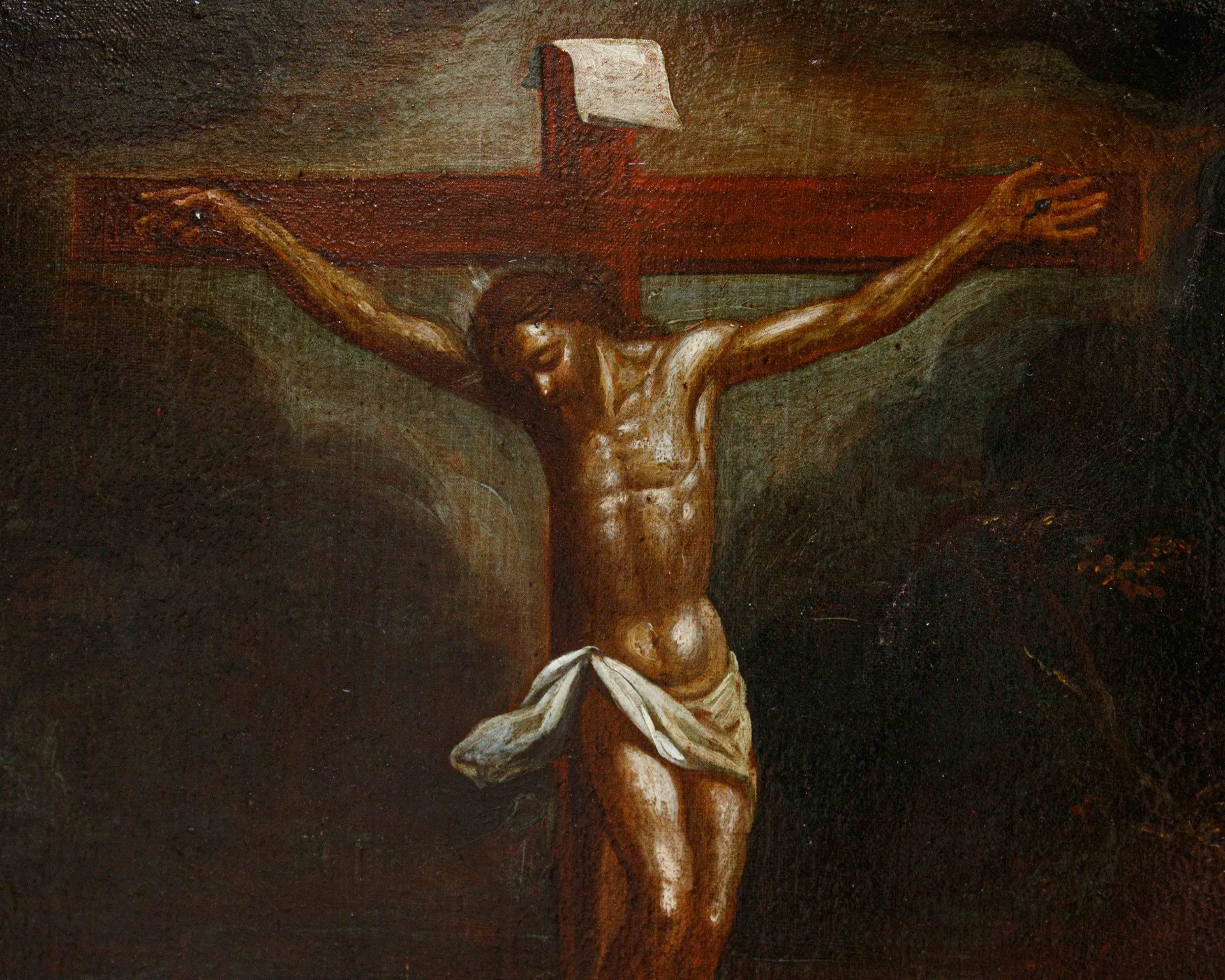
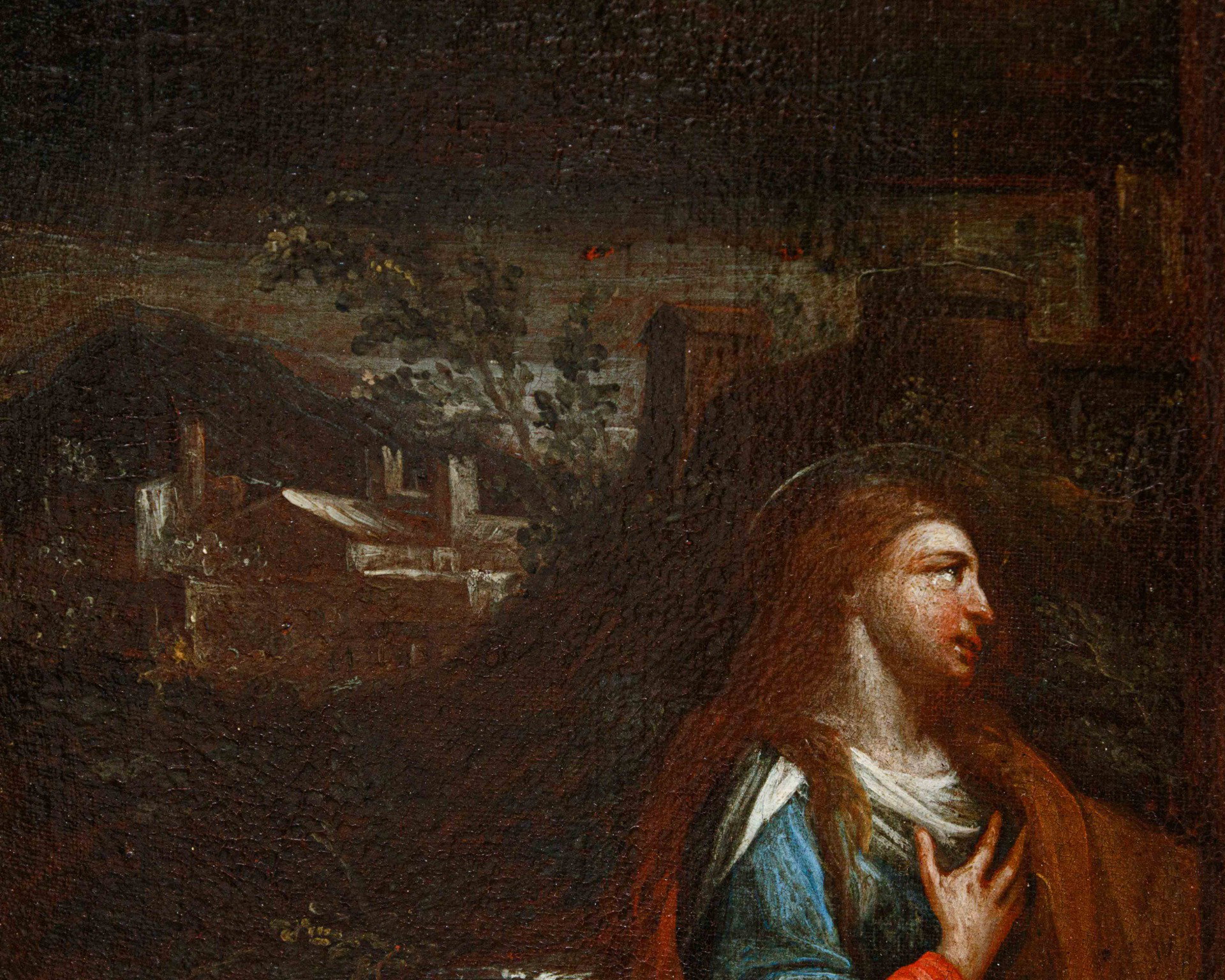
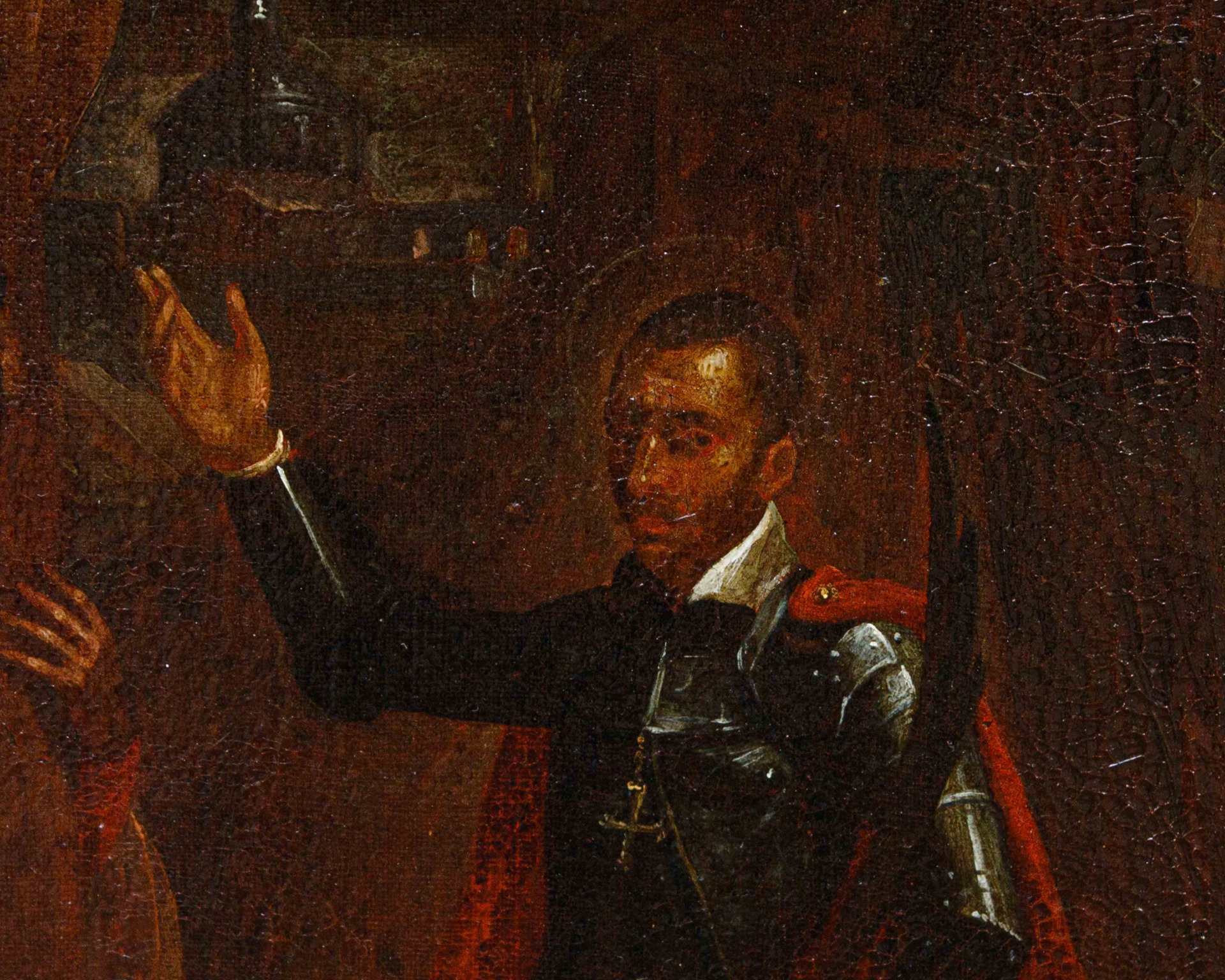
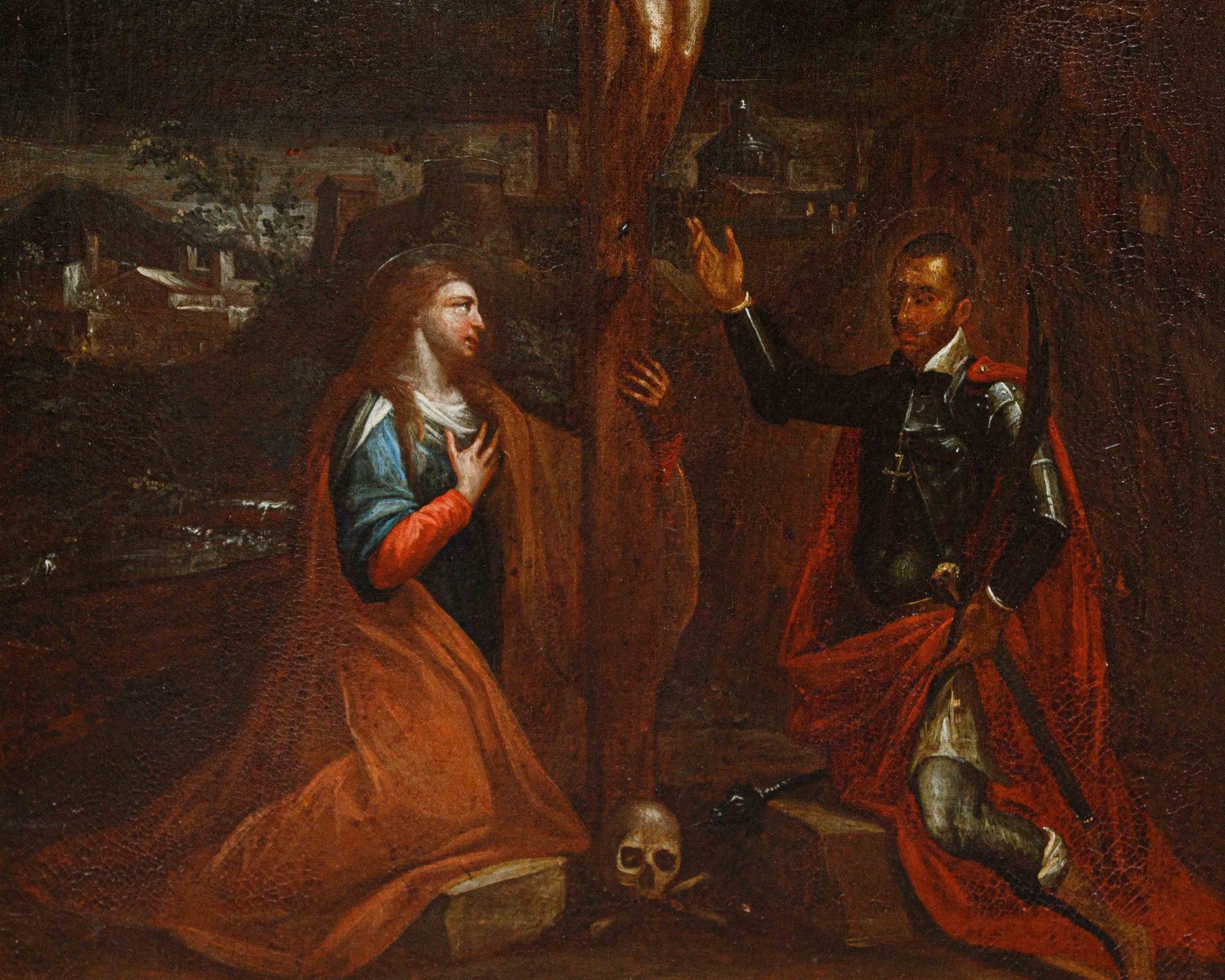
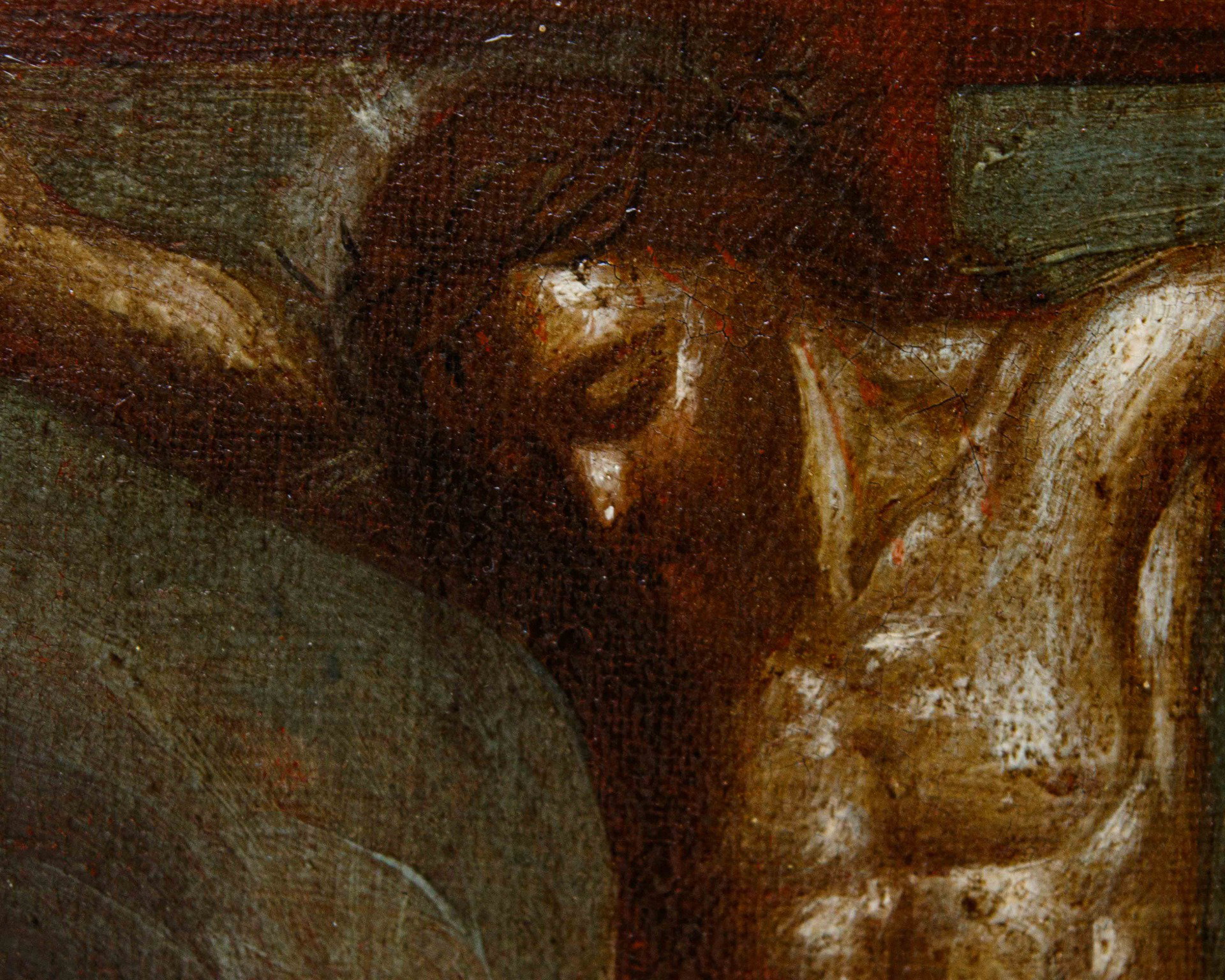
The crucifixion described here belongs to the Lombard school of the 17th century. Against a background characterized by cool tones and a dark, stormy landscape, the buildings of a city that can be identified with Jerusalem can be glimpsed. On the right, a bare, earthy-toned mountainous backdrop covers the rest of the urban view, thus drawing the eye to the foreground where, at the foot of the cross, Mary Magdalene and a warrior saint, in 17th-century armor and clothing, are kneeling. While the former looks at Jesus weeping and pining away, the latter points to the ultimate sacrifice with his hand and turns his gaze to the viewer. The latter, holding the palm of martyrdom and wearing a wide crimson cloak, typical of warrior saints, reveals his identity thanks to the iron mace placed on the rock to his right. This iconographic detail makes it possible to recognize Saint Defendens, a Roman soldier who lived in Thebes in the 3rd century and was martyred under Emperor Maximian. The name to pronounce for the small Crucifixion is that of Francesco Zucco, a painter to whom Count Francesco Maria Tassi (1793) devoted an entire biography. Born in Bergamo around 1570 (the exact year is not yet supported by documents), he was soon inclined
"to the study of painting", was "sent by his father to Cremona in the celebrated school of the Campi". The paternity of the work can be deduced from the habit of immortalizing the figures kneeling on a block of stone, as in this case and as in the altarpiece in San Pancrazio in Carobbio degli Angeli, dated 1608, in which the Virgin with the Child is venerated by San Bernardo and Santa Caterina da Siena. The rapid touches of light also strike some points of the landscape behind and allow us to better distinguish the profile of the buildings. The connections with Giovan Battista Moroni and the Bergamo school are evident, although the naturalistic reading gives way to an almost heraldic way of painting, so that the figures, rather lean and lifeless, touch an almost unreal consistency: it is the result of the intertwining of the culture of the post-Tridentine image, purged and rigorist, with the instances of the last season of Mannerism, that of Cremonese matrix. In this sense, we can mention the first masters of Zucco: the Campi brothers, especially Giulio, in whose Crucifixion in Santa Maria della Passione we find the Magdalene embraced to the cross and the strong chiaroscuro contrasts. Francesco Zucco himself created a larger version for the church of San Lorenzo in Bergamo. The same setting can be found in the canvas of the same subject by Giovan Paolo Cavagna, preserved at the Pinacoteca Tosio Martinengo in Brescia. For the periodization we must place the work between the second and third decade of the seventeenth century, in the moment of full maturity for the artist from Bergamo.