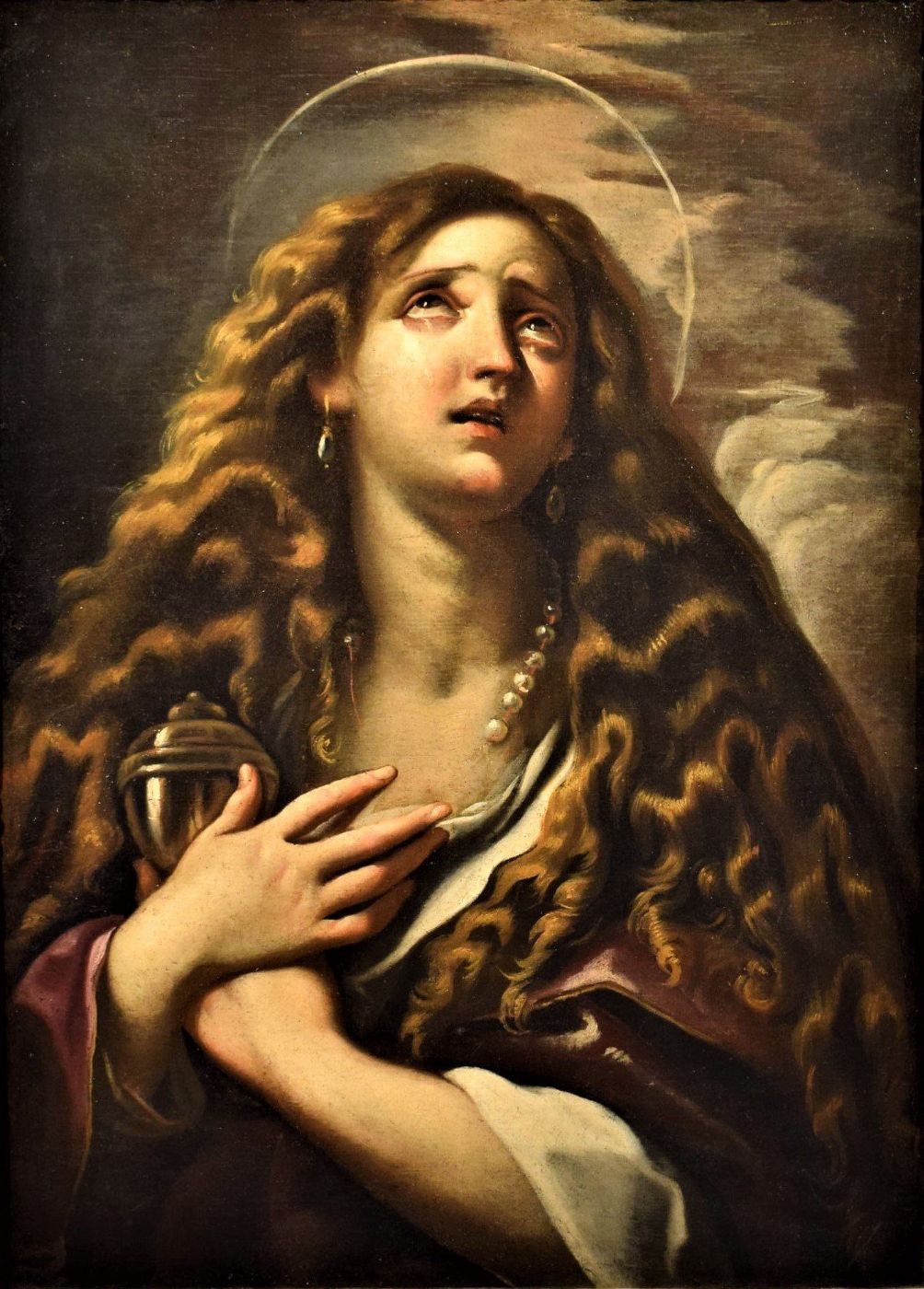
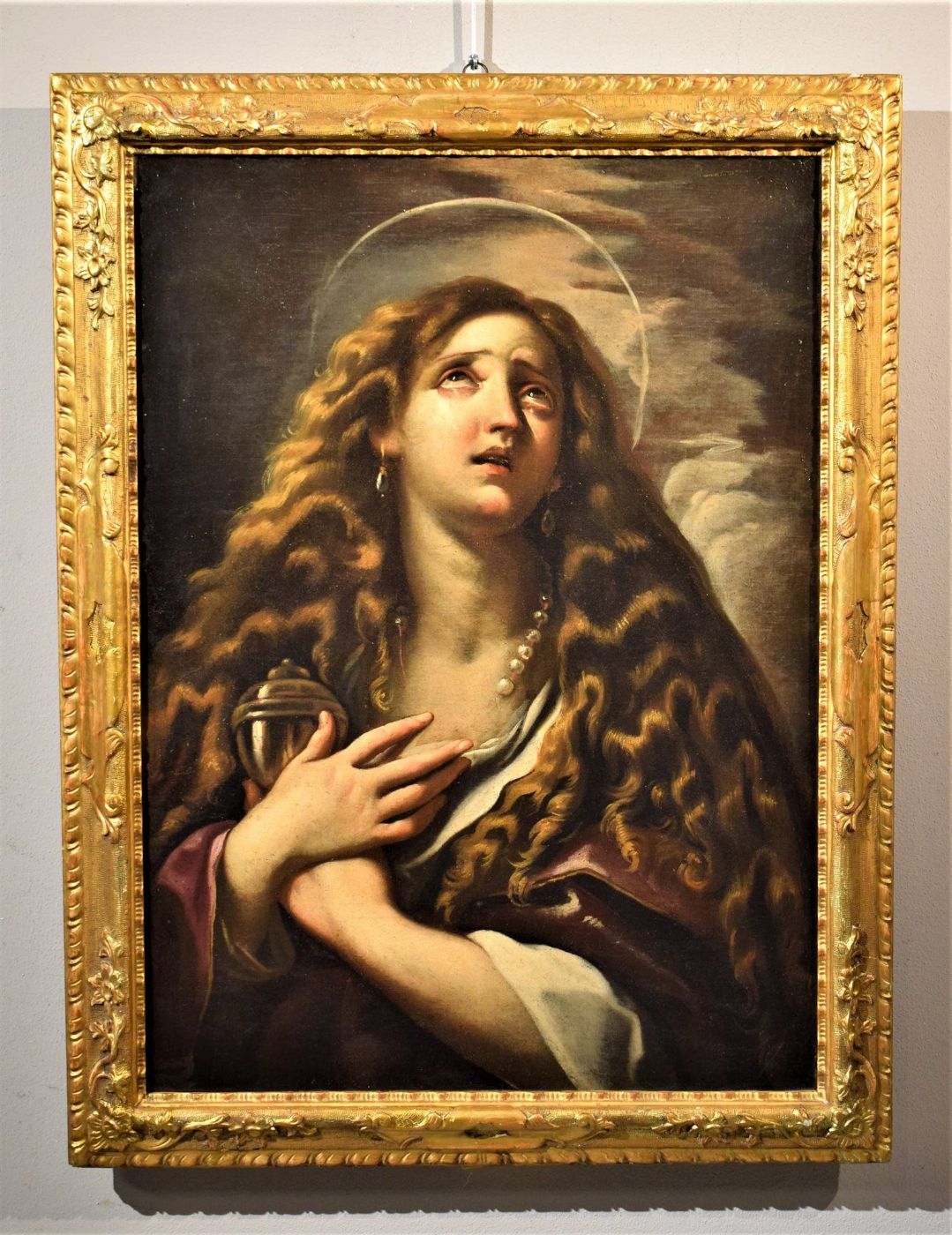
"Maria Maddalena"
Giacinto Brandi
(Rome, 1621-1691)
Oil on canvas
Period: 2nd Half of the 17th Century
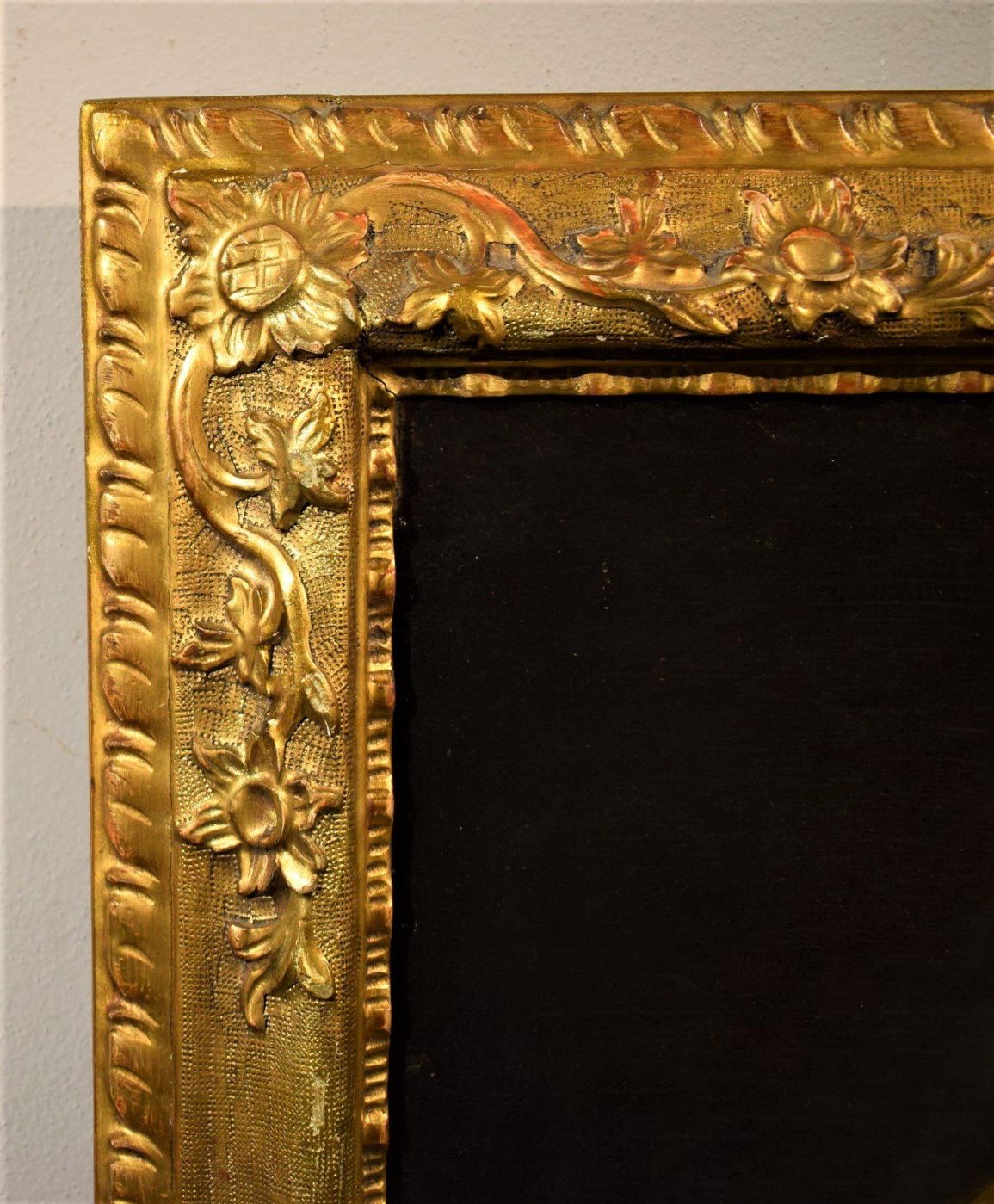
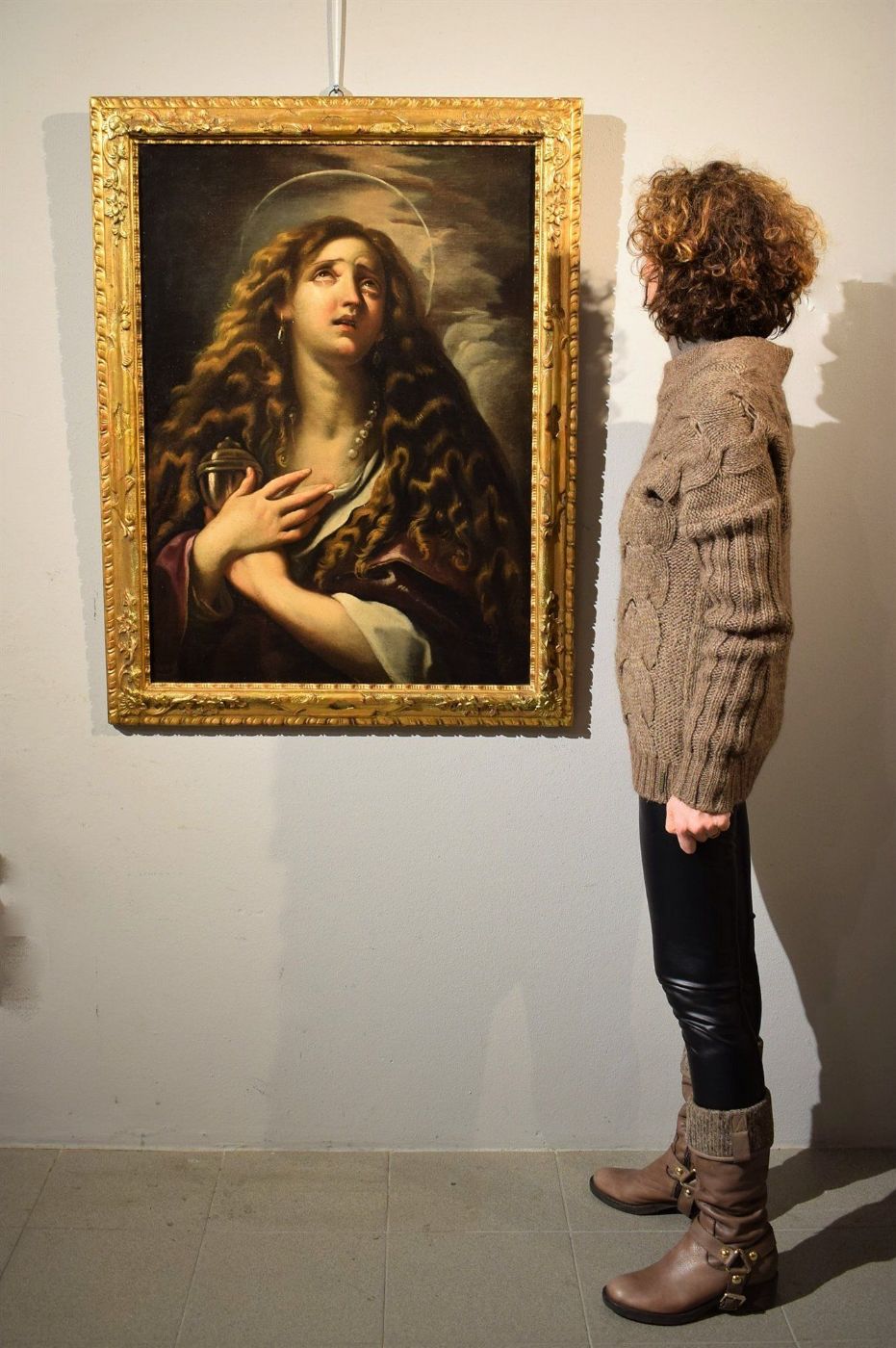
Canvas 92 x 68 cm, frame 105 x 80 cm
Excellent condition.
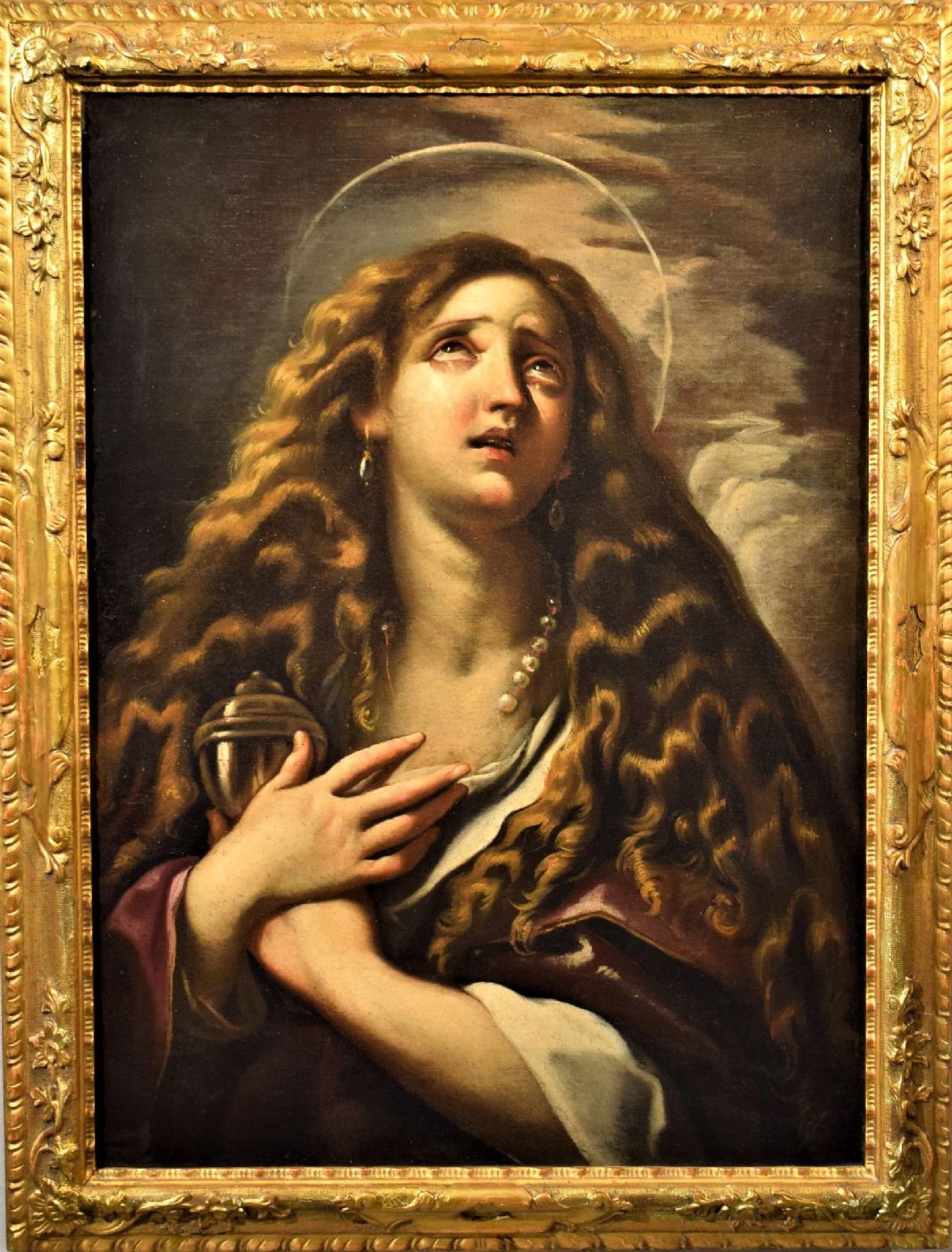
Attributed to the great Roman Master Giacinto Brandi, this extraordinary canvas, of incredible drama and high pictorial level, is considered one of his most significant achievements.
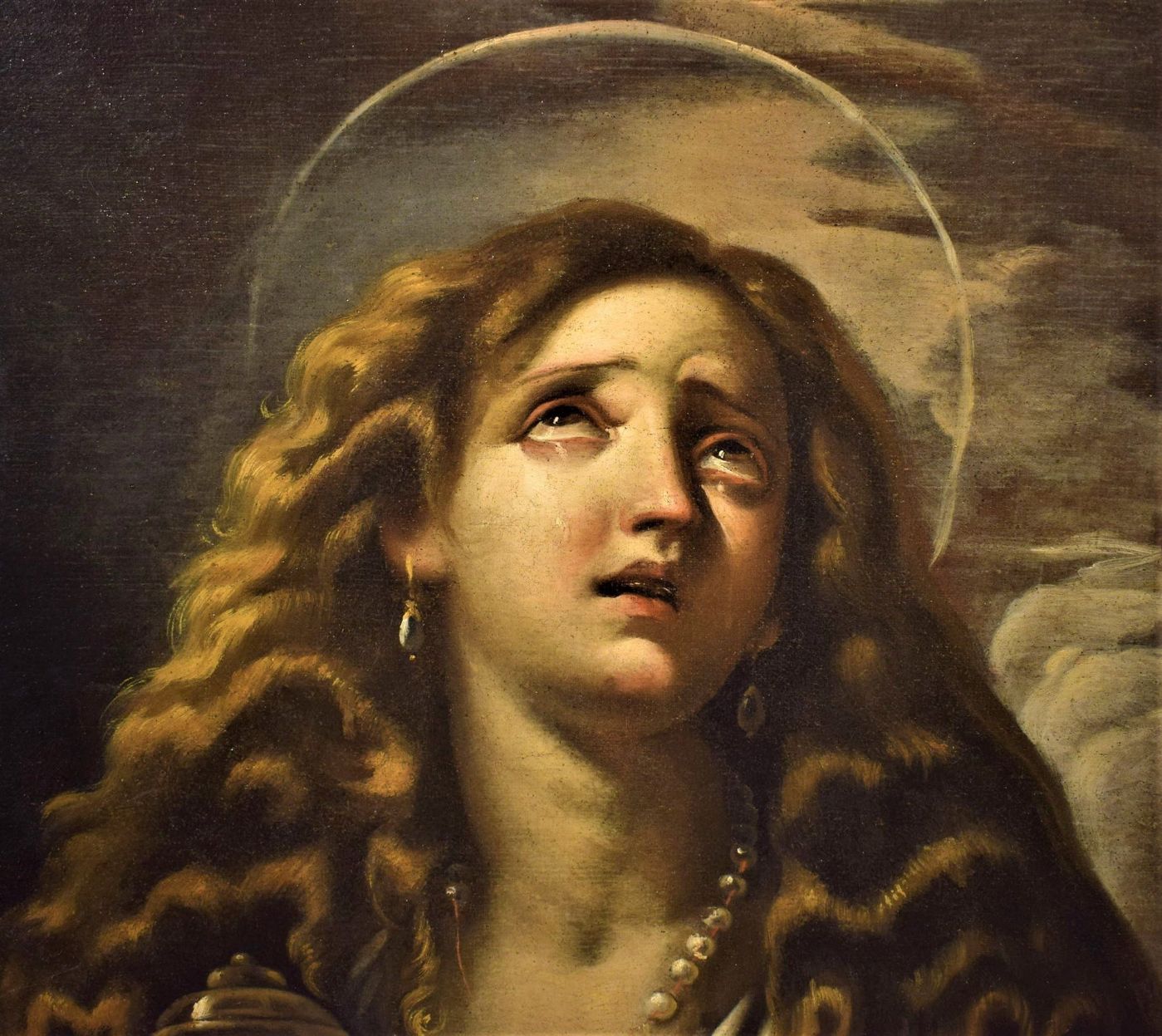
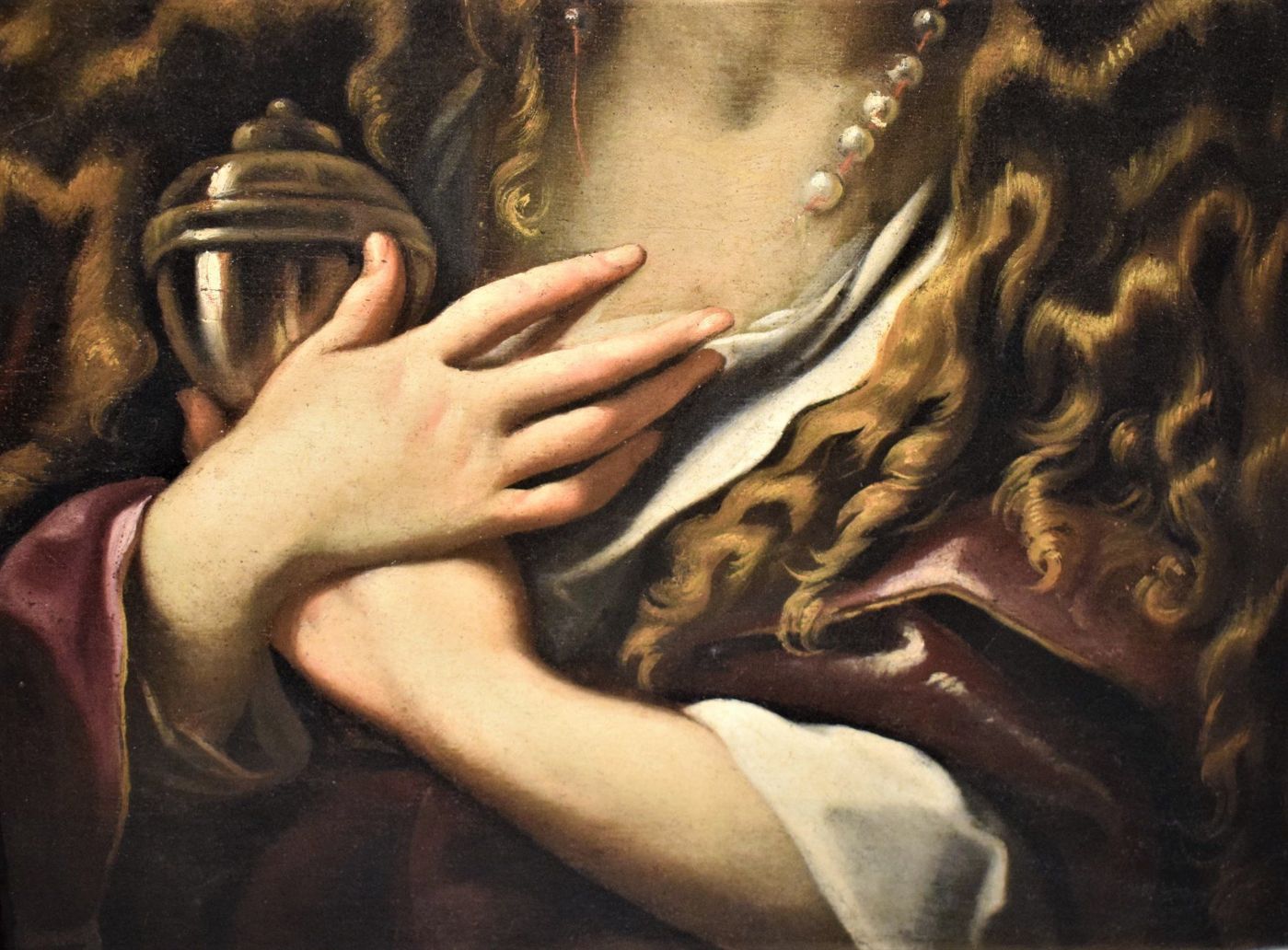
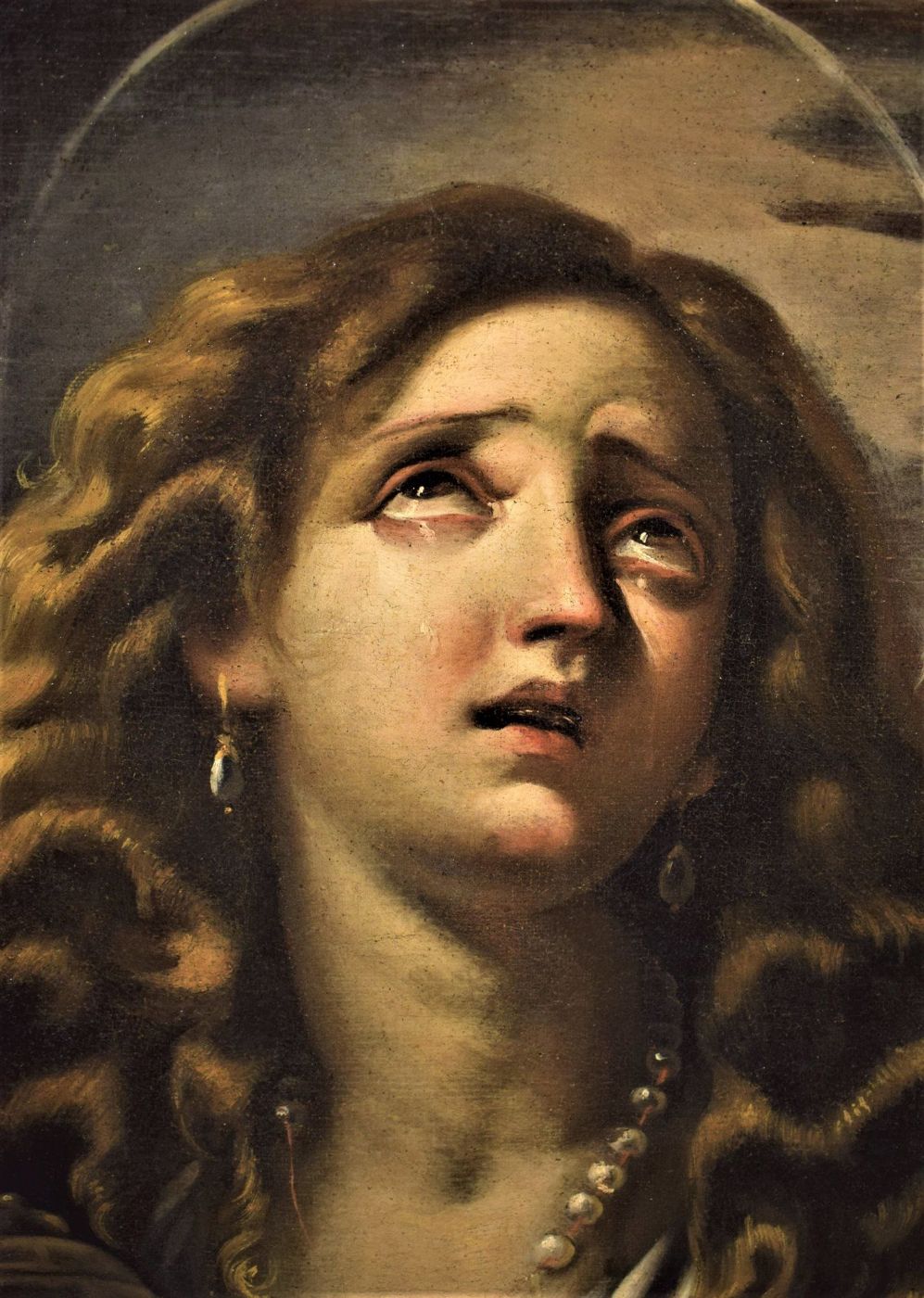
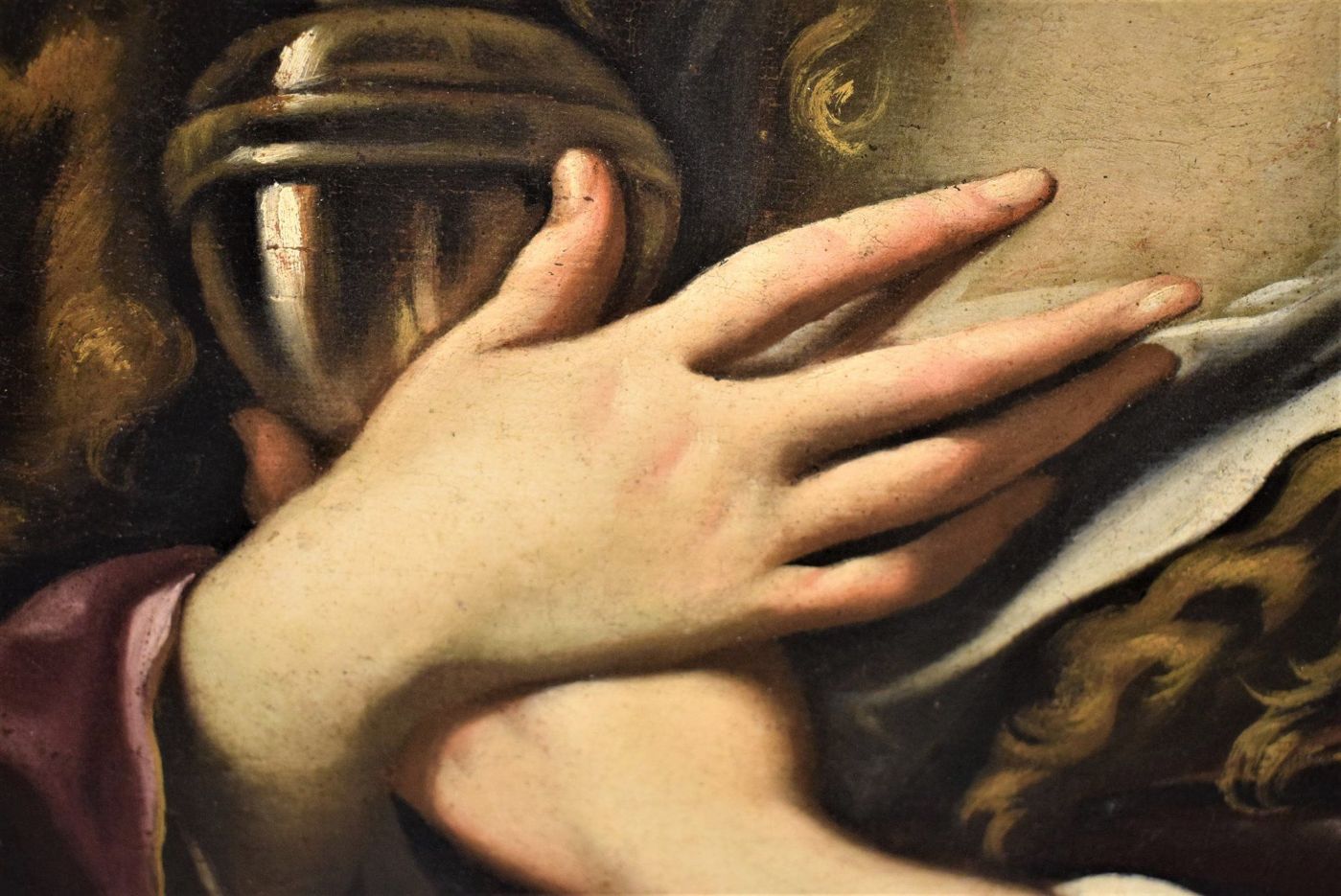
The splendid protagonist, as the most traditional iconography dictates, is covered by her long curly hair and holds the jar of ointments in her hands. Her gaze, with tearful eyes, is directed towards the sky.
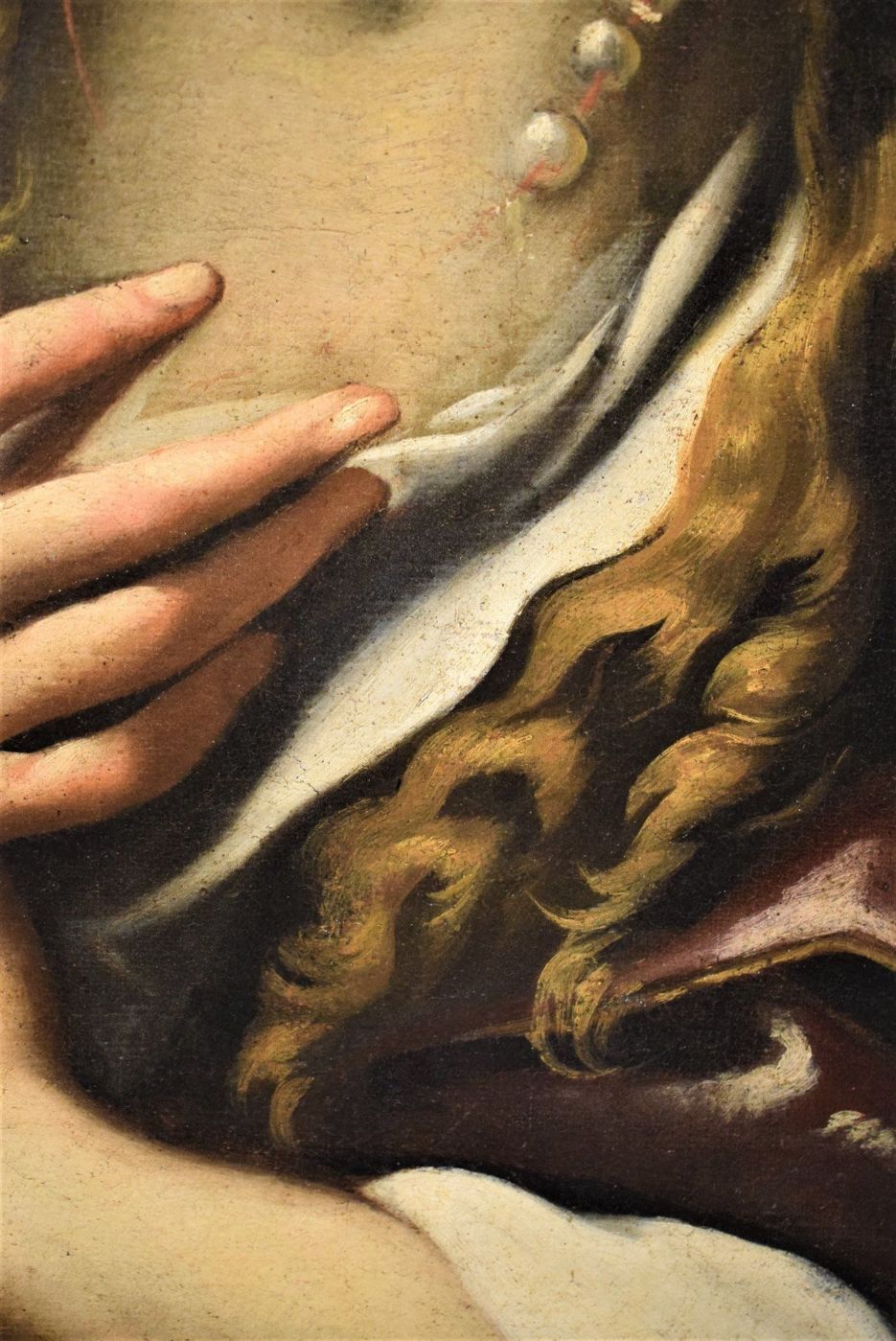
She has torn off the pearl necklace as a sign of renunciation of earthly pleasures and her own femininity.
It is the image that depicts the repentance of the sinner and her unconditional love towards God.
Brandi, celebrated as one of the main interpreters of the Roman Baroque with his masterpieces exhibited in the Basilicas of the Capital, painted some splendid portraits of Mary Magdalene interpreted in a very personal way and, albeit with notable variations, always with the same unmistakable features.
This version can undoubtedly be considered the most successful, both from a pictorial point of view and as regards the emotional and devotional aspect.
The overwhelming beauty of the protagonist is disfigured by pain and the message of repentance takes on tones of great drama.
It is evidently a work of great effect that violently strikes the viewer and involves him in a mix of beauty and upheaval.
Furthermore, the splendid condition of the painting allows a perfect reading down to the smallest details.
Author's Biography
Born in Rome in 1621, he was very young when he joined the studio of Alessandro Algardi, a well-known sculptor who noted that Brandi was more suited to painting. He then became part of the studio of Giovanni Giacomo Sementi. In 1638 he left for a stay in Naples where he worked until 1647 when he returned to Rome to work under Giovanni Lanfranco. Here Brandi met Mattia Preti with whom he shared a great friendship and an important stylistic maturation. The two artists would later collaborate often.
His works are well distributed among the Baroque Churches of Rome, including frescoes on the ceiling of San Carlo al Corso (1670–1671), San Silvestro in Capite, Sant'Andrea al Quirinale, a canvas of Sant'Andrea (1650) in Santa Maria in Via Lata, a painting of the Martyrdom of the Forty (1660) for the Church of the Santissima Stimmate di San Francesco, a Coronation of the Virgin (1680) which serves as the main altarpiece for the church of Gesù e Maria, a canvas of the Drunkenness of Noah in the Galleria Corsini, The Assumption (1655) for Santa Maria in Organo in Verona, a fresco from Ovid's Metamorphoses (1651–1653) for Palazzo Pamphilj in Piazza Navona, and a Martyrdom of Saint Blaise for the church of San Carlo ai Catinari; a Vision of Blessed John of Saint Facundo (1656) and an Ecstasy of Blessed Rita da Cascia (1660) in the Basilica of Sant'Agostino in Campo Marzio, San Rocco intercedes for plague sufferers (1673) and San Rocco in glory (1674) in the Church of San Rocco all'Augusteo; Lamentation over the Dead Christ (1675–76) in the Church of Sant'Andrea al Quirinale. In 1647 he joined the Congregation of Virtuosos at the Pantheon in Rome and from 1651 he was included in the Academy of San Luca for painters. In 1663 he frescoed the Life of Sant'Erasmo for the crypt of Gaeta cathedral.
A certificate of authenticity is issued in accordance with the law (FIMA affiliate).
Tracked shipping (DHL TRACKING) and fully insured with anti-shock packaging in custom-made wooden crate.
Delivery within 3 days of receipt of payment (DHL EXPRESS)
Negotiable price and personalized payment
All the photographic details of the work on the link:
https://www.antichitaischia.it/it/prodotto/-maddalena-