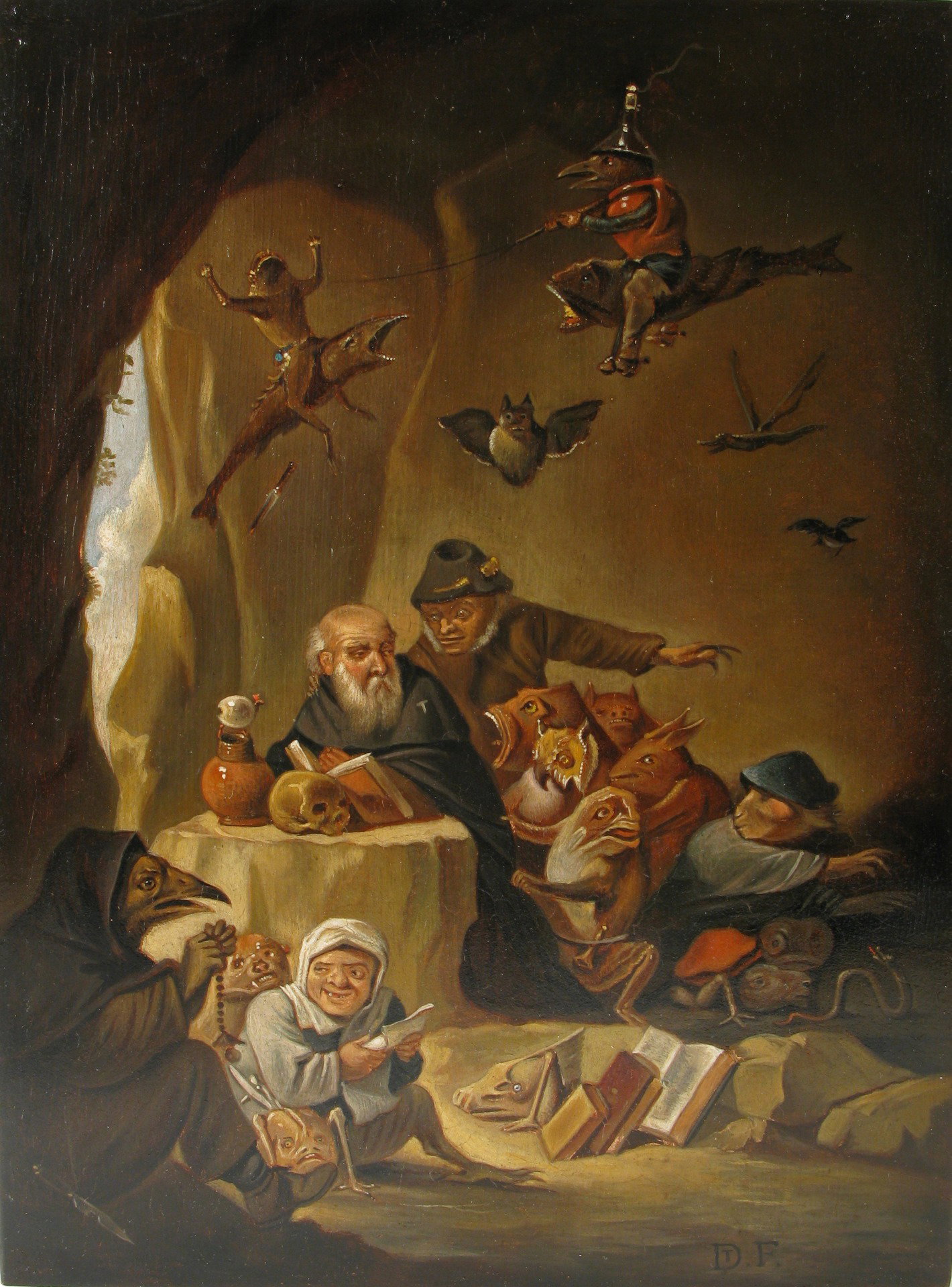
Oil painting on panel.
Flemish painter of the 18th century
Measurements: cm 31.4x23
The scene takes place inside a cave.
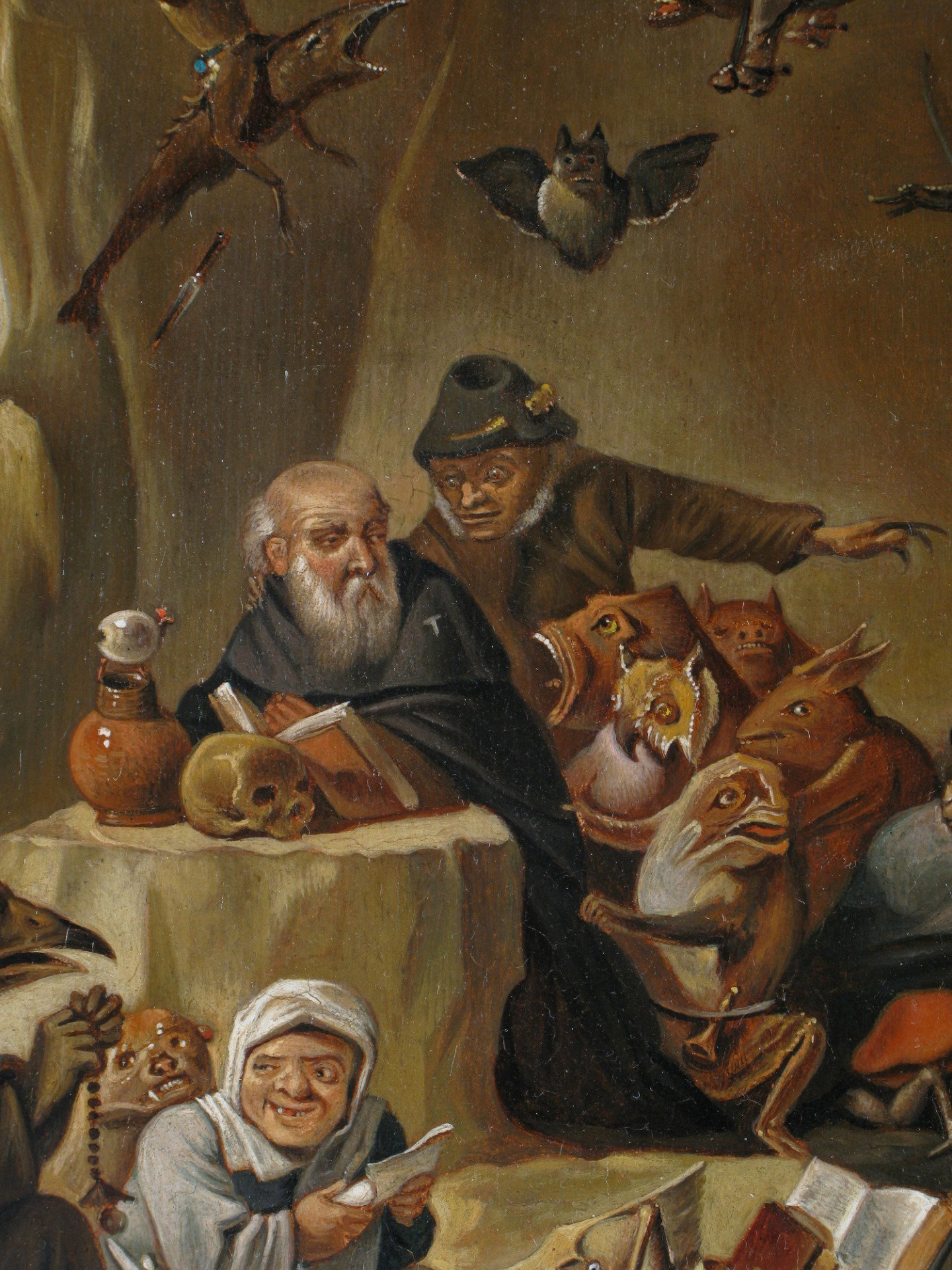
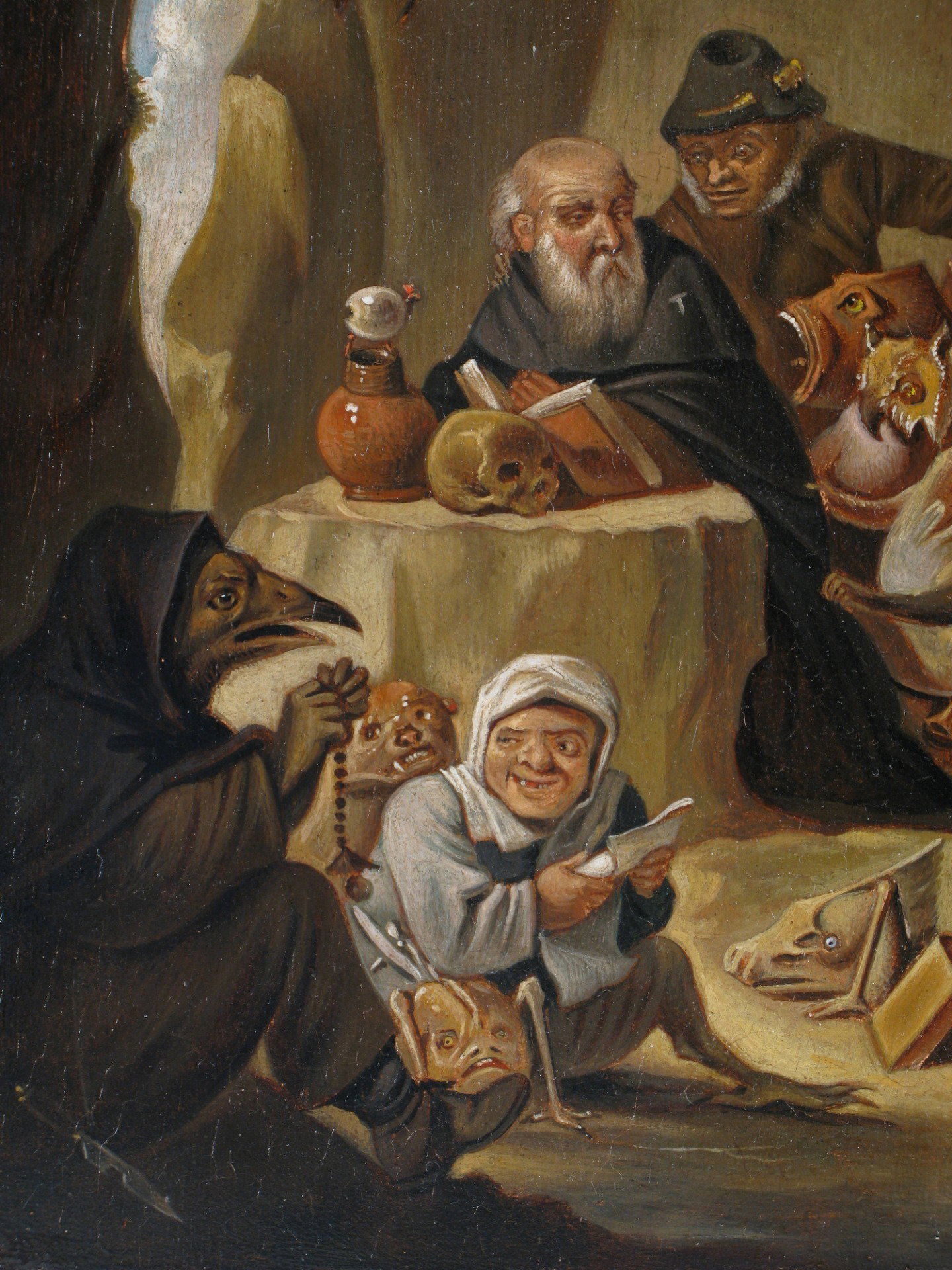
Saint Anthony Abbot, seated at a table made from a rock, on which can be seen a terracotta or copper container and a skull (symbol of human transience), is reading a book.
The Saint is distracted from his reading by a figure with human features who seems to be whispering something to him, indicating the direction in which to turn his gaze.
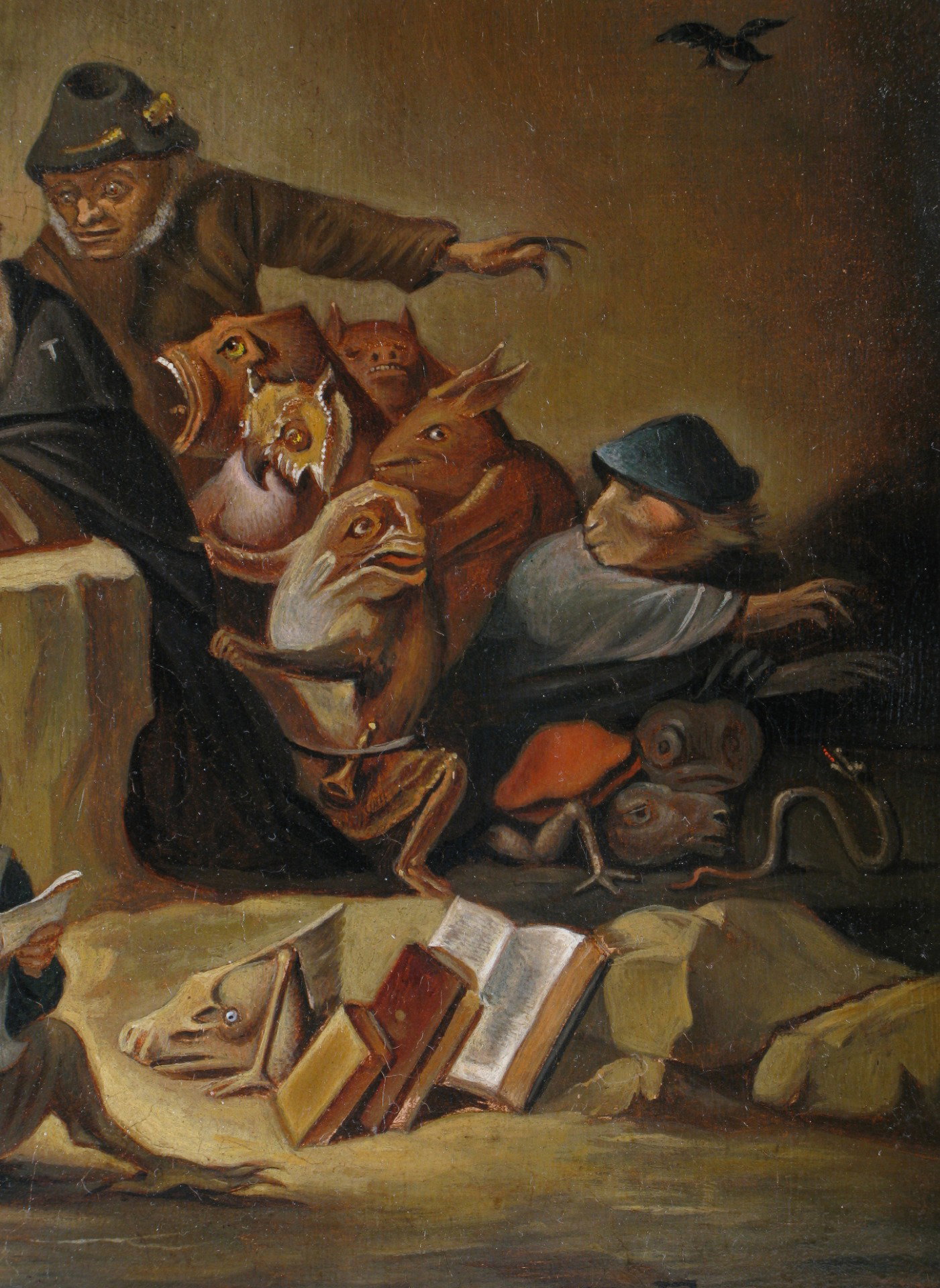
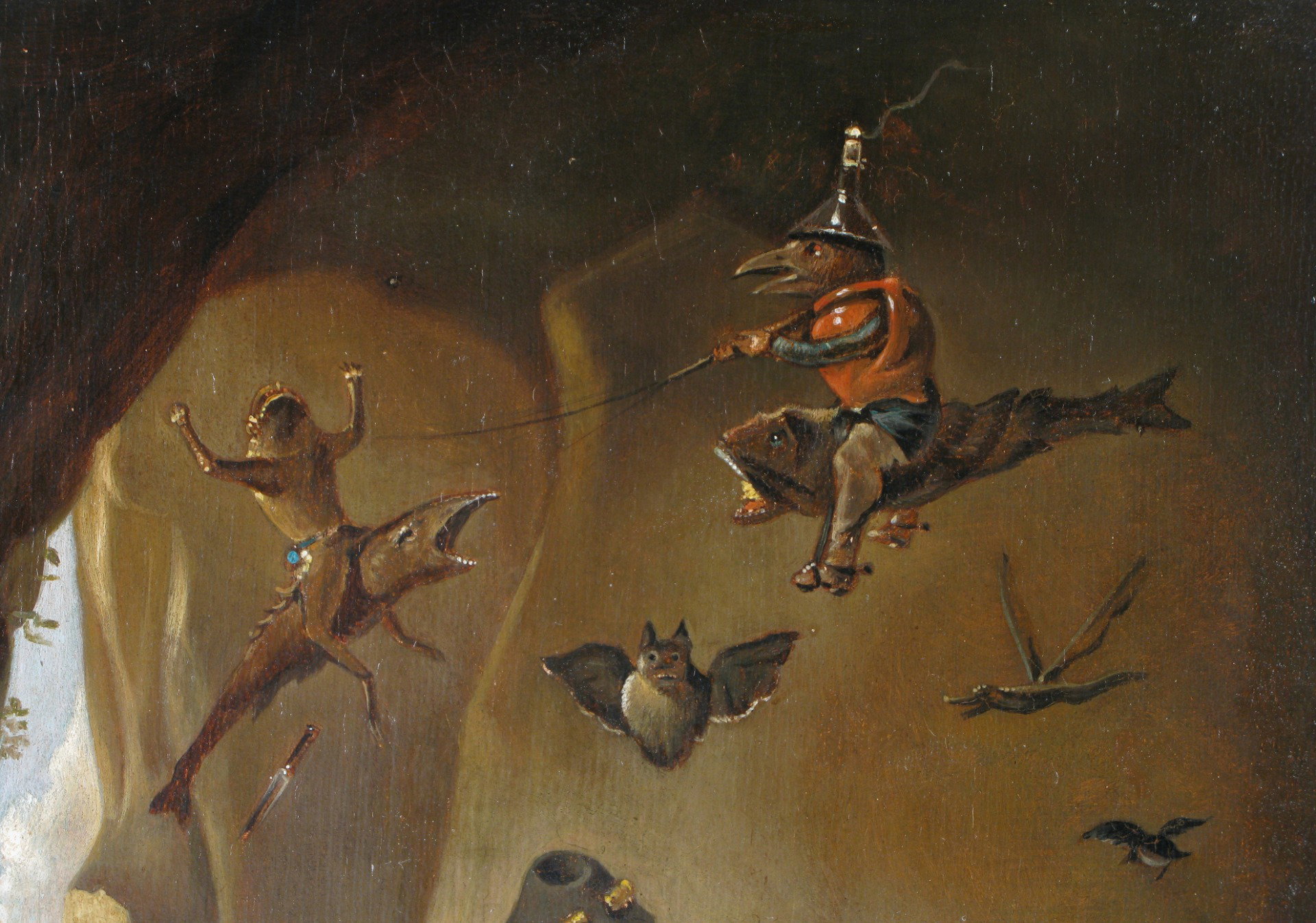
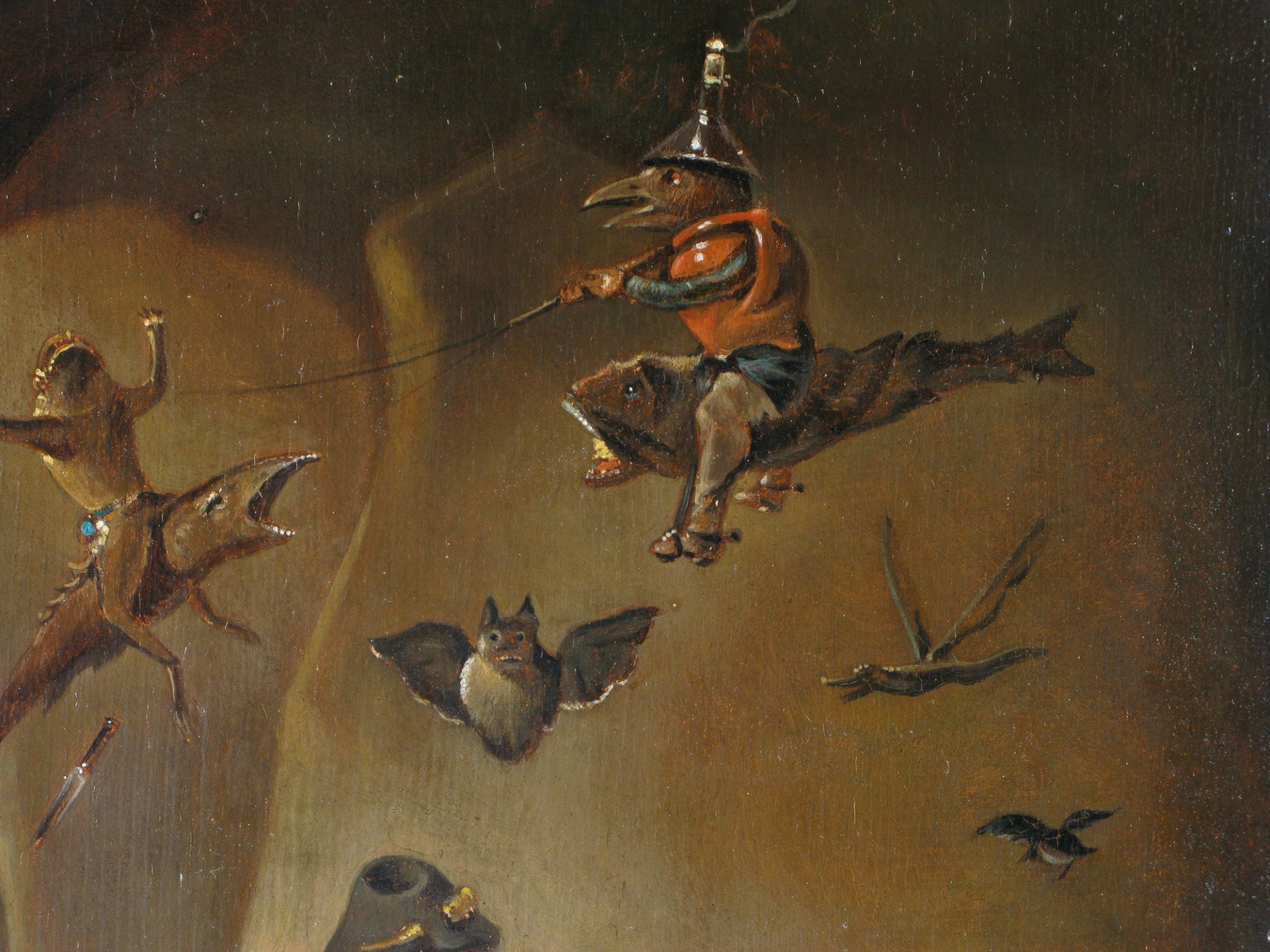
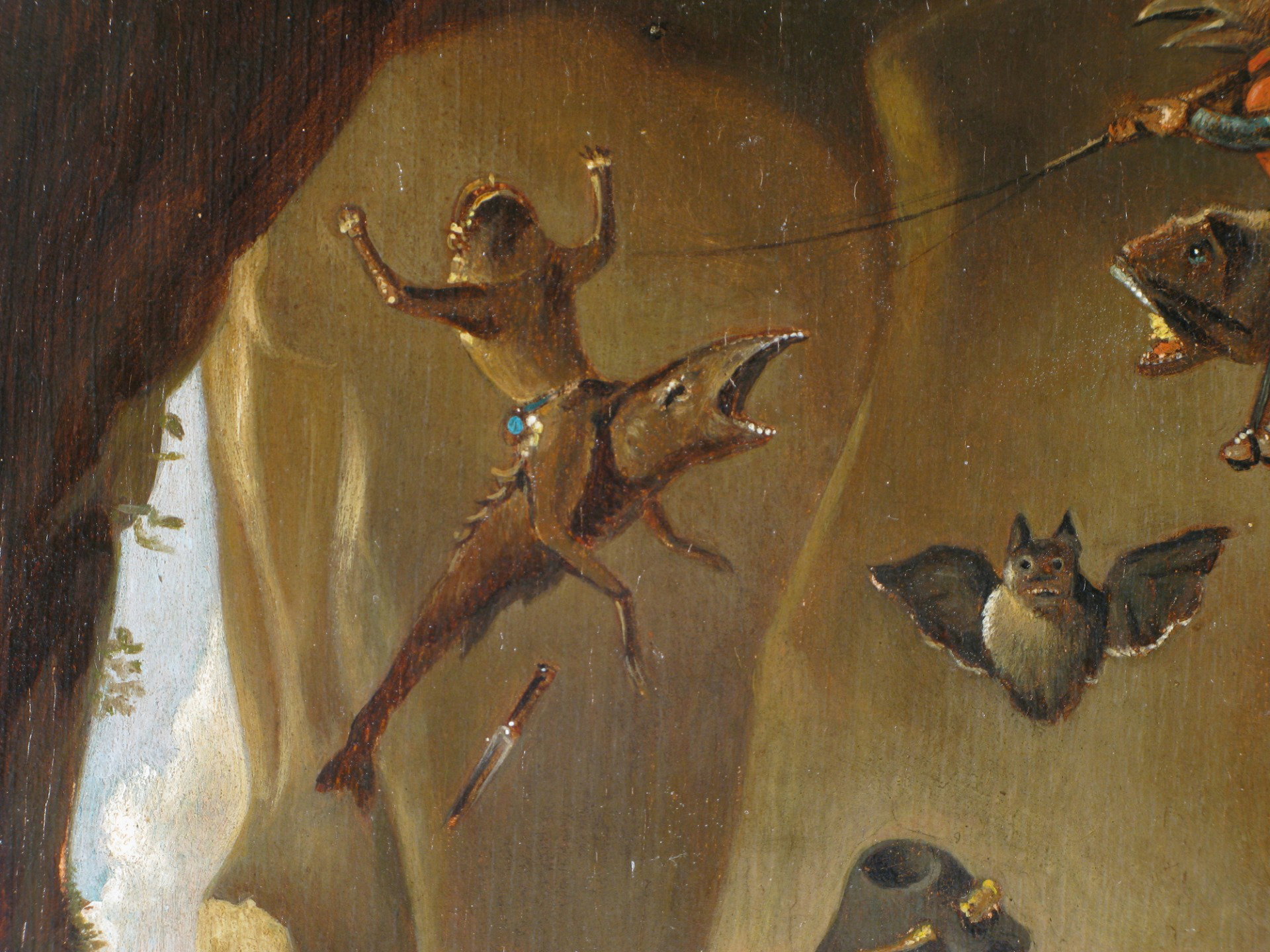
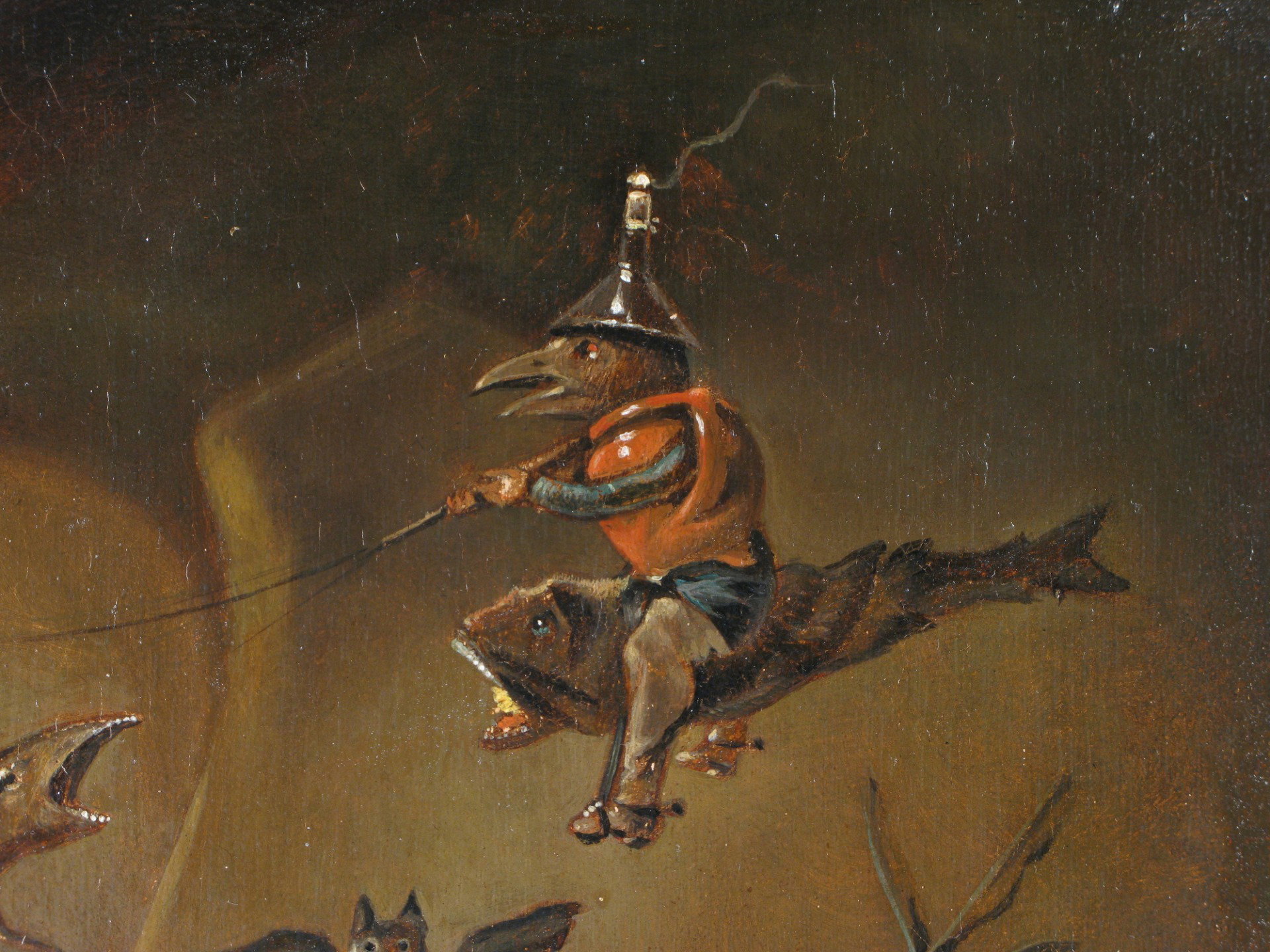
The cave is populated by anthropomorphic and zoomorphic figures, fantastic animals, little monsters, snakes, a bat, other imaginary birds, and two monstrous but amusing little animals dueling on flying fish.
Figures that, in a visionary imaginary, represent the temptations.
The refined painting, strongly inspired and influenced by the fantastic and imaginative pictorial representations of Hieronimus Bosch (Hertogenbosch, October 2, 1453 – Hertogenbosch, August 9, 1516) is certainly the work of an 18th-century Flemish artist.
The Life of Saint Anthony Abbot
Anthony was born around 250 AD to a wealthy family of farmers in the village of Coma, now Qumans in Egypt. Around the age of 18-20, he was orphaned, leaving him with a rich inheritance to manage and a younger sister to educate.
Attracted by the evangelical teaching "If you want to be perfect, go, sell what you have, give it to the poor, and you will have treasure in heaven; then come, follow me," and following the example of some anchorites who lived near the Egyptian villages in prayer, poverty, and chastity, Anthony wanted to choose this path. He therefore sold his possessions, entrusted his sister to a community of virgins, and dedicated himself to the ascetic life in front of his house and then outside the village.
In search of a penitent and distraction-free lifestyle, he asked God to be enlightened. He saw not far away an anchorite like him, who sat working weaving a rope, then stopped, got up and prayed; immediately after, he resumed working and praying again. He was an angel of God who showed him the way of work and prayer which, two centuries later, would form the basis of the Benedictine rule "Ora et labora" and Western Monasticism.
Part of his work served to obtain food and part he distributed to the poor. Saint Athanasius asserts that he prayed continuously and that he was so attentive to the reading of Scripture that his memory replaced books.
The temptations
After a few years of this experience, in his early youth, very hard trials began for him.
Obscene thoughts tormented him, doubts assailed him about the appropriateness of such a solitary life, not followed by the masses of men nor by the ecclesiastics. The instinct of the flesh and the attachment to material possessions, which he had tried to suppress in those years, returned powerfully and uncontrollably.
He therefore asked for help from other ascetics, who told him not to be frightened, but to go forward with confidence, because God was with him. They also advised him to get rid of all ties and all material possessions, to retreat to a more solitary place.
Thus, barely covered by a rough cloth, Anthony took refuge in an ancient tomb carved into the rock of a hill, around the village of Coma. A friend occasionally brought him some bread; for the rest, he had to manage with berries and wild herbs.
In this place, the first temptations were followed by terrifying visions and noises. In addition, he went through a period of terrible spiritual darkness: he overcame it by persevering in the faith, doing God's will day by day, as his teachers had taught him.
When finally Christ revealed himself to him, the hermit asked: "Where were you? Why didn't you appear from the beginning to stop my suffering?". He felt himself answered: "Anthony, I was here with you and watched your struggle".
Anthony died in 356 at over a hundred years old.
The work, like every other object of ours, is sold accompanied by certificates of authenticity and lawful origin.
We personally take care of and organize the packaging and shipping of works of art with insurance all over the world